With the summer now behind us, enough time has passed to allow for a leisurely reading of Leo XIV’s first encyclical: *Magnifica humanitas* (May 15, 2026). This text does not focus on artificial intelligence, but rather, as the subtitle states, “the protection of the human person in an age of artificial intelligence.”.
At the same time, it outlines how Christians should contribute to building a more humane and fraternal city. The prelude and the finale frame the symphonies. It is worth paying special attention to the beginning and the end of the encyclical—even though they are brief—in order to fully grasp the content of its message.
During the time of Leo XIII What was new was the Industrial Revolution, with its advances and risks. Today, the Pope says, we need to engage in “shared discernment” that will help us, in this “turning point in history,” to answer some fundamental questions: “Where are we going? What goal do we wish to pursue? What direction should we choose as a human community and as nations?” (no. 6).
To build responsibly in our time, the Pope proposes two biblical “images”: the building of the Tower of Babel (cf. Gen 11:1–9) and the rebuilding of the walls of Jerusalem (cf. Neh 2:6) after the exile in Babylon (cf. nos. 7–10).
“The first choice is not between a ‘yes’ or a ‘no’ to technology, but between building Babel or rebuilding Jerusalem: between a power that seeks to dominate the heavens and a people who, in God’s presence, set to work together to rebuild the walls of fraternal coexistence” (no. 9).
León XIV asserts that it is precisely “this shared work” that expresses the way Christians build together: “To orient our actions toward God, so that, in his light, pluralism does not dissolve into disorder but, through the practice of synodality, becomes the space in which humanity rediscovers its solid foundations and its ultimate purpose” (n. 10).
Thus, one might say, a Christian anthropology of work takes shape, culminating in the gift of the definitive City of God: Heaven, the fulfilled Kingdom of God, the Church—the communion of saints in a reconciled and transformed world. “This vision of grace is, for us Christians, a call to work together, cultivating a peaceful, just, and dignified common life in today’s ‘cities’” (Ibid.).
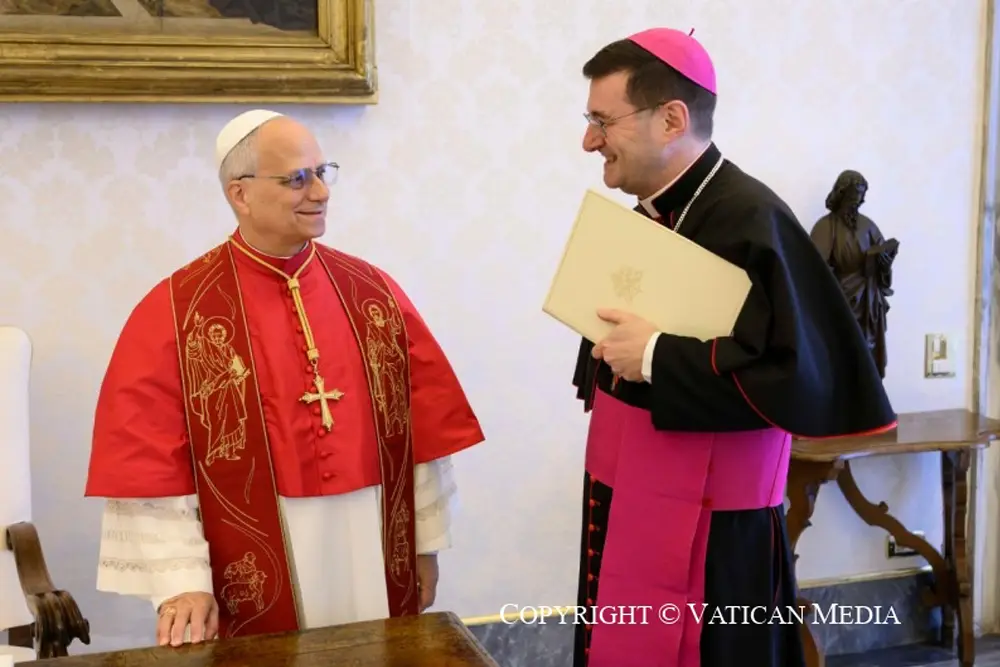
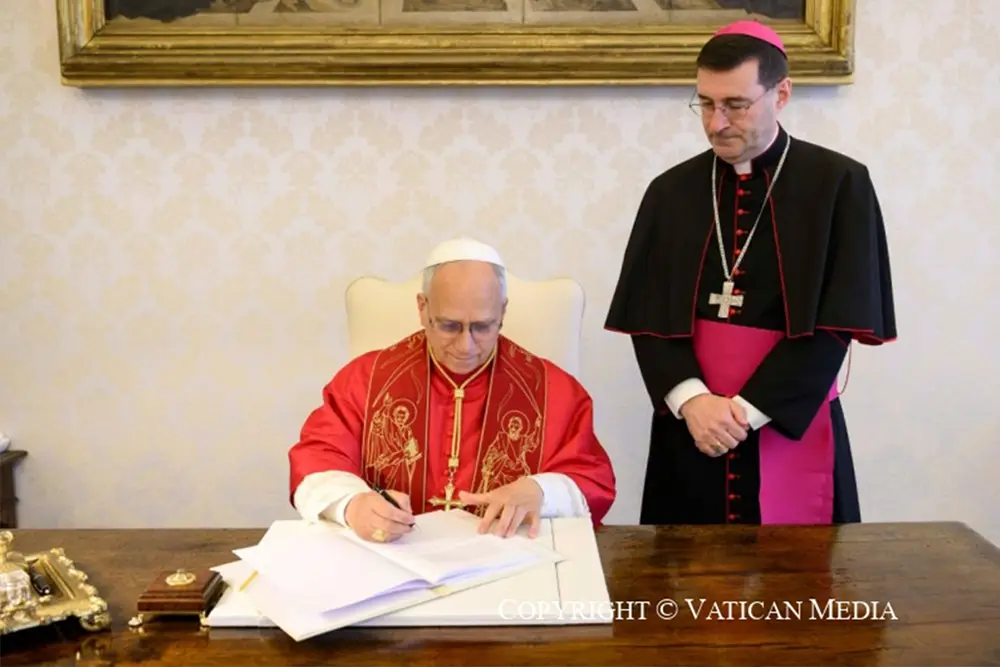
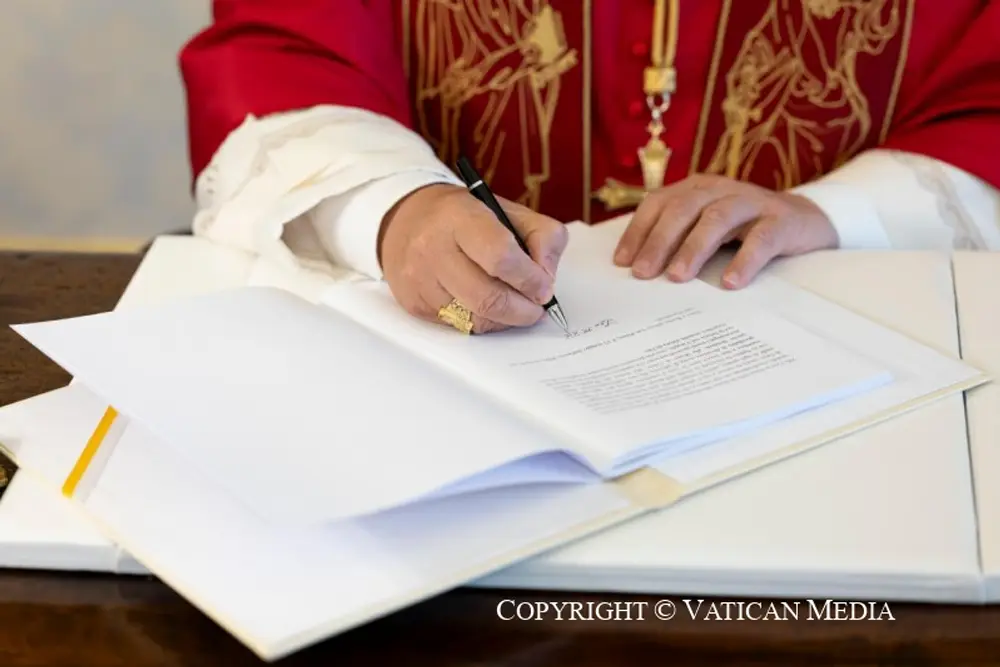
To mark the 135th anniversary of Leo XIII’s prophetic *Rerum novarum*, Pope Leo XIV has published his new encyclical, Magnifica Humanitas (May 15, 2026). A document of profound theological and social significance that addresses the greatest challenge of our era: the protection of the human person in the age of Artificial Intelligence (AI) and runaway digitization.
Drawing inspiration from the biblical image of God who became flesh to shed light on the mystery of humanity, the Holy Father proposes an interpretation of the res novae (the «new realities») from the perspective of faith, reason, and shared responsibility.
In the face of the aspiration to achieve a «superhuman» state through technical and biological control, the Encyclical contrasts this with the greatness of grace and the Incarnation: true transcendence does not consist in overcoming our biological limits through technological force, but in embracing the transcendent dignity of every person as the image of the Triune God.
The Pope emphasizes that technologies must always be oriented toward the common good and subordinate to human moral responsibility. Crucial decisions that affect life, justice, or peace cannot be blindly delegated to algorithms devoid of heart and conscience.
Truth and Communication: In a hyperconnected ecosystem vulnerable to manipulation and misinformation, the truth must be safeguarded as a common good essential to the health of democracies. Leo XIV calls for a genuine «ecology of communication» and an educational alliance.
The Dignity of Work: In the face of the specter of technological unemployment and automation, the text reaffirms that work is not merely a factor of production, but an indispensable path to personal fulfillment and participation in creation.
Freedom vs. Control: The encyclical denounces «new forms of digital slavery,» screen addiction, and the dynamics of commodification and social control that ensnare young people and families.
The Tower of Babel: It represents humanity’s claim to self-sufficiency, the pursuit of ideological and technological uniformity, and the pride of wanting to reach heaven without God—all of which inevitably lead to a breakdown in communication and social collapse.
The Reconstruction of Jerusalem (Nehemiah): It is a model of shared responsibility, communion in diversity, intergenerational dialogue, and mutual effort. Rather than imposing from above, it is about rebuilding «bonds before stones,» placing God and our neighbors at the center.
This involves «dismantling the rhetoric,» realistically acknowledging the perspective and suffering of conflict victims, and promoting comprehensive disarmament guided by justice and peaceful dialogue among peoples.
*Magnifica Humanitas* concludes by turning our gaze toward Mary’s Magnificat and the contemplation of the Incarnate Word. Leo XIV reminds us that technology is meant to serve the person, and not for the person to submit to technology. The challenge facing our generation is to avoid losing our soul in the age of algorithms and to build, together, a genuinely human and fraternal society.
Mr. Ramiro Pellitero Iglesias, professor emeritus of Pastoral Theology at the School of Theology at the University of Navarra.
Published in Church and new evangelization.
 carf@fundacioncarf.orgLandline: +34 914 029 082Mobile: +34 638 078 51145 Conde de Peñalver Street.