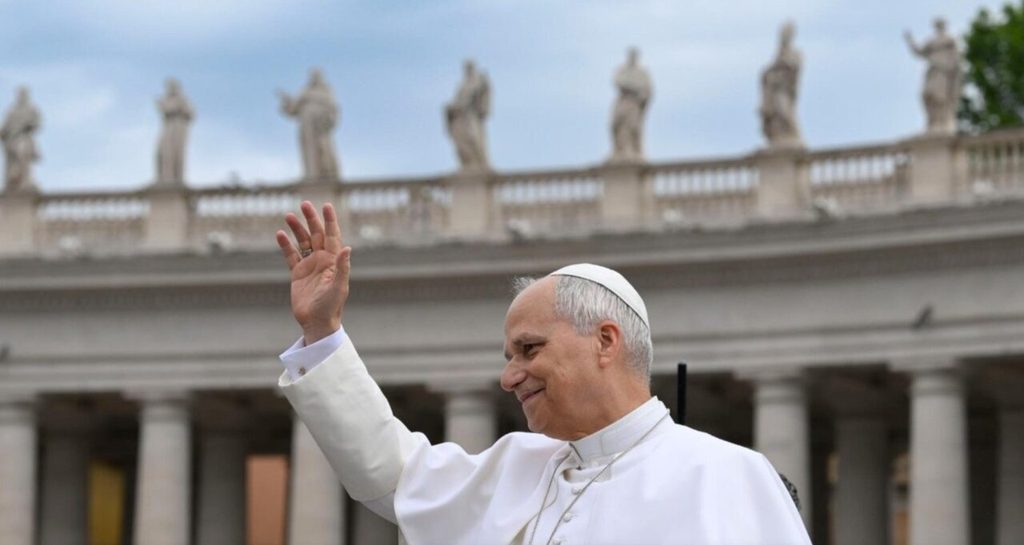
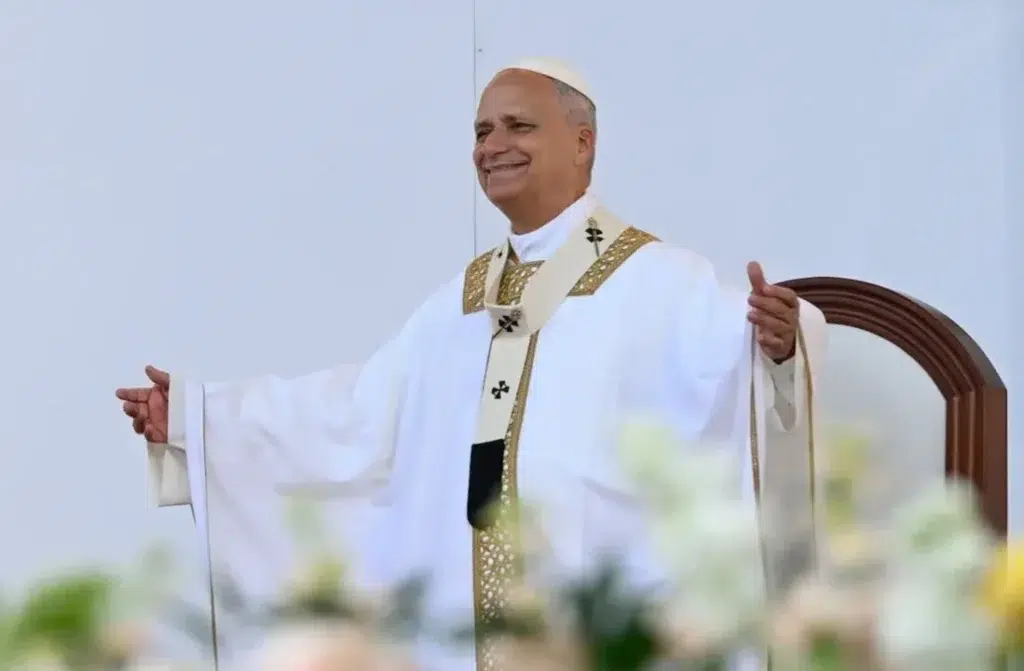
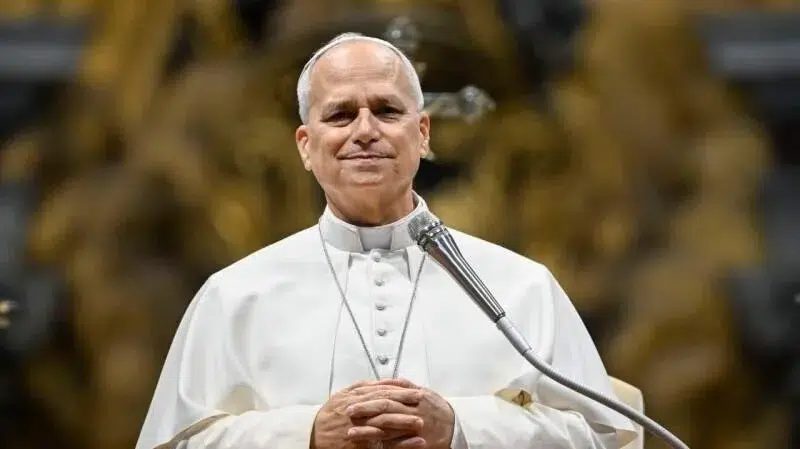
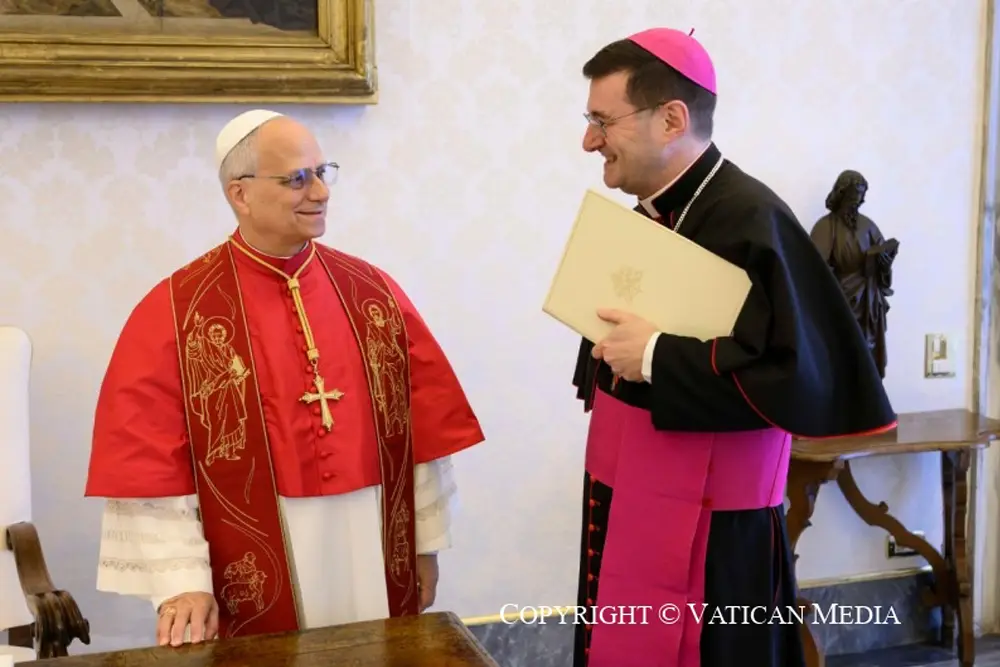
Sixty years after the promulgation of the historic conciliar declaration on the Church's relations with non-Christian religions, the Holy See offers a document of theological and pedagogical depth, which reviews the legacy of "Nostra aetate", assesses the challenges of the present and charts the future coordinates of interreligious dialogue.
The spark of a silent revolution
On October 28, 1965, amidst the fervor of the Second Vatican Council, the Catholic Church made public the Declaration Nostra aetate «"On the relations of the Church with non-Christian religions." That brief but extremely bold text marked an irreversible shift by stating that the Church "rejects nothing that is true and holy in these religions" (NA 2).
Sixty years later, the Dicasteries for the Doctrine of the Faith, for Promoting Christian Unity, and for Interreligious Dialogue have jointly published the commemorative note "A Path of Hope." The document, approved by the Pope Leo XIV Following his audience with the prefects and secretaries of the three dicasteries, he presents himself not as a bureaucratic assessment, but as a living and urgent manifesto for a planet threatened by polarization, identity retreat and the aftermath of war.
Jewish roots and the essential memory of the Holocaust
The Note recalls with journalistic and historiographical precision that Nostra aetate It was not born as an academic exercise, but as a direct response to the atrocious consequences of antisemitism and the Holocaust. The document recounts how Saint John XXIII, impacted by his providential encounter with the Jewish historian Jules Isaac and thanks to the mediation of Maria Vingiani, commissioned Cardinal Augustin Bea to write a text intended to heal relations between the Church and the Jewish people.
In its theological development, the Note emphasizes that Jesus was Jewish and never stopped being so.. Citing 20th-century theology, he affirms that in the Incarnation the Word became "Jewish flesh." Therefore, Jewish-Christian dialogue is not a diplomatic option or a secondary practice, but an intrinsic element for the Church to understand its own identity, and an essential component of its mission.
God's covenant with the Jewish people is irrevocable(cf. Rom 11:29). At the same time, the text maintains the confession of Christ as the only Redeemer. It clarifies that, therefore, this does not imply supporting two parallel paths to salvation, but rather recognizing that Jewish religiosity as lived today remains an active value that enriches Christians. «What Jesus contributed to Christianity as a Jewish heritage forms part of the theological structure of Christianity itself» (A path of hope, 11).
The document also renews its condemnation of antisemitism and points to the memory of the Holocaust as a permanent warning against the danger of racial and religious hatred.
Mr. Ramiro Pellitero Iglesias, professor emeritus of Pastoral Theology at the School of Theology at the University of Navarra.
Published in Church and new evangelization.
Dialogue as a path to friendship and peace
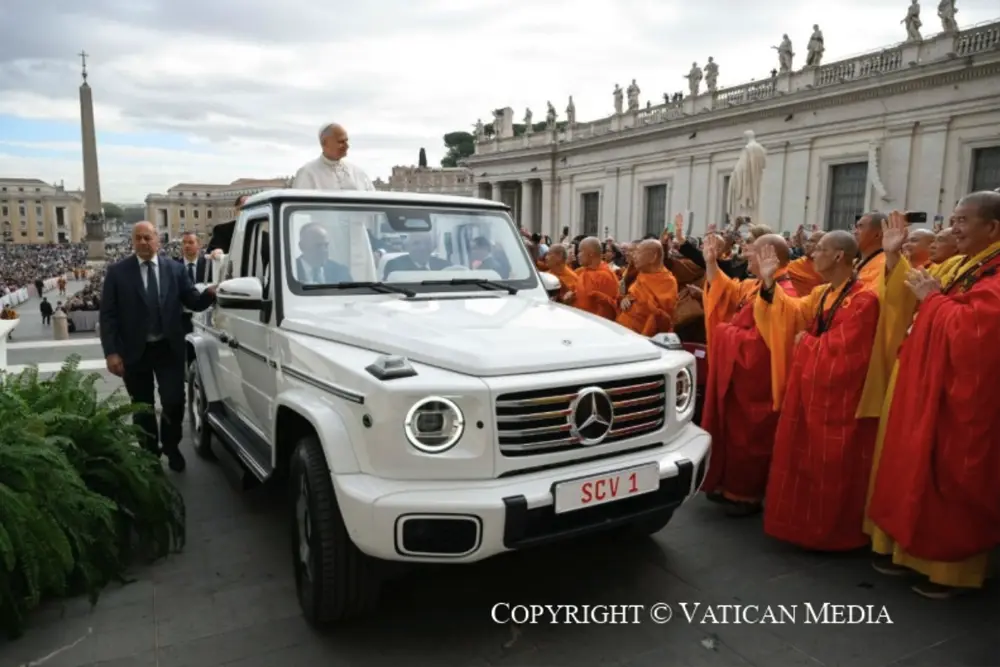
The recent teachings of Pope Leo XIV invite us to delve deeper into this culture of encounter. In his meeting with representatives of different religious traditions, held in Metz on September 28, 2016, he reminded us that dialogue does not mean renouncing one's own identity, but rather living it with openness and respect for those who are different.
For the Pope, interreligious dialogue has a specific purpose: to foster friendship, peace, and the recognition of the dignity of every person. In a world marked by conflict and division, the various religious traditions are called to contribute together to a culture that rejects any use of faith to justify violence.
This perspective directly links to the spirit of Nostra aetate and with the recent Note A path of hope, which encourages us to continue building bridges of knowledge, respect and collaboration among believers.
The spirit of Nostra aetate It continues to illuminate the path of the Church. The Church recognizes that all religions can reflect "a glimmer of that Truth which enlightens all men" (n. 2) and seek answers to the great mysteries of human existence, so dialogue must be not only intellectual, but profoundly spiritual.
The Declaration invites all Catholics—bishops, clergy, consecrated persons and lay faithful—to participate sincerely in dialogue and collaboration with the followers of other religions, recognizing and promoting all that is good, true and holy in their traditions (cf. ibid.This is necessary today in practically every city in the world where, due to human mobility, our spiritual and cultural diversities are called to meet and live together fraternally.
Nostra aetate It reminds us that true dialogue is rooted in love, the only foundation of peace, justice and reconciliation, while firmly rejecting all forms of discrimination or persecution, affirming the equal dignity of every human being (cf. NA, 5).
Jesus and the Samaritan woman: dialogue begins with listening
The Gospel offers a particularly significant image for understanding the dialogue between people of different religious traditions: the encounter of Jesus with the Samaritan woman.
In his catechesis on Nostra aetate, Leo XIV presented this episode as an example of dialogue based on openness, sincere listening, and recognition of the other. Jesus transcends cultural and religious barriers to encounter a specific person.
From this perspective, interreligious dialogue is not just about finding common ground. It also involves learning to listen, getting to know the other, and recognizing what unites us without hiding our differences.
Sixty years later Nostra aetate, This attitude remains an invitation to build relationships based on respect, friendship, and the shared search for truth.
Table of Contents
In 2025, seminarians and diocesan priests from 85 countries were trained.
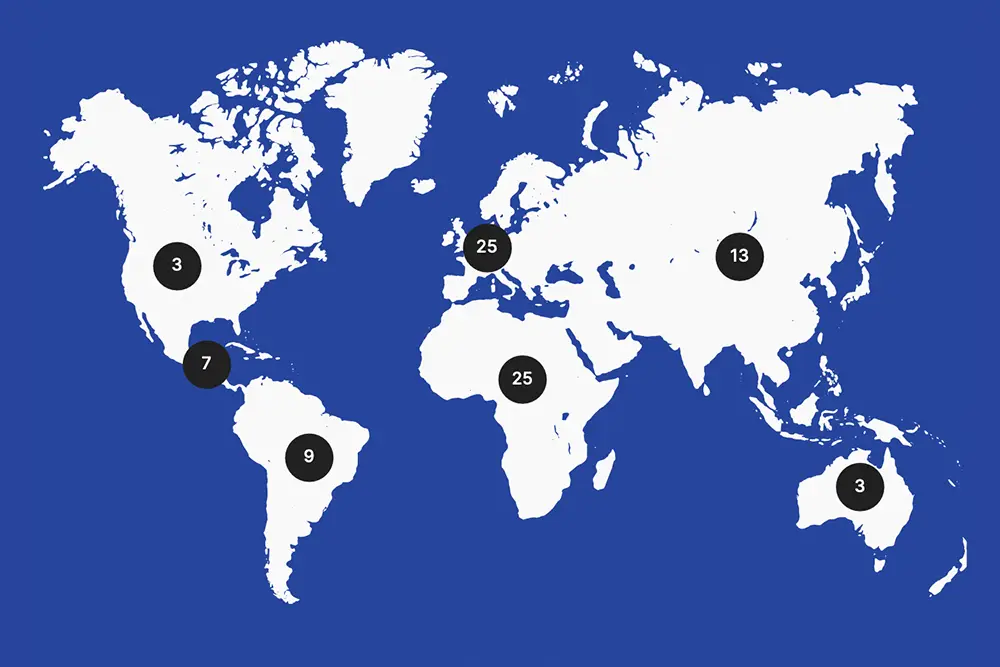
The CARF Foundation recently made public its data 2025 Report, And there is one figure that stands out above the rest: the seminarians, diocesan priests, religious men and women, whose training was financed by the institution last year in Rome and Pamplona, came from 85 countries on five continents.
«"These students, from 85 countries and more than 1,200 dioceses, are proof that the Church is a universal family that knows no borders," summarizes Fernando Martí Scharfhausen, president of the Foundation, in the letter that introduces the report.
Behind that figure is the work that the CARF Foundation (Roman Academic Center Foundation) has been carrying out for more than three decades: to finance the academic, human, pastoral and spiritual formation of seminarians and diocesan priests, by religious men and women that, without that help, they would not be able to afford their studies in the Pontifical University of the Holy Cross, in Rome, or in the Ecclesiastical Faculties of the University of Navarrein Pamplona.
That vocation should not depend on place of birth
The CARF Foundation, legally established on February 14, 1989 (although it has been working since 1984), is based on a simple conviction: The quality of a priest's formation cannot depend on whether his diocese of origin is rich or poor.. That is why it financially supports the studies of seminarians, diocesan priests and religious men and women from any country, so that they can complete a comprehensive formation –academic, human, pastoral and spiritual– without money being the reason why a vocation does not prosper.
Each study aid contains a bishop who has placed his trust in the Foundation –more than 1,200 bishops and 350 generals of religious orders from 130 countries do so– and also a young man who, thanks to that help, can prepare to return to his homeland and exercise his priesthood there with solidity.
And that trust is sustained, year after year, thanks to the generosity of benefactors, Partners and friends who understand that helping to train a good priest is helping thousands of people whom that priest will accompany throughout their lives.
Universality of the Church, country by country
Review where the students of the CARF Foundation come from It is also about reviewing the geography of faith in the world. In 2025, Africa and Europe will be the two continents with the greatest diversity of countries of origin, with 25 each; followed by the Americas, encompassing its three regions—South, Central, and North—then Asia, and finally Oceania. There is no single profile among those receiving this aid: there are as many stories as there are cultures, languages, and ecclesial realities.
In Africa
The beneficiaries come from countries such as Angola, Benin, Cameroon, Ivory Coast, Ghana, Kenya, Nigeria, Tanzania or Uganda, among many others. This is the case of Gonçalves Cacoma Cahinga, An Angolan seminarian who discovered his vocation at the age of eight. "My heart burned and I dreamed of being a catechist," he recalls with emotion.
Today, along with a classmate, he is one of the first Angolan seminarians to study at the Bidasoa International Seminary in Pamplona. «In my diocese, although there are quite a few Catholics, there are few priests and few parishes. That is why I am deeply grateful to all the benefactors of the CARF Foundation for the opportunity they are giving me. For me, being in Bidasoa is a great enrichment, because it allows me to discover the greatness of the universal Church,» he says.
In Europe
In the historical cradle of the Church, the Foundation continues to help train seminarians and diocesan priests in countries where faith coexists with very different contexts, from west to east of the continent.
The Polish priestKrzysztof Patejuk, assisted by the CARF Foundationto study Canon Law in Pamplona. He summarizes it thus: «Thanks to your support, I was able to experience an unforgettable period of study in Pamplona, an encounter with the Church and spiritual growth, especially through the formation offered by Opus Dei. I know that this experience has been key to my priesthood, and without you, I would not be the same priest I am today.».
In Asia
Where in many countries Catholics are a minority, Each vocation carries a special weight. Xudong Feng, Pedro Mari, whose Christian name is Pedro Mari, is a Chinese seminarian studying in Pamplona thanks to the CARF Foundation. He recalls with emotion how his vocation was born in that land steeped in fidelity: "My grandfather and my parents taught me to go to Mass every day from childhood. It wasn't an obligation, it was an inheritance. That's how I began to feel that I wanted to be a priest.".
And he is clear about his gratitude and goals: «I am here thanks to many people who believe in our vocation. Thanks to the CARF Foundation, I can receive proper training to serve better. I know that my journey doesn’t end in Navarre: it’s just beginning. I want to return to my town, to my diocese, and give back what I have received.».
In America
The Foundation supports vocations that come from From Mexico to Argentina, passing through Central America and the Caribbean. Arthur Caesar, A Brazilian seminarian from the Archdiocese of São Sebastião of Rio de Janeiro, studies in Bidasoa thanks to the support of the benefactors, partners and friends of the CARF Foundation.
«"The people aren't looking for event organizers, but for closeness, sacraments, and formation. The priest's first calling is to holiness; to be an example and companion in the search for Christ. And I felt a peace that confirmed to me that it was God who was calling me," he recounts about his vocation.
In 2025, the financial aid reached students from 85 countries.
In Oceania
The presence is smaller (Australia, New Zealand and Papua New Guinea), but significant. Samuel Pitcaithly, assisted by the CARF Foundation and the ninth New Zealand seminarian to study at the Pontifical University of the Holy Cross in its 40-year history. He summarizes his story this way: «Looking back today, I see clearly how God has guided me step by step. Today I have just finished my first year of studies for the priesthood at the Pontifical University of the Holy Cross. It is a blessing to be able to study in the heart of the Church, surrounded by seminarians and professors from all over the world, all seeking holiness.».
He adds: «I am deeply grateful for everything you do to make this journey possible for me and so many fellow seminarians and priests around the world. I keep you very much in my prayers and, God willing, one day I will be able to offer Holy Mass for you and your intentions. May God and Our Blessed Mother bless you abundantly!».
The same vocation, the same family
What these stories have in common is not the country, but a vocation of service to the Church. Seminarians, diocesan priests, religious men and women from very different backgrounds can access, thanks to the support of the benefactors, partners and friends of the CARF Foundation, a comprehensive education without the lack of economic resources being an obstacle.
This is, in essence, the reason for the Foundation's existence since its inception: to promote an excellent intellectual, human, and spiritual formation for seminarians, diocesan priests, and religious men and women from any country in the world, without their economic capacity being an impediment.
During their formative years, students from very different countries and cultures share studies and life together in Rome and Pamplona. This experience makes visible the "universal family that knows no borders" that the president of the CARF Foundation speaks of.
Sustaining this work is possible thanks to those who, year after year, choose to be part of this universal family as benefactors. If you would like to help ensure that the next Annual Report includes even more countries, You can collaborate with the CARF Foundation here.
The importance of priestly formation
The formation of a priest does not end with his ordination. Saint John Paul II emphasized the importance of accompanying and forming those who receive the call to the priesthood., both during his seminary years and throughout his entire ministry. Pope Leo XIV has also reiterated this since the beginning of his pontificate.
In his apostolic exhortation Pastores dabo vobis, In his letter published in 1992, Saint John Paul II emphasized that the formation of future priests must encompass all dimensions of the person: human, spiritual, intellectual and pastoral. For the Polish pope, this preparation is one of the most important tasks for the future of evangelization.
The document also notes that The seminar should be a true space for training and growth., where those preparing for the priesthood can deepen their relationship with Christ and acquire the necessary tools to serve the people entrusted to them. Formation, therefore, consists not only of acquiring knowledge, but also of preparing to live and communicate the charity of Christ, the Good Shepherd.
This vision connects directly with the work that the CARF Foundation It has been developing for decades: facilitating that seminarians, diocesan priests and religious from different parts of the world can access a comprehensive formation and then return to their dioceses and communities to put everything they have learned at the service of others.
For Pope Leo X: «Formation is a path of relationship. Becoming friends of Christ means being formed in relationship, not just in skills.» In his meeting with the Dicastery for the Clergy on June 26, 2025, addressing formators, priests, and seminarians, Leo XIV recalled that priestly formation It cannot be reduced to the acquisition of pastoral knowledge or skills.
At its core is a personal relationship with Christ. The seminary is the place where that friendship is learned and cultivated: a familiarity with the Lord that commits one's whole life of the future priest, his heart, his intelligence and his freedom, and gradually shapes him in the image of the Good Shepherd.
Forming priests, therefore, does not consist only in transmitting content, but in accompanying a journey of life with Christ in order to be Christ himself for others, Pope Leo emphasizes.
«The formation of future priests […] is considered by the Church to be one of the most important tasks for the future of the evangelization of humanity.» Saint John Paul II, Pastores dabo vobis, 2.
More than thirty years after those words of Saint John Paul II, priestly formation continues to be an essential mission for the Church. 2025 Report The CARF Foundation shows how this task becomes a reality every year through hundreds of stories and vocations from all over the world.
Table of Contents
Prayer for peace in uncertain times
We live in times that can generate uncertainty and concern. The wars in Ukraine, Gaza, Congo, the Sahel, Sudan, Yemen, Somalia, Ethiopia, Myanmar, and the drug-related violence in Mexico, Haiti, and Ecuador continue to cause suffering among the civilian population, displacement, and a need for humanitarian aid.
While other conflicts receive far less international attention, the United Nations notes that by 2026 hundreds of millions of people will need urgent humanitarian assistance as a result of conflicts and other crises.
Given this reality, a question may arise: What can a Christian do when he feels that the world's problems are too big for him?
A first response is to pray. Not to ignore what is happening, but to place those who suffer before God, to ask for peace and to let that prayer also transform our way of seeing and acting.
Praying for peace means not being indifferent.
Christian prayer It often begins with a simple request: Lord, grant us peace..
When we pray for those living through war, for families who have lost their homes, for children growing up amidst violence, for those who have had to flee their countries, or for those suffering persecution, we stop viewing suffering as a distant reality. Prayer helps us remember that behind every conflict are real people.
The Pope Leo XIV Throughout 2026, he has repeatedly called for prayers for peace. In August, he asked for prayers for those suffering in Sudan and for the victims of violence in Ukraine and Russia. In September, he again called for prayers for peace in the face of persistent conflicts and violence in various parts of the world.
From October 1st to 7th, 2026, a week of prayer for peace and unity has also been called, with initiatives taking place in parishes, schools, communities, and families in various countries. The initiative culminates on October 7th, the feast of Our Lady of the Rosary.
Prayer for peace knows no borders. We can pray for those we know and for those we will never know; for the victims of wars that make the headlines and for those who suffer in forgotten conflicts.
The antidote for uncertain times: prayer
Sometimes we may think that prayer is insufficient in the face of the magnitude of a war or a humanitarian crisis. However, prayer is not meant to replace the responsibilities of individuals, institutions, or states. It is something else entirely: it places us before God and helps us not to become accustomed to suffering.
During the prayer vigil for peace held in April 2026, Leo XIV affirmed that prayer is not a refuge to evade our responsibilities nor a way to avoid the pain caused by injustice. On the contrary, he presented it as a response to violence and a way to keep hope alive.
St. Josemaría He expressed the importance of prayer with these words: «Like the soldier on guard duty, so must we be at the door of God our Lord: and that is prayer» (Saint Josemaría, The Forge, 73).
In this sense, prayer is about remaining awake to God and also to what is happening around us. It is not simply about asking for problems to disappear. It is also about learning to see the world through God's eyes. We can pray for:
The victims of wars and their families.
Children living in conflict zones.
Those who have had to leave their homes.
Persecuted Christians.
Those who work for peace and reconciliation.
Those who have political responsibilities and must make difficult decisions.
Those who suffer in conflicts that barely appear in the news.
Conversion of the hearts of those who perpetrate violence.
And we can also pray for ourselves: so that we do not fall into hatred, indifference or hopelessness.
Saint Josemaría reminded us that peace is not built solely on the great international stage. It also begins in the heart of each person and extends to the family, to work, and to society.
As he recalls in another of his texts: «The Lord wants his children along all the honest paths of the earth, sowing the seeds of understanding, forgiveness, coexistence, charity, and peace. —What are you doing?» (Saint Josemaría, Forge 373). It is a particularly relevant question.
We are all in the same fight
Saint Paul uses the image of the body to explain communion among Christians: when one member suffers, all suffer with it.
This idea takes on special force when we think about the people living under the bombs, those who have lost family members, the displaced, and those waiting for humanitarian aid.
The United Nations continues to identify Ukraine, Gaza, and Sudan as places where civilian populations continue to suffer the consequences of war and violence. But there are other, less visible crises as well. That is why, Praying for peace means learning to look beyond the headlines from the newspapers.
We may feel powerless in the face of events happening thousands of miles away. However, we can always do something: pray, stay informed responsibly, help those around us, comfort those who are suffering, and avoid fueling hatred or dehumanization. Peace also begins in the way we speak, listen, and treat others.
A peace that is "disarmed and disarming"«
Leo XIV's message for the 2026 World Day of Peace is precisely entitled «"Peace be with you all: towards a 'disarmed and disarming' peace"“.
In it, the Pope recalls the need to overcome the logic that presents war as inevitable and points to dialogue, diplomacy, forgiveness, and the protection of civilians as paths to building peace. He also insists that prayer nourishes the commitment to peace. This perspective helps us understand what it means to pray for peace.
It's not about closing our eyes to reality, but about opening them wider. Nor is it about remaining on the sidelines, but about asking God to change hearts and, at the same time, asking ourselves what we can do.
We must try not to believe that prayer allows us to control events, and instead trust in God even when we do not understand what is happening.
How to pray for peace
There is no single way to do it. We can dedicate a few minutes each day to praying for peace. We can pray the Rosary for those who are suffering. We can offer Holy Mass for those living through war. We can go before the Blessed Sacrament and place before God the situations that concern us most.
We can also turn a moving news story into a prayer. When we read that a family has lost their home, we can pause for a few seconds and pray for them.
When we learn of a new escalation of violence, we can pray for those who bear responsibility and for those working to reach agreements. When we discover a forgotten conflict, we can include it in our prayers. And when we are at a loss for words, we should simply remain before God.
Because, as Saint Josemaría taught: «Prayer is not a matter of speaking or feeling, but of loving. And one loves by striving to say something to the Lord, even if nothing is actually said.»Saint Josemaría, Furrow, 464).
Pray and work for peace
Prayer does not necessarily end when the moment of reflection is over. It can continue in our decisions, in our words, and in the way we relate to others.
We can be peacemakers in our families, at work, among our friends, and in our society. We can learn to listen before we judge, to forgive, to ask for forgiveness, to reject violence, and to no longer contribute to the spread of hatred.
International peace also needs people capable of building peace in their own communities. Therefore, in the face of uncertainty, Christians are called to avoid being paralyzed by fear.
He is called to Pray, wait, and act. To place the suffering of the world before God and, at the same time, to ask oneself every day: «"Lord, what can I do to bring a little peace to where I am?"».
Table of Contents
«"Love is stronger than pornography"»
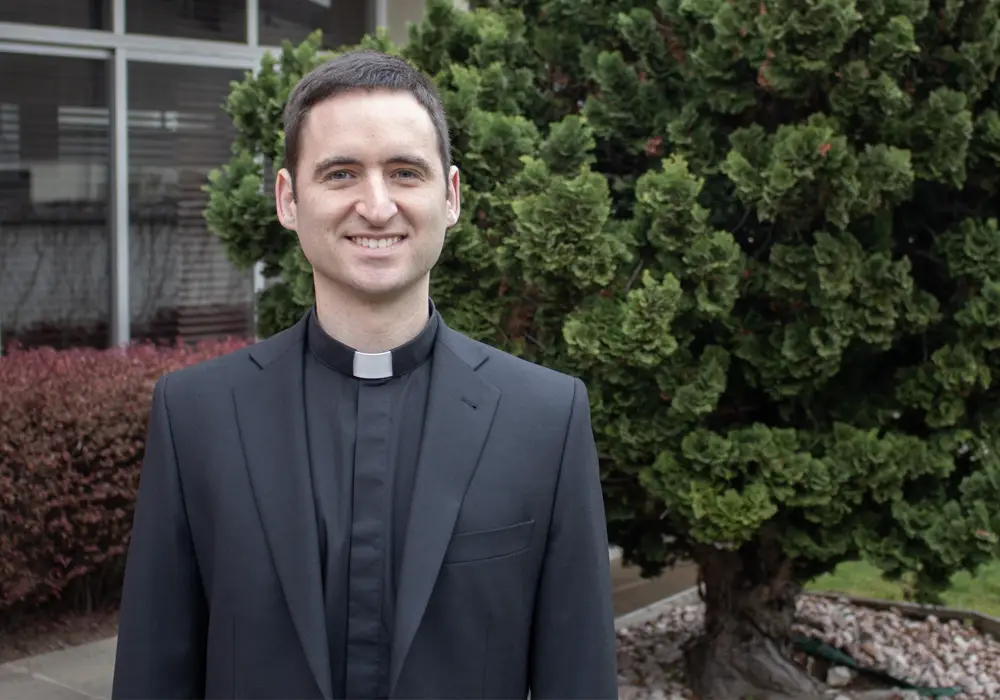
In response to this crisis, the Chilean priest Juan Ignacio Izquierdo Hübner, chaplain of the Tabancura school, has published New eyes. Love is stronger than pornography. (Semillas Editions, 2025), a book aimed especially at young people and born from his years of conversation and pastoral accompaniment. He is a lawyer, theologian, and holds a doctorate in Theology from the University of Navarra.
But New eyes It is not merely an essay on the dangers of pornography: it is also a literary work. Through a theatrical structure, with characters like the angel Lumen and the demon Grimson, humor, dialogue, and a plot that places the reader before a veritable "night tribunal," Father Juan Ignacio attempts to address a complex problem with an engaging and at times even humorous style.
In this interview, he explains why he believes that the fight against pornography is also a quest for freedom, love, and the promotion of the most genuine humanity.
New eyes. Love is stronger than pornography.
—Why did you decide to write a book about pornography? As I prepared for priestly ordination, I came to understand that an important part of my work would consist of talking to young people about their difficulties with cell phones, social media and pornography. I remember a Spanish priest telling us at the seminary that he had arrived at the school wanting to talk to the students about the Holy Trinity, but ended up dedicating a good part of the conversations to helping them manage their cell phones better.
That made me realize there was a very specific pastoral need here. I decided to study the issue and write a book that could be truly helpful for a young person struggling with pornography. My dream was simple: that someone would finish it thinking, "Now I have more resources to get out of this.".
—What have you discovered by talking to young people? We should dedicate much more time to them. They need us more than ever. Young people crave affection, they need to find trustworthy people to share their innermost thoughts with, they crave companionship, and they have an enormous desire to love and be loved. However, pornography offers immediate gratification, but it ends up distorting precisely what the person was seeking. The result is confusion and, sometimes, discouragement.
I've also discovered that many young people aren't as comfortable with screens as we might think. Some want to quit social media, regain their concentration, or break free from habits they feel are wasting their time. The problem is, they don't always have the energy to do it alone. That's why they need more help from adults.
—Why the title of New eyes? Because I believe that overcoming pornography isn't the end of the story, but the beginning. When a person gets used to seeing the world through pornography, they end up losing sensitivity to many beautiful things in reality.
That's why I didn't want to write simply a book "against pornography." I wanted to talk about something much bigger: about recovering the ability to see. To look at another person and discover that they are not an object. To look at one's own life and discover that it is worthwhile. To look at nature, friendship, art, family, faith. In short, to learn to see the world with new eyes.
Inability to establish relationships
—Is pornography solely a moral problem? It's a human problem. It has consequences for freedom, emotions, the ability to form relationships, and how we understand others. Of course, there's a moral dimension (understood as the art of living well), because we're talking about how we treat people and what we do with our freedom.
But it's not about reducing everything to the caricature of censorship or prohibition; rather, it's up to us to help the person understand what they are looking for, what is happening to them, and where they want to take their life to be happy.
—What role does the mobile phone play in this problem? Mobile phones have radically changed the situation. Before, accessing certain content required actively searching for it. Today, it can appear in a child's pocket by chance. And there's another problem: mobile phones not only allow access to endless pornography, but they can also amplify loneliness, comparison, boredom, and the constant search for stimulation.
That's why I believe the problem can't be addressed solely from the perspective of pornography. We must ask ourselves what kind of relationship we are teaching our young people to have with technology.
—In Spain, the first contact with pornography occurs around the age of nine to eleven. What does it mean that a child can encounter this content at that age? This means we're asking a child to process a reality for which they don't yet have the necessary emotional or intellectual tools. And in one out of three cases, the first contact occurs by chance. This means that it's not enough to tell a child "don't look for pornography," because they can encounter it without looking for it.
That's why prevention begins long before a problem arises. It's urgent to protect children and, at the same time, educate them so they can recognize what harms them and ask their parents for help when they encounter something that confuses them.
Limits on mobile
—What should parents do? First, don't be afraid to talk. Sometimes parents avoid these conversations because they feel uncomfortable. But children need to know they can come to their parents precisely when they feel embarrassed about something.
The second thing is to set boundaries. Love also knows how to say no. Giving a smartphone Giving a child unlimited internet access and expecting them to manage something many adults struggle with is asking too much. I'm sorry, but I find it cruel.
And the third thing is to offer alternatives. It's not enough to remove a screen: you have to fill that space with friendship, sports, reading, music, conversation, nature, family, prayer. Freedom needs something good to turn toward.
—How do you see the Church's current discourse on these issues? I feel very close to the concerns that Pope Leo XIV is expressing about new technologies. He has insisted that we need an educational, ethical, and responsible response, and that technology must be at the service of the human person.
He also pointed out that parents and educators need collaborative networks to support young people. Therefore, the Church is trying to accompany families so they can discern and make good decisions.
Follow Pope Leo
—Do you feel, in some way, that you are following in the footsteps of Pope Leo? Yes, because I share a fundamental conviction: we must put people at the center. Technology is an extraordinary tool, but it ceases to be a tool when it replaces us. And Pope Leo XIII has spoken very clearly about the need to protect children and adolescents from early, unlimited, and unsupervised digital access.
—So the answer is to ban? The answer is to educate, guide, and, when necessary, set limits. Along with that, it will sometimes be necessary to prohibit certain things at certain ages. But an education based solely on prohibitions is inadequate, because we want to develop people capable of choosing what is right even when no one is watching.
That's why I like the word "accompaniment" so much. A young person struggling with pornography doesn't just need someone to tell them they're doing something wrong. They need someone to sit with them, listen without being shocked, and help them discover that they can live differently.
—And what can someone do who is already trapped in this habit? The first thing is not to despair. On the contrary, be encouraged to fight! Shame can be a very bad ally when it turns into hopelessness. Then, ask for help so that someone (ideally a parent) can accompany the child in their challenge of discovering their most vulnerable moments, modifying certain habits, reducing opportunities to stumble, and taking refuge in God's mercy.
God at the center
—What place does God occupy in this process? A central place. The Christian life consists of discovering a love that compensates for our weaknesses. When a person discovers that they have been created by God, that they possess immense dignity, and that they are called to love, their perspective changes. Chastity, properly understood, is a way of learning to love. And when one discovers this, one begins to ask oneself something that interests everyone: "How can I love better?".
—What message would you give to a young person who feels they cannot get out of pornography? I would tell him not to identify with his problem. You are not "an addict," nor "a lost cause." You are a person who is struggling, like everyone else, and who can ask for help.
I would also tell him not to settle for just surviving. There's a much more beautiful life on the other side of this struggle. When you begin to regain your freedom, you discover that the world has many more colors than you saw before.
Fearless
—And what message would you give to parents? They shouldn't be afraid. Children need adults who are willing to support them, even though we adults don't have all the answers either. We have a task ahead of us that we can't completely delegate to schools, technology platforms, or the government. We need to work together to reclaim the educational role of families. And we need to do it with humility, while we continue learning.
Regaining hope
—What would you like to happen after someone reads New eyes? I would like the reader to experience a surge of hope. That a young person might think, "I can be free." That a parent might say, "Now I know better how to talk to my child.".
Furthermore, we all need to understand that this isn't just a battle against an industry or a screen. It's a fight for something far more valuable: our ability to see others as people, to experience genuine relationships, and to love as we truly are.
Table of Contents
Leo XIV: "God dreams of us"«
His questions found in Pope Leo XIV an answer that points to the very heart of the Christian faith:«God does not remain indifferent to human life, but goes out to meet people, accompanies them, and opens up a horizon of hope.".
This is how Ernesto Juliá explains it in a series of three articles dedicated to the words of Leo XIV. In them appears the same idea that runs through the different situations: God loves man as he is, but always invites him to grow, to rise up, to reconcile and to live a new life.
"God loves you as you are, but dreams of you better."
«"Dear friends, I invite you to continue dreaming God's dream. To each of you I say: God loves you as you are, but He dreams of you as you are! The Lord allows us all to start anew, for being human and being Christian does not consist of never making mistakes, but in growing in the capacity to convert, repent, amend our ways, and above all, to reconcile and forgive.".
These words of Leo XIV in a Barcelona prison have resonated around the world. And they will continue to do so. A God who dreams of humanity, who accompanies humanity in its sufferings and joys. And who never ceases to love this creature of his, which is each one of us, “his image and likeness.” God who has revealed himself to the world in the person of Jesus Christ, true God and true man.
And this divine reality was very well expressed in the meeting of Pope Leo XIV with a man and two women in the Olympic Stadium of Barcelona:
«Holy Father, we grow up hearing that the only goal in life is to produce, to be successful, and to cultivate our image. I tried it myself, but I only found immense emptiness. Seeking answers, my life took a turn, and this past Easter I received Baptism. Now that this path is new to me, I ask you: How can we keep our gaze fixed on what truly matters when society pushes us to constantly look at the ground or only at ourselves?»
Created in the “image and likeness” of God, this man, not baptized by his parents, has found himself struggling through life's various stages without finding meaning in his existence. The number of elderly people requesting Baptism each year is increasing in some European countries, including Spain.
Pope Leo XIV's response first opens up the horizon of his life, points out where he will find God, and finally suggests paths to find God.
«"Our desire for truth and happiness needs a broader horizon. And this restlessness is a gift that God The same has given us: we are made to measure for the infinite and therefore, every finite horizon, every step, every conquest, while satisfying us, time itself propels us forward and invites us to continue searching, to search by advancing, but, above all, to search by “descending inwardly”, that is, going into the depths.».
Where can I experience that "opening of horizons"?, we can imagine the newly converted man asking himself.
«"It is within this society that you and so many others have discovered the value of a more human, fuller life, open to encountering God and the joy of faith. This means that, despite the difficulties, the place where God makes himself present and where we must find his traces is always in the reality where we find ourselves.".
And the Holy Father, Leo XIV, ends by suggesting to him the path and the dispositions to share his life fully with God.
«We believe that the Holy Spirit acts and works silently in all situations of life and history, even in those that seem most difficult. But we must cultivate this restlessness and make room for it; as I said, “look within,” trying not to be overwhelmed by external rhythms and temptations, cultivating spaces of silence, perhaps pausing for a few minutes a day to read the Gospel and speak with God, and also trying to make this inner journey together with others, allowing ourselves to be accompanied on ecclesial journeys and engaging with priests, religious, and people who, like us, have embarked on this path.».
The stirring love of God the Father, Son, and Holy Spirit in the heart of this convert reached him at a moment when he stood searching for a Light that would give meaning to his life. Is it possible that this cry of God's Love could be stifled by a conscience shrouded in darkness?.
Leo XIV faced with the pain of suicide
The second person to present her case to Leo XIV is a woman who has struggled with severe depression, which has led her to experience—in her own words—"darkness, isolation, and immeasurable pain. At times, this pain is so overwhelming that the idea of disappearing seems like the only way out. I fought to overcome this illness, silently for years, and one Friday night I lost the battle and tried to take my own life. I am here because God gave me a second chance, and I will be eternally grateful.".
As soon as she finishes describing the profound depression she has experienced and thanking God for this “second chance,” she asks the Pope: «I ask you with all my heart: where can we see God when the darkness is absolute and we can’t go on anymore? How can we trust in God when it seems that nothing, not even ourselves, is worthwhile?»
Leo XIV opens his heart perhaps with the desire that this woman will open hers and discover Christ suffering with her, and encouraging her to rise with Him (the texts are the Pope's words).
«"Faced with the most difficult and painful situations, when God seems absent, we must entrust to Him once again the burdens we carry in our hearts, even shouting to Him, even protesting like Job, certain that somehow He makes Himself present and is near even when He is apparently silent.".
And after recalling the anguish and pain, "the hours of darkness, anguish and pain that Jesus experienced when the hour of his death approached"", duck:
«"At such times, we may instinctively think that God has also abandoned us. But the Cross of Jesus tells us that God does not abandon us, that He continues to be crucified for us in the moment of pain and external loneliness, that He gathers not only our tears, but the cry of our suffering that others do not hear, a cry that Jesus made His own on the Cross, saying: 'My God, my God, why have you forsaken me?'".
The Lord in Gethsemane and on Calvary reveals to us the infinite love He has for us, and teaches us that we will only come to discover the depth of His love if we accompany Him in suffering. If, contemplating Him crucified, offering us redemption from all our sins and stirring our souls to repentance, we offer our pains and sufferings to Him, accompanying Him in carrying His redeeming Cross.
«"In times of pain, at least as far as possible, we must open ourselves to someone who can help us express a simple prayer, who can discreetly accompany us without rushing to explain that pain to us, who can take us by the hand and lead us out of that cry," adds Pope Leo XIV.
That someone is Christ himself. Pope Leo seems to be inviting that woman to discover the Lord's suffering on the Cross, and to unite herself with Him, living His sufferings in Christ, through Christ, with Christ, as the good thief did in a way:
«Dimas fixes his gaze on the One who is about to breathe his last, and raises his spirit to the heights of the Cross. To the heights of God, discovering the splendor of the Resurrection. “Lord, remember me when you come into your Kingdom.” “Today you will be with me in paradise.”».
""Never before on earth has such a brief dialogue been heard, nor will it ever be heard, so full of meaning and immensity, between the Love of God and the misery of man. The encounter on the Cross of the Son of God made man with sinful man, who cries out for his mercy" (With Christ on Calvary, p. 72)
«"These experiences offer a message also to us believers. To the whole Church: we must not spiritualize suffering, superficially attributing it to 'God's will' or some mysterious plan of his, because this risks minimizing that suffering, silencing it, and hurting people. God does not want suffering; he carries it with us and invites us to trust in him perseveringly.".
Does God dream of what Leo XIV wanted to recommend to that woman who, hand in hand with the Blessed Virgin, unites her sorrows and sufferings to those of Christ and thus has the joy of accompanying the Lord in his death on the Cross, and already enjoys the joy of the Resurrection?.
Leo XIV, continue dreaming the dream of God
«"Dear friends, I invite you to continue dreaming God's dream. To each of you I say: God loves you as you are, but He dreams of you as you are! The Lord allows us all to start anew, for being human and being Christian does not consist of never making mistakes, but in growing in the capacity to convert, repent, amend our ways, and above all, to reconcile and forgive.".
These words of Leo XIV in a Barcelona prison have resonated around the world. And they will continue to do so. We included them in the first of these articles, and we repeat them here. A God who dreams of humanity, who accompanies humanity in its sufferings and joys. And who never ceases to love this creature of his, which is each one of us, “made in his image and likeness.” God who has revealed himself to the world in the person of Jesus Christ, true God and true man. “Whoever has seen me has seen the Father” (John 14:9), says the Lord.
«"Good evening, Holy Father. I come from a family in a very humble neighborhood of Barcelona. When I was little, my father tried to kill my mother, and she was saved because a boy intervened and died. My father went to prison, and my mother became addicted to drugs. When I was ten, social services took me into their care and placed me in the San José de la Montaña juvenile detention center. At first, it was difficult because I had built a wall around myself, where I wouldn't let anyone in.".
But little by little, I experienced family love for the first time, and my heart began to open. There, I learned about Jesus, began to pray, and was baptized. But in my teens, I rebelled against God many times. I was invited to a retreat, and there, for the first time, I experienced God's love. But a few months have passed, and I still find it hard to forgive my father. And sometimes I raise my eyes to heaven and ask, "Where were you when I was a child?" Holy Father, how can I forgive my father, who almost left me without a mother? How can I truly reconcile with God?.
Jesus on the Cross gives meaning to suffering
Physical and moral suffering can be found—and indeed we do find it—in each of our lives. From the Cross, Christ gives meaning to all suffering, and nailed to the Cross, Christ will remain forever, until the end of time, so that we may suffer with Him and rise with Him.
Aware that Christ has given meaning to all human suffering, Leo XIV uses the questions to place women in an authentic relationship with God.
«"It is truly a sign of God's grace that this question arises from a past so marked by suffering and that, despite the pain, one has the courage to ask how it is possible to forgive those who have wronged us. (...) We cannot attribute to God what has been entrusted to our responsibility; we cannot imagine that God on high will automatically respond to our needs or miraculously prevent evil from happening.".
"He has endowed us with intelligence and will, he has given us a conscience, he has clothed us with dignity and freedom, and above all he has come to meet us to show us, in his Son Jesus Christ, the way to follow so that our life may be fully human and justice, peace and fraternity may reign in our society," adds Pope Leo.
Jesus Christ came to earth to redeem us from sin, and to give us the grace – by living with us – so that we can live asking for forgiveness and forgiving those we offend or who offend us.
«"All of this helps us to enter more and more into the dynamic of forgiveness and to reconcile ourselves with God and with others. We are forgiven sinners, we are at peace and we are capable of forgiving. Capable of being bearers of peace.".
In his responses to these three young people, the Holy Father offered a very personal glimpse into the practice of the three theological virtues that, in a way, express humanity's relationship with God—Faith, Hope, and Charity. Living them day after day, even when it is difficult, allows us to discover God's love for us. A love that He wants us to share with all our neighbors.
Table of Contents
Ernesto Juliá, (ernesto.julia@gmail.com) | Previously published in Religion Confidential.
Rereading the encyclical Magnifica humanitas
With summer in between, enough time has passed to allow for a calm reading of Leo XIV's first encyclical: Magnifica humanitas (May 15, 2026). A text whose subject is not artificial intelligence, but, as the subtitle states, "the protection of the human person in a time of artificial intelligence.".
At the same time, it outlines how Christians should contribute to building a more humane and fraternal city. The prelude and the finale frame the symphonies. It is worth paying special attention to the beginning and the end of the encyclical—even though they are brief—in order to fully grasp the content of its message.
The Prelude: Babel or Jerusalem?
During the time of Leo XIII What was new was the Industrial Revolution, with its advances and risks. Today, the Pope says, we need to engage in “shared discernment” that will help us, in this “turning point in history,” to answer some fundamental questions: “Where are we going? What goal do we wish to pursue? What direction should we choose as a human community and as nations?” (no. 6).
To build responsibly in our time, the Pope proposes two biblical “images”: the building of the Tower of Babel (cf. Gen 11:1–9) and the rebuilding of the walls of Jerusalem (cf. Neh 2:6) after the exile in Babylon (cf. nos. 7–10).
“The first choice is not between a ‘yes’ or a ‘no’ to technology, but between building Babel or rebuilding Jerusalem: between a power that seeks to dominate the heavens and a people who, in God’s presence, set to work together to rebuild the walls of fraternal coexistence” (no. 9).
León XIV asserts that it is precisely “this shared work” that expresses the way Christians build together: “To orient our actions toward God, so that, in his light, pluralism does not dissolve into disorder but, through the practice of synodality, becomes the space in which humanity rediscovers its solid foundations and its ultimate purpose” (n. 10).
Thus, one might say, a Christian anthropology of work takes shape, culminating in the gift of the definitive City of God: Heaven, the fulfilled Kingdom of God, the Church—the communion of saints in a reconciled and transformed world. “This vision of grace is, for us Christians, a call to work together, cultivating a peaceful, just, and dignified common life in today’s ‘cities’” (Ibid.).
5 Keys to Understanding *Magnifica Humanitas*
On the occasion of the 135th anniversary of the prophetic Rerum novarum Pope Leo XIV, who succeeded Leo XIII, has made public his new encyclical letter, Magnifica Humanitas (May 15, 2026). A document of profound theological and social significance that addresses the greatest challenge of our era: the protection of the human person in the age of Artificial Intelligence (AI) and runaway digitization.
Drawing inspiration from the biblical image of God who became flesh to illuminate the mystery of man, the Holy Father proposes a reading of the res novae (the «new realities») from a perspective of faith, reason and shared responsibility.
The Technocratic Paradigm Versus True Christian Humanism León XIV warns of the risk of succumbing to a technocratic paradigm that elevates efficiency to an absolute, reduces human beings to a mere set of data, or promotes narratives such as transhumanism and posthumanism.
In the face of the aspiration to achieve a «superhuman» state through technical and biological control, the Encyclical contrasts this with the greatness of grace and the Incarnation: true transcendence does not consist in overcoming our biological limits through technological force, but in embracing the transcendent dignity of every person as the image of the Triune God.
AI as a tool, not as a substitute for consciousness and governance Artificial intelligence represents a valuable tool capable of generating great advances, but its omnipresence demands ethical considerations, transparency, and good governance. The Pope issued a warning about the unprecedented power wielded today by large transnational private actors, often exceeding the regulatory capacity of states.
The Pope emphasizes that technologies must always be oriented toward the common good and subordinate to human moral responsibility. Crucial decisions that affect life, justice, or peace cannot be blindly delegated to algorithms devoid of heart and conscience.
Truth, Work, and Freedom: The Three Pillars at Risk In chapter four, the encyclical details how the digital transition impacts three structural dimensions of social life:
Truth and communication: In a hyperconnected ecosystem exposed to manipulation and disinformation, truth must be safeguarded as a common good essential to the health of democracies. Leo XIV calls for a genuine "ecology of communication" and an educational alliance.
The dignity of work: Faced with the specter of technological unemployment and automation, the text reaffirms that work is not merely a factor of production, but an indispensable path to personal fulfillment and participation in creation.
Freedom versus control: The encyclical denounces the "new digital slaverys," screen addictions, and the dynamics of commodification and social control that grip young people and families.
Rebuilding Jerusalem vs. the Temptation of the Tower of Babel To illustrate this moment of epochal change, the Holy Father uses two powerful biblical images:
The Tower of Babel: The Tower of Babel: It represents humanity’s claim to self-sufficiency, the pursuit of ideological and technological uniformity, and the pride of wanting to reach heaven without God—all of which inevitably lead to a breakdown in communication and social collapse.
The Reconstruction of Jerusalem (Nehemiah): It is a model of shared responsibility, communion in diversity, intergenerational dialogue, and mutual effort. Instead of imposing from above, it is about rebuilding "the bonds before the stones," placing God and neighbor at the center.
From the "culture of power" to the "civilization of love". Finally, Pope Leo XIV makes an urgent appeal to global geopolitics. Faced with a culture of power that normalizes war, develops AI-guided autonomous weapons systems, and degrades diplomatic multilateralism, the Church counters with the urgent need to build a civilization of love.
This involves «dismantling the rhetoric,» realistically acknowledging the perspective and suffering of conflict victims, and promoting comprehensive disarmament guided by justice and peaceful dialogue among peoples.
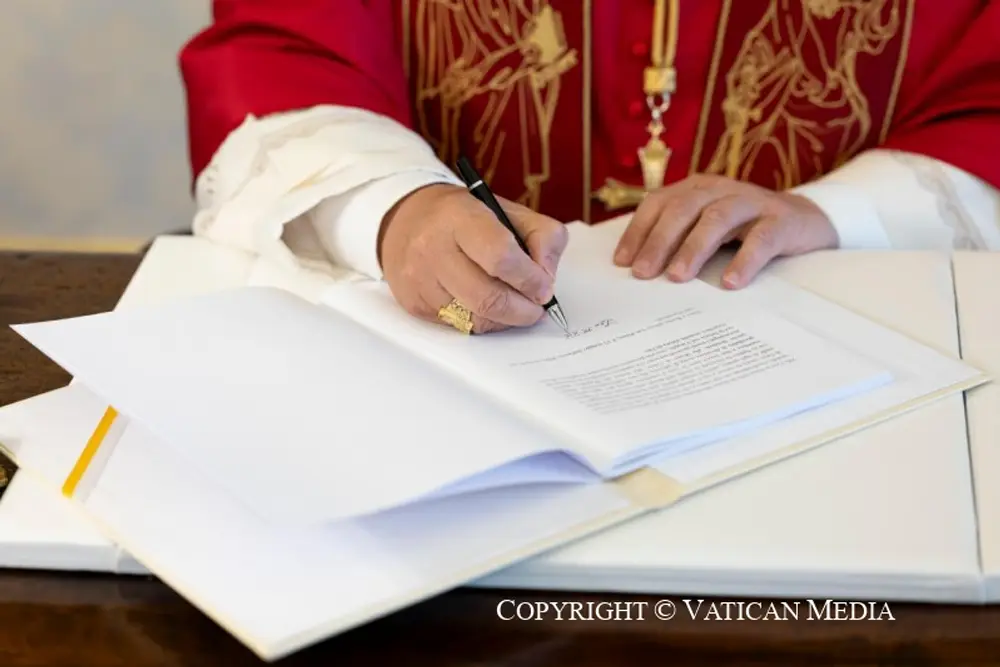
Signature of the encyclical Magnifica humanitas.
A Song of Hope
Magnifica Humanitas He concludes by raising his gaze towards the Magnificat of Mary and the contemplation of the Incarnate Word. Leo XIV reminds us that technology is meant to serve the person, and not the person to submit to technology.
The challenge for our generation is to not lose our soul in the age of algorithms and to build, together, a genuinely human and fraternal society.
Mr. Ramiro Pellitero Iglesias, professor emeritus of Pastoral Theology at the School of Theology at the University of Navarra.