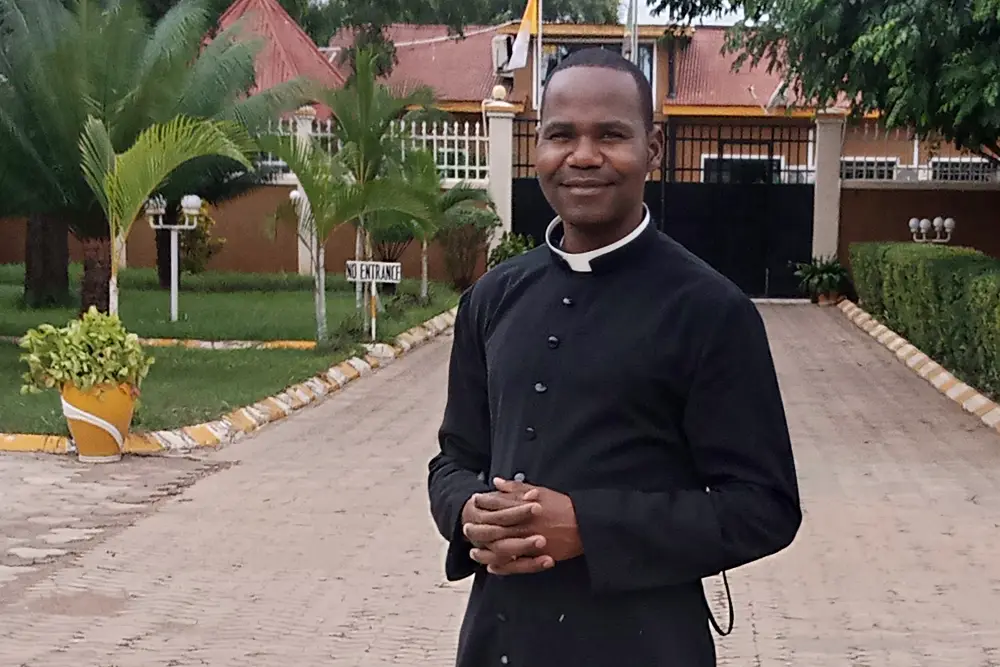
Francisco Eusebio Vinumo, Angolan In Rome, he views the eternal city with awe, like an unimaginable dream. Because for him, it truly is: "It is a city with a centuries-old Christian history.". To be here is to touch the roots of our ancestors, our patriarchs in Christianity.You get to live and socialize with saints, martyrs, popes, and all those who have left their mark on the history of Christianity. Being here is an incomparable experience, because you marvel at everything you see; you touch things handed down by the apostles and the saints.... In short, to be in Rome is to experience the universality of the Church".
But until we get to Rome, Francisco Eusebio went through various trials and choices. He grew up happily in a large family. He is the youngest of six siblings, from a family well protected and cared for by his mother, María Teresa de Jesús, who instilled in her children a love for the Lord.
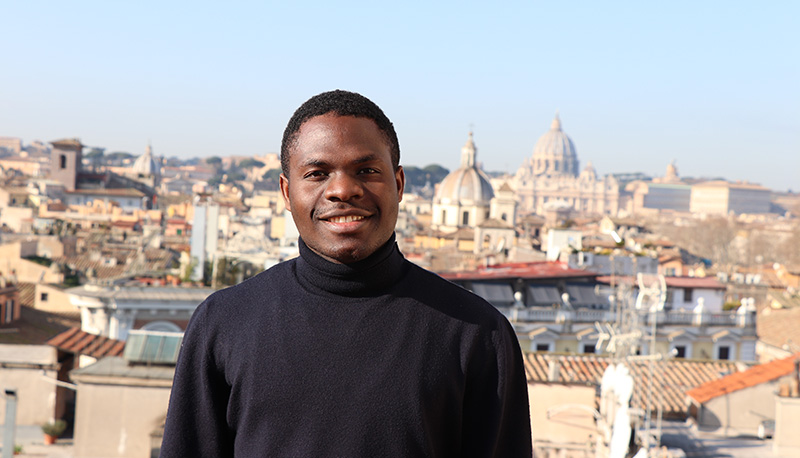
His life passed normally. And so he explains that his vocation had nothing extraordinary about it, "like the biblical vocations of Moses, Abraham, Isaiah, Jeremiah, Samuel and those of some priests and nuns, which had a kind of magic touch". Perhaps, however, that 'magic touch' Francis speaks of was given to him by his beloved mother in the course of an ordinary, everyday life.
Maria Teresa, as an African mother who welcomes, educates and cares, encouraged her six children (three boys and three girls, and a seventh in heaven) to participate in religious activities, such as catechesis and the rosary that they sometimes prayed as a family and, most importantly, attendance at Holy Mass.
As a disciplined and traditional family of Africa, They received some punishments if they did not participate in religious activities, something that is not recommended, but which Francis remembers without trauma, as something "funny in the Christian life of our family, funny because of its unusualness, but which was very significant for our religious formation.".
Therefore, going to Mass and catechesis was an obligation for the children and, if they did not participate, they were punished without a meal and washing all the dishes. And as his story will surely miss, Francisco qualifies with a smile: "A mother's love is so great that, to those punished, in the end she always kept some food for us, even if it was not a full meal".
Francis insists that these types of punishments, however inadvisable they may seem, both he and his brothers remember them with nostalgia and gratitude, because, just as God corrects his children with love, This punishment was educational, because our mother He always wanted what was best for us and wanted to see us on the right path. And thanks to these punishments my vocational adventure began.
Between pedagogical punishment and attendance at Mass, An interest was sparked in him: to observe the priest closely. "His way of celebrating Mass captivated me, especially when he sang. In the immensity and diversity with which God calls people to his vineyard, I felt called to serve him in those moments."«.
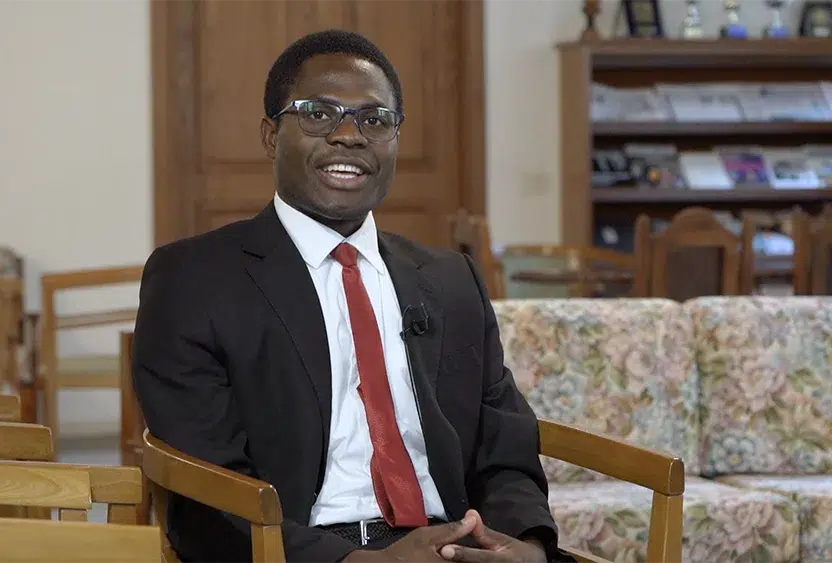
Another figure no less important in the discovery of his vocation was his brother, who by then was already a seminarian and now a priest. His testimony greatly influenced his choice.
So she began attending the vocation group of her parish, led by the Sisters of the Most Holy Savior, and then joined the group of altar servers.
However, the process of entering the seminary was not easy. First of all, the pastor had to make a choice, because the number of altar boys and vocations is greater than the number of vacancies. Fortunately, he was one of those chosen. But the battle was not over yet, as he had to go through another admission test at the minor seminary. Once again, the number of applicants was enormous. As they say: "when God calls you, insist until you get it".
After the test, a few days later, he discovered with enthusiasm that he was one of those admitted. So, at the age of 14, in 2011, I entered Our Lady of Mercy minor seminary, in the archdiocese of Huambo.
As in every journey, there have been difficulties and challenges in his seminary career, but today he feels more and more mature in his priestly vocation.
«"In the seminars I've attended, both in Angola "Just like here in Rome, at the Sedes Sapientiae seminary, everything has come together so that my faith, my love for God, for the Virgin Mary and my perseverance in my vocation have grown and become stronger and stronger," he says enthusiastically.
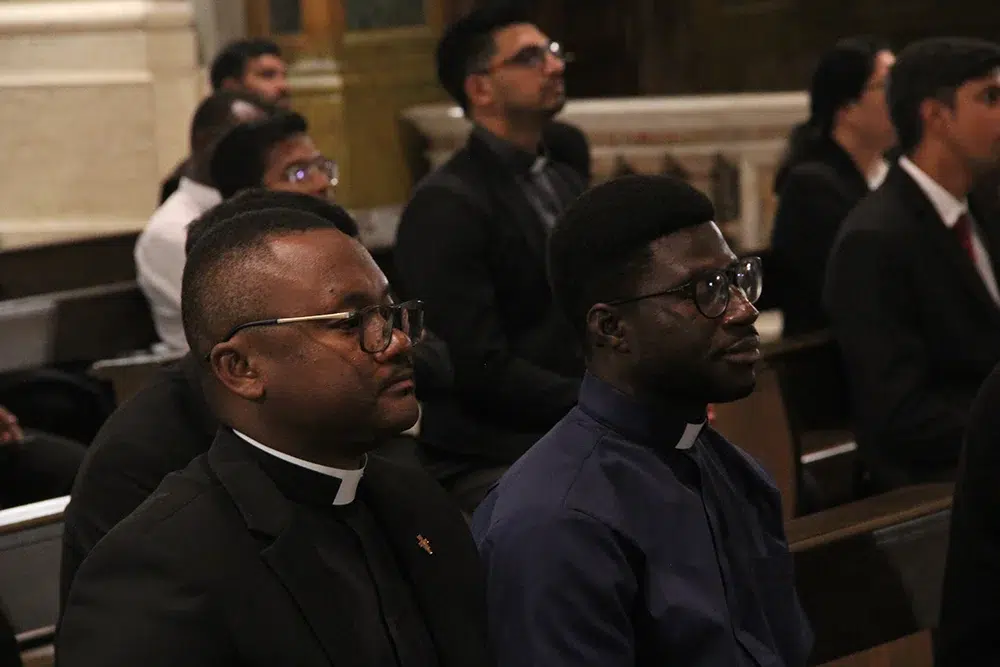
And from Africa to Rome And from Africa to Rome, which, as he said at the beginning, his stay in the city of the Tiber is causing him such amazement that he has no words to describe it. Or maybe he does: a "unique, singular, unrepeatable and enriching" experience.
Because for him, coming into contact with a reality different from the one he was used to is always enriching, especially when it is a new culture and a new way of life. modus vivendi totally different.
"I am living this exciting reality because being in Rome, the capital of Christianity, is a unique occasion and opportunity. Not only do you come into contact with a new culture, but with a variety of cultures, meeting people from all over the world. This is experienced in the living together in the seminary and at the university, but also in the environment of the city of Rome and of Italy, where we interact with the world," he says. young Angolan.
Among the variety of people from different countries and cultures, for Francis there is one thing that unites them: Christianity, and especially Catholicism.
«"This experience makes you truly see and live the nature of the phrase 'One, Holy ..., Catholic and Apostolic of the Church, and thus be united in diversity. Living in Rome is a continuous learning, a unique and unrepeatable richness, and I am savoring it. I really see the beauty of the Church in its universality. I dare to say that Rome is the eternal city, not because it never dies, but because it eternalizes you".
And for this wonderful experience that he is living in his beloved Rome, in the Sedes Sapientiae International Seminar and in the Pontifical University of the Holy Crosswould like to conclude with a sincere and heartfelt thank you:
«"Today, as a priest, all I have to say is: thank you, thank you, gratias tibi Domini, And thanks to the benefactors, partners, and friends of the CARF Foundation for giving me the immense opportunity to train as a seminarian and priest in the Eternal City of Rome!».
Gerardo Ferrara
BA in History and Political Science, specializing in the Middle East.
Head of the student body at the Pontifical University of the Holy Cross in Rome.
«"At every moment in human history, the absolute need for priests, men chosen by God to be mediators between Him and every man, is felt. Perhaps in our time it is more evident that they are needed with particular urgency.".
However, it is not enough to have a good number of priests: what is required are priests who are intellectually well formed, with a deep spirit of prayer, self-sacrificing, generous; in short, holy priests.
Intellectual training will help them to respond, in light of the teachings of Jesus Christ transmitted by the Church, to the numerous and profound questions that humanity poses today.
The Sedes Sapientiae International Ecclesiastical College, together with the Pontifical University of the Holy Cross, strives to work in unity to achieve the dual objective of intellectual formation and holiness of life, with the desire to offer many dioceses throughout the world “faithful, devout, learned, and self-sacrificing priests; and always joyful!” as Saint Josemaría envisioned. And with him, we wish “that our Heavenly Mother, Spes nostra Sedes Sapientiae, Ancilla Domini, May we receive the grace to be priests in the likeness of the Heart of his Son and of his Immaculate Heart".
Working in Rome to achieve this goal also offers a specific dimension, one very dear to Saint Josemaría: Romanity, Catholicism, universality. We hope that the priests that, with the grace of God, they are formed in this College, may bring to the local churches a great love for the Holy Father and for the Universal Church.". Rector Sergio Tapia-Velasco.
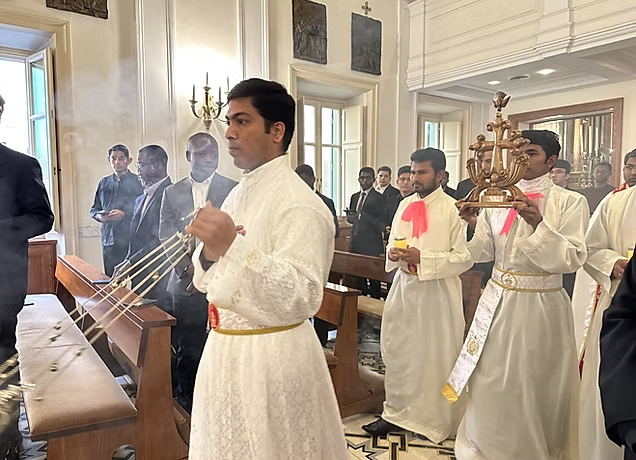
The management of the College is entrusted to the Prelature of Opus Dei.
The Sedes Sapientiae responds to a wish of Saint Josemaría Escrivá of Balaguer, founder the Opus Dei, who, moved by his ardent love for the Church and the Roman Pontiff, since his arrival in Rome in 1946, wished to establish a college for the formation of candidates for the priesthood next to the See of Peter.
This “dream” has become a reality thanks to the first successor of Saint Josemaría, Blessed Álvaro del Portillo, prelate of the Opus Dei.
In the years following its establishment – which took place in the academic year 1990/91 – the Ecclesiastical College has seen a progressive increase in the number of seminarians.
At the beginning of 2000, Sedes Sapientiae moved its permanent headquarters to the buildings of the former San Pascual Baylon Conservatory, located in the Trastevere neighborhood, a few minutes from San Pedro and from Piazza Navona, very close to the Pontifical University of the Holy Cross.
During the restoration work on the house, several archaeological ruins were found which, when properly valued, contribute to giving the College an even more pronounced Roman character.
Thanks to the new facilities, it has been possible to increase the number of seminarists who receive training for the priesthood and, in this way, better respond to the many requests for admission received each year.
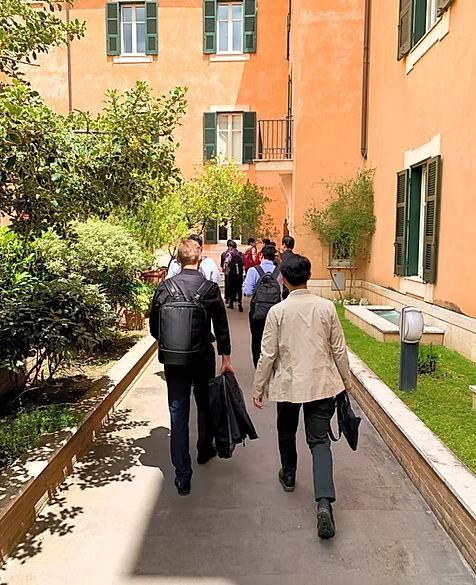
Students who arrive at Sedes Sapientiae are candidates for priesthood sent by their respective bishops and, once their training is complete, they return to their diocese of origin, in which they will be incardinated.
The fact that the college is based in Rome helps to create a more vivid perception of the unity and universality of the Church.
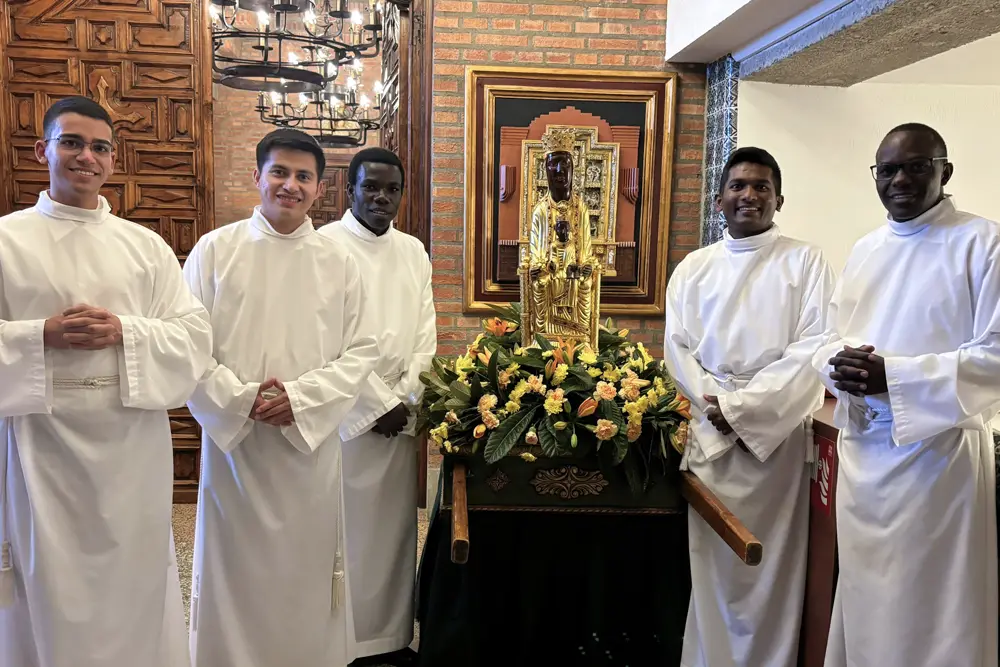
Life in the seminar It is characterized by an atmosphere of trust and freedom, order and fraternity, a climate of serious study and piety. Furthermore, living together in the international environment of Sedes Sapientiae fosters in the seminarians an attitude of openness and understanding toward diverse cultures.
 carf@fundacioncarf.orgLandline: +34 914 029 082Mobile: +34 638 078 51145 Conde de Peñalver Street.