Every June 22, the Church honors a man who chose to "lose his head" rather than betray his faith and his conscience. As we celebrate the feast of Thomas More, We find ourselves with a character whose relevance transcends the centuries, becoming a reference of coherence both for the faithful and for those who see in him a bastion of individual freedom in the face of tyranny.
As Antonio R. Rubio Plo has pointed out in his analysis of the cultural representation of the saint, the figure of Thomas More has been immortalized on the stage and on the big screen, offering lessons that continue to vibrate strongly today.
A Man for All Seasons It is not intended to evoke a saint, among other reasons because Bolt did not consider himself a Christian. Bolt’s Moro is a man marked by a strong sense of individuality and self-identity. Because of his way of understanding the world, he is willing to give his life.
The play: A man for eternity
In September 1960, a play that had been a hit on the London stage that summer was published. It was A Man for All Seasons, by Robert Bolt, which soon took the American box office by storm and became the film with the most Oscars in 1966.
In Spain, it was given the title of A Man for All Seasons, of ambiguous meaning. It is an expression coined by Erasmus of Rotterdam, a friend of Thomas More, the protagonist of the work, whom the Dutch humanist described as "a man for all hours, someone who adapts himself to seriousness as well as to happiness, and whose company is always pleasant".
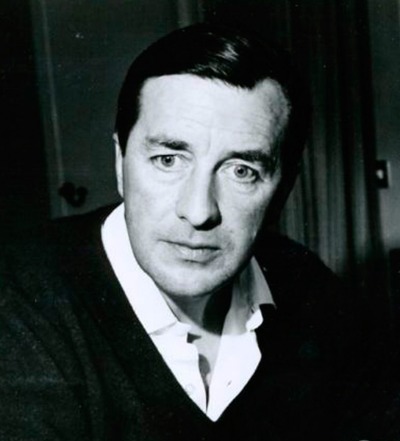
The author: Robert Bolt (1924–1995) began his professional career at an insurance company, studied history in Manchester, and taught at a school in Devon. He later left teaching following the success of his radio scripts and plays, though his reputation stems from his work as the screenwriter for *Lawrence of Arabia*, *Doctor Zhivago*, and *Ryan’s Daughter*—three films directed by David Lean.
by David Lean. These stories have in common characters who are incapable of assuming their reality and who defy the conditions of their existence, regardless of the price to be paid. They are willing to maintain, no matter who, their own individuality.
Later, Bolt's name faded into the background, overshadowed by the limitations of an illness and a turbulent personal and family life. Nevertheless, his final moment of triumph would be the screenplay for *The Mission* (1986) by Roland Joffé.
Robert Bolt, an Englishman, taught at a school in Devon, but he gave up teaching after the success of his screenplays, which include *Lawrence of Arabia*, *Doctor Zhivago*, and *The Mission*.
Actors
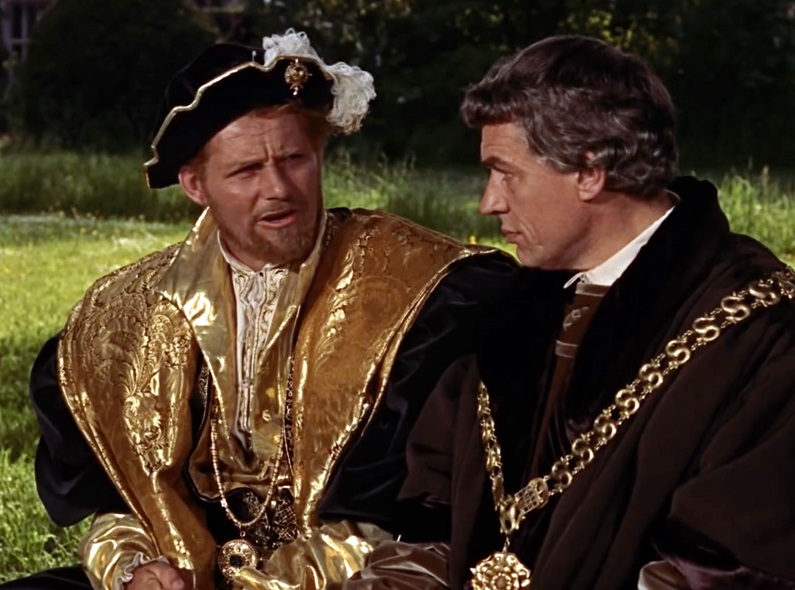
Some people claim that actor Paul Scofield was not the best choice to play More. He comes across as too serious for a good-humored Christian like the Lord Chancellor of England. In reality, the problem lies in Bolt’s portrayal of More.
He wisely draws on the Gospel passage about what good it is for a man to gain the whole world if he loses his soul (Mt 16:26), although it is possible that Bolt might have wanted to replace “soul” with “individuality,” the specific way of being.
But if there is someone who is repulsive in the play, more so for Bolt than perhaps for More himself, it is Richard Rich, a young careerist who moves around the Lord Chancellor in the hope that he will grant him an office. Failing to achieve his purpose, he joins the entourage of Cromwell, who rewards him from the first moment, and even testifies against Moor in his trial before parliament.
I recommend that teachers—and those who aren't—read or watch the dialogue between Rich and Moro at the beginning of the play. Rich is offered a position as a schoolteacher, with his own house and an annual income of 50 pounds.
But the young man, eager for fame and honors, considers Moro’s offer insignificant, since it amounts to a life marked by mediocrity. No one will know that he is a great teacher, except for his students and friends. It is more appealing to go into politics, despite the risk of succumbing to temptation—something Moro wanted to help him avoid with his advice.
The life of Thomas More reached its breaking point when Henry VIII decided to break with Rome in order to divorce Catherine of Aragon. In this scenario, most of the courtiers and bishops of the time opted for pragmatism. Rubio Plo highlights how Bolt's work portrays figures such as Wolsey, Cranmer, Cromwell and Norfolk as opportunistic, lying and corrupt men whose only compass was to stay at the height of power.
In contrast, the Henry VIII of Bolt's fiction is presented as a young and chivalrous man who, despite his affection for More, cannot tolerate that it does not coincide with his royal will. Herein lies the core of the drama of Thomas More: the conflict between loyalty to the sovereign and loyalty to God as expressed in one's conscience.
Moro was not seeking martyrdom; in fact, he used all his legal knowledge to try to save his life without compromising his principles. However, when man's law clashed head-on with divine law, his choice was clear.
The Value of the Unseen: Advice to Richard Rich
One of the most revealing moments of the play, and one that Rubio Plo strongly recommends analyzing, is the initial dialogue between Thomas More and young Richard Rich. Rich represents worldly ambition, the burning desire for fame, positions and social recognition. Faced with this greed, Moro offers him an alternative that, to the eyes of the world, seems mediocre: a position as a schoolteacher.
Moro tells Rich that he could be a great teacher, and when the young man complains that "no one would know," Moro replies that he himself, his students, and God would know. This invitation to a life of integrity lived in simplicity is perhaps the most powerful message for our society today, which is obsessed with visible success.
Rich's tragedy is that he rejects this "mediocrity" only to end up becoming the man who, for the sake of a political office, testifies falsely against Moro, sending him to the gallows.
St. Josemaría entrusted to the English saint (February 7, 1478-July 6, 1535), the matter of relations with non-ecclesiastical authorities. The story is told in the book The intercessors of Opus Dei.
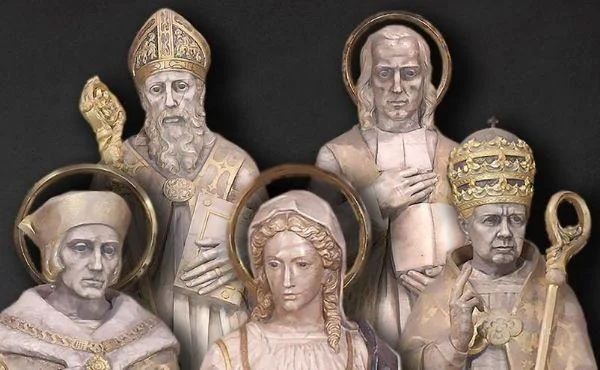
In accordance with the Church's continuing tradition of turning to the intercession of the saints, The faithful of Opus Dei and the members of the Priestly Society of the Holy Cross entrust themselves to some of them in a particular way. To St. Thomas More, in particular, relations with the civil authorities.
St. Thomas More was particularly suited to the role of intercessor of Opus Dei, both because of his professional prestige and his status as a statesman, and because he was a married man and a man of state. family man. He was to be the only lay person and non-celibate to be named a patron saint: the number of canonized saints with these characteristics was, then as now, quite small.
Although St. Josemaría had recognized from the beginning that there were married faithful in Opus Dei, he was unable to obtain approval to formally admit the first three supernumerary members until 1948. It is likely that this fact influenced, to some extent, the choice of St. Thomas More as an intercessor just a few years later.
Antonio R. Rubio PloDegree in History and Law. Writer and international analyst @blogculturayfe / @arubioplo
Table of Contents
 carf@fundacioncarf.orgLandline: +34 914 029 082Mobile: +34 638 078 51145 Conde de Peñalver Street.