The Catholic Church celebrates the Solemnity of the Nativity of St. John the Baptist June 24. Unlike the vast majority of saints, whom we remember on the day of their passing into heaven (August 29 in the case of the Forerunner), we also commemorate Saint John the Baptist on the day of his earthly birth.
Who was this man, really, who wore camel-hair clothing, whom many considered a madman, and who ultimately marked the beginning of the Redemption of all human beings?
Juan's story begins with his parents, Zechariah (a priest (a Jew) and Elizabeth. They were elderly, and her infertility had prevented them from having children. One day, while Zechariah was in the temple, the Archangel Gabriel He appeared to him to announce that they would have a son who would prepare the way for the Messiah. Zechariah doubted the news and, as a result, was struck dumb until the promise was fulfilled.
There is a fascinating detail regarding the conception of St. John: when the Virgin Mary (who was already expecting Jesus) went to visit her cousin Elizabeth; the infant John leaped for joy in his mother’s womb upon hearing Mary’s greeting. Because of this episode, popular devotion and Church tradition hold that John was freed from original sin before he was born.
Eight days after his birth, it was time to name him. The family assumed he would be named Zechariah, after his father. However, Elizabeth objected, and Zechariah asked for a tablet on which he wrote: «His name is Juan» (which means "God is merciful"). Instantly, Zechariah regained the power of speech. With this gesture, his parents gave up trying to impose their own plans on him and embraced the unique calling that God had for their son.
During the Angelus on June 24, 2012, Benedict XVI said: «From his mother’s womb, John is the forerunner of Jesus: the angel announces to Mary his miraculous conception as a sign that ‘nothing is impossible with God’ (Lc »1:37), six months before the great miracle that brings us salvation—the union of God with man through the work of the Holy Spirit.".
«The four Gospels place great emphasis on the figure of John the Baptist as the prophet who brings the Old Testament to a close and ushers in the New, identifying Jesus of Nazareth as the Messiah, the One Consecrated by the Lord,» continued the theologian pope.
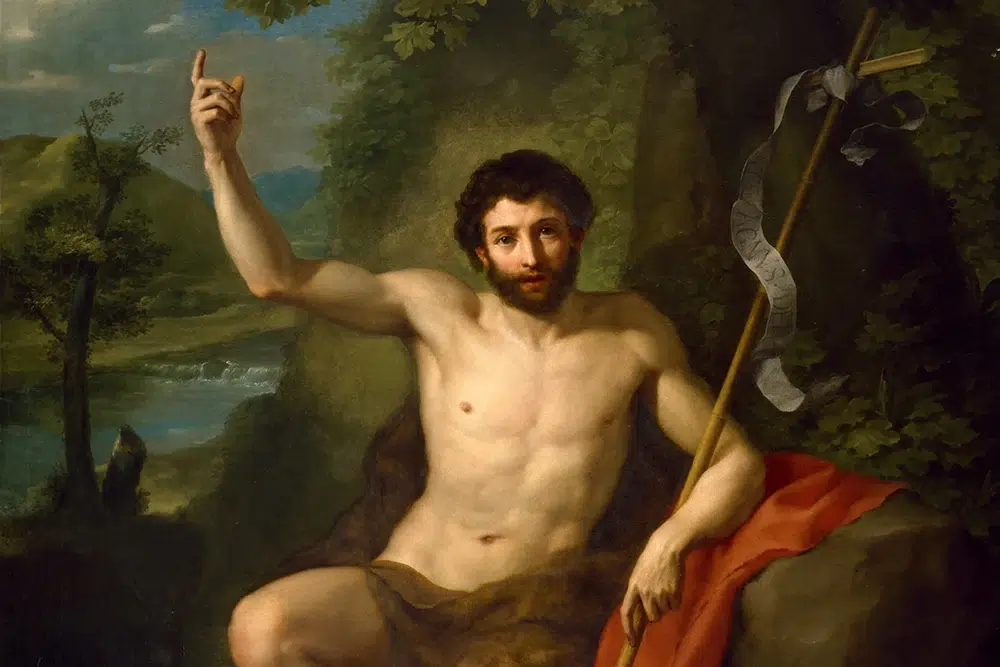
John is the key figure who serves as a bridge between the Old and New Testaments; he is the last of the prophets. He was not a conventional man. He spent his youth in the desert leading an extremely austere lifestyle: he wore a camel’s hide fastened with a leather belt, and he ate locusts and wild honey.
Around the year 26 A.D., guided by the Holy Spirit, he began preaching on the banks of the Jordan River. His message was direct and sometimes harsh—he even called the Pharisees and hypocrites who approached him a "brood of vipers." He invited people to change their lives and administered a "baptism of repentance" to all. Although his appearance and harshness might have made him seem like a madman, the core of his message was not punishment, but preparing people’s hearts to receive God’s imminent mercy.
St. Josemaría on the Baptism of Jesus Christ
The highlight of his mission came when he himself Jesus He went to the Jordan River to be baptized. When John saw him, he recognized him and spoke the words that are still repeated today: "Behold, the Lamb of God, who takes away the sin of the world.".
Regarding this passage, St. Josemaría invited us to reflect. He emphasized how in the Baptism, God the Father takes possession of our lives, unites us to Christ, and sends us the Holy Spirit. The founder of Opus Dei reminded us that through this sacrament, the Lord places an indelible seal on our souls that makes us children of God.
«At Baptism, Our Father God has taken possession of our lives, has incorporated us into the life of Christ, and has sent us the Holy Spirit. The strength and power of God illuminate the face of the earth. We will set the world ablaze with the flames of the fire you came to bring to earth! ... And the light of your truth, our Jesus, will enlighten minds for all eternity.».
«I hear you cry out, my King, with a living voice that still resonates: “""I have come to bring fire to the earth, and what do I want but for it to be set ablaze?"” (I have come to bring fire to the earth, and what do I want but for it to burn?)—And I reply—with my whole being—with all my senses and faculties: “Here I am: for you have called me!” (I’m here because you called me). Through Baptism, the Lord has placed an indelible seal on your soul»Or: You are a child of God. Child: Doesn't that make you eager to get everyone to love Him?"
«He has to grow, and I have to shrink.»
John was the consummate master of humility. Despite his enormous social influence and vast following (in fact, Jesus’ first apostles—such as Peter, Andrew, and John—were initially disciples of John the Baptist), he never sought the limelight. His spiritual legacy is summed up in a phrase he left to his followers: «He has to grow, and I have to shrink». His sole mission was to point to Christ and, once that was done, to step aside.
A man of such integrity could not turn a blind eye to the injustices committed by those in power. John openly rebuked King Herod Antipas for divorcing his wife and marrying Herodias, his own brother’s wife. This courage in defending the truth and the institution of marriage cost him his freedom, as Herodias came to hate him so much that she sought his death.
His end came tragically during a grand banquet held in honor of Herod's birthday. Salome, the daughter of Herodias, danced for the guests and so pleased the king that he swore an oath to grant her whatever she asked for. Urged on by her mother, the young woman asked for the head of John the Baptist on a platter. Herod, though saddened, refused to lose face in front of his guests, so he ordered John to be beheaded in prison.
Today, St. John the Baptist remains a model of faithful holiness: he teaches us to be courageous defenders of the truth, to live without unnecessary attachments, and, above all, to make our own lives an instrument for bringing others closer to God.
In 2007, already as Pope, Benedict XVI had also said during the Angelus. «Today, June 24, the liturgy invites us to celebrate the Solemnity of the Nativity of St. John the Baptist, whose life was entirely oriented toward Christ, just like that of his mother, Mary. St. John the Baptist was the forerunner, the “voice” sent to announce the Incarnate Word.».
«That is why commemorating his birth actually means celebrating Christ, the fulfillment of the promises of all the prophets, the greatest of whom was John the Baptist, who was called to “prepare the way” before the Messiah (cf. Mt »11, 9–10).".
The Pope Francis noted in January 2025, during the Jubilee, Jesus emphasizes to everyone: «"I tell you the truth, no one is greater than John; yet the least in the Kingdom of God is greater than he"” (v. 28). Hope, brothers and sisters, lies entirely in this qualitative leap. It does not depend on us, but on the Kingdom of God. Here is the surprise: welcoming the Kingdom of God leads us to a new order of greatness. Our world—all of us—needs this! And we say: What should we do? [Start over]; I don’t quite understand [start over]. Don’t forget this: start over.
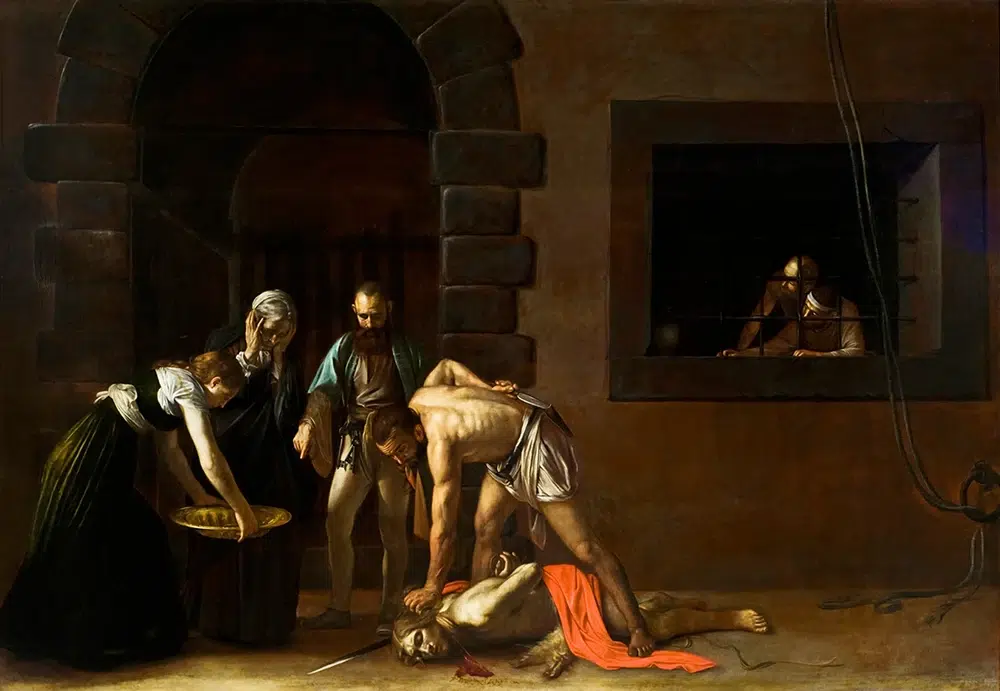
When Jesus speaks those words, John the Baptist is in prison, filled with questions. On our journey, we, too, carry so many questions, and do you know why? Because there are many “Herods” who still oppose the Kingdom of God. But Jesus shows us the way—the way of the new Beatitudes, which are the surprising laws of the Gospel. So let’s ask ourselves: Do I have a sincere desire within me to start over? Do I want to learn from Jesus who is truly great? The least in the Kingdom of God—he is great. And we must… [Start over, start over]. Start over.
So let us learn from John the Baptist to believe once more. Hope for our common home—this Earth of ours, so abused and wounded—and hope for all human beings lies in God’s otherness. His greatness is different. And we begin anew from this originality of God, which shone forth in Jesus and which now calls us to serve, to love one another as brothers and sisters, and to recognize our own smallness. And to see the least among us, to listen to them, and to be their voice. Behold our new beginning; this is our jubilee! And we must… [start anew] Thank you!».
Gospel of the Birth of Saint John the Baptist (Lk 1:57–66, 80)
Meanwhile, the time came for Elizabeth to give birth, and she gave birth to a son. Her neighbors and relatives heard that the Lord had shown her great mercy, and they rejoiced with her. On the eighth day, they came to circumcise the child, and they wanted to name him after his father, Zechariah. But his mother said:
—No way; his name will be Juan.
And they said to him:
«There is no one in your family with that name.» At the same time, they asked his father by signs what name he wanted him to be called. And he, asking for a tablet, wrote, “John is his name.” This filled everyone with wonder. At that moment, his speech returned; his tongue was loosened, and he spoke, praising God. Fear seized all his neighbors, and these events were discussed throughout the hill country of Judea; and all who heard them treasured them in their hearts, saying:
"What's this kid going to be, then?"
Because the Lord's hand was with him.
Meanwhile, the child grew and became strong in spirit, and lived in the wilderness until the time came for him to reveal himself to Israel.
Commentary on the Gospel
Among the Israelites, the act of naming a child was reserved for the child’s father. It was a way of acknowledging paternity of the newborn. That is why it was up to Zechariah to name the baby, even though he found it difficult to speak at that moment, because he had been struck dumb due to his unbelief.
The parents of Saint John the Baptist recognized that God had blessed them by sending them a child when it seemed they no longer had any reason to hope. The extraordinary way in which he came into the world reminded them that this son was a gift from the Lord. The angel had told Zechariah that this son would bring great joy not only to his parents but also to a multitude of people: «He will be a source of joy and gladness to you, and many will rejoice at his birth» (Luke 1:14). Saint John, that long-awaited son, had a mission for the entire people: «He will turn many of the children of Israel to the Lord their God» (Luke 1:16).
Elizabeth and Zechariah insist on naming the child as the angel had instructed. Behind this attitude, we can sense their desire to offer this son to God. They do not want to control his life, nor do they seek to assert themselves through their parenthood. In fact, Zechariah refuses to give the child his own name, even though everyone else thought that would be the most logical choice. However, for Elizabeth and her husband, the most important thing is that their son fulfill the mission for which he has come into the world.
After Zechariah had written, «His name is John,» his tongue was loosened, and he began to praise God. It is the joy of a generous father who entrusts his son to the Lord and is filled with enthusiasm for the mission he has been given.
In the parents of Saint John the Baptist, we find a wonderful example for all parents. It pleases the Lord for us to rejoice in the gift of our children. At the same time, He invites us to respect and love “the name” He has given them: that is, their unique temperament, their talents, and, above all, their vocation. Parents thus become the nurturers of their children’s personalities and a great help to them in embracing the mission the Lord has entrusted to them.
Table of Contents
 carf@fundacioncarf.orgLandline: +34 914 029 082Mobile: +34 638 078 51145 Conde de Peñalver Street.