We live in times that can generate uncertainty and concern. The wars in Ukraine, Gaza, Congo, the Sahel, Sudan, Yemen, Somalia, Ethiopia, Myanmar, and the drug-related violence in Mexico, Haiti, and Ecuador continue to cause suffering among the civilian population, displacement, and a need for humanitarian aid.
While other conflicts receive far less international attention, the United Nations notes that by 2026 hundreds of millions of people will need urgent humanitarian assistance as a result of conflicts and other crises.
Given this reality, a question may arise: What can a Christian do when he feels that the world's problems are too big for him?
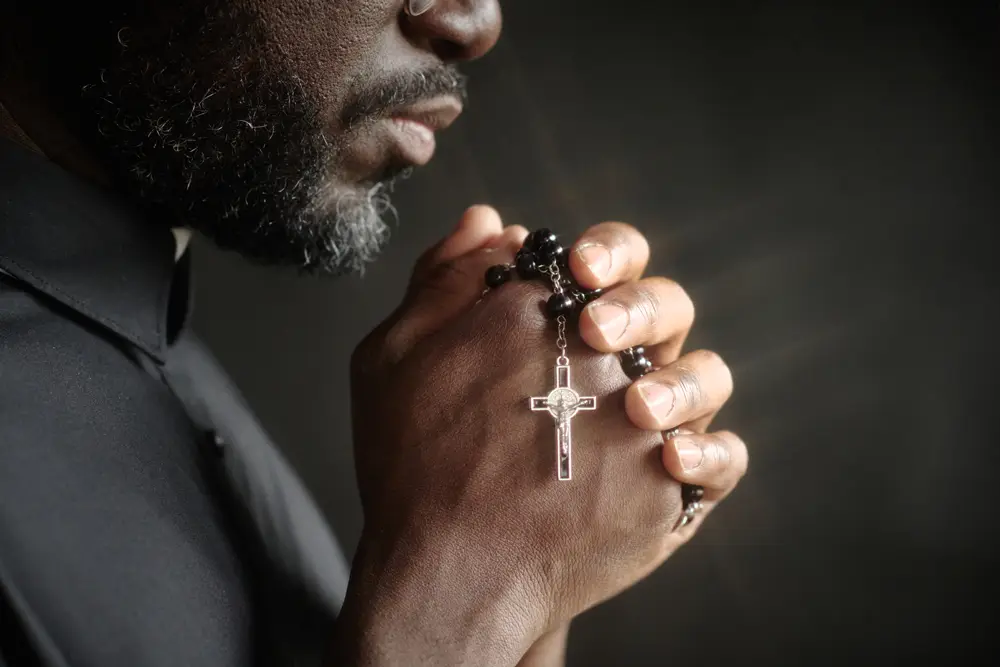
A first response is to pray. Not to ignore what is happening, but to place those who suffer before God, to ask for peace and to let that prayer also transform our way of seeing and acting.
Christian prayer It often begins with a simple request: Lord, grant us peace..
When we pray for those living through war, for families who have lost their homes, for children growing up amidst violence, for those who have had to flee their countries, or for those suffering persecution, we stop viewing suffering as a distant reality. Prayer helps us remember that behind every conflict are real people.
The Pope Leo XIV Throughout 2026, he has repeatedly called for prayers for peace. In August, he asked for prayers for those suffering in Sudan and for the victims of violence in Ukraine and Russia. In September, he again called for prayers for peace in the face of persistent conflicts and violence in various parts of the world.
From October 1st to 7th, 2026, a week of prayer for peace and unity has also been called, with initiatives taking place in parishes, schools, communities, and families in various countries. The initiative culminates on October 7th, the feast of Our Lady of the Rosary.
Prayer for peace knows no borders. We can pray for those we know and for those we will never know; for the victims of wars that make the headlines and for those who suffer in forgotten conflicts.
The antidote for uncertain times: prayer
Sometimes we may think that prayer is insufficient in the face of the magnitude of a war or a humanitarian crisis. However, prayer is not meant to replace the responsibilities of individuals, institutions, or states. It is something else entirely: it places us before God and helps us not to become accustomed to suffering.
During the prayer vigil for peace held in April 2026, Leo XIV affirmed that prayer is not a refuge to evade our responsibilities nor a way to avoid the pain caused by injustice. On the contrary, he presented it as a response to violence and a way to keep hope alive.
St. Josemaría He expressed the importance of prayer with these words: «Like the soldier on guard duty, so must we be at the door of God our Lord: and that is prayer» (Saint Josemaría, The Forge, 73).
In this sense, prayer is about remaining awake to God and also to what is happening around us. It is not simply about asking for problems to disappear. It is also about learning to see the world through God's eyes. We can pray for:
And we can also pray for ourselves: so that we do not fall into hatred, indifference or hopelessness.
Saint Josemaría reminded us that peace is not built solely on the great international stage. It also begins in the heart of each person and extends to the family, to work, and to society.
As he recalls in another of his texts: «The Lord wants his children along all the honest paths of the earth, sowing the seeds of understanding, forgiveness, coexistence, charity, and peace. —What are you doing?» (Saint Josemaría, Forge 373). It is a particularly relevant question.
We are all in the same fight
Saint Paul uses the image of the body to explain communion among Christians: when one member suffers, all suffer with it.
This idea takes on special force when we think about the people living under the bombs, those who have lost family members, the displaced, and those waiting for humanitarian aid.
The United Nations continues to identify Ukraine, Gaza, and Sudan as places where civilian populations continue to suffer the consequences of war and violence. But there are other, less visible crises as well. That is why, Praying for peace means learning to look beyond the headlines from the newspapers.
We may feel powerless in the face of events happening thousands of miles away. However, we can always do something: pray, stay informed responsibly, help those around us, comfort those who are suffering, and avoid fueling hatred or dehumanization. Peace also begins in the way we speak, listen, and treat others.
A peace that is "disarmed and disarming"«
Leo XIV's message for the 2026 World Day of Peace is precisely entitled «"Peace be with you all: towards a 'disarmed and disarming' peace"“.
In it, the Pope recalls the need to overcome the logic that presents war as inevitable and points to dialogue, diplomacy, forgiveness, and the protection of civilians as paths to building peace. He also insists that prayer nourishes the commitment to peace. This perspective helps us understand what it means to pray for peace.
It's not about closing our eyes to reality, but about opening them wider. Nor is it about remaining on the sidelines, but about asking God to change hearts and, at the same time, asking ourselves what we can do.
We must try not to believe that prayer allows us to control events, and instead trust in God even when we do not understand what is happening.
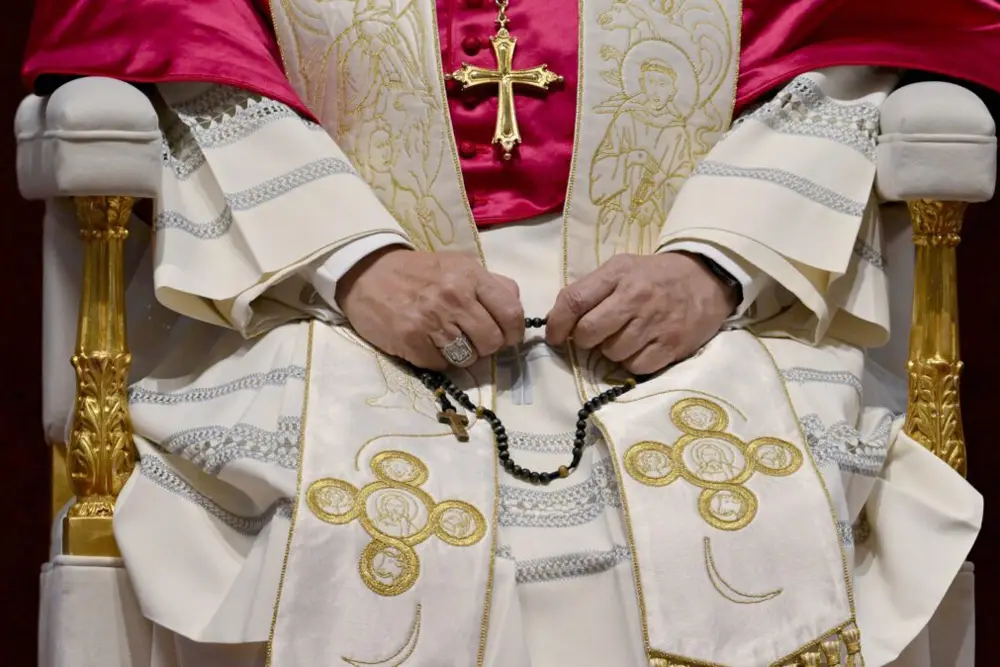
There is no single way to do it. We can dedicate a few minutes each day to praying for peace. We can pray the Rosary for those who are suffering. We can offer Holy Mass for those living through war. We can go before the Blessed Sacrament and place before God the situations that concern us most.
We can also turn a moving news story into a prayer. When we read that a family has lost their home, we can pause for a few seconds and pray for them.
When we learn of a new escalation of violence, we can pray for those who bear responsibility and for those working to reach agreements. When we discover a forgotten conflict, we can include it in our prayers. And when we are at a loss for words, we should simply remain before God.
Because, as Saint Josemaría taught: «Prayer is not a matter of speaking or feeling, but of loving. And one loves by striving to say something to the Lord, even if nothing is actually said.»Saint Josemaría, Furrow, 464).
Pray and work for peace
Prayer does not necessarily end when the moment of reflection is over. It can continue in our decisions, in our words, and in the way we relate to others.
We can be peacemakers in our families, at work, among our friends, and in our society. We can learn to listen before we judge, to forgive, to ask for forgiveness, to reject violence, and to no longer contribute to the spread of hatred.
International peace also needs people capable of building peace in their own communities. Therefore, in the face of uncertainty, Christians are called to avoid being paralyzed by fear.
He is called to Pray, wait, and act. To place the suffering of the world before God and, at the same time, to ask oneself every day: «"Lord, what can I do to bring a little peace to where I am?"».
 carf@fundacioncarf.orgLandline: +34 914 029 082Mobile: +34 638 078 51145 Conde de Peñalver Street.