Plenary indulgences: an experience of the Church's mercy

Plenary indulgences are a fundamental concept in Catholic theology that allows believers to receive a special grace that remits the temporal punishment due to sins already forgiven. This article will explore the history, meaning, and impact of plenary indulgences on the spiritual life of Catholics. Through a journey spanning from their origins to their contemporary practice, it seeks to understand their relevance in a world that increasingly seeks mercy and redemption.

Definition of plenary indulgences

A plenary indulgence is a complete remission of the temporal punishment due to sin, which can be obtained by the faithful under certain conditions. According to Catholic doctrine, although sins are forgiven through confession, the temporal punishment resulting from those sins may still exist. Plenary indulgences allow believers, through specific acts of faith, to eliminate this punishment and thus draw closer to God.

A plenary indulgence differs from a partial indulgence, which only remits part of the temporal punishment due to sin. The concept is based on the belief that the Church, as mediator of grace, has the authority to grant these indulgences through the treasury of merits accumulated by Christ and the saints.

History and origin

The history of indulgences dates back to the early centuries of Christianity. Although the concept of penance existed from the beginning of the Church, the practice of granting formal indulgences began to develop in the Middle Ages. Christians began to seek ways to atone for their sins through acts of charity and piety, which eventually became formalized in the granting of indulgences by Church leaders.

One of the most controversial periods in the history of indulgences was during the 16th century, when the practice of selling indulgences led to the Protestant Reformation. Martin Luther, by nailing his 95 Theses to the door of the Wittenberg church, vehemently criticized this abuse, leading to a significant shift in the Church's practice and understanding of the concept of indulgences.

Importance in Catholic theology

In Catholic theology, indulgences are seen as a manifestation of divine mercy. They reflect the idea that, although sin has consequences, there is a path to redemption and purification. This theology emphasizes that salvation is not only about avoiding sin, but also about the transformation of the soul and growth in virtue.

Indulgences, therefore, become a means of fostering a deeper life of faith, promoting the practice of works of mercy and acts of devotion within the Catholic community. By obtaining an indulgence, the faithful are called to live their faith not only in terms of what they abstain from, but also in terms of what they actively pursue in love and service.

The concept of mercy in the church
Mercy as a pillar of faith

Mercy is one of the fundamental pillars of Christianity and plays a crucial role in understanding the Catholic faith. It is the manifestation of God's love and compassion for humanity, a love that extends even to those who have sinned. The Church teaches that mercy is not only a characteristic of God but also a commandment for all believers, which implies acting with compassion and forgiveness toward others.
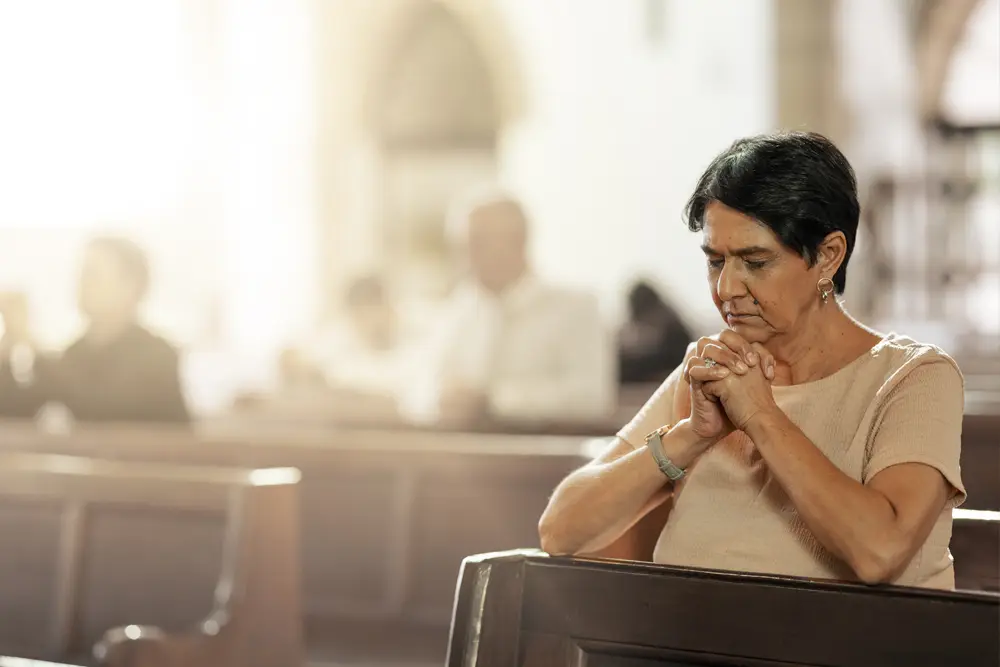
Rezar, confesarse y las indulgencias plenarias

This theological approach is based on several biblical teachings that emphasize mercy as essential to the Christian life. In the Gospel of Matthew, for example, we are reminded that blessed are the merciful, for they will receive mercy (Matthew 5:7). This teaching highlights the interconnectedness between receiving God's mercy and offering it to others, thus establishing a continuous cycle of love and forgiveness.

Relationship between indulgences and mercy

Plenary indulgences are a direct reflection of divine mercy manifested through the Church. By offering the possibility of remission of the temporal punishment due to sin, the Church acts as an instrument of God's mercy in the world. This process not only provides comfort and hope to the faithful, but also invites them to participate actively in the life of faith through concrete actions.

Therefore, by understanding indulgences as a means of experiencing God's mercy, believers are encouraged to live more intentionally in their Christian lives. Obtaining an indulgence is not merely a ritual exercise, but a call to action, implying a genuine commitment to conversion and spiritual growth.

The process for obtaining plenary indulgences
Spiritual requirements

Obtaining a plenary indulgence requires the faithful to fulfill certain spiritual requirements, which are essential to ensure that the act of receiving the indulgence is linked to a life of authentic faith. First and foremost, it is crucial to have the intention of obtaining the indulgence, accompanied by a sincere desire to turn away from sin.

Furthermore, believers must experience genuine repentance for their sins, which implies a desire for reconciliation with God. This repentance must be accompanied by the grace of confession, where sins are forgiven, allowing the faithful to be in a state of grace before receiving the indulgence.

Actions that grant plenary indulgences

The actions that can lead to obtaining plenary indulgences are varied and range from prayer to works of charity. Among the most common actions are reading Sacred Scripture, praying the Rosary, or performing acts of charity for those in need. These actions are not mere rituals, but opportunities to live out one's faith in action, thus reflecting the principles of love and compassion taught by Christ.

Furthermore, the Church also establishes specific times in the liturgical calendar when plenary indulgences are offered in a special way, such as on Christmas Day or during Lent. Taking advantage of these opportunities can be an effective way for the faithful to deepen their spiritual lives.

The role of confession and communion

Confession and communion are two sacraments that play a crucial role in obtaining a plenary indulgence. Confession is essential because it guarantees that sins are forgiven, allowing believers to receive the indulgence in a state of grace. Without confession, the indulgence cannot be valid, as it is based on reconciliation with God.

Communion, on the other hand, represents the most intimate union with Christ and the community of believers. By receiving the Eucharist, the faithful participate in the mystery of salvation and are strengthened on their spiritual journey. Communion is a vital component that complements the pursuit of indulgences, as it allows believers to tangibly experience God's grace in their lives.

Plenary indulgences in practice

Historical and contemporary examples

Throughout history, plenary indulgences have played a significant role in the life of the Church. During the Middle Ages, for example, there were numerous instances where indulgences were offered as part of crusading campaigns or as a means of raising funds for cathedral construction. However, there were also cases where the practice was misused, leading to reforms and clarifications in its application.

In more recent times, popes have reintroduced an emphasis on indulgences within the context of spiritual renewal. John Paul II, for example, often spoke of the importance of mercy and how indulgences are a means of receiving it. The Year of Mercy proclaimed by Pope Francis also highlighted the value of indulgences as a tool for spiritual growth and reconciliation.

Testimonies of faith and spiritual transformation

Many believers have shared how the practice of obtaining plenary indulgences has led to a spiritual transformation in their lives. These testimonies range from experiences of inner peace to dramatic changes in their behavior and relationships with others. The pursuit of indulgences becomes not only an act of devotion but also a path to a more spiritual life. commitment to faith and the community.

For example, some Catholics have stated that simply dedicating time to Bible reading or family prayer during periods of indulgence has renewed their connection with God and created a deeper sense of community in their daily lives. These testimonies underscore the idea that plenary indulgences, when undertaken with a genuine heart, can result in an enriching spiritual experience.

Criticisms and misunderstandings about indulgences
Context of the controversies

Despite the Church's clear teaching on indulgences, criticism and misunderstandings still surround this concept. Many people associate indulgences with corruption and the selling of pardons, especially in light of the historical scandals that have rocked the Church. This context has generated skepticism and distrust toward the practice of indulgences.

Furthermore, in a world where spirituality is being redefined, some believe that indulgences are an outdated concept with no place in modern life. Criticisms often focus on the idea that the practice can promote a view of Christianity reduced to a system of give and take, rather than emphasizing love and a personal relationship with God.

Debunking common myths

One of the most common myths is that indulgences can be bought, which is a misinterpretation of Church teaching. Indulgences are not payment for sins, but a means of receiving divine grace through acts of faith. The Church has made it clear that they cannot be commercialized, and any idea of selling indulgences goes against their spiritual essence.

Another misconception is that indulgences are a way to save one's soul, when in reality they are a complement to the salvation already offered by Christ and are intended to help the faithful experience God's mercy in their lives. Correcting these myths is essential for the faithful to properly understand the value and purpose of indulgences. indulgences on their spiritual path.

Final reflections on the spiritual journey

Plenary indulgence as a path to spiritual growth

The practice of seeking plenary indulgences can be seen as a spiritual journey that invites believers to deepen their relationship with God. This quest goes beyond a mere desire to remove the temporal punishment due to sin; it is a commitment to living the faith actively and authentically. By dedicating time to acts of charity, prayer, and reflection, the faithful are led to a deeper understanding of divine mercy.

This transformative approach allows believers not only to receive indulgences, but also to grow in their spiritual lives through the practice of faith. The plenary indulgence thus becomes a symbol of hope and renewal, a resource that invites the community of believers to unite in the pursuit of holiness.

Invitation to the practice of mercy

Ultimately, plenary indulgences are a call to all Catholics to live mercy in their daily lives. The invitation is to cultivate a compassionate heart, to act on behalf of others, and to seek a deeper relationship with God. Through this process, the Catholic community can experience a transformation that benefits not only individuals but also society as a whole.

Indulgences are a reminder that, despite our weaknesses and failings, there is always a path to redemption and grace. On this spiritual journey, every act of love and every gesture of mercy counts, and it is in these moments that we find the true essence of Christianity.

Conclusion

Plenary indulgences represent a rich tradition within the Catholic faith, evoking the Church's commitment to mercy and redemption. Throughout this article, we explore their history, meaning, and contemporary practice, as well as the criticisms and misunderstandings surrounding them. As believers seek to experience this grace, they are invited to reflect on their spiritual journey and the importance of living mercy in their daily lives.

Frequently Asked Questions

What are plenary indulgences?

Plenary indulgences are total remissions of temporal punishment for sins already forgiven, which Catholics can receive through specific acts of faith.

What are the requirements to obtain a plenary indulgence?

To obtain a plenary indulgence, the faithful must have the intention of receiving it, be in a state of grace, and perform specific actions such as prayer, confession, and communion.

What role do confession and communion play in obtaining indulgences?

Confession ensures that sins are forgiven, allowing the faithful to receive indulgence in a state of grace. Communion is a way of uniting with Christ and receiving His grace, complementing the process.

Are indulgences a form of payment for sins?

No, indulgences are not payment for sins. They are a means of receiving grace through acts of faith and mercy, reflecting God's love for believers.

Are indulgences relevant today?

Yes, indulgences remain relevant, as they offer the faithful an opportunity to deepen their spiritual life and experience God's mercy on their faith journey.

Training priests to accompany married couples

Eva Corujo coordinates «Love That Speaks with the Body,» a digital training course on marital sexuality to better prepare couples. train priests The course, designed for diocesan priests and seminarians, celebrates its second edition this fall. Behind the course is a shared conviction: to help diocesan priests better accompany married couples and discover, even in the most delicate matters, the beauty of human love. Part of the proceeds will be donated to the CARF Foundation.

A married couple is going through a difficult time, a couple has doubts about their marriage, or spouses are wondering how to live out certain Church teachings. In these moments, the priest is called to listen, understand, and accompany them. But how can he do so when complex questions arise or when there is a lack of arguments to clearly explain the meaning of what the Church teaches?

Eva Corujo is well aware of this need. A pharmacist and fertility specialist, with a master's degree in Bioethics and another in Marriage and Family, she coordinates «Love that Speaks with the Body,» an online training program for priests and seminarians that celebrates its second edition this fall.

Professionals from different areas of married life

The initiative was born with a very specific purpose: to put at the service of priests The knowledge and experience of professionals working in various fields related to married life. Psychology, philosophy, sex education, and fertility awareness are some of the disciplines from which issues present in the lives of so many married couples are addressed.

In this context, the role of priests is crucial; they must be trained to train priests to the new generations and guide them on their path towards marital commitment.

«We are a group of people trained in various topics related to married life,» Eva explains. «With this training, we want to offer priests and seminarians solid tools and useful, up-to-date education to accompany married couples, always within the framework of the Magisterium of the Catholic Church.».

Behind every question are real people, family stories, and situations that need to be heard without prejudice. The intention is not to remain in the realm of theory, but to help priests better understand what married couples are experiencing and to accompany them through their difficulties.

Programa el amor habla con el cuerpo

Nearly 70 priests connected from different countries

The first edition confirmed that a real need existed. Nearly 70 priests from around the world connected for the inaugural session. Participants came from the United States, Mexico, England, and Italy, in addition to numerous Spanish priests. All training is conducted in Spanish.

For Eva, last year's course was a «super positive» experience. The participants' response and, above all, their subsequent feedback encouraged the team to prepare a second edition that would delve deeper into the content and better address the needs they had expressed.

«All the priests would recommend it to others,» says the coordinator. Among the suggestions received, several asked for more practical examples. The team wanted to address that request in this new edition: «In this edition, we will include more concrete stories based on the marriages we work with.».

For this group of professionals, it is not only about knowing a subject better, but about having more resources to help people who seek advice in pastoral conversations.

Testimonials of gratitude

The testimonies of those who participated in the first edition allow us to understand what the training meant for some of them.

«It has been exciting to be reminded of the need for a good and positive presentation of the beauty of Christian sexuality, and from there to illuminate the rest of the issues.».

Another priest noted that the course offered him «a more comprehensive view of the importance and complexity of marital relationships.» He added, «It also provided many solid arguments for advising couples who have doubts about these issues. Ultimately, I have a better understanding of Church doctrine and more arguments to explain it more effectively.».

Learning doesn't end when you close the computer. For those who support families, a better understanding of a topic can make all the difference when answering a question, helping to overcome a difficulty, or explaining a lesson that isn't always easy to grasp.

The beauty of human love, even in difficult questions

One of the testimonies received expresses with particular clarity what this training can mean for a priest who feels alone when he has to address certain issues.

«It was very helpful to hear from well-prepared married people about marital morality, especially since one can feel a bit alone on these issues. I believe it was Jaime Serrada who said that in many places the teachings of the Humanae Vitae It has been silenced, and I see that I am one of them. Hearing people speak clearly and knowledgeably about these issues, when everything seems to be going in another direction, gave me great clarity and strength to continue counseling troubled couples. Thank you very much.

His words reflect one of the motivations of the course: offer training and arguments to those who, in their pastoral work, need to explain the Church's marital morality with knowledge, clarity and the ability to accompany.

Formar sacerdotes
Ways to better explain the Church's marital morality

Another participant is grateful precisely for the tools he has received to transmit that message: «Ways to better explain the Church's marital morality. Interesting ideas have been provided that help to explain things better each time. The reason for the Church's moral stance on such an important issue as this. Thank you so much for what you do. I pray for you and your families and for all the immense work we have to do in spreading the beauty of human love as God intended it for humankind, which is the best!

The training has also allowed some participants to discover aspects they were previously only superficially familiar with. One priest acknowledges: «A deeper overview of married life. It opened my eyes to the value and benefits of natural methods: I knew they were good, but now I understand a little better why.».

Another values having acquired a «global overview of human sexuality, mainly in marriage», along with a «better understanding of the biological-psychological basis of the situations that marriages go through».

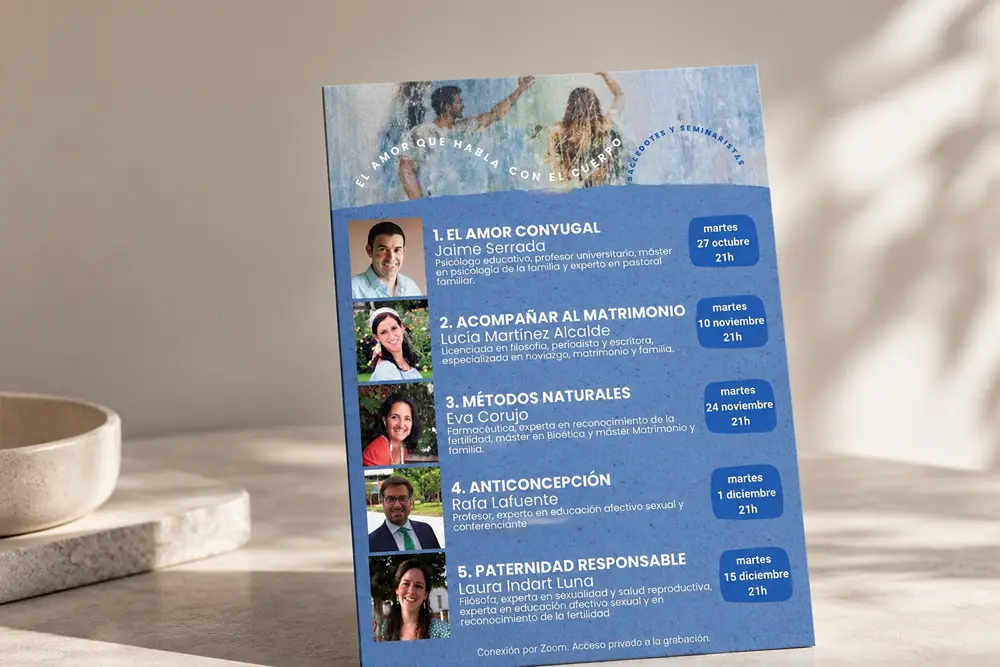
Five sessions to train priests who will better support married couples

The second edition of «Love That Speaks Through the Body» will delve deeper into marital sexuality, marriage, and communication. It will also address, with well-founded arguments, the Church's position on contraception. Natural methods of fertility awareness will also be prominently featured, including cases of couples who are unable to conceive.

The program consists of five online sessions, taught by professionals specializing in the different areas of training:

Format: Tuesdays at 9:00 PM via Zoom, with private access to the recording in case you cannot connect live.
Price:
• Pack of 5 sessions: €50.
• Single sessions: €20 each.

To register, write to info@letyourselves.com Please indicate your name, your diocese or seminary, and the option you choose. We will reply with the payment details (bank transfer or PayPal).

To train those who support families

This initiative also has a special connection with the CARF Foundation. Part of the proceeds from the training will go to the Foundation, which helps train diocesan and religious priests to serve the Church worldwide.

In this way, those who participate in «Love that speaks with the Body» also contribute to a broader task: supporting the formation of priests who, from their dioceses and communities, will accompany many other people.

Eva Corujo The team coordinating the course has gathered previous experiences to prepare this second edition and incorporate the request to offer more practical examples.

Because when a married couple seeks guidance from a priest, being able to clearly explain a teaching and understanding what the couple is experiencing are two ways to approach them. And, to provide good support, one also needs to continue learning.


Marta Santínjournalist specializing in religion.

Pilgrimage to Rome 2026: a gift for the soul

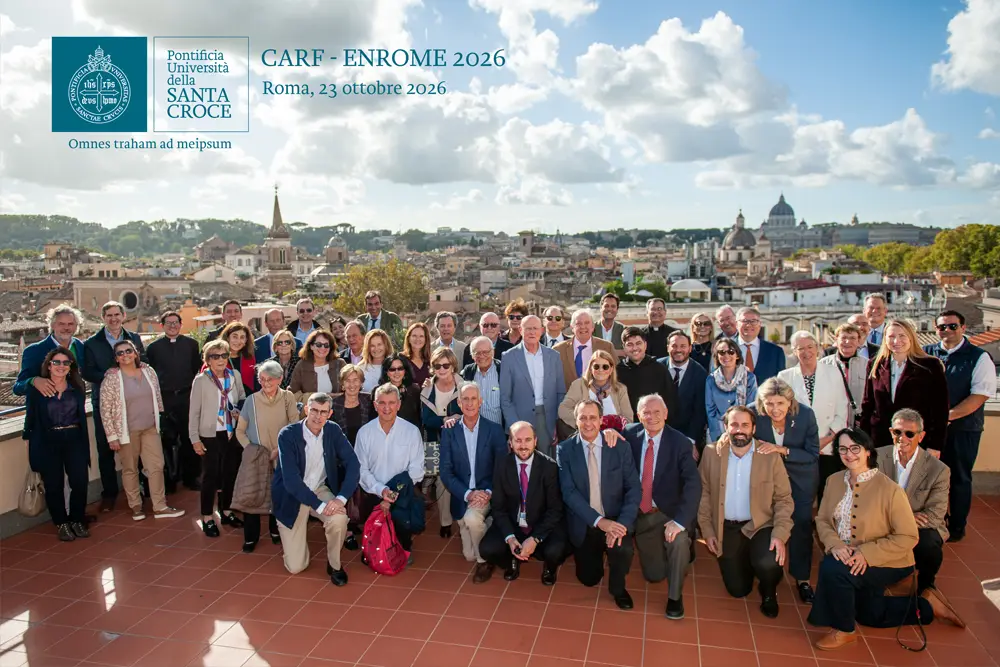
Once again, the pilgrimage to Rome of the CARF Foundation It reflects unique moments that are not experienced on other trips to the Eternal City.

«Because, in addition to visiting the Scavi Vatican, »The crypt of the Popes, visiting the Vatican Museums and the Sistine Chapel, the catacombs of Priscilla and walking non-stop through Rome, there are moments experienced on this pilgrimage that are impressive," explains one of the pilgrims.

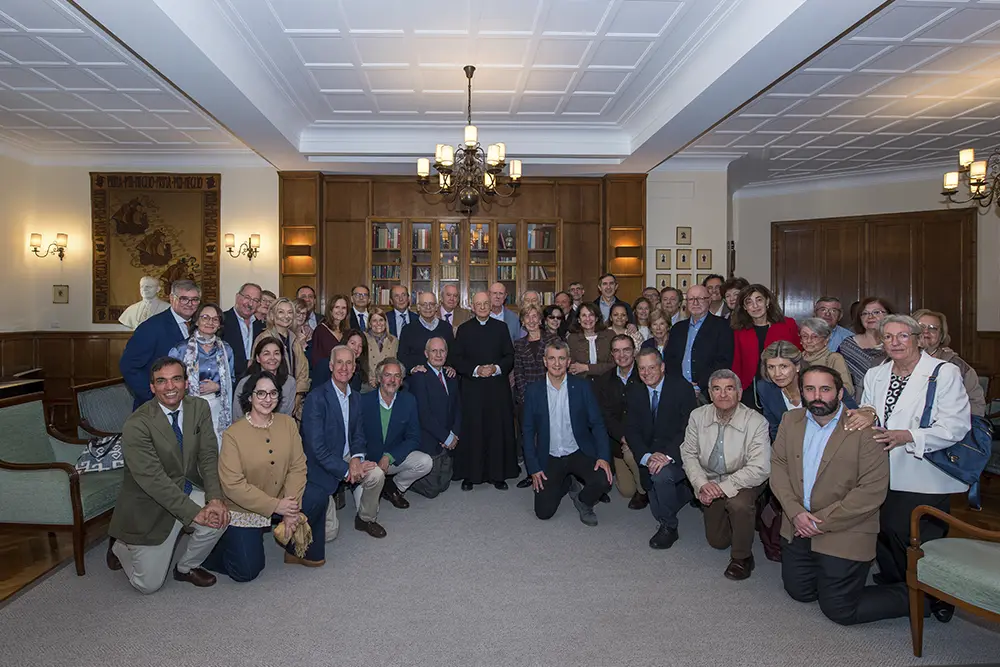
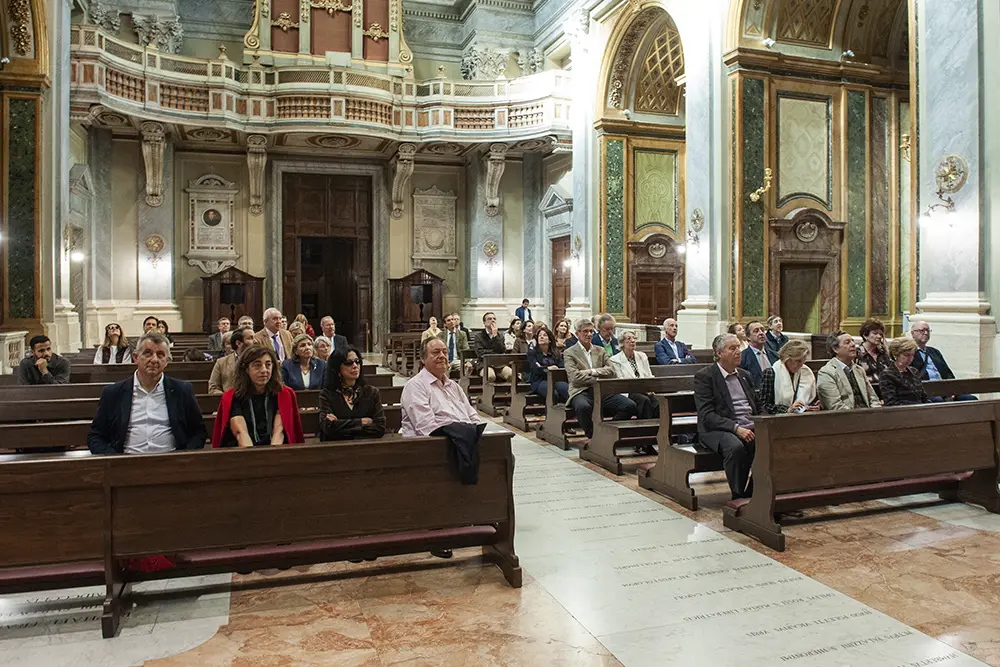
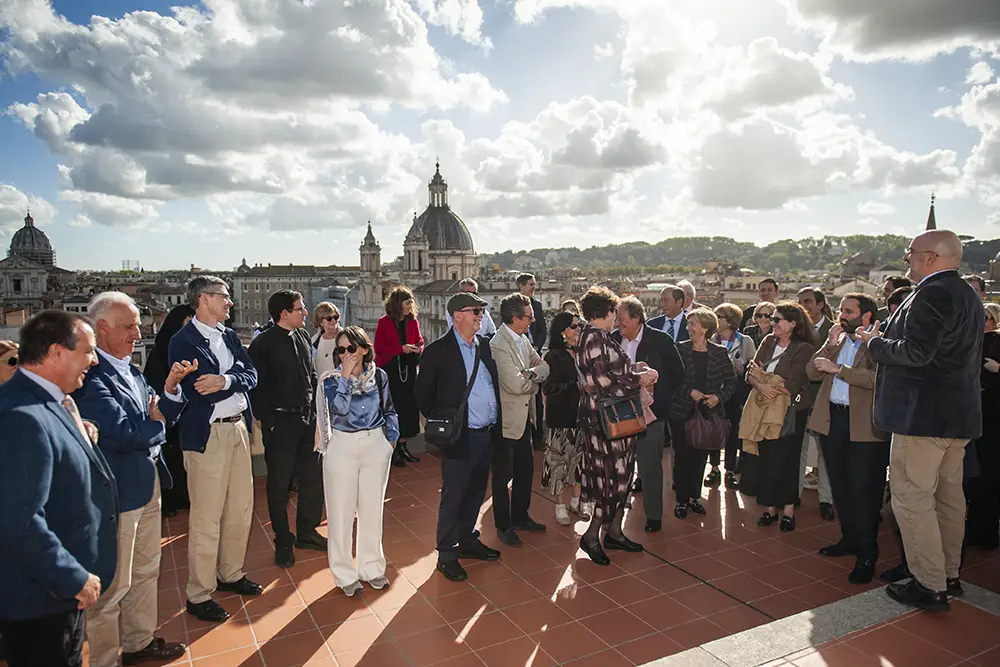
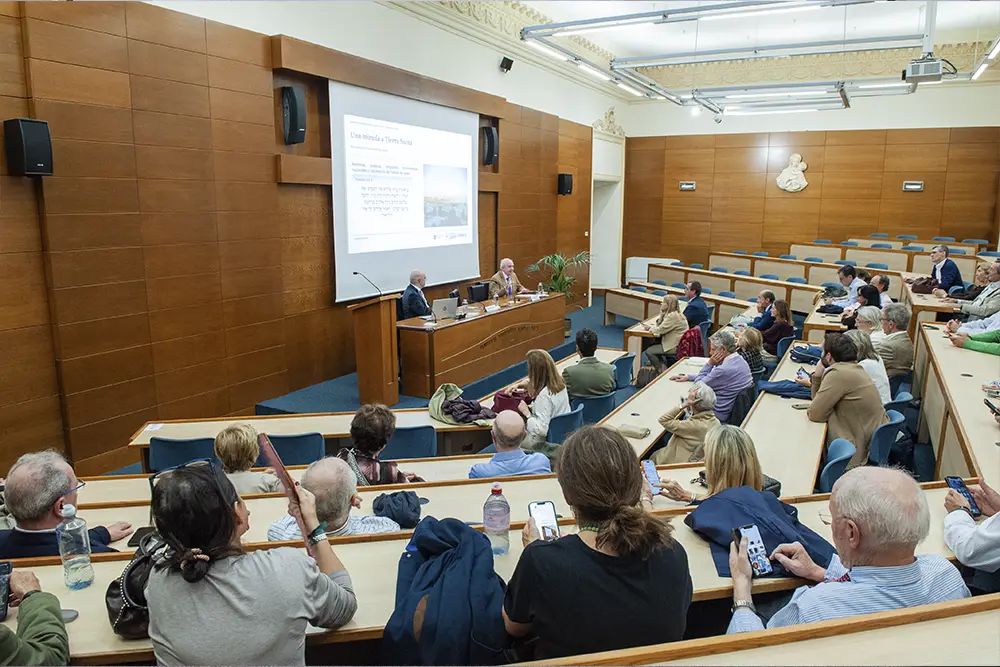
These moments, as one would expect, include Holy Mass in St. Peter's Basilica and the audience with Pope Leo XIV. Also noteworthy are the events organized by CARF to meet the priests and seminarians the Foundation supports: a discussion with Monsignor Fernando Ocáriz, Prelate of Opus Dei and Grand Chancellor of the Pontifical University of the Holy Cross (PUSC); the reception of the University Rector, Professor Fernando Puig; lunch at PUSC with students and professors, in which experiences are exchanged, and a discussion with priests from different countries of the Tiberine Priestly College who are studying in Rome for a Bachelor's degree or a Doctorate at the Holy Cross.

A pilgrimage to Rome to experience it with all your soul.

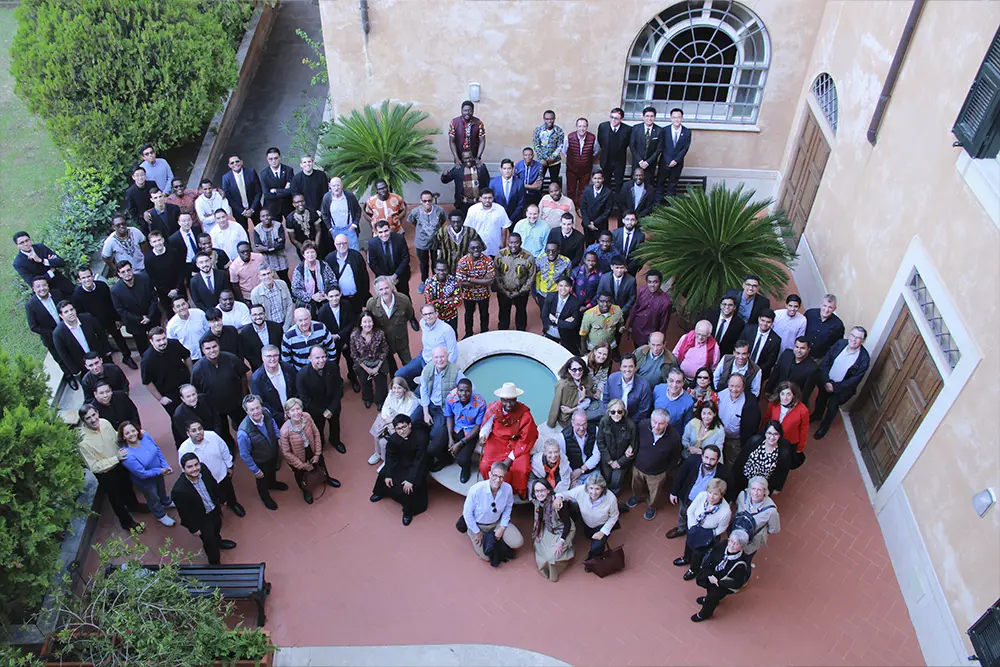
«But if there's one thing I would highlight, it's the discussion with the hundred seminarists from the Sedes Sapientiae International Ecclesiastical College. Getting to know them firsthand, sharing their experiences, the needs of their countries, and the role of the Catholic Church makes you reflect that your donations »They are going to specific people in service to the universal Church," another pilgrim recounts.

And, as a final note to this journey, another pilgrim highlights: «The care of the liturgy and the singing at all the masses is also overwhelming.».

Essential points of the itinerary

Audience with Leo XIV

We will participate in the traditional Wednesday general audience in St. Peter's Square. It will be a special occasion to see Pope Leo XIV up close as he travels around the square in an open vehicle to greet pilgrims from all over the world.

At the end of the meeting, the Holy Father always imparts his blessing to those present. Early in the morning, a private Mass is celebrated in St. Peter's Basilica.

Scavi vatican and crypts

After the papal audience, we were able to discover some of the most emblematic places in the Vatican. We learned the secrets of St. Peter's Square.

The day will continue with lunch at a restaurant near the square and a visit to the scavi vatican, the necropolis located under St. Peter's Basilica, where the tombs of the Popes are found.

Catacombs of Priscilla

We will visit the catacombs of Santa Priscilla, one of the oldest underground cemeteries in Rome, with more than 13 kilometers of galleries spread over two levels.

Among its treasures is a representation of the Virgin and Child, considered one of the oldest surviving Marian images. The painting, dated between 230 and 240, depicts the Virgin with the Child and a prophet pointing to a star above her head.

Visit to Villa Tevere

Villa Tevere is the headquarters of Opus Dei and houses the Prelatic Church of Santa Maria della Pace. The remains of Saint Josemaría Escrivá de Balaguer rest in its main altar. The crypt also contains the remains of Blessed Álvaro del Portillo and Javier Echevarría, Saint Josemaría's first and second successors.

We enjoyed a private conversation with Monsignor Fernando Ocáriz, current prelate of Opus Dei and Grand Chancellor of the Pontifical University of the Holy Cross.

Sedes Sapientiae Seminar

In the heart of Rome is the Sedes Sapientiae International Ecclesiastical College, where seminarians from different countries prepare for the priesthood and receive spiritual, academic, human and pastoral formation.

During the pilgrimage, we were able to spend a day with their students, who came from 26 countries, and learn firsthand about their life of study, prayer, and community in service to the universal Church. The visit included a tour of the facilities, lunch, a celebration, and testimonies from some of the students.

And much more…

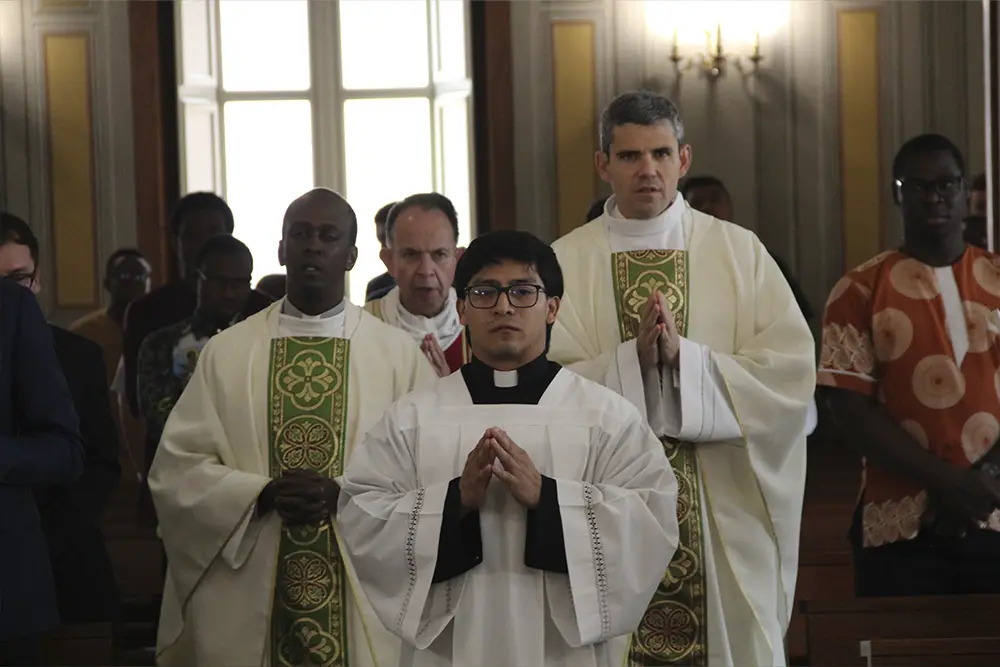
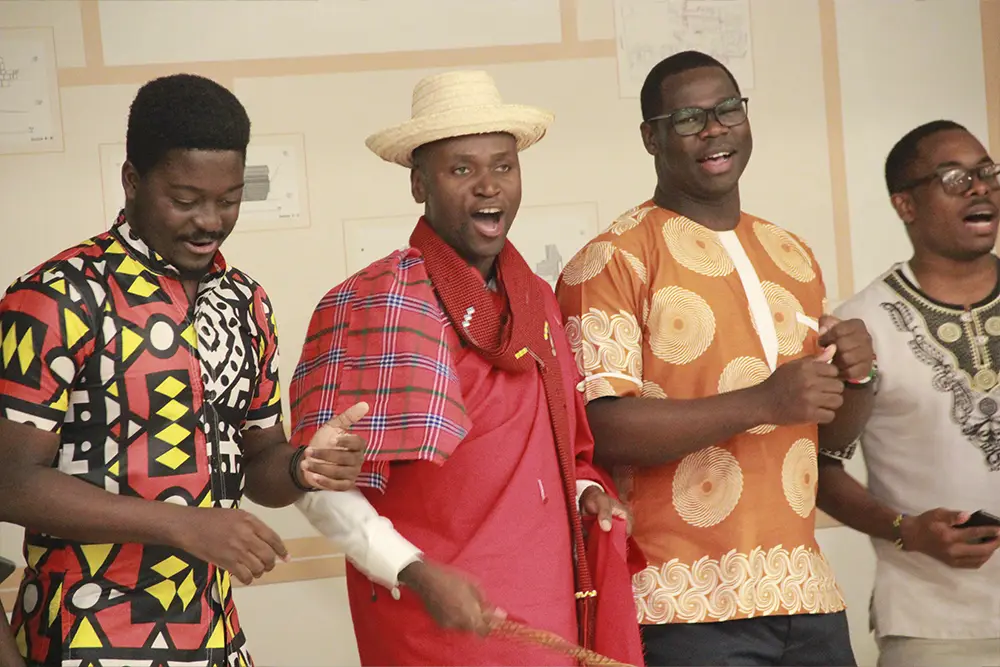
The program included a morning of fellowship with priests residing in Tiberino, who shared their testimonies and sang some songs after celebrating Holy Mass in the residence's main chapel. Those who chose to catch their flight later prayed the Angelus with the Pope in St. Peter's Square.

We will also walk through part of Baroque Rome, discovering some of its churches around Piazza Navona and the Pantheon of Agrippa, one of the best-preserved monuments of Antiquity in the city.

Gallery

Full photo summary of 2026.


Marta Santínjournalist specializing in religion.


Angelus Pope Leo XIV, St. Peter's Square

Sunday, October 25, 2026

Dear brothers and sisters, happy Sunday!

In today's Gospel (cf. Mt 22:34-40), the Lord leads us once again to the heart of our faith. A lawyer, to test Jesus, asks him, «Which is the greatest commandment in the Law?» (v. 36). The Master responds by quoting a passage from Deuteronomy: «You shall love the Lord your God with all your heart, and with all your soul, and with all your strength» (v. 37; cf. Dt 6:5). Christ indicates that the dimension of love is central to our relationship with God. It is not enough to know that God exists, that he is unique, or that he is omnipotent; the Lord asks us for a personal relationship: the one true God wants to be our God.

In our encounter with Him, the commandment of love is neither an obligation nor an imposition. We cannot love “by command.” Love for God is the very essence of human desire, which finds its fulfillment in communion with Him. Therefore, our love can be authentic when it is a response to His love, which always precedes us. Hence the need for a totality that involves the whole person: heart, soul, and mind.

To the first commandment, the Lord adds a second: «You shall love your neighbor as yourself» (Mt 22:39). This rule of life springs from the same source; therefore, Jesus says, it is like the first. From our intimate relationship with God, we are able to see ourselves and our neighbor with the same eyes as Christ, from his perspective. In this way, selfishness is overcome, and self-love becomes charity; our existence is directed toward others and becomes a gift for those around us.

Saint Thérèse of Lisieux understood this well: “Only love,” she wrote, “can move the members of the Church to action; if this love were to die out, the Gospel would no longer be proclaimed” (cf. Complete Works, Manuscript B, 3v°, Burgos 2006, 261). Without it, in fact, our faith would be deprived of its content, our good works would be reduced to mere moralizing, and our hope would be in vain.

Dear friends, we cannot truly love God without that love overflowing toward our brothers and sisters. And we cannot truly love our neighbor except as children of the same Father who first loved us in his Son Jesus.

Let us ask the Lord for the grace of a new heart, capable of embracing and living the great commandment. May the Virgin Mary intercede for us, in whose Immaculate Heart there is nothing but love.

After the Angelus

Dear brothers and sisters:

I continue to follow with deep concern the grave humanitarian situation in Yemen, particularly in the city of Taiz, where the population is suffering from a lack of food, water, and medical care. I make an urgent appeal for a cessation of hostilities and for the Yemeni people and all the peoples of the region to be guaranteed the right to live in peace.

I assure you of my prayers for those who died or were injured last Friday in the terrorist attack against the faithful of the Orthodox Church of St. George ad Hamoud in Jordan. I express my solidarity with that community and with the entire country, which is distinguished by its peaceful coexistence and respect among different religions.

We continue to pray together for peace. The day after tomorrow, October 27, let us unite spiritually with the representatives of the Churches and religious leaders who will meet in Assisi on the 40th anniversary of the Encounter convened by Saint John Paul II. Today, more than ever, it is clear that wars, besides sowing death and destruction, impoverish and harm the world. May the Lord inspire decisions toward dialogue and peace!

I greet all of you, dear faithful of Rome and pilgrims from different countries.

I give the Welcome to the members of the Roman Academic Center Foundation, from Spain; to the group from St. Ciaran's College in Ballygawley, Ireland, and to the group from the St. John Paul II Schools, in the Diocese of Opole, Poland.

I am pleased to welcome the heads of the Ceremonial departments of some Italian ministries and government departments.

I greet the members of the association “Solidarity in good hands”, from Castiglion Fiorentino, and the group of contemporaries from Concorezzo who have come on pilgrimage for their 70th anniversary.

I wish you all a happy Sunday.


Jack Valero: Understanding Opus Dei from within

«"These are not positive or negative stories. They are normal stories of people trying to do things, who are imperfect, who suffer, who see God enter their lives and respond in this way or that way, who enter the Work, who leave the Work.".

This is how Jack Valero explained the purpose of Opus Dei unfiltered, during the dialogue held this September 22nd at Villanueva University with María José Atienza, director of Omnes.

The book, published by Almuzara, brings together the stories of 18 people linked to Opus Dei and aims, according to its author, to answer some of the questions that are usually raised about the institution "from below", through the lives of its members.

Valero, spokesperson for Opus Dei in the UK, explained that after 33 years of answering questions about power, money, influence, and the role of women, he had perceived a limitation in always doing so "from a top-down perspective." That's why he decided to share the concrete experiences of very different people. The book features a taxi driver, a businessman, people who have traveled their entire lives, and others who have always stayed in the same place. "There's a bit of everything, a cross-section of what's out there," he noted.

What does Opus Dei seek?

Valero responded to this question by saying that his aim is "to help people find God in their ordinary, everyday lives." He explained that it's about helping each person discover that God is present in what they do and "to be a better person in everything you do." He added that this task is carried out with the understanding that people are imperfect and make mistakes.

One of the issues he emphasized most was freedom. Valero believes it is one of the aspects most difficult for those outside the institution to understand. In his experience, members intuitively grasp the possibility of making decisions about their lives: studying one degree or another, living in one place or another, participating in a demonstration or not, supporting one political party or another, or following certain priestly directives. "They understand it and live it accordingly," he stated.

Regarding the testimonies of former members who claim to have experienced a lack of freedom or pressure, Valero acknowledged that these experiences must be examined. "That's not good, but we're going to see where it comes from and what happened," he stated. In his opinion, those who joined did so seeking something good, although some later discovered that this vocation wasn't for them and left the institution.

He also stressed the need to listen to those who have suffered and "change the things that need changing." "If we try to do good and don't listen to those on the inside, we're doing something wrong," he added.

Auxiliary Numeraries: "I want them to explain what they are."«

Valero wanted to focus particularly on the auxiliary numeraries. He didn't want to explain their vocation himself, but rather preferred that they themselves bear witness to it. That's why he decided to include the stories of Patricia and Nuala in his book. "I want them to explain what they are, how they do it, and why they do it," he stated, even placing their testimonies at the beginning and end of the work. For him, these testimonies have allowed him to understand this reality "from the ground up.".

She also acknowledged that there have been situations that "weren't handled well" and that these must be rectified, with apologies offered when necessary. However, she also insisted that these specific cases should not diminish or obscure the vocation of the auxiliary numeraries: "Because, while 43 people in Argentina felt they were mistreated, there are also 500 others who wrote a letter asking for respect for their vocation, for understanding of what they do and why they do it.".

Listen to those who have suffered

Regarding those who have suffered within Opus Dei or who have felt displaced after leaving, Valero emphasized the importance of listening. He recounted that during his 33 years as director in England, he was particularly attentive to ensuring that those who felt Opus Dei was not their vocation could leave "happy" and grateful for their time there. He acknowledged, however, that his experience is "just a small sample" and that there may be different cases elsewhere.

She also mentioned the listening offices and other mechanisms put in place to address these situations. "Many things have changed; we have listened for many years," she affirmed, although she added that it is necessary "to continue listening.".

Power and money in Opus Dei?

Regarding the accusations that the Opus Dei Valero, who is seeking political power or influence within the Church, denied the existence of a plan for conquest: "Opus Dei has no plan to improve the world, but it does have a plan to help people and inspire them to change the world." The institution, he explained, does not tell its members what to do, but rather encourages them to take their Christian vocation seriously and act freely in the world.

Therefore, he believes that attributing to the institution a coordination of political plans stems from a difficulty in accepting the freedom of its members. "If there is no plan, power is irrelevant," he stated. According to Valero, the people who appear in his book do not describe the institution in terms of power, but rather as a family, a means of training, and a place of support. He says that the word "power" is not even mentioned in the book.

He also explained that each member has their own independent finances. Three-quarters of the members are supernumeraries and support their own families, while the numeraries contribute to the institution what they don't need for their own expenses. Valero noted that the works promoted by members—universities, Schools, residences or social initiatives—can handle significant amounts of money, but he rejected the idea of the institution accumulating that money for itself.

«"I like people to see themselves as they are: imperfect."»

Another element Valero highlighted in the book is precisely the imperfection of its protagonists. "I like that everyone is seen as they are, imperfect, because that's reality," she stated. In contrast to an idealized image of the institution's members, the 18 stories portray diverse individuals with difficulties, flaws, and varied experiences.

As she explained, all 18 people's answers to the question of what it means to them are different, yet compatible. Among the aspects that most caught her attention was their trust in God. She cited the testimony of a woman from the Netherlands who discovered that she didn't have to ask God to come and help her because "God was always there.".

For Valero, one of the pending tasks is learning to communicate this experience better. Catholics, he affirmed, «have a lot to say,» but sometimes they lack the confidence to express it. «It’s not about telling them what to say, but helping them say it better,» he explained. In his opinion, speaking about one’s faith from personal experience can help avoid both imposing one’s beliefs and creating a sense of superiority.

Frequently Asked Questions

What is Opus Dei? Opus Dei —Work of God, in Latin— is a hierarchical institution of the Catholic Church, a personal prelature, whose purpose is to contribute to the evangelizing mission of the Church.

Specifically, it aims to foster a profound awareness of the universal call to holiness and the sanctifying value of ordinary work. The institution was founded by Saint Josemaría Escrivá on October 2, 1928.

What is the institution's core mission and objectives? Opus Dei aims to help people living in the world—the ordinary man, the man on the street—to lead a fully Christian life, without changing their normal way of life, their ordinary work, or their hopes and aspirations.

Therefore, in a phrase I wrote many years ago, one can say that Opus Dei is as old as the Gospel and as new as the Gospel itself. It is a reminder to Christians of the wonderful words found in Genesis: that God created man to work. We have looked to the example of Christ, who spent almost his entire earthly life working as a craftsman in a village. Work is not only one of the highest human values and a means by which people should contribute to the progress of society; it is also a path to holiness.

If one wishes to draw a comparison, the easiest way to understand the institution is to consider the lives of the first Christians. They lived their Christian vocation to the fullest; they earnestly sought the perfection to which they were called by the simple yet sublime act of Baptism.

They were indistinguishable from other citizens. The faithful are ordinary people; they hold ordinary jobs; they live in the world as what they are: Christian citizens who want to fully respond to the demands of their faith.

Who was Álvaro del Portillo and why was he beatified? Monsignor Álvaro del Portillo y Diez de Sollano (Madrid, 1914 – Rome, 1994). A civil engineer with doctorates in philosophy and canon law, he joined the institution in 1935. Ordained a priest on June 25, 1944, he collaborated closely with Saint Josemaría until his death in 1975. He also carried out numerous assignments for the Holy See, most notably his active participation in the work of the Second Vatican Council.

After the death of Saint Josemaría, he was elected to succeed him in governing the institution. He was ordained a bishop in 1991. His canonization process began in March 2004. Pope Benedict XVI declared him Venerable in 2012, and Pope Francis signed the Decree of the Miracle attributed to his intercession in 2013.

How do you see the future of Opus Dei? (Asked the Founder) Thirty-eight years for an institution is just the beginning. Our task is to collaborate with all other Christians in the great mission of bearing witness to the Gospel of Christ; it is to remember that this good news can revitalize any human situation. The work that awaits us is immense.

It is a boundless sea, because as long as there are people on earth, however much the technical methods of production change, they will have work they can offer to God, work they can sanctify. With God's grace, the Work wants to teach them to make that work a service to all people of every condition, race, and religion. By serving others in this way, they will be serving God.

Does it not have an economic or political orientation? Each member has complete freedom to think and act as they see fit in this area. In all temporal matters, the faithful of Opus Dei are entirely free: the institution welcomes people of all political, cultural, social, and economic persuasions that Christian conscience can accept.

I never speak about politics. My mission as a priest is exclusively spiritual. Furthermore, even if I were to express an opinion on temporal matters, the members of Opus Dei would have no obligation to follow it.


The CARF Foundation's charity market celebrates its 30th anniversary

The CARF Foundation's charity market is celebrating its 30th anniversary. For the past 30 years, the volunteers who are part of the Social Action Board (PAS) have had one main mission: to collaborate and contribute to raising funds to finance the training of seminarians and diocesan priests, as well as religious men and women from around the world, especially from countries with fewer economic resources.

This year's edition changes its traditional location from the parish halls of San Luis de Los Franceses, and will not be at Padilla 9, as they are under construction.

Justin Joseph: a young Indian seminarian of the Syro-Malabar rite

Justin Joseph is one of the young seminarians whose formation is supported by the benefactors, partners, and friends of the CARF Foundation. He belongs to the Syro-Malabar Diocese of Idukki in Kerala, India. This diocese was established in 2003 to respond to the spiritual needs of the faithful in this mountainous region of Kerala. Most of the region's inhabitants are farmers whose faith is intertwined with their daily work.

He was born in Adimaly in 1998 and is currently in his third year of a Bachelor of Theology degree at the Pontifical University of the Holy Cross in Rome, thanks to the study grants financed by the CARF Foundation. 

I am deeply grateful for the opportunity to be in Rome because I believe this experience is helping me grow both personally and spiritually and is preparing me more thoroughly for my future priestly ministry.

Their story represents seminarians from various countries who receive support from the CARF Foundation to train and later serve their home communities. They also benefit from initiatives such as the Solidarity Market in Madrid and the one in Zaragoza, held in March.

A charity market with handmade Christmas sweets for this edition

To celebrate the market's 30th anniversary, the PAS volunteers have prepared something new: handmade Christmas sweets made by a volunteer who is a master pastry chef. Visitors will be able to buy marzipan, nougat, shortbread, and chocolate.

Less than a month remains until the grand anniversary of one of Madrid's oldest and most traditional markets. The Board of Trustees continues to accept donations of items in good condition to maintain the market's quality. Among other items, they are accepting tableware, cutlery, glassware, small furniture, tablecloths, and paintings.

Thirty years after its beginnings, the volunteers are preparing a new edition with the same purpose: to raise funds that contribute to the training of those preparing to serve the Church throughout the world.

The Social Action Board was founded in 1989

The initiative to create the Social Action Foundation arose in 1989 thanks to the drive of several women. Its objective was to promote activities that would involve more people in praying for vocations to seminarians and diocesan priests, as well as to raise funds for those who lack the resources to cover their studies.

«"It started very small and has grown over the years. The first sales were made in a private home, then in a premises lent to us by a hair salon, whose owner was a great collaborator, and finally we moved into a rented premises," recalls Rosana Diez-Canseco, co-president of PAS.

Over time, both the donated items and the number of collaborators and buyers have increased. "In recent years we've collected so many products that I sincerely believe it's one of the largest flea markets held in Madrid," explains Rosana. 

The work of the Board of Trustees has also been linked to helping the families of seminarians and priests. Currently, the third generation of volunteers is led by Carmen Ortega and Rosana Diez-Canseco, co-presidents of the PAS. 

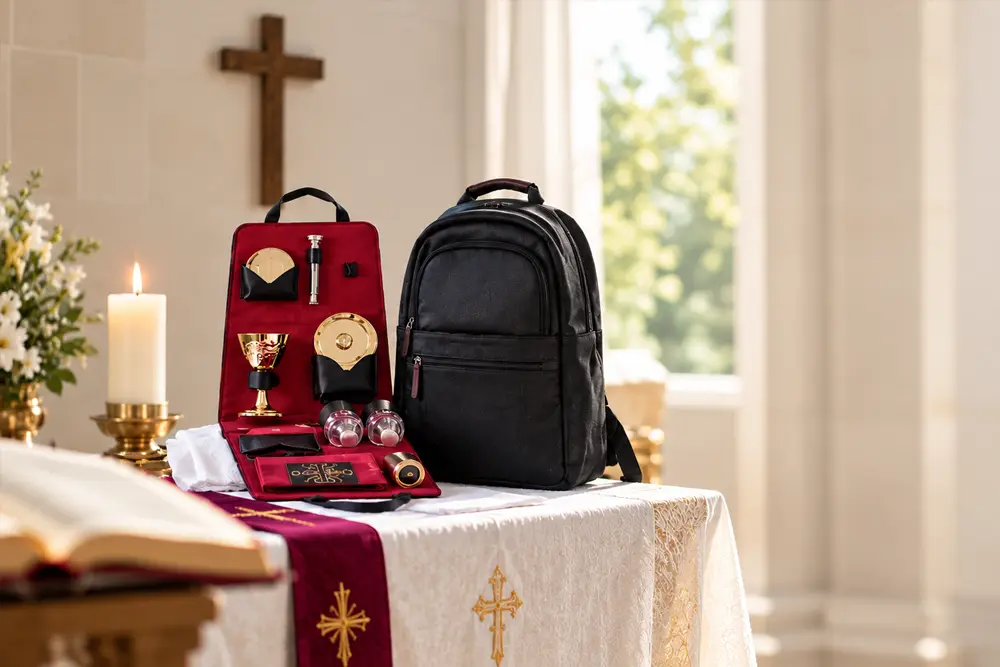
Throughout the year they organize various activities to contribute to the financing of seminarian training and the purchase of backpacks of sacred vessels for those who, after studying in Rome or Pamplona, return to their countries to be ordained priests.

Among the volunteers' memories, the gratitude of a Filipino priest stands out. He wrote to them to tell them that the backpack was essential for his ministry: he celebrated Holy Mass every day on a different island, in small chapels that barely had any resources.


Some practical information


Helping to train priests

The funds raised through the charity markets contribute to the CARF Foundation's mission to support the formation of priests and seminarians, especially those from dioceses with fewer resources.

Mochila de vasos sagrados

The work of the Board of Trustees for Social Action also includes initiatives such as the Backpacks of Sacred Vessels, which are given to seminarians at the end of their training so that, once ordained priests and back in their dioceses, they can celebrate Holy Mass and administer the sacraments with the necessary liturgical objects.

Thus, the solidarity of many people ends up having a substantial impact on the lives of priests who will carry out their ministry in different parts of the world.

What is the Board of Trustees for Social Action of the CARF Foundation?

The Social Action Board (PAS) It brings together and coordinates the work of numerous volunteers who collaborate with the CARF Foundation to support its mission in service to the Church and diocesan priests.

Through various solidarity initiatives, the Board of Trustees seeks to address the specific needs of priests and seminarians, especially in areas with fewer resources. charity markets They are one of these initiatives: thanks to donations from individuals, the work of volunteers and the collaboration of those who participate in them, resources can be obtained for different aid projects.

But the work of the Social Action Board goes far beyond the markets.

What are the funds from the Social Action Board used for?

Among the different actions promoted by the PAS are:

In this way, the work of the volunteers and collaborators of the Social Action Board is transformed into concrete help for priests and communities in different parts of the world.

Every market stall, every donation, and every act of collaboration is part of the same chain of solidarity: to help priests to develop their mission and serve the people of their dioceses. Because behind every object there is a story. And behind every purchase, an opportunity to help.

Another solidarity initiative in Zaragoza

Of the February 28 to March 5, 2026, the premises of the parish's social services Santa Engracia, in Zaragoza, They hosted a new Charity Market organized by the CARF Foundation. An initiative promoted with the collaboration of volunteers from Social Action Board to support the Foundation's mission: to contribute to comprehensive formation of priests and seminarians from all over the world.

During those days, visitors to the flea market found a variety of donated items: dishes, books, paintings, clothing, bags, toys, coffee sets, small furniture, decorative objects, and jewelry, among other things. Each donation gave new life to objects that were no longer used, transforming them into an opportunity to help others.

The Zaragoza Charity Market is also a testament to the commitment of those who collaborate with the CARF Foundation's Social Action Board. Volunteering makes these initiatives possible and ensures that... donations received can be transformed into resources for the training of priests and seminarians.

As the Patronato explains, behind each item there is much more than just a sale. There are people who donate what they no longer need, volunteers who dedicate their time to preparing and running the market, and people who decide to support the cause by purchasing some of the items.

In this way, a set of dishes, a book, a bag or a decorative object can end up becoming an aid for a seminarian to receive the training he needs.


Pope Leo XIV and the Virgin Mary

More than one Mariologist – people who know and study all the Church's doctrine on the Virgin Mary- has already expressed her joy, for the devotion to the Mother of God that she has shown Leo XIV in the brief time of his pontificate.

References to this are common in Wednesday catechetical discourses, in homilies at Eucharistic celebrations, and in the Angelus, such as those included here: "Brothers and sisters, let us ask together..." Maria, Queen of Martyrs, help us to be, in every circumstance, faithful and courageous witnesses of your Son, and to support our brothers and sisters who suffer for the faith today.» (Angelus, August 17, 2025). And he frequently encourages the faithful to ask for Mary’s intercession for peace, serenity in difficult situations, etc.

Pope Leo XIV's devotion to the Virgin Mary

The reference to Maria What has attracted the most attention so far are the words he spoke on June 9th in the homily for the celebration of the Blessed Virgin Mary, Mother of the Church: «John, the only one of the twelve present at Calvary, saw and testified that, at the foot of the cross, along with other women, was the mother of Jesus (Jn 19, 25). And he heard with his own ears the last words of the Master, among which, these: "Woman, here is your son," and then, addressing him: "Here is your mother.".

The new Eve

«"Mary's motherhood through the mystery of the cross took an unthinkable leap. The Mother of Jesus became the new Eve, because the Son associated her with his redemptive death, the source of new and eternal life for every human being who comes into this world.".

Words that have moved Mark Miravalle, a professor of Theology from Franciscan University of Steubenville, USA, to write this commentary after considering other details of Pope Leo XIV's relationship with the Virgin Mary.

«Then there is the homily of June 9, perhaps the clearest reference to Our Lady’s co-redemption in the last twenty years: when he says that Mary’s motherhood took an unimaginable leap to the cross, where she becomes the new Eve and that Jesus associated her with his redemptive death. That is classic co-redemption; and that is what the title Co-Redemptrix means: that Mary participates in a unique way with Jesus, the new Eve with the new Adam, in the redemption of humanity. The fact that the Pope is taking the new Eve to Calvary has great theological weight.»National Catholic Register, August 7).

Leo XIII officially confirmed the title of Co-redemptrix To the Virgin Mary, Mother of God. We do not know if Leo XIV will reaffirm this, after it has been sidelined in certain theological circles in recent years without any serious reason. And if Christ associated her with his redemptive death, who are we to question the actions of Jesus?

The Virgin Mary in Sacred Scripture

While writing these pages, an article published in Religion in Freedom on August 13th fell into my hands, conveying the reasons of a convert that moved him to enter the Church Catholic, and to cease being an evangelical Protestant. His ninth personal reason refers directly to what he calls: The rich biblical typology of the Church. Biblical typology that he employed Papa by calling Mary the "new Eve".

«"This method of reading the Scriptures, which The way the New Testament is foreshadowed in the Old Testament has helped me understand the Bible in very profound ways. It is the method that Jesus, in Luke 24:27, and the Apostle Paul, in Romans 5:12-14, and other apostles used to explain the Scriptures, and it is the method that the Catholic Church uses in its teaching.

This helped me see the scriptural basis of the Church's teaching on Mary, which was my biggest obstacle to entering the Church. Once I understood that she was the New Eve, the New Ark of the Covenant, the new Queen Mother, it became clear that the Church had good reasons to venerate the Blessed Virgin.

Mary leads us to Jesus Christ

Assumed into Heaven, the Mother of God continues to care for the Church of her Son, stirring the hearts and minds of the Pope and all Catholics, so that we may welcome with open arms and hearts all those who discover that She is the ever-open door to enter the one Church founded by Her Son.

«Sweetest Heart of Mary, give strength and security to our journey on earth: be yourself our way, for you know the path and the sure shortcut that lead, through your love, to the love of Jesus Christ» (Saint Josemaría Escrivá).


Ernesto Juliá, (ernesto.julia@gmail.com) | Previously published in Religion Confidential.


Leo XIV: Mary, model of faith and charity

Leo XIV's teaching on the Virgin Mary continued to develop in his catecheses of 2026. In the general audience of May 13, dedicated to the Virgin Mary as a model for the Church, the Pope recalled that Mary is an example of faith and charity for the entire Christian community.

«Dear brothers and sisters, good morning and welcome!

The Second Vatican Council wanted to dedicate the last chapter of the Dogmatic Constitution on the Church to the Virgin Mary (cf. Lumen gentium, 52-69). She is «proclaimed as a most excellent and entirely singular member of the Church and as the perfect type and exemplar of the Church in faith and charity» (n. 53). These words invite us to understand how in Mary, who under the action of the Holy Spirit welcomed and gave birth to the Son of God made flesh, we can recognize both the model, the excellent member, and the mother of the entire ecclesial community.

By allowing herself to be molded by the work of Grace, which came to be fulfilled in her, and by accepting the gift of the Most High with her faith and virginal love, Mary is the perfect model of what the whole Church is called to be: creature of the Word of the Lord and mother of the children of God, generated in docility to the action of the Holy Spirit.

Furthermore, as the quintessential believer, offering us the perfect example of unconditional openness to the divine mystery within the communion of God's holy people, Mary is an excellent member of the ecclesial community. Finally, as she gives birth to children in the Son, beloved in the eternal Beloved who came among us, Mary is the mother of the entire Church, to whom the Church can turn with filial trust, certain of being heard, protected, and loved.

The sum of these characteristics of the Virgin Mary could be expressed by speaking of her as the iconic woman of the Mystery. The term "woman" highlights the historical concreteness of this young daughter of Israel, to whom the extraordinary experience of becoming the mother of the Messiah.

The term "icon" emphasizes that in her the twofold movement of descent and ascent is fulfilled: in her shine forth both God's gratuitous choice and the free consent of faith in him. Mary is therefore the iconic woman of the Mystery, that is, of the divine plan of salvation, hidden in an age and fully revealed in her Jesus Christ.

Predestined from eternity

The Council has left us a clear teaching on the place reserved for the Virgin Mary in the work of Redemption (cf. Lumen Gentium, 60-62). It has reminded us that the only Mediator of salvation is Jesus Christ (cf. 1 Tim 2:5-6) and that his Blessed Mother «in no way obscures or diminishes this unique mediation of Christ, but rather serves to demonstrate its power» (LG, 60).

At the same time, «the Blessed Virgin, predestined from all eternity as the Mother of God together with the Incarnation of the Word, […] cooperated in an entirely unique way in the work of the Savior with obedience, faith, hope and ardent charity in order to restore the supernatural life of souls. For this reason she is our mother in the order of grace» (ibid., 61).

The mystery of the Church is also reflected in the Virgin Mary: in her, the people of God find their origin, their model, and their homeland. In the Mother of the Lord, the Church contemplates its own mystery, not only because it finds again the model of virginal faith, maternal charity, and the spousal covenant to which it is called, but also and above all because it recognizes in her its own archetype, the ideal figure of what it is called to be.

As can be seen, the reflections on the Virgin Mary collected in the Lumen gentium, They teach us to love the Church and to serve in it in the fulfillment of the Kingdom of God that is to come and that will be fully realized in glory.

Let us then allow ourselves to be challenged by such a sublime model as Mary, Virgin and Mother, and let us ask her to help us through her intercession to respond to all that is asked of us through her example: Do I live my belonging to the Church with humble and active faith? Do I recognize the covenant community that God has given me to respond to his infinite love? Do I look to Mary as a model, an excellent member and mother of the Church, and do I ask her to help me be a faithful disciple of her Son?

Brothers and sisters, may the Holy Spirit, who descended upon Mary and whom we invoke with humility and trust, grant us to live these wonderful realities fully. And, having delved into the Constitution Lumen gentium, Let us ask the Virgin to grant us this gift: that love for Holy Mother Church may grow in all of us. Amen!»

Source: General Audience of Leo XIV, May 13, 2026: "The Virgin Mary, model of the Church"«.