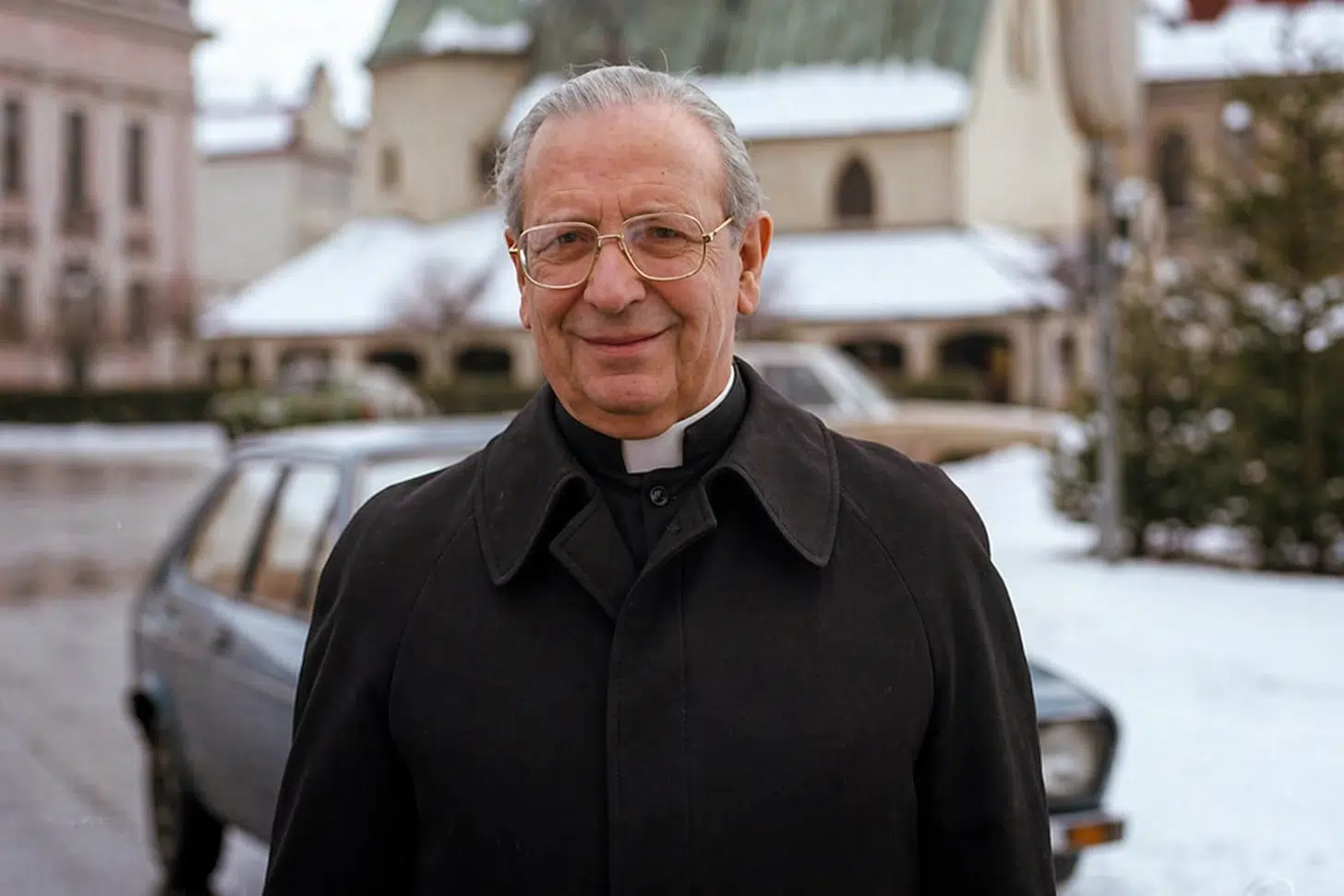
The history of the 20th century could not be fully understood without figures who, through discretion and efficiency, transformed institutions and mentalities. Álvaro del Portillo (1914-1994) is one of them. Doctor of Civil Engineering, Doctor of Philosophy and Letters (History section), and Doctor of Canon Law, his life was a bridge between the rigor of technique and the humble depth of faith. This blog entry looks at some of the outstanding and essential elements of his career, marked by an unwavering loyalty to the Church, to St. Josemaría, to Opus Dei and a prodigious capacity for work: the good and faithful servant.
He was born in Madrid on March 11, 1914 into a family with deep Christian roots. Álvaro stood out from a young age for his brilliant intelligence and natural serenity. His initial training as a Civil engineer marked his mental structure: logical, orderly and oriented to the resolution of complex problems.
This technical mentality would be, years later, fundamental for his work in the Church. Those who lived with him in his youth emphasized his capacity for sacrifice. During the Spanish Civil War, his faith was put to the test in situations of extreme precariousness, forging a temperate character in adversity and a peace that, according to many testimonies, was contagious to those around him.
In 1935, Blessed Alvaro del Portillo met St. Josemaría Escrivá. That encounter transformed his life. He became the strongest supporter of the founder of the Opus Dei, The relationship was inseparable for almost forty years.
In the biography Mission accomplished, by Hugo de Azevedo, details how Álvaro became the rock (saxum) on which St. Josemaría relied. His role was not merely that of a secretary, but that of a confidant, confessor, and necessary collaborator in spreading a revolutionary message in his time: the universal call to holiness in the midst of the world through the sanctification of professional work.
A decisive role in the Second Vatican Council
Perhaps one of the milestones least known by the general public, but most valued by ecclesiastical historians, is the contribution of Blessed Álvaro del Portillo to the Second Vatican Council (1962-1965).
His work in Rome was enormous. He was the secretary of the Commission that drafted the decree Presbyterorum Ordinis, but his influence extended to other vital documents. His ability to mediate and his profound juridical knowledge were key to articulating the role of the laity in the Church. He did not seek the limelight; his style was one of quiet effectiveness in the corridors and commissions of Vatican II, where he earned the respect of cardinals and theologians of all sensibilities in the Church.
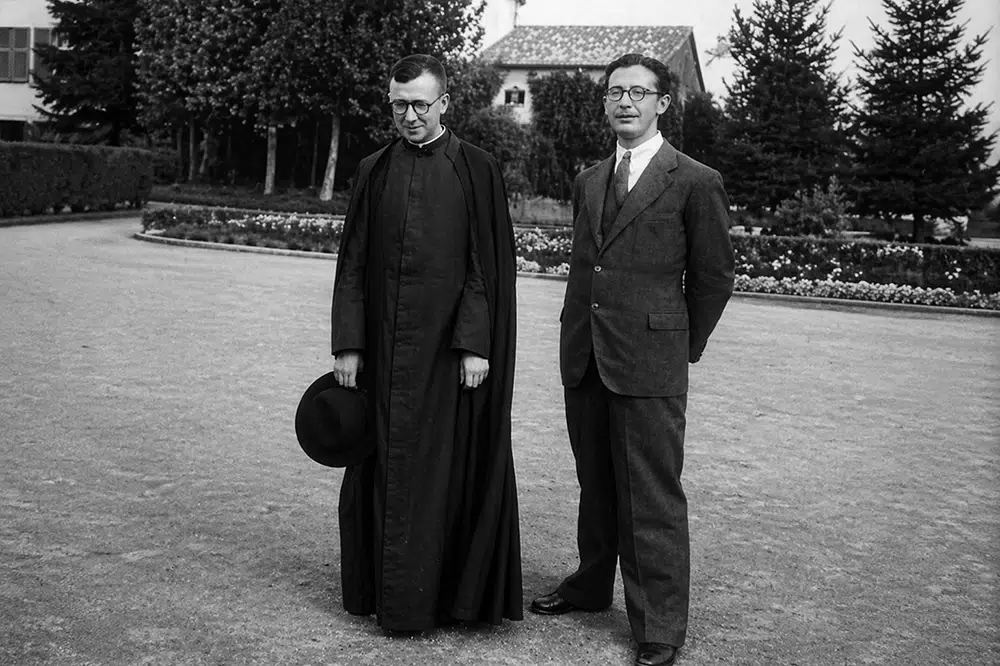
Álvaro del Portillo's responsibilities at Vatican Council II and subsequent
During the pontificate of Pius XII he collaborated in various pontifical dicasteries and was appointed Consultor of the Sacred Congregation for Religious (1954-66). St. John XXIII appointed him consultor to the Sacred Congregation of the Council (1959-1966), and qualifier (1960) and judge (1964) of the Supreme Congregation of the Holy Office. In the stages leading up to the Second Vatican Council, he was president of the Antepreparatory Commission for the Laity and was also a member of other preparatory commissions. He was later appointed among the first one hundred experts of the Council.
In the years of development of the Second Vatican Council (1962-65), he was Secretary of the Commission on the Discipline of the Clergy and the Christian People and Consultor to other Conciliar Commissions: that of Bishops, Religious, Doctrine of the Faith, etc. In 1963 he was appointed, also by John XXIII, consultant to the Pontifical Commission for the Revision of the Code of Canon Law.
Later, St. Paul VI appointed him consultor to the Post-Conciliar Commission on Bishops and the Regime of Dioceses (1966), to the Sacred Congregation for the Doctrine of the Faith (1966-1983) and to the Sacred Congregation for the Clergy (1966).
St. John Paul II appointed him consultor to the Sacred Congregation for the Causes of Saints (1982) and to the Pontifical Council for Social Communications (1984) and member of the secretariat of the Synod of Bishops (1983). Since 1982, he has also been a member of the Secretariat of the Synod of Bishops (1983). ad honorem of the Pontifical Roman Theological Academy. He participated, at the express wish of Pope John Paul II, in the Ordinary General Assemblies of the Synod of Bishops on the vocation and mission of the laity in the Church and in the world (1987) and on the formation of priests in the present situation (1990).
Successor and faithful and creative continuity
Upon the death of St. Josemaría in 1975, Álvaro del Portillo was unanimously elected to succeed him. He faced the most difficult challenge for anyone who must lead: to succeed a charismatic figure of world stature who was already recognized in private circles as a saint.
His administration was characterized by what today could be called "faithful and creative continuity". He did not limit himself to repeating the past, but consolidated the juridical structure of Opus Dei as a Personal Prelature in 1982, a historic milestone that gave the institution a definitive place within Canon Law. During his mandate, the apostolic work was extended to twenty new countries, demonstrating a global vision and an extraordinary capacity for execution.
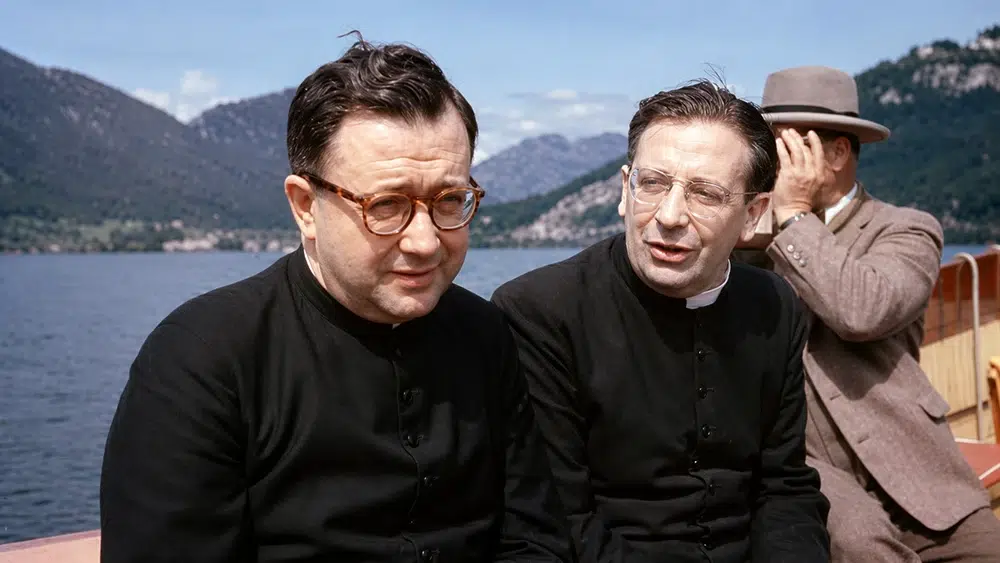
A man of peace and joy: his personality traits
The book Remembrance of Álvaro del Portillo, by Salvador Bernal, collects hundreds of testimonies that coincide in one distinctive feature: his peace. In a turbulent world, he emanated a tranquility that was not the result of the absence of problems, but of a deep inner life and joy.
The last years and the trip to the Holy Land
The end of his life was a summary of his existence. In March 1994, he made a pilgrimage to the Holy Land. Those who accompanied him remember his deep emotion when he prayed in the holy places.
He returned to Rome on March 22 and, a few hours later, in the early hours of the 23rd, he died of a heart attack. Just a few hours earlier, he had celebrated his last Holy Mass in the Church of the Cenacle in Jerusalem. It was a symbolic farewell: the engineer who had built spiritual bridges all over the world was ending his journey in the cradle of his faith.
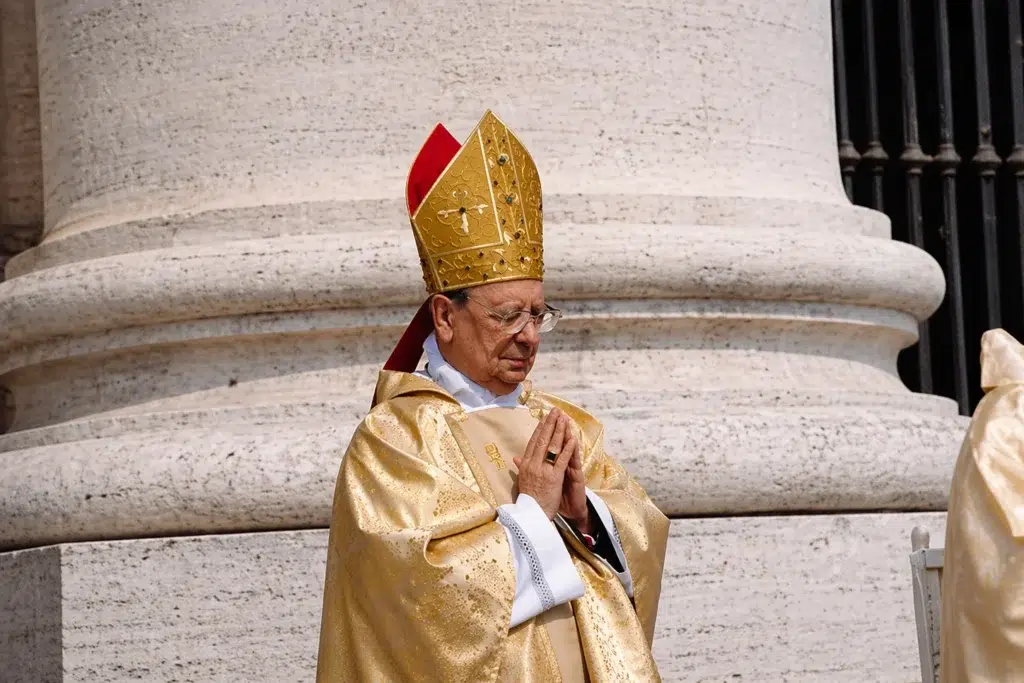
On September 27, 2014, the beatification of Don Álvaro in Madrid was a multitudinous event that confirmed what many already knew: his life had been a "mission accomplished". And we review the homily delivered that day by Cardinal Angelo Amato.
"1. «Pastor after Christ's own heart, zealous minister of the Church.» [1]. This is the portrait that Pope Francis offers of Blessed Alvaro del Portillo, a good shepherd who, like Jesus, knows and loves his sheep, leads those who are lost to the fold, binds up the wounds of the sick and offers his life for them. [2].
The new Blessed was called as a young man to follow Christ, to be later a diligent minister of the Church and to proclaim throughout the world the glorious richness of his saving mystery: «We proclaim this Christ; we admonish all, we teach all, with all the resources of wisdom, to present them all perfect in Christ.
For this reason I fight hard with his strength, which acts powerfully in me.» [3]. And this proclamation of Christ the Savior was made with absolute fidelity to the cross and, at the same time, with exemplary evangelical joy in the midst of difficulties. For this reason, the Liturgy applies to him today the words of the Apostle: «Now I rejoice in my sufferings for your sake: thus I complete in my flesh what is lacking in Christ's sufferings for the sake of his body, which is the Church».» [4].
Serene happiness in the face of pain and suffering is a characteristic of the saints. Moreover, the beatitudes - even the more arduous ones, such as persecutions - are nothing but a hymn to joy.
2. Blessed Alvaro lived the virtues of faith, hope and charity in a heroic way. He practiced these virtuous habits in the light of the beatitudes of meekness, mercy and purity of heart. The testimonies are unanimous. Besides standing out for his total spiritual and apostolic harmony with the holy Founder, he also distinguished himself as a figure of great humanity.
Witnesses affirm that, since he was a child, Álvaro was «a boy with a very cheerful and studious character, who never gave any trouble»; «he was affectionate, simple, cheerful, responsible, good...» [5].
He inherited from his mother, Doña Clementina, a proverbial serenity, gentleness, a smile, understanding, speaking well of others, and weight in judging. He was a true gentleman. He was not loquacious. His training as an engineer gave him the mental rigor, conciseness and precision to get to the heart of problems and solve them. He inspired respect and admiration.
3. His gentleness in his dealings went hand in hand with an exceptional spiritual richness, in which the grace of unity between interior life and untiring apostolic zeal stood out. The writer Salvador Bernal affirms that he transformed the humble prose of daily work into poetry.
He was a living example of fidelity to the Gospel, to the Church, to the Magisterium of the Pope. Whenever he went to St. Peter's Basilica in Rome, he used to recite the Creed before the tomb of the Apostle and a Salve before the image of St. Mary, Mater Ecclesiae.
He shunned all personalism, because he transmitted the truth of the Gospel and the integrity of tradition, not his own opinions. Eucharistic piety, Marian devotion and veneration for the Saints nourished his spiritual life.
He kept God's presence alive with frequent ejaculatory and vocal prayers. Among the most common were: Cor Iesu Sacratissimum et Misericors, dona nobis pacem!, y Cor Mariae Dulcissimum, iter para tutum; as well as the Marian invocation: Holy Mary, our Hope, Handmaid of the Lord, Seat of Wisdom, our Hope..
4. A decisive moment in his life was the call to Opus Dei. At the age of 21, in 1935, after meeting St. Josemaría Escrivá, then a young priest of 33, he responded generously to our Lord's call to holiness and apostolate.
He had a deep sense of filial, affective and effective communion with the Holy Father. He welcomed his teaching with gratitude and made it known to all the faithful of Opus Dei. In the last years of his life, he often kissed the Prelate's ring given to him by the Pope to reaffirm his full adherence to the Roman Pontiff's wishes. In particular, he seconded his requests for prayer and fasting for peace, for Christian unity and for the evangelization of Europe.
He stood out for his prudence and rectitude in evaluating events and persons; his justice in respecting the honor and freedom of others; his fortitude in resisting physical and moral setbacks; and his temperance, lived as sobriety, interior and exterior mortification. Blessed Alvaro transmitted the good odor of Christ.bonus odor Christi- [6], which is the aroma of authentic holiness.
5. However, there is one virtue that Bishop Alvaro del Portillo lived in a particularly extraordinary way, considering it an indispensable instrument for holiness and the apostolate: the virtue of humility, which is imitation and identification with Christ, meek and humble of heart [7]. He loved the hidden life of Jesus and did not despise the simple gestures of popular devotion, such as, for example, going up on one's knees the Scala Santa in Rome.
A member of the Prelature, who had visited the same place but had climbed up the hill on foot, was Scala Santa, Blessed Alvaro replied with a smile, and added that he had brought her up on his knees, even though the atmosphere was somewhat stuffy because of the crowd of people and the poor ventilation. [8]. It was a great lesson in simplicity and piety.
Monsignor del Portillo was, in fact, beneficially “infected” by the behavior of Our Lord Jesus Christ, who did not come to the Church in the name of the Lord Jesus Christ. to be served, but to serve [9]. For this reason, he often prayed and meditated on the Eucharistic hymn Adoro Te devote, latens deitas. In the same way, he considered the life of Mary, the humble handmaid of the Lord.
Sometimes I remembered a phrase of Cervantes, from the Exemplary Novelswithout humility, there is no virtue that is«.» [10]. And he often recited a frequent ejaculation among the faithful of the Work: «....«Cor contritum et humiliatum, Deus, non despicies" [11]; You will not despise, O God, a contrite and humbled heart.
For him, as for St. Augustine, humility was the charity home [12]. He repeated a piece of advice that the Founder of Opus Dei used to give, quoting some words of St. Joseph Calasanz: «If you want to be holy, be humble; if you want to be more holy, be more humble; if you want to be very holy, be very humble».» [13].
Nor did he forget that a donkey was Jesus“ throne at the entrance to Jerusalem. Even his fellow students, in addition to highlighting his extraordinary intelligence, emphasized his simplicity, the serene innocence of one who does not consider himself better than others. He thought that his worst enemy was pride. A witness affirms that he was ”humility in person".” [14].
His humility was not harsh, flashy, exasperated; but affectionate, joyful. His joy derived from the conviction of his low personal worth. In early 1994, the last year of his life on earth, in a meeting with his daughters, he said: «I say it to you, and I say it to myself. We have to struggle all our lives to become humble.
We have the marvelous school of humility of the Lord, the Blessed Virgin and St. Joseph. Let us learn. We are going to fight against our own self that is constantly rising up like a viper, to bite. But we are safe if we are close to Jesus, who is of the lineage of Mary, and is the one who will crush the head of the serpent.» [15].
For Don Alvaro, humility was «the key that opens the door to enter the house of holiness,» while pride was the greatest obstacle to seeing and loving God. He said: «humility strips us of the ridiculous cardboard mask that presumptuous, self-conceited people wear».»[16].
Humility is the recognition of our limitations, but also of our dignity as children of God. The best praise for his humility was expressed by a woman of Opus Dei, after the death of the Founder: «Don Álvaro died, because our Father continues to live in his successor».» [17].
A cardinal testifies that when he read about humility in the Rule of St. Benedict or in the Spiritual Exercises Ignatius of Loyola, it seemed to him that he was contemplating a lofty ideal, but one that was unattainable for human beings. But when he met and got to know Blessed Alvaro, he understood that it was possible to live humility in a total way.
6. The words that Cardinal Ratzinger pronounced in 2002, on the occasion of the canonization of the Founder of Opus Dei, can be applied to the Blessed. Speaking of heroic virtue, the then Prefect of the Congregation for the Doctrine of the Faith said: «Heroic virtue does not exactly mean that one has accomplished great things on his own, but that in his life there appear realities that he has not done himself, because he has shown himself transparent and available for God to act [...]. This is sanctity».» [18].
This is the message that Blessed Alvaro del Portillo, «pastor according to the heart of Jesus, zealous minister of the Church», delivers to us today.» [19]. He invites us to be saints like him, living a kind, merciful, gentle, meek and humble holiness.
The Church and the world need the great spectacle of holiness to purify, with its pleasant aroma, the miasmas of the many vices flaunted with arrogant insistence.
Now more than ever we need an ecology of holiness to counteract the contamination of immorality and corruption. The saints invite us to bring into the bosom of the Church and society the pure air of God's grace, which renews the face of the earth.
May Mary, Help of Christians and Mother of Saints, help and protect us.
Blessed Alvaro del Portillo, pray for us. Amen".
Blessed Álvaro del Portillo leaves behind the legacy of a man who knew how to combine the professional excellence with a deep personal humility. His life demonstrates that it is possible to be at the center of great historical events while always keeping one's heart on the essential: service to others and fidelity to one's principles.
Table of Contents
 carf@fundacioncarf.orgLandline: +34 914 029 082Mobile: +34 638 078 51145 Conde de Peñalver Street.