Sixty years after the promulgation of the historic conciliar declaration on the Church's relations with non-Christian religions, the Holy See offers a document of theological and pedagogical depth, which reviews the legacy of "Nostra aetate", assesses the challenges of the present and charts the future coordinates of interreligious dialogue.
The spark of a silent revolution
On October 28, 1965, amidst the fervor of the Second Vatican Council, the Catholic Church made public the Declaration Nostra aetate «"On the relations of the Church with non-Christian religions." That brief but extremely bold text marked an irreversible shift by stating that the Church "rejects nothing that is true and holy in these religions" (NA 2).
Sixty years later, the Dicasteries for the Doctrine of the Faith, for Promoting Christian Unity, and for Interreligious Dialogue have jointly published the commemorative note "A Path of Hope." The document, approved by the Pope Leo XIV Following his audience with the prefects and secretaries of the three dicasteries, he presents himself not as a bureaucratic assessment, but as a living and urgent manifesto for a planet threatened by polarization, identity retreat and the aftermath of war.
Jewish roots and the essential memory of the Holocaust
The Note recalls with journalistic and historiographical precision that Nostra aetate It was not born as an academic exercise, but as a direct response to the atrocious consequences of antisemitism and the Holocaust. The document recounts how Saint John XXIII, impacted by his providential encounter with the Jewish historian Jules Isaac and thanks to the mediation of Maria Vingiani, commissioned Cardinal Augustin Bea to write a text intended to heal relations between the Church and the Jewish people.
In its theological development, the Note emphasizes that Jesus was Jewish and never stopped being so.. Citing 20th-century theology, he affirms that in the Incarnation the Word became "Jewish flesh." Therefore, Jewish-Christian dialogue is not a diplomatic option or a secondary practice, but an intrinsic element for the Church to understand its own identity, and an essential component of its mission.
God's covenant with the Jewish people is irrevocable(cf. Rom 11:29). At the same time, the text maintains the confession of Christ as the only Redeemer. It clarifies that, therefore, this does not imply supporting two parallel paths to salvation, but rather recognizing that Jewish religiosity as lived today remains an active value that enriches Christians. «What Jesus contributed to Christianity as a Jewish heritage forms part of the theological structure of Christianity itself» (A path of hope, 11).
The document also renews its condemnation of antisemitism and points to the memory of the Holocaust as a permanent warning against the danger of racial and religious hatred.
Mr. Ramiro Pellitero Iglesias, professor emeritus of Pastoral Theology at the School of Theology at the University of Navarra.
Published in Church and new evangelization.
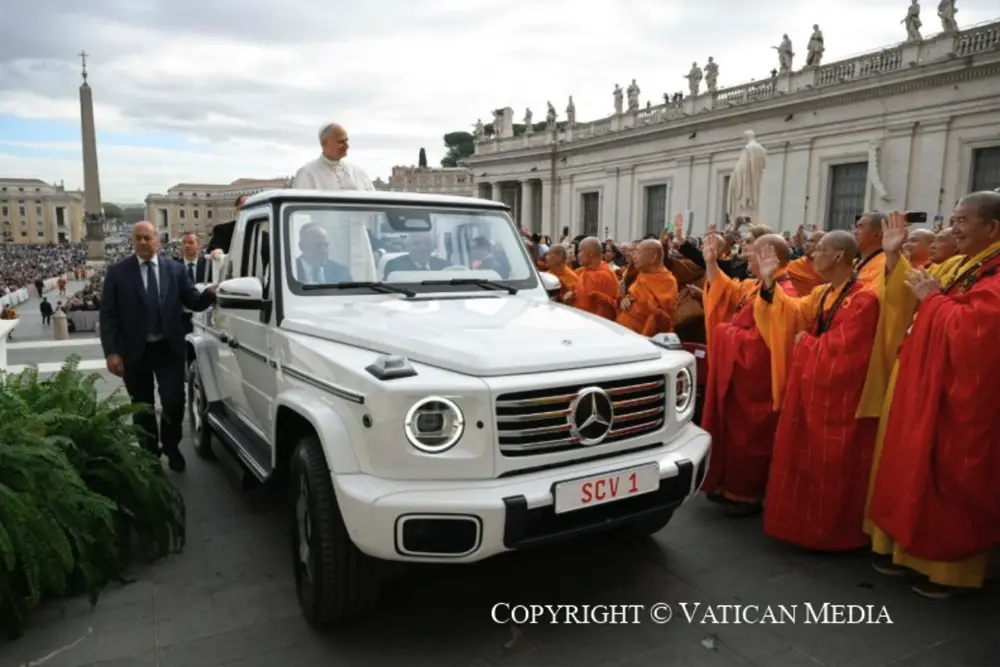
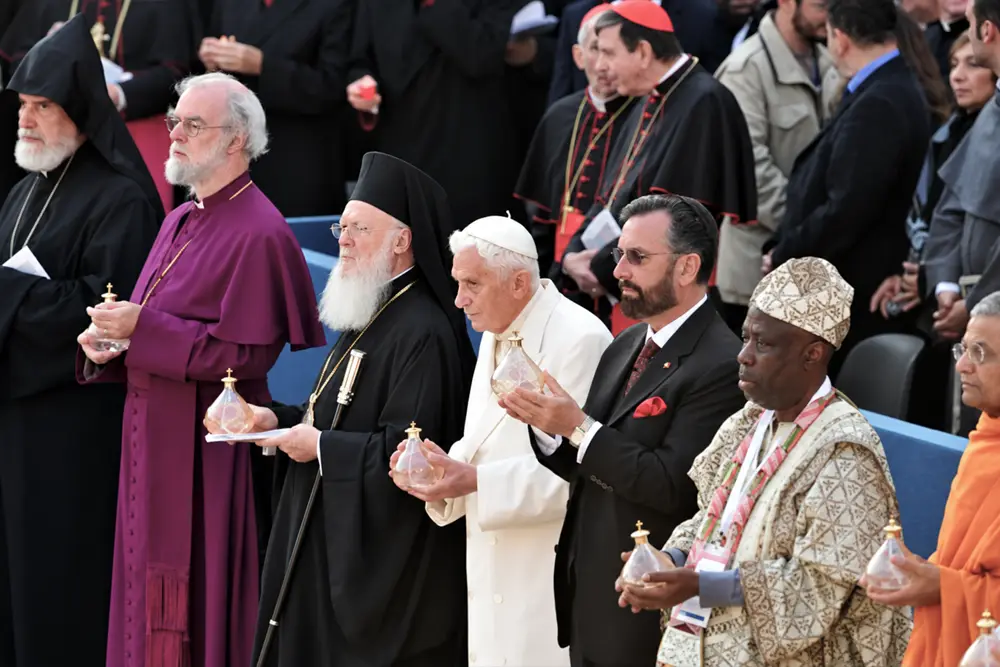
The recent teachings of Pope Leo XIV invite us to delve deeper into this culture of encounter. In his meeting with representatives of different religious traditions, held in Metz on September 28, 2016, he reminded us that dialogue does not mean renouncing one's own identity, but rather living it with openness and respect for those who are different.
For the Pope, interreligious dialogue has a specific purpose: to foster friendship, peace, and the recognition of the dignity of every person. In a world marked by conflict and division, the various religious traditions are called to contribute together to a culture that rejects any use of faith to justify violence.
This perspective directly links to the spirit of Nostra aetate and with the recent Note A path of hope, which encourages us to continue building bridges of knowledge, respect and collaboration among believers.
The spirit of Nostra aetate It continues to illuminate the path of the Church. The Church recognizes that all religions can reflect "a glimmer of that Truth which enlightens all men" (n. 2) and seek answers to the great mysteries of human existence, so dialogue must be not only intellectual, but profoundly spiritual.
The Declaration invites all Catholics—bishops, clergy, consecrated persons and lay faithful—to participate sincerely in dialogue and collaboration with the followers of other religions, recognizing and promoting all that is good, true and holy in their traditions (cf. ibid.This is necessary today in practically every city in the world where, due to human mobility, our spiritual and cultural diversities are called to meet and live together fraternally.
Nostra aetate It reminds us that true dialogue is rooted in love, the only foundation of peace, justice and reconciliation, while firmly rejecting all forms of discrimination or persecution, affirming the equal dignity of every human being (cf. NA, 5).
The Gospel offers a particularly significant image for understanding the dialogue between people of different religious traditions: the encounter of Jesus with the Samaritan woman.
In his catechesis on Nostra aetate, Leo XIV presented this episode as an example of dialogue based on openness, sincere listening, and recognition of the other. Jesus transcends cultural and religious barriers to encounter a specific person.
From this perspective, interreligious dialogue is not just about finding common ground. It also involves learning to listen, getting to know the other, and recognizing what unites us without hiding our differences.
Sixty years later Nostra aetate, This attitude remains an invitation to build relationships based on respect, friendship, and the shared search for truth.
 carf@fundacioncarf.orgLandline: +34 914 029 082Mobile: +34 638 078 51145 Conde de Peñalver Street.