The formation of lay people in canon law

His path from the Charismatic Renewal to his studies at the University of the Pontifical University of the Holy Crossz in Rome, shows how God's grace transforms life and opens horizons of mission for the Church today, giving impetus to the lay training for the new communities that emerge in it.

Fabiana was born on March 23, 1980 in Recife, in the Northeast region of Brazil, and is currently in her last year of her degree in Canon Law, thanks to the CARF Foundation, which granted her a scholarship during her studies.

A transforming encounter with Jesus

I am Brazilian, I was born in the city of Recife, in the state of Pernambuco, in the northeastern region of Brazil. I am the youngest daughter of four siblings. My family has always been Catholic: my mother, a deeply committed and practicing woman of the Catholic faith and the sacraments; my father, although not practicing, encouraged my siblings and me to participate and follow my mother. I grew up in an environment where Christian values were presented to us and witnessed by my parents as a reality of daily life.

But it was around the age of 13 when I had a personal experience with the living Jesus, through the Catholic Charismatic Renewal. From that experience, Jesus became someone close to me, who lived with me, who accompanied me in my moments of study and also in my leisure time, when I was with my friends. Jesus was with me in my daily life. He was not only a God who gave me rules (the ten commandments) to follow, but a God who wanted me to be happy and joyful in my daily life.

Experience renewed sacramental practice and prayer life

Through this experience, participation in the Holy Eucharist took on a new meaning: I began to attend daily, not just as an obligation on Sundays.

Born in me the desire to read the Bible, I began to learn more about the Catholic faith, to participate more fervently in the sacrament of Confession. I began to join a prayer group of the Catholic Charismatic Renewal, to take an interest in activities and social works, wishing that other people could also have that same personal encounter with Jesus that gave a new meaning to my life.

Everything good became even better, and what I had previously considered negative I learned to see in a different way, even discovering the meaning of difficulties.

This personal encounter with Jesus was a turning point in my life. I am very grateful to God because it happened at the beginning of my adolescence, giving me a fundamental foundation. A desire for holiness was born in me: to do everything well and to do it for God., giving meaning to the values that my parents taught me, to the attitudes that I saw in them and that now found a deeper meaning in God's love for me, for my family and for each person.
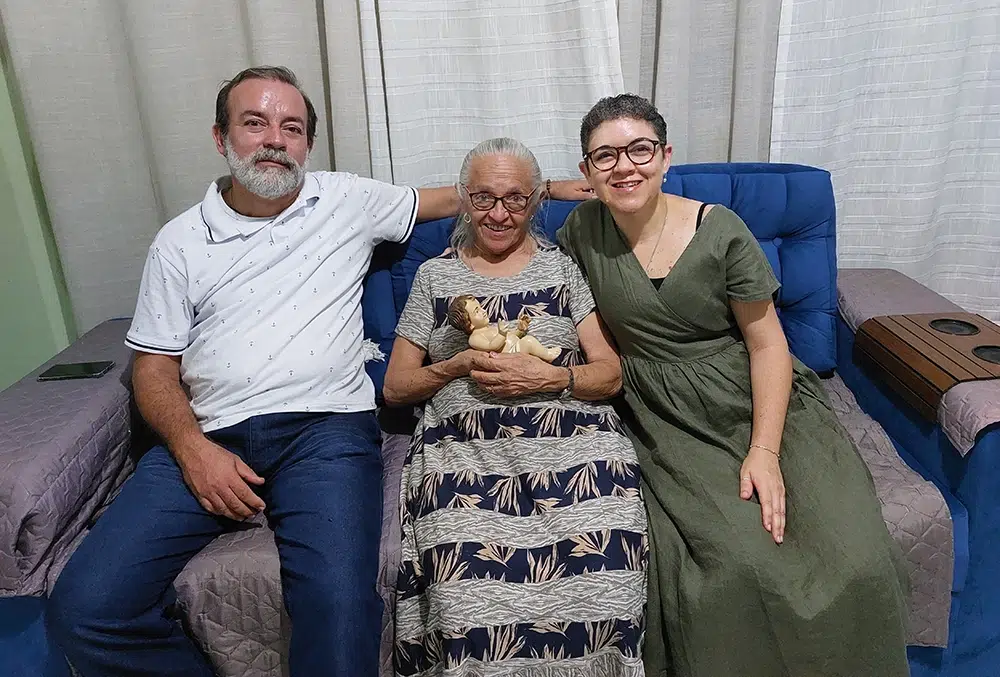
Fabiana Valdevino de Souza with her father and mother.

From Charismatic Renewal to service in the new communities

However, as the years went by, I began to feel that God was asking more of me, and that I also wanted to give more to the Lord. It was then that, for the first time, I thought of living in a new community. After a few months of prayer and discernment, I had the courage to seek out the Founder and those in charge of the community. Behold your Mother-Work of Mary to share what I was feeling and express my desire to make a community experience.

Years later I met the Community Behold your Mother-Work of Mary, a new community born in the neighborhood of Várzea, where I was living in Recife. When I came into contact with the first members of the community, I experienced mixed feelings: on the one hand, I was impressed by their courage in leaving everything - their father's house, their city - to live in community with the aim of evangelizing; on the other hand, it seemed to me an enormous challenge. My first thought was: «What about my projects, my dreams, am I going to give up everything? It is not necessary... I am already following Jesus, I am already fulfilling my part».

This is how I assumed, as a way of life, the charism of the community: to evangelize in every way, with joy, helping the local Church in its various needs, inviting everyone to take the Virgin Mary home, both in a physical and spiritual dimension. To evangelize and serve the Church like the Virgin Mary, guided by the grace of the Holy Spirit. To carry out the mission of the community I was sent to our mission house in Rome, where we developed our apostolate in a parish in the periphery.

Formation of the laity: discovering Canon Law

After a few years in Rome, a friend of the community told us about the course. Ecclesial Movements and New Communities, organized by the Pontifical University of the Holy Cross. He told us that he had already done it and that it would be very good for me and another missionary to participate as well, to help in the needs of the community. I spoke with our founder and after sharing it with the General Council, we received the proposal to do the course. That was our first contact with the PUSC.

From that course onwards we better understood the need for some members to enter the world of Canon Law, in order to help the Community in a special way and, at the same time, to prevent future errors. At the beginning we thought it was something intended for the formation of priests. However, in sharing it with the organizers of the course, we were encouraged to recognize the importance of also having the laywomen of a new community dedicate themselves to the study of Canon Law, given that this reality is still new and requires the preparation of lay people.

With some fear, but also with enthusiasm, I started my first steps in the ISSRA and then in the course of Canon Law. In time, I recognized as divine providence the opportunity to study Canon Law, especially at the PUSC, where it is always presented to us with its true purpose: the contribution to the salus animarum. Without this objective, the study would become cold and distant from the mission for which the Church exists with all its structure.
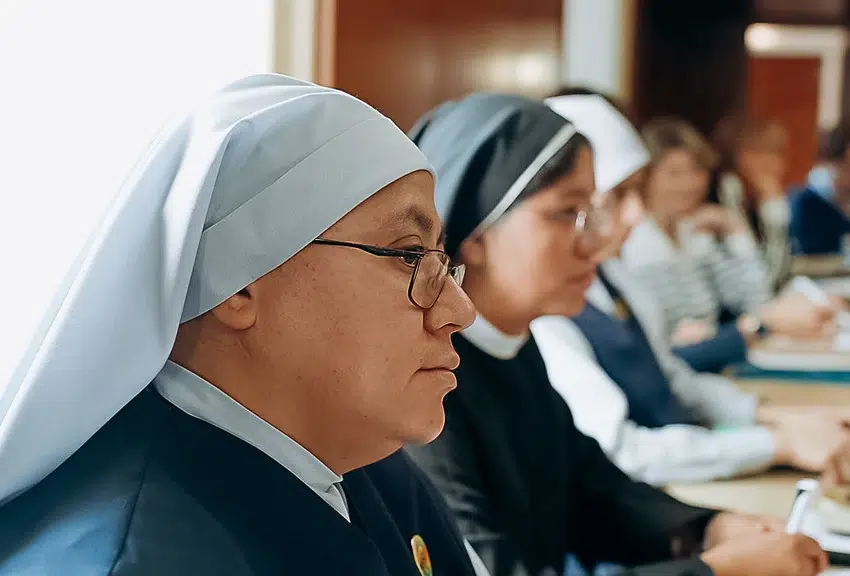
Religiosas estudiando en la Universidad Pontificia de la Santa Cruz
Religious, in a PUSC class.

CARF Foundation grants, a key support for training

The financing of study grants managed by the CARF Foundation, thanks to the generosity of thousands of benefactors and friends, is key to the formation of seminarians and diocesan priests, but also for religious men and women of new and consolidated movements in the Church.

«Given this opportunity to receive a solid formation, my desire with the Degree in Canon Law is to help my community, but also other communities and movements in Brazil and in the world. I wish to serve better and be faithful to the call that the Lord has given me, and for this I am enormously grateful to the benefactors of the CARF Foundation for giving me this great opportunity to receive concrete help in my formation», thanks Fabiana Valdevino de Souza.


Gerardo Ferrara, Degree in History and Political Science, specializing in the Middle East. Head of the student body at the Pontifical University of the Holy Cross in Rome.


St. Charles Borromeo, patron saint of seminarians

St. Charles Borromeo was one of the most important persons of the Catholic Reformation, also known as the Counter-Reformation, in the 16th century. A man who was born into the opulence of the nobility and chose service and austerity.

His life shows how a priest, Armed with an iron will and faith, he can help transform the Church. He is remembered as a model pastor for his love of the Church. formation of seminarians and catechists.

The Borromeo family

Charles Borromeo was born on October 2, 1538 in the castle of Arona, on Lake Maggiore (Italy). His family, the Borromeo, was one of the oldest and most influential of the Lombard nobility. His father was Count Gilberto II Borromeo and his mother Margarita de Medici.

This maternal kinship would mark his destiny in a decisive way. His maternal uncle, Giovanni Angelo Medici, would become Pope Pius IV. From a young age, Charles showed remarkable piety and a serious inclination towards study, despite suffering from a slight speech impediment.

At the age of twelve, his family had already destined him for an ecclesiastical career, receiving the tonsure and the title of commendatory abbot. He studied Canonic Law and Civil Engineering at the University of Pavia.

A lay cardinal at the age of 22

The life of St. Charles Borromeo changed in 1559. After the death of Pope Paul IV, his maternal uncle was elected Pope, taking the name Pius IV. Almost immediately, the new pope called his nephew to Rome.

In 1560, at only 22 years of age and without having been ordained priest still, Charles was named cardinal deacon. It is essential to understand that, at that time, the cardinalate was often a political and administrative position. Pius IV also appointed him secretary of state of the Holy See.

It became, de facto, the most powerful man in Rome after the pope. He administered the affairs of the Papal States, managed Vatican diplomacy and oversaw countless projects. He lived like a Renaissance prince, surrounded by luxuries, although he personally maintained his piety.

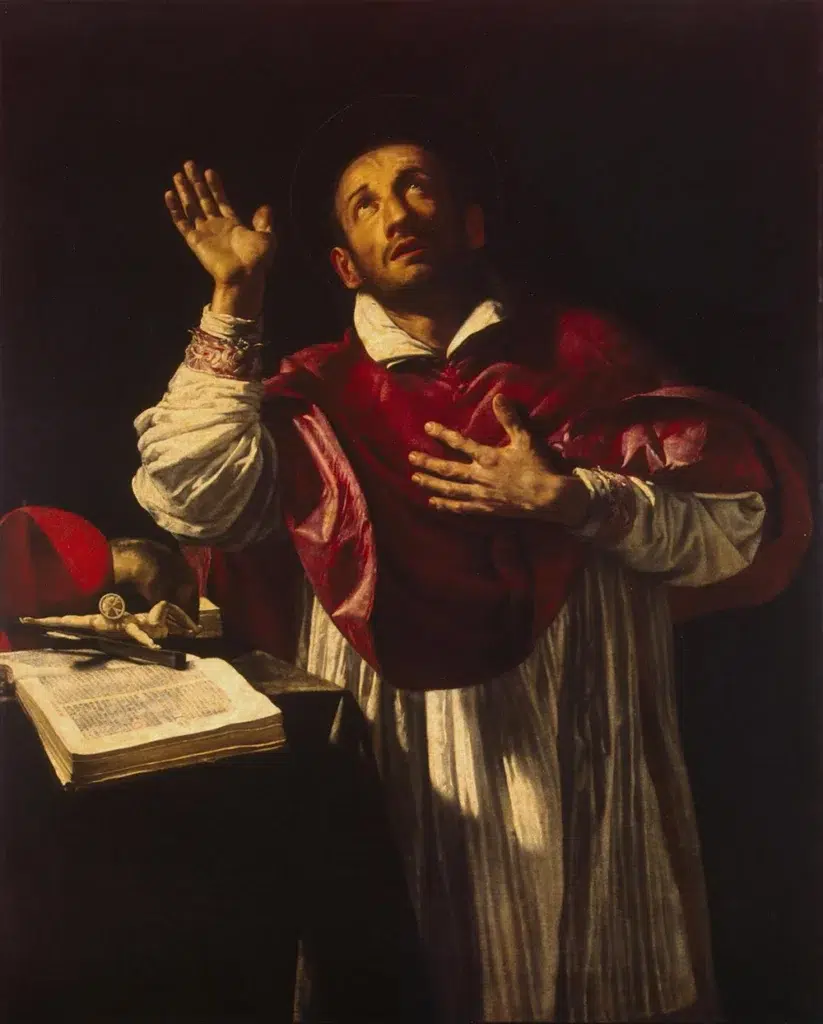
San Carlos Borromeo de Orazio Borgianni
St. Charles Borromeo from Orazio Borgianni.

Conversion and his call to the priesthood

The life of St. Charles Borromeo in Rome, although administratively efficient, was mundane. However, a tragic event shook his conscience: the sudden death of his older brother, Frederick, in 1562.

This loss caused him to reflect deeply on the vanity of the earthly life and the urgency of eternal salvation. Frederick was the heir of the family, and his death put pressure on Charles to leave the ecclesiastical life to ensure offspring.

Charles rejected this idea. He experienced a profound spiritual conversion. He decided that he would no longer be a lay administrator with a cardinal's title, but a true man of God. In 1563, it sought ordination and was consecrated priest, and soon after, bishop. His life changed radically: he adopted a lifestyle of extreme austerity, fasting and prayer.

The driving force behind the Council of Trent

The great work of the pontificate of Pius IV was the resumption and completion of the Council of Trent (1545-1563), which had been blocked for years. St. Charles Borromeo, In his position at the Secretariat of State, he was the diplomatic and organizational driving force that brought the Council to a successful conclusion in its final phase.

It was he who managed the tense negotiations between the European powers (Spain and France), the papal legates and the bishops. His tenacity was key to the council defining Catholic doctrine in the face of the Protestant reform and, crucially, establishing the decrees for the internal reform of the Church.

The council ended, St. Charles Borromeo did not rest. He dedicated himself body and soul to implementing his decrees. He chaired the commission that drafted the Roman Catechism (or Catechism of Trent), a fundamental tool for instructing the faithful and unifying teaching.

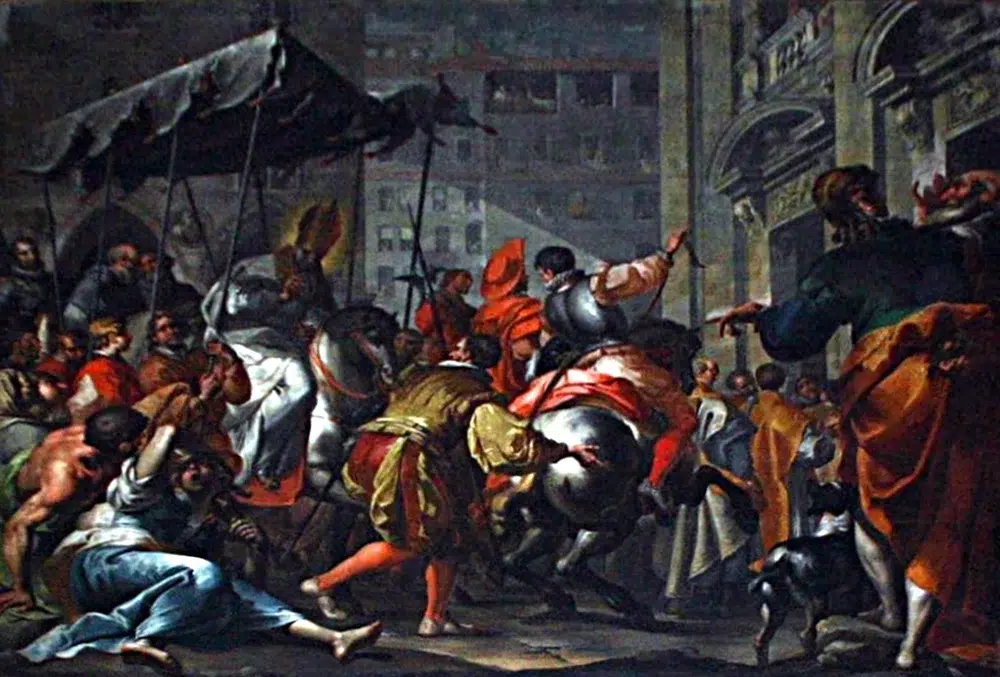
The triumphal entry of St. Charles Borromeo in Milan by Filippo Abbiati, Milan Cathedral.

St. Charles Borromeo: resident archbishop of Milan

While in Rome, St. Charles Borromeo had been appointed archbishop of Milan in 1560. However, as was the custom of the time, he governed his diocese "in absentia" through vicars. He was a "shepherd without a flock".

The very Council of Trent that he helped conclude forbade this practice and required bishops to reside in their dioceses. True to his principles, Charles begged his uncle, the pope, to allow him to leave the glory of Rome for the difficult Milan.

In 1565, Pius IV agreed. The entry of St. Charles Borromeo in Milan marked the beginning of a new era. For the first time in almost 80 years, Milan had a resident archbishop.

Milan's challenge: a diocese in ruins

The archdiocese of Milan which found Charles Borromeo was a reflection of the ills of the pre-Tridentine Church. It was one of the largest and richest dioceses in Europe, but spiritually it was in anarchy.

The clergy were deeply relaxed and poorly trained. Many priests did not keep celibacy, lived luxuriously or were simply ignorant of basic doctrine. The religious ignorance of the people was vast. The monasteries, both male and female, had lost their discipline and had become centers of social life.

The relentless reform of St. Charles Borromeo

St. Charles Borromeo applied the decrees of Trent with superhuman energy. His method was clear: to visit, regulate, form and lead by example.

He began by reforming his own archiepiscopal house. He sold the luxurious furnishings, drastically reduced his servants and adopted an almost monastic regime of life. His example as priest austere was his first reform tool.

He began pastoral visits, tirelessly touring each of the more than 800 parishes in his diocese, many in difficult-to-access mountainous areas in the Alps. He inspected the churches, examined the clergy and preached to the people.

To implement the reform, he convoked numerous diocesan synods and provincial councils, where he promulgated strict laws to correct the abuses of the clergy and laity. He was not afraid to confront the nobles and Spanish governors, who saw his authority as an intrusion.

The creation of the seminar

St. Charles Borromeo understood perfectly well that the reform of the Church was impossible without a well-trained clergy. The Council of Trent had ordered the creation of seminars for this purpose, but the idea was at a very theoretical level.

Charles was the absolute pioneer in its practical implementation. He founded the major seminary in Milan in 1564, making it the model for the entire Catholic Church. He went on to establish minor seminaries and schools (like the Helvetic, to train clergy against Calvinism).

He established strict rules for the spiritual, academic and disciplinary life of every seminarian. I wanted the future priest was a man of deep prayer, learned in theology and morally blameless. The figure of the seminarian modern, dedicated exclusively to his formation for ministry, is a direct inheritance of the vision of St. Charles Borromeo. For this reason, he is considered the patron saint of all seminarian.

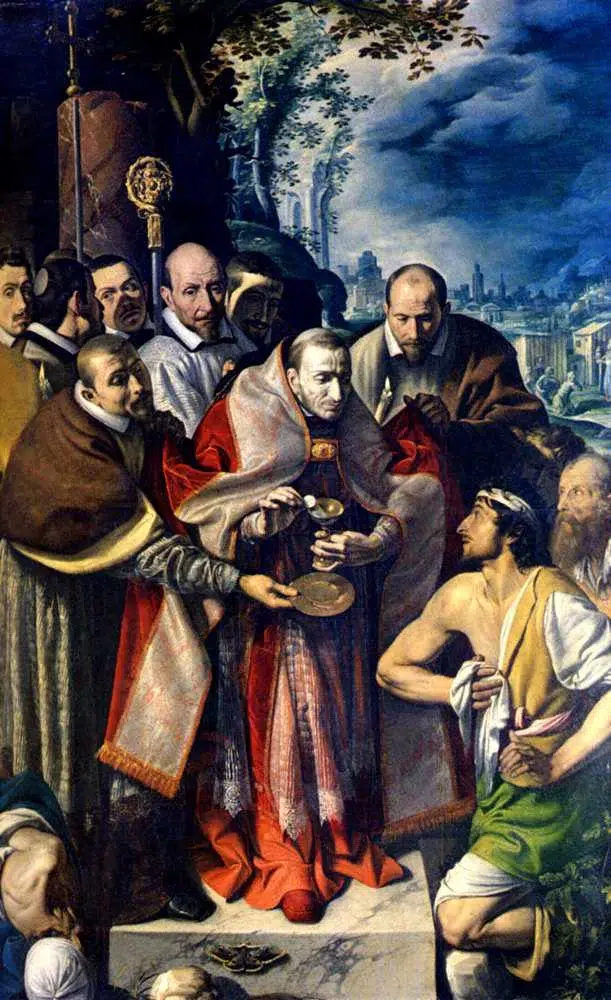
St. Charles Borromeo giving communion to plague victims, by Tanzio da Varallo, ca. 1616 (Domodossola, Italy).

A priest for his people

The defining moment of the heroism of St. Charles Borromeo was the terrible plague that devastated Milan between 1576 and 1577, known as the plague of St. Charles.

When the epidemic broke out, the civil authorities and most of the nobles fled the city to save themselves. St. Charles Borromeo he stayed. He became the moral, spiritual and, in many ways, civil leader of the disease-ridden city.

He organized field hospitals (lazarettos), gathered his faithful clergy and urged them to care for the dying. He himself went through the most infected streets, giving Communion and Extreme Unction to the plague-stricken, without fear of contagion.

He sold his remaining possessions, including the tapestries of his palace, to buy food and medicine for the poor. So that the sick who could not leave their homes could attend Mass, he ordered the Eucharist to be celebrated in public squares. His figure, leading barefoot penitential processions through the city, became an important figure in the city's history. symbol of hope.

Opposition and attack

The reform of St. Charles Borromeo was neither easy nor popular. His rigor earned him powerful enemies. He constantly clashed with the Spanish governors of Milan, who tried to limit his jurisdiction.

But the most violent opposition came from within the Church. The Humiliati, The friars, a religious order that had become morally lax and possessed great wealth, refused to accept his reform. In 1569, a member of this order, Friar Girolamo Donato Farina, attempted to assassinate him.

While St. Charles Borromeo While he was praying on his knees in his chapel, the friar shot him in the back with an arquebus at point-blank range. Miraculously, the bullet only tore his vestments and caused a slight bruise. The people saw this as a divine sign, and Pope Pius V suppressed the order of the Humiliati shortly thereafter.

Legacy, death and canonization

The constant effort, extreme penances and tireless work exhausted the health of St. Charles Borromeo. In 1584, while performing a spiritual retreat on Mount Varallo, he contracted a fever.

He returned to Milan gravely ill and died on the night of November 3, 1584, at the age of 46. His last words were Ecce venio (Here I come).

His reputation for holiness was immediate. The people of Milan venerated him as the priest martyr to charity and reform. The process of canonization was extraordinarily rapid for the time. He was beatified in 1602 and canonized by Pope Paul V in 1610.

St. Charles Borromeo is universally recognized as the patron saint of bishops, catechists and, in a very special way, of all the bishops and catechists. seminarian and spiritual director. His influence on the definition of the priest post-Tridentine - formed, pious and dedicated to his people - is incalculable.


Tithing: what is it and what is its meaning?

The purpose of the tithe was to fundraising for the material support of the Church and those most in need, today Pope Francis tells us "The enemy of generosity is consumerism".

Every Christian can contribute financially "what he has decided in his heart and not reluctantly or by force, because God loves a cheerful giver". 2 Corinthians 9:7

What is tithing

The word tithe comes from the Latin decimus and is linked to a tenth, the tenth part of something. The concept was used to refer to the 10% fee to be paid to a king, a ruler or a leader. Those who were to make the payment gave a tenth of their earnings or income to the creditor. It was a common ancient practice among the Babylonians, Persians, Greeks and Romans and among the Hebrews.

The meaning of tithing in the Bibleis the tenth part of all the fruits acquired, which must be given to God as recognition of his supreme dominion. Cf. Leviticus 27:30-33. The tithe is offered to God, but it is transferred to his ministers. Cf. Num 28:21.

The tithe and offering should be understood today, according to the Christian spirit of a heartfelt giving of love for helping the Church and the most disadvantaged in their needs.

"The generosity of the little things widens the heart, beware of consumerism".. In his homily at morning Mass at Casa Santa Marta on November 26, 2018, Pope Francis urged us to ask ourselves how we can be more generous to the poor, the current tithe is in "the little things." And he warned that the enemy of generosity is consumerism, spending more than we need to spend.

How tithing is reflected in the Bible

The Old Testament speaks of the willingness of heart to titheaccording to the phrase "let each one give as he has decided in his heart, not giving with sorrow but with joy.". The meaning of the tithe in the bible appears for the first time when Abram, gives it to the priest Melchizedek in a token of gratitude (Genesis 14:18-20; Hebrews 7:4). Over time, it was instructed for all the priests Levites and was even established as an obligation or law.

Then Jacob gives the tithe of all his possessions to the Lord. "And this stone, which I have set up for a sign, shall be God's house; and of all that thou shalt give me, I will set apart for thee the tithe." (Genesis 28:22)

Subsequently the Bible explains how each year, the Israelites set aside a tenth of what their land produced (Leviticus 27:30). If they decided to pay with money, then they had to add 20 % to its value (Leviticus 27:31). They also had to give "tenths of the cattle and herd" (Leviticus 27:32).

To calculate the tithe of their livestock, the Israelites chose every tenth animal that came out of their pen. The Law said that they could not examine whether that animal was good or bad, nor exchange it for another. Furthermore, they could not pay that tithe with money (Leviticus 27:32, 33).

But the second tithe, the one used for the annual feasts, could be paid with money. This was very practical for the Israelites who came from far away to attend the feasts (Deuteronomy 14:25, 26). Israelite families used these offerings on their special feasts. And there were specific years in which these offerings were used to helping the very poor. (Deuteronomy 14:28, 29; 26:12.)

Paying tithe was a moral obligation, the Mosaic law did not establish any punishment for those who did not comply with the law.. The Israelites had to declare before God that they had complied and then ask him to bless them for having done so (Deuteronomy 26:12-15).

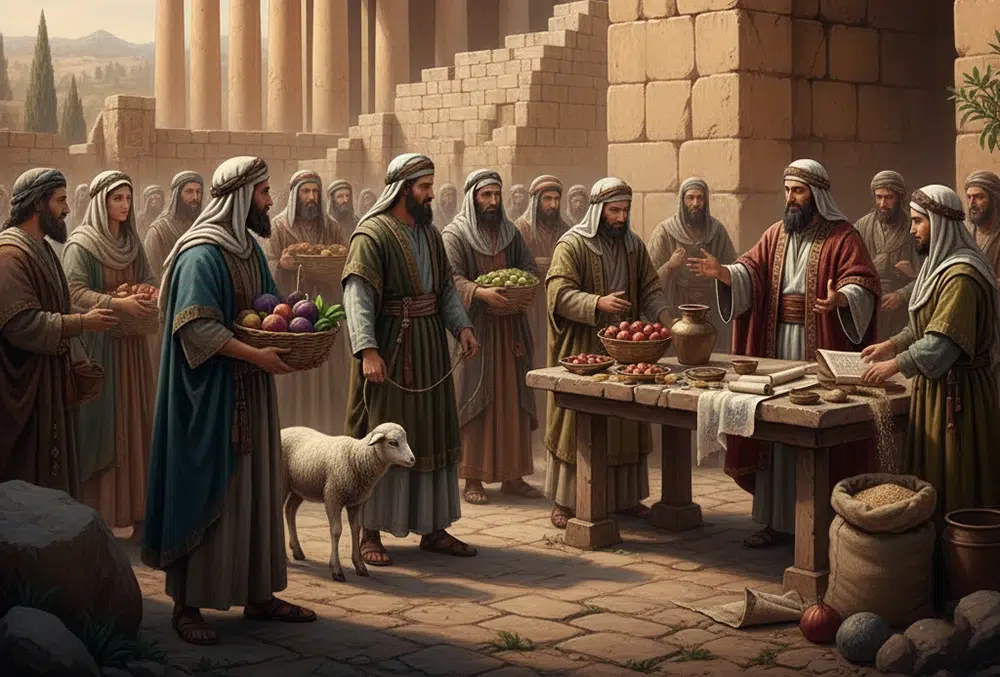
Grupo de personas en un entorno antiguo, similar a un mercado o templo, entregando ofrendas de frutas y monedas a un hombre que las recibe. La escena evoca la práctica del diezmo en tiempos bíblicos.
In the marketplace of ancient Judea, people came to give their tithes.

Tithing in the Bible: the New Testament

In the days of Jesustithe was still paid. But, when he died on the cross, this was no longer a requirement. Jesus does not reject it, but teaches a new reference: to give no longer the 10% but to give oneself totally as master.r, not counting the cost. Therefore, he condemned the religious leaders because they were very strict in collecting the tithe and at the same time, neglected "the most important matters of the Law: justice, mercy and faithfulness" (Matthew 23:23).

Jesus' death annulled the Mosaic Law, including "the command to collect the tithe from the people" (Hebrews 7:5, 18; Ephesians 2:13-15; Colossians 2:13, 14). In none of the four times that the tithe appears in the New Testament are we taught to be guided by that measure. It is no longer limited to the law of 10 % but refers us to the example of Jesus Christ who gave himself unreservedly. Jesus lives a radical surrender and teaches us that we should do the same. That is why he transmitted to us the concept and the importance of the Works of mercySpiritual and corporal.

The Heart of Jesus is the model of total surrender. He gave himself to death on Calvary. Jesus gives us His grace to know how to give and to give as He gave Himself.. Everything belongs to God and we are stewards of our resources according to the Holy Spirit who enlightens our conscience. San Pablo teaches and lives the same self-giving, "For you know the generosity of our Lord Jesus Christ, who, though he was rich, yet for your sakes became poor, that you might be enriched by his poverty." (II Corinthians 8,9)

The Pope Francisco Pope gives catechesis on Jubilee, tithing and condemnation of usury. At the general audience on Ash Wednesday 2016.

Importance for the financing of the Church in Spain

The Catechism of the Catholic Church mentions the tithe only once, in reference to the Christian's responsibility towards the poor, already founded in the Old Testament. The fifth commandment, "to help the Church in her needs", that the faithful are obliged to help, each according to his or her ability, to the material needs of the Church (cf. CCC can. 222).

There is much confusion among the population about the sources of financing of the Catholic Church in Spain. The Catholic Church receives from the Spanish State, 0.7% of the taxes of those who freely check the corresponding box in the personal income tax declaration. This has been the case since the modification of the tax allocation system was signed in December 2006. And it can be considered a way of contributing a tithe or offering to the Church today.

In addition to the State's contribution via personal income tax, the Church is supported by the contributions and offerings of its faithful through other means:

Marking the Church box on the income tax return does not imply any cost for the citizen. You will not get back less or pay more. But it is a great help for thousands of people who need it. A small gesture for a great work. In the CARF Foundation's Reflection Days that we organized with different collaborators online, Silvia Meseguer explained the financing of religion in Spain.


Bibliography:

Catechism of the Catholic Church
infocatolica.com
Opusdei.org


The 108 Eucharistic miracles of St. Carlo Acutis

With his actions and his conduct, the already declared saint, represents a model of a young man who knows how to follow with courage and firmness the path indicated by the Lord, despite the difficulties without ceasing to lead a life close to Jesus.

The life project of St. Carlo Acutis, considered the millennial saint, was to live with Jesus, for Jesus and in union with Jesus. His life was not to dedicate it to vain things, but to give it to God, placing all his projects in his hands.

The life of this young Italian saint, leaves as fruit a work on the Eucharistic miracles for all Christians with which he manages to bring Jesus to the whole world through the Internet. He made, almost unwittingly, a contribution to the evangelizing work of the Church around the Holy Eucharist and the real presence of Jesus in it.

Young witness to the Gospel

Blessed Carlo Acutis is an authentic witness that the Gospel can be fully lived by an adolescent. His brief existence, destined to the goal of the encounter with Jesus, is an example for Christian youth..

milagros eucarĂ­sticos carlo acutis
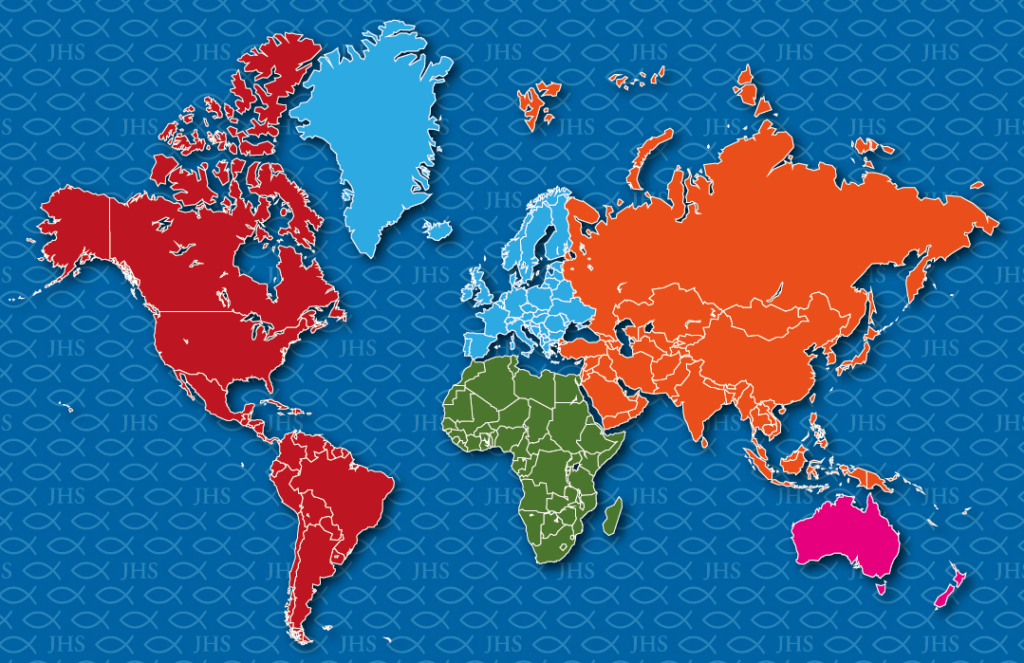
Map with the 163 panels created by saint Carlos Acutis

The exhibition on the Eucharistic miracles of St. Carlo Acutis

Carlo Acutis is known as Patron Saint of the Internet because he was able to use the new communication techniques to transmit the Gospel and to communicate Christian values.

In addition, he conducted research, compilation and design work that resulted in the creation of 163 panels displaying photographs and historical descriptions of Eucharistic miracles in different centuries and in the world.

In this way the exhibition on the Eucharistic miracles of Saint Carlo Acutis which has already toured many countries around the worldHe has visited more than 500 parishes in Italy and more than ten thousand parishes in other countries with translations in different languages.

With a a wide variety of photographs and historical descriptions, the Eucharistic miracles exhibition, the that have occurred over the centuries in different countries and that have been the subject of major events that have recognized by the Catholic Church. By means of the panels, the millennial saint gets us to virtually visit the places where these miracles occurred.

Originals and photocopies

St. Carlo Acutis has a message for today's youth: life in Christ is beautiful and must be lived in fullness. Eternal realities are authentic and we are immersed in them more than we think.

"Everyone is born an original, but many die as photocopies." In order not to die as a photocopy, Carlo Acutis drinks from the source of the sacraments, which for him are the most powerful means to grow in Christian virtues. 

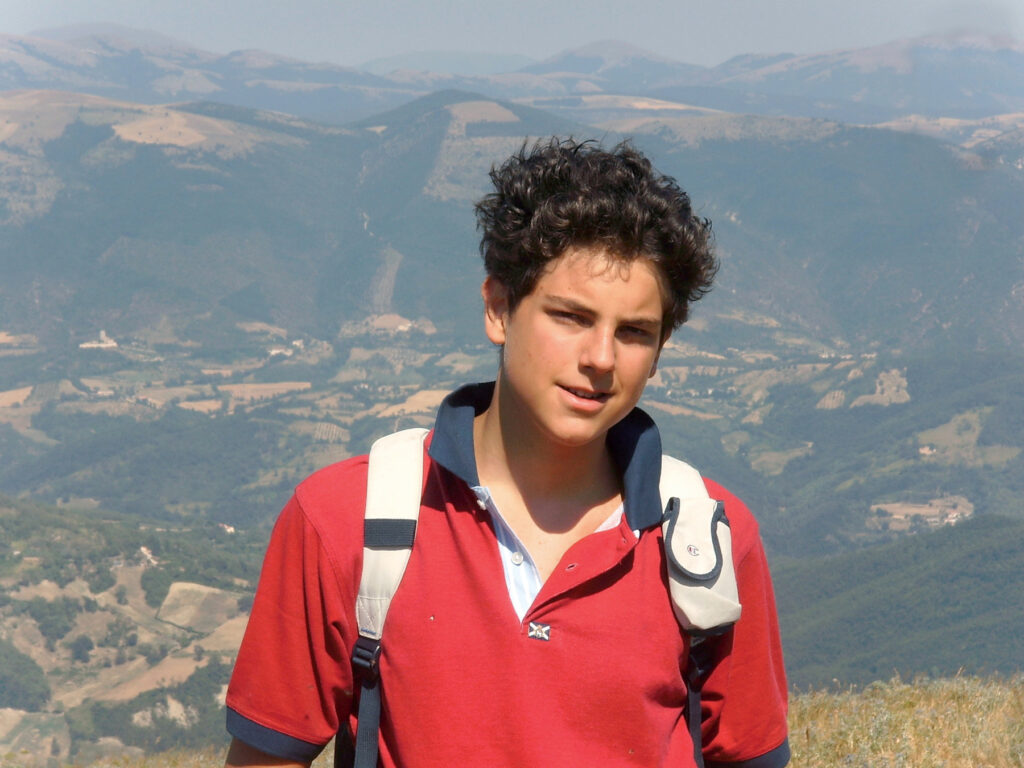
El joven san Carlo Acutis en una foto al aire libre con un paisaje de montañas al fondo, vistiendo un polo rojo y una mochila.
Carlo Acutis (1991-2006), the cyber-apostle of the Eucharist, whose upcoming canonization will make him Saint Carlo Acutis.

What are Eucharistic miracles?

The Eucharistic miracles are prodigious interventions of God. which are intended to confirm faith in the real presence of the body and blood of the Lord in the Eucharist.

During the liturgy of the Eucharist, the most important moment of the Catholic Mass is the Consecration of the bread and wine that will be transformed, through the words of the priest, into the body and blood of Christ.

This marvelous transformation, in the part of the Mass The most important, it takes the name of transubstantiation, that is, the change of one substance for another, cannot be experienced at all by the senses, only faith assures us of this marvelous transformation. It changes the substance without changing the accidents.

The Eucharistic miracles seek to confirm this faith, which is based on the words of Jesus: what looks like bread is not bread and what looks like wine is not wine.

In the Eucharistic miracles, flesh and blood are indeed seen, or one without the other depending on the miracle.

The purpose of these wonders is to demonstrate that we should not look for the external appearance (bread and wine), but for the substance, the true reality of things, which is the flesh and blood of Jesus Christ God our Lord.

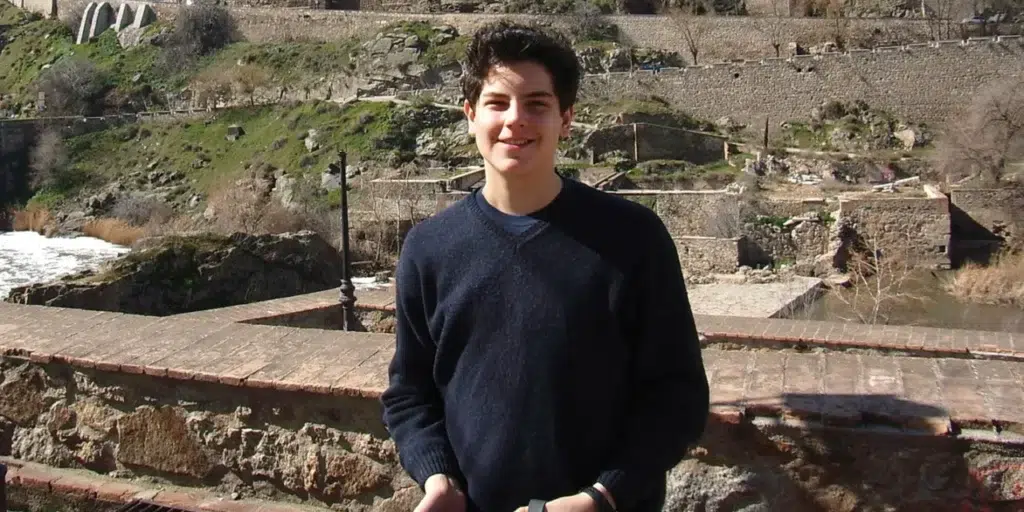
Fotografía del adolescente san Carlo Acutis sonriendo a la cámara en un entorno histórico, con un puente de piedra y un río al fondo, durante un viaje.
St. Carlo Acutis in an image that reflects his simplicity and the joy of a young man of our time.

Brief biography of St. Carlo Acutis

This young saint died in October 2006, at the age of 15, of acute myeloid leukemia, leaving in the memory of those who know his life a deep admiration for his witness of Christian life.

From a very early age, Carlo showed a great attraction for the Eucharist, he was a normal boy. He carried out different apostolic works.

He played the saxophone, played soccer and had fun with video games. But he did it all with an absolutely special harmony, thanks to his great friendship with Jesus.

He was a great connoisseur of the computer world. His knowledge ranged from computer programming to film editing, website creation, digital newspapers, and he used it for his apostolate.

His devotion grew daily thanks to Communion; he participated fervently in Holy Mass and prayed before the Blessed Sacrament.

If you were not able to see his canonization, you can now watch it through the following video:

Carlo's love for the Eucharist and the Virgin Mary were the pillars of his life. The Virgin Mary was his confidant and he never ceased to venerate her, praying the Holy Rosary and dedicating to her his sacrifices in the form of renunciations.

This is how he lived Carlo AcutisIn intimate friendship with Jesus and in his constant presence, he understood that an authentic spiritual life was necessary for effective missionary action. When he was diagnosed with leukemia, he offered his sufferings "for the Lord, the Pope and the Church".

Since April 6, 2019, Carlo's mortal remains have been at rest in the Sanctuary of the Despotate of Assisi. Pope Francis named him blessed on October 10, 2020. And on September 7, 2025, Pope Leo XIV proclaimed him a saint, together with Pier Giorgio Frassati.

Canonization of St. Carlo Acutis

Acutis, considered the millennial saint was canonized together with Pier Giorgio Frassati on Sept. 7 2025 in St. Peter's Square by Pope Leo XIV, accompanied by thousands of people.

carlo acutis milagros eucarĂ­sticos con santos
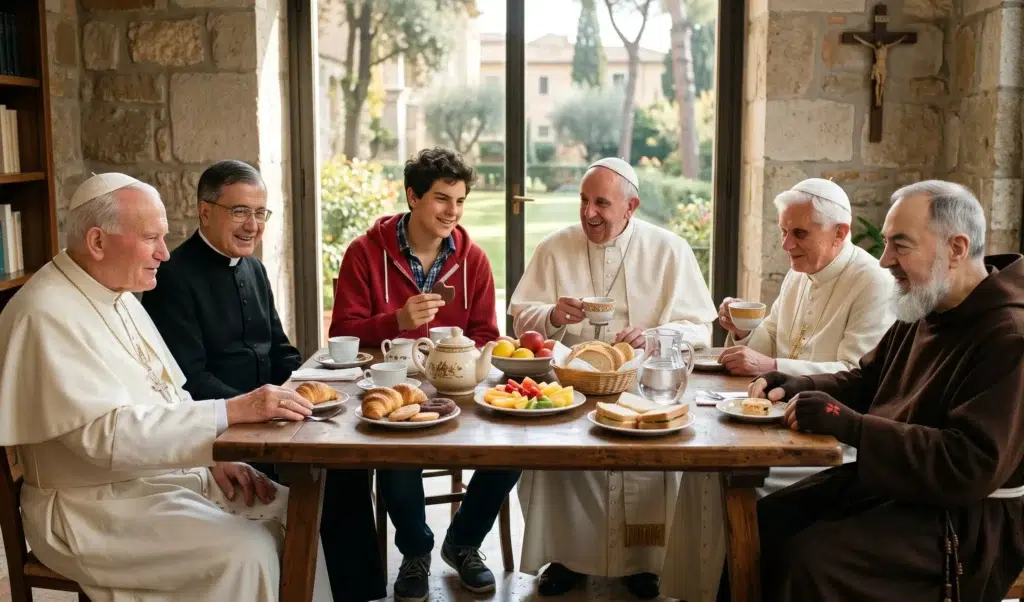
Image recreated with artificial intelligence of saints loving the Holy Eucharist.


Archangels Michael, Gabriel and Raphael, September 29th

In the Catholic faith, few figures inspire as much reverence and affection as the angels. Spiritual creatures, endowed with intelligence and will, they are the manifestation of God's perfection, infinity and power: each of them exhausts in him his own species. Sacred Scripture and the tradition of the Church reveal their existence to us as a truth of faith. In this heavenly choir, three figures stand out for their name and mission: the saints archangels St. MichaelSt. Gabriel y St. Raphael.

On September 29, the Church celebrates these three faithful servants of God in a single feast, recognizing their role in the History of Salvation. From the CARF Foundation, we want to deepen in the identity and mission of these heavenly princes, powerful allies on the road to holiness, whose protective and messenger work is still valid today as in biblical times.

The Gospel passage proposed by the Church for this feast of the archangels Michael, Gabriel and Raphael is the meeting of Jesus with Nathanael, which St. John places at the beginning of his Gospel. "You will see heaven opened and the angels of God ascending and descending upon the Son of Man" (Jn 1:47-51). Jesus makes himself known as the Messiah, and describes the mission of the angels, who are part of the history of salvation, carrying out different missions entrusted by God.

Angels: servants and messengers

Before reviewing the specific missions of St. MichaelSt. Gabriel y St. RaphaelWe must understand what the Church teaches us about angels. The Catechism of the Catholic Church (CEC) clearly instructs us: "The existence of spiritual, non-corporeal beings, which Sacred Scripture usually calls angels, is a truth of faith" (CEC, 328).

They are not a mere abstraction or a conjunction of energy. They are personal and immortal creatures that surpass in perfection all visible creatures. Their purpose is to glorify God without ceasing and to serve as executors of his saving designs. Like their own Greek name -angelswhich means "envoy" or "messenger" - indicates that one of its primary functions is to communicate the divine will to mankind.

Tradition, based on the Scriptures, has organized the angels into different choirs or hierarchies. The archangels are those entrusted with missions of special transcendence. Although the Bible suggests the existence of seven, the Catholic Church venerates with their own names the three revealed in the canonical texts, as a sign of divine intervention in the world. Their work is a constant reminder that Heaven is not distant, but is actively involved in our history, a reality that sustains the formation of future priests who will one day preach these truths of faith.

The liturgy has unified in on september 29th, the feast of the holy archangels Michael, Gabriel and Raphael. Their names refer to their functions as intermediaries between God and men, as well as executors of his orders and transmitters of his messages.

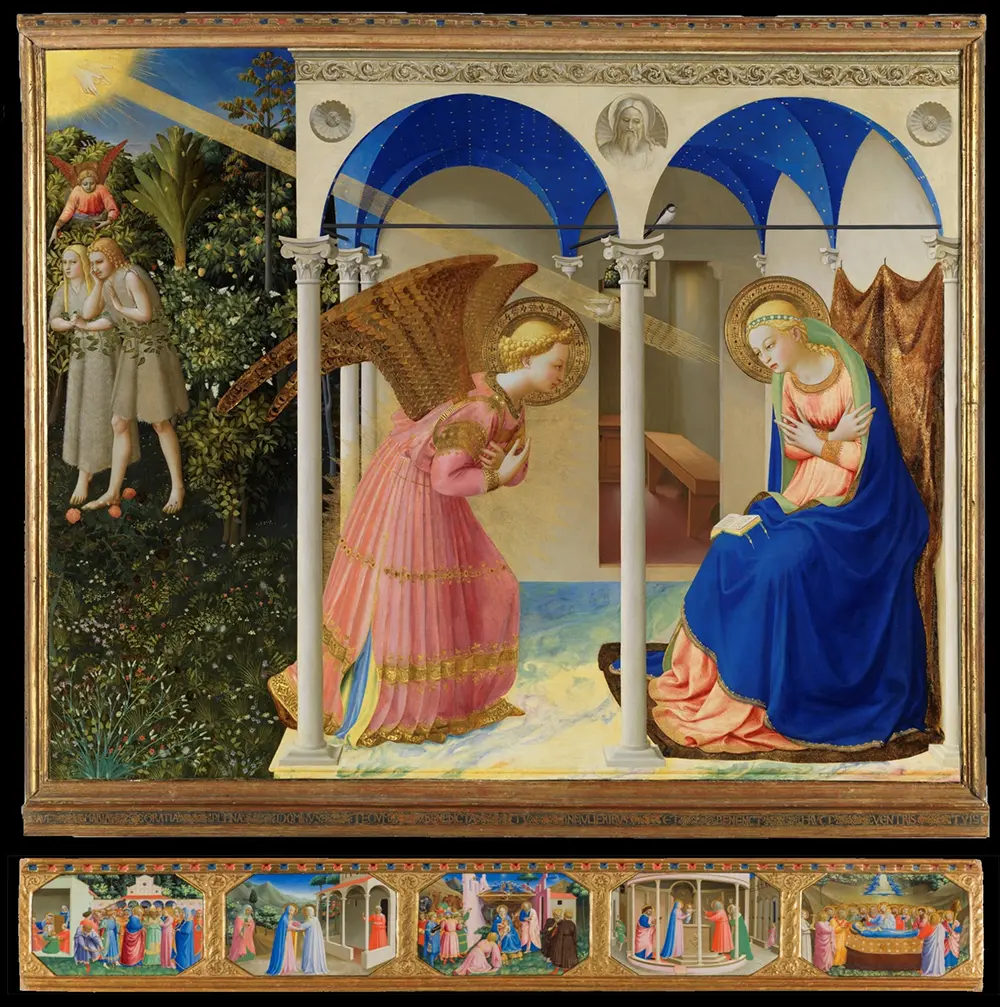
El Arcángel san Gabriel, arrodillado con humildad ante la Virgen María en un pórtico, le anuncia que será la Madre de Dios.
The Annunciation (1426) by Fra Angelico. St. Gabriel is depicted as the messenger of the Incarnation.

The Archangel Gabriel

Its name means Fortress of God. The archangel Gabriel was entrusted with the mission of announcing to the Virgin Mary that she would be the Mother of the Savior. The message it conveys is transcendental. Undoubtedly the most important in the History of Salvation; it is about the arrival of the Messiah, the Son of God, to the world.

It was "In the sixth month the angel Gabriel was sent from God to a city of Galilee called Nazareth, to a virgin betrothed to a man whose name was Joseph, of the house of David. The virgin's name was Mary. And he went in to her and said to her, 'Hail, full of grace, the Lord is with you....'". Luke 1:26-28.

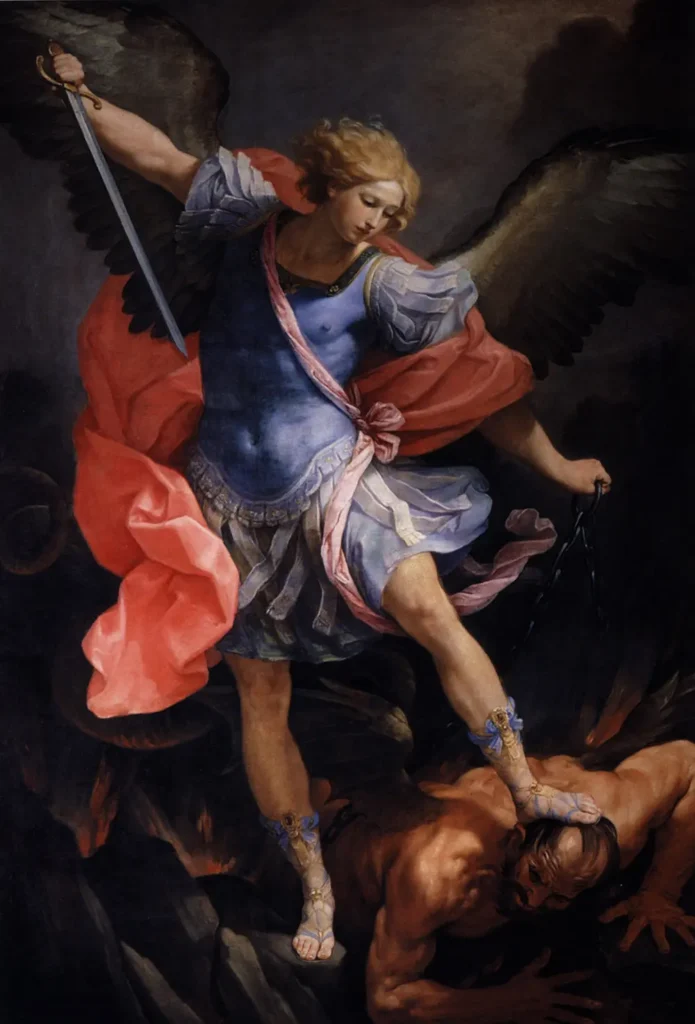
El Arcángel san Miguel, con armadura y espada en alto, somete con su pie la cabeza de Satanás, que yace derrotado en el suelo.
Saint Michael defeating the devil (1636) by Guido Reni. It represents his power as head of the heavenly militia.

The Archangel Michael

In Hebrew it means Who is like God, an expression that is in harmony with his mission and interventions. 

The archangel Michael is in command of the heavenly armies.. He is the defender of the Church and his name is the battle cry in the battle waged in Heaven against Satan. That is why St. Michael is depicted attacking the infernal serpent.

The Church has worshipped and prayed to him since the 5th century because of his protective role, both in the first reading and during the celebration of the Mass. Holy MassThe liturgy of the hours, in antiphons and in the Office of Readings.

"Archangel Michael, defend us in the struggle. Be our protection against the wickedness and snares of the devil. We beseech God to keep him under his empire; and you, O Prince of the Heavenly Militia, cast into hell with divine power Satan and the other evil spirits, who go about the world trying to lose souls. Amen.

The Archangel Raphael

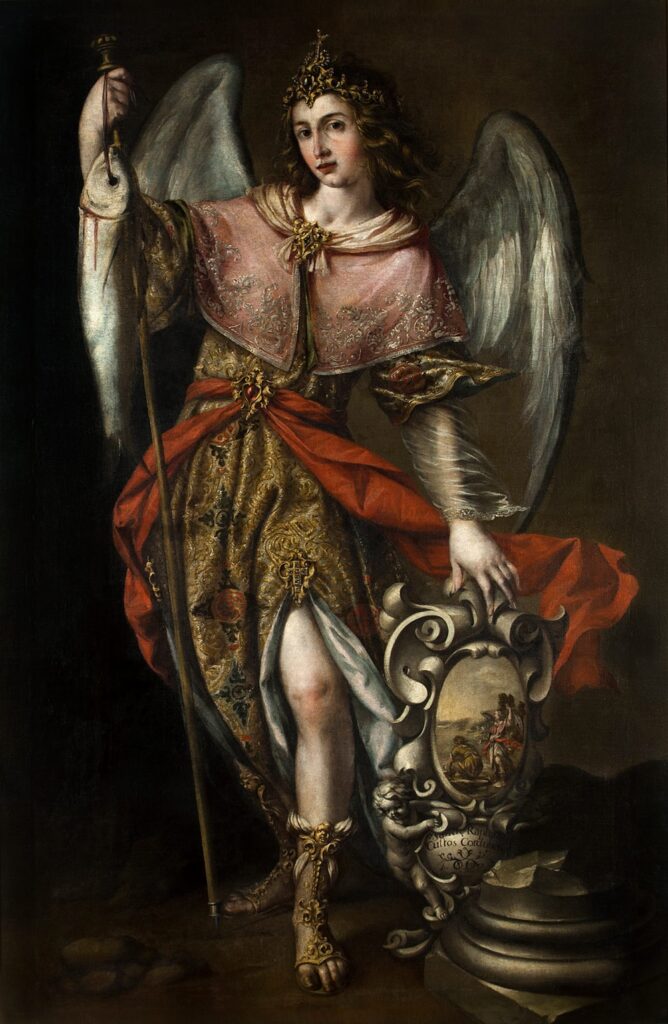
The archangel Raphael is the friend of the wayfarers and physician of the sick. His name means Medicine of God or God has worked health. In the Bible he is presented as the protector and companion of all, and is one of the great angels present before the glory of the Lord.

It appears in the book of Tobit 12:17-20 that it is the Archangel Raphael himself who reveals his identity: "Do not be afraid. Peace be with you. Bless God forever. If I have been with you..., it has been by the will of God. To Him you must bless every day, to Him you must sing... And now bless the Lord on earth and confess to God. Behold, I go up to him who sent me...".

arcángeles san miguel, san grabriel y san rafael
Archangel Saint Raphael by Juan de Valdés Leal.

The archangels in the life of the saints

Devotion to the archangels is not a mere theological curiosity; it has been a source of strength for countless saints.

St. Thomas Aquinasthe Angelic Doctor, although he is not known to have a specific personal devotion to any of the three. archangels as well as other saints, is the most important intellectual figure in the understanding of the angelic nature. In his Summa Theologicadevoted an entire treatise to the angels, exploring with unparalleled depth their being, their knowledge and their will. His work provides the theological structure upon which the Catholic doctrine of angels rests, allowing us to appreciate more clearly the greatness of the angels. San Miguel, San Gabriel y San Rafael.

St. Michael, Gabriel and Raphael: Patrons of Opus Dei

St. JosemarĂ­aFrom the beginning of the foundation of the Work, he felt that he needed a lot of help from heaven to carry out the mission that God had entrusted to him: to transmit the message that it is possible to be a saint through work and ordinary life. Part of that help came from the holy archangels Michael, Gabriel and Raphael.

"I prayed the prayers of the Work of God, invoking the holy archangels, our patron saints: St. Michael, St. Gabriel, St. Raphael.... And how sure I am that this triple call, to such high lords in the Kingdom of Heaven, must be - it is- most pleasing to the Triune and One, and must hasten the hour of the Work!"(St. Josemaría Escrivá).

On Thursday, October 6, 1932, while praying in the chapel of St. John of the Cross during his spiritual retreat in the convent of the Discalced Carmelites in Segovia, St. JosemarĂ­a chose as patrons of Opus Dei the archangels Michael, Gabriel and Raphael and the Apostles St. John, St. Peter and St. Paul. From that moment on, he considered them patrons of the different apostolic areas that make up Opus Dei.

Under the patronage of the archangel St. Raphael is the work of Christian formation of youth, from where they arise vocations in the early years, the years of great deeds. Under the patronage of the archangel St. Michael, we find the vocations who are formed spiritually and humanly in celibacy. As for the fathers and mothers of families who are part of the Work, their patron is the Archangel Gabriel.

Thus, we can then recall the passage from the Gospel of Luke that will be read on the feast of the Archangels Michael, Gabriel and Raphael, and think that God has wanted all Christians to count on the help of the archangels and with the help of the guardian angels who know a lot about the task of kindling cold hearts and helping to make generous decisions.


Bibliography


Marian Family Day at Torreciudad

Torreciudad commemorated on this occasion a very special event: the celebration of the 50th anniversary of the opening for worship of the new temple dedicated to the Virgin.

A meeting marked by joy, prayer and the certainty of sharing the faith as a family. As the Vicar of Opus Dei in Spain, Fr. Ignacio Barrera, said: "How much beauty and joy can be transmitted by a family that prays!

The CARF FoundationThe Foundation, faithful to its commitment to priestly formation and to the universal Church, was one of the sponsors of this event, thus joining in the joy of the families who came to the Aragonese sanctuary.

The praying family

The main event was the Eucharist celebrated on the esplanadeIgnacio Barrera, Vicar of Opus Dei in Spain, who invited all those present to be "sowers of peace and joy," recalling the words of St. JosemarĂ­a: families are called to be "luminous and joyful homes.

In a world so often marked by haste, division and uncertainty, Barrera recalled that "the Lord will take care of the rest and will kindle many other lights" if each family tries to give witness to love in their daily lives: "The Lord will take care of the rest and will kindle many other lights" if each family tries to give witness to love in their daily lives.Give light in your homes, schools, workplaces, etc.... How much beauty and joy can be transmitted by a family that prays, that loves one another, that forgives one another and is united". And he asked: "Don't you think that there is much need for this in our time, in social life, in political life, in the work environment?

This day breathes fraternity and prayer. After praying the Angelus, there was a varied presentation of offerings by the participating associations, parishes, schools and groups, who offered flowers, products of the earth, images of the Virgin, children's handicrafts and other symbols of gratitude and faith.

In a gesture full of tenderness, the parents offered their children to the Virgin of Torreciudadentrusting them with their future and asking for her protection. This moment, lived with tears and smiles, was a testimony of what it means to walk together as a Christian family: to allow ourselves to be guided by Mary towards her Son.

torreciudad-jornada-mariana-de-la-familia-carf
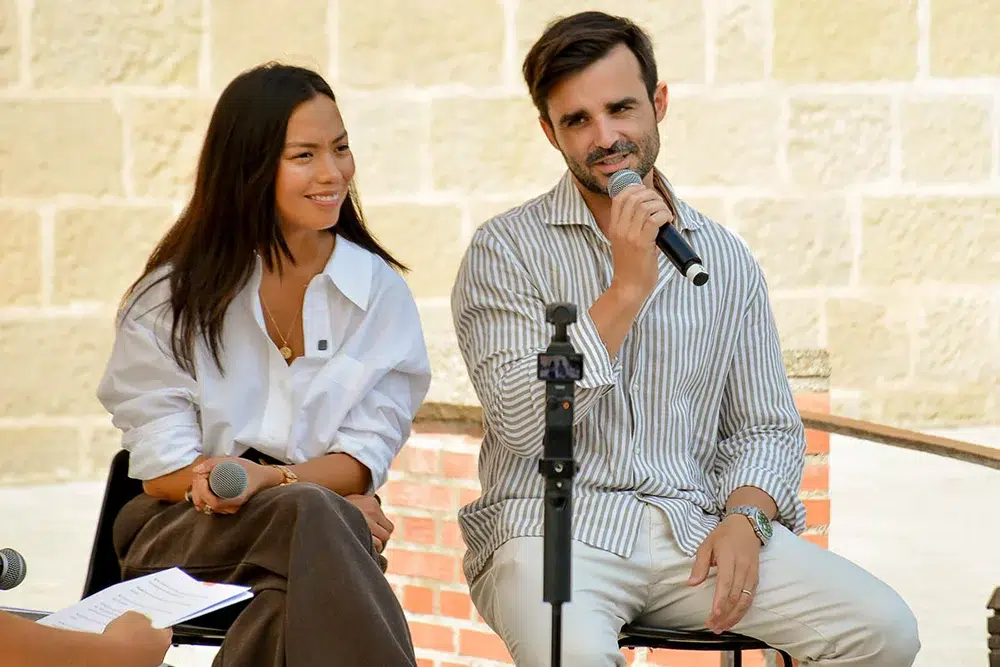
In dialogue with Nachter and Roseanne.

Nachter and Roseanne

The day was full of moments of encounter and testimony. The couple formed by Nachter and Roseanneknown for their humor and closeness in social networks, shared their experience on "how to improve our family relationships with a lot of humor. They recalled that "laughing with others, not at others" is a simple key to living charity in the home, and that "in the face of pain, it is essential that our life is not defined by suffering, but by the help we give each other. And above all God, who is Father and we can fully trust in Him, even if sometimes we do not understand Him".

torreciudad-jornada-mariana-de-la-familia-carf
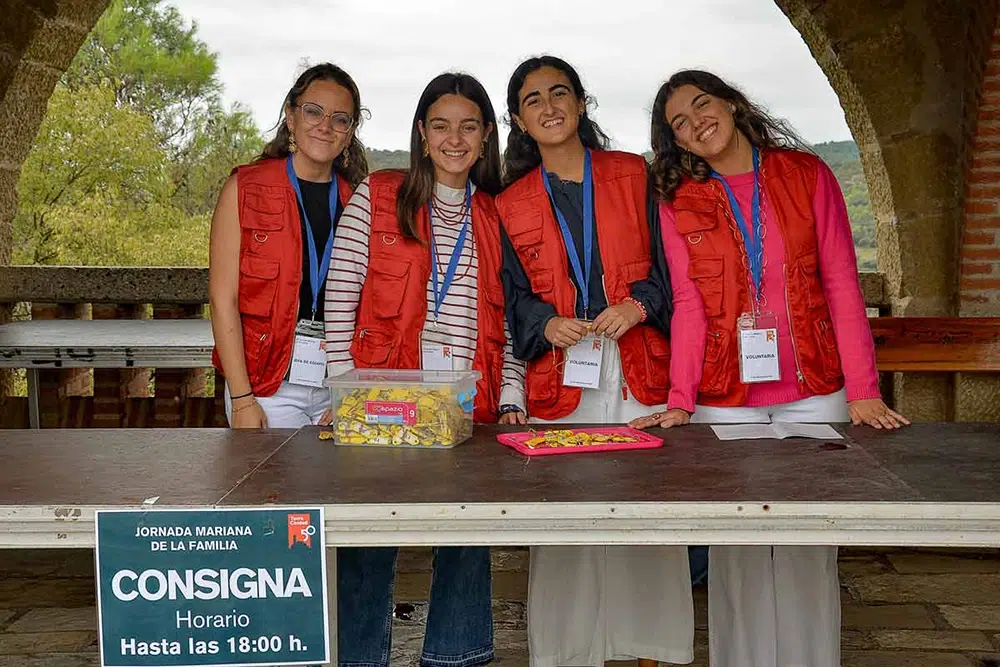
A group of volunteers.

A simple gesture

Throughout the day, more than 200 volunteers collaborated in the reception, parking, information and cleaning services, together with the Guardia Civil, Turismo de Aragón, the regions of Somontano, Ribagorza and Cinca Medio, the municipalities of Secastilla and El Grado, the CARF Foundation and the Mahou San Miguel Group. In addition, hygiene products were collected for needy families, which will be delivered through Cáritas Diocesana de Barbastro-Monzón: a simple gesture that embodies Christian love made service.

On the 50th anniversary of the church, this Marian Day once again showed the vibrant heart of the Church: families united by faith, praying, forgiving and trusting in God.. The CARF Foundationpresent among them, shares this mission of radiating hope and forming priestly hearts that serve so many families throughout the world.

Torreciudad, once again, was light. A light that is born of Mary and that, through the family, illuminates society with the joy of the Gospel.

torreciudad-jornada-mariana-de-la-familia-carf
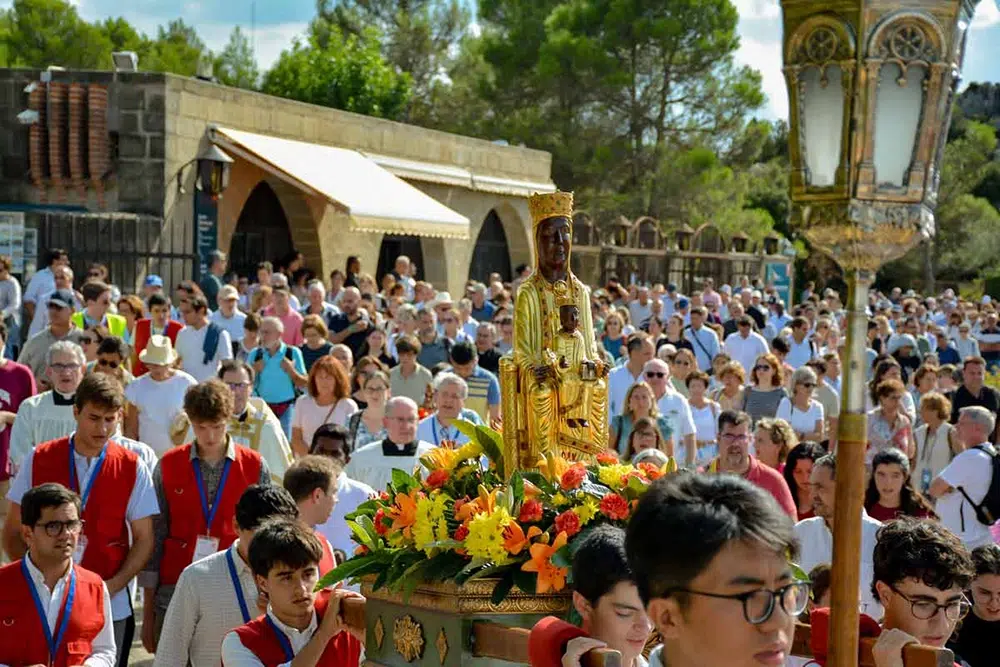
The Virgin of Torreciudad in procession during the recitation of the Rosary.

Mayors encourage repeat business

Javier Betorz, delegate of the Government of Aragon in Huesca, stressed that "Torreciudad is an undoubted focus of attraction, therefore has our full support in promoting religious and cultural tourism". Mari Carmen Obis, mayoress of El Grado, has pointed out the importance of the festival "in these calls to share our heritage and our joy, so that they reach new visitors".

José Luis Arasanz, deputy mayor of Secastilla, and Ana María Rabal, councilor, trust in the road axis project with El Grado and Graus through the municipality. Antonio Comps, mayor of Castejón del Puente, thinks that "the day is a very important event for Alto Aragón, with a deep positive meaning for the family and as an element of promotion".

Fernando Torres, mayor of Barbastro, said he was "very happy to repeat another edition, and to have shared the concern of the sanctuary for the damage caused by last night's storm", while for José Pedro Sierra, mayor of Peraltilla, "the best thing is that I have seen many people, with families that we hope will repeat and make our environment known".

José María Civiac, president of the Cinca Medio region and mayor of Alfántega, commented that "I have seen many people, willing to travel a long way sometimes, and of course, we must all work together to increase the number of visitors".

Lola Ibort, councilor in Almudévar and provincial deputy, said in her second attendance to this day, that "I am very happy to return because I share so many values that promote the family, which is so important. And these young families are, at the same time, the best ambassadors of our territory".

Also in attendance were the mayoress of El Pueyo de Santa Cruz, Teresa Rupín, and municipal representatives from Puente de Montañana, Arén, Enate and Artasona.


Marta SantĂ­njournalist specializing in religion.