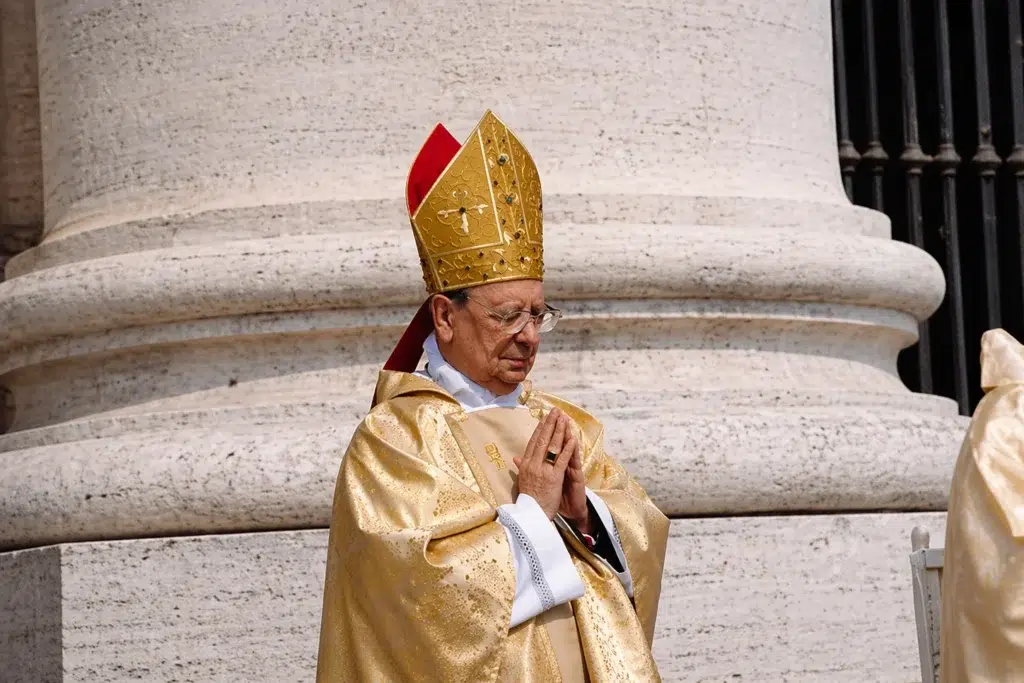
Pentecost: the Holy Spirit accompanies, guides and animates

"1On the anniversary of Pentecost, were all together in the same place. 2Suddenly, there came from the sky a roar, as of a wind blowing strongly, and it filled the whole house where they were sitting. 3They saw tongues, like flames, appear and divide, landing on top of each of them. 4They were all filled with Holy Spirit And they began to speak with other tongues, as the Spirit gave them utterance» (Acts 2:1-4).

Pentecost or Shavuot

For the Jews, it was one of the three great feasts. At the beginning, thanksgiving for the harvesting of grain (first fruits), but this was joined by the feast for the giving of the Torah, the Torahthe "instruction manual" of the world and of man, which granted wisdom to Israel. It was the feast of the Covenant to live always according to the will of God manifested in his Law.

The images that St. Luke uses to indicate the irruption of the Holy Spirit-the wind and the fire-allude to Sinai, where God had revealed himself to the people of Israel and had granted them his covenant (cf. Ex 19:3ff). The feast of Sinai, which Israel celebrated fifty days after Passover, was the feast of the covenant. In speaking of tongues of fire (cf. Acts 2:3), St. Luke wants to present the Upper Room as a new Sinai, as the feast of the Covenant that God makes with his Church, which he will never abandon: this is Pentecost.

The Holy Father asks all the pastors and faithful of the Catholic Church to join in prayer this Pentecost together with the Catholic Ordinaries of Holy Land, The Pope said: "We are calling on the Holy Spirit, so that Israelis and Palestinians may find the path of dialogue and forgiveness. 

Shavuot is the Jewish holiday commemorating the giving of the Ten Commandments of God's Law to Moses on Mount Sinai, after the flight of the people of Israel from Egypt. Therefore, it takes place seven weeks after Passover, which is the most important holiday for the Jews, since it celebrates the liberation of the Jewish people from Pharaoh's slavery. In Hebrew “Shavuot” means “weeks” and also means oath: the covenant that God made with his people through the Law.  

The day of Pentecost

By the power of the Holy Spirit they make themselves understood by all, whatever their origin and mentality: Now there were dwelling in Jerusalem Jews, devout men from every nation under heaven. And when the noise was heard, the multitude came together and were perplexed, for each one heard them speaking in his own language.

They were astonished and wondered, saying, "Are not all these who are speaking Galileans? How is it, then, that we hear them each in our own mother tongue? "Parthians, Medes, Elamites, inhabitants of Mesopotamia, of Judea and Cappadocia, of Pontus and Asia, of Phrygia and Pamphylia, of Egypt and the part of Libya near Cyrene, Roman strangers, as well as Jews and proselytes, Cretans and Arabs, we hear them speaking in our own tongues the great things of God (Acts 2:5-11).
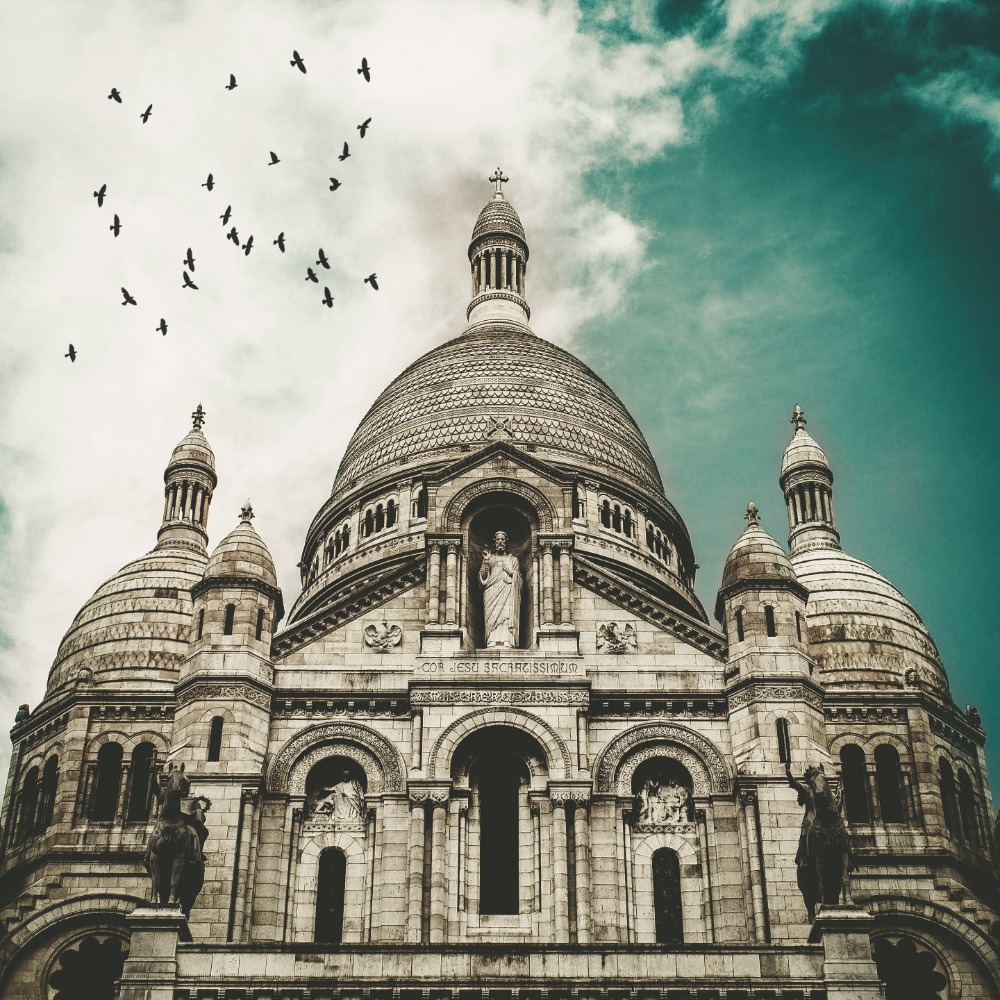
Pentecostés fiesta del Espíritu Santo

The action of the Holy Spirit at Pentecost

What happens that day, with the action of the Holy Spirit, is the antithesis of what the Bible had told about the origins of mankind: At that time the whole earth spoke one language and with the same words. Moving from the east, they found a plain in the land of Shinar and settled there.

-Let's make bricks and bake them in the fire! In this way, the bricks served them as stones and the asphalt as mortar. Then they said: -Let us build us a city and a tower whose top reaches to heaven! So shall we make a name for ourselves, that we may not be scattered over the face of the whole earth. And the Lord came down to see the city and the tower which the sons of men were building, and the Lord said, "They are one people, with one language for all, and this is only the beginning of their work; now nothing they try to do will be impossible for them.

Let us go down and confuse their language right there, so that they will no longer understand one another! So from there the Lord scattered them over the face of the whole earth, and they ceased to build the city. Therefore it was called Babel, because there the Lord confused the language of the whole earth, and from there the Lord scattered them abroad over the face of the whole earth (Gen 11:1-9).

The Pope Francis recalled during the celebration of Pentecost 2021 in Rome that the Holy Spirit consoles «especially in difficult moments like the one we are going through», and in a very personal way because «only the one who makes us feel loved as we are gives peace of heart». In fact, «it is the very tenderness of God, who does not leave us alone, because to be with those who are alone is already to console».

Pentecost: active communication

When the people in the biblical story began to work as if God did not exist, they found that they themselves had become dehumanized, because they had lost a fundamental element of human beings, which is the ability to agree, to understand each other and to act together. This text contains a perennial truth. In such a technified society, with so many means of communication and information, as the contemporary one, we speak less and less and we understand each other less and less, we lose the real capacity to communicate in an open and sincere dialogue. We need something to help us recover this capacity to be open to others.

The action of the Holy Spirit

What human pride has broken, the action of the Holy Spirit puts back together again. Today too, docility to the Holy Spirit is what gives us the help we need to build a more humane world, in which no one feels alone, deprived of the attention and affection of others. Jesus promised it to the apostles and to each one of us: I will pray the Father and he will give you another Paraclete to be with you always (Jn 14:16). He uses a Greek word para-kletós which means "the one who speaks next to": is the friend who accompanies us, encourages us and guides us along the way. 

Now that we are talking to God in this time of prayer, we ask ourselves in his presence: do I strive to build my professional and family life, my friendships, the society in which I live, as a world built by my own efforts without caring about God? Or do I want to listen and be docile to the loving voice of the Holy Spirit, that inseparable companion that Jesus has placed at my side to guide and encourage me?

We can invoke the Holy Spirit with an ancient and beautiful prayer of the Church: Come Holy Spirit, fill the hearts of your faithful, and enkindle in them the fire of your Love. And we ask the Blessed Virgin, Spouse of God the Holy Spirit, that, like her, we may let him do great things in our souls, so that we may know how to love God and others, and build with his help a better world.


Mr. Francisco Varo Pineda
Director of Research at the University of Navarra.
Professor of Sacred Scripture at the Faculty of Theology.

PENTECOST VIGIL WITH MOVEMENTS, ASSOCIATIONS AND NEW COMMUNITIES

HOMILY OF THE HOLY FATHER LEON XIV, St. Peter's Square, Saturday, June 7, 2025.

Dear sisters and brothers:

The creative Spirit, which we have invoked with the song -Veni creator Spiritus-, is the Spirit that descended upon Jesus, the silent protagonist of his mission: «The Spirit of the Lord is upon me» (Lc 4,18). By asking him to visit our minds, multiply our languages, enkindle our senses, infuse love, comfort our bodies and endow us with peace, we have opened ourselves to welcome the Kingdom of God. This is conversion according to the Gospel: to set us on the way to the Kingdom that is already at hand.

In Jesus we see and from Jesus we hear that everything is transformed, because God reigns, because God is near. On this vigil of Pentecost we find ourselves intimately linked by God's proximity, by his Spirit who unites our stories to that of Jesus. We are involved in the new things God is doing, so that his will of life may be fulfilled and prevail over the will of death.

Bringing the Good News

«He has consecrated me by anointing. He sent me to bring good news to the poor, to proclaim release to the captives and recovery of sight to the blind, to set at liberty those who are oppressed and to proclaim a year of the Lord's favor» (Lc 4,18-19).

We perceive here the perfume of the chrism with which our foreheads were marked. Baptism and Confirmation, dear brothers and sisters, have united us to the transforming mission of Jesus, to the Kingdom of God. As love makes us familiar with the scent of a loved one, so tonight we recognize in one another the perfume of Christ. It is a mystery that surprises and makes us think.

At Pentecost Mary, the Apostles, the disciples and the disciples with them were filled with a Spirit of unity, which forever rooted their diversities in the one Lord Jesus Christ. Not many missions, but one mission.

Not introverted and bellicose, but extroverted and luminous. This St. Peter's Square, which is like an open and welcoming embrace, magnificently expresses the communion of the Church, experienced by each of you in the various associative and community experiences, many of which represent fruits of the Second Vatican Council.

On the evening of my election, looking with emotion at the people of God gathered here, I remembered the word “synodality,” which happily expresses the way in which the Spirit shapes the Church. In this word resounds the syn -meaning with- that constitutes the secret of God's life. God is not solitude. God is “with” in himself - Father, Son and Holy Spirit - and he is God with us. At the same time, synodality reminds us of the way -odós- because where the Spirit is, there is movement, there is a way. We are a people on the way.

Year of the Lord's grace

This awareness does not alienate us, but immerses us in humanity, like leaven in the dough, which leavens it all. The year of grace of the Lord, of which the Jubilee is an expression, has in itself this leaven. In a broken and peaceless world, the Holy Spirit teaches us to walk together. The earth will rest, justice will be affirmed, the poor will rejoice and peace will return if we stop moving as predators and start moving as pilgrims. No longer each one on his own, but harmonizing our steps with the steps of others. No longer consuming the world with voracity, but cultivating it and guarding it, as the Encyclical teaches us. Laudato si’.

Dear brothers and sisters, God created the world so that we might be together. “Synodality” is the ecclesial name for this awareness. It is the path that asks each one of us to recognize our debt and our treasure, feeling that we are part of a totality, outside of which everything withers, even the most original of charisms. Look: the whole of creation exists only in the modality of existing together, sometimes dangerously, but always together (cf, Laudato si’ 16; 117).

Fraternity and participation

And what we call “history” takes shape only in the form of a coming together, a living together, often in the midst of dissent, but still a living together. The opposite is deadly and unfortunately is before our eyes every day. May your aggregations and communities be places where fraternity and participation are practiced, not only as places of encounter, but also as places of spirituality.

The Spirit of Jesus changes the world because he changes hearts. He inspires, in fact, that contemplative dimension of life that drives away self-assertion, murmuring, the spirit of controversy, the domination of consciences and resources. The Lord is the Spirit and where the Spirit of the Lord is, there is freedom (cf. 2 Co 3,17). Authentic spirituality commits us, therefore, to integral human development, actualizing among ourselves the word of Jesus. Where this happens there is joy. Joy and hope.

Evangelization, the work of God

Evangelization, dear brothers and sisters, is not a human conquest of the world, but the infinite grace that spreads through lives transformed by the Kingdom of God. It is the way of the beatitudes, an itinerary that we travel together, in continuous tension between the “already” and the “not yet”, hungry and thirsty for justice, poor in spirit, merciful, meek, pure of heart, working for peace. To follow Jesus on this path He has chosen, there is no need for powerful protectors, worldly commitments or emotional strategies.

Evangelization is God's work and, if it sometimes passes through our persons, it is because of the bonds that it makes possible. Therefore, be deeply attached to each of the particular Churches and parish communities where you nourish and spend your charisms. Close to your bishops and in synergy with all the other members of the Body of Christ, we will then act in harmonious harmony. The challenges facing humanity will be less frightening, the future less dark, discernment less difficult, if together we obey the Spirit.

May Mary, Queen of Apostles and Mother of the Church, intercede for us.
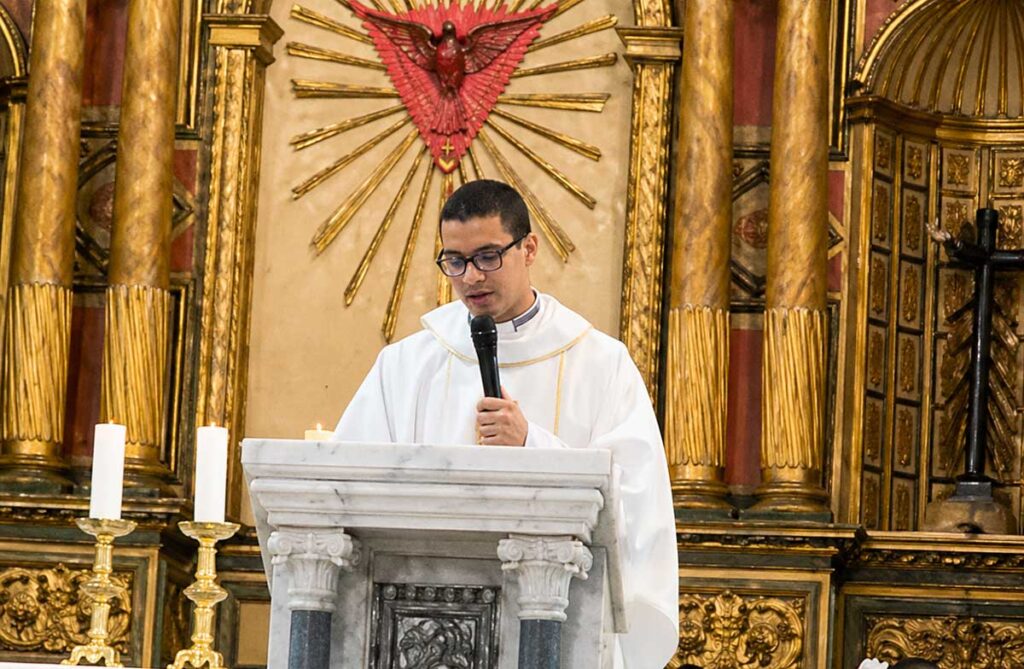

The joy of being a priest

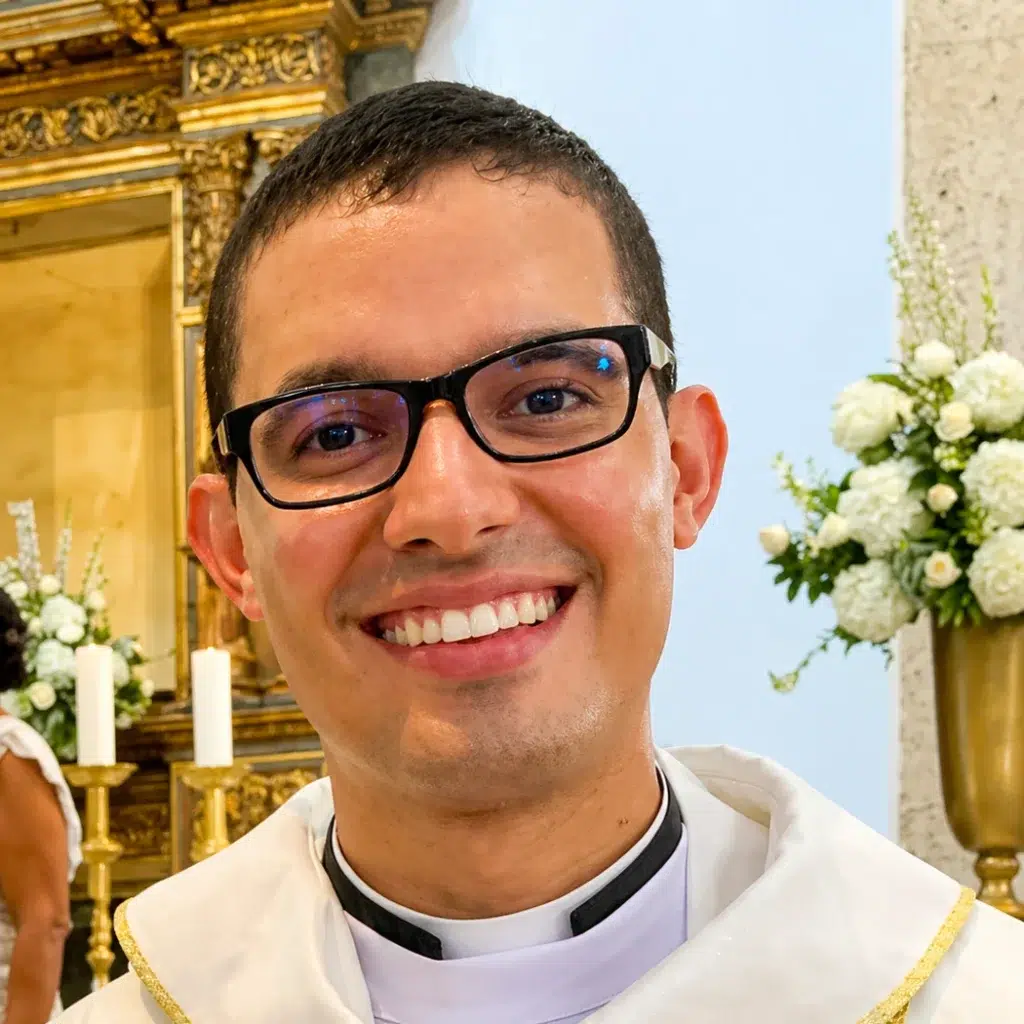
Hernando José Bello Rodríguez has had in the Virgin Mary and in St. John Paul II two great protectors and guides in his life and in his vocation to become a priest, which has left a great imprint on him. After several events that would mark his life, this young priest born in 1993 now serves as pastor of St. Francis of Assisi, in the city of Cartagena de Indias (Colombia), while serving as delegate of Vocational Ministry of his diocese.

In an interview with the CARF Foundation, Father Hernando José tells us that he grew up in a Catholic family with a deeply rooted faith, «especially my mother who instilled in me since I was a child the fundamentals of the faith and Christian morals». But it was when he was just 16 years old that a book changed his life forever. It was a long work, about 1,300 pages long and that, a priori, would never have been of interest to a teenager. But God had something big in store for this young Colombian.

«When I was in the penultimate year of high school (which in Spain would correspond to the first year of Bachillerato) I discovered my priestly vocation when I read a biography of St. John Paul II (the Pope's biography).Witness of Hope, by George Weigel). That book made me discover a little flame in my soul, which was later rekindled by a moment of prayer in the oratory of my school. In front of the tabernacle, I felt the impulse to give my life to the Lord in the priesthood. At first I said yes with fear; then my fears and doubts were dissipated, thanks to prayer, formation and good spiritual accompaniment».

Hernando José stresses that this flame was fanned and not lit, because, as he tells us, «this little flame was already lit in me since my conception: I owe my priestly vocation to the Virgin Mary. Thanks to her I came into the world. My mother could not have children, and together with my father, she prayed to Our Lady, in her Medjugorje invocation, to be able to have them. I was born just at the beginning of the month of Mary: May 1st. That is why Our Lady and St. John Paul II have been so important in her life.

hernando josé bello rodríguez alegría de ser sacerdote Colombia

The experience of training in Pamplona

His spiritual director had a lot to do with this discernment process, who recommended that it would be good for him to study a civil career before deciding whether to enter the seminary or not. He told him about the University of Navarra, in Spain, and after discussing it with his parents, he traveled to Pamplona to study philosophy and journalism. He assures that these two careers helped him to put his feet on the ground, while strengthening the call of God, which ended up being for him a time of preparation prior to the seminary.

God willed that while still a seminarian in the archdiocese of Cartagena de Indias, he returned to Pamplona to train to become a priest, a period he remembers as a truly marvelous experience.

«For me priestly formation, I lived both in the Albaizar Hall of Residence and in the Bidasoa International Seminary. In both places, I lived surrounded by people with a great love for Jesus Christ; this undoubtedly helped me a lot,» he says.  

The same thing happened to him with his studies in Spain. She confesses to having been very happy to have been able to study at the School of Theology of the University of Navarra for «their fidelity to Tradition and to the Magisterium, as well as for their broad vision of reality, without narrow-mindedness,» which, he adds, «makes me feel confident and proud of the formation I received. I owe an immense debt to each of my professors».

Learning what it means to be a priest

In this way, Hernando José Bello points out that his priestly ministry and his pastoral work are truly marked by his formation in Navarra. «What I could call ‘the formative environment’ permeated me and I carry it with me, because I owe my way of seeing and living the faith, spirituality and priestly ministry to my stay in Pamplona,» he adds.

He especially emphasizes a very concrete aspect that he took away from Navarre: the lesson of what a priest should be. For him, he should be «a man of God, a man of faith and for the Eucharist, a man to minister spiritually to the faithful.». In short, this stage helped him «to be clear about the identity of the priest and his priorities». 

Looking back, he says he has seen fulfilled in his life the beautiful quote of Benedict XVI: «God takes nothing away and gives everything». «I am surprised at how God has given me more than I was afraid of losing when I thought of a priestly vocation. Undoubtedly, the Lord's promise is true: He gives a hundredfold in this life and then in the eternal life. It is a great responsibility that the priest has in his hands,» he said.

Finally, he has a special thanks for the partners, benefactors and friends of the CARF Foundation who have collaborated in God's plan for him to become a priest: «God repay you, thank you for your great generosity. Count on my prayers».

La alegría de ser sacerdote, Hernando José Bello, Colombia.

Who is a priest

Pope Benedict XVI, In the audience of June 24, 2009, the year of the priesthood, he said: «Alter Christus, the priest is profoundly united to the Word of the Father, who in becoming incarnate took the form of a servant, became a servant (cf. Flp 2, 5-11). The priest is a servant of Christ, in the sense that his existence, ontologically configured with Christ, assumes an essentially relational character: he is at the service of mankind. at Christ, by Christ and with Christ.

Precisely because he belongs to Christ, the priest is radically at the service of men: he is a minister of their salvation, of their happiness, of their authentic liberation, maturing, in this progressive acceptance of Christ's will, in prayer, in "being united in heart" to him. This, then, is the indispensable condition of every proclamation, which entails participation in the sacramental offering of the Eucharist and docile obedience to the Church».

What and who is it?

When a priest is formed and receives the Sacrament of Holy Orders, he is prepared to lend his body and spirit, that is, his whole being, to the Lord, making use of him, «the priest is asked to learn not to hinder the presence of Christ in him, especially in those moments when he performs the Sacrifice of the Body and Blood and when, in the name of God, in auricular and secret sacramental Confession, he forgives sins.

The administration of these two Sacraments is so central to the priest's mission that everything else must revolve around it. Other priestly tasks-preaching and instruction in the faith-would be without foundation if they were not directed to teaching how to treat Christ, how to meet him in the loving tribunal of Penance and in the unbloody renewal of the Sacrifice of Calvary, in the Holy Mass» (St. Josemaría, Priest for Eternity, 43).

Mission of a priest

«The Spirit of the Lord upon me» (Lc 4, 18). The Holy Spirit received in the sacrament of Holy Orders is a source of holiness and a call to sanctification, not only because he configures the priest to Christ, Head and Shepherd of the Church, and entrusts to him the prophetic, priestly and royal mission to be carried out in the person of Christ, but also because he animates and vivifies his daily life, enriching it with gifts and demands, with virtues and strengths, which are summed up in pastoral charity.

This charity is the unifying synthesis of the Gospel values and virtues and, at the same time, the force that sustains their development to Christian perfection» (St. John Paul II, exhortation Shepherds Dabo Vobis, March 25, 1992).

This is the reason for the dignity of priests, which is not personal but ecclesial. The dignity of the mystery they perform, each time they convert the bread and wine into the body and blood of our Lord, is the reason of faith that gives meaning to all of Christianity.

In these priests, we admire the virtues proper to any Christian and any honest man: understanding, justice, a life of work (priestly work in this case), charity, education, gentleness in dealing with others.

We, the Christian faithful, expect the priestly character to be clearly emphasized: That the priest pray; that he administer the Sacraments; that he be ready to welcome all, be they of whatever kind; that he put love and devotion into the celebration of Holy Mass; that he sit in the confessional, that he console the sick and the afflicted; that he have counsel and charity for the needy; that he impart catechesis; that he preach the Word of God and not another kind of human science which, even if he knew perfectly well, would not be the science that saves and leads to eternal life.

«Priests should diligently care for the value of intellectual formation in education and pastoral activity, since, for the salvation of their brothers and sisters, they must seek a deeper knowledge of the divine mysteries,» St. John Paul II.


Christians in the encounter between faith and cultures

What does the Gospel message have to do with cultures? What light does the life of Christ offer us on this? What criteria can be deduced from this for the mission of the Church and the apostolate of Christians?

We are in the midst of a profound and vertiginous cultural change, accompanied by a great technological development and no lesser conflicts for political, economic and ideological reasons. This challenges us as Christians, called to participate in the shaping of the world, while at the same time announcing the Gospel message as a seed of light and definitive life.

In this context, we will dwell on an important message of Leo XIV on the Guadalupe event (in 2031 we will celebrate 500 years), as well as in the Pope's teachings during some pastoral visits to Roman parishes. 

Christians, Gospel and cultures

Leo XIV describes the Guadalupian event as “sign of perfect inculturation”.” of the Gospel (cfr. Message to a congress on the Guadalupan event, 5-II-2026). And he stops to explain what this inculturation consists of.

This is the the way the history of salvation has taken place, across cultures, The Covenant with the Chosen People, as recorded in the Sacred Scriptures, beginning with the Old Testament. Little by little, God manifested himself as he accompanied the vicissitudes of the People of Israel. Then, «God revealed Himself fully in Jesus Christ, in whom He not only communicates a message, but communicates Himself». And, therefore, he teaches St. John of the Cross that after Christ there is no more word to be expected, there is nothing more to be said, for everything has been said in Him (cf. Ascent of Mount Carmel, II, 22, 3-5).

It is clear that to evangelize, as the term itself expresses, is to bring the “good news” (Gospel) of salvation through Jesus. However, the proclamation of the Gospel message always takes place within a history and a concrete experience. This began with Jesus of Nazareth, in whom the Son of God took on our flesh (we speak of his "Gospel"). Encarnacion): he took on our human condition with all that it entails, also through a specific culture.

Evangelization must continue to do the same: «it follows then that the cultural reality of those who receive the proclamation cannot be ignored, and it is understood that inculturation is not a secondary concession or a mere pastoral strategy, but rather an intrinsic requirement of the mission of the Church». While it is true that the Gospel does not identify with any particular culture, it is able to permeate (illumine and purify) them with the truth and life that come from God.

«To inculturate the Gospel," explains Leo XIV, "is, from this conviction, to follow the same path that God has walked: to enter with respect and love into the concrete history of peoples so that Christ can be truly known, loved and welcomed from within their own human and cultural experience». And he observes: «this implies to assume the languages, the symbols, the ways of thinking, feeling and expressing themselves of each people, not only as external vehicles of proclamation, but as real places where grace wishes to dwell and act».

That said, he adds what inculturation “is not”: is not a «sacralization of cultures or their adoption as the decisive interpretative framework of the Gospel message»; nor is it a «relativistic accommodation or a superficial adaptation of the Christian message». It is not, therefore, a matter of «legitimizing everything culturally given or justifying practices, worldviews or structures that contradict the Gospel and the dignity of the person». This would be tantamount to «ignoring the fact that every culture - like every human reality - must be enlightened and transformed by the grace that flows from the paschal mystery of Christ».

Therefore and in condensed synthesis: «inculturation is, rather, a demanding and purifying process, by which the Gospel, while remaining integral in its truth, recognizes, discerns and assumes the semina Verbi present in the cultures, and at the same time purifies and elevates their authentic values, freeing them from that which obscures or disfigures them. These seeds of the Word, as traces of the prior action of the Spirit, find in Jesus Christ their criterion of authenticity and their fullness».

Guadalupe, a lesson in divine pedagogy

In this perspective, the Pope points out: «Saint Mary of Guadalupe is a lesson of divine pedagogy on the inculturation of salvific truth.». It does not canonize a culture, but neither does it ignore it; rather, it assumes it, purifies it and transfigures it, making it a “place” of encounter with Christ.

"The ‘Morenita’ manifests God's way of approaching his people; respectful in its point of departure, intelligible in its language and firm and delicate in leading her to the encounter with the full Truth, with the blessed Fruit of her womb».

What happened at Tepeyac, assures Pope Leo XIV, is neither a theory nor a tactic; rather, «it presents itself as a permanent criterion for discernment of the evangelizing mission of the Church, called to proclaim the True God through whom we live without imposing him, but also without diluting the radical newness of his saving presence».

Turning to the present situation, the Pope observes that today the transmission of the faith can no longer be taken for granted. We live in pluralistic societies with visions of man and life that tend to dispense with God. In this context, it is necessary «an inculturation capable of dialoguing with these complex cultural and anthropological realities, without assuming them uncritically...., The aim is to foster an adult and mature faith, sustained in demanding and often adverse contexts».

This implies that the faith should not be transmitted «as a fragmentary repetition of content or as a merely functional preparation for the sacraments, but as a true path of discipleship», so that «a living relationship with Christ may form the basis of the faith. believers capable of discernment, of giving a reason for their hope and of living the Gospel with freedom and coherence".

Pope Leo XIV concludes by restating the priority of catechesis for all ages and in all places: «Catechesis becomes an inalienable priority for all pastors (cf. CELAM, Aparecida Document, 295-300)». Catechesis -he insists- «is called to occupy a central place in the action of the Church, to accompany in a continuous and profound way the process of maturation that leads to a faith that is truly understood, assumed and lived in a personal and conscious manner., even when it means going against the current of the dominant cultural discourses».

The gaze of faith

This approach to faith is lived by Leo XIV in his own ministry, as evidenced by his pastoral visits during the past few weeks. On the second Sunday of Lent, he appeared at the parish of the Ascension of Our Lord Jesus Christ in the Quarticciolo (Rome). In his homily (1-III-2026) he showed the power of faith starting from the journey of Abraham (cfr. Genesis 12, 1-4) and the scene of the transfiguration of Jesus (cfr. Mt 17, 1-9). 

From Abraham we learn trust in the Word of God who calls him and sometimes asks him to leave everything. We too «will cease to fear losing anything, because we will feel that we are growing in a richness that no one can rob us of». The apostles were also reluctant to go up with Jesus to Jerusalem, especially because he had announced to them that he would suffer and die there, although he would also rise again. But they were afraid, and even Peter tried to dissuade him. But Jesus encouraged them by allowing them to contemplate his Transfiguration, which dispelled the inner darkness in their hearts. «Peter becomes the spokesman for our old world and its desperate need to stop things, to control things.».

In the midst of the vicissitudes of daily life with its difficulties, darkness and discouragements - the Pope addresses the faithful of the parish - we too can count on «the pedagogy of the gaze of faith, which transforms everything into hope, spreading passion, sharing and creativity as a remedy for the many wounds of this neighborhood». 

Thirst for living water

The following Sunday, the Pope visited the Roman parish of St. Mary of the Presentation. In his homily (cf. 8-III-2026) he contemplated the Gospel passage of Jesus' encounter with the Samaritan woman (cf. Jn 4:1-42), insofar as it helps us to improve our relationship with God. 

We too have a “thirst for life and love”. Deep down, a desire for God. «We seek him like water, even without realizing it, every time we wonder about the meaning of events, every time we feel how much we miss the good we desire for ourselves and for those around us.». 

bautismo

It is in this context that we find Jesus, like the Samaritan woman. «He wants to give her this new, living water, capable of quenching every thirst and calming every restlessness, because this water flows from the heart of God, the inexhaustible fullness of all hope». And he promises her a gift from God that will make her, herself, a fountain of water springing up to eternal life. In fact, that woman accepts what Jesus offers her and becomes a missionary. 

We Christians must continue with the proposal of Jesus: a true and full just life, starting from the Eucharist. We must be «a sign of a Church that, like a mother, cares for her children, without condemning them, but rather welcoming them, listening to them and supporting them in the face of danger. Pope Leo XIV ended by encouraging those present: »Go forward in faith!«.

The face of God

A week later, the successor of Peter visited the parish of the Sacred Heart in Ponte Mammolo, where he celebrated Laetare Sunday (15-III-2026). In the current context of violent conflicts, the Pope's message was clear: «Beyond any abyss into which human beings may fall because of their sins, Christ comes to bring a stronger clarity, capable of freeing them from the blindness of evil, so that they may begin a new life».

Jesus« encounter with the man born blind (cf. 9:1-41) prompted the Pope to consider how we too must recover our sight. This »means first of all overcoming the prejudices of those who, when faced with a man who suffers, see only an outcast to be despised or a problem to be avoided, shutting themselves up in the armored tower of a selfish individualism". 

Jesus« attitude is quite different: »He looks at the blind man with love, not as an inferior being or an annoying presence, but as a beloved person in need of help. Thus, his encounter becomes an occasion for God's work to be manifested in everyone". In the miracle, Jesus reveals himself with his divine power and the blind man, on regaining his sight, becomes a witness to the light. 

In contrast, there is the blindness of those who resist accepting the miracle. And further, to recognize Jesus as the Son of God, the Savior of the world. They refuse to see the face of God as he appears before them, clinging to «the sterile security offered to them by the legalistic observance of a formal norm. Perhaps, at times,» the Pope observes, "we too can be blind in this sense, when we fail to notice others and their problems.

Leo XIV concluded with a reference to St. Augustine. In preaching to the Christians of his time, he asks what the face of God is like, to tell them that they, who are the Church, are the face of God if they live charity: «What face does love have? What form, what stature, what feet, what hands? [...] It has feet, which lead the Church; it has hands, which give to the poor; it has eyes, with which one recognizes the needy» (Commentary on the First Letter of John, 7, 10).


Full message of the Holy Father Leo XIV to the participants in the Pastoral Theological Congress on the Guadalupan event, 24.02.2026

Dear brothers and sisters:

I cordially greet you and thank you for your work of reflection on the sign of perfect inculturation that, in St. Mary of Guadalupe, the Lord wanted to give to his people. In reflecting on the inculturation of the Gospel, it is appropriate to recognize the way in which God himself has manifested himself and offered us salvation.

He wanted to reveal Himself not as an abstract entity nor as a truth imposed from outside, but by entering progressively into history and dialoguing with man's freedom. «After having spoken of old to our fathers by the Prophets, on many occasions and in various ways» (Hb 1:1), God revealed Himself fully in Jesus Christ, in whom He not only communicates a message, but communicates Himself; therefore, as St. John of the Cross teaches, after Christ there is no more word to be expected, there is nothing more to be said, for everything has been said in Him (cf. Climbing Mount Carmel, II, 22, 3-5).

Evangelization consists, above all, in making Jesus Christ present and accessible. Every action of the Church must seek to introduce the human being into a living relationship with Him, who enlightens existence, challenges freedom and opens a path of conversion, disposing us to accept the gift of faith as a response to the Love that gives meaning and sustains life in all its dimensions.

However, the proclamation of the Good News always takes place within a concrete experience. To keep this in mind is to recognize and imitate the logic of the mystery of the Incarnation, through which Christ «became flesh and dwelt among us» (Jn 1:14), assuming our human condition, with all that it entails in its temporal configuration.

It follows then that the cultural reality of those who receive the proclamation cannot be ignored and it is understood that inculturation is not a secondary concession or a mere pastoral strategy, but an intrinsic requirement of the Church's mission. As St. Paul VI pointed out, the Gospel - and therefore evangelization - is not identified with any particular culture, but is capable of permeating all of them without being subject to any one of them (Apostolic Exhortation, "The Gospel is a gift of God"). Evangelii nuntiandi, 20).

To inculturate the Gospel is, from this conviction, to follow the same path that God has traveled: to enter with respect and love into the concrete history of peoples so that Christ can be truly known, loved and welcomed from within their own human and cultural experience. This implies taking on the languages, symbols, ways of thinking, feeling and expressing oneself of each people, not only as external vehicles of proclamation, but as real places where grace wishes to dwell and act.

However, it is necessary to clarify that inculturation is not equivalent to a sacralization of cultures or to their adoption as the decisive interpretative framework of the Gospel message, nor can it be reduced to a relativistic accommodation or a superficial adaptation of the Christian message, since no culture, however valuable it may be, can be identified with Revelation without further ado or become the ultimate criterion of faith.

To legitimize everything culturally given or to justify practices, worldviews or structures that contradict the Gospel and the dignity of the person would be to ignore the fact that every culture - like every human reality - must be enlightened and transformed by the grace that flows from the paschal mystery of Christ.

Rather, inculturation is a demanding and purifying process by which the Gospel, while remaining intact in its truth, recognizes, discerns, and assumes the semina Verbi present in cultures, and at the same time purifies and elevates their authentic values, freeing them from that which obscures or disfigures them. These seeds of the Word, as traces of the prior action of the Spirit, find in Jesus Christ their criterion of authenticity and their fullness.

From this perspective, St. Mary of Guadalupe is a lesson of divine pedagogy on the inculturation of salvific truth. In her, a culture is not canonized nor are its categories absolutized, but neither are they ignored or despised: they are assumed, purified and transfigured to become a place of encounter with Christ. The Morenita manifests God's way of approaching his people; respectful in its starting point, intelligible in its language and firm and delicate in its leading to the encounter with the full Truth, with the blessed Fruit of her womb. 

In the tilma, among painted roses, The Good News enters the symbolic world of a people and makes its closeness visible, offering its novelty without violence or coercion. Thus, what happened at Tepeyac is not presented as a theory or a tactic, but as a permanent criterion for the discernment of the evangelizing mission of the Church, called to proclaim the Good News without violence or coercion. True God for whom one lives without imposing it, but also without diluting the radical novelty of its saving presence.

Today, in many regions of the American continent and the world, the transmission of the faith can no longer be taken for granted, particularly in large urban centers and in pluralistic societies marked by visions of man and life that tend to relegate God to the private sphere or to do without Him. In this context, strengthening pastoral processes requires an inculturation capable of dialoguing with these complex cultural and anthropological realities, without assuming them uncritically, in such a way as to awaken an adult and mature faith, sustained in demanding and often adverse contexts.

This implies conceiving the transmission of the faith not as a fragmentary repetition of content or as a merely functional preparation for the sacraments, but as a true path of discipleship, in which a living relationship with Christ forms believers capable of discernment, of giving a reason for their hope and of living the Gospel with freedom and coherence.

Therefore, catechesis becomes an indispensable priority for all pastors (cf. CELAM, Aparecida Document, 295-300). It is called to occupy a central place in the action of the Church, to accompany in a continuous and profound way the process of maturation that leads to a faith that is truly understood, assumed and lived in a personal and conscious way, even when this means going against the current of the dominant cultural discourses.

In this Congress, you wanted to rediscover and understand how to adequately disseminate the theological content of the Guadalupan event and, therefore, of the Gospel itself. May the example and intercession of so many holy evangelizers and pastors who faced this same challenge in their time -Toribio de Mogrovejo, Junípero Serra, Sebastián de Aparicio, Mamá Antula, José de Anchieta, Juan de Palafox, Pedro de San José de Betancur, Roque González, Mariana de Jesús, Francisco Solano, among so many others- grant you light and strength to continue the proclamation today. And may Our Lady of Guadalupe, Star of the New Evangelization, accompany and inspire every initiative towards the 500th anniversary of her apparition. From my heart I impart to you my Blessing.

Vatican City, February 5, 2026. Memorial of St. Philip of Jesus, Mexican Protomartyr.


Mr. Ramiro Pellitero IglesiasProfessor of Pastoral Theology at the Faculty of Theology of the University of Navarra.

Published in Church and new evangelization.


The Ascension of the Lord: the triumph of Christ

The Ascension of the Lord is more than a farewell farewell; it is the crowning of Easter and the beginning of the Church's mission. Forty days after his Resurrection, Jesus ascends to heaven to sit at the right hand of the Father, reminding us that our final destiny is not this earth, but eternity and the joy of heaven with the Trinity.

What do we celebrate on the feast of the Ascension into heaven?

The Solemnity of the Ascension of the Lord commemorates the entrance of the humanity of Jesus Christ into the glory of God. As the catechism explains well in point 665: «The Ascension of Jesus Christ marks the definitive entrance of the humanity of Jesus into the heavenly dominion of God from which he is to return (cf. Acts 1:11), although in the meantime he hides it from the eyes of men (cf. Col 3:3).» This mystery constitutes the second moment of the glorification of the Son, which began with the Resurrection.

The meaning of yes to heaven

Christ does not leave the world to disengage himself from us. As he ascends to heaven with his glorious body, he takes our own nature with him. As I mentioned St. Josemaría in one of his homilies: «The Lord responds to us by ascending to heaven. Like the Apostles, we are both amazed and saddened to see him leave us.

It is not easy, in fact, to get used to the physical absence of Jesus. I am moved to remember that, in a display of love, he has gone and stayed; he has gone to Heaven and is given to us as nourishment in the Holy Host. We miss, however, his human word, his way of acting, of looking, of smiling, of doing good. We would like to look at him again, when he sits by the well, weary from the hard journey, when he weeps for Lazarus, when he prays at length, when he pities the crowd.

It has always seemed logical to me and has filled me with joy that the Most Holy Humanity of Jesus Christ ascends to the glory of the Father, but I also think that this sadness, peculiar to Ascension Day, is a sign of the love we feel for Jesus, Our Lord. He, being perfect God, became man, perfect man, flesh of our flesh and blood of our blood. How can we not miss him? Jesus is the guarantee that where He is, we will also be.

The promise of the Holy Spirit

Before leaving, Jesus leaves a clear mission to his disciples: «Go into all the world and preach the Gospel». But he does not leave them alone. The Ascension of the Lord to heaven is the necessary prelude to Pentecost. Christ ascends so that the Paraclete can come and dwell in the hearts of the faithful, allowing the Church to be, from then on, his mystical body on earth.

Strengths and spiritual keys to Ascension

To understand the magnitude of the march to heaven, we must analyze three pillars that stand out in this festivity:

  1. The exaltation of Christ: Jesus is recognized as King of the Universe. By sitting at the right hand of the Father, his power over history and time is manifested.
  2. Our citizenship in heaven: St. Paul reminds us that our true homeland is in heaven. Ascension acts as a compass that reorients our daily goals toward the eternal.
  3. The invisible presence of God: Jesus ceases to be present in a physical and limited way to be present through the Eucharist and the action of his ministers.

The members, benefactors and friends of the CARF Foundation, The priests of our parishes know that, for this presence of Christ to reach every corner of the world, the solid and integral formation of priests who strive to be saints is vital. A well-formed priest is the link that unites Christ with the faithful in parishes around the world.

When is the Ascension of the Lord celebrated?

According to the account in the book of the Acts of the Apostles (1:3-12), the Ascension occurs 40 days after Easter Sunday. Traditionally, this date falls on a Thursday. However, in the vast majority of dioceses, in order to facilitate the participation of the faithful, the liturgical celebration is moved to the following Sunday (the VII Sunday of Easter).

This time of waiting between Ascension and Pentecost is lived by the Church as an intense prayer, asking for the gifts of the Holy Spirit. The tradition of the Decennial to the Holy Spirit begins ten days before (May 15) and will end on Sunday 24 with the celebration of Pentecost.

From contemplation to action

It might be common to think that the disciples remained gazing longingly at heaven, blocked, not knowing what to do. The Gospel account is clear: two angels appear to tell them: «As they were gazing into heaven, while he was going away, two men in white stood by them and said to them, "Men of Galilee, why do you stand there gazing into heaven? The same Jesus who was taken up from among you and carried up to heaven will return as you have seen him go into heaven." Then they returned to Jerusalem, from the mountain which is called the Mount of Olives, which is as far from Jerusalem as it is permitted to walk on the Sabbath.».

A few verses later, we find the reaction of Peter and the other apostles. «On one of those days Peter stood up in the midst of the brethren (there were about one hundred and twenty people gathered together) and said, »Brethren, what the Holy Spirit, by the mouth of David, had foretold in the Scripture, must be fulfilled.'" As we read, he launches into evangelization.

For this reason, the Ascension could be considered the starting signal for the universal mission. From that moment on, the Church set out to transmit the good news to the whole world. Today, this mission continues through the work of tens of thousands of seminarians and priests, religious men and women, not forgetting all the laity, who, supported by institutions such as the CARF Foundation, They dedicate their lives to bringing the love of Christ and the grace of the Holy Spirit to the geographic and existential peripheries.

The joy of return

St. Luke relates in Acts that the disciples, after seeing Jesus ascend, returned to Jerusalem with great joy. How is it possible to be joyful at such a farewell? The answer lies in faith. They knew that Christ was not abandoning them, but was inaugurating a new form of closeness. From heaven, He intercedes for us as our High and Eternal Priest.

The Christian before this mystery of heaven

According to St. Josemaría: «The feast of our Lord's Ascension also suggests another reality to us: the Christ who encourages us in this task in the world is waiting for us in heaven. In other words: life on earth, which we love, is not definitive; we do not have a permanent city here, but we are in search of a future one. (Heb XIII, 14) immutable city». (Christ is passing by, 126).

And the Ascension of the Lord could be considered a feast of priestly hope. Christ ascends to intercede for us. And the priests act on earth in persona Christi. In the CARF Foundation we are convinced that helping a seminarian or a diocesan or religious priest to be formed in Rome or Pamplona is to perpetuate the presence of Jesus, perfect God and perfect man.

Through our social networks (@fundacioncarf), we share testimonies of young people who have seen that call to go around the world to preach the Gospel. And for this they strive to prepare themselves humanly, intellectually and spiritually to be the feet and hands of Christ on earth. A theological training quality is essential for the message of Ascension to be transmitted with fidelity and ardor. The contents and articles that are published and promoted in media such as Omnes help lay and consecrated people to improve their formation.

Why is your collaboration important?

Every time a person collaborates with the CARF Foundation, he or she is participating in a metaphorical and real way in the mandate of the Ascension.

«He said to them, »It is not for you to know the times or moments which the Father has set by His own authority; instead, you will receive the power of the Holy Spirit who is to come upon you, and you will be My witnesses in Jerusalem, and in all Judea and Samaria, and to the ends of the earth.' When he had said this, in their sight he was lifted up to heaven, until a cloud took him out of their sight.".

Not all of us can go to distant missions, but we can ensure that those who live there are prepared. The formation of a priest is an investment for the salvation of many souls of both believers and non-practicing people.

Christ's Ascension has opened the way to heaven. Our task now is to travel it with joy, sanctifying our daily work and human relationships, knowing that every small act of love brings us closer to that glory which Jesus already possesses.

Are we looking too much to the ground, concerned only with the immediate, or do we raise our eyes hopefully to heaven? Ascension invites us to do so.

On this feast of the Ascension, we invite you to be part of the evangelizing mission of the Church. Your tax-deductible donation to the CARF Foundation enables priests from all over the world to receive the necessary education to better serve their brothers.


From Equatorial Guinea: «Go to the lost sheep».»

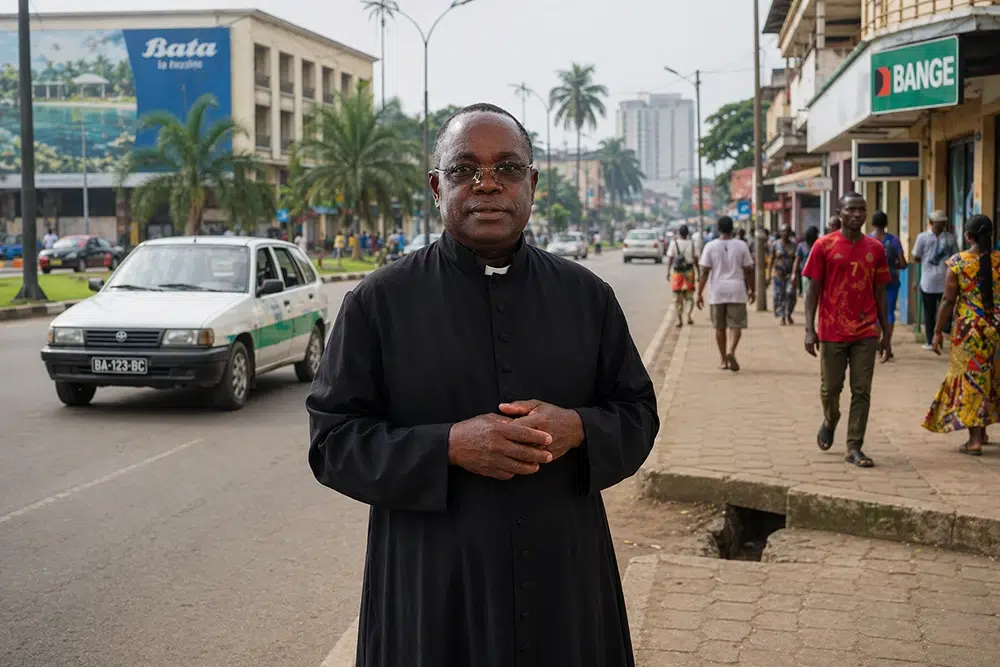
José Luis Mangué Mbá is a priest of the diocese of Bata (in Equatorial Guinea). During his stay in Madrid, he visited the headquarters of the CARF Foundation, The Bata World News Team interviewed him on the occasion of his visit to Bata, where he received a donation of liturgical objects for his parish of Our Lady of Mount Carmel in Bata. We took the opportunity to learn about the pastoral reality he is living.

The parish of Our Lady of Mount Carmel is located in the town of Bome, on the outskirts of the city of Bata. It also serves five other communities, each with its own chapel: Our Lady of Lourdes, St. Michael the Archangel, St. Ambrose and St. James the Apostle.

The Church in Equatorial Guinea

The pastoral work is carried out by two priests: Father Jacinto Edú and Father José Luis Mangué.

Bome is a heterogeneous community: Ndowe natives, Fang immigrants, foreigners from other African countries, as well as Chinese and Lebanese people live together. It is also a second home area, with an influx of people living in the capital on weekends.

From the religious point of view, it is a cold community threatened by the presence of sects. «They are the lost sheep of Israel whom we must lead into the Lord's flock,» explains the priest.

With 30 years of priesthood, Fr. José Luis came to this parish years ago after having served in various capacities in his diocese: pastor of the cathedral and of St. Francis Xavier, diocesan youth delegate, professor at the major seminary and vicar of the clergy.

«The bishop's desire is to consolidate the presence of the Church, strengthen the faith of the people and open it up to the experiences of communities with a longer journey,» he says.

Guinea Ecuatorial, sacerdote Iglesia católica José Luis Mangé

The work of José Luis in Equatorial Guinea

Currently, they have begun to reorganize catechesis at all levels. One of the main challenges is lay formation and adult catechesis.

The parish has significant material deficiencies. It has neither a sacristy nor adequate space for meetings, catechesis, singing rehearsals or celebrations. The church is not sufficiently equipped: it lacks a baptismal font, sacred vessels and other liturgical elements.

In this context, the donation from benefactors takes on special significance. «This donation of ornaments from the CARF Foundation means a lot to us,» he says. Thanks to it, they will be able to dignify worship and improve pastoral care.

It also highlights other aid received, such as a Stations of the Cross paid for by the Discalced Carmelite nuns of Boadilla del Monte and a tabernacle donated the previous year by the community of San Lorenzo de El Escorial.

«In the name of my community and in my own name, I give you infinite thanks. May the Lord keep us united in his service and bless the works of our hands».

The mission of the CARF Foundation

The CARF Foundation works to support the Church worldwide through the integral formation of seminarians and diocesan priests, religious men and women. Its work is focused on providing the necessary means for them to receive a solid theological, human and spiritual preparation, especially in centers such as the Pontifical University of the Holy Cross or the Ecclesiastical Faculties of the University of Navarra.

In addition to academic training, the CARF Foundation promotes material aid for dioceses with fewer resources, such as the donation of vestments and liturgical objects. These initiatives help to improve the conditions in which worship is celebrated and facilitate pastoral work in communities with great difficulties.

Thanks to the collaboration of benefactors, this work has a direct impact on parishes around the world, such as the one in Bome, Equatorial Guinea, where the support received helps to strengthen Christian life and care for the faithful.

CARF Foundation data

In 2025, the CARF Foundation supported 1,960 seminarians and diocesan priests from 85 countries, The Church's universal character is reflected in its mission statement.

Download the CARF Foundation's annual report for fiscal year 2025.

The Foundation's work is sustained by a broad social base of approximately 5,200 donors, This guarantees its independence and continuity.

During this exercise, the following were obtained 10.47 million euros, of which more than 6.32 million were directly allocated to aid, 2.61 million could be allocated to the endowment fund last year. 2.61 million euros could be allocated to the endowment fund last year.

622,846 in study grants, without losing value, since the CARF Foundation is committed to the principles of socially responsible investment and good governance practices. The endowment fund is intended to provide constant and perpetual support for the integral formation of seminarians, priests and religious, beyond the negative cycles of the economy. To this end, certain donations are earmarked for investments in real estate, stocks, bonds and others, seeking to maintain the power of the initial capital.

The impact is global: since the establishment of the CARF Foundation, beneficiaries have come from the following countries 130 countries, Every year thousands of dioceses and religious orders request support for the formation of their future priests.

In addition to comprehensive academic, human and spiritual formation, the Foundation promotes material aid in areas with scarce resources, facilitating the support of worship and pastoral care in communities such as Bome, in Equatorial Guinea.


Christ's witnesses on earth

Blessed Álvaro del Portillo: a man faithful to the Church

The history of the 20th century could not be fully understood without figures who, through discretion and efficiency, transformed institutions and mentalities. Álvaro del Portillo (1914-1994) is one of them. Doctor of Civil Engineering, Doctor of Philosophy and Letters (History section), and Doctor of Canon Law, his life was a bridge between the rigor of technique and the humble depth of faith. This blog entry looks at some of the outstanding and essential elements of his career, marked by an unwavering loyalty to the Church, to St. Josemaría, to Opus Dei and a prodigious capacity for work: the good and faithful servant.

Álvaro, the engineer who looked at the sky

He was born in Madrid on March 11, 1914 into a family with deep Christian roots. Álvaro stood out from a young age for his brilliant intelligence and natural serenity. His initial training as a Civil engineer marked his mental structure: logical, orderly and oriented to the resolution of complex problems.

This technical mentality would be, years later, fundamental for his work in the Church. Those who lived with him in his youth emphasized his capacity for sacrifice. During the Spanish Civil War, his faith was put to the test in situations of extreme precariousness, forging a temperate character in adversity and a peace that, according to many testimonies, was contagious to those around him.

Encounter with St. Josemaría: the fidelity and solidity of a rock

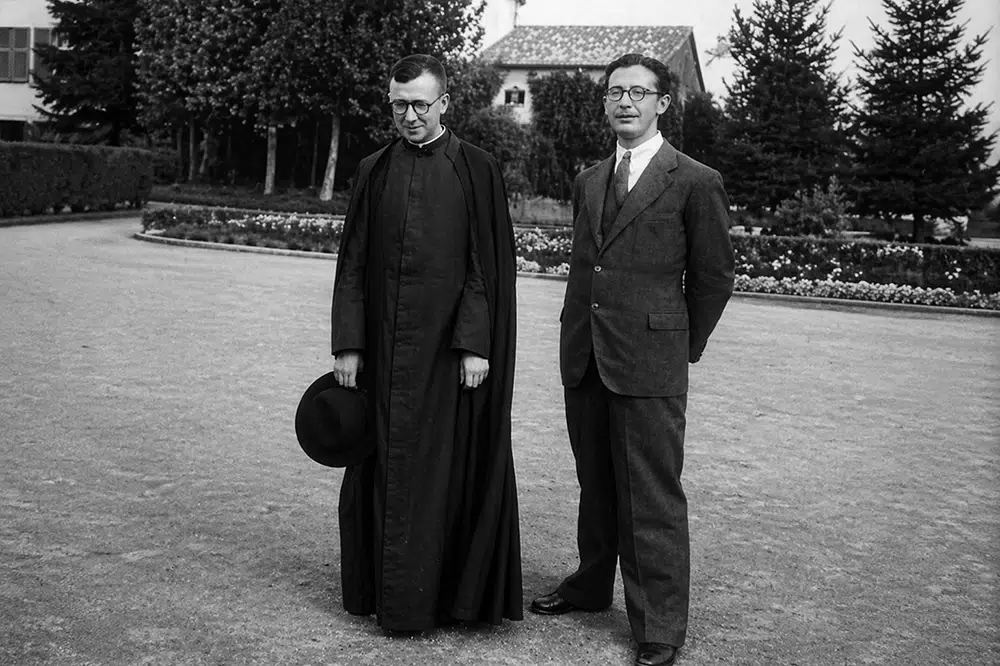
In 1935, Blessed Alvaro del Portillo met St. Josemaría Escrivá. That encounter transformed his life. He became the strongest supporter of the founder of the Opus Dei, The relationship was inseparable for almost forty years.

In the biography Mission accomplished, by Hugo de Azevedo, details how Álvaro became the rock (saxum) on which St. Josemaría relied. His role was not merely that of a secretary, but that of a confidant, confessor, and necessary collaborator in spreading a revolutionary message in his time: the universal call to holiness in the midst of the world through the sanctification of professional work.

Some key points in the life of Blessed Álvaro del Portillo

A decisive role in the Second Vatican Council

Perhaps one of the milestones least known by the general public, but most valued by ecclesiastical historians, is the contribution of Blessed Álvaro del Portillo to the Second Vatican Council (1962-1965).

His work in Rome was enormous. He was the secretary of the Commission that drafted the decree Presbyterorum Ordinis, but his influence extended to other vital documents. His ability to mediate and his profound juridical knowledge were key to articulating the role of the laity in the Church. He did not seek the limelight; his style was one of quiet effectiveness in the corridors and commissions of Vatican II, where he earned the respect of cardinals and theologians of all sensibilities in the Church.

Álvaro del Portillo junto a san Josemaría
St. Josemaría with Blessed Álvaro del Portillo.

Álvaro del Portillo's responsibilities at Vatican Council II and subsequent

During the pontificate of Pius XII he collaborated in various pontifical dicasteries and was appointed Consultor of the Sacred Congregation for Religious (1954-66). St. John XXIII appointed him consultor to the Sacred Congregation of the Council (1959-1966), and qualifier (1960) and judge (1964) of the Supreme Congregation of the Holy Office. In the stages leading up to the Second Vatican Council, he was president of the Antepreparatory Commission for the Laity and was also a member of other preparatory commissions. He was later appointed among the first one hundred experts of the Council.

In the years of development of the Second Vatican Council (1962-65), he was Secretary of the Commission on the Discipline of the Clergy and the Christian People and Consultor to other Conciliar Commissions: that of Bishops, Religious, Doctrine of the Faith, etc. In 1963 he was appointed, also by John XXIII, consultant to the Pontifical Commission for the Revision of the Code of Canon Law.

Later, St. Paul VI appointed him consultor to the Post-Conciliar Commission on Bishops and the Regime of Dioceses (1966), to the Sacred Congregation for the Doctrine of the Faith (1966-1983) and to the Sacred Congregation for the Clergy (1966).

St. John Paul II appointed him consultor to the Sacred Congregation for the Causes of Saints (1982) and to the Pontifical Council for Social Communications (1984) and member of the secretariat of the Synod of Bishops (1983). Since 1982, he has also been a member of the Secretariat of the Synod of Bishops (1983). ad honorem of the Pontifical Roman Theological Academy. He participated, at the express wish of Pope John Paul II, in the Ordinary General Assemblies of the Synod of Bishops on the vocation and mission of the laity in the Church and in the world (1987) and on the formation of priests in the present situation (1990).

Successor and faithful and creative continuity

Upon the death of St. Josemaría in 1975, Álvaro del Portillo was unanimously elected to succeed him. He faced the most difficult challenge for anyone who must lead: to succeed a charismatic figure of world stature who was already recognized in private circles as a saint.

His administration was characterized by what today could be called "faithful and creative continuity". He did not limit himself to repeating the past, but consolidated the juridical structure of Opus Dei as a Personal Prelature in 1982, a historic milestone that gave the institution a definitive place within Canon Law. During his mandate, the apostolic work was extended to twenty new countries, demonstrating a global vision and an extraordinary capacity for execution.

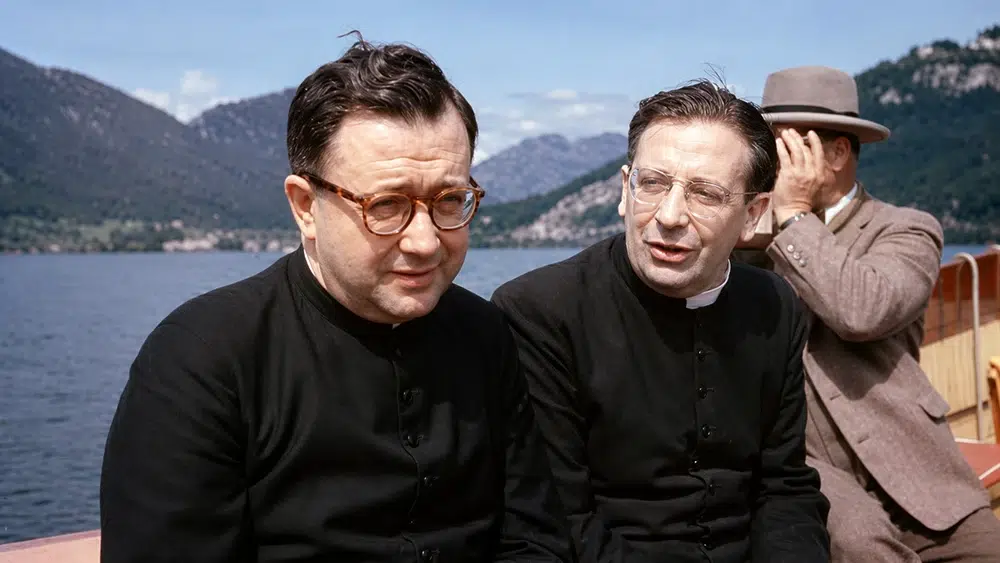
Photo taken in Austria at Lake Wolfgangsee (near Salzburg) in May 1955. St. Josemaría visited various Marian sites and cities in Austria and Germany accompanied by Alvaro del Portillo.

A man of peace and joy: his personality traits

The book Remembrance of Álvaro del Portillo, by Salvador Bernal, collects hundreds of testimonies that coincide in one distinctive feature: his peace. In a turbulent world, he emanated a tranquility that was not the result of the absence of problems, but of a deep inner life and joy.

The last years and the trip to the Holy Land

The end of his life was a summary of his existence. In March 1994, he made a pilgrimage to the Holy Land. Those who accompanied him remember his deep emotion when he prayed in the holy places.

He returned to Rome on March 22 and, a few hours later, in the early hours of the 23rd, he died of a heart attack. Just a few hours earlier, he had celebrated his last Holy Mass in the Church of the Cenacle in Jerusalem. It was a symbolic farewell: the engineer who had built spiritual bridges all over the world was ending his journey in the cradle of his faith.

On September 27, 2014, the beatification of Don Álvaro in Madrid was a multitudinous event that confirmed what many already knew: his life had been a "mission accomplished". And we review the homily delivered that day by Cardinal Angelo Amato.

"1. «Pastor after Christ's own heart, zealous minister of the Church.» [1]. This is the portrait that Pope Francis offers of Blessed Alvaro del Portillo, a good shepherd who, like Jesus, knows and loves his sheep, leads those who are lost to the fold, binds up the wounds of the sick and offers his life for them. [2].

The new Blessed was called as a young man to follow Christ, to be later a diligent minister of the Church and to proclaim throughout the world the glorious richness of his saving mystery: «We proclaim this Christ; we admonish all, we teach all, with all the resources of wisdom, to present them all perfect in Christ.

For this reason I fight hard with his strength, which acts powerfully in me.» [3]. And this proclamation of Christ the Savior was made with absolute fidelity to the cross and, at the same time, with exemplary evangelical joy in the midst of difficulties. For this reason, the Liturgy applies to him today the words of the Apostle: «Now I rejoice in my sufferings for your sake: thus I complete in my flesh what is lacking in Christ's sufferings for the sake of his body, which is the Church».» [4].

Serene happiness in the face of pain and suffering is a characteristic of the saints. Moreover, the beatitudes - even the more arduous ones, such as persecutions - are nothing but a hymn to joy.

2. Blessed Alvaro lived the virtues of faith, hope and charity in a heroic way. He practiced these virtuous habits in the light of the beatitudes of meekness, mercy and purity of heart. The testimonies are unanimous. Besides standing out for his total spiritual and apostolic harmony with the holy Founder, he also distinguished himself as a figure of great humanity.

Witnesses affirm that, since he was a child, Álvaro was «a boy with a very cheerful and studious character, who never gave any trouble»; «he was affectionate, simple, cheerful, responsible, good...» [5].

He inherited from his mother, Doña Clementina, a proverbial serenity, gentleness, a smile, understanding, speaking well of others, and weight in judging. He was a true gentleman. He was not loquacious. His training as an engineer gave him the mental rigor, conciseness and precision to get to the heart of problems and solve them. He inspired respect and admiration.

3. His gentleness in his dealings went hand in hand with an exceptional spiritual richness, in which the grace of unity between interior life and untiring apostolic zeal stood out. The writer Salvador Bernal affirms that he transformed the humble prose of daily work into poetry.

He was a living example of fidelity to the Gospel, to the Church, to the Magisterium of the Pope. Whenever he went to St. Peter's Basilica in Rome, he used to recite the Creed before the tomb of the Apostle and a Salve before the image of St. Mary, Mater Ecclesiae.

He shunned all personalism, because he transmitted the truth of the Gospel and the integrity of tradition, not his own opinions. Eucharistic piety, Marian devotion and veneration for the Saints nourished his spiritual life.

He kept God's presence alive with frequent ejaculatory and vocal prayers. Among the most common were: Cor Iesu Sacratissimum et Misericors, dona nobis pacem!, y Cor Mariae Dulcissimum, iter para tutum; as well as the Marian invocation: Holy Mary, our Hope, Handmaid of the Lord, Seat of Wisdom, our Hope..

4. A decisive moment in his life was the call to Opus Dei. At the age of 21, in 1935, after meeting St. Josemaría Escrivá, then a young priest of 33, he responded generously to our Lord's call to holiness and apostolate.

He had a deep sense of filial, affective and effective communion with the Holy Father. He welcomed his teaching with gratitude and made it known to all the faithful of Opus Dei. In the last years of his life, he often kissed the Prelate's ring given to him by the Pope to reaffirm his full adherence to the Roman Pontiff's wishes. In particular, he seconded his requests for prayer and fasting for peace, for Christian unity and for the evangelization of Europe.

He stood out for his prudence and rectitude in evaluating events and persons; his justice in respecting the honor and freedom of others; his fortitude in resisting physical and moral setbacks; and his temperance, lived as sobriety, interior and exterior mortification. Blessed Alvaro transmitted the good odor of Christ.bonus odor Christi- [6], which is the aroma of authentic holiness.

5. However, there is one virtue that Bishop Alvaro del Portillo lived in a particularly extraordinary way, considering it an indispensable instrument for holiness and the apostolate: the virtue of humility, which is imitation and identification with Christ, meek and humble of heart [7]. He loved the hidden life of Jesus and did not despise the simple gestures of popular devotion, such as, for example, going up on one's knees the Scala Santa in Rome.

Álvaro del Portillo at La Santa Mass of thanksgiving celebrated one day after the beatification of Josemaría Escrivá, on May 12, 1992.

A member of the Prelature, who had visited the same place but had climbed up the hill on foot, was Scala Santa, Blessed Alvaro replied with a smile, and added that he had brought her up on his knees, even though the atmosphere was somewhat stuffy because of the crowd of people and the poor ventilation. [8]. It was a great lesson in simplicity and piety.

Monsignor del Portillo was, in fact, beneficially “infected” by the behavior of Our Lord Jesus Christ, who did not come to the Church in the name of the Lord Jesus Christ. to be served, but to serve [9]. For this reason, he often prayed and meditated on the Eucharistic hymn Adoro Te devote, latens deitas. In the same way, he considered the life of Mary, the humble handmaid of the Lord.

Sometimes I remembered a phrase of Cervantes, from the Exemplary Novelswithout humility, there is no virtue that is«.» [10]. And he often recited a frequent ejaculation among the faithful of the Work: «....«Cor contritum et humiliatum, Deus, non despicies[11]; You will not despise, O God, a contrite and humbled heart.

For him, as for St. Augustine, humility was the charity home [12]. He repeated a piece of advice that the Founder of Opus Dei used to give, quoting some words of St. Joseph Calasanz: «If you want to be holy, be humble; if you want to be more holy, be more humble; if you want to be very holy, be very humble».» [13].

Nor did he forget that a donkey was Jesus“ throne at the entrance to Jerusalem. Even his fellow students, in addition to highlighting his extraordinary intelligence, emphasized his simplicity, the serene innocence of one who does not consider himself better than others. He thought that his worst enemy was pride. A witness affirms that he was ”humility in person".” [14].

His humility was not harsh, flashy, exasperated; but affectionate, joyful. His joy derived from the conviction of his low personal worth. In early 1994, the last year of his life on earth, in a meeting with his daughters, he said: «I say it to you, and I say it to myself. We have to struggle all our lives to become humble.

We have the marvelous school of humility of the Lord, the Blessed Virgin and St. Joseph. Let us learn. We are going to fight against our own self that is constantly rising up like a viper, to bite. But we are safe if we are close to Jesus, who is of the lineage of Mary, and is the one who will crush the head of the serpent.» [15].

For Don Alvaro, humility was «the key that opens the door to enter the house of holiness,» while pride was the greatest obstacle to seeing and loving God. He said: «humility strips us of the ridiculous cardboard mask that presumptuous, self-conceited people wear».»[16].

Humility is the recognition of our limitations, but also of our dignity as children of God. The best praise for his humility was expressed by a woman of Opus Dei, after the death of the Founder: «Don Álvaro died, because our Father continues to live in his successor».» [17].

A cardinal testifies that when he read about humility in the Rule of St. Benedict or in the Spiritual Exercises Ignatius of Loyola, it seemed to him that he was contemplating a lofty ideal, but one that was unattainable for human beings. But when he met and got to know Blessed Alvaro, he understood that it was possible to live humility in a total way.

6. The words that Cardinal Ratzinger pronounced in 2002, on the occasion of the canonization of the Founder of Opus Dei, can be applied to the Blessed. Speaking of heroic virtue, the then Prefect of the Congregation for the Doctrine of the Faith said: «Heroic virtue does not exactly mean that one has accomplished great things on his own, but that in his life there appear realities that he has not done himself, because he has shown himself transparent and available for God to act [...]. This is sanctity».» [18].

This is the message that Blessed Alvaro del Portillo, «pastor according to the heart of Jesus, zealous minister of the Church», delivers to us today.» [19]. He invites us to be saints like him, living a kind, merciful, gentle, meek and humble holiness.

The Church and the world need the great spectacle of holiness to purify, with its pleasant aroma, the miasmas of the many vices flaunted with arrogant insistence.

Now more than ever we need an ecology of holiness to counteract the contamination of immorality and corruption. The saints invite us to bring into the bosom of the Church and society the pure air of God's grace, which renews the face of the earth.

May Mary, Help of Christians and Mother of Saints, help and protect us.

Blessed Alvaro del Portillo, pray for us. Amen".

Blessed Álvaro del Portillo leaves behind the legacy of a man who knew how to combine the professional excellence with a deep personal humility. His life demonstrates that it is possible to be at the center of great historical events while always keeping one's heart on the essential: service to others and fidelity to one's principles.