Palm Sunday: biblical meaning and history

With Palm Sunday, Holy Week begins and we remember Christ's triumphal entry into Jerusalem. St. Luke writes: «As he drew near to Bethphage and Bethany, near the Mount of Olives, he sent two of his disciples, saying to them, "Go to the hamlet that is in front of you. When you enter, you will find a little donkey tied up that no one has yet ridden. Untie it and bring it here. If anyone asks you why you are untying him, tell him: the Lord needs him." They went and found everything as the Lord had told them.».

What do we celebrate on Palm Sunday?

Palm Sunday is the last Sunday before the Easter Triduum. It is also known as Passion Sunday, which marks the beginning of the Holy Week celebrations.

This is a Christian feast of peace. The branches, with their ancient symbolism, remind us now of the covenant between God and his people. Confirmed and established in Christ, because He is our peace.

In the liturgy of our Holy Catholic Church, we read today these words of profound joy: the sons of the Hebrews, bearing olive branches, went out to meet the Lord, crying out and saying: Glory in the highest.

As he passed by, St. Luke tells us, the people spread their garments on the road. And when they were near the descent of the Mount of Olives, the disciples in great numbers, overcome with joy, began to praise God with a loud voice for all the wonders they had seen: Blessed is the King who comes in the name of the Lord, peace in heaven and glory in the highest.

"By works of service, we can prepare for the Lord a greater triumph than that of his entry into Jerusalem.", St. Josemaría Escrivá.

Holy Week: origin of Palm Sunday

On this day, Christians commemorate Christ's entry into Jerusalem to consummate his Paschal Mystery. For this reason, two Gospels have long been read at Mass on this day.

As Pope Francis explains, "this celebration has a double taste, sweet and bitter, it is joyful and painful, because in it we celebrate the Lord's entry into Jerusalem, acclaimed by his disciples as king, while at the same time the Gospel account of his passion is solemnly proclaimed. So our heart feels that painful contrast and experiences in some measure what Jesus felt in his heart on that day, the day when he rejoiced with his friends and wept over Jerusalem."

It is in the Palm Sunday, As our Lord begins the decisive week for our salvation, St. Josemaría recommends that «let us leave aside superficial considerations, let us go to what is central, to what is truly important. Look: what we have to pretend is to go to heaven. Otherwise, nothing is worthwhile. To go to heaven, fidelity to the doctrine of Christ is indispensable. In order to be faithful, it is indispensable to persevere with constancy in our struggle against the obstacles that oppose our eternal happiness...."

The palm leaves, writes St. Augustine, are a symbol of homage, because they signify victory. The Lord was about to conquer, dying on the Cross. He was going to triumph, in the sign of the Cross, over the Devil, the prince of death.

He comes to save us; and we are called to choose his way: the way of service, of self-giving, of self-forgetfulness. We can follow this path by stopping during these days to look at the Crucifix, the "Chair of God".Pope Francis.

Procesiones de Semana Santa

Meaning of Palm Sunday

Bishop Javier Echevarría, makes us see the Christian meaning of this feast: "We, who are nothing, are often vain and arrogant: we seek to stand out, to attract attention; we try to be admired and praised by others. People's enthusiasm does not usually last. A few days later, those who had welcomed him with cheers will cry out for his death. And we, will we let ourselves be carried away by a passing enthusiasm? 

If in these days we notice the divine fluttering of God's grace, which passes close by, let us make room for it in our souls. Let us spread our hearts on the ground, more than palms or olive branches. Let us be humble, mortified and understanding with others. This is the homage that Jesus expects from us.". 

"Just as the Lord then entered the Holy City on the back of the donkey," says Benedict XVI, "so the Church always saw him arrive again under the humble appearance of bread and wine.

The Palm Sunday scene is repeated in a certain way in our own lives. Jesus approaches the city of our soul on the back of the ordinary: in the sobriety of the sacraments; or in the gentle hints, such as those that St. Josemaría pointed out in his homily on this feast: "live punctually the fulfillment of your duty; smile at those who need it, even if your soul is in pain; dedicate, without stint, the necessary time to prayer; come to the aid of those who seek you; practice justice, extending it with the grace of charity.

Pope Francis pointed out that nothing could stop the enthusiasm for the entry of Jesus; let nothing prevent us from finding in him the source of our joy, of authentic joy, which remains and gives peace; because only Jesus saves us from the bonds of sin, death, fear and sadness.

Palm Sunday in the Bible

The Palm Sunday liturgy puts this canticle on the lips of Christians: Lift up your lintels, O ye gates; lift up your lintels, ye ancient doors, that the King of glory may come in.

First Gospel of Palm Sunday (Luke 19:28-40)

When he had said this, he went on ahead of them, going up to Jerusalem. And when he came near Bethphage and Bethany, by the mount called the Mount of Olives, he sent two disciples, saying:

-Go to the village opposite; when you enter it you will find a donkey tied up, on which no one has yet ridden; untie it and bring it to him. And if anyone asks you why you are untying it, you shall answer him, "Because the Lord has need of it."

The envoys went and found it just as he had told them. When they untied the donkey their masters said to them:
-Why do you untie the donkey?

-Because the Lord needs it," they answered.

They took him to Jesus. And they threw their cloaks on the donkey and made Jesus ride on it. As he went on, they spread their cloaks along the road. And as he drew near, as he was going down the Mount of Olives, the whole multitude of the disciples, filled with joy, began to praise God with a loud voice for all the wonders they had seen, saying:

Blessed is the King who comes in the name of the Lord!
Peace in heaven and glory in the highest!

Some Pharisees from the crowd said to him, "Teacher, rebuke your disciples.

He answered them, "I tell you, if these keep silent, the stones will cry out.

Gospel of Palm Sunday (Mark 11:1-10)

As he drew near to Jerusalem, to Bethphage and Bethany, by the Mount of Olives, he sent two of his disciples and said to them:

-Go to the village opposite you, and as soon as you enter it you will find a donkey tied up, on which no one has yet ridden; untie it and bring it back. And if anyone says to you, "Why do you do that?" answer him, "The Lord needs him, and he will bring him back here at once."

They went away and found a donkey tied by a gate outside at a crossroads, and they untied it. Some of those who were there said to them:

-What are you doing untying the donkey?

They answered them as Jesus had said to them, and allowed them. Then they brought the donkey to Jesus, threw their cloaks on it, and he mounted on it. Many spread their cloaks on the road, others the branches they were cutting from the fields. Those who went before and those who followed behind shouted:

-Blessed is he who comes in the name of the Lord, blessed is the coming kingdom, the kingdom of our father David, Hosanna in the highest, Hosanna in the highest!

And he went into Jerusalem into the Temple; and when he had carefully observed everything, as it was toward evening, he departed for Bethany with the twelve.

"There are hundreds of animals more beautiful, more skillful and more cruel. But Christ looked to the donkey to present himself as king before the people who acclaimed him. For Jesus does not know what to do with calculating cunning, with the cruelty of cold hearts, with showy but hollow beauty. Our Lord values the joy of a young heart, the simple step, the voice without falsetto, the clear eyes, the attentive ear to his word of affection. Thus he reigns in the soul"., St. Josemaría Escrivá.

domingo de ramos semana santa

When did the Holy Week processions of Palm Sunday begin?

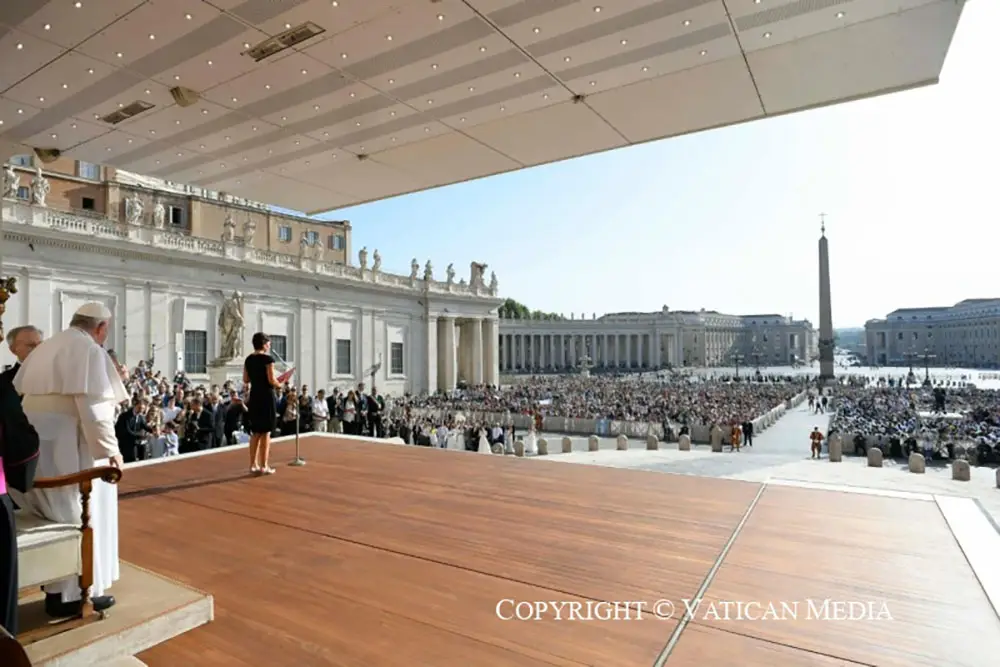
The tradition of celebrating Palm Sunday is hundreds of years old. For centuries, the blessing of the olive trees has been part of this feast, as well as the processions, The Holy Mass and the recounting during it of the Passion of Christ. Today they are celebrated in many countries.

The faithful participating in the Jerusalem procession, which dates back to the 4th century, They also carry palm branches, olive trees or other trees in their hands, and sing Palm Sunday songs.. The priests carry bouquets and lead the faithful.

In Spain, a cheerful Palm Sunday procession commemorates Jesus' entry into Jerusalem. Gathered together we sing hosanna and waves his palms as a gesture of praise and welcome.

The olive branches are a reminder that Lent is a time of hope and renewal of faith in God. They are attributed to be a symbol of the life and resurrection of Jesus Christ.. They also recall the Church's faith in Christ and his proclamation as King of Heaven and Earth.

At the end of the pilgrimage, it is customary to place the blessed palms next to the crosses in our homes as a reminder of Jesus' Easter victory.

These same olive trees will be prepared for the following Ash Wednesday. For this important ceremony, the remains of the palms blessed on Palm Sunday of the previous year are burned. These are sprinkled with holy water and then scented with incense.

Songs for Palm Sunday

Brief list of recommended songs for the celebration of Palm Sunday:


Bibliography:
Pope Francis, Homily, Palm Sunday 2017
Benedict XVI, Jesus of Nazareth.
St. Josemaría, Christ Is Passing By.
St. Josemaría, Forge.


Questions and answers

- What is the meaning of Palm Sunday?

The Palm Sunday is one of the most important celebrations in Christianity, as it marks the beginning of the beginning of the Holy Week. It represents the end of Lent and the beginning of the commemoration of the passion, death and resurrection of Jesus.

- What does the Palm Sunday bouquet symbolize?

It commemorates the triumphal entry of Jesus Christ into Jerusalem. It is celebrated one week before his glorious Resurrection triumphing over death and sin. Jesus entered Jerusalem riding on a donkey, and the people who had come for the Jewish Passover celebrations laid their cloaks and small branches of trees on the ground, while chanting part of Psalm 118: «Blessed is he who comes in the name of the Lord».

March 25, the Annunciation of the Lord

The Church celebrates the Solemnity of the Annunciation of the Lord the March 25, The Feast of the Incarnation, a crucial moment in the history of salvation. Also known as the Incarnation of the Lord, this feast remembers the instant when the Archangel Gabriel announces to the Virgin Mary that she will be the mother of the Son of God. Her «let it be done to me according to your word» (Lk 1:38) represents a model of faith and total surrender to the divine will.

Anunciación  25 de marzo Virgen María Jornada por la Vida sacerdotes

The meaning of the Annunciation and the incarnation of the Word

The mystery of the Annunciation is inseparable from the Incarnation, since it is the moment in which God assumes human nature. St. Josemaría Escrivá, founder of the Opus DeiHe emphasized the greatness of this event, affirming that "God calls us to sanctify ourselves in ordinary life, as Mary accepted her mission with humility.

Mary, model of vocation and dedication

Our mother, the Virgin Mary is an example for all Christians, especially for those who have been called to the priesthood. His confident and unreserved response is a reflection of the willingness that all Christians must have in order to be called to the priesthood. seminarian and priest should have before God's call.

Anunciación  25 de marzo Virgen María Jornada por la Vida sacerdotes

The Annunciation and the defense of life

In Spain, the Episcopal Conference celebrates on March 25, the Day for the Life, recalling the sacred value of human life from conception. In 2026, the motto is «Life, an inviolable gift», a call for the protection of life in all its stages. «Abortion - the prelates stress - can never constitute a right, since there is no right to eliminate a human life».

However, the Episcopal Conference does not only focus on the mother's womb; it also addresses mothers and fathers who face difficulties when dealing with pregnancy. For this reason, they indicate that from CEE «we want to promote a social alliance for hope in favor of the natality, The aim is, on the one hand, to build together the necessary conditions for our young people to be able to consider the possibility of forming a family open to life and, on the other hand, so that no woman has to resort to abortion because she feels alone or without resources».

anunciación 25 de marzo jornada por la vida sacerdotes

The commitment of priests and seminarians

For the priests and for the future pastors supported by the CARF Foundation, This feast has a special meaning. The defense of life is part of their mission, being witnesses of the Gospel in a society that often relativizes the value of human existence.

The commitment of priests and seminarians is not only based on the defense of life from conception, but also in their pastoral work to accompany people at every stage of their lives.

Your training theologically and spiritually prepares them to be guides in faith and guides in difficult times. Inspired by Mary's yes, they are called to be heralds of hope, promoting a culture of life and Christian love.

In addition, this holiday invites them to deepen their knowledge of their vocation, reaffirming its commitment to evangelization and the teaching of Christian doctrine.

In times when human dignity faces multiple challenges, their witness takes on special relevance. The Annunciation is for them a reminder of their mission to be Christ's living presence in the world, transmitting the message of salvation in word and deed.

anunciación 25 de marzo jornada por la vida sacerdotes
Living Mary's yes: a commitment for all Christians

The party of the Annunciation not only invites us to meditate on the yes of the Maria, but also to renew our surrender to God with trust and joy.

Mary, with her humble and courageous acceptance, teaches us that every Christian, regardless of his or her state in life, is called to give his or her own yes to God in everyday life.

For seminarians and priests The day for diocesan priests is a day of special reflection on their vocation and on their commitment to be defenders of life and faith.

However, this call is not exclusive to them. Each member of the faithful, from his or her own reality, can make this call present to Christ in the world through their acts of charity, their Christian witness and their trust in God's providence.

The Annunciation reminds us that each one of us, as part of the people of God, can be an instrument in his hands, bringing hope, love and faith to those around us.


Faith-building legacies: the value of the legacy of solidarity for the Church

Talking about inheritances and legacies usually makes us think of property, goods or money that are passed on from parents to children or other loved ones. But a legacy of solidarity can go well beyond the materialis to leave a mark of faith that will endure over time, a witness that will continue to bear fruit in the Church after we are gone.

The history of the Church is full of examples of how legacies, large or small, have sustained its mission and made it possible for the Gospel to reach millions of people.

The relationship between culture, art, charity and the Catholic Church is probably the longest and most fruitful sponsorship contract of mankind. For centuries, the Church has been a spiritual guide, and the main "creative director" of the West.

The Royal Monastery of San Lorenzo de El Escorial is a complex that includes a royal palace, a basilica, a pantheon, a library, a college and a monastery. It is located in the Spanish town of San Lorenzo de El Escorial, in Madrid, and was built between 1563 and 1584.

Great legacies that shaped the Church

At various times in history, bishops, abbots and religious founders who lived in holiness They used part of their goods or ecclesiastical revenues to found seminaries, hospices or houses of formation. They were not merchants or passing patrons, they were pastors and religious who, with their austere life, gave testimony that they had everything “borrowed” from God and that their mission was to take care of souls.

Some monastic communities, following their spirituality, assumed that their surplus land or rents should be used for their maintenance, but also for a broader mission: to train priests, support missions or help in poor areas. Thus, monasteries became economic centers that redistributed goods for ecclesiastical purposes.

We also find legacies of lay faithful: relevant royalty or even historical figures such as Catholic kings, merchants, families with visible Christian lives who, at the end of their lives, offered part of what they owned to the Church to support schools, orphanages or priestly formation.

These physical legacies, sometimes translated into cathedrals, monasteries or universities, are the visible expression of a conviction that faith deserves to be transmitted and guarded for future generations.

Life-changing legacies and wills

There are also discrete legacies that, although invisible, have transformed the course of the Church.

In many villages, chapels and parishes were built thanks to collections from simple families, farmers and artisans who contributed what little they had. Their names do not appear in the history books, but without them, the faith would not have taken root in so many communities.

Other legacies are even more profound: the legacy of faith transmitted in the family. Let's think about St. Monica, who bequeathed to the Church nothing less than St. Augustine thanks to his constant weeping and prayer. Or in the parents of St. Therese of the Child Jesus, whose spiritual legacy was the atmosphere of faith and love that made holiness blossom in their daughter. The legacy of a Christian is not measured in numbers, but in the impact he or she leaves on souls.

A bridge between earth and sky: “Desde el Cielo” at the CARF Foundation

The great and small legacies of history remind us that Christian generosity is never lost, but is always transformed into life for the Church.. We see that same reality today in those who, anonymously and discreetly, decide to leave a legacy that contributes to the future of the church. 

As a tribute and token of our gratitude, the CARF Foundation created the Page From HeavenA memorial where we remember those deceased benefactors who made it possible for thousands of diocesan and religious priests and seminarians to be formed each year.

Holy Mass is offered daily for their souls at the Sanctuary of Torreciudad, The priests who have received help from the CARF Foundation carry in their daily prayers the memory of those benefactors who now continue to help from heaven. The priests who have received help from the CARF Foundation carry in their daily prayers the memory of those benefactors who now continue to help from heaven.

This gesture consolidates an intimate spiritual relationship: those who bequeathed their generosity not only sustain the Church from earth, but now intercede and accompany her from eternity. It is a beautiful and clear expression that the Christian legacy of solidarity does not end at death, but continues in the communion of saints.

Facultades Eclesiásticas de la Universidad de Navarra
Ecclesiastical Faculties of the University of Navarra, Pamplona.

The Christian sense of legacy

For a Christian, leaving a legacy of solidarity means much more than distributing goods. It is a spiritual decision, a way of prolonging charity beyond one's own life.

The Gospel reminds us: «where your treasure is, there your heart will be» (Mt 6:21). Whoever decides to include the CARF Foundation in his or her solidarity will transforms his or her assets into a seed of faith, allowing others to find God through priests and priests well trained.

Today, that same logic is still alive: the legacy is the bridge between your earthly life and the eternal fruits that others will receive thanks to your generosity.

Your legacy today can form priests for tomorrow

At present, through the CARF Foundation, your legacy becomes a direct support to seminarians and diocesan priests around the world.. Young people who wish to give themselves to God and serve the universal Church, but who need help in their formation.

Just as in the past legacies built temples, universities, hospitals, convents and missions, today your legacy can build living temples: priests prepared to proclaim the Gospel and accompany thousands of people. A Christian takes nothing to heaven, but can leave a lot on earth.. As kings, saints and anonymous families did, today you have the opportunity to decide that what God entrusted to you in life will continue to be transformed into hope, faith and service.

Your legacy may be the most valuable inheritance: the one that sustains the Church and accompanies thousands of people to God.


SOME CURIOUS QUESTIONS AND ANSWERS

1. Which is better, an inheritance or a bequest?

Inheritance is the succession in all the assets, rights and obligations of the deceased. While the bequest, a specific donation of a specific asset (a car, a house, a jewel).

2. How did the emperors consolidate the inheritances?

Before there were great art collectors, it was political leaders who consolidated the Church's holdings.

- Constantine the Great (IV century): The original patron. After legalizing Christianity, he financed the construction of the first large basilicas, such as the Former St. Peter's Basilica in Rome and that of the Holy Sepulchre in Jerusalem.

- Charlemagne (IX century): He promoted the "Carolingian Renaissance". His support was vital for the preservation of illuminated manuscripts and the reform of ecclesiastical architecture in Europe.

3. How is patronage consolidated in the Renaissance?

In the 15th and 16th centuries, patronage became a matter of status, faith and, let's face it, a bit of family ego supported by the great families who supported artists and bequeathed and donated much heritage to the Church.

- The MediciThey produced four popes (Leo X, Clement VII, among others) and financed the splendor of Florence and the Vatican. They promoted Michelangelo and Raphael.

- Pope Julius IIknown as the Warrior Pope, was the one who ordered the demolition of the old St. Peter's Basilica to build the current one. He supported Michelangelo (Sistine Chapel) and Bramante.

- The BorgheseCardinal Scipione Borghese was the great patron of the early Baroque. He promoted the careers of Bernini and Caravaggio.

4. What did the great Catholic monarchies promote?

- Philip II of Spain: the great defender of the faith. His greatest work of patronage was El Escorial, a monastery-palace that symbolized the union of royal power and religious fervor.

- The Habsburgs of Austria: turned Vienna and Central Europe into bastions of ecclesiastical baroque, financing abbeys and churches of almost overwhelming sumptuousness.

5. Some examples of modern patronage

Today, patronage has gone from being a matter of kings and popes to being managed by institutions and foundations.

- Knights of Columbus: This organization has financed numerous restorations in St. Peter's Basilica and supports Vatican communication projects.

- Private Foundations and Museums: institutions such as the Vatican Museums are self-financed, but depend on international donations (such as the Patrons of the Arts in the Vatican Museums) for the restoration of some masterpieces.

- Billionaires and Philanthropists: after the fire in Notre Dame de Paris in 2019, families such as the Pinault and the Arnault (LVMH) donated hundreds of millions of euros, demonstrating that Catholic patronage today is also an act of preservation of the global cultural heritage.

Lent and God's forgiveness

The Lent is the liturgical season in which the Church invites Christians to pause, look at their lives before God and return to Him with a renewed heart. For forty days a journey of conversion marked by prayer, penance and charity is proposed to us. It is not just an outward change, but a profound call to recognize our fragility and to open ourselves anew to God's mercy.

«You have compassion on all, O Lord, and hate nothing that You have done; You close Your eyes to the sins of men that they may repent and forgive them, for You are our God and Lord» (Ash Wednesday, Entrance Antiphon).

On that day, during the celebration of the Holy Mass, or in a separate ceremony, the faithful who wish to do so, approach the altar so that the priest may impose the ashes on them, while saying: «Remember that you are dust, and to dust you shall return»; or, «Convert and believe the Gospel».

These two phrases do not have a contradictory meaning. They complement each other, and if we know how to put them together, they give us the profound meaning of what the Church wants us to live in this liturgical season: a new Conversion in our Christian living.

With what disposition should we begin to live these days? Josemaría Escrivá, in It is Christ who passes, n. 57, reminds us: «We have entered the season of Lent: a time of penance, purification and conversion. It is not an easy task. Christianity is not a comfortable path. be in the Church and let the years go by. In our life, in the life of Christians, the first conversion - that unique moment, which each of us remembers, in which we clearly perceive all that the Lord asks of us - is important; but even more important, and more difficult, are the successive conversions.

And to facilitate the work of divine grace with these successive conversions, it is necessary to keep the soul young, to invoke the Lord, to know how to listen, to have discovered what is wrong, to ask for forgiveness» (...).

What is the best way to begin Lent?

We renew faith, hope, charity. This is the source of the spirit of penance, of the desire for purification. The Lent is not only an occasion to intensify our external practices of mortification: if we were to think that it is only that, we would miss its deep meaning in the Christian life, because these external acts are -I repeat- the fruit of faith, hope and love.

In order for us to live this willingness to convert, we need to prepare our spirit to listen attentively to, and then put into practice, the lights that the Lord wants to give us during these days of Lent. We can summarize this disposition in three words: sorry y ask for forgiveness.

Cuaresma perdón, tiempo para rezar a Dios

When blessing the ashes, the priest can say this prayer: «O God, who does not want the death of the sinner, but his repentance, hear with goodness our supplications and deign to bless this ash that we are going to impose on our head; and because we know that we are dust and to dust we shall return, grant us, by means of the Lenten practices, the forgiveness of sins, so that we may attain, in the image of your risen Son, the new life of your Kingdom».

Everything begins by humbly asking the Lord for forgiveness for our sins, for our lack of love for Him and for our lack of love for our neighbor. «If in bringing your offering to the altar you remember that your brother has something against you, leave your offering there before the altar; go first to be reconciled to your brother, and then return to present your offering.» (Mt. 5:23-24)

This request for forgiveness, and the thought of Christ's joy in forgiving us our sins, will move our soul to forgive wholeheartedly the offenses, injustices, mistreatments, insults, and abandonments that we may have received, and not to allow even the slightest seed of hatred, resentment, or revenge to nestle in our hearts.

Forgive as Christ forgives us. In this way we will have the humility of spirit so necessary to live our life in union with Christ, and following in his footsteps, which he pointed out to us with these words: «Learn from me, for I am meek and humble of heart». And asking the Lord for forgiveness in the sacrament of Reconciliation and Confession, as Leo XIV reminded the priests of Madrid:

«Therefore, dear children, celebrate the sacraments with dignity and faith, being aware that what is produced in them is the true strength that builds up the Church and that they are the ultimate goal to which our whole ministry is ordered. But do not forget that you are not the source, but the channel, and that you also need to drink from that water. Therefore, do not cease to confess yourselves, to return always to the mercy that you proclaim».

Lenten Messages

In many Lenten messages, the Popes remind us of the three classic works recommended by saints and spiritual doctors to live Lent well: «prayer, fasting, almsgiving, and almsgiving.".

«Lent is a propitious time to intensify the life of the spirit through the holy means that the Church offers us: fasting, prayer and almsgiving. At the basis of everything is the Word of God, which at this time invites us to listen to and meditate on more frequently.» (Francis, Lenten Message, 2017).

By forgiving and asking for forgiveness, our prayer will reach heaven; our fasting will lead us not to seek ourselves in our actions, and to want to give glory to God in everything we do; and our almsgiving will be to accompany the needy, to encourage sinners to repent.

Our prayer is a deep manifestation of Faith that springs from the depths of our soul. Faith that leads us to have full confidence in Christ, to unite ourselves with Him in His Life, to know Him better, and thus, we will have the joy of quenching His thirst. And it opens our hearts to love the Lord with all our strength, and with the best of ourselves.

Our fasting leads us to detach ourselves from ourselves, to seek only the glory of God in all our actions, not to think always of ourselves and not to dwell on useless worries or memories. Fasting from ourselves and our interests will elevate our heart, our soul to hunger to love Christ, to live with Him, and truly nourish ourselves on his Word, and say to him with St. Peter: «You have the words of eternal life» (Jn. 6:68). And we will renew our Hope in the Lord, who opens for us the horizon of Eternal Life.

In his Lenten Message, Leo XIV suggests us to live an abstinence that can do great good to our spirit:

«For this reason, I would like to invite you to a very concrete and often underappreciated form of abstinence, namely, that of refrain from using words that affect and hurt our neighbor. Let us begin to disarm language, renouncing hurtful words, immediate judgment, speaking ill of those who are absent and cannot defend themselves, and slander.

Let us strive, instead, to learn to measure words and cultivate kindness: in the family, among friends, in the workplace, in social networks, in political debates, in the media and in Christian communities. Then, many words of hatred will give way to words of hope and peace.».  

Our almsgiving will lead us to be generous in serving others and thus follow in the footsteps of Christ who told us «The Son of Man did not come to be served but to serve, and to give his life as a ransom for many» (Mt. 20:28). We have many people around us who, besides needing material help in some cases, need our affection, our understanding, our company. And our Charity will purify our spirit, adoring Jesus in the Blessed Sacrament of the Altar: the deepest alms of love that we offer to God. 

By living prayer, fasting and almsgiving, we are accompanying Christ in the temptations in the desert, with our Faith, with our Hope and with our Charity.

With our Faith uniting us to his response to the devil in the first temptation: «Man does not live by bread alone, but by every word that proceeds from the mouth of God» (Mt. 4:4). Faith that helps us to discover his loving heart in all the difficulties - in all the stones we may encounter on our path - and to carry with him our daily cross. He is, and will always be, our Bread.

By fasting from ourselves, and feeding on His Bread, we will revive our Hope in the Incarnation of Our Lord Jesus Christ, and we will not tempt God by asking Him to do extraordinary things to dazzle us, and force us, in some way, to follow Him, as the devil tried to do in the second temptation. We will unite our sorrows, sacrifices and sufferings in life and in our daily work, to those that He lives in His eagerness to redeem us from sin.

And we will do it without drawing attention to ourselves, in the silence of our soul, in the secret of our heart, as he reminded us: «When you help, do not pretend to be sad as the hypocrites, who disfigure their faces so that people may see that they are fasting» (Mt 6:16).

With the alms of love, Charity, we will give Him our whole heart, He alone we will adore, He alone we will serve, when we go out to meet the material and spiritual needs of the people we live with, the people in our families, our friends, and those whom the Lord wants us to meet on our journey. There are so many who are waiting for us on the roadside of our life, as that man mistreated by the bandits waited for the Good Samaritan to pass by!

Lent: sin and God's forgiveness

In accompanying Christ during these days of Lent, we are living with Him his triumph over the three lusts that will tempt us until we finish our journey on earth: the devil, the world and the flesh, and we prepare ourselves to enjoy with Him the triumph of his Resurrection, in which, in addition to these three temptations, death and sin are conquered. The light of Christ's Resurrection blinds the devil in our soul. We open the eyes of body and spirit to the horizon of Eternal Life.

The Gospel of the Fourth Sunday of Lent narrates the Lord's encounter with a man blind from birth. Jesus Christ performs the miracle of restoring his sight, and reminds us that he is the light of the world: «While I am in the world, I am the light of the world».

Filled with the light of the Lord, with his teachings, with his commandments, we will not be deceived by those words of the devil in the third temptation: «I will give you the whole world, all that you see, if you worship me». We will not sell our soul to the devil, and we will not fall into the seduction of purely material perspectives and our own triumph. that this world can offer us, and that yearn to fill our pride and our pride: our flesh, our selfishness.

We will worship the Lord alone

How can we overcome these temptations, follow the commandments and live with Christ, who purifies our heart, and thus make our life a true life “hidden with Christ in God”? Psalm 94:8 tells us: «Do not harden your hearts; listen to the voice of the Lord».

The Lord speaks to us with his life, and with his words recorded in the Gospels, and also shows us the way so that we can live hidden with him in God - «I am the Way, the Truth, the Life» -: he institutes the Eucharist, and invites us to nourish ourselves with his Body and Blood.

By receiving Christ with faith and love in the Eucharist, and by living the Holy Mass with Him, our life of Faith, Hope and Charity is deeply rooted in our soul. How and why? Because we make an act of faith in the divinity and humanity of Christ; in his words, in his Resurrection and in Eternal Life. Christ celebrates the Mass, Christ we eat, and He is Eternal Life.

When we receive Him, after offering with Him, and moved by the Holy Spirit, our life to God the Father, we live the Hope of Heaven: “Whoever eats my Flesh and drinks my Blood has eternal life”; the Church reminds us that the Eucharist is “the pledge of eternal life”.

And by living with Christ we learn to love our brothers and sisters, all men and women, as He loves them. To be able to live the Mass “with Christ, in Christ and through Christ” is already a foretaste of living with the Love that God has for us; and to receive Christ given to us in the Eucharist is to receive in our body and in our soul, the greatest Love that Christ offers us on earth: the total donation of his whole Being., for our salvation.

Following this journey, and renewing our Faith, our Hope, and our Charity, as we contemplate the Passion and Death of Christ, which we live on Good Friday, and in the sorrowful mysteries of the Holy Rosary, we will also live in the Holy Spirit and with the Blessed Virgin, the joy of the Resurrection.


Ernesto Juliá, (ernesto.julia@gmail.com) | Previously published in Religion Confidential.


Frequently Asked Questions

- What is the meaning of Lent?

Lent is 40 days before Easter, a special time to prepare ourselves for the most important feast of Christianity: the Resurrection of Jesus. This period of reflection and change began to be recognized by the Church since the 4th century, as a time to renew ourselves, practice penance and get closer to God.<br><br>In the Catechism of the Catholic Church (540) we are told that "the Church unites herself every year, during the forty days of Great Lent, to the Mystery of Jesus in the desert". Just as Jesus spent 40 days in the desert to prepare for his mission, we use these days to purify our hearts, strengthen our Christian life and live with a penitential attitude. It is a time to return to the essentials, reflect on our lives and strengthen our relationship with God.

- Why does the Church celebrate Lent?

The Church invites us to live Lent as a time of spiritual retreat, a space to pause and reflect. It is a time to strengthen our relationship with God through prayer and meditation, but also to make a personal effort, as a kind of "spiritual detoxification," in which we put aside what distances us from Him.

This effort of mortification (like fasting or almsgiving) is something that each one decides according to what he or she can give, but always with generosity. Lent is not only a sacrifice, but an opportunity to grow and prepare ourselves for the great feast of Easter: the Resurrection of Jesus. It is the time for a deep conversion, to renew our hearts and be more prepared to live Resurrection Sunday with joy and peace.

- When does Lent begin and when does it end?

Lent begins on Ash Wednesday and ends just before the Holy Thursday Mass, the Mass of the Lord's Supper. It is a time to prepare ourselves, in a more intense way, to live Easter.

- What is the point of practicing fasting and abstinence?

Fasting and abstinence are ways that the Church proposes to us to grow in the spirit of penance. But, beyond external acts, what is important is inner conversion. It is not only about what we do externally, but about changing our attitude and getting closer to God with our heart. If there is no inner change, fasting loses its meaning.<br><br>In addition to fasting from food, fasting can be lived more broadly. Sometimes, fasting means giving up good things, such as social networks, series, music or even some comforts, as a sacrifice to focus more on God.

But fasting also implies fighting against those habits or attitudes that keep us away from Him. It can be a "fast" from bad moods, from looking at ourselves too much in the mirror, or from rushing when we pray. It is about making conscious efforts to improve in those aspects of our life that do not help us to get closer to God.

What are the key parts of a joint and several will?

When we think of writing a will, the first thing that comes to mind is usually the family, the assets, the security of leaving everything in order. But a solidarity will is much more than a legal document: it is also an opportunity to leave a mark beyond our lifetime, to give continuity to our values and to sow the seeds of the future.

At the CARF Foundation, we believe that the solidarity will is a bridge between the life we have lived and the impact we want to leave. Each person who includes a bequest to the CARF Foundation in his or her will contributes to something transcendental: the integral formation of seminarians and diocesan priests around the world who tomorrow will lead parishes, celebrate the Eucharist and bring hope to those who need it most.

However, in order to make this decision with serenity, it is essential to understand how a will works in Spain and which are the parts that compose it. A good knowledge of these legal figures will allow you to choose the best formula for your loved ones and, if you wish, to also support a cause that transcends in time, such as the CARF Foundation.

Key figures when making a solidarity will

Testator: who gives form to his legacy

The testator is the person who grants the will., The will of the deceased, that is, the person who expresses his or her will as to how his or her property, rights and obligations should be distributed after his or her death. According to the Spanish Civil Code (arts. 662 et seq.), If a will is not executed, only those who have full legal capacity and act freely may grant a will.

The law always protects the forced heirs through the so-called legitimate, but leaves a third of free disposition that the testator can allocate to whomever he wishes, including institutions with transcendent and solidary purposes such as the CARF Foundation. It is in this space where a will or solidarity legacy makes full sense.

Alumnos UNAV formulario de contacto de la Fundación CARF
A group of seminarians from Bidasoa at the University of Navarra.

Universal heir: who takes your place in law

The universal heir is the person - or institution - who receives the entirety of your inheritance, with its assets, rights and also obligations. Spanish law defines an heir as one who succeeds “by universal title” (arts. 657 and 661 of the Civil Code). This means that the heir legally takes your place: he or she receives your estate, but is also liable for any debts that may exist.

An heir may be a sole heir or shared among several heirs (co-heirs). If you do not specify anything, your forced heirs (descendants, ascendants or spouses, as the case may be) will inherit by law. But if you decide to leave your will on record, you can grant an open will before a notary and establish who will occupy that central place.

testamento-solidario-legado-fundacioncarf

Coheirs: when you share the inheritance

If you wish to distribute your inheritance among several people or institutions, then we are talking about co-heirs. Each of them receives a part of the whole estate, in the proportion you have decided. They all share both the rights and obligations derived from the inheritance, and a partition will be necessary to allocate the assets in a concrete way.

This is where the figure of the accountant-partidor, who can be designated in the will to avoid conflicts and expedite the distribution. In this way, even if there are several co-heirs with different interests, a professional or trusted person will be able to order the division in an equitable manner and in accordance with your will.

Legatees: a specific asset for a specific person

The figure of the legatee is different from that of the heir. While the heir receives the entire estate (or a proportional part of it), the legatee receives the entire estate (or a proportional part of it). The legatee receives a specific asset, a specific right or a specific amount of money. The law defines it as the one who succeeds “in a private capacity” (art. 881 of the Civil Code).

testamento-solidario-legado-fines-fundacioncarf

A fundamental characteristic is that the legatee is not liable for the debts of the estate; He receives only what has been left to him. However, the heir or the executor must hand over the bequeathed property to him, unless the testator has provided otherwise. 

This figure is especially interesting when you want to support a charitable cause without affecting the rest of the family estate. It is, in fact, the most common way to include the CARF Foundation in a will.

Executor and accountant-partidor: those who watch over your will

The will also allows you to name trusted persons to ensure that your provisions are carried out. The executor is the person in charge of executing your will, either in general or for specific aspects. (arts. 892-911 of the Civil Code). You can appoint one or more, and establish the time during which they will exercise their office.

For its part, the accountant-partidor is in charge of distributing the inheritance among the heirs and legatees in accordance with what you have disposed. His role is key when there are several co-heirs and different assets to be divided. Even if you have not appointed one, the law allows a notary or a lawyer of the Administration of Justice to appoint an accountant-partidor dative to avoid blockages (art. 1057 of the Civil Code).

Thanks to these figures, your will not only expresses your will, but also ensures that it is effectively executed, avoiding arguments and ensuring family peace.

Seminaristas atienden en clase de Teología en las Facultades Eclesiásticas de la Universidad de Navarra
Seminarians attend Theology classes in the Ecclesiastical Faculties of the University of Navarra.

The value of a legacy of solidarity

Beyond the legal figures, the essential thing about a will is that it reflect who you are and what mark you want to leave when you are gone. By including the CARF Foundation as a legatee, you transform a juridical act into a permanent and transcendent act of commitment, faith and hope in the future of the Church throughout the planet.

How your bequest to the CARF Foundation takes shape

The totality of your bequest will go entirely to the integral formation of seminarians and diocesan priests and religious men and women from all over the world so that when they return to their countries they can continue to form others and do much good in their dioceses.

As the CARF Foundation is a non-profit foundation, bequests are exempt from Inheritance and Gift Tax. This means that every euro, property or object donated is converted into aid for study, maintenance, integral formation and the support of vocations that will accompany millions of people.

Your generosity translates into more lively parishes, greater formative richness for each of the faithful, sacraments that can be administered where they are most needed, and communities that find in priests the living presence of Christ.

It is, in short, a way for your life to continue to bear fruit when you are no longer with us. turn your generosity into a legacy of solidarity that strengthens the future of the Church.


St. Peter's Basilica celebrates its 400th anniversary

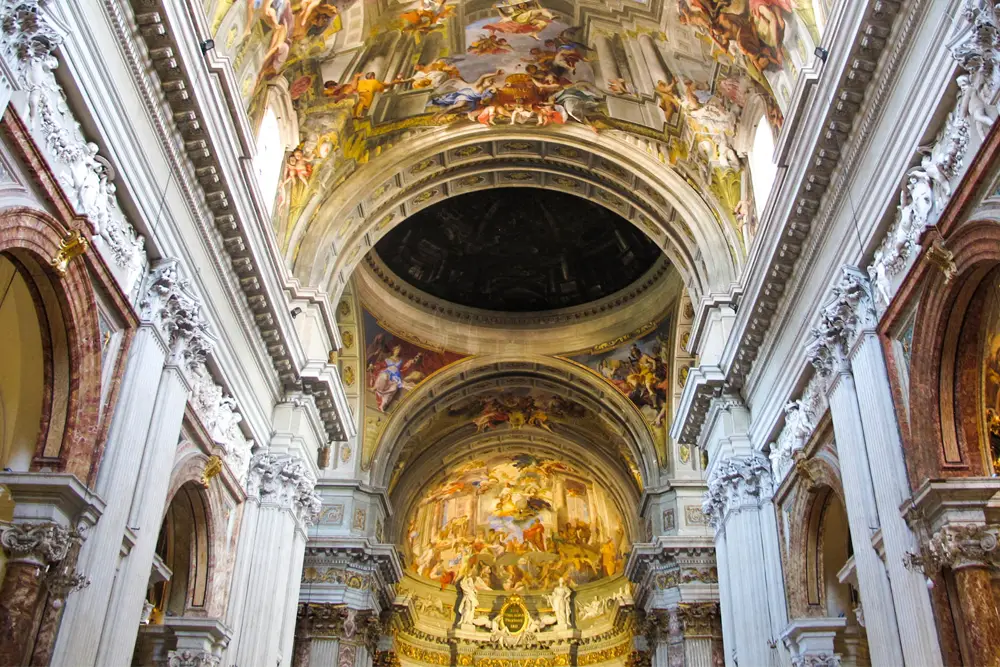
Located in the heart of Vatican City, and built by Bramante, Michelangelo and Bernini, St. Peter's Basilica is the center of Christianity and one of the greatest works of the Renaissance. The Holy See has recently presented several events to commemorate the 400th anniversary of its dedication.

St. Peter's Basilica is a work of art and faith that no one doubts. Its construction, which spanned more than a century (1506-1626), represents the transition and culmination of the Renaissance and Baroque styles.

In 1626, the great basilica erected over the tomb of the Apostle Peter was officially consecrated. Four centuries later, in 2026, St. Peter's Basilica celebrates its 400th birthday as one of the most influential buildings in the history of Western architecture.

From Bramante to Bernini: the legacy of modern architecture

The present basilica replaced the ancient 4th century Constantinian church. The project officially began in 1506 on the initiative of Pope Julius II, who commissioned the design to Donato Bramante.

Throughout more than a century of construction, the building passed through the hands of decisive architects: Michelangelo, which redefined the dome and gave the ensemble its definitive monumentality; Carlo Maderno, responsible for the current façade and the longitudinal extension that turned the church into a Latin cross; and Gian Lorenzo Bernini, He is the author of the imposing bronze baldachin under the dome and of the design of the elliptical square that embraces the pilgrims.

A history that can be viewed online

The consecration took place on November 18, 1626.. Since then, St. Peter's has been the scene of papal coronations, great public celebrations, historic funerals and key moments in contemporary history.

On this anniversary, rediscover the history of San Pedro through digital resources now available:

A living museum: of art, space and experiences

The basilica is a compendium of European art between the sixteenth and seventeenth centuries. The dome of Michelangelo -136 meters high- became a model for countless later churches. Bernini's baldachin introduced a baroque language that dialogues with the colossal scale of the building. The side chapels house sculptures, mosaics and funerary monuments that trace five centuries of history.

Drawing made by H. W. Brewer in 1891 of the state of the basilica between 1483-1506.

On the occasion of the anniversary, the program presented in February 2026 includes an exhibition dedicated to the design and construction phases of the temple, from Bramante's first sketches to its completion in the 17th century. The aim is to show the creative process behind a work that, more than a building, was an ongoing architectural experiment for more than a hundred years.

In addition, on February 20, a new Stations of the Cross by Swiss artist Manuel Dürr was added, integrating contemporary creation into a historic space, something that has happened periodically over the centuries.

What is the project Beyond the visible

The basilica welcomed more than 30 million pilgrims in 2025, a record number due to the Jubilee of Hope. The anniversary was the occasion to reinforce the management of flows through a booking system integrated into the official website.

In addition, a mobile app will offer simultaneous translation of liturgies, chants and readings in 60 languages, facilitating a more immersive and orderly experience. New areas of the complex will also be opened, such as the Gregorian and Clementine domes, and the terrace that runs along the three apses.

View this post on Instagram

A post shared from Vatican News en español (@vaticannews.es).

One of the most eye-catching projects of the 400th anniversary is Beyond the visible, a comprehensive digital model of the monumental complex. This is a technological and preservation project promoted by the Fabbrica di San Pietro and ENI, in collaboration with Microsoft.

During 18 months of work and more than 4,500 hours of data collection, the 80,000 square meters of the basilica have been digitally scanned.

400 years later

Few buildings can claim to have shaped for four centuries the visual identity of a city and, at the same time, the history of Western art. St. Peter's Basilica is not only the symbolic center of the Vatican; it is a synthesis of faith, architecture, sculpture, engineering and urban planning.

St. Peter's turns 400 years old not as a relic, but as a living building: a space where history, art and technology continue to dialogue under the same dome that Michelangelo imagined more than five centuries ago.

What is the Chair of St. Peter?

Every February 22nd, the Catholic Church celebrates the feast of the Virgin Mary. Chair of St. Peter, The Pope's role as successor of St. Peter and his mission to guide the faithful in faith and unity, as preached by Leo XIV since the beginning of his pontificate, is highlighted on this special occasion.

This day that challenges us to look with more love to the Pope who exercises his humble leadership in times that some call difficult; it urges us to walk fortes in fide.

The celebration of the Chair of St. Peter becomes an opportunity to unite in prayer and strengthen our faith. The Chair symbolizes the teaching and guidance that the Pope offers to the Church and all the faithful.

The Cathedra Sancti Petri Apostoli is considered by tradition to be the episcopal chair of St. Peter. It is an ancient wooden throne - symbol of the primacy and magisterium of the Pope - adorned with ivory plaques depicting the works of Hercules, and with friezes, also in ivory, from the Carolingian period (IX century).

To dignify it even more, the architect Gian Lorenzo Bernini He realized a grandiose gilded bronze monument that was completed in 1666, after ten years of difficult and costly work, especially for the fusion of the statues and the bronze elements, which weighed 74 tons. On the throne containing the relic, two angels hold the papal insignia: the keys and the tiara. The whole reaches a height of 14.74 meters.

Where is the tomb of St. Peter

The original tomb of the apostle St. Peter is located in the exactly under the main altar of St. Peter's Basilica.. It cannot be seen with the naked eye, but is located in a deep subway level, which can be visited in a very restricted way, known as the Vatican Necropolis, It is below the level of the Vatican grottoes (the place where most of the popes are buried).

Under the present high altar, archaeologists, during the 60s of the last century, found a small edicule (shrine) dating from the second century, which was built in front of a wall painted red. On it there was a graffiti in ancient Greek that said Petros eni (Pedro is here).

In a secret niche, inside that red wall, bones belonging to a robust man of about 60 to 70 years of age were found. The bones had a lot of soil stuck to them and were wrapped in a purple cloth embroidered with gold thread (a sign of great respect). After years of forensic studies, in 1968, Pope St. Paul VI officially announced that these remains could be convincingly considered to be the authentic remains of St. Peter the Apostle.

Access to the Scavi Vatican is very restricted (only about 250 visitors per day) to protect the microclimate and conditions of the ruins. Reservations must be requested months in advance by sending a form or email to Ufficio Scavi (Excavations Office of the San Pedro Factory).

As more operative details, the tour lasts approximately 90 minutes. It is an enclosed space, somewhat hot and humid, not suitable for people with claustrophobia. Children under 15 years of age are not allowed to enter and photography is not allowed.

The Vatican Grottoes

Just below the floor of the present St. Peter's Basilica are the Vatican Grottoes. To get your bearings, physically, they occupy an intermediate level between the present cathedral and the old ruins of the necropolis.

To summarize, the floor of the Vatican Grottoes is the original floor of the basilica that Emperor Constantine ordered to be built in the 4th century.

The extensive crypt of the Vatican grottoes serves as the papal cemetery. There are the tombs and chapels of more than 90 popes (including Blessed John Paul I, Pius XII, St. Paul VI, among others), as well as some kings, queens and nobles who stood out for their support of the Catholic Church (such as Queen Christina of Sweden). The tomb of St. John Paul II was initially there until it was moved after his beatification to make it easier for the files to visit and pray. It is currently located to the left of Michelangelo's Pieta.