4 questions on the origin of the Christian priesthood

Before going deeper, it is important to understand the central idea: the Christian priesthood does not arise as a structure created by the Church, but as a real participation in the unique priesthood of Christ. Everything that follows in this entry explains how this reality was expressed and consolidated from the Apostles to the first ministries.

The Christian priesthood is not born of a human institution, but of the one Priest: Christ, whose mission continues to live on in the early Church and its ministers.

How is it explained that Jesus never referred to himself as a priest?

is, above all, a mediator between God and mankind. Someone who makes God present among people, and at the same time, someone who brings before God the needs of all and intercedes for them. Jesus, who is God and true man, is the most authentic priest.

However, knowing the course that the Israelite priesthood had taken in his time, limited to the performance of ceremonies in which animals were sacrificed in the Temple, but with a heart more attentive than usual to political intrigues and the lust for personal power, it is not surprising that Jesus never presented himself as a priest.

His was not a priesthood like the one seen in the priests of the Temple of Jerusalem. Moreover, to his contemporaries it seemed evident that it was not, since according to the Law the priesthood was reserved to members of the tribe of Levi and Jesus was of the tribe of Judah.

His figure was much closer to that of the ancient prophets, who preached faithfulness to God (and in some cases like Elijah and Elisha performed miracles), or above all, to the figure of the itinerant teachers who went through cities and villages surrounded by a group of disciples whom they taught and whose instruction sessions they allowed to approach the people. In fact, the Gospels reflect that when people spoke to Jesus they addressed him as “Rabbi” or “Teacher”.

But did Jesus perform properly priestly tasks?

Of course. It is proper of the priest to bring God closer to people, and at the same time to offer sacrifices on behalf of men. Jesus' closeness to humanity in need of salvation and his intercession so that we could obtain God's mercy culminates in the sacrifice of the Cross.

Precisely there arises a new clash with the practice of the priesthood of that time. The crucifixion could not be considered by those men as a priestly offering, but quite the contrary. The essential of the sacrifice was not the suffering of the victim, nor his own death, but the performance of a rite in the established conditions, in the Temple of Jerusalem.

The death of Jesus was presented before their eyes in a very different way: as the execution of a man condemned to death, carried out outside the walls of Jerusalem, and that instead of attracting divine benevolence, it was considered - taking out of context a text from Deuteronomy (Deut 21:23) - that he was the object of a curse.

Did we start talking about priests already at the beginning of the Church?

In the moments that followed the Resurrection and Ascension of Jesus to heaven, after the coming of the Holy Spirit at Pentecost, the Apostles began to preach, and with the passage of time they began to associate collaborators to their task. But if Jesus Christ himself had never designated himself as a priest, it was logical that such a denomination would not even occur to his disciples to use it to speak of themselves in those first moments.

The functions they performed had little to do with those that the Jewish priests carried out in the Temple. That is why they used other names that more descriptively designated their functions in the first Christian communities: apóstolos which means "sent", epíscopos which means "inspector", presbýteros "elder" or diákonos "servant, helper", among others.

However, when reflecting and explaining the tasks of those "ministers" who are the Apostles or who themselves were instituting, it is perceived that these are truly priestly functions, although they have a different meaning from what had been characteristic of the Israelite priesthood.

Cuatro cuestiones sobre el sacerdocio cristiano
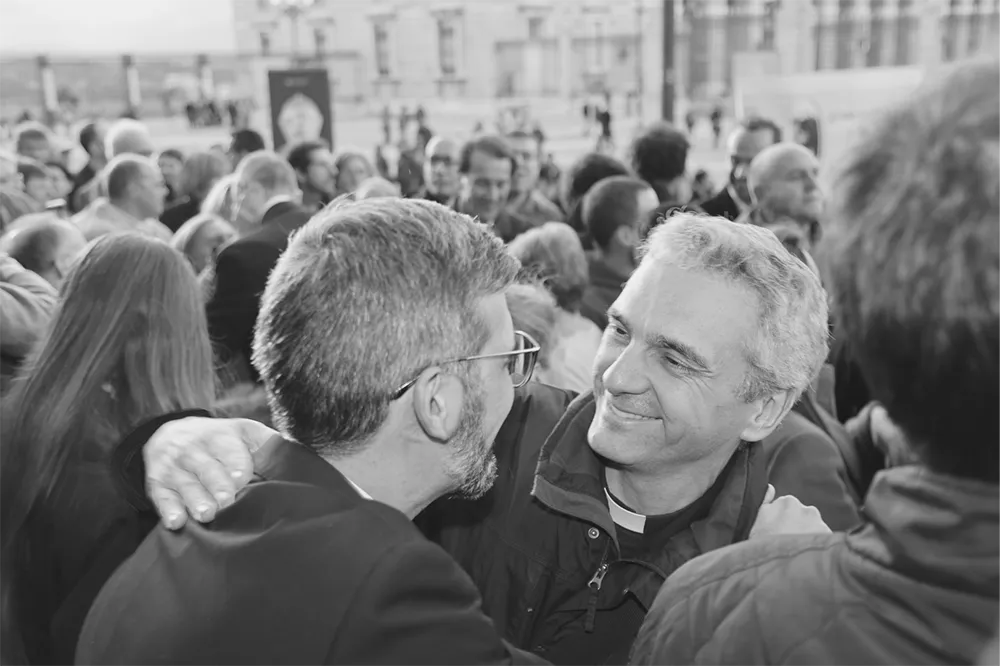
Ordination of the first priests of Opus DeiJosé María Hernández Garnica, Álvaro del Portillo and José Luis Múzquiz.

What is this new meaning of the Christian priesthood?

This "new meaning" can already be appreciated, for example, when St. Paul speaks of his own tasks in the service of the Church. In his letters, to describe his ministry he uses a vocabulary that is clearly priestly, but which does not refer to a priesthood with its own personality, but to a participation in the High Priesthood of Jesus Christ.

In this sense, St. Paul does not intend to resemble the priests of the Old Covenant, for his task does not consist in burning on the fire of the altar the corpse of an animal to remove it - "sanctifying" it in its ritual sense - from this world, but in "sanctifying" - in another sense, helping them to attain "perfection" by introducing them into God's realm - living men with the fire of the Holy Spirit, kindled in their hearts through the preaching of the Gospel.

In the same way, when writing to the Corinthians, St. Paul notes that he has forgiven sins not on their behalf, but in their name. in persona Christi (cf. 2 Cor 2:10). It is not a simple representation or a performance "in the place of" Jesus, since Christ himself is the one who acts with and through his ministers.

It can be affirmed, therefore, that in the early Church there are ministers whose ministry has a truly priestly character, who perform various tasks at the service of the Christian communities, but with a decisive common element: none of them are "priests" in their own right - and therefore do not enjoy the autonomy to perform a "priesthood" of their own accord, with their own personal stamp - but rather they are "priests" in their own right. participate in the priesthood of Christ.


Mr. Francisco Varo Pineda
Director of Research at the University of Navarra. Professor of Sacred Scripture, Faculty of Theology.


Feast of the Baptism of the Lord

The Feast of the Baptism of the Lord is a Christian celebration that commemorates a central moment in the life of Jesus: his death. baptism in the Jordan River by his cousin John the Baptist, The solemnity, which marks the beginning of his public mission, is celebrated on the feast of St. Josemaría. This solemnity is celebrated in the Catholic Church on the Sunday following Epiphany, and in 2026 the Sunday, January 11.

What is celebrated on the Feast of the Baptism of the Lord?

The feast recalls the event narrated in the synoptic gospels (Matthew 3, Mark 1 and Luke 3): Jesus arrives at the Jordan River and receives the baptism from the hands of St. John the Baptist. As they emerge from the water, the skies open up and the Holy Spirit descends upon Him in the form of a dove, while a voice from heaven confirms: “This is my beloved Son”.

This episode is interpreted as a public manifestation of the identity of Jesus as the Son of God, the inauguration of its public ministry and the revelation of the Trinity -Father, Son and Holy Spirit - who becomes present at that moment.

Thus, it is not just a historical memory, but a profound theological revelation about who Jesus is and how he relates to humanity and to God the Father.

Location in the liturgical calendar

The Feast of the Baptism of the Lord closes the Christmas time and gives way to the Ordinary Time in the Catholic liturgy.

If we make a brief context of dates: The Christmas season begins on December 25th with the birth of Jesus. It includes the Solemnity of Mary, Mother of God (January 1), the Epiphany (January 6) and other commemorations (the Holy Innocents). Finally, it culminates with the Feast of the Baptism of the Lord, which this year is celebrated on Sunday, January 11, 2026.

After this Solemnity, the Church faces the Ordinary Time, The year is a more stable stage of the liturgical year that lasts until Lent.

Approach to the theological significance

Jesus identifies with humanity. Although Jesus was without sin, he submitted to John's baptism in order to identify with us, men and women in need of redemption. His gesture was not a sign of personal need, but of solidarity and acceptance of the human condition and obedience to the Father's will.

Baptism is salvation . The baptism that Jesus receives becomes the symbol and foundation of the sacrament of Baptism in the Church. From this point on, Christian baptism will be seen as: a sign of conversion and forgiveness of sins; access to life in the Holy Spirit and our divine filiation; and entrance into the Church as the People of God.

Revelation of the Holy Trinity

The gospel account of this day shows the simultaneous presence of the Son (Jesus), of the Father (the voice from heaven) and of the Holy Spirit (the dove). This event is one of the clearest scenes of the Trinitarian Theophany in the gospels.

Liturgical readings and symbols

Infografía acerca de la Fiesta del Bautismo del Señor
Feast of the Baptism of the Lord: Jesus is baptized by John in the Jordan, the Trinity is manifested and his saving mission begins.

Liturgy of the day

In the Eucharistic celebration of this Sunday, the readings usually include texts that present the figure of Jesus as Servant of the Lord, The Gospel narrates the baptism of Jesus himself in the Jordan, and shows the call to the disciples to live the faith with coherence.

These texts invite the faithful to remember your own baptism, to renew baptismal promises and to live an active faith in the world.

Symbols

A reflection for the faithful

The Feast of the Baptism of the Lord is a ritual commemoration and an opportunity to reflect on Christian identity. The Church, in various reflections and homilies, invites us to see this day as a call to remembering our baptism and the commitment it implies; an invitation to live a faith that is consistent with the following of Jesus; and an opportunity to deepen the gift of the Holy Spirit in our lives.

Pope Leo XIV reflected on the Feast of the Baptism of the Lord, recalling that with this celebration begins the Ordinary Time of the liturgical year, «a period that invites us to follow the Lord, to listen to his Word and to imitate his gestures of love for our neighbor.". According to the Pope, in this way «we renew and confirm our own Baptism, the sacrament that makes us Christians, freeing us from sin and transforming us into children of God, through the power of his Spirit of life».

The relationship with John the Baptist

John the Baptist has a central role in this feast. His mission was to prepare the way for the Messiah, calling the people to the conversion of sins and to a new life in the Spirit. By baptizing Jesus, John fulfills the mission entrusted to him and recognizes Jesus as the Lamb of God.

The Feast of the Baptism of the Lord is closely linked to Epiphany, which celebrates the manifestation of Jesus to the world on January 6, but also to Christmas, which celebrates the birth of Christ on December 25. This feast opens the door to the beginning of Ordinary Time, which calls the faithful to live their faith in daily life.

On this day, the Church recalls a historic event and proposes a current experienceThe first step is to return to the origin of our faith, to renew our baptismal commitment and to move forward in our daily Christian mission.

Some baptism stories


The Three Wise Men, January 6. Feast of the Epiphany of the Lord

Every January 6, the Church celebrates the Epiphany of the Lord, one of the oldest solemnities in the liturgical calendar. This feast commemorates the manifestation of Jesus Christ as Savior and universal king, symbolically represented in the adoration of the Three Wise Men from the East.

This is more than just a pious memory; it is a central affirmation of the Christian faith: Christ has come and manifests himself to save everyone, regardless of people, cultures, or races.

The word epiphany comes from the Greek epiphany, which means manifestation or appearance. In Christian tradition, this solemnity emphasizes that the Baby Jesus, born in Nativity scene, belongs to the people of Israel and is also recognized by the Gentiles, symbolized by the Magi. The liturgy of this day thus emphasizes the universality of salvation.

The Three Wise Men, a celebration with a missionary dimension

Since the early centuries of Christianity, Epiphany has had a marked missionary character. The Magi—wise men from the East, guided by a star—represent humanity seeking the truth and who, even without knowing the law or the prophets, are able to recognize God when he manifests himself. Their pilgrimage to Bethlehem shows the path of faith, made up of searching, questioning, and worship.

The gifts they offer to the Child Jesus –gold, frankincense, and myrrh– have profound theological significance. Gold recognizes his royalty; frankincense, his divinity; and myrrh anticipates his Passion and Death. In a simple gesture, yet one laden with symbolism, the Magi confess who that Child lying in a manger truly is.

Epiphany also reminds us that Christian faith must be lived openly and never with a self-referential approach. Those who have found Christ are called, like the Magi from the East, to return by another route, that is, to live transformed or transforming others to bear witness with a life consistent and devoted to the worship of the Child Jesus.

Three Wise Men: the Gospel of the Epiphany

Gospel according to Saint Matthew (Mt 2:1-12)

«Having been born Jesus In Bethlehem of Judea, during the time of King Herod, magi from the East arrived in Jerusalem asking:

— Where is the King of the Jews who has been born? For we have seen his star and have come to worship him.

When King Herod heard this, he was greatly disturbed, and all Jerusalem with him. He called together all the chief priests and scribes of the land and inquired of them where the Messiah was to be born. They replied,

— «In Bethlehem of Judea, for thus it is written by the prophet: “And you, Bethlehem, land of Judah, are by no means the least among the towns of Judah, for out of you will come a leader who will shepherd my people Israel.”.

Then Herod secretly summoned the magi to find out the exact time the star had appeared, and sent them to Bethlehem, saying to them:

— «Go and find out carefully what has happened to the child, and when you find him, let me know, so that I too may go and worship him.».

After hearing the king, they set out, and suddenly the star they had seen rising began to guide them until it came to rest above the place where the child was.

When they saw the star, they were filled with great joy. They entered the house, saw the child with Mary, his mother, and falling on their knees, they worshiped him. Then, opening their chests, they offered him gifts: gold, frankincense, and myrrh. And having received a warning in a dream not to return to Herod, they departed for their own country by another route.

Reyes Magos Epifanía del Señor 6 enero

Light in the midst of darkness

The Gospel story contrasts two attitudes toward the arrival of Christ. On the one hand, there is Herod, who sees his power threatened and responds with fear and violence. On the other hand, there are the Magi, who allow themselves to be guided by the light and welcome the truth with joy. This tension remains relevant today: Epiphany challenges each person to consider how they react to the presence of God in their lives.

The star that guides the Magi occupies a central place in the iconography and spirituality of this holiday. It is not just an astronomical phenomenon, but a sign of the light of God that guides those who seek with a sincere heart. The liturgy presents Christ as the “light of the nations,” the fulfillment of the promises made to Israel, and the hope for all humanity.

A lively celebration in the Church

In many countries, especially in Spain, Epiphany also has a strong cultural and family dimension, associated with the tradition of the Three Kings. However, the liturgy Remember that the deeper meaning of the feast goes beyond folklore: celebrating Epiphany is renewing the certainty that God has become close and accessible to all.

The solemnity also invites us to rediscover the missionary vocation of the Church. Just as the Magi brought with them the news of what they had seen, Christians are called to be witnesses of Christ in the world, through consistent words and deeds.

On the Epiphany of the Lord, the Church proclaims that God allows himself to be found, who comes out to meet humanity and reveals himself in humility. A message that is especially relevant in a time marked by uncertainty and the search for meaning.


Solemnity of St. Mary, Mother of God

The January 1, the Catholic Church celebrates the Solemnity of the Blessed Virgin Mary, Mother of God. It is not a pious conclusion to the Christmas season or a devotional addition to the liturgical calendar. It is a doctrinal affirmation of the first order: in Mary, the truth of who Jesus Christ is is at stake. For a Catholic in the year 2026, this feast continues to be a decisive reference point for understanding the faith, the dignity of the person, and the Christian meaning of time.

The origin of the solemnity of Saint Mary

The celebration of Mary as Mother of God has its roots in the early centuries of Christianity. It did not arise from overwhelming popular devotion, but rather from a central theological controversy: who is really Jesus of Nazareth. In the fifth century, the debate surrounding Nestorius—who refused to call Mary Theotokos (Mother of God) and preferred the title Christotokos (Mother of Christ) – forced the Church to clarify its faith.

The Council of Ephesus (431) declared that Mary is truly the Mother of God because the Son born of her is a single Person, divine, who fully assumes human nature. It is not a question of saying that Mary precedes God or is the origin of divinity, but of affirming that the subject of the birth is God made man. Separate the motherhood of Mary of Christ's divinity implies fragmenting the mystery of the Incarnation.

Since then, divine motherhood has become a cornerstone of the Christian faith. The Roman liturgy set this celebration on January 1, eight days after Christmas, following the ancient biblical tradition of the octave, to emphasize that the Child born in Bethlehem is the same Lord confessed by the Church.

The theological meaning: Mary guarantees the truth of the Incarnation

Celebrating Mary as Mother of God is, above all, a Christological confession. The Church does not focus on Mary in order to isolate her, but rather to protect the core of the faith: Jesus Christ is true God and true man. Mary is not an addition, but rather the specific place where God enters into history.

Mary's motherhood implies that God has taken on a genealogy, a body, a time. He does not become incarnate in a symbolic or apparent way. In her, God accepts dependence, growth, and care. Therefore, this solemnity has profound consequences for Christian anthropology: flesh, history, and motherhood are not secondary realities, but spaces where God acts.

From this perspective, Mary is not an idealized or distant figure. She is a real woman, situated in a specific historical context, who responds freely to God's initiative. Her faith does not eliminate darkness or uncertainty, but it does overcome them. The Gospel of the day presents her as “keeping all these things and meditating on them in her heart”: a thoughtful, not naive, faith; silent, but firm.

A celebration to start the year: a time of Christian peace

It is no coincidence that this solemnity is celebrated on the first day of the year. The Church proposes to begin the civil year from a theological perspective: time has meaning because God has entered into it. For Catholics in 2026, immersed in a fast-paced, fragmented culture marked by uncertainty, this statement is particularly relevant.

Furthermore, since 1968, January 1 has been linked to World Peace Day. Not as a slogan, but as a logical consequence: if God has assumed the human condition, all human life has an inviolable dignity. Mary, as Mother of God, also becomes a reference point for a Christian vision of peace, understood not only as the absence of war, but as a just order, reconciliation, and care for the most vulnerable.

In a global context marked by armed conflicts, cultural tensions, and crises of meaning, this solemnity reminds us that peace is not built solely with structures, but with a correct view of the human being. Mary's motherhood affirms that no one is disposable and that history is not closed to meaning.

Mary, Mother of God and Mother of Christians today

For contemporary believers, the Solemnity of Mary, Mother of God, is not an archaeological celebration. It directly challenges Christian life. Mary appears as model of mature faith, capable of integrating reason, freedom, and obedience. Her motherhood is not passive: it involves responsibility, risk, and perseverance.

St. Josemaría Escrivá insisted that turning to Mary is not a sentimental escape, but rather a school of concrete Christian life. In it, we learn to accept God's will in ordinary circumstances, to live our faith without fanfare, and to maintain hope when we do not understand everything.

At this point, the work of institutions such as the CARF Foundation takes on special relevance. Forming priests and seminarians for a Church faithful to the truth of the Incarnation involves transmitting a solid theology, rooted in tradition and capable of dialogue with today's world. The divine motherhood of Mary is not a marginal topic, but a key to an integral formation: doctrinal, spiritual, and pastoral.

A beginning that sets the tone for the entire year

The Solemnity of Mary, Mother of God, places Christians at the beginning of the year before a decisive truth: God is not an idea or an abstract force, but someone who wanted to have a mother. Everything else is ordered from there: faith, morals, social life, and hope.

Celebrating it in 2026 means reaffirming that the Christian faith still has something concrete to say about reality, time, and the person. Mary does not eclipse Christ; she reveals him in his most radical truth. And so, beginning the year under her patronage is not just another pious gesture, but a stance: trusting that history, even with its shadows, remains open to God.


December 26, Saint Stephen: the first martyr

Every December 26, the Church celebrates the feast of Saint Stephen, remembering the first maximumrpull Christian. His story, though brief, is an impressive testimony of faith, courage, and love for the Gospel. Do you know his origins and how he came to be one of the Church's most emblematic models of holiness?

Who was Saint Stephen?

Saint Esteban He was one of the first seven deacons chosen by the apostles to assist in serving the Christian community in Jerusalem. Its main mission was to care for widows and the poorest members of society, ensuring that no one was left destitute.

The Book of Acts of the Apostles tells us that Esteban was a man full of faith and the Holy Spirit (Acts 6:5). He was also known for his wisdom and for the signs and miracles he performed among the people, which attracted both admirers and detractors.

San Esteban, primer mártir de la cristiandad
Saint Stephen is depicted as a deacon, wearing a dalmatic, holding the palm of martyrdom and the stones that evoke his stoning. The work emphasizes his serenity and devotion to the Gospel.

The Martyrdom of Saint Stephen

Stephen's preaching caused controversy among some religious leaders of his time. He was falsely accused of blasphemy against Moses and against God, and brought before the Sanhedrin, the supreme council of the Jews.

During his defense, he delivered a powerful and courageous speech in which he reviewed the history of Israel and denounced the people's resistance to accepting God's will. This speech enraged his accusers, who took him outside the city and stoned him to death.

As he became the first martyr, Stephen, filled with the Holy Spirit, exclaimed: «Lord Jesus, receive my spirit.» and, with a heart full of forgiveness, he said: «Lord, do not hold this sin against them.» (Acts 7:59-60). His death is a reflection of Christ's love and mercy on the cross.

"Esteban, full of grace and power, performed great wonders and signs among the people» (Acts 6:8). The number of those who believed in the doctrine of Jesus Christ was growing. However, many—either because they did not know Christ or because they knew him poorly—did not consider Jesus to be the Savior.

«They began to argue with Stephen, but they could not withstand his wisdom and the Spirit with which he spoke. So they incited some men to say, “We have heard him speak blasphemous words against Moses and against God”» (Acts 6:9-11).

Saint Stephen He was the first martyr of Christianity. He died filled with Holy Spirit, praying for those who stoned him. «Yesterday, Christ He was wrapped in swaddling clothes by us; today, He covers Stephen with the garment of immortality. Yesterday, the narrowness of a manger held the infant Christ; today, the immensity of heaven has received Stephen triumphant. The Lord descended to lift up many; our King humbled Himself to exalt His soldiers.

Living the joy of the Gospel

We too have received the exciting mission of spreading the message of Jesus Christ with our words and above all with our lives, showing the joy of the Gospel. Perhaps St. Paul, who was present at that event, would be moved by Stephen's testimony and, once he became a Christian, would draw strength from it for his own mission.

«Goodness always tends to communicate itself. Every authentic experience of truth and beauty seeks by its very nature to spread, and anyone who experiences profound liberation becomes more sensitive to the needs of others (...). Let us rediscover and increase our fervor, the sweet and comforting joy of evangelizing, even when we must sow amid tears. And may today's world—which is searching, sometimes with anguish, sometimes with hope—be able to receive the Good News, not through evangelists sad and discouraged, impatient or anxious, but through (...) those who have received, above all in themselves, the joy of Christ» (apostolic exhortation Evangelii Gaudium by Pope Francis, 2013).

What can we learn from Saint Stephen?

Saint Stephen teaches us the importance of defending our faith with courage and humility, but also with love and forgiveness toward those who persecute us. His example invites us to trust fully in God, even in the most difficult moments.

It also reminds us of the value of service. As deacon, He dedicated his life to helping those most in need, living out the commandment to love one's neighbor in a concrete way.

The patron saint of deacons

Saint Stephen He is considered the patron saint of deacons and those who suffer. persecution for his faith. His testimony has inspired generations of Christians throughout history.

In the liturgy, his feast day on December 26 invites us to reflect on the meaning of martyrdom as total surrender to Christ.

In a world that often rejects the values of the Gospel, Saint Stephen encourages us to live our faith with authenticity and courage.

San Esteban, primer mártir de la cristiandad
Martyrdom of Saint Stephen, Juan de Juanes at the Prado Museum.

A reflection

The testimony of the first martyr, Saint Stephen, remains relevant today. How can we be witnesses to Christ in our daily lives? We may not face physical persecution, but we may encounter challenges as we try to live our faith consistently in a world that is often indifferent or critical.

The Gospel of his feast day reflects the faithfulness of Jesus' first disciple, who bore witness to him before men. Faithfulness means likeness, identification with the Master. Like Jesus, Stephen preached to his brothers of the same race, filled with the wisdom of the Holy Spirit, and performed great wonders on behalf of his people. Like Jesus, he was taken outside the city and stoned there, while he forgave his executioners and gave up his spirit to the Lord (cf. Acts of the Apostles, 6:8-10; 7:54-60).

Caring about the environment

But we can ask Jesus: how can we not worry when we feel the threat of an environment hostile to the Gospel? How can we ignore the temptation to fear Or human respect, to avoid having to resist?

Even more so when that hostility arises in one's own family environment, something that the prophet already predicted: “For the son will speak against his father, the daughter against her mother, the daughter-in-law against her mother-in-law; a man's enemies will be the members of his own household” (Micah 7:6). It is true that Jesus does not give us a technique for escaping persecution unscathed. He gives us much more: the assistance of the Holy Spirit to speak and persevere in goodness, thus giving faithful witness to God's love for all humanity, including our persecutors.

On this first day of the Octave of Christmas, there is still room for joy, since what we love most, what makes us happiest, is not our own safety, but salvation for all.

Saint Stephen invites us to remember that the strength to live and defend our faith comes from the Holy Spirit. Let us trust in Him and follow His example of love, forgiveness, and service!

In the CARF Foundation, We pray for persecuted Christians around the world and work to train seminarians and diocesan priests who, like Saint Stephen, will courageously carry the message of Christ. Let us join together in prayer for them!


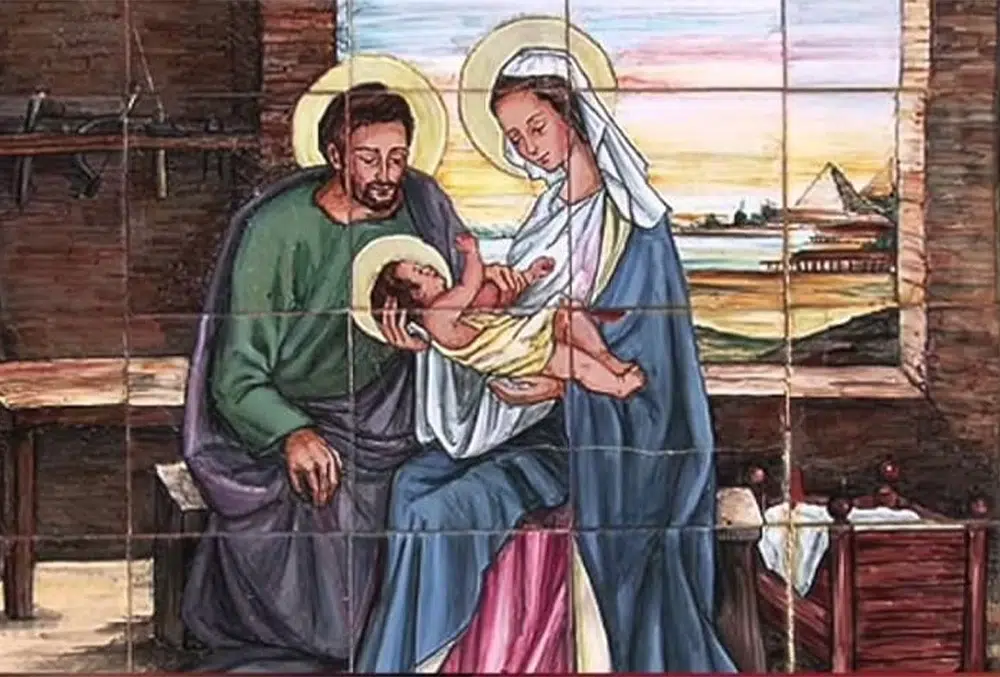
December 28, Feast of the Holy Family, cradle of love

The family is defined as a school of love. This year, since Christmas does not fall on a Sunday, we celebrate the feast on the last Sunday of the year instead of the Friday before.

«The Redeemer of the world chose the family as the place for his birth and growth, thus sanctifying this fundamental institution of every society.» Pope Saint John Paul II, Angelus message, December 30, 2001.

The teachings

The family The family is an intimate communion of life and love, founded on marriage between a man and a woman, open to the gift of human life and love forever. This feast points to the Holy Family of Nazareth as the true model of life. All the families of the world should always turn to the protection of the Holy Family, in order to learn to live love and sacrifice.

The family is defined as a school of love and a domestic Church. The family is the providential place where we are formed as human beings and as Christians. Our family is where we grow in wisdom, age and grace before God and mankind.

It must be a place of dialogue between God and man, open to the Word and to listening. Seconded by the family prayer that binds us together strongly. Saint John Paul II strongly recommended praying the Holy Rosary within families, and he kept in mind the saying: «the family that prays together, stays together.».

It is for all these reasons that the Feast of the Holy Family invites us to welcome, live and proclaim the truth and beauty of the family, according to God's plan.

Una familia en Torreciudad rezando como la Sagrada Familia nos enseñó, unidos.
A family in Torreciudad giving thanks to the Virgin Mary.

Source of priestly vocations

The identity of Christ and his mission have taken shape in history and in the world in the bosom of the Holy Family. We can say that this is the model within which, in the vast majority of cases, the Lord's call to the sons of Christian families to their consecration and vocation to the priesthood takes place. For this reason, the role of Christian families is fundamental in the emergence of vocations.

Both the priesthood and the consecrated life are free gifts from the Lord and it is indisputable that the vast majority of vocations arise from within families that believe and practice, from environments in which the values of the Holy Family of Nazareth are lived.

To discover this vocation, the role of parents in the formation of their children is crucial. No institution can replace their work in education "especially as regards the formation of conscience. Any intrusion in this sacred sphere must be denounced because it violates the right of parents to transmit to their children an education in conformity with their values and beliefs",

Cradle of the vocation to love

In the Familiaris consortioPope John Paul II taught that "Christian marriage and the Christian family build up the Church: for in the Christian family the human person is not only brought into being and progressively introduced into the human community by means of education, but also by means of the rebirth of the human person. baptism and education in the faith in which the child is also introduced into the family of God, which is the Church".

The home that lives following the example of the Holy Family is a school of prayer. From an early age, children learn to place God spontaneously in the first place, recognizing Him and dialoguing with Him in all circumstances. TIt is also a school of lived faith, where learning does not take place in a theoretical way, but is embodied in everyday work. Likewise is a school of missionary diffusion as active promoters of consecrated vocations.

Living the gospel is not easy today, even more so in these times. However, In the Gospel we find the way to live a holy life on a personal and family level, a certainly demanding but fascinating path. We can follow the example of Jesus of Nazareth and thanks to his intercession.

In every home there are happy and sad, peaceful and difficult moments. Living the gospel does not exempt us from experiencing difficulties and tensions, from encountering moments of happy strength and moments of sad fragility. We must understand that it is the Holy Spirit who guides every human being today. But we must listen to the Spirit who speaks in us; we need a gaze of faith to grasp the reality beyond appearances.

Monsignor Javier Echevarría at the shrine of Torreciudad alluded to the fact that it is the family home "where the various vocations in the Church are forged", and expressed the wish that families be "truly Christian, that they consider the call of some of their sons to the priesthood a great divine blessing".

Discernment of vocation in the Christian home

Pope Francis offers us in the apostolic exhortation Christus vivitten guidelines for reflecting on the feast, home education and facilitating the process of vocational discernment for children.

Forging in Charity


Bibliography:

- Synod of Bishops, 2001.
- Spanish Episcopal Conference 2022.
- Pope Francis Audience, 2019.
- Post-Synodal Apostolic Exhortation Christus Vivit, Pope Francis, 2019.