Bohdan and Ihor, Ukrainian students at the Pontifical University of the Holy Cross


Bohdan and Ihor

Bohdan Luhovyi, 26, and Ihor Bazan, 24, are two of eight Ukrainian students in training at the Pontifical University of the Holy Cross. They tell us about their pain and hope about the war in Ukraine. They are seminarians at the Basilian College of St. Josaphat, a Greek Catholic saint. They belong to the Greek Catholic Church.

 A sad time

 It is a sad time for everybody. In Europe, we were expecting a spring without sanitary emergency, masks, social distance. We had hoped for a new season, of joy and peace, but we found something horrifying that we would never have imagined could happen again in Europe: a war. And a cruel war, without mercy, on the eastern fringe of our own continent.

 Images of refugees displaced for thousands of kilometers with their few belongings; children crying; bombs destroying ancient and modern palaces, houses, cars, life. And the snow that covers the land is wounded with burned houses, trees, lives and hopes.

 Praying for the Ukrainian people

 And that is why today, in the Pontifical University of the Holy Cross and all over the world we are praying. And more: being Ash Wednesday, the university community has decided to respond to the call of Pope Francis and adhere to the Fasting Day for Peace.

 During the 12:45 p.m. Holy Mass in the Basilica of St. Apollinaris - a Mass to which students, faculty and staff were invited - prayers were said in particular for peace in Ukraine, in union with the whole Church.

 And with us have been two special guests, Bohdan Luhovyi, 26, born in Bolekhiv and Ihor Bazan, 24, born in Ternopil. They tell us what is happening in their country.

 Communication at the Pontifical University of the Holy Cross

 I have to admit that it is very shocking for me to meet you... You are both very young, like many of your friends who are in Ukraine fighting this absurd war. You are here studying at the Faculty of Institutional Communication and right now you are involved in another battle, that of communication, since this is a war also of communication and you, for the first time in Rome, are "communicators" of a situation in which the Church is particularly involved in helping the Ukrainian population.

 Bohdan: That's right, and we belong to two different dioceses of the Greek Catholic Church of Ukraine. I was born in the city of Bolekhiv, in the western part of Ukraine, but after school I studied for six years in the seminary in Kiev. When I graduated, I was working and living for one year in Kiev, between 2021 and 2022. Now, then, I belong to the Archieparchy of Kiev and, after my studies here in Rome, at the Faculty of Communication, I will return to my Archieparchy.

"My thoughts are in Ukraine."

Ihor: I was born in Ternopil, also in western Ukraine, and I belong to the Archieparchy of Lviv. I have been in Rome for six months, studying, and I have to tell you that right now everything is very difficult... I did not run away from the war. But still, my thoughts are with Ukraine and with my friends who are fighting. I feel anxious for my home, my people and my country. I bow my head and my knees before God..

For my part, being here, all I can do is pray, tell them the truth about the situation in the country and look for opportunities to support materially and financially the people who are suffering, the fugitives, the victims, their families. Now I have joined the work of a group of volunteers, here in Rome, and I communicate daily with Ukrainian teenagers who are suffering from the war, giving them psychological support, telling them stories that help them not to think too much about the war, how to act in different situations and keep calm.

A great faith

 I know that faith is helping you a lot at this time.....

Bohdan: Yes, and thank God it is something that has been with me since childhood. When I was a child, my parents discovered my faith in God and my desire to go to church. From an early age I went to church, attended liturgical services and also served at the altar for six years. Therefore, after graduating from high school, I decided to study to be a priest at the seminary of the Greek Catholic Church of Ukraine.

Ihor: I was also born into a family where Christian values are paramount, so I went to church from an early age. Even in my early childhood, I was very interested in religion.. I have to say that my great-grandmother played the most important role in that.. I loved to talk to her and listen to her. She told me about Ukrainian traditions, the Second World War, sang me songs and taught me many poems. I loved her very much.

I often told him about my plans and what was going on in my life. She passed away three years ago. I wanted to preserve my memory of her, so I wrote a book about my great-grandmother. There I collected our common stories, stories of the wartime and her daily life, and much more.

Being in Rome is a dream

However, as I grew older, I no longer thought of becoming a priest. I didn't even mention it anymore. I started studying at the Faculty of Journalism and then I worked as an announcer in a Christian radio station. It was there that I began to study the subject of religion in a different way. I started to read the Bible, I studied the details of the liturgy, the rites and more: it was a time when I reflected on why I believe in God.

And being here in Rome is a dream, a unique opportunity that I took advantage of. I remember praying a few years ago to come to Rome, to learn a lot, to be formed here and to gain new experiences that will be the basis of my future and present life.

Ukraine, far from Russia in values

A colleague specializing in Russian and Ukrainian languages, cultures and politics at Holy Cross has explained some of the issues of the war and the reasons for the conflict. What do you think about it?

 Bohdan: In my opinion, Ukraine is far away from Russia in terms of mentality and values, but close geographically, so Ukraine has often suffered violence from different Russian regimes.

Our values in Ukraine are freedom, democracy, equality, value and dignity of human life.The Russian people have been known for their hard work and love for their homeland. In Russia, however, these concepts are very vague and throughout its history have been taken advantage of by neighboring nations.

Moreover, the fact of being ruled by an absolute monarch, makes the Russian people identify very much with the figure of an autocrat, who can be the tsar as well as the current president. In other words, they have lived under dictatorship all their existence.

This is also why in Russia propaganda works so well in the field of information, which distorts the truth so much, so the vast majority of the population only sees lies on television and does not interfere in the actions of their leaders.

The Russian people, against the war

Although we are seeing that these days many people in Russia are taking to the streets to demonstrate against the war, and at great danger. There have been thousands of arrests of peaceful demonstrators opposing the invasion.

Bohdan: Yes, the Russians and the whole world are coming together against this global terrorist mentality.

Russia, in fact, had already attacked Ukraine in 2014 because of its imperialist ambitions, culminating in the annexation of Crimea. It seems that its goal is the restoration of the Soviet Union and the establishment of its empire in Eastern Europe. This, then, is something that is now happening with Ukraine and is going to happen with other countries.

 Manipulation of the masses

 Ihor: I agree with what Bohdan said about manipulation of the masses. There has always been in Russia this form of manipulation both in front of Russians and the whole world. Sometimes it is successful. Now, fortunately, the Russians and the whole world have found out what is going on and the killings that are taking place.

Russia has used powerful propaganda in Ukraine. Most Ukrainians have been living on this propaganda for a long time. The Russian government says that we are not a nation, that a separate state of Ukraine does not exist and never existed. However, six days ago, when the war started, all Ukrainians and the whole world could see that this is not the case.

Promoting the Russian language

Russian governments have been promoting the Russian language in Ukraine for a long time. That's why all Ukrainians understand Russian. For example, I have never studied it, but I understand it well and speak it fluently.Why? Because I heard it on TV since I was a child.

There was almost no Ukrainian language on TV. Russian was also spoken on the radio, Russian music was played. Our language was not considered and for us this was terrible.
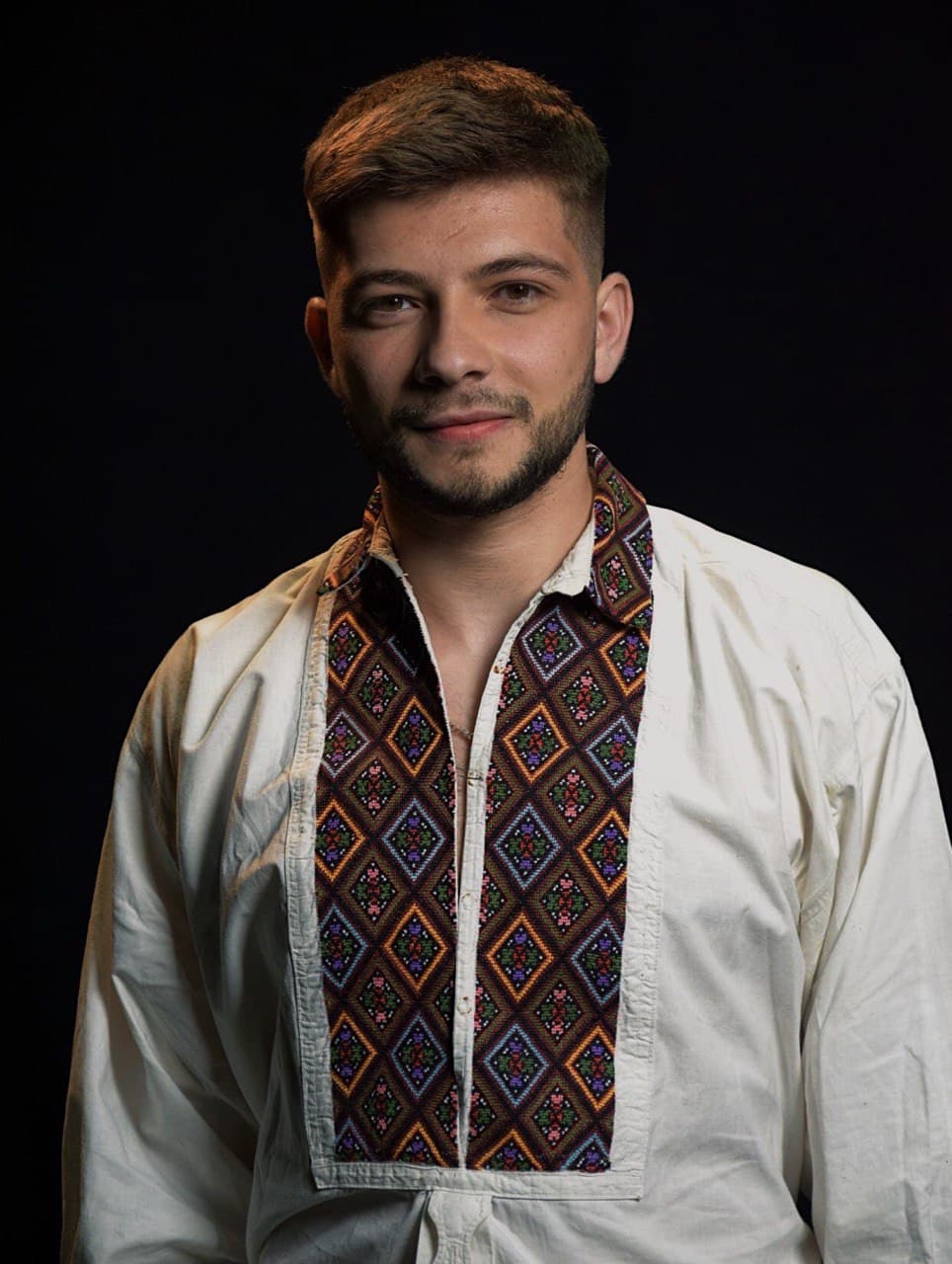
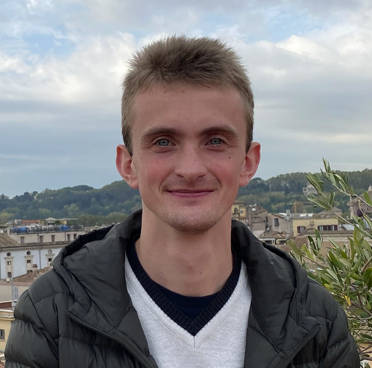
 
 
Estudiante ucraniano

Ihor Bazan is 24 years old, a seminarian of the Greek Catholic Church and is studying Institutional Communication at the Pontifical University of the Holy Cross.

"I've been in Rome for six months now, studying, and I have to tell you that right now everything is very difficult. I didn't run away from the war. But still, my thoughts are with Ukraine and with my friends who are fighting. I feel anxious for my home, my people and my country. I bow my head and knees before God.

He explains that the Ukrainian Greek Catholic Church has played a very important role in the preservation and development of their culture, faith and thought of the Slavic peoples since the beginning of Christianity.


Genocides in the 20th century

 And we are also seeing that there is a difference between the east and the west of the country....

Ihor: That's right. The west of Ukraine is more pro-Ukrainian, i.e. more aware of its own national identity, while the east is the opposite. This problem goes back to the tragedy of the Holodomor.

For our readers who do not know it, we explain that the Holodomor (Гололодомор in Ukrainian and Russian) has been one of the great genocides of the 20th century.

Even if the number of victims is counted, it could have been the largest, since, between 1932 and 1933, it caused the death of millions of people. The term derives from the Ukrainian expression moryty holodom (Морити голодом), which combines the Ukrainian words holod (hunger, famine) and moryty (to kill, to starve, to exhaust), and the combination of the two words emphasizes the intention to cause starvation on the part of someone.

Controlled earth

In the second half of the 1920s, Stalin decided to initiate a process of radical transformation of the economic and social structure of the Soviet state, with the aim of founding a fully regulated economy and society.

 Ukraine, together with the southern Russian territories on the Black Sea, after World War I, however, had confirmed its agricultural vocation. In fact, it was considered the breadbasket of the Soviet Union. And yet, according to the regime's plan, the wealth produced by agriculture was to be reinvested entirely in industry, the new engine of the planned economy.

 Therefore, Stalin ordered that the land be unified into agricultural cooperatives (Koljoz) or in state-owned companies (Sovjoz), who were obliged to deliver the products at the price fixed by the state. For the process to be fully carried out, the land and all production had to pass under the control of the state.

 Collectivization

With Ukraine having a long tradition of individually owned farms, small agricultural entrepreneurs (kulaks) constituted the most independent component of the local social and economic fabric and, together with their peasants, did not want to submit to Stalin's imposition.

The dictator ordered, with a very coercive and violent action, the "collectivization" and "collectivization" of the company.deskulakizationThe "land grab" of the Ukraine and other regions of the Soviet Union, through the end of private property and the physical elimination or deportation (to Siberia and the Arctic regions) of millions of small peasants.

 These extreme measures were taken during the "Second Revolution" or "Stalin Revolution" between 1927-1928. Then, in the years 1932-1933, government measures were implemented to bring the surviving population to its knees by means of a "programmed" famine that ravaged the affected territories in the same period.

 Ukraine, the main issue

In fact, and these phrases give goose bumps if we think about it today in the face of some of Putin's statements, Stalin said several times: "Ukraine is today the main question, being the Party, and the State itself and its organs of the political police of the republic, infested by nationalist agents and by Polish spies. So we run the risk 'of losing Ukraine', a Ukraine which, on the contrary, it is necessary to transform into a Bolshevik fortress".

 "To eliminate the kulaks as a class, the policy of limiting and eliminating individual groups from kulaks...] it is necessary to break the resistance of this class with an open struggle and strip it of the economic sources of its existence and development".

All of this is described very well in a Canadian film titled "Bitter harvest" from 2017.

Nearly 8 million Ukrainians killed

 Ihor: That's right, the Holodomor killed about 8 million Ukrainians, who starved to death during the Stalinist regime. This was in eastern Ukraine. After this great tragedy, Russia moved "ethnic" Russians to this part of Ukraine to replace the millions of starving Ukrainians.

Recovering the Soviet empire

 This is typical of revolutionary, socialist, communist regimes. It was also done by the French revolutionaries in Vanda, by the Soviets in Moldavia and Georgia (see the issues of Transistria and Abkhazia) and in Kazakhstan, by the Yugoslavs, with Tito, in Istria...

Ihor: Yes, a tragedy. And after that, the period of global Russification began. To this day, this problem has affected Ukraine. Therefore, I can say that the propaganda of Russia worked, which in this sense is the most powerful country in the world. Russia is attacking Ukraine because Putin has said that he wants to regain the Soviet empire, but that will never happen. We Ukrainians know well how to live in a totalitarian dictatorial regime. Putin's regime is no different from that of Stalin.

Bombings in schools and hospitals 

We can see this in the news today. We see the Russian army killing children, bombing schools and hospitals, burning factories and nuclear power plants. This is inhuman, this is a crime against humanity. This is the 21st century and in Europe: it can't happen anymore!

I am sure that Ukrainians will not be able to accept it: we do not want to live in a country that only invades and does not develop. Ukrainians' goals are the opposite of Putin's goals.

I don't think other people fully understand this, because they have never lived under this type of mentality.

But it is not fair that Ukraine always has to suffer, so we ask for special help.. We want to live our lives as Europeans, without the wars of conquest of foreign territories and massacres of other peoples for political ambitions. We want to be free. And we ask the world to free us from this darkness.


"The Ukrainian Greek Catholic Church has always been a bulwark of our identity. That is why the Russian and Soviet authorities have been destroying it for many years."


A heartbreaking testimony

 It is a very strong testimony, heartbreaking words, especially thinking that your friends and families are there at this moment, in Ukraine. Can you tell us more about it?

 Bohdan: I spent a long time living and studying in Kiev, although I am from another region, and I can say that this city has become my home. There are very friendly and hospitable people. I have many acquaintances and friends from there. So now, in these times of war, I call them very often and write to them to know if everything is all right and I am very worried about their safety and life. The Russian army is now killing civilians and, as you are hearing, is trying to break into our big cities and overthrow the democratic government, putting their puppets in their place.

Psychological stress

 Ihor: I am from Lvov, my city is in the west of the country. In Ukraine, Lviv is known as the most patriotic city. This city is the most developed cultural center of the country, the one that best keeps tradition and faith.

Thank God, for now my family is safe. There have been no bombs in Lviv since the beginning of this war. But they are worried. Everyone has psychological stress.

Greek Catholic Church

And speaking of faith, how important is your Church, the Greek Catholic Church (which is in communion with the Pope and Rome) in the history of Ukraine and what is its role in the country?

 Bohdan: The Ukrainian Greek Catholic Church has played a very important role in the preservation and development of our culture, of the faith and thought of the Slavic peoples since the beginning of Christianity in Kievan Rus'.

Our Church has always been and remains independent of political authorities. In contrast, the Russian Orthodox Church has a strong connection with the president, which sometimes results in censorship of the preaching of the Word of God.

During the persecution of our Church by the communist regime, people prayed underground or in the houses, in secret. Priests and bishops were ordained in secret because the communist authorities sent bishops and priests of the Ukrainian Greek Catholic Church to Siberia or shot them. The Soviet Union, and now its successor the Russian government, also see our Church as a threat to their dictatorship.

The most persecuted church

 We have seen something similar also in Romania during the Ceaucescu regime, when the Romanian Greek-Catholic Church was the most persecuted by state communism, representing a real threat to the identity and specificity of the people.

 Ihor: Yes, in fact the Ukrainian Greek Catholic Church has always been a bulwark of our identity. That is why the Russian and Soviet authorities have been destroying it for many years.

As Bohdan said, for a long time the Ukrainian Greek Catholic Church remained in hiding during the Soviet regime. Priests of our Church were imprisoned, tortured and killed for recognizing Ukraine as a specific identity and being part of the Greek Rite Catholic Church.

Helping the Ukrainian people

How can we, and I am referring in particular to readers in Europe and Latin America, help the Ukrainian people in any way?

Bohdan: First of all with prayer, because only God can defeat this evil of war. In addition, if possible, readers can help through the Apostolic Exarchate in Italy, which has a bank account on its Facebook page where it is possible to transfer funds. Even in our parishes in Europe and around the world we collect food and other things and send them in trucks to Poland, and from there to Ukraine.

Thanks to each of you, and especially to CARF - Centro Academico Romano Foundation, for joining us and our people in different ways!

Ihor: The most significant help that can come from abroad is public demonstrations, prayer and financial assistance, when possible. Humanitarian aid is also being collected in many countries.

For example, here in Rome, it is already being done since the first day of the war. Many Italians and Ukrainians in Italy are supporting, also through sending or personally delivering, here in Rome, humanitarian aid to the Ukrainian Cathedral of St. Sophia. I myself am a volunteer there. I help sorting goods and other things, and we also load trucks delivering humanitarian aid to Ukraine.

To you, friends of Spain and Latin America, I sincerely ask you to pray for an end to the violence in Central Europe forever. Together we will stop the enemy of the world.

No to war in Ukraine! No to war!

Educating students in dialogue and peace

Thank you very much to Bohdan and Ihor for their strong testimony. We conclude by telling our readers in Spain that they can also help through Caritas and Aid to the Church in Need.

For our part, here at the Pontifical University of the Holy Cross, we can only, thanks to the work of our benefactorsWe are committed to continue doing what we do, which is to educate our students from all over the world about the value of peace and dialogue.

Ours is a small universe, because here, crossing young people from all over the world, we feel a little more the problems and the needs of each one of them who tell us their stories.

And thanks to the tools and studies provided to them, we try to make them not only capable of communicating to avoid conflicts and wars like the one we are seeing now, but also to be able to rebuild humanly and spiritually the future of those countries destroyed by violence and fights among human beings.

Bohdan ucraniano

Bohdan Luhovyi, 26, was born in the city of Bolekhiv. "Our values in Ukraine are freedom, democracy, equality, value and dignity of human life, hard work and love for the homeland. In Russia, however, these concepts are very vague and throughout its history they have taken advantage of neighboring nations," he explains. 

Gerardo Ferrara
BA in History and Political Science, specializing in the Middle East.
Responsible for students at the University of the Holy Cross in Rome.


Fernando, a seminarian from Guatemala, pro-life capital of the world

Otto Fernando Arana Mont is a 31-year-old seminarian from Guatemala (diocese of Santiago). He studies theology at the Bidasoa International Seminary in Pamplona. In this interview he tells us about his vocation, the apostolic needs of his country that will be declared in March 2022 as "Ibero-American pro-life capital" and, finally, his experience in Spain.

His vocation at the age of 30

You are 31 years old and before Before entering the seminary, you worked for more than 11 years in education. How did you discover your vocation?

When I talk about this I always explain that the vocation was early, but the response was late. I liked to play soccer, until hepatitis at the age of 11 forced me to rest. for a few months. But the infinite wisdom of God took advantage of this situation to propose to me an exciting adventure: the ministerial priesthood.

Thanks to my mother

How did it happen? By being limited in terms of physical activity and with few possibilities for distraction (at home there was only one TV, no computer and no internet access), my mother was wise enough to put at my disposal books of Sacred Scripture and many biographies of saints adapted for children.

From these texts I developed a strong interest in these subjects, wanting to imitate the heroic lives I read about. In addition, the environment favored it, since my mother always encouraged me to pray the Holy Rosary at home, frequent participation in the Holy Mass and the sacramental life, as well as moments of personal prayer.

At the age of 12, altar boy

When I was 12 years old, already an altar boy with a great interest in liturgy, I made it known to my family and to a priest, Fr. Pedro Medina ofm, who accompanied me in this vocational process.

The first plan was to train with the Franciscans of the province that was pastorally attending the rectory of St. Francis of Assisi, in which I participated. This meant traveling to Murcia and studying there. But when the time came, I did not want to take the step.

He set aside his vocation

After this, there was a period from the age of 18 to 29 years in which the vocation of theI was a student, working and then studying philosophy, literature and education at the university.

However, the restlessness was always latent and every end of the year was a time in which I dedicated myself to see websites for information on the different charisms in the ChurchFranciscans, Dominicans, Benedictines, Carthusians, Jesuits, among many others.

During this time, I would like to stress the importance of the presence of Our Blessed Mother Mary, who was always at my side and helped me to return to the Lord. For this reason, I like to say to her "Little Mother, what would my life be without You?". My life and my vocation are unthinkable without the maternal presence of the Immaculate Ever-Virgin Mother of God.

Training resources

In my last place of work, an educational center where I worked as a teacher and family educational advisor, the Lord provided me with the means of formation that helped me to take up again with enthusiasm the universal Christian vocation to holiness.

Giovanni Pleitez who, with great patience and dedication, helped me as my spiritual director when I returned to the subject of the ministerial priesthood in 2012.

In a retreat

But it will be until November 2017, that in a retreat, talking with this priest, he helped me to discern and decide what I had been leading to prayer: to give a first yes to God and serve him as a secular priest incardinated in the Archdiocese of Santiago de Guatemala.

It was at that moment that he spoke to me about the possibility of scholarships. From then on, God's providence arranged the whole process until my arrival in Spain to study Theology at the University of Navarra and to be formed in Bidasoa, sent by the Archbishop of that time, Monsignor Óscar Julio Vian Morales sdb.

Experience with families

The following year was decisive and meant a radical change: to announce the news of my entry into the seminary to be formed as a candidate for the ministerial priesthood. The school received it well, although the transition was a challenge for the families with whom I was working that school year. It was an excellent place to work.

The experience of working with families was importantThe first thing he did was to witness the daily yes to the vocation of marriage, of parents who educated their children with dedication and care, thus giving an authentic witness of holiness.

Surrender my life to God

While I could have served God as a teacher and allowed Him to work through this work, I realized that I could give the Lord more.

To give my life completely to serve Him, in spite of my miseries. and many sins, with a love according to his Most Sacred and Priestly Heart, renewed by his redemptive work that is actualized in every Eucharistic celebration to be given, in the Church, to the souls he wishes to entrust to me.

"I believe that, in these times, those of us who have responded to the Lord's call to serve him in the Church as priests must be clear that our vocation involves persecution and even martyrdom."

Otto Fernando Arana Mont

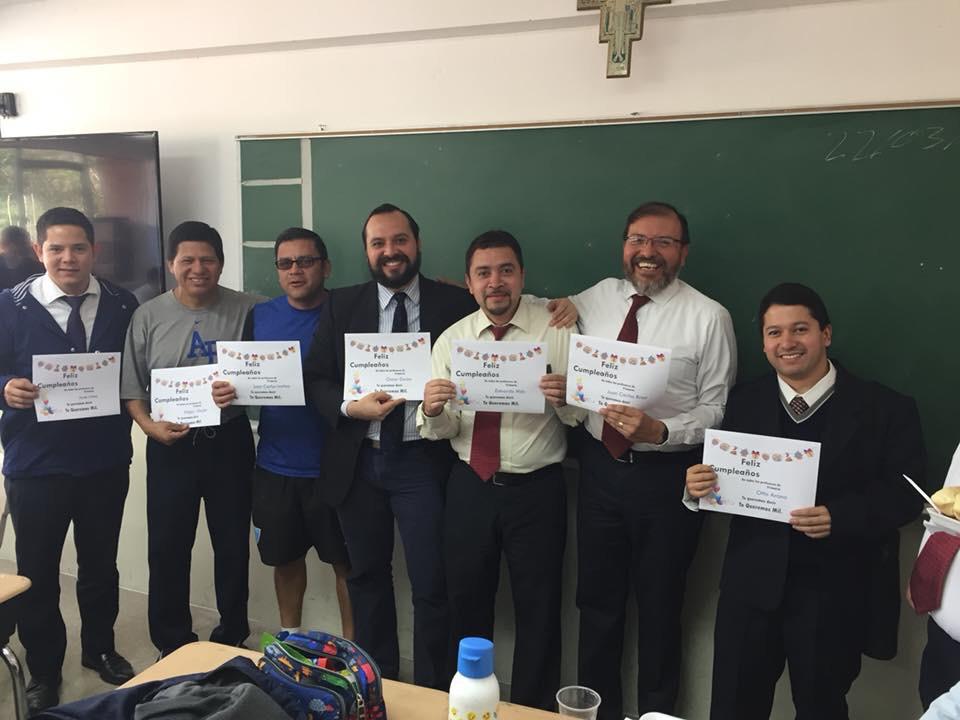
In the picture, with other teachers from the school.

Otto Fernando Arana Mont felt the call of the Lord at the age of 11, when he hepatitis forced him to rest for a few months. "Then my mother was wise enough to put at my disposal books of Sacred Scripture and many biographies of saints adapted for children. From these texts I developed a strong interest in these subjects, in wanting to imitate the heroic lives I read about".

However, from the age of 18 to 29, he put aside his vocation and dedicated himself to the to work and then to study philosophy, literature and education at the university.

In my last place of work, an educational center where I worked as a teacher and family educational advisor, the Lord provided me with the means of formation that helped me to take up again with enthusiasm the universal Christian vocation to holiness.

Apostolic needs of Guatemala

As a seminarian in Guatemala, what do you think are the most important apostolic needs in your country, how is the situation regarding religious freedom?

I am in communion with the bishops of the country, who in their communiqués as the Bishops' Conference, whose current president is my own, are in communion with the bishops of the country. bishop Monsignor Gonzalo de Villa y Vásquez sj, have expressed as pastors those apostolic needs that are most important: care for migrantsboth foreigners and nationals; the need for peace in the face of various forms of violence that causes so much suffering and pain, the cry of the poor, among others.

Undoubtedly, the path we have begun with the diocesan stage towards the Synod on Synodality will highlight the needs of the Church on pilgrimage in Guatemala in communion with the Holy Father.

Religious freedom

As for religious freedom, there does not seem to be a problem at the present time. Masonic liberal governments in the pasts who persecuted the Church from 1871 to 1945 and left an "abomination of desolation" (Dn 9:27). expelling religious orders, imposing secular education, writing a history against evangelization and the work of the Church for centuries, expropriating convents.

Perhaps we should mention a recent event related to the pandemic. Faced with the prohibition of attendance to religious activities in temples and outdoors in September 2021, the Bishops' Conference reacted, asking for this regulation to be modified, declaring the "essential value" which is the cultic life of believers.

In addition, when it has come to the care of the common home, many clergy members have suffered threats and harassment, as confirmed by a 2017 report by the U.S. Embassy.

Abortion and euthanasia

Tell us about abortion in your country, euthanasia and gender ideology.

I can glimpse a future danger looming over the Church on pilgrimage in Guatemala. danger of passing legislation allowing abortion and euthanasiaThe promotion of sex education that seeks to implant gender ideology among children, as well as the recognition of homosexual unions.

Because if passed, the implications such legislation would have for pastors' preaching could lead to legal consequences, some of which some have already suffered: lawsuits, lawsuits, legal sanctions, imprisonment, gagging, gaggingetc.

Imposing an ideological agenda

There has been no shortage of attempts to promote projects that favor legislation to decriminalize abortion and the implementation of abortion law. gender ideology in sex education in educational centers. The most recent is bill 5494, which seeks to decriminalize abortion.

In addition, there are institutions that, linked to certain corporations and people with a lot of international power, are interested in imposing this agenda and are poisoning many people, mainly children and adolescentsso that these ideas are internalized as a matter of course. Not to mention the ideological work that is done with women to induce them to an abortionist and contraceptive mentality.

New persecution

This would unleash a new persecution.. But, I believe that, in these times, those of us who have responded to the Lord's call to serve Him in the Church as priests, must be clear that our vocation involves persecution and even martyrdom, also in Guatemala.

It motivates me and fills me with an indescribable joy when I think: the Lord wanted to count me in his team for these times. That is why I want to tell him like the prophet Isaiah (my friend and favorite prophet that I have studied), and renew him constantly: "Here I am. Send me" (Is 6:8) and as the psalm expresses it "Here I am - as it is written about me in the Book - to do your will, my God" (Ps 40:8-9).

Ibero-American pro-life capital

For the time being, there is a legal framework, such as the Political Constitution that defends against these anti-Christian laws, with two main principles: Article 3, when speaking about life, affirms that "the state guarantees and protects human life from its conception". In Article 42, when dealing with the family, it states that it is constituted "by the free decision of a man and a woman to enter into marriage".

This constitutionally guarantees a real opposition to any attempt to decriminalize abortion and to recognize unions between homosexuals.

Recently there have been two news items that may show the situation on the abortion issue. The first was on Tuesday, October 12, when Alejandro Giammattei, who is the current President of the Republicsigned its adhesion to the Geneva Consensus, which establishes that there is no "right" to abortion. The second was that the country will be declared in March 2022 as a "Ibero-American pro-life capital.

Destroying the family

Therefore, I still see on the horizon a serious future danger, even not so distant: that international pressure and certain influential people may condition the country's government by forcing it to back down, destroying all that has been achieved in the defense of life and the family.

With this, they can create a whole gag that economically seeks to influence the legal. But this should not surprise us, since behind all this is Satan, "a murderer from the beginning" (Jn 8:44), who wants to destroy the family, hates life and seeks to pervert people.

We cannot lower our guard, we must persevere vigilantly and know that the total victory will be until the Parousia, that we know that the triumph is of the Risen One, but that does not exempt us from living the prophetic denunciation of these evils.

Catholics and Protestants

In some Latin American countries, people are leaving the Catholic faith and going Protestant. Is this also happening in Guatemala?

This is an undeniable reality. In 2016, the Evangelical Alliance estimated that in Guatemala, for every Catholic parish there were 96 Protestant temples, being considered the country with the most Protestants in Latin America. While in 2015 Guatemala had 45 % of Catholics to 42 % of Protestants, the 2020 data shows a change: 42.8 % of Protestants and 41.2 % of Catholics.

There are a wide range of factors influencing these changes: poor training of Catholics versus rigorous persuasion training of Protestants, the welcoming capacity in Protestant groups versus a somewhat passive attitude in some Catholic temples, and the tireless Protestant proselytizing versus the comfort of thousands of Catholics who are content with Sunday Mass.

The presence of priests is fundamental

Therefore, I think that the presence of the priest in the parish is fundamentalHe must be available to the faithful and, like a father, be tireless in forming them and encouraging them to be missionary disciples. It is not rare to find a story in which a Catholic faithful has sought help from the parish priest and his absence was the cause of a disappointment that found in some Protestant group all the support and welcome that he did not have in the parish.

In addition, Catholics must overcome some of the greatest problems of our time and complex, including a solid knowledge of Sacred Scripture, living Tradition and the Magisterium, as well as a formation in Mariology that leads us to feel proud to have a Mother like the ever-virgin Blessed Virgin Mary.

We must explain everything that objects to the privileges with which God has adorned her in anticipation of her Divine Maternity, so that we may be "shamelessly Marian" as my former bishop Bishop Oscar Julio Vian Morales sdb used to say.

"It's not all shadows"

However, it is not all shadows. There is much hope and light in the ecumenical task. We have to remember that there is a belonging to the Church of all these Protestant brethren, but they lack the fullness that we Catholics do have by possessing the integrity of doctrine and the the totality of the sacraments, especially the Eucharist and the Sacrament of Holy Orders.

Moreover, there are many reasons that can unite us in the face of dangers that threaten the dignity of the person and Christianity: we can fight for the defense of the familyChristian life and values in society. From them we can learn the study of Sacred Scripture, the lack of human respects in preaching the Gospel, and the missionary way of life by which they are always ready to give witness to the faith.

"I think that the presence of the priest in the parish is fundamental: he must be available to the faithful, and like a father, be tireless in forming them and always encouraging them to be missionary disciples."

Otto Fernando Arana Mont seminarista guatemala

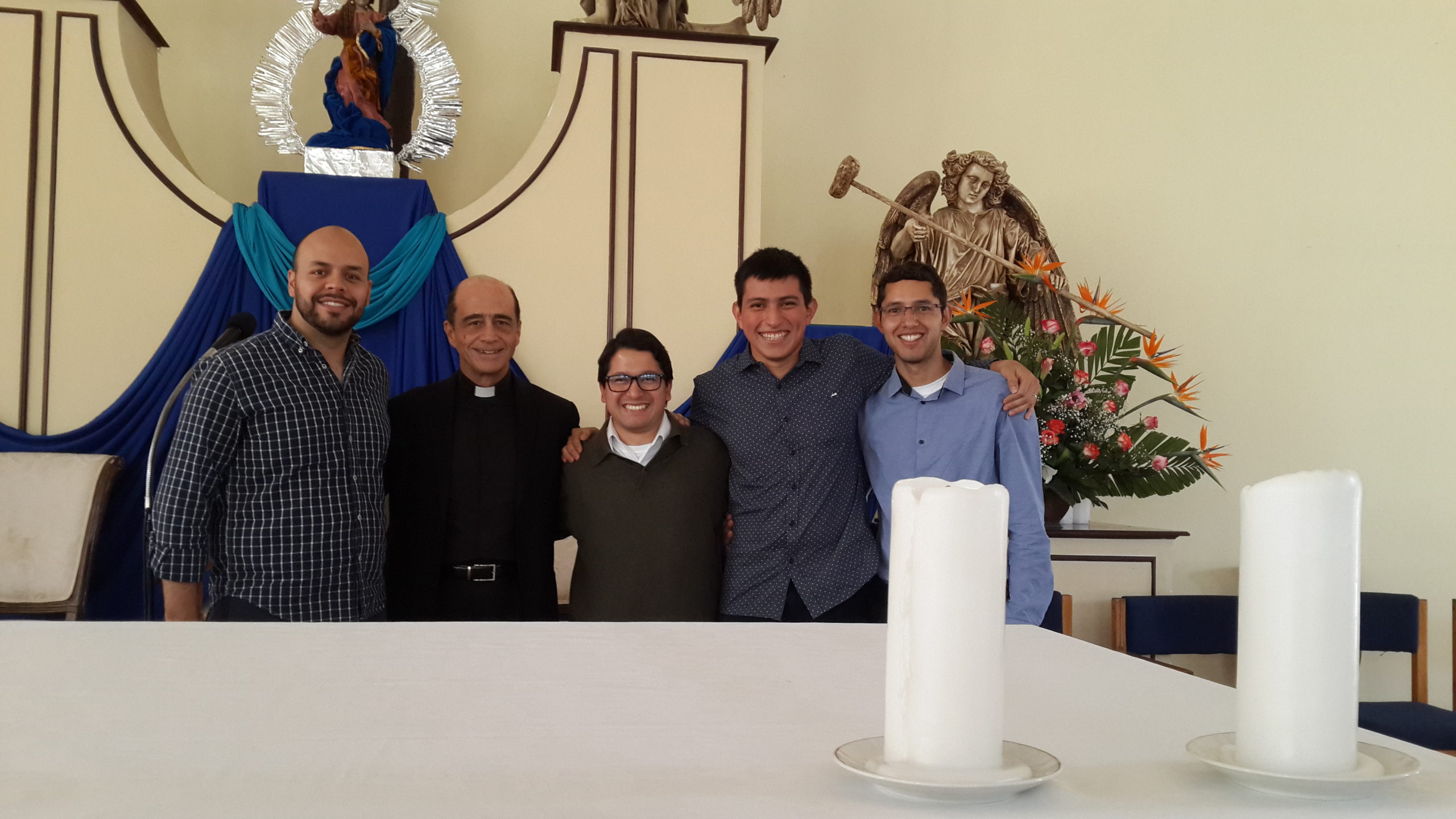
In the picture, with other seminarians from Bidasoa.

The experience of living in Spain and meeting the Spanish people has been very pleasant and important in my formation as a seminarian in Guatemala. To know the treasure that they have in the spiritual and cultural aspects is something that I am grateful for and I have taken advantage of.

Then, when I have been in pastoral ministry during the summer and Holy Week in different places, I have experienced with gratitude and admiration the generosity of the Spanish people towards me. I am very grateful to them because in many places I have felt at home. I thank all my benefactors", says Fernando.

Your stay in Spain

In your stay in Spain, how have you seen the Spanish people, what has surprised you?

The experience of living in Spain and meeting the Spanish people has been very pleasant and important in my formation as a seminarian in Guatemala. To know the treasure that they have in the spiritual and cultural aspects is something that I am grateful for and I have taken advantage of.

Then, when I have been in pastoral ministry during the summer and Holy Week in different places, I have experienced with gratitude and admiration the generosity of the Spanish people towards me. I am very grateful to them because in many places I have felt at home.

John Paul II Fatima Center

Would you like to tell us something that has left an impression on you?

I would like to refer to the pastoral experience that has left the greatest mark on my formation in Bidasoa. This happened in the John Paul II Fatima CenterI have had the opportunity, together with other seminarians, to widen my heart in the formation towards the priesthood, serving and seeking to correspond with generous dedication to others.

This is what we try to live in the days when we live in the center. For if what one longs for is to be Christ on earth, one must not forget that "the Son of Man did not come to be served, but to serve" (Mk 10:45).

This is manifested in my service to the meninhos and meninhas (residents), for whom I have wanted to be a brother who lavishes on them the same attention that he would have lavished on Christ himself, remembering the words of the Lord: "As you did it to one of the least of these my brethren, you did it to me" (Mt 25:40).

A woman with cerebral palsy

I especially remember that in the casinha (little house) where I served, I met Daniela, an elderly woman in her 50s who has cerebral palsy, cannot speak and finds it difficult to ingest food.

She was the first person I helped feed at the center, thinking it would be easy. I tried for 45 minutes to get him to eat. I could barely get him to take any of the food. But, as I got to know him and treated him with patience, I learned how and when to give him a spoonful, founded on a special affection that I took her as a spiritual daughter.

The main remedy was to tell him "With the help of God, your angel and my guardian angel I will feed you". Whenever he asked for it, lunch and dinner went wonderfully. The grace of God and the assistance of the guardian angels helped. I continued to attend him until the end of the pastoral.

"We have received more than we have given."

We also had an animation activity for the residents in which we had the challenge of giving them a time of recreation and a lot of joy. When in doubt about how we can make ourselves understood with them, we learned some words and phrases in Portuguese.

But the best help is very simple: the Babel of the language difference, God remedies it with the Pentecost of smiles, service, music and dance.

What we have received from God through each of the people we have served is always beyond us.. The Lord has worked through them to configure us according to his most Sacred Heart, and through the hands of Holy Mary who teaches us to serve each of his favorite children.

Crucified Christs

They are Christs-crucified who smile... and also suffer. The smile of the meninhos and meninhas who, in spite of their situation, like to smile and have a sense of humor, is impressive. After observing, listening and opening the heart, one begins to see them as Christ sees them.

Some also express their sufferings. But when they are taken out of their routine, in recreation and fellowship, they shine with joy as a reflection of God's glory.

Friends for eternity

There remain many memories engraved by charity, living the new commandment of love by which the Lord affirmed that we would recognize that we are his disciples (cf. Jn 13:34-35). The Lord has given me friends for eternity.

I constantly pray for them, especially for Daniela, Jael, Rita, Joao, Soraia and for all the other meninhos and meninhas.

I am especially mindful of them at Holy Mass. Their memory strengthens me in the face of difficulties in formation for the priesthood, because remembering the grace of God received, I can again be firm in God that it is worthwhile to follow, it is worthwhile to be a priest of Jesus Christ for the generous surrender of one's own life.

Undoubtedly, all of this has been possible thanks to so many benefactors, who, accepting the gift of generosity, have made it possible to that God has given them, contribute spiritually and materially so that we can have the opportunity of these pastoral experiences in this path of formation towards the priesthood. To all of them I profess eternal gratitude.

Marta Santín, Journalist specializing in religious information

Belvy, a priest from Congo, with a Catholic father and an evangelical mother

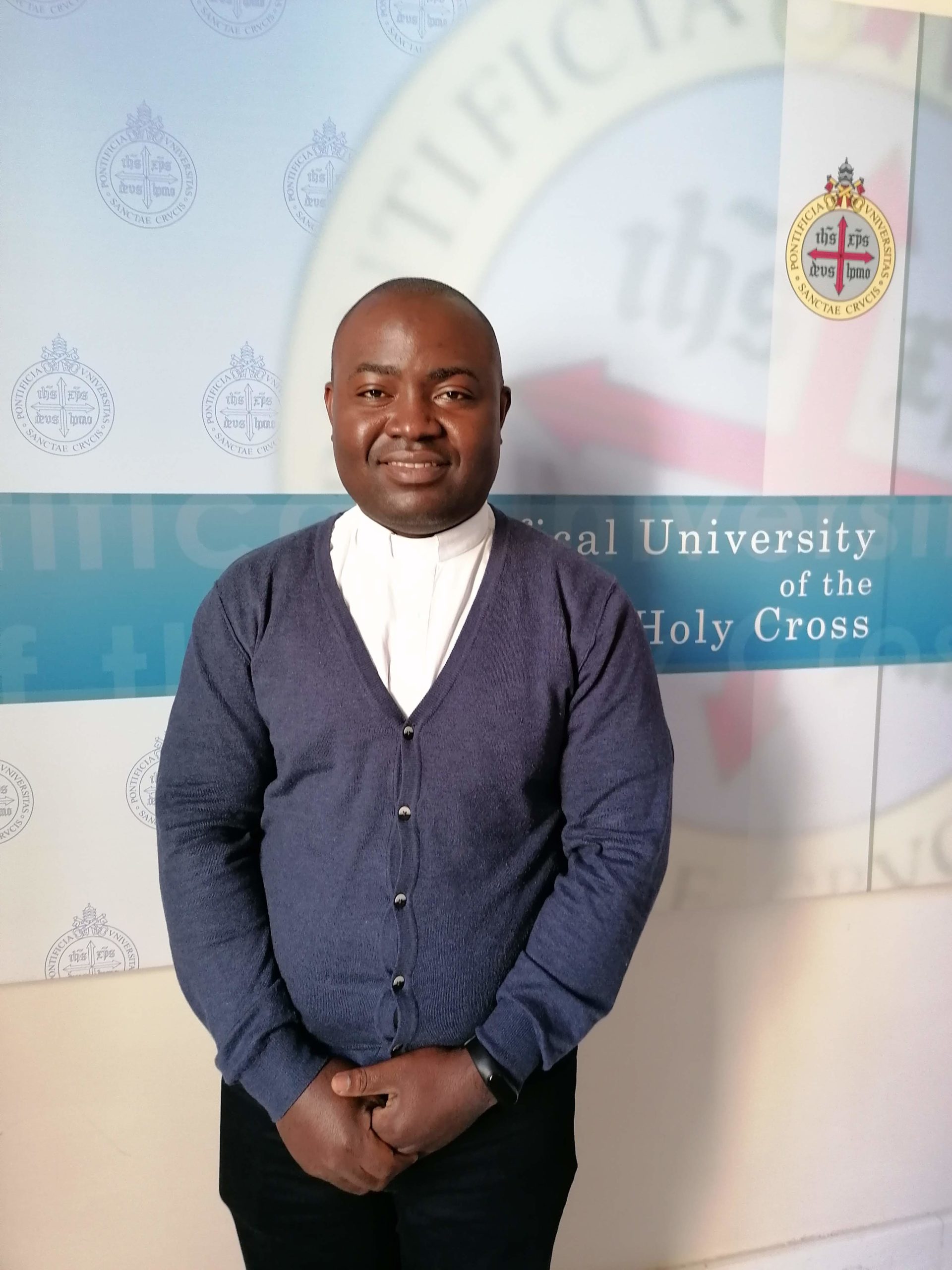
Belvy, priest of Congo

Belvy Delphane Diandaga is a priest of the Diocese of Brazzaville, in the Republic of Congo. He was born in the same city of Brazzaville in 1985 and is currently in Rome pursuing a degree in Philosophy at the Pontifical University of the Holy Cross, thanks to a scholarship granted by CARF - Centro Academico Romano Foundation. He tells us his story, which, as he himself says, is a love story.

The story of a vocation is a love story

"The story of a vocation is above all a beautiful story of love, as well as a work of God's mercy which, despite our limits and weaknesses, makes us sharers in the great ministry of his Son. And this work in us is a true privilege that God grants us," he says.

Belvy Delphane Diandaga was born into a family of religious disparity: her father is Catholic and her mother is Protestant, so she had the opportunity to choose between one or the other vision of the Christian faith.

But even as a child, he was a regular at Sunday Mass. "Even without having any real knowledge of it, it was a moment of happiness for me, because it was a moment of encounter with the other faithful, a communal moment. It was precisely when I was four years old that I began to express the desire to accompany my father to Sunday Mass and this, as I grew up, had a great influence on me," says Fr.

His decision for the Catholic faith

Already at this age he could perceive the signs of his inclination towards the Catholic faith. "Being from a family with mixed religious traditions, with an evangelical (Protestant) mother, I had the possibility of embracing one or the other tradition. But it was towards the Catholic faith that I oriented myself at the age of seven, when I went to enroll in the courses of initiation to Christian life (catechesis) without telling my father, who would soon, however, notice and encourage me."

During this period of initiation, he had taken the initiative to join the scouting movement with his cousin, and then that of the altar boys, "even without feeling at this precise moment the desire to become a priest, because my dream was to become a priest," he said. army officer or even a magistrate, to defend the oppressed and fight injustice in my country".

Belvy Delphane Diandaga

Belvy Delphane Diandaga is a priest of the Diocese of Brazzaville in the Republic of Congo. 

He was born into a family of different religions: his father is Catholic and his mother is Protestant, so he had the opportunity to choose between one or the other vision of the Christian faith.

But even as a child, he was a regular at Sunday Mass. "Even without having any real knowledge of it, it was a moment of happiness for me, because it was a moment of encounter with the other faithful, a communal moment. It was precisely when I was four years old that I began to express the desire to accompany my father to Sunday Mass and this, as I grew up, had a great influence on me," says Fr. 

The Lord called him to his service

"It was at the end of my high school studies that I somehow realized that the Lord was calling me to his service. It was on the occasion of the priestly ordination of a priest of the Order of the Most Holy Trinity that this desire became clearer. I could not describe what happened that day, but I can say in general that this wonderful encounter with Christ transformed my whole life. As St. Augustine said, "no one can meet Christ and remain the same".

Belvy has it clear: the motto of his life, then, is a word of St. Paul the Apostle to the Corinthians (1 Cor 15:10): "by the grace of God I am what I am, and the grace that He gave me was not unfruitful" (1 Cor 15:10).

The Eucharist is the sacrament of sacraments.

"After feeling God's call, I was quick to talk about it with my father one day when we were returning from my parish choir rehearsals. We were both participating in these songs of praise to God through liturgical animation, especially at Mass, which was for me a strong moment of encounter with Christ: a moment of ecstasy, in which my heart was filled with joy.

"Later, no doubt, he would discover, like seminarian and through the theological studies that the Eucharist is the sacrament of sacramentsIt is the center of all Catholic Christian spirituality because it is the sacrament where Christ is totally present. And more and more, I became aware of the sublimity and nobility of the priesthood.. Because Jesus, calling me into his mystery, wanted to make me a minister of the Eucharist, and this is simply a grace.

For this reason, moreover, my word of life taken from the first letter of St. Paul to the Corinthians (1 Cor 15:10) describes this same dimension of grace: "By the grace of God I am what I am, and the grace he has given me was not unfruitful". So I constantly give thanks to God for the gift of a priestly vocation. and at the same time I thank all those who have made possible the materialization of this grace and those who help me to live this vocation with dignity.

"The story of a vocation is above all a beautiful story of love, as well as a work of God's mercy which, despite our limits and weaknesses, makes us sharers in the great ministry of his Son. And this work in us is a true privilege that God grants us."

Supporting the Diocese of Brazzaville and the Church in Congo

More than ninety percent of Congo's population is Christian, and Catholics are represent about 52%. However, Belvy alert: "The evangelical (Protestant) confession is increasingly advancing in our country. For that reason, it is increasingly necessary to have well-trained priests, in good cultural environments, to work in the Catholic Church. not only in the formation of the clergy and the people of God, but also in evangelization and in the apostolate with the poor and those who are spiritually and materially indigent".

For this very reason, after completing his canonical training in philosophy and then in theology, once ordained a priest he had decided to return to the École Normale Supérieure to continue his studies of philosophy there....

Thanks to CARF's benefactors

"But who could have imagined that, in our diocese, so poor in resources, we could have the opportunity to train a priest abroad.However, two years later, my bishop considered it appropriate for me to go to Rome, to the Pontifical University of Santa Croce, because it was considered necessary for a priest to be formed in an academic and multicultural environment suitable for integral formation and development, and then return to work in the diocese," he says with enthusiasm.

"So, thanks to a scholarship from CARF - Centro Academico Romano Foundation, the dream came true and today I am about to finish my Bachelor's Degree in Philosophy. I cannot express in words the gratitude to my benefactors of CARF for all they have done for me: I can only commend them every day, so that God may fill them with grace and blessings."

Gerardo Ferrara
BA in History and Political Science, specializing in the Middle East.
Responsible for the student body of the University of the Holy Cross in Rome.

Carlos, a priest from El Salvador and his apostolic needs

Bidasoa Alumni

Carlos Bladimir Corado Hernández is a priest of the diocese of Santa Ana, El Salvador. He is 31 years old and was ordained on January 7, 2017. From 2011 to 2016, he was a former student of the Bidasoa International Seminary. He has now returned to the University of Pamplona to complete his degree in Dogmatic Theology.

When he returned to his diocese, he was appointed parochial vicar of the parish of Santísimo Redentor por el Calvario in Ahuachapán and for three years he accompanied many people with his ministry and formation to the laity. In addition, he was a teacher in a Catholic school and collaborated as a professor in the San Juan XXIII Seminary of his diocese.

Carlos, a Salvadoran priest, spoke with CARF to learn about his mission as a priest and the needs of his country.

 What are the most important apostolic needs in El Salvador? 

El Salvador is a very small country territorially, wrapped in a great history and great conflicts. A few days ago we celebrated the 30th anniversary of the peace accords that ended the war that devastated the country. That painful part of our history has caused psychological wounds and poverty. Therefore, I believe that one of the most important apostolic needs of our country is to work with the youth and also formation.

As a result of the war, young people today often do not find opportunities to get ahead and this implies that these young people look for inadequate ways to solve their problems. The Church needs to bet for the youth, for their human and Christian formation, which is a difficult stage and it is necessary to lay good foundations to have good citizens. If there are good people, the country will be better. As Benedict XVI said, if there are no righteous, there will be no justice either. We need young people with good values.

The latest information confirms that Protestantism has surpassed Catholicism in El Salvador, and this is a constant that is happening throughout Latin America ....

Latin America has the peculiarity of the massive presence of sects associated with Protestantism. It is true, Catholicism is decreasing in our country for several reasons. In the first place, in El Salvador and in general in our Latin American countries we live a simpler faith that does not look for so many reasons to believe, a faith that lives from the encounter and the relationship. In this sense, people seek in their relationship with God, that simplicity that sometimes is not well understood. People seek a deeper experience, a more sentimental experience of that encounter with the Lord, and sometimes this is misunderstood and sometimes falls into sentimentalism. Some sects offer these experiences.

The second reason is that, coupled with this, one of the challenges we have is the formation of people. I have met people who have left the Church because they thought that our faith offers erroneous beliefs. For example, Protestants call us idolaters for praying in front of images of saints. For this reason, people need to be formed. It is a challenge for the Church in El Salvador: to help people understand more about their Catholic faith so that they can have a living encounter with the Lord.


Carlos Corado con compañeros de Bidasoa

Carlos Bladimir Corado Hernández is a priest of the diocese of Santa Ana, El Salvador. He is 31 years old and was ordained on January 7, 2017. From 2011 to 2016, he was a former student of the Bidasoa International Seminary. He has now returned to the University of Pamplona to complete his degree in Dogmatic Theology.

In the picture, a mass offered by the alumni of Bidasoa de El Salvador for Mr. Juan Antonio Gil Tamayo, formator of the International Seminary and very dear to all, who passed away recently.

Christian Unity

Is there good harmony between Protestants and Catholics in El Salvador? 

I have family members who are Protestants. However, we are not very prone to create fruitful dialogues in our environments. This is perhaps a pending task for the unity of Christians and to strengthen those relationships in order to achieve the unity that the Lord wants, that all may be one.

Synod of Bishops 

On the Synod of Bishops and synodality What does El Salvador need in this regard? 

What we need is to listen to the people, which is what the Pope has told us. Listen to each other. We pastors need to listen to the people and their spiritual needs. We also need to listen to the laity. And we also need to listen to each other as pastors and bishops and listen to the needs of the laity. the priests Why have there been so many scandals in the Church? Perhaps we have been careless among priests.

"I believe that one of the most important apostolic needs of our country is to work with the youth. and also training".

Beatification of four martyrs

You have just beatified 4 martyrs of the Salvadoran war, who join Saint Oscar Romero. How did you experience this event? 

It has been a historic moment of joy and it fills us with strength. We have a great lack of knowledge of these people and we Catholics must know our saints. May this beatification also serve to reconcile all of us Salvadorans.

For friends of the CARF Foundation  

 Any final words for the benefactors and friends of the Foundation? CARF

 I am very grateful that I can relate my experience as a priest made possible by so many anonymous benefactors who give from what they have and not from what is left over. Generous people are those who have a big heart for giving. And I thank you for the opportunity you have given me to be able to study in the University of Navarra that in this way they help the Church and also my country, El Salvador. I have very good memories of Bidasoa. I assure you of my prayers and commend you in the Eucharist.


Marta Santín, Journalist specializing in religious information.

Mr. Peter Rettig

[et_pb_section fb_built="1" admin_label="section" _builder_version="3.22" da_disable_devices="off|off|off" global_colors_info="{}" da_is_popup="off" da_exit_intent="off" da_has_close="on" da_alt_close="off" da_dark_close="off" da_not_modal="on" da_is_singular="off" da_with_loader="off" da_has_shadow="on"][et_pb_row admin_label="row" _builder_version="3.25" background_size="initial" background_position="top_left" background_repeat="repeat" global_colors_info="{}"][et_pb_column type="4_4" _builder_version="3.25" custom_padding="||||" global_colors_info="{}" custom_padding__hover="||||"][/et_pb_column][/et_pb_row][/et_pb_section]

Don Carlos Duncan Franco, the work of a Brazilian priest

Although he has only been ordained for six years, don Carlos Duncan Franco has been at the helm of an extremely poor parishand, therefore, with numerous needs. "It was a real challenge," he confesses. But he has also had a very different mission, since before coming to Spain he was the Diocesan Coordinator of the Pastoral Ministry of Initiation into Christian Life. Two very different fields that demand one hundred percent and he remembers them as "very intense" experiences for the short time that he had been priest.

A priest of his time

This Brazilian is 36 years old, a young priest and a son of his time. Don Carlos assures that "in these times living the priesthood is a great challenge" and that his mission as a young religious "is to try not to change the world, something that I think many priests think, as I myself did, but to gradually bring people closer to God through knowledge, but above all through charisma and testimony".

"We need happy and faithful priests, and I believe that our mission is this, to reveal the face of Christ with the fidelity and joy of one who has discovered a treasure." he says with complete conviction.

Your training in Spain

Don Carlos studied theology at the Faculty of Theology He returned to his diocese in Brazil to continue his mission and to help young people and future vocations that may arise from his pastoral work. He is very grateful to the benefactors of the CARF Foundation for making his theology studies possible.