In this catechesis dedicated to the Dogmatic Constitution on the Church, Lumen gentium, Pope Leo XIV once again places at the center the understanding of the Church as the People of God, a living community in which all the baptized share the same dignity and mission. Far from a passive vision, the Holy Father emphasizes that every Christian actively participates in the salvific work of Christ, thanks to the Baptism and the Confirmation, The priesthood, prophecy and kingship are incorporated into it.
This participation is not symbolic, but concrete: it is expressed in the sacramental life, especially in the Eucharist, The Pope also emphasizes the role of the Church in prayer, in daily witness and in commitment to the faith. In addition, Leo XIV emphasizes the role of the sensus fidei, that supernatural sense of faith which, guided by the Holy Spirit, The Church's teaching, which is the basis for the whole People of God, enables the whole of the People of God to recognize and live the revealed truth in communion with the Magisterium.
In this context, the Pope recalls that the whole Church - from pastors to lay faithful - is called to be an active subject of evangelization. The different charisms and vocations, including the consecrated life and associative realities, manifest the richness and vitality of this priestly and prophetic people, called to give a coherent witness to Christ in the world.
«Dear brothers and sisters, good morning and welcome!
Today I would like to dwell once again on the second chapter of the Conciliar Constitution. Lumen gentium (LG), dedicated to the Church as the people of God.
The messianic people (LG, 9) receive from Christ the participation in the priestly, prophetic and royal work in which his salvific mission is carried out. The Council Fathers teach that the Lord Jesus has instituted through the new and everlasting covenant a kingdom of priests, He constituted his disciples into a «royal priesthood» (1Pt 2:9; cf. 1Pt 2:5; Rev 1:6). This common priesthood of the faithful is given to us through Baptism, which enables us to worship God in spirit and in truth and to «confess before men the faith which they have received from God through the Church» (LG, 11).
Moreover, through the sacrament of Confirmation, all the baptized «become more closely bound to the Church, are enriched with a special power of the Holy Spirit, and are thereby more strictly bound to spread and defend the faith, as true witnesses of Christ, by word together with works» (ibid.). This consecration is at the root of the common mission that unites the ordained ministers and the lay faithful.
In this regard, Pope Francis observed: «To look at the People of God is to remember that we all enter the Church as lay people. The first sacrament, the one that forever seals our identity and of which we should always be proud, is that of Baptism. Through it and with the anointing of the Holy Spirit, (the faithful) “are consecrated as a spiritual house and a holy priesthood” (LG 10), then we all form the Holy and faithful People of God» (letter to the President of the Pontifical Commission for Latin America, March 19, 2016).
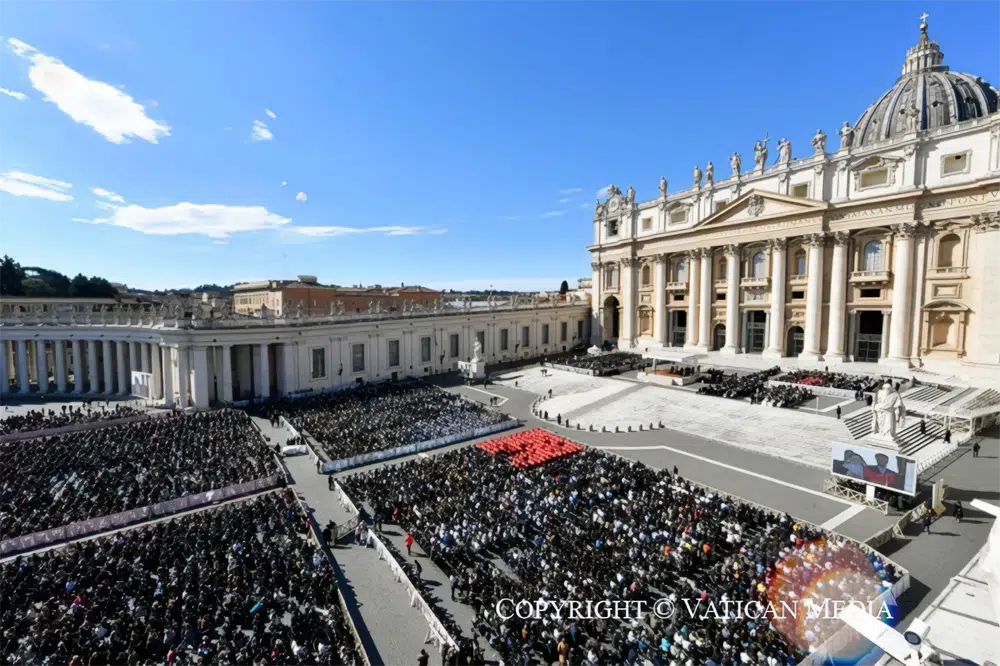
The exercise of the royal priesthood takes place in many ways, all of them aimed at our sanctification, above all by participating in the offering of the Eucharist. Through prayer, asceticism and active charity they bear witness to a life renewed by the grace of God (cf. LG, 10). As the Council summarizes, «the sacred and organically structured character of the priestly community is actualized by the sacraments and by the virtues» (LG, 11).
The Council Fathers also teach that the holy people of God also participates in the prophetic mission of Christ (cf. LG, 12). In this context they introduce the important theme of the meaning of faith and the consensus of the faithful.
The Doctrinal Commission of the Council specified that this sensus fidei «it is like a faculty of the whole Church, thanks to which in her faith she recognizes the transmitted revelation, distinguishing between the true and the false in matters of faith, and at the same time penetrates more deeply into it and applies it more fully in life» (cf. Acta Synodalia, III/1, 199). The sense of faith belongs therefore to each member of the faithful, not as individuals, but as members of the People of God as a whole.
Lumen gentium concentrates attention on this last aspect and relates it to the infallibility of the Church, to which the infallibility of the Roman Pontiff, in serving her, belongs. «The totality of the faithful, who have the anointing of the Holy One (cf. 1 Jn 2:20 and 27), cannot err when they believe, and this peculiar prerogative of his is manifested by the supernatural sense of the faith of the whole people when from the Bishops down to the last lay faithful gives universal consent in matters of faith and morals» (LG, 12).
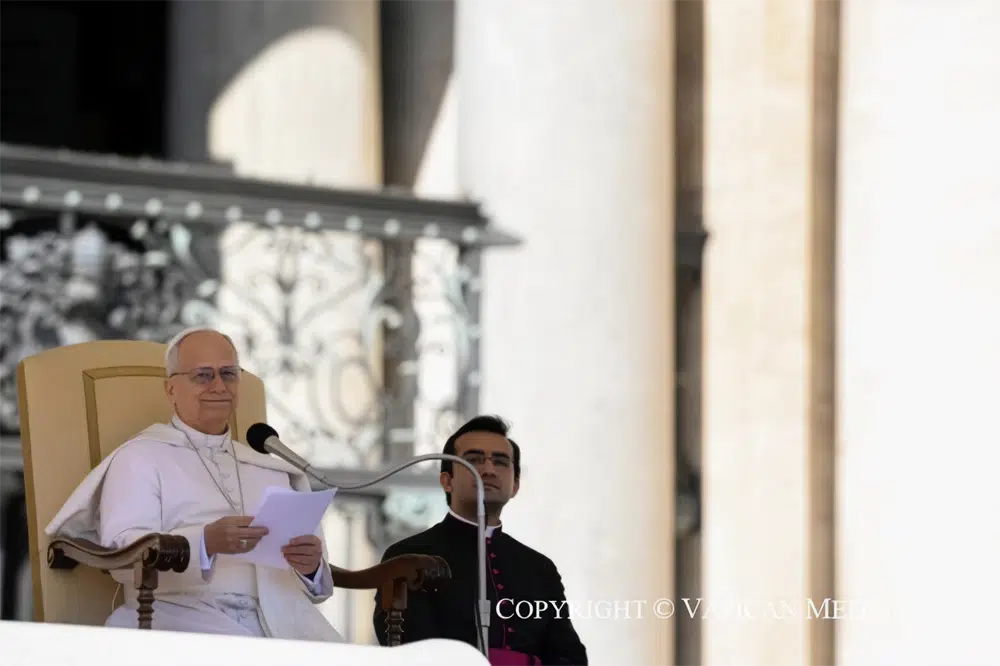
The Church, Therefore, as a communion of the faithful, which obviously includes pastors, it cannot err in the faith: the organ of its ownership, founded on the anointing of the Holy Spirit, is the supernatural sense of the faith of the whole people of God, which is manifested in the consensus of the faithful. From this unity, which the Church's Magisterium safeguards, it follows that every baptized person is an active subject of evangelization, called to give a coherent witness to Christ according to the prophetic gift which the Lord infuses into his whole Church.
The Holy Spirit, who comes to us from Resurrected Jesus, The charismatic vitality of the consecrated life is in fact dispensed «among the faithful of every condition, distributing to each as he wills (1 Cor 12:11) his gifts, making them fit and ready to carry out the various works and duties that are useful for the renewal and greater edification of the Church» (LG, 12). A particular demonstration of such charismatic vitality is offered by the consecrated life, which continually springs forth and flourishes by the work of grace. Also ecclesiastical associative forms are a luminous example of the variety and fruitfulness of the spiritual fruits for the edification of the People of God.
Beloved, let us awaken in ourselves the awareness and gratitude of having received the gift of being part of God's people; and also the responsibility that this entails».
Lumen gentium is one of the central dogmatic constitutions of the Vatican Council II, promulgated in 1964 and signed by Pope Paul VI. It explains what the Church is and what her mission in the world is, presenting her as a mystery of communion and as the People of God walking in history.
The full text can be read on the official Vatican website in English: read Lumen gentium in full. It is organized in eight chapters that develop the essential aspects of the Church, from its nature to its mission and universal vocation to holiness.
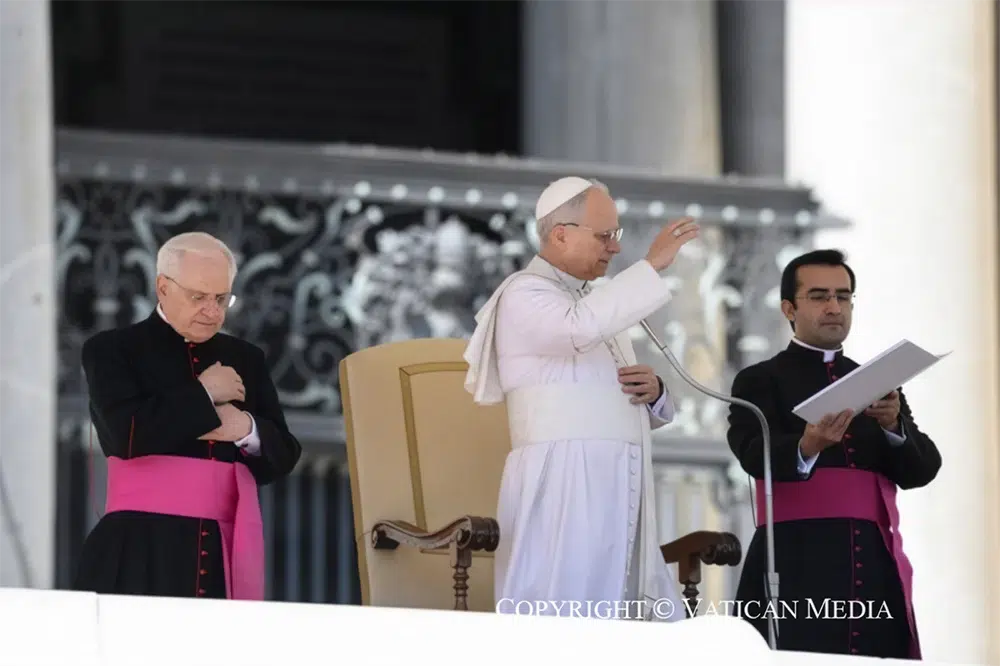
The document is divided into eight chapters that progressively address the reality of the Church: its mystery, the People of God, the hierarchical constitution, the laity, the call to holiness, the consecrated life and the role of the Virgin Mary.
Among the most relevant key points, three stand out: first, the centrality of the People of God, where all the baptized participate in the mission of Christ. universal call to the holiness, Third, the understanding of the Church as a reality both visible and spiritual, guided by the Holy Spirit in history.
One of the main axes of the text is the centrality of the People of God, where all the baptized share the same dignity and participate in the mission of Christ. To this is added the universal call to holiness and the understanding of the Church as a visible and spiritual reality, guided by the Holy Spirit.
From this perspective, every Christian is an active subject of evangelization. The mission of the Church does not correspond only to pastors, but to the entire People of God, who are called to bear witness to Christ in ordinary life, in communion and unity.
Table of Contents
 carf@fundacioncarf.orgLandline: +34 914 029 082Mobile: +34 638 078 51145 Conde de Peñalver Street.