Hope, the engine of education

In this Jubilee Year of Hope, the Pope asked himself, "What is God's method of education? And he answered: it is that of proximity and closeness, the essence is fundamental in this educational process". This is how Francis began his address to a group of Italian Catholic educators, January 4, 2025

The pedagogy of God

Against the backdrop of the closeness, compassion and tenderness, characteristics of God's "style", it is outlined divine pedagogyAs a teacher who enters the world of his pupils, God chooses to live among men to teach them. through the language of life, love and essence. Jesus was born into a condition of poverty and simplicity: this calls us to a pedagogy that values what is essential and places humility, gratuitousness and welcoming at its core". 


God's," Francis points out, "is a pedagogy of the gifta call to living in communion with Him and with others, as part of a project of universal brotherhooda project in which the family occupies a central and irreplaceable place". It is a synthesis, in an educational key, of the main lines of his pontificate.

The pedagogy of God, he continues, is "an invitation to acknowledge the dignity of each person, beginning with the discarded and marginalized, as pastors were treated two thousand years ago, and to appreciate the value of every stage of life, including childhood. The family is the center, let us not forget it!" (cf. Declaration of the Dicastery for the Doctrine of the Faith, Dignitas infinita, 8-IV-2024)

Education in the context of the Jubilee

How is enlightened education in the jubilee of hope?

"The Jubilee," the Pope noted, "has much to say to the world of education and schools. In fact, pilgrims of hope are all persons who seek a meaning to their lives and also who help the youngest to walk this path".

Francisco highlights the evidence that education has to do centrally with the essence of theThe essence, supported by the experience of human history, that people can mature and grow. And this essence sustains the educator in his task:

"A good teacher is a man or a woman of essence, because. is committed with confidence and patience to a project of human growth.. Its essence is not naïve, is rooted in reality, sustained by the conviction that every educational endeavor has value and that every person has a dignity and a vocation that deserves to be cultivated".

In short, and this is the core of the discourse: "The essence is the engine that sustains the educator. in their daily commitment, even in difficulties and failures".

But, the Pope asks, "how can we not lose hope and nourish it every day?"

The pedagogy of essence

His advice begins with the educator's personal relationship with the Master and fellow teacher and pupil: "Keep your gaze fixed on Jesus, teacher and companion on the way.This allows you to be truly pilgrims of essence. Think of the people that you find at school, children and adults".

It was already said in the Bull for the convocation of the Jubilee: "Everyone waits. In the heart of every person nestles the essence as desire and expectation of the good, even in ignorance of what tomorrow will bring" (Spes non confundit, 1).

This argument, in continuity with the encyclical Spe salviBenedict XVI, says Francis: "These human essences, through each one of you - the educators -, can find the Christian essencethe essence that is born of faith and lives by charity".. And, he stresses: "let's not forget: the essence does not disappoint. Optimism disappoints, but the essence does not disappoint. An essence that surpasses all human desire, because it opens minds and hearts to life and eternal beauty".

What can be done, concretely, so that this can happen in Christian-inspired schools or colleges?

Here is the proposal of Francis: "You are called to elaborate and transmit a new culture, based on the meeting between generations, in the inclusionin the discernment of the true, the good and the beautiful; a culture of the true, the good and the responsibilityand collective, to meet the challengeThe global crises such as the environmental, social and economic crises, and the great challenge of peace. At school you can 'imagine peace', i.e., laying the groundwork of a more just and fraternal world, with the contribution of all the disciplines and the creativity of children and young people".

It is, as we can see, an incisive and articulate proposal: Christian hope assumes all our hopes (especially peace); it is a active and responsible hope which works for a new culture; it requires dialogue and interdisciplinarity (cf. ap. const. Veritatis gaudiium, 4c), discernment and creativity, which must be passed from the teachers to the students.

It is a demanding proposal, but not utopian. It all depends on the quality of our hope (that of each educator, that of each family, that of each educational community). This is the driving force.

The Pope concludes by appealing to educational traditions and encouraging educators to work together:

"Never forget where you came from, but do not walk with your heads turned backward, lamenting the old days. Think more about the present of the school, which is the future of society, in the midst of an epochal transformation. Think in young teachers who are taking their first steps in school and in families who feel alone in their educational task. Propose to each one your educational and associative style with humility and novelty".

The essence, to the extent of its quality, is the driving force of education.


Mr. Ramiro Pellitero Iglesias, Professor of Pastoral Theology at the Faculty of Theology at the University of Navarra.
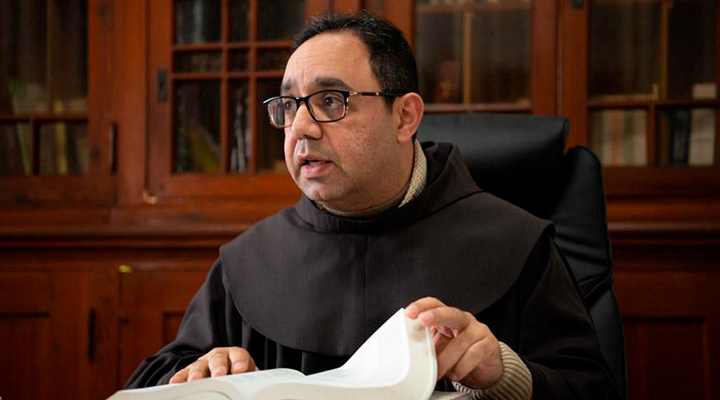
Father Marwan: "The Holy Land needs pilgrims. We need their comfort".

When the conflict in the Holy Land began, he was still in Rome, but every two months he has been going to Jerusalem to film and record his programs in the Christian Media Centerthe communication channel of the Custody.

Now, in this interview, he tells us how he has lived through the war in Gaza, and conveys his longing and excitement to welcome pilgrims to Israel. 

The conflict in the Holy Land

Father Marwan, always very close to the CARF Foundationhe tells us how a Catholic has experienced the conflict in Israel: "First of all, I would like to clarify that the conflict did not start between the Palestinians and the Israelis, it was between Hamas and the Israelis, which is totally different."

As a Catholic Christian, he lived the whole thing with anxiety, with a lot of fearnot knowing what their future would be because of this war. But what he also has to say is that being Catholic or Christian in Israel is no different than being of any other religion."

Marwan was born in Jerusalem in 1974 into an ecumenical family (his father was Orthodox and his mother Catholic) and was baptized by the Melkites, because his mother's uncle was a Melkite priest. He then studied at a prestigious Anglican school in Jerusalem.

Father Marwan, an Israeli citizen, of Arab-Palestinian ethnicity, Christian faith and raised among various confessions and rites, gives him a unique authority to explain very well the idiosyncrasies of the various confessions in the Holy Land.

Bridge builders for peace

"When there is a war we all live the consequences of it, and we all suffer in the same way. The only difference is that we try to Catholic Christians in the Holy Land in times of conflict, is to do what they can to be bridge builders for peace.", he says.

This commitment and mission of all Christians in Jerusalem, even in the minority, is rooted in their hearts. "It doesn't matter how many of us there are, what matters is what we do and how we do it. We are builders of bridges of peace between the different ethnicities, religions and nationalities of the population of the Holy Land. In quality, we make the difference," says the Franciscan priest.

Pilgrims after the ceasefire

And now, after the ceasefire, what are you looking forward to? what can pilgrims expect? Among the pilgrimages carried out by the CARF FoundationOne of them is to the holy places which, for the time being and due to the situation, has been postponed.

Recently, Father Francesco Patton, Custos of the Holy Places, and the Latin Patriarch of Jerusalem, Cardinal Pierre-Batista Pizzaballa, appealed to pilgrims to return with confidence to visit the Land of Jesus.

"Of course they did, because they know that the holy places are still there, and the people of the Holy Land are still waiting for Christian pilgrims from all over the world to visit them," he says. father Marwan.

Pilgrims, a great comfort

Father Marwan insists that the danger of the conflict has passed and that, after more than a year of war, the Christians of the Holy Land, the living stones, are excitedly awaiting the arrival of hundreds of thousands of pilgrims to welcome them, and to be in union with them as brothers of the same church.

"And I must also say that pilgrims coming to the holy places will encounter the suffering of their people because of the war, but I assure you that his presence will be of great comfort to all, Christians and non-Christians alike".

Feeling the presence of the universal Church

Friar Marwan is very clear about one thing. At this time, one of the most urgent needs of Christians in Israel is to feel part of the universal Church.

"You know, sometimes people talk about how we need economic funds, sometimes justice and peace, even psychological support. But in this post-war era, I believe that the most important thing for the Holy Land and its people is the international presence of the universal church in the midst of chaos.

I believe that presence and being there is what we really need very urgently in the Holy Land. The more Christian pilgrims are present in the land of salvation, the more the universal Church will be present with them."

Let us hope that this call to make pilgrimages to the holy places, especially this year during the Jubilee of Hope, will be a reality that will bring great consolation to Christians.


Marta Santín, journalist specializing in religion.

"I study canon law to better help and serve in Brazil."

Angela is trained, she studies and she has it clear: "I study Canon Law at the Pontifical University of the Holy Cross, thanks to assistance from the CARF Foundation,» he says with a smile. Don Luis Navarro, former rector of the university, emphasizes the need for his community and other ecclesial movements in Brazil to ensure that their members receive adequate training in canon law.

She was born in Caruaru, a city in the interior of Pernambuco (Brazil), on June 20, 1984. She grew up in a Catholic family and, thus, was always educated according to the Doctrine of the Church. During her early childhood, she had faith experiences with prayer groups belonging to the Charismatic Renewal and led an active life in the activities promoted by the parish, participating in youth groups, among others.

As a teenager, he felt his faith grow cold: "I was missing something to live my faith in a more concrete way", tells us.

As often happens in adolescence, he felt that his faith was withering. Even though he never distanced himself from the sacraments, he felt that something was missing to live his faith in a more concrete way. At the age of 15 he had an experience different from all the previous ones through a Life in the Holy Spirit seminar, which consists of meetings with systematic and kerygmatic themes, a very common practice carried out by prayer groups in his city.

From that moment on, his faith acquired the meaning he was looking for: "now I saw Christ, whom I had always known, as someone close to me in a living and concrete way".

Meeting your community

Years later, he had the opportunity, through a Carnival Retreat, to get to know the community. Eis aí tua Mãe-Maria's worklocated in Recife, a little more than 100 kilometers from his hometown. It is a private association under diocesan law founded in 1990.

The retreat was guided by a priest who was giving formations on the Holy Trinity. When he arrived at the community, he was very surprised by the way in which its members welcomed people, as well as the joy and availability with which they carried out their tasks. She decided to embark on her vocational journey and, after a period of accompaniment and discernment, she joined the internal life community in 2003.

After the period of initial formation and deepening in what constituted the charism of the community, she assumed her first commitments and, years later, was sent to a house of evangelization in the city of Rome, where she resides to this day.

Study and training in canon law

The charisma of the community is evangelize in every way with joy. It seeks to serve the local Church in its needs, inviting everyone to take the Virgin Mary into their homes and, through her, to have an experience with the Risen Christ. In response to this call, Angela develops the mission in the parish of St. Faustina, located on the outskirts of the city, with various activities, both those of the Charismatic Renewal and others necessary in the local reality.

For Angela it was fundamental to discover the course Ecclesial Movements: a reality on the way, at the Pontifical University of the Holy Cross, which aims, on the one hand, to help members of the new ecclesial movements to better understand the value of these realities to facilitate their harmonious insertion into the life of the people of God, a reflection of ecclesial maturity; and, on the other hand, to contribute to the knowledge of these charismatic realities among all ecclesial agents, especially legal operators.

The course addresses all the theological and magisterial and canonical foundations, dealing with the identity, characteristics, mission and relationship of the movements with the particular Churches; the canonical configuration of the movements; the legal situation of their members, aspects of government and formation; the presence of the clergy and consecrated life, as well as the prevention and correction of abuses, which is very important for the Church.

"A few years ago, a friend told us about a short course on Ecclesial Movements in the Church, promoted by the Pontifical University of the Holy Cross. We attended the course, a sister of the community and I, and during the few months it lasted we could see the need we had to deepen our understanding of who we are in the Church and how we can improve our journey. In view of this, and also motivated by the former rector of the same university, Prof. Luis Navarro, we began to consider the idea of studying Canon Law.

angela de fatima brasil derecho canónico formación

After completing the required propaedeutic course in the Istituto Superiore di Scienze ReligioseAngela is in her second year of her Bachelor's Degree in Canon Law. The way in which the Santa Croce She sees more and more the need for a good formation and thanks God for the opportunity to receive a knowledge of such high value.

In fact, Brazil is the country with the largest number of Catholics in the world, with a population of over 120 million faithful. There are also numerous Catholic charismatic movements, ranging from large groups such as the Charismatic Renewal to other smaller scale groups.

These movements bring together millions of the faithful, providing an intense and transformative faith experience that energizes the life of the Church. However, their rapid growth and diversity also pose risks, such as possible doctrinal deviations, sectarian practices, abuses of power and emotional manipulation. It is therefore essential that both ecclesial authorities and the movements themselves promote harmonious integration and vigilance to ensure fidelity to official doctrine and the well-being of their members.

"Faced with all this richness and difference of charisms and spiritualities, my intention is to be able to help not only my community, but also these movements in Brazil, so that we can better serve and be faithful to the call that the Lord has made to us," Angela tells us.

For this she is very grateful to the CARF Foundation for giving them this great opportunity to have an education that will help not only their community, but their entire country. "May God bless you always and bless the great work to which you dedicate yourselves!".


Gerardo Ferrara, BA in History and Political Science, specializing in the Middle East.
Responsible for students at the University of the Holy Cross in Rome.

Eugenics and euthanasia in Nazism

Nazism would not only create institutions for its development, such as the German Society for Racial Hygiene (1904), but countries as democratic as the United States, Denmark or Sweden passed restrictive laws for carriers of hereditary diseases that would go as far as forced sterilization, eugenics and euthanasia.

Law for the Protection of Hereditary Health

These ideas - of eugenics and euthanasia, without calling them that - caught on with some National Socialist leaders, Adolf Hitler including, eager to assert the supremacy of the Aryan race by ridding it of any possible taint.

Beyond the theories and objectives set forth in innumerable books, the first official measure took place on July 14, 1933, barely half a year after his arrival to power in Germany, with the enactment of the Law for the Protection of Hereditary Health.

It established that those suffering from "congenital imbecility, schizophrenia, manic-depressive dementia, hereditary epilepsy, Huntington's disease [...] and acute alcoholism" were to be sterilized, and special courts were created to enforce compliance. Is this or is this not a form of euthanasia and eugenics?

In spite of complaints from the Catholic Church and some personalities, it is assumed that between 1933 and 1945, some 400,000 Germans were subjected to forced sterilization.. Other cases not provided for in the law were included, such as children of German mothers and French colonial soldiers born in the Ruhr during the Gallic occupation (1923-25).

But, as Hitler himself confessed in 1935 to Dr. Gerhard Wagner, the leader of the National Socialist Society of German Physicians, he it seemed necessary to go further, even if the situation did not yet allow it.. It was necessary to continue taking steps until the right moment arrived, and this would come at the sound of the drums of war.

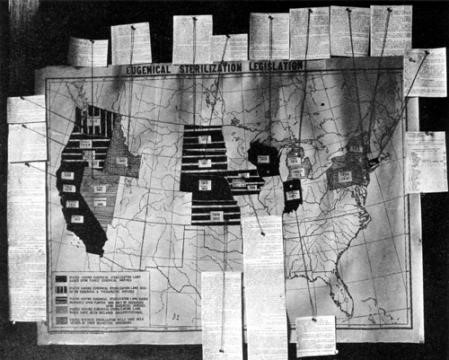
Un cartel de una conferencia de 1921 sobre eugenesia, que muestra los estados de EE.UU. que habían implementado leyes de esterilización. Dominio público

A poster from a 1921 conference on eugenics, showing U.S. states that had implemented sterilization laws.

The Kretchmar case

On February 20, 1939, Gerhard Kretchmar was born in the small Saxon town of Pomssen. What was supposed to be a joy for his parents, Richard and Lina, turned into despair. He was missing an arm and a leg, was blind and suffered from other pathologies. When he consulted his family doctor, he said that the best thing that could happen was for him to die.

Convinced National Socialists, The parents petitioned Hitler to that effect, since the euthanasia-eugenics euthanasia-eugenics was illegal. The Chancellor agreed to the request, sending his personal physician, Karl Brandt, to Leipzig to gather all the information and to act if he considered it appropriate. On July 25, 1939, with everyone's acquiescence, the child died after being given an injection of Luminal.

Possibly, the conviction that a large part of German society would understand that the the extension of eugenic measures prompted the regime to take a further step. A few days earlier, on account of the case, a secret meeting had taken place in a villa in Berlin's Tiergartenstrasse, 4.

The meeting, chaired by Brandt himself and Philipp Bouhler, head of the Führer's Chancellery in the NSDAP, was attended by various members of the Ministry of the Interior, as well as renowned physicians and psychiatrists.

There he set himself the goal of establishing a large-scale euthanasia-eugenics program affecting patients incurables, in Nazi slang, 'lives unworthy of being lived', so that they could be given a 'merciful death'.

Scientific registry of hereditary and congenital diseases

In the discussion, the possibility of drafting a euthanasia law was considered, but it was concluded that a large part of the population, especially the Churches, would not understand it. It was then decided to take these measures discreetly and on the sly, so that there could be no talk of murder.

One of the first was the creation of the Reich Committee for the Scientific Registration of Hereditary and Congenital Diseases, which would draw up a census of newborns with deficiencies.

The final meeting took place on September 5. At the meeting a document signed on the 1st (date of the invasion of Poland) by Hitler was exhibited which stated: "The Reichsleiter and Dr. Brandt are charged, under their responsibility, with extending the powers of certain physicians who are to be nominally appointed.

These may grant a merciful death to the sick whom they have considered incurable. according to the most rigorous appraisal possible". Everyone thought that the German public, busy with the war, would pay little attention to him.

At the same time, a campaign was orchestrated for to raise German society's awareness of the economic and social that was involved in keeping these people alive.

From books and pamphlets, we would move on to short films such as Das Erbe (The Inheritance, Carl Hartmann, 1935), and to successful feature films such as Ich klage an (I accuse, Wolfgang Liebeneiner, 1941).

Meanwhile, in the schools, the children were given problems like this: "If it costs 500,000 marks a year to maintain an insane asylum for incurable mental patients and it costs 10,000 marks to build a house for a working family, How many family homes could be built per year on what is being squandered on the asylum?".

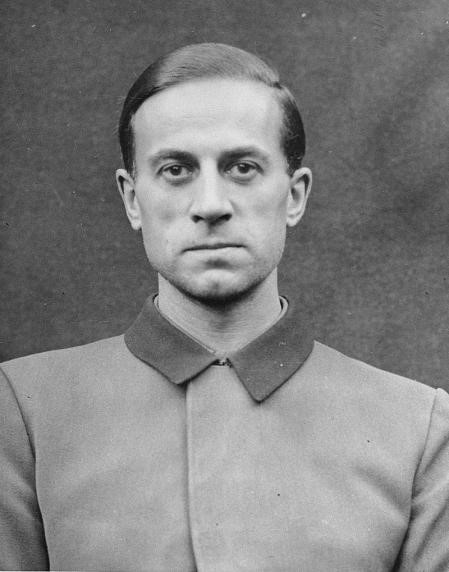
Karl Brandt, doctor personal de Hitler y organizador del Aktion T-4. Dominio público

Karl Brandt, Hitler's personal doctor and organizer of Aktion T-4.

Aktion T-4 kicks off

The operation was launched under the name Aktion T-4, after the mansion in Tiergartenstrasse where it was based. Hospitals and mental sanatoriums throughout the Reich were compelled to report those patients considered incurable..

. They had to do so through a form established by the Ministry of the Interior that included three groups:

  1. schizophrenics, epileptics, syphilitics, senile, irreversible paralysis, etc.
  2. sick with at least five years of hospitalization; 3) alienated criminals and foreigners.

Once the files arrived, three doctors reviewed them and checked a box that decided the future of the patient. A red cross signified death; blue, life; and a question mark, doubt with future revision.

The first ones were picked up by large gray buses, used by Deutsche Post, the postal service, which had the particularity of having the windows tinted in black.

Shortly after the patients were transferred, the families received a new letter informing them of the death.

The destination was one of six gassing centers: Grafeneck, Hartheim, Sonnenstein, Brandenburg, Bernburg and Hadamar. At these centers a cursory visual examination that spared few from immediate death. Very young children were eliminated with injections of morphine or scopolamine.

Although the family was notified of the transfer, not many details were added. Soon after, he received a new letter informing him of the death and its presumed cause, and announcing that the body had been cremated for public health reasons.

In some cases the ashes were added, and in others a short period of time was given so that they could be collected by the relatives.

The number of groups affected increased progressively. A directive obliged doctors and midwives to report children born with malformationsShortly thereafter, the parents were informed of the existence of special sanatoriums for their care and rehabilitation, requesting their authorization to transfer them to centers from which almost no one returned.

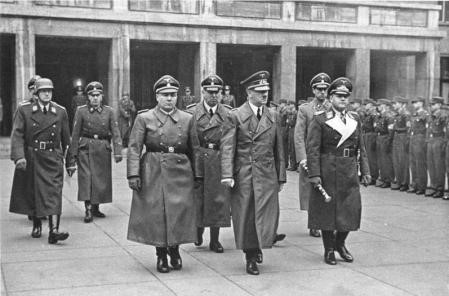
Karl Brandt (a la derecha), junto a Adolf Hitler y Martin Bormann. Bundesarchiv

Karl Brandt (right), together with Adolf Hitler and Martin Bormann. Bundesarchiv, Bild 183-H0422-0502-001 / CC-BY-SA 3.0

Opposition to the eugenics-euthanasia program

Letters of condolence, on the other hand, were not always convincing. Some contained errors of sex or age, and the pathologies of the deceased did not always match the cause of death. Sometimes the urn was empty, or there were two urns for the same person.

The pressure on the centers' personnel began to become excessive, and Rumors began to spread in the towns adjacent to the sanatoriums.

As early as March 19, 1940, Theophil Wurm, Protestant bishop of Württemberg, sent a letter to the Minister of the Interior asking for explanations.. Others would follow, while families were increasingly reluctant to transfer.

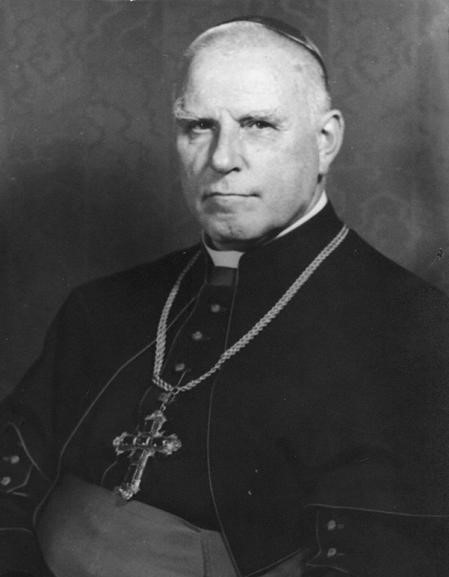
However, Aktion T-4 was given a kick-start by the Bishop of Münster, Clemens August von Galenin his homily of August 3, 1941.

El obispo Clemens August von Galen.

Bishop Clemens August von Galen.

In the sermon, which was reproduced in some parishes of the diocese, Von Galen said: "The suspicion has spread, bordering on certainty, that so many unexpected deaths among mental patients are not due to natural causesThe fact is that they have been deliberately programmed, and that officials, following the precept that it is permitted to destroy 'lives not worth living', kill innocent people, if it is decided that these lives are of no value to the people and to the State.

It is a terrible doctrine that justifies the murder of innocent peoplewhich gives carte blanche to kill invalids, the deformed, the chronically ill, the elderly who cannot work and the sick who suffer from an incurable disease".

The denunciation could not have been louder and clearer, and it made an impact. Opposition to the euthanasia-eugenic measures grew, while the nervousness of the Aktion T-4 executives increased.

Immersed in the campaign against the USSR, Hitler did not want any social unrest in the rearguard, so he had no choice but to officially' suspend the operation on August 24, 1941.

By then, 70,273 victims had been registered. However, recent studies suggest that the operation continued covertly and with other methods.

Although the transfers stopped, a lethal injection, drug poisoning or starvation replaced the gas. The number of victims will probably never be knownalthough it could very well be around 200,000.


Originally published in La Vanguardia.

5 essential keys: euthanasia vs. palliative care

Palliative care... euthanasia? What do people think about death today? Talking about death is not politically correct in our culture, because we consider it as something alien to life; as if it only happens because of bad luck or misfortune.

However, in reality, death occurs at any time of life, even during childhood. The death of a loved one involves immense pain and grief due to the definitive physical separation of that person who is so important to us. It involves pain for the deceased and also pain for us, who are deprived of his or her presence.

The disease ends is the proximity of an irremediable death. It is characterized because the dying person has a "holistic or total pain". He suffers from physical, psychic, spiritual and social pain.

What is euthanasia?

It is to end the life of a sick person. It is the intentional provocation of the death of a person suffering from an advanced, chronic or terminal disease. This death can be caused by action or omission.

Physicians are pained to see how in so-called advanced societies euthanasia is being introduced to rid society of annoying people who generate costs for the state.

At the same time, we are pleased to see that in places where palliative care and home care have been established, patients and their families show deep gratitude.

In our country they have been implemented in recent years, but there is an urgent need for a broader and more homogeneous development of palliative care throughout Spain.

What strategies are used by campaigns advocating the euthanasia law?

Those who defend the euthanasia law use campaigns and mobilizations to stir people's feelings and try to demonstrate that it is not possible to 'do otherwise'.

They are based on the autonomy of the person, if he/she so desires. Autonomy that in practice does not exist, because We are all by definition vulnerable and dependent. And in a very special way, in the last moments of life, we are all vulnerable and dependent..

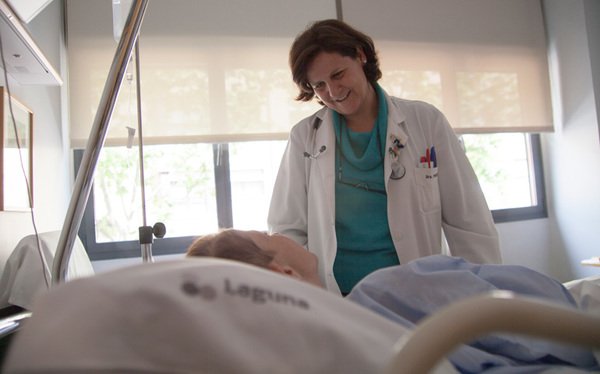
eutanasia cuidados paliativos

Palliative care

Fortunately, the humanization of health care and the control of the suffering of a terminally ill patient is today medically possible thanks to the correct application of the palliative careThese are administered according to an action guide based on ethical principles that guide clinical decision making.

Ethical principles of palliative care practice

Principle of solidarity

Solidarity with terminally ill persons and their families implies the accompaniment and application of appropriate assistance resources. No one should have to face his or her own death alone, without essential help from others.

This solidarity involves say no to neglect, disinterest and oblivion. It implies saying yes to closeness, to human warmth, to the provision of quality care. A yes also to the alleviation of social suffering.

Principle of non-maleficence

Non-maleficence arises from the Hippocratic ethics with the known, principle of Primum non nocare. Never harm the suffering human being is a prerequisite for any medical intervention.

This will involve verifying a correct diagnosis of terminality and avoiding medical measures that will not achieve the desired objectives.

Principle of fairness

It requires offering the same solutions to all patients. Guarantee the rights of the terminally ill patient and his family without discrimination..

For this purpose, it will be necessary to check the adequacy of :

  • The structure.
  • The capacity of the professionals.
  • The process, through the correction of care protocols.
  • The results of the terminal phase and the achievement of an appropriate death.
  • Applying the principle of fairness also includes assessing the possibility of social futility.

The principle of autonomy

Individuals should be treated as autonomous and persons whose autonomy is diminished should be the object of care. One way of respecting autonomy is to promote in practice the participation of the patient and his or her family in decision-making.

What does this imply?

  • Inform the patient and the next of kin in an understandable manner.
  • To guarantee the willingness to accept treatment, through the use of informed consent, respecting the right to refuse it.
  • Protect minors who are unable to make decisions for themselves, and accept parental decisions.

Principle of beneficence

It requires causing no harm. Maximize possible benefits and minimize possible harm. Palliative care performs an objective benefit-risk analysis, applies a comprehensive multidisciplinary care plan. And apply the final sedation, when it is necessary with a protocol. ethically correct.

Conclusions

In view of the foregoing, I consider:

First, that it is vitally important to awareness at all levelsand individual, medical, medical, social, family and individual, of the radical difference between "palliative care and euthanasia".

Second, that it is vitally important naturalizing and humanizing the final trance of existence, respecting the dignity of the person in each particular case. The most important moment of a person's life is the moment of death.

Thirdly, that the establishment of the law on euthanasia, the application of which is open to errors and misunderstandings, is to be rejected. And yet it is urgent to establish, as soon as possible, a law on palliative care.


Ana María Álvarez Silván, physician emeritus HUVR.

Knowing how to encourage

I don't know what kind of feelings flood the spirit of a cyclist when his body, panting in the effort to reach the summit of the mountain pass, is relieved by the pitcher of cold water thrown by a fan to give encouragement.

I have had the opportunity to meet people who, after a difficult night that has become too long, they go out into the street with the hidden illusion that someone will give them an affectionate pat. on your back and say two words to help you get to the end of the day.

Perhaps in few things are we mortals more alike than when it comes to discouragement. There are so many goals that we have to reach throughout life, that it is not too difficult for us to run up against even the most beaten paths. There are so many illusions that we engender that it is not surprising that many times they are frustrated even before they are born.

The rich are discouraged, perhaps in their desire to have more or to see that money does not solve everything, and the poor, who do not know how to get to the end of the day; the intelligent, because they never manage to unravel all the mysteries that surround them, and the less gifted, who perhaps do not manage to distill the aroma of ordinary things to better enjoy the joy of living.

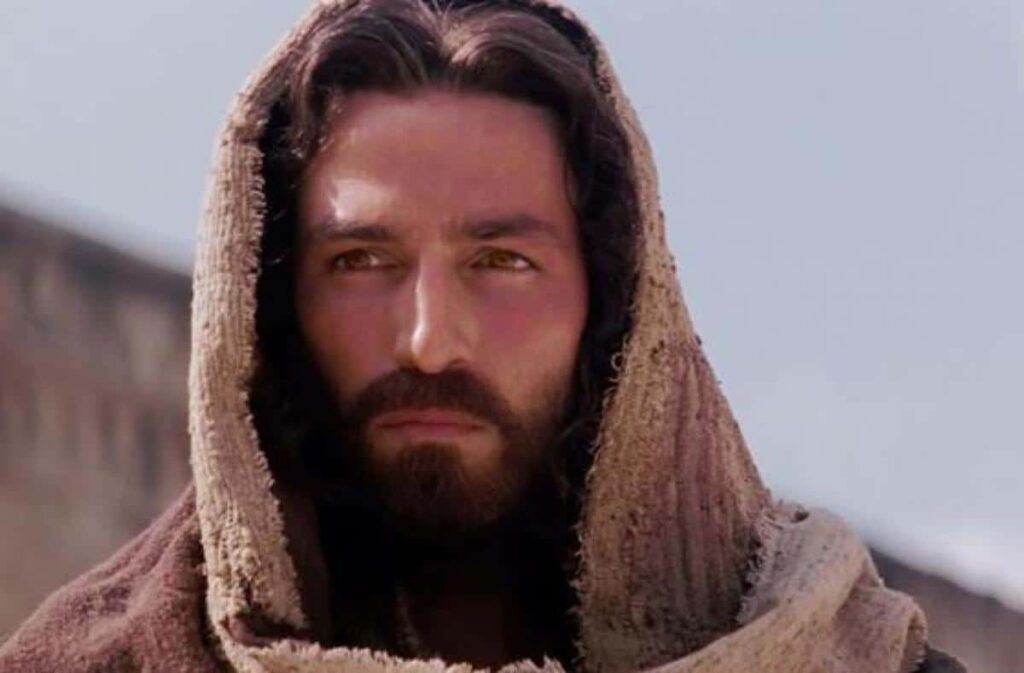
dar ánimos jesus de nazaret historia

The strong and the weak are discouraged, because we are all limited; those of the right, those of the center, those of the left; those of the north and those of the south; women and men and children when they begin to be conscious; doctors and patients; the healthy and those of the left; those of the right and those of the left; those of the north and those of the south; women and men and children when they begin to be conscious; doctors and patients; the healthy and those of the right and those of the left. patients. And any ordinary Christian who returns home dissatisfied, grumbling about how little the day has yielded.

We are discouraged by what we are not and would like to be; by the love we would like to give, and we offend; even by the word of comfort that is unwelcome and, instead of consoling, adds sorrow to sorrow; by our blunders with the best intention in the world.

Discouragement is known to sinners and to those who santosThe elderly, who also have their share of sinners, are well aware that they do not correspond to the love that God manifests to them. Perhaps only the old man burdened with years is saved from discouragement and turns it into fruitful hope, because he has already lived long enough to realize that only Paradise is worth missing.

Jesus-God and encouragement

We have to live with discouragement, but we cannot live with it. The normal discouragement that looks for a word of encouragement to become again the desire to start again, because in the end it is to become aware of the limits of our being creatures of God. God.

It does not go well, however, the "state of discouragement", the profession of "discouraged", which ends in a sour, angry, unbearable pessimism. And this is where gratitude for a word of encouragement, for a "get up, it's no big deal", gets its flavor.

The singer was discouraged and began to sing "¿Qué pájaro será aquel / que canta en la verde oliva? / Anda y dile que se le silen / que su cante mi lastima" (What bird is that one / that sings in the green olive tree? / Go and tell him to shut up / that his singing hurts me). Only a very dejected man can be hurt by the singing of a bird.

It is hard to say a word of encouragement, sometimes it can be hard to give a glass of water to the thirsty, to comfort the sad. We can always have the feeling that we are intruding where no one is calling us and even that we are going to be fired with a bang. Even if it is good for them, not everyone has the good spirit to be grateful for something they need. 

No matter, the encouraging word always renews the roots of good in the heart that has engendered it, and creates in his mind and around him the joy of living, even in the discouragement of every day.


Ernesto Juliálawyer and priest, ernesto.julia@gmail.com.
Original collaboration published in Religión Confidencial. Knowing how to give encouragement.