Prayer in uncertain times

Because today there are so many situations of injustice, war and self-interested oblivion in many corners of the world. Let us listen to the plea for help from persecuted Christians in many countries, the poor, the sexually exploited children and abused women in countries where protests are systematically put down. Many are silenced by terrorism or economic interests. We cannot remain indifferent to the climatic disasters that leave many without resources, nor to the number of entire families who drown in silence with the unfulfilled dream of reaching Europe by sea. Today, the whole world is experiencing a situation of political, economic and cultural uncertainty that is disturbing. Also today we see thousands of elderly people alone, abandoned in the big cities of the whole planet. And without forgetting Ukraine, Syria, Afghanistan, up to a total of 57 armed conflicts, of which we do not speak.

As Christians we cannot leave in silence so many realities for which we must pray together. We want to be a united body that suffers and celebrates as a family. This is our way to Easter, and the sense of union, with Mary and Joseph, who already at the foot of so many crosses of history, visible and invisible, announces the morning of resurrection. "Like the soldier who stands guard, so must we stand at the door of God our Lord: and that is prayer". St. Josemaría, Fork 73.

To pray is to awaken and to set out on the way, in communion.

If Christianity," said John Paul II, "is to be distinguished in our time above all by the art of prayer, how can we not feel a renewed need to spend long periods in spiritual conversation, in silent adoration, in an attitude of love, before Christ present in the Blessed Sacrament? How often, my dear brothers and sisters, have I made this experience and found strength, consolation and support in it!

St. Josemaría defines it as necessary for the spiritual life. Prayer is the breath that allows the life of the spirit to develop, and actualizes faith in the presence of God and his love. This can sometimes be a glance at an image of the Lord or his Mother; sometimes a request, with words; sometimes the offering of good works, a rosary in familyWe can attend Holy Mass or embark on a pious novena.

"Praying is the way to stop all the evils from which we suffer". Forge, 76. no two times of prayer are the same. The Holy Spirit, source of continuous novelty, takes the initiative, acts and waits. "Fruit of the action of the Holy Spirit who, infusing and stimulating faith, hope and love, leads us to grow in the presence of God, until we know that we are at once on earth, where we live and work, and in heaven, present through grace in our own hearts". St. Josemaría, Conversations, 116.

There is a need for "true Christians, men and women of integrity, capable of facing with an open spirit the situations that life throws at them, of serving their fellow citizens and contributing to the solution of the great problems of humanity, of bearing witness to Christ wherever they find themselves later in society". It is Christ who passes, 28.

St. Josemaría Escrivá.

The antidote for uncertain times: prayer

Sometimes it seems that prayer, although important, can hardly stop something as big as armed conflict or social injustice. But it has already shown that it can prevent wars or, if they are already happening, minimize their effects or even put an end to them. An example of this situation happened with the apparitions at Fatima. When on May 13, 1917, in the midst of World War I, the apparitions took place at Fatima, The Virgin Mary asked: "Pray the Rosary every day to achieve peace in the world and an end to war".

God tirelessly calls each person to the mysterious encounter of prayer. God is the one who takes the initiative in prayer, placing in us the desire to seek him, to speak to him, to share our life with him. The person who prays, who is ready to listen to God and to speak to him, responds to this divine initiative. When we pray, that is, when we speak to God, the one who prays is the whole person. To designate the place from which prayer springs, the Bible sometimes speaks of the soul or the spirit, and more often of the heart (more than a thousand times): It is the heart that prays.

Therefore, "Prayer is not a matter of speaking or feeling, but of loving. And one loves by making an effort to try to say something to the Lord, even if nothing is said". St. Josemaría, Furrow, no. 464. We must awaken ourselves not to the terror of difficulties, but to the humble courage of those who unite, like the early Christians, to pray with the certain conviction that Jesus on the cross is the victor of history.

Because the God of our faith is not a distant being, who contemplates indifferently the fate of mankind. He is a Father who ardently loves his children, a Creator God who overflows with affection for his creatures. And he grants man the great privilege of being able to love, thus transcending the ephemeral and transitory. St. Josemaría, Speeches about the University.

We are all in the same fight

St. Paul says, if one part of the body suffers, we all suffer. As Christians we are against suffering, war, hopelessness and lack of freedoms. We stand with those who suffer, even if they do not make the news. "Current events often make it clear that we are outraged, but not awake; frightened, but not on our feet; angry, but not on our way; in solidarity with those far away, but not so attentive to those nearby; generous, but safe in our enclosures of comfort. To pray is to wake up to what we are not seeing and recognizing about ourselves, our family, community and country, in this crucial hour of the world and the Church. What would our prayer be like if we have enough to eat and to clothe, house and roof, and we see those caravans of mothers with their children passing by and we do not offer, I do not say what we need, but what we do not use and what is empty. We must open our hearts, welcome and receive Jesus who is asking for lodging.". Miguel Márquez Calle, G. Carmelita.
oración en tiempos inciertos

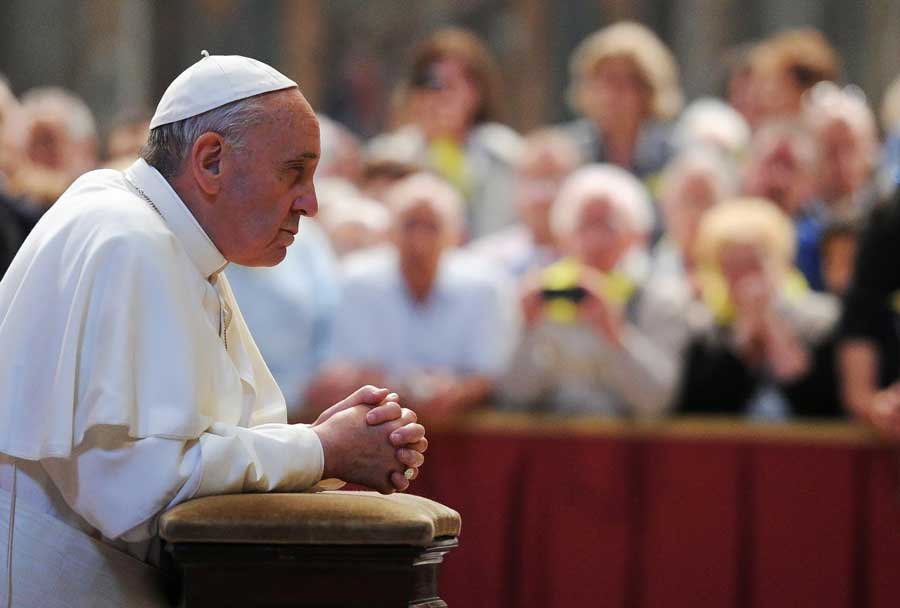
Pope Francis asks all Christians to pray "that those who suffer may find ways of life, allowing themselves to be touched by the Heart of Jesus".

For our prayer to be effective

Pope Francis tells us in his Catechesis on prayer that began on May 6, 2020. "In the face of all these difficulties we must not be discouraged, but continue to pray with humility and trust." Pope Francis.

Recollection against distractions

Prayer, like every fully personal act, requires attention and intention, awareness of God's presence and effective and sincere dialogue with Him. A condition for all this to be possible is recollection. This attitude is essential in the moments dedicated especially to prayer, cutting off other tasks and trying to avoid distractions. But it should not be limited to those times, but should extend to habitual recollection, which is identified with a faith and a love that, filling the heart, lead one to try to live all one's actions in reference to God, whether expressly or implicitly.

Hope against aridity

Many times we are down, that is to say that we have no feelings, we have no consolations, we can't go on any longer. They are those gray days..., and there are many of them in life! But the danger is in having a gray heart. When this "being down" reaches the heart and makes it ill..., and there are people who live with a gray heart. This is terrible: one cannot pray, one cannot feel consolation with a gray heart! Or one cannot carry on a spiritual aridity with a gray heart. The heart must be open and luminous, so that the light of the Lord may enter. And if it does not enter, it is necessary to wait for it with hope. But do not close it in the gray.

Perseverance against acedia

What is a real temptation against prayer and, more generally, against the Christian life.. Acedia is "a form of harshness or unpleasantness due to laziness, laxity of asceticism, carelessness of vigilance, negligence of the heart". CIC, 2733. It is one of the seven "deadly sins" because, fueled by presumption, it can lead to the death of the soul. In these moments, the importance of another of the qualities of prayer, perseverance, becomes evident.. The raison d'être of prayer is not the obtaining of benefits, nor the search for satisfactions, pleasures or consolations, but communion with God; hence the necessity and value of perseverance in prayer, which is always, with or without encouragement and joy, a living encounter with God. Catechism 2742-2745, 2746-2751.

Trust

Without a full trust in God and in his love, there will be no prayer, at least sincere prayer and capable of overcoming trials and difficulties. It is not only a matter of trusting that a particular request will be answered, but of the security that we have in the one we know loves us and understands us, and to whom we can therefore open our hearts without reserve. Catechism , 2734-2741.

Bibliography

- Opusdei.org.
-Catechesis of Pope Francis on prayer, 2020.
-Catechism of the Catholic Church.
- Carmelitaniscalzi.com.
-John Paul II, Litt. Ecclesia de Eucharistia, 2004.
-St. Josemaría, Discourses on the University. The commitment to truth (May 9, 1974).
 

Who is Blessed Álvaro del Portillo?

Beatification of Álvaro del Portillo: September 27th

To his beatification, more than 200,000 people from all over the world attended the event.. The ceremony was presided over by Cardinal Angelo Amato. He was accompanied by Cardinal Antonio María Rouco, Archbishop Emeritus of Madrid and the former prelate of Opus Dei, Don Javier Echevarría. Seventeen cardinals and 170 bishops from around the world concelebrated at the same ceremony.

Cardinal Angelo Amato emphasized in his homily, Alvaro del Portillo's fidelity to the Gospel, to the Church and to the Pope. He explained: "he fled from all personalism, because he transmitted the truth of the Gospel, not his own opinions". And he emphasized that Don Alvaro, "stood out for his prudence and rectitude in evaluating events and people; justice in respecting the honor and freedom of others".

Pope Francis was present at the ceremony in a letter in which he painted this portrait of the new Blessed: "Especially outstanding was his love for the Church, the spouse of Christ, which he served with a heart stripped of worldly interests, far from discord, welcoming to all and always looking for the positive in others, what unites, what builds. She never complained or criticized, not even in particularly difficult moments, but, as she had learned from St. Josemaría, she always responded with prayer, forgiveness, understanding and sincere charity.

"The elevation to the altars of Alvaro del Portillo reminds us once again of the universal call to holiness proclaimed with great force by the Second Vatican Council. He also referred to "the joy of St. Josemaría Escrivá, seeing that this most faithful son of his has been proposed as an intercessor and example for all the faithful.

Bishop Javier Echevarría, on the occasion of the beatification of Don Álvaro del Portillo.

Life of don Álvaro del Portillo

His life is a great lesson for men today. St. Josemaría called him very early on "rock", saxuman appellation that defined him from a young age. Alvaro del Portillo was a faithful man, a tireless worker in the service of the Church and Opus Dei. He was a close collaborator of St. Josemaría and became his first successor at the head of Opus Dei in 1975, after the founder's death. He is an example that is close to everyone, despite living in circumstances different from his own.

He was born in Madrid into a large and devout family on March 11, 1914. He was a Doctor of Civil Engineering, Doctor of Philosophy and Doctor of Canon Law.

1935: joined Opus Dei

While studying engineering, he joined Opus Dei, an institution that had been founded seven years earlier. He received directly from St. Josemaría Escrivá the formation and spirit proper to that new path of the Church.. He developed an extensive work of evangelization among his fellow students and co-workers.

During the Spanish Civil War, he suffered greatly and nearly lost his life, but Don Alvaro rarely spoke of that period. One of those few occasions was in Cebu, at the end of 1987. And he did so to stress the need for love and promote peaceincidentally alluded to the persecution against the Church unleashed in Spain during the civil war: "I had not been involved in any political activity, and I was not a priest, nor a religious, nor a seminarian, but an engineering student; and they put me in jail, just for being from a Catholic family. At that time I wore glasses, and once one of the guards came up to me -they called him Petrof, a Russian name-, put a gun to my temple and said: you are a priest, because you wear glasses. He could have killed me at any moment. He didn't do it because God thought he could still give a lot of war to the devil, or that he was not worthy of Heaven. It was a tremendous thing. Since 1939, he carried out an intense apostolate in different cities of Spain that he promoted throughout his life.

1944: received priestly ordination

On June 25, 1944 he was ordained together with José María Hernández Garnica and José Luis Múzquiz: were the first three priests of Opus Dei, after the founder. Since then, devoted himself entirely to pastoral ministryin service to the members of Opus Dei and to all souls.

1946-1975: lived in Rome with St. Josemaria

He manifested his tireless service to the Church by dedicating himself to the numerous assignments of the Holy See as consultor to various Dicasteries of the Roman Curia. He actively participated in the Second Vatican Council. Between 1947 and 1950 promoted Christian formation activities and provided priestly care to numerous people. He contributed to the apostolic expansion of Opus Dei in different Italian cities.

In 1948, he obtained a doctorate in Canon Law at the Pontifical University of St. Thomas (Angelicum). In the same year, the Roman College of the Holy Cross was established in Rome as an international center of priestly formation.

In addition, Álvaro del Portillo was always at St. Josemaría's side, helping him in the tasks of evangelization and pastoral government of Opus Dei, and accompanied him on his many apostolic journeys. to countries in Europe and the Americas.

1975-1994: successor to St. Josemaría

On September 15, 1975, he was elected the first successor of St. Josemaría.. And on November 28, 1982, upon erecting the Work as a Personal Prelature, the Holy Father St. John Paul II named him Prelate of Opus Dei.

1991: received episcopal ordination

St. John Paul II conferred episcopal ordination on him. on January 6 of that year. All his work was characterized by fidelity to the Founder and his message and to the Church, and by tireless pastoral work to extend the apostolates of the Prelature in service to the Church.

Don Álvaro del Portillo He sought identification with Christ in a trusting abandonment to the will of God the Father, constantly nourished by prayer, the Eucharist and a tender devotion to the Blessed Virgin. His love for the Church was manifested by his deep communion with the Pope and the Bishops. His charity towards all, his untiring solicitude for his daughters and sons in Opus Dei, his humility, prudence and fortitude, his joy and simplicity, his forgetfulness of self and his ardent desire to win souls for Christ, also reflected in his episcopal motto - "I will never forget you," he said.Regnare Christum volumus!-Together with the kindness, serenity and good humor that radiated from his person, these are traits that make up the portrait of his soul.

1994: Road to Heaven

He died suddenly in the early hours of March 23, 1994, at the Prelature's headquarters in Rome, hours after returning from a pilgrimage to the Holy Land, where he had followed the earthly footsteps of Our Lord Jesus with intense piety. The previous morning he had celebrated his last Mass in the Upper Room in Jerusalem.

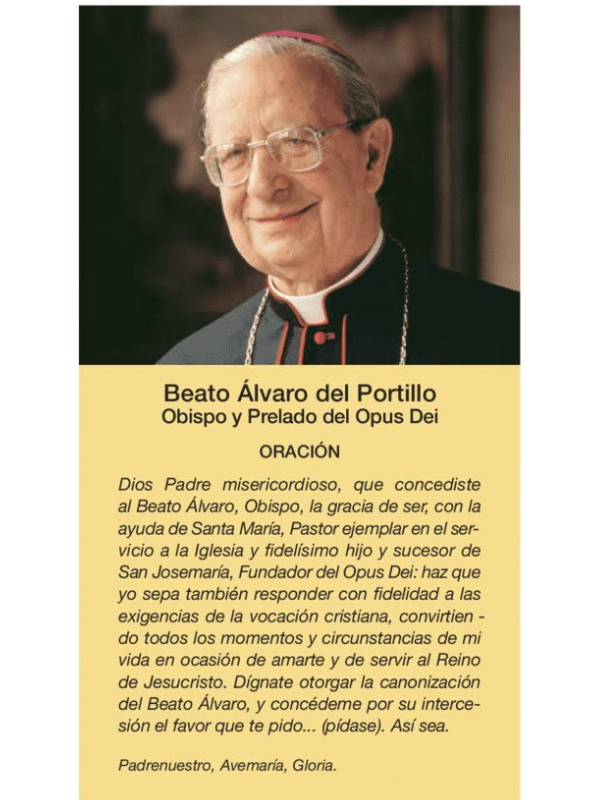
Oración Don Alvaro del Portillo: Dios Padre misericordioso, que concediste al Beato Álvaro, Obispo, la gracia de ser, con la ayuda de Santa María, Pastor ejemplar en el servicio a la Iglesia y fidelísimo hijo y sucesor de San Josemaría, Fundador del Opus Dei: haz que yo sepa también responder con fidelidad a las exigencias de la vocación cristiana, convirtiendo todos los momentos y circunstancias de mi vida en ocasión de amarte y de servir al Reino de Jesucristo. Dígnate otorgar la canonización del Beato Álvaro, y concédeme por su intercesión el favor que te pido... (pídase). Así sea.

Prayer to Blessed Álvaro del Portillo. If you wish you can send here the account of the favors received by Blessed Alvaro del Portillo.

On the same day, March 23, St. John Paul II went to pray before His mortal remains, which now rest in the crypt of the Prelatic Church of Santa Maria della Pace in Rome. Continually accompanied by the prayers and affection of the faithful of Opus Dei and thousands of other people.

From the day of her death, many people began to ask for her intercession to obtain her favors from heaven. In addition, thousands of people testified about her love for the Church.

In 2004, ten years after his death, the process for his beatification and canonization was opened in Rome. After the intense analysis of all the documentation presented by the postulator for the Cause of the Saints, the process for his beatification and canonization was opened in Rome in 2004, On June 28, 2012, Bishop Álvaro del Portillo y Diez de Sollano was declared Venerable and was finally beatified on September 27, 2014. Her feast day is celebrated on May 12, the anniversary of her first communion.

Blessed Álvaro del Portillo

St. Josemaría Escrivá had a phrase from the Book of Proverbs carved on the door of Don Álvaro's office: Vir fidelis multum laudabitur. (The faithful man shall be highly praised).

His life is so powerful that it moves us to live faithfully our own vocation with the same joy that he showed to everyone.

Bibliography

Opusdei.org.

Novena to the Virgin Mary

Why a Novena to the Virgin Mary?

In the Bible nine days are, for the disciples and the Virgin Mary, a period of waiting lived in prayer. "They all persevered in prayer with one mind." Acts 1: 14. At the end of which they received the Holy Spirit. Therefore, we too can live the Novena as a time of prayer in expectation of a grace.

There are many novenas that we can make to go to the Virgin Mary. Some of them are:

  • Novena to the Virgin of Carmen.
  • Novena to Our Lady of Fatima.
  •  Novena to the Immaculate Conception.
  •  Novena to the Nativity of the Virgin Mary, which is the one we will see below.

Nativity of the Blessed Virgin Mary

The Church commemorates the day of the birth of the Virgin Mary, called the Nativity of the Blessed Virgin Mary, every September 8. The Gospel does not give us data of Mary's birth, but there are several traditions. It was fixed on September 8, the opening day of the Byzantine liturgical year, which closes with the Dormition, in August. In the West it was introduced around the 7th century, and was celebrated with a procession-letany that ended in the Basilica of St. Mary Major.

Novena to the Nativity of the Virgin Mary

This novena to the Virgin Mary can be made as many times as you wish, especially in the days before her feast. It consists of a common prayer that is repeated every day, both at the beginning and at the end, and a brief daily meditation that will help you at the moment of prayer.

Who could be a better teacher of love for God than this Queen, this Lady, this Mother, who has the most intimate relationship with the Trinity: Daughter of God the Father, Mother of God the Son, Spouse of God the Holy Spirit, and who is at the same time our Mother?

-Go personally to his intercession.

Forge, 555, St. Josemaría Escrivá.

Prayer to begin the Novena to Our Lady each day

Virgin Mary, Mother of God, my Queen and my Mother, I come to You, full of trust and love. I believe that it is through You that Jesus, true Son of God and true son of Yours, has wanted, wants and will want until the end of time, to shower upon me, a sinner, all the graces, goods and infinite mercy that He keeps in His Divine Heart.

For this I beseech Thee, Mother of Goodness and Mercy, to obtain for me from Jesus, conversion of heart, forgiveness of my sins, remedy for my needs, strength in my trials and sufferings, consolation in my sorrows, especially the salvation of my soul.

What I ask of You in this Novena is, according to the Will of God the Father, for His greater Glory, Your praise and the good of souls and of my soul.

Ask for the grace you wish to obtain through this Novena to the Virgin Mary.

Prayer to end the Novena to Our Lady each day

I beseech you, Lord and my God, to listen to your Mother and grant me the graces that she asks of you on my behalf; to 'feel' her, to love her, and to serve her with your same love, and to always count on her 'almighty' intercession before your Heart.

So that guided, accompanied and defended by Her, and following Her example, I may love and serve You in this life and enjoy with Her, and with all the Angels and Saints, the love of the Most Holy Trinity for all eternity.

Ask it for me and in Your Name to God the Father, with whom You live and reign in unity of the Holy Spirit forever and ever. Amen.

First day of meditation for the Novena to the Virgin Mary

Virgin Mary, Blessed art Thou among women!

You who were predestined from all eternity, and chosen among all women, to be the Mother of the Son of God, for which God infused into your soul all the virtues and the Holy Spirit filled you with all his gifts and inflamed your heart with the love of God.

I beg You to enrich my soul with the love, virtues and fruits that I need, so that my life may be worthy of a child of God and a child of Yours, so that in imitating You, I may unite my will more and more closely to the Will of God. And just as with your "Yes" to His Will He began the History of Salvation, may I also make of my life a "yes", and may I employ my life in the love and service of Him and of the Church, becoming an instrument of salvation for others.

Pray three Hail Mary's in honor of the Most Holy Trinity and Glory Be.

Second day of meditation for the Novena to the Virgin Mary

Virgin Mary, ever immaculate, "Blessed is the Fruit of thy womb".

You who from the first moment of your conception were preserved by God from every stain of sin and full of grace, so that, when the "Fullness of time" came, his Divine Son would be incarnated in you by the work of the Holy Spirit, and you were already introduced from that first announcement into the Mystery of Christ your Son forever, I beseech Thee by Thy Immaculate Conception to grant me Thy help so that I may always keep my soul clean of sin, and the Holy Spirit may form Jesus in my heart with Thee and in Thee, and filled with His gifts as Thou art, be a worthy dwelling place of the Most Holy Trinity.

Pray three Hail Mary's in honor of the Most Holy Trinity and Glory Be.

Third day of meditation for the Novena to the Virgin Mary

Virgin Mary, model of humility and obedience to the Will of God.

You who called yourself "handmaid of the Lord," who consecrated yourself totally to the saving work of Jesus, making your life not only a continual song of love, praise and gratitude to God, but also a continual act of service, I beseech you to obtain for me from the Lord that, filled with this love, full of faith and with a humble and generous heart, I may, after Your example, be able to follow Your example, thus cooperating in the redemption with humility and fidelity, I beseech you to obtain for me from the Lord that filled with this love, full of faith and with a humble and generous heart, I may, after your example, make of my life a continuous act of service to God and his saving mission. May I be an instrument of salvation in His hands for others and for the Church in the world. So that one day with You I may proclaim God's greatness and sing forever of His mercies.

Pray three Hail Mary's in honor of the Most Holy Trinity and Glory Be.

Fourth day of meditation for the Novena to the Virgin Mary

Virgin Mary, teacher of prayer and silence, first listener and disciple of Jesus.

You who knew and lived the Mysteries of the Incarnation and Redemption, who kept in your Heart with faith the words spoken by God; You who lived the events that constituted the Mysteries of the infancy and life of Jesus, discovering little by little through all this the designs of God the Father for the salvation of mankind, I beg you to obtain for me from God that strong, firm and indestructible faith, that hope against all despair and that love that you keep in your Heart. That I may always accept in my life the mysterious designs of God's Will and see in everything His Providence which desires only my good. I ask you to be for others a witness of faith and hope.

Pray three Hail Mary's in honor of the Most Holy Trinity and Glory Be.

Fifth day of meditation for the Novena to the Virgin Mary

Virgin Mary, Mother, help, health, refuge, consolation, succor, advocate of all those who need You and come to You with trust and love.

Mary, you who went to visit your holy cousin Elizabeth and then at the Wedding at Cana, gave me an example of love, generosity and solidarity with my neighbor. Elizabeth and then at the Wedding at Cana, You gave me an example of love, generosity and solidarity with my neighbor, manifesting in both moments through You, the Divinity and power of Jesus, teach me to have that spirit of generosity and solidarity with all those who are part of my life, with all those who in some way need my help, especially with the poorest. May I, like you and with your help, take Jesus wherever I go, so that they may discover through me the power and mercy of Jesus, and like you, in my prayer, may I always and unceasingly present to God the Father for the needs of men and of the world.

Pray three Hail Mary's in honor of the Most Holy Trinity and Glory Be.

Sixth day of meditation for the Novena to the Virgin Mary

Virgen Santísima de los Dolores.

You who like no one else lived, "felt" and suffered in your Mother's Heart the most painful Passion and Death that Jesus suffered for our salvation, obtain for me from the Holy Spirit the faith, love and gift of fortitude that filled your Heart in those moments, so that I too may accept with love, and unite the sufferings of my life to those of Jesus and Yours, to complete in my flesh - as St. Paul said - what is lacking in his Passion for the good of the Church and for the salvation of souls.

Pray three Hail Mary's in honor of the Most Holy Trinity and Glory Be.

Seventh day of meditation for the Novena to the Virgin Mary

Virgin Mary, Mother of God and Mother of all men.

Mary, you who accompanied Jesus nailed to the Cross, and undoubtedly associated yourself as Mother to his sacrifice and offered yourself with him to the Father for the salvation of all men, defend our cause with your maternal protection and your 'omnipotent' intercession before God. Give us, who love and follow Jesus, the unceasing help of your grace so that we may remain faithful to the demands and commitments of our Baptism. And since you are the Mother of Goodness and Mercy, pray unceasingly for so many men who live in sin. Mother of sinners and Mother of Life, pray for us.

Pray three Hail Mary's in honor of the Most Holy Trinity and Glory Be.

Eighth day of meditation for the Novena to the Virgin Mary

Virgin Mary, Mother and Model of the Church.

You who, united as one more disciple with the Apostles and disciples in the Cenacle, prayed and invoked without ceasing the gift of the Holy Spirit promised by Jesus before his Ascension into Heaven, that in the Church, united in prayer, a New Pentecost may take place. I pray that God may unite her in peace and love; and that He may renew and transform the hearts of all Christians, so that filled with His gifts our lives may be a testimony of faith, hope and love like yours.

Pray three Hail Mary's in honor of the Most Holy Trinity and Glory Be.

Ninth day of meditation for the Novena to the Virgin Mary

Virgin Mary, Queen and Lady of the Angels.

You who were assumed body and soul into Heaven, and crowned as Queen and Lady of heaven and earth, and already enjoy seated at the right hand of Jesus of the Union, of the eternal Glory and Love of the Most Holy Trinity, guide me and protect me in my pilgrimage of faith towards eternal life, so that I may not stray from Jesus, the only true Way to the Father, and at the hour of death I may experience your powerful intercession and maternal protection. And so with You I may praise, adore and enjoy God, Father, Son and Holy Spirit for all eternity.

Pray three Hail Mary's in honor of the Most Holy Trinity and Glory Be.

Bibliography

Opusdei.org.
Aciprensa.
En.catholic.net.

Anti-Christianity: martyrs and persecuted Christians

Persecuted Christians

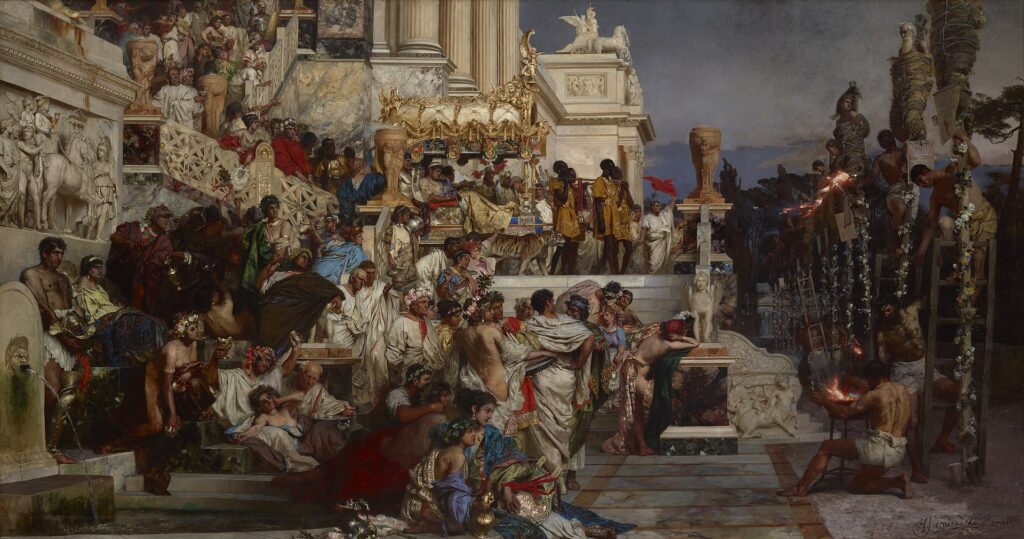
The expression "persecuted Christians" usually evokes the first three centuries of the Christian era, when the Roman Empire killed countless people for the "crime" of being Christians. Apart from local incidents, during those centuries Christians suffered ten great persecutions by pagan Rome. The first great persecution (years 64-68) was that of Emperor Nero and the tenth (years 303-311), which was the greatest, was that of Emperors Diocletian and Galerius.

Christian Martyrs

However, throughout the history of the Church, there have been many martyrs, i.e. Christians who have died in odium fidei (for hatred of the faith) and in recent centuries the number of Christian martyrs exceeded that of the Ancient Ages.

The French Revolution killed, imprisoned, exiled or deported to penal colonies many thousands of Catholic priests, and suppressed Catholic worship for years. As a result, between 1793 and 1796 there was a popular uprising in the French region of the Vandée. The Vandeans took up arms to resist the persecution of the Catholic faith. The revolutionary authorities not only defeated the Vandeans but also annihilated a large part of the civilian population of the Vandée. It was the first modern genocide. Although these atrocities of the Great Revolution are very well documented, the "official" histography still tries to deny, minimize or hide them.

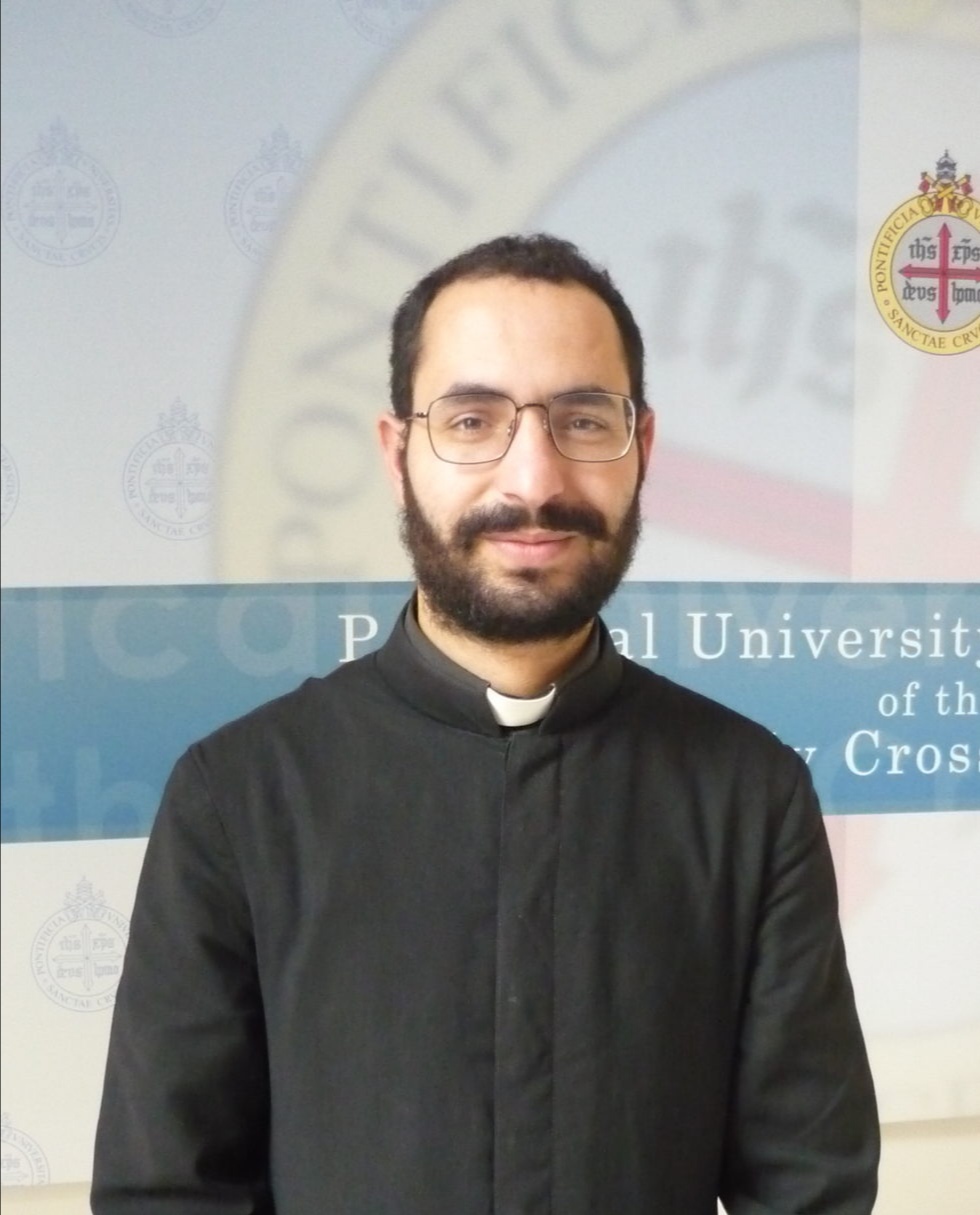
Nader Kamil Malak Shaker is a Coptic Catholic priest and religious of the Institute of the Incarnate Word. He was born in Menia (Egypt) 30 years ago. In his country, being a Christian is very difficult because of the persecutions they have suffered. The Church in Egypt is a Church of martyrs. 

Today's Anti-Christian Persecutions

The twentieth century was by far the one that produced the greatest number of Christian martyrs. Because of the vastness of the subject, I will only mention here six of the greatest anti-Christian persecutions of that century:

  • The Armenian Genocide (1915-1923): more than 1.5 million Christian Armenians were massacred by order of the Young Turks (a group of liberals and Freemasons) during the final stage of the Ottoman Empire and the beginning of the Republic of Turkey.
  • The anti-Catholic persecution in Mexico (1917-1929): This too was of Masonic imprint. Many priests were shot for celebrating the sacraments, and many rebellious Catholics (the "cristeros") were eliminated not only on battlefields but also after laying down their arms in obedience to the bishops.
  • The Holodomor or Ukrainian genocide (1932-1934): millions of Ukrainians (mostly Christians) died in a famine artificially created by Stalin's communist regime.
  • Anti-Catholic persecution in Spain, before and during the Civil War (1936-1939): the Republican side murdered at least 6,832 priests, bishops, religious men and women, and many thousands of Catholic lay faithful, as well as raping thousands of nuns and burning hundreds of churches and convents.
  • Nazi persecution (1933-1945): About 3,000 Catholic priests, bishops, men and women religious (some 10,700 of them Polish) were interned by the Nazis in the Dachau concentration camp, and another 5,000 were imprisoned in other Nazi concentration camps. Nearly half died there. The young German Christians of the White Rose group developed nonviolent resistance against the Nazi regime and suffered harsh persecution.
  • Communist persecution in the Soviet Union and Eastern Europe (1927-1991): it is impossible for me to summarize this enormous, terrible and continuous anti-Christian persecution. Catholics suffered very harsh persecution especially in Lithuania, Ukraine, Hungary, Czechoslovakia, Romania and Albania.

In the 21st century, Christians continue to be persecuted, especially in four geographical areas

  1. at Africa North and West Asia by radical Islamists.
  2. in the Far East by the remaining communist regimes.
  3. in India by Hindu extremists
  4. in the West, bloodlessly, by secularists (liberal or progressive). I will elaborate on the first two cases.

cristianos-perseguidos-anticristianismo-martires-Siemiradski_Fackeln

Persecution of Christians by communist regimes

With regard to the second case, I can only say that the task of liquidating the totalitarianisms of the 20th century will not be completed as long as the Communist regime in China continues to exist, seeking first the subjugation and then the destruction of all religious cults, especially Christianity. The anti-Christian persecution continues at full speed in China and is today supported by an Orwellian electronic surveillance system. Now the iron curtain of an Orwellian electronic surveillance system.

Now the Chinese iron curtain is enclosing Hong Kong, which until very recently was a relative oasis of freedom. All this is happening amidst the overwhelming silence of the once Christian West and the indifference or passivity of the majority of China's heroic Christian brothers and sisters in faith.


Daniel Iglesias Grèzespublished in https://danieliglesiasgrezes.wordpress.com/

The value of old age

Undoubtedly, the Pope always values old age, experience, the elderly and all their capacity to contribute to a society that tends to discard the weak or the unprotected.

Elders, teachers of wisdom

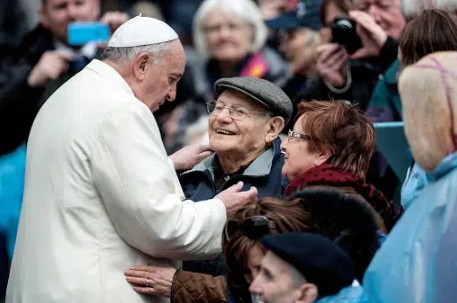
Francis pointed out that in the dominant culture, "the elderly are little valued, in their spiritual quality, their sense of community, their maturity and wisdom". And this, in the eyes of the Papaimplies a "vacuum of thought, imagination, creativity" (Ibid.). He insisted that without dialogue between generations we have "a sterile society, without a future, a society that does not look at the horizon, but looks at itself" (2-II-2022).

To the elders he said: "You have the responsibility to denounce the human corruption in which we live and in which continues that way of life of relativism, totally relative, as if everything were lawful. Go ahead. The world needs, it needs strong young people, who will go forward, and wise old people" (Ibid.).

To others, reminded them of their duty to protect the elderly and to educate in the care of old age and old age. Regarding the fourth commandment Honor Father and Mother, he pointed out: "Honor is lacking when overconfidence, instead of manifesting itself as delicacy and affection, tenderness and respect, becomes rudeness and prevarication. When weakness is reproached, and even punished, as if it were a fault. When bewilderment and confusion become an occasion for mockery and aggression" (23-II-2022).

Living faith, the legacy of old age

With the example of old Eleazar (cf. 2 M, 18 ff.), he indicated that "the practice of the faith is not the symbol of our weakness, but the sign of its strength" (General Audience, May 4, 2022.). And for this reason: "We will show, with all humility and firmness, precisely in our old age, that believing is not something 'for old people', but something vital. Believe in the Holy Spirit, who makes all things new, and he will gladly help us" (Ibid.). Faith lived is the heritage of old age.

"The elderly, by their weakness, can teach those who live other ages of life that we all need to abandon ourselves to the Lord, to invoke his help. In that sense, we all need to learn from old age: yes, there is a gift in being old understood as abandoning oneself to the care of others, beginning with God himself (Ibid). From this arises a "magisterium of fragility": not to hide the weaknesses of old age is a lesson of the elderly for everyone".

In the Gospel of St. John, Nicodemus asks Jesus: How can one be born when one is already old (Jn 3:4). And Jesus explains to him that old age is an opportunity to be reborn spiritually and to bring a message of the future, mercy and wisdom (cf. General Audience, 8-VI-2022).

Today, says the Pope, "old age is a special time to dissolve the future of the technocratic illusion of biological and robotic survival, but, above all, because it opens up to the tenderness of God's creative and generative womb." (Ibid.).

And so he teaches: "The old are the messengers of the future, the old are the messengers of tenderness, the old are the messengers of the wisdom of a life lived". (Ibid.).

papa francisco valor vejez ancianos audiencia

Francis spoke of the role of physicians and healthcare workers in this shared responsibility between the families of the elderly and the healthcare system of a society, and stated, "All of medicine has a special role in society as a witness to the honor due to the elderly person and to every human person."

Acceptance of limits and spirit of service

From the account of the healing of Simon's mother-in-law (cf. Mk 1:29-31), Francis considers: "When you are old, you no longer command your body. It is necessary to learn to accept one's limits, what we can no longer do." (cf. General Audience, 15-VI-2022). ("I too must now go with a cane").

"He rose up and began to serve them". The Pope says: "The elderly who preserve the disposition for healing, consolation, intercession for their brothers and sisters - be they disciples, centurions, people troubled by evil spirits, discarded people... - are perhaps the highest testimony of purity of that gratitude that accompanies faith. All this, she observes, is not exclusive to women. But women can teach men about gratitude and the tenderness of faith, which is sometimes more difficult for them to understand".

Time of the testimony of the Life that does not die

In the dialogue between the risen Jesus and Peter at the end of John's Gospel (21:15-23, cf. General Audience 22-VI-2022), Francis also finds grounds for advising the elderly.

"You must be a witness for Jesus even in weakness, sickness, and death.. Moreover, the Lord always speaks to us according to our age. And our following must learn to allow ourselves to be instructed and shaped by our own frailty, our helplessness, our dependence on others, even in our clothing, in our walk".

The spiritual life (through prayer and the sacraments, especially the Eucharist and confession of sins) is what gives us the strength and wisdom to know how to say goodbye with a smile: "a joyful farewell: I have lived my life, I have kept my faith". It is up to others, especially the young, to help the elderly to live and express this wisdom, and to know how to receive it.

In the same vein, near the end of the catechesis, the Pope invites us to reread Jesus' farewell (cf. Jn 14): "When I have gone and prepared a place for you, I will come again and receive you to myself, so that where I am you may be also" (14:3). Peter's successor affirms: "The time of life on earth is the grace of that passage. The presumption of stopping time-wanting eternal youth, unlimited well-being, absolute power-is not only impossible, it is delusional" (cf. General Audience, 10 August 2022).

Here below, life is initiation, imperfection on the way to a fuller life. And Francis takes the opportunity to say that our preaching, where beatitude, light and love abound, "perhaps lacks a little life".

The "white-haired old man" and Mary

The Pope's original catechesis on the "white-haired old man" who appears in the Book of Daniel (7:9; cf. General Audience, August 17, 2022) is connected with this. This is how God the Father is usually represented. But this," Francis observes, "is not a silly symbol" that should be demythologized. It is a symbol of an eternal existence, of the eternity of God, always ancient and always new, with his strength and his nearness; "because God always surprises us with his newness, he always comes to meet us, every day in a special way, for that moment, for us.

Francis brought his catechesis on old age to a close by contemplating the mystery of the assumption of the Virgin (cf. General Audience, August 24, 2022). In the West," he recalled, "we contemplate her raised on high, wrapped in glorious light; in the East she is represented lying down, asleep, surrounded by the Apostles in prayer, while the Risen One carries her in his hands like a child. The Pope indicates that the connection of the Assumption of the Virgin with the Resurrection of the Lord, to which our own is linked, when we will rise with him at the end of time, should be emphasized.

Mary precedes us in her assumption into heaven, also as a figure of the Church, which will be in the end: the extension of the risen body of Christ, made family. Jesus speaks of this - of the full life that awaits us in the Kingdom of heaven - with various images: the wedding feast, the feast with friends, the rich harvest, the fruit that comes, not without pain. From all of this and for the good of others - Francis proposes, including himself in the group - "We, the elderly, must be the seed, the light and also the restlessness of that fullness of life that awaits us".


Mr. Ramiro Pellitero IglesiasProfessor of Pastoral Theology at the Faculty of Theology of the University of Navarra.

(*) Published in Church and new evangelization.

Pope Francis on poverty

His message for the Sixth World Day of the Poor is a healthy provocation, says the Pope, "to help us reflect on our lifestyle and on the many poverties of the present moment.".

"A few months ago, the world was emerging from the storm of the pandemic, showing signs of economic recovery that would bring relief to millions of people impoverished by the loss of employment. There was a glimpse of serenity that, without forgetting the pain of the loss of loved ones, promised finally to be able to return to direct interpersonal relationships, to meet again without limitations or restrictions. And then a new catastrophe appeared on the horizon, destined to impose a different scenario on the world.

The war in Ukraine came to add to the regional wars that in these years are bringing death and destruction..."

Living generosity

Also In the present context of conflict, illness and war, Francis evokes the example of St. Paul, who organized collections, for example, in Corinth, to care for the poor of Jerusalem. He refers specifically to the Sunday Mass collections. "At Paul's instruction, every first day of the week they collected what they had managed to save, and they were all very generous." We too should be generous for the same reason, as a sign of the love we have received from Jesus Christ. It is a sign that Christians have always carried out with joy and a sense of responsibility, so that no sister or brother lacks what is necessary," as St. Justin testifies (cf. First Apology, LXVII, 1-6).

Living solidarity and welcoming

Thus the Pope exhorts us to not getting tired of living solidarity and welcomeAs members of civil society, let us keep alive the call to the values of freedom, responsibility, fraternity and solidarity. And as Christians, let us always find in charity, faith and hope the foundation of our being and our action". In the face of the poor, it is necessary to renounce rhetoric, indifference and the misuse of material goods.. It is not a matter of mere assistance. Nor is it activism: "it is not activism that saves, but rather sincere and generous attention to that allows me to approach a poor person as a brother who reaches out to help me wake up from the lethargy in which I have fallen".

For this reason, the Pope adds with demanding words from his programmatic exhortation Evangelii Gaudium: "no one should say that he or she keeps away from the poor because his or her life choices imply paying more attention to other matters. This is a frequent excuse in academic, business, professional and even ecclesial circles. [...] No one can feel exempted from concern for the poor and for social justice." (n. 201).

"May this VI World Day of the Poor become an opportunity of grace, to make an examination of personal and community conscience, and ask ourselves if the poverty of Jesus Christ is our faithful companion in life."

Pope Francis, message of the XXXIII Sunday in Ordinary Time, June 13, 2022.

Types of poverty

And the Bishop of Rome concludes by pointing out two very different types of poverty: "The first is poverty of the poor.there is a poverty - famine and misery - that humiliates and kills, and there is another poverty, his poverty - that of Christ - that liberates us and makes us happy"..

Desperate poverty

It is the daughter of injustice, exploitation, violence and the unjust distribution of resources. "It is a desperate poverty, with no future, because it is imposed by a throwaway culture that offers no prospects and no way out". This poverty, which is often extreme, also affects "the spiritual dimension which, although often neglected, does not exist or does not count".

Anthropological poverty is, in fact, an unfortunately frequent phenomenon in the current dynamics of profit without the counterbalance - which should come first and which is not opposed to just profit - of service to people.

And that dynamic is relentless, as described by Francis in his message for the 6th World Day of the PoorWhen the only law is that of calculating profits at the end of the day, then there is no longer any brake on the logic of the exploitation of people: the others are only means. There are no more fair wages, fair working hours, and new forms of slavery are created, suffered by people who have no other alternative and must accept this poisonous injustice in order to obtain the minimum for their livelihood".

The virtue of detachment

Regarding the poverty that liberates (the virtue of detachment or voluntary poverty) is the fruit of the attitude of detachment that every Christian must cultivate.The poverty that liberates, on the other hand, is that which is presented to us as a responsible choice to lighten the ballast and focus on what is essential.

The Pope observes that today many seek to care for the least, the weak and the poor, because they see it as their own need. Far from criticizing this attitude, he values it while appreciating this educational role of the poor towards us: "the encounter with the poor allows us to put an end to so many anxieties and inconsistent fears, to arrive at what really matters in life and that no one can steal from us: true and gratuitous love. The poor, in reality, rather than being the object of our alms, are subjects that help us to free ourselves from the bonds of restlessness and superficiality".

Mr. Ramiro Pellitero Iglesias
Professor of Pastoral Theology at the Faculty of Theology of the University of Navarra.

Published in "Church and new evangelization".