CARF Foundation and Altomonte Priestly College: a vital link for formation

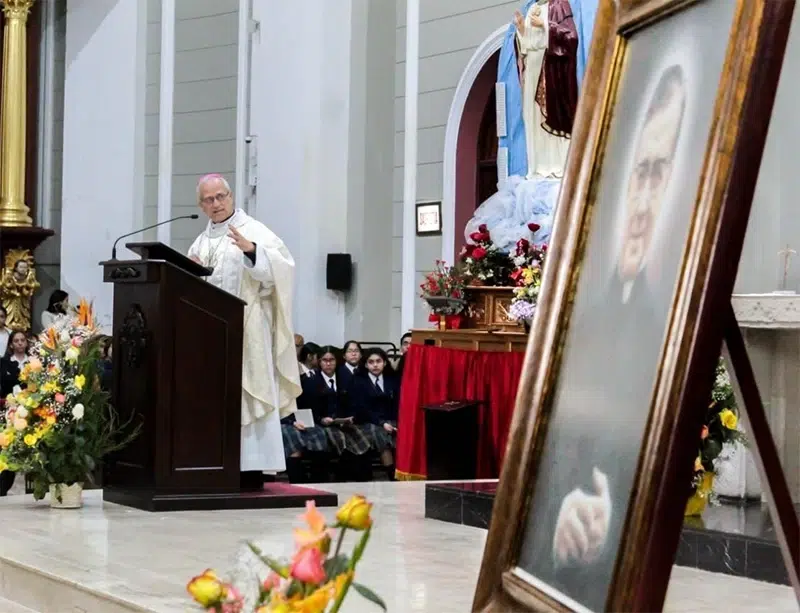
The CARF Foundation and the Altomonte Priestly College in Rome have established an essential collaboration for the formation of priests. In order for priests to receive a high quality university education (degrees and doctorates) at the Pontifical University of the Holy Cross (PUSC), it was necessary to have specific accommodations where they could also foster their human and spiritual formation.

The union between the CARF Foundation and Altomonte also strengthens the pastoral mission of the Catholic Church throughout the world by caring for priests from all over the world.

What is the CARF Foundation?

Since its founding in 1989, the CARF Foundation has been dedicated to supporting the formation of seminarians and priests diocesans and religious from all over the world, providing educational and spiritual resources in renowned institutions in Rome and Pamplona.

Founded with the objective of promoting priestly vocations and prepare the future of the Church, plays a crucial role in promoting the Catholic faith in 131 countries.

Since February 14, 1989, the CARF Foundation has supported the training of thousands of
seminarians and diocesan and religious priests. Promoted by Blessed Alvaro del Portillo with the support of St. John Paul II, it lives in the urgency of providing a comprehensive and quality education to seminarians and diocesan priests of the Catholic Church.

The work of the Foundation has always grown thanks to the generosity of donors committed to the mission of strengthening the Catholic faith.

What is Altomonte Priestly College?

The Priests' College Altomonte is a residence and training center for diocesan priests studying in Rome, founded in response to a wish of St. Josemaría Escrivá, and promoted by the Pontifical University of the Holy Cross. 2011 and located near St. Peter's Basilica, seeks to offer an integral priestly formation in the human, spiritual, pastoral and intellectual dimensions.

To achieve this, it offers an environment conducive to spiritual and academic growth, providing future priests with the tools necessary to serve their communities with wisdom and compassion.

A special way to collaborate

The relationship between the CARF Foundation and Altomonte Priestly College is based on common goals: the integral formation of priests who are capable of facing contemporary pastoral challenges. The benefactors through the CARF Foundation support the students of Altomonte Priestly College by funding study aids, ensuring that no seminarian is prevented from completing his formation due to financial constraints.

This collaboration has resulted in the formation of numerous priests who now serve in various parts of the world, bringing with them the values and knowledge acquired in Rome. This joint effort not only benefits the priests, but also the communities they serve, contributing to the strengthening of the faith and the spiritual well-being of all Catholics.

A significant way in which the CARF Foundation and Altomonte Priestly College honor their benefactors is by celebrating a monthly Mass in their memory. This ceremony not only shows gratitude, but also strengthens the spiritual bond between the benefactors and the formative mission of both institutions.

One of the many beneficiaries of this collaboration is Koffi Edem Amaglo, a seminarian who has been able to advance his formation thanks to the support of the CARF Foundation. In his own words, Koffi expresses his deep gratitude: "The formation I have received in Rome has been invaluable for my pastoral mission. The CARF Foundation and the Altomonte Priestly College have made it possible for me to pursue my vocation with dedication and hope."

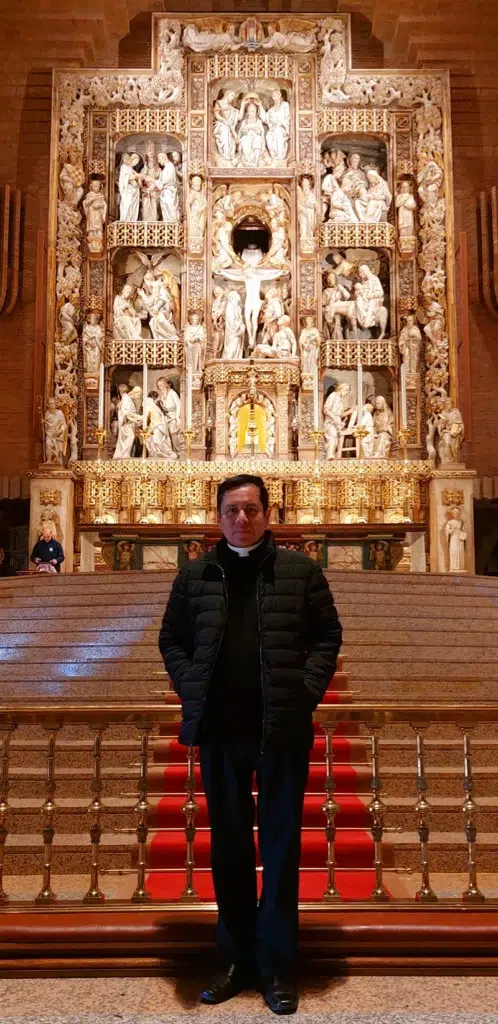
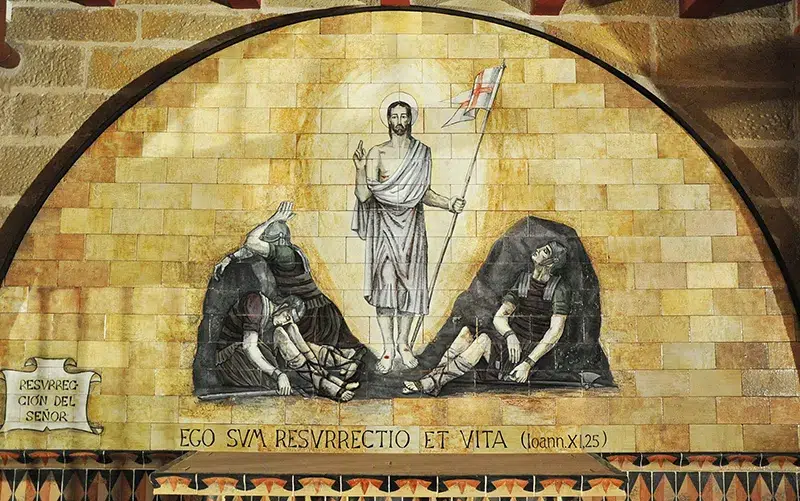
capilla-de-la-resurreccion-colegio-sacerdotal-altomonte
Chapel of the Resurrection at the Altomonte Priestly College.

How You Can Help

Through the CARF Foundation, there are multiple ways to collaboratefrom financial donations to the promotion of fundraising activities. Every contribution helps to ensure that seminarians and priests can continue their formation without interruption, which is vital for the future of the Church.

The relationship between the CARF Foundation and Altomonte Priestly College is a remarkable example of how cooperation and mutual support can have a lasting impact on the formation of priests. And, through their work together, they ensure that the priests of today are well prepared to lead the Church of tomorrow.

Body of Christ and Church: what is it and where is it kept?

 
Pope Francis explains the Body of Christ to us from the text of the Acts of the Apostles. The conversion of Saul, who would later be called Paul: "The conversion of Saul, who would later be called Paul, was a great event.Saul was a persecutor of Christians, but while he was walking along the road leading to the city of Damascus, suddenly a light enveloped him, he fell to the ground and heard a voice saying to him: Saul, Saul, why do you persecute me? He asks: Who are you, Lord?and the voice responds: I am Jesus, whom you are persecuting." (cf. Acts 9:4-5):

"This experience of St. Paul tells us of the depth of the union between Christians and Christ himself. When Jesus ascended into heaven, He did not leave us orphans, but with the gift of the Holy Spirit, union with Him has become even more intense." 

What is the Body of Christ?

We refer to the Corpus MysticumIn Latin, mystical body of Christ or Body of Christ when we speak of the Church as a single body, Christ himself being its Head. As the body of Christ we are one in Him. That is, we walk according to his precepts and united as Christians. In the sacrament of the Eucharist is contained, offered and received the very Body of Christ our Lord, through which the Church continually lives and grows.  

By transubstantiation, that is, by the conversion of the bread and wine into his Body and Blood, Christ becomes present in this sacrament. This is the Eucharistic sacrifice, memorial of the death and resurrection of the Lord, in which the Sacrifice of the cross is perpetuated down through the centuries, is the center of Christian life.

With the Eucharist we give meaning to and are the people of God and bring to completion the building up of the Body of Christ and the Church. The simple offerings of bread and wine, placed in the hands of the Lord, become the Body and Blood of Christ. The priest invokes the Holy Spirit that he may descend upon these gifts and also make Christ present among us. At every Mass, together with this bread and wine, we also present to God, in a symbolic way, something of ourselves.

Cuerpo de Cristo e Iglesia: qué es, oración y dónde se guarda – CARF

Being part of the Church "means being united to Christ and receiving from Him the divine life that makes us live as Christians, it means remaining united to the Pope and the Bishops who are instruments of unity and communion, and it also means learning to overcome personalisms and divisions, to understand each other better, to harmonize the variety and richness of each one; in a word: to love God and the people who are close to us more". General Audience Pope Francis.

Body of Christ and Church

"And this body has a head, Jesus, who guides it, nourishes it and sustains it. This is a point I want to stress: if the head is separated from the rest of the body, the person cannot survive. So it is in the Church: we must remain ever more deeply united to Jesus. But not only that: as in a body, it is important that the vital sap flows so that it can live, so we must allow Jesus to work in us, that his Word guides us, that his presence in the Eucharist nourishes us, encourages us, that his love gives strength to our love for our neighbor. And this always, always, always!

Here I come to a second aspect of the Church as the Body of Christ. St. Paul says that just as the members of the human body, though different and numerous, form one body, so the Church is the Body of Christ.So we were all baptized by one Spirit into one body.

Conflict, if not overcome well, separates us, separates us from God. Conflict can help us to grow, but it can also divide us. We do not go down the path of divisions, of fighting among ourselves, no! All united, all united with our differences, but united, united always, because that is the way of Jesus!

Unity is superior to conflict, unity is a grace that we must ask the Lord to save us from temptationsWe are not only a people of the world, but also of the divisions, of the fights among us and of the selfishness, of the gossip".  Catechesis of the Pope 19 June 2013.

Prayer to the Body of Christ

Help us, Lord, to be members of the Body of the Church always deeply united to Christ; help us not to make the Body of the Church suffer by our conflicts, our divisions, our selfishness; help us to be living members bound together by a single force, that of love, which the Holy Spirit pours into our hearts.

Pope Francis.

Cuerpo de Cristo e Iglesia: qué es, oración y dónde se guarda – CARF

"The members of the body of Christ follow Christ, who is the head of all." (Ephesians 1:22-23).

Where is the body of Christ kept?

Every time the priest at the Holy Mass recites the words of Consecration, the miracle of the Eucharist takes place; what was once bread and wine is now, under that appearance, the Body and Blood of Christ.

The tabernacle is the place where the Most Holy Eucharist, the consecrated Body of Christ, is reserved.. There is usually only one in each church or oratory. It is placed near the altar, in a prominent, sheltered and appropriate place for prayer. A corner that is easily identified by any Christian who enters the Church.

Ante the tabernacle in which the Body of Christ is guardedThe presence of a special lamp should be constantly displayed, indicating and honoring his presence.

We keep the sacred body of Christ within the Church in an immovable place, made of solid, non-transparent material, and closed, so as to avoid as much as possible the danger of profanation.


Bibliography

Catechesis of the Pope on June 19, 2013.
OpusDei.org.
Catechism of the Catholic Church.

Corpus Christi 2024: meaning and what it is celebrated

What is Corpus Christi Day?

Corpus Christi, in Latin, Body of Christis one of the most important festivities of the Catholic Church because it is we celebrate the presence of Christ in the Eucharist. On that day, we the faithful acclaim the institution of the Eucharist, which took place on Holy Thursday, during the Last Supper. When Jesus Christ turned the bread and wine into his body and blood, and invited the apostles to commune with him.

We proclaim and reinforce our faith in the presence of Jesus Christ in the Blessed Sacrament, giving Him public adoration. That is why the celebrations of the feast of Corpus Christi include processions in the streets and public places in which the body of Christ is exhibited and accompanied by crowds of the faithful.

When is it?

Corpus Christi is a movable feast of the Catholic religion, contemplated in the liturgical calendar. As such, is celebrated sixty days after Easter Sunday. It is celebrated on the Thursday following the Solemnity of the Most Holy Trinity, which takes place on the Sunday after the following Sunday. Pentecost.

Thus, the feast of Corpus Christi is the Thursday following the ninth Sunday after the first full moon of spring in the northern hemisphere, and of autumn in the southern hemisphere. Corpus Christi 2024 will be celebrated this Thursday, May 30.

Corpus Christi, its meaning

What is Corpus Christi and what is its purpose? St. Josemaría Escrivá reminds us that On the feast of Corpus Christi, we Christians meditate together on the depth of the Lord's love, which led him to remain hidden under the sacramental species.

"I would like that, in considering all of that, to become aware of our mission as Christians, to turn our eyes towards the Holy Eucharist, towards Jesus who, present among us, has constituted us as his members.You are the body of Christ and members united to other members. Our God has decided to remain in the Tabernacle to nourish us, to strengthen us, to divinize us, to give efficacy to our task and to our efforts. Jesus is simultaneously the sower, the seed and the fruit of the sowing: the Bread of eternal life".

He continues: "This continually renewed miracle of the Holy Eucharist has all the characteristics of Jesus' way of acting.. Perfect God and perfect man, Lord of heaven and earth, He offers Himself to us as our sustenance, in the most natural and ordinary way. Thus he has been waiting for our love for almost two thousand years. It is a long time and it is not a long time: for, when there is love, the days fly."

"For me the Tabernacle has always been Bethany, the quiet and peaceful place where Christ is."

Homily on devotion to the Blessed Sacrament. May 28, 1964. St. Josemaría on the feast of Corpus Christi.

Origin of the Feast of Corpus Christi

The celebration emerged during the 13th century. At Cornillon Abbey, its prioress, St. Juliana, had a great devotion to the Blessed Sacrament. One day, she obtained permission to hold a special celebration in her honor that soon spread throughout Germany.

Thus, The first Corpus Christi celebration took place in 1246 in the city of Liège, in present-day Belgium.

Almost 20 years later, in 1263. In the city of Bolsena (Italy), the so-called miracle of Bolsena took place. Where a priest, who was celebrating the Holy Mass, when he pronounced the words of consecration, blood began to flow from the host.

Pope Urban IV instituted the feast of Corpus Christi in 1264 by means of the bull Transitururs de hoc mondeThe celebration was to be held on the Thursday after the octave of Pentecost.

That is why Corpus Christi is not always celebrated on the same day. The day of the celebration was always on Thursday, but since 1990, when this day ceased to be a holiday, the festivity was moved to Sunday. In fact, although the liturgical solemnity is on Sunday, several localities celebrate the procession on Thursday. ToledoThe procession, in Spain, is one of the most spectacular and well cared for processions. 

For this solemnity St. Thomas Aquinas was commissioned to prepare the texts for the Office and Holy Mass. of the day, including hymns such as the Pange Lingua, as the Tantum Ergothe Panis angelicus or the Adoro te devote.

Later, at the Council of Vienne in 1311, Pope Clement V regulated the processional procession inside the temples, and it was Pope Nicholas V who, in 1447, carried out the procession with the Blessed Sacrament through the streets of Rome.

Subsequently, the Council of Trent, held in 1551, approved the decree On the Most Blessed Sacrament of the Eucharist. In it, the importance of celebrating and venerating the Blessed Sacrament of the altar during the feast of Corpus Christi is recognized.

"Let us widen our hearts." 

Pope Francis, Feast of Corpus Christi 2021.

Processions

"As a peculiar celebration of this solemnity is the procession born of the piety of the Church; in it the Christian people, carrying the Eucharist, go through the streets with a solemn rite, with songs and prayers, and thus render public testimony of faith and piety towards this sacrament." canon 386 of the Ceremonial of Bishops.

Although the bull did not speak of any parade, the feast soon began to be crowned with a procession in which the consecrated host in a monstrance is taken out into the street. The first processions were held in Cologne (Germany), Paris (France) and the Italian cities of Genoa, Milan and Rome. In Spain, the processions of Ponteareas and Toledo are of International Tourist Interest.

Corpus Christi in Spain

In our country, the celebration of Corpus Christi has had and still has special roots. Numerous cities celebrate it with solemnity, the procession with the Holy Sacrament is joined by popular celebrations that make this feast a very important moment of the year.

The procession is especially solemn, the streets are decorated with ornaments on balconies and carpets of aromatic plants; altars are erected along the route of the procession, even the walls of the cathedrals are covered with tapestries.

Accompanying the Blessed Sacrament are the members of the clergy, the faithful and brothers and sisters of confraternities and brotherhoods, the members of the Nocturnal Adoration, the children who have received their First Communion that year, and together with all of them, the civil and military authorities, and even the academic institutions.

corpus-christi-toledo

Corpus Christi in Seville and Guadix

In some cities such as Seville or Guadix (Granada), the seises, a group of children who dance in front of the Blessed Sacrament during the procession, will also be present.

Once again, popular art is present through multiple elements around this solemnity, especially the monstrances. This piece, made of gold, silver or other noble metal, is used to place the Blessed Sacrament in it and thus be exposed for the veneration and adoration of the faithful. Many of them are framed in a templete or throne that facilitates its transfer in the procession. They are elements of great artistic and material value, standing out among many, those of Toledo, Cordoba, Seville and Baeza.

As a curiosity there is a city with that name in the United States: Corpus Christi, Texas.


Bibliography

OpusDei.org
Turismocastillalamancha.es
Diocesisdehuelva.es
Catedraldesantiago.es

Who is the Holy Spirit and what are His gifts? Invocation to the Holy Spirit

 
Christians in the Creed profess faith in the Holy Spirit, who is God, "Lord and giver of life". He is the inexhaustible source of divine life in us. He is "the living water" that Jesus promised to the Samaritan woman to quench thirst forever, to satisfy the deepest and highest longings of the human heart. For Jesus has "come that they may have life and have it abundantly." (Jn 10,10)

Who is the Holy Spirit?

The Holy Spirit who is one of the three persons of the Holy Trinity.. It comes from the Father and the Son. Christ has poured it into our hearts, to make us children of God and so that our lives may be guided, animated and nourished by him.

This is precisely what we mean when we say that the Christian is a spiritual man: a person who thinks and acts following the Holy Spirit who is his inspiration.

But in adoring the life-giving, consubstantial and indivisible Holy Trinity, the faith of the Church also professes the distinction of the Persons. When the Father sends his Word, he also sends his Breath: a joint mission in which the Persons of the Holy Trinity are distinct but inseparable. Without any doubt, Christ is the one who manifests himself, the visible image of the invisible God, but it is the Holy Spirit who reveals him.. Catechism of the Catholic Church 687-689

The coming of the Holy Spirit

Before the Ascension, Jesus had commanded the disciples "not to depart from Jerusalem, but to wait for the promise of the Father. For John indeed baptized with water," he told them, "but you will be baptized with the Holy Spirit not many days from now. When he has come upon you, you will be witnesses in Jerusalem, and in all Judea, and in Samaria, and to the ends of the earth."

A few days later, continues St. Luke, "when they were all together, suddenly there came suddenly from heaven a sound as of a rushing mighty wind, and it filled the whole house where they were sitting; and there appeared to them tongues as of fire, and it sat upon each of them. Y were all filled with the Holy Ghost, and began to speak with other tongues".

On this day, the Holy Trinity is fully revealed. and from that moment the Kingdom announced by Christ is open to all who believe in Him.

The mission of the Holy Spirit

Jesus does not fully reveal the Holy Spirit until after his Resurrection. However, he suggests it little by little, even in his teaching to the crowd, when he reveals that his Flesh will be food for the life of the world. He also suggests it to Nicodemus, to the Samaritan woman and to those who participate in the feast of Tabernacles.

To his disciples he speaks of him openly about prayer: St. Luke records this in verse 11 of his GospelIf you who are evil know how to give good things to your children, how much more will the Father in heaven give the Holy Spirit to those who ask him".

And when he explains to them the testimony they will have to give, he says: "When you are arrested, do not worry about what you will say or how you will speak. When that time comes, you will be told what you have to say. For it is not you who will speak, but the Spirit of the Father who will speak for you". Catechism of the Catholic Church 689-690

The Paraclete who is God himself who gives himself to us to make us sharers in his divine nature. He acts in us by giving us interior consolation, that we can experience as an increase of faith, hope, charity, peace or joy that draws us to Him.

"No one can say, 'Jesus is Lord,' except by the Holy Spirit," says St. Paul in the Epistle to the Corinthians. And in the Epistle to the Galatians: "God has sent the Spirit of his Son into our hearts, crying 'Abba, Father'".

María-Santísima-esposa-del-Espíritu-Santo

The Holy Spirit and the Virgin Mary

He prepared Mary with his grace. Mary, "full of grace" the Mother of the One in whom "all the fullness of the divinity resides bodily".

In Mary, the Divine Grace fulfills the benevolent plan of the Father.. The Virgin conceives and gives birth to the Son of God through the work of the Holy Spirit. Her virginity becomes a unique fruitfulness through the power of the Spirit and faith.

In short, through Mary, the Holy Spirit begins to put people in communion with Christ. "object of God's benevolent love". Catechism of the Catholic Church 721-726

The Holy Spirit in the life of the Christian

The knowledge of faith is possible only in Divine Grace. To enter into contact with Christ, it is necessary first of all to have been attracted by Divine Grace. He, with the Most Blessed Trinity, comes to dwell in the soul through the sacrament of Baptism. The Holy Spirit with His grace is the "first" who awakens us to faith. and initiates us into the new life that comes from knowing the one true God and the one God sent to us, Jesus Christ. Catechism of the Catholic Church 737-742

It is impossible to live a Christian life without Divine Grace, for it is our companion and the protagonist of our lives, Pope Francis said during his homily in the chapel of the Casa Santa Marta.

"You cannot walk in a Christian life without the Holy Spirit."Pope Francis pointed out, and added that we ask the Lord for the grace to understand this message, because "He is our companion on the journey".

The Holy Father explains that without the Holy Spirit, who is our strength, we can do nothing.The Spirit "makes us rise from our limits, from our dead, because we have so many, so many necroses in our life, in our soul". It is therefore necessary that we Christians make a place for him in our existence.

Moreover, the Pope stressed that a Christian life that does not reserve space for the Holy Spirit and does not allow itself to be guided by Him "is a pagan life, disguised as Christian. He is the protagonist of the Christian life, the Spirit who is with us, accompanies us, transforms us, conquers us".

Francis made a call in Santa Marta to the Pope to all Catholics should be aware "that we cannot be Christians without walking with the Holy Spirit".without acting with Him, without letting Him be the protagonist of our lives".


Pope Francis explains faith in the Holy Spirit. 
General Audience: Pope Francis' Catechesis for the Year of Faith.

The symbols of the Holy Spirit in the Church

Water from Baptism means the action of the Divine Grace in the soul.

The fire because in the form of tongues "as of fire" the Spirit rested upon the disciples on the morning of Pentecost and filled them with Him.

La Paloma because when Christ comes out of the water of his baptism, the Holy Spirit, in the form of a dove, descends and rests upon him.

An invocation to the Holy Spirit

The term "Spirit" translates the Hebrew term Ruah, which in its first meaning means breath, air, wind.

Jesus, when he announces and promises the coming of the Holy Spirit, calls him the "Paraclete", which is usually translated as "Comforter". He also calls him "Spirit of Truth".

St. Paul refers to Him as the Spirit of promise, the Spirit of adoption, the Spirit of Christ, the Spirit of the Lord, the Spirit of God, and in St. Peter, the Spirit of glory.

On the other hand, the church considers Spirit and Holy One as divine attributes common to the Three divine Persons. But, uniting both terms, Scripture, liturgy and theological language designate the ineffable person of the Paraclete, without any possible ambiguity with the others. The mystery of the cross of Christ and thus the Christian meaning of suffering, are illuminated when we consider that it is the Holy Spirit who unites us in the Mystical Body (the Church).

In 1971 St. Josemaría composed the invocation to Divine Grace, which has been renewed every year since then in all the centers of Opus Dei on the Solemnity of Pentecost.

Come, Holy Spirit,
fill the hearts of your faithful,
and kindle in them the fire of your love.

Send your Creator Spirit
and renews the face of the earth.

Oh my,
that you have enlightened the hearts of your children
with the light of the Holy Spirit;
make us docile to his inspirations
to always taste good
and enjoy its comfort.

Through Christ our Lord.
Amen.

The gifts of the Holy Spirit

The gifts of the Holy Spirit infused in the Christian's soul bring the virtues to perfection and make the faithful docile to follow with promptness and love, in their daily actions, the divine inspirations. Catechism of the Catholic Church 1830-1831. Their gifts are given with the Sacrament of Baptism and are reinforced in Confirmation, but we must develop them throughout our Christian life.

According to the Catechism of the Catholic Church, his gifts are seven: wisdom, understanding, counsel, fortitude, knowledge, godliness and fear of God.. They support the moral life of the Christian and make him docile and sensitive to God's will.

St. Paul says that the Christian's existence is animated by Divine Grace and rich in its fruits, which are: "Love, joy, peace, understanding, helpfulness, kindness, goodness, loyalty, gentleness, self-control" (Galatians 5:22-23).

The precious gift of the Holy Spirit is the very life of God, inasmuch as we are his true children by his adoption.

"Frequent the dealings of the Holy Spirit...Do not forget that you are a temple of God. The Paraclete is at the center of your soul: listen to him and docilely heed his inspirations."

Camino, 57, San Josemaría.

Gift of Counsel

The moment we welcome him and harbor him in our hearts, the Holy Spirit begins to make us sensitive to his voice and to orient our thoughts, our feelings and our intentions according to the heart of God.

It leads us to direct our inner gaze towards Jesus, as a model for our way of acting and relating to God the Father and to our brothers and sisters.

Gift of Understanding

This gift of the Holy Spirit is related to faith. When the Divine Spirit dwells in our heart and enlightens our mind, He makes us grow day by day in the understanding of what the Lord has said and done.

To understand the teachings of Jesus, to understand the Gospel, to understand the Word of God.

Gift of Wisdom

Wisdom as the grace of being able to see everything with the eyes of God: to see the world, to see situations, occasions, problems, everything, with the eyes of God.

Gift of Fortitude

There are many men and women who honor our Church because they are strong in leading their lives, their families, their work and their faith. Let us give thanks to the Lord for these Christians who live a hidden holiness: it is the Holy Spirit who leads them.

Gift of Science

In Genesis it is emphasized that God is pleased with his Creation, repeatedly underlining the beauty and goodness of everything. At the end of each day, it is written: And God saw that it was good.

If God sees that Creation is a good thing, that it is something beautiful, we must also assume this attitude. Here is the gift of science that makes us see this beauty; let us praise God, let us thank Him for having given us so much beauty.

Gift of Mercy

This gift indicates our belonging to God and our deep bond with Him, a bond that gives meaning to our whole life and keeps us firm, in communion with Him, even in the most difficult and stormy moments.

It is a relationship lived with the heart: it is our friendship with God, given to us by Jesus, a friendship that changes our life and fills us with enthusiasm and joy.

Gift of Fear of God

It is the gift of the Spirit that reminds us how small we are before God and his love, and that our good lies in abandoning ourselves humbly, with respect and trust in his hands. This is the fear of God: abandonment in the goodness of our Father who loves us very much.

Let us turn to the Holy Spirit

The guide who leads us along the path of good in our daily life is the Holy Spirit. We depend on his work to live according to the Word, to understand it, to direct our walk on the path of holiness, to act justly. He fills us with love, patience, peace, joy, goodness, meekness, gentleness, kindness and gives us faith.


Bibliography

Catechism of the Catholic Church.
OpusDei.org.
RomeReports

May is the month of the Virgin Mary: learn why

The Church grants this month to Mary to know and love her more. In Europe, May is the month of flowers, of spring. This is an ideal month to be outdoors, surrounded by the beauty of nature. Precisely because of this, everything around us should remind us of our Creator, we dedicate this month to the Blessed Virgin Mary, a delicate soul who offered her life to the care and service of Jesus Christ, our Redeemer.

"In a spontaneous, natural way, there arises in us the desire to treat the Mother of God, who is also our Mother. To treat her as one treats a living person: because death has not triumphed over her, but she is body and soul with God the Father, with her Son, with the Holy Spirit. To understand the role that Mary plays in the Christian life, to feel attracted to her, to seek her gentle company with filial affection, there is no need for great disquisitions, even though the mystery of the divine Maternity has a wealth of content on which we can never reflect enough."
It is Christ who passes, 142

Mary, sign of God's love. why is may the month of the virgin?

This Christian custom has been in force for two centuries and coincides with the beginning of spring and the end of winter. The "triumph of life" symbolized by spring is one of the reasons why May is the month of the Virgin, Mother of Life, of Jesus. This beauty of nature also speaks to us of Mary, of her inner beauty and virtue.

In ancient Greece, the month of May was dedicated to Artemis, the goddess of fertility. In ancient Rome, May was dedicated to Flora, the goddess of vegetation. At that time they celebrated the ludi florals or floral games at the end of April and asked for her intercession.

Later, in medieval times, similar customs abounded, all centered on the arrival of good weather and the departure of winter. May 1st was considered the peak of spring.

Before the 12th century, the feast of "The Thirty Days' Devotion to Mary" or Tricesimum, which took place between the second half of August and the first 14 days of September, was celebrated.

The idea of the month of May, month of Mary dates back to the baroque time or XVII century. It included thirty daily spiritual exercises in honor of the Mother of God. This custom spread especially during the 19th century and is practiced until today, making this celebration count with special devotions organized every day during the whole month.

Celebrate this month of May is more than a Christian tradition, it is a tribute and a thanksgiving to the one who is our Mother.. Many and varied details can be offered. Among the most common are the family prayerThe prayer of the Rosary, the floral offerings and the meditation of its dogmas.


May, the month of the Blessed Virgin Mary: The Founder of Opus Dei explains how our love for Our Lady can be.

Devotion to the Virgin Mary in the month of May

The ways in which Mary is honored in May are as varied as the people and customs of those who honor her. It is common for parishes to have a daily recitation of the Holy Rosary in May and many erect a special altar with a statue or image of Mary.

In addition, it is a long tradition to crown her statue, a custom known as the Coronation of May. Often, the crown is made of beautiful flowers that represent Mary's beauty and virtue and is also a reminder to the faithful to strive to imitate her virtues. This coronation is in some areas a great celebration and usually takes place outside of Mass.

The altars and coronations during this month are not only privileges of the parish. At home, one can also participate fully in the life of the Church. We should give a special place to Mary not because it is a tradition or because of the special graces that can be obtained, but because Mary is our Mother, the mother of the whole world and because she cares for all of us, interceding even in the smallest matters.

How does a son behave towards his mother?

"How does a normal son or daughter behave with his or her mother? In a thousand ways, but always with affection and trust. With an affection that will run in each case through determined channels, born of life itself, which are never something cold, but endearing customs of home, small daily details, that the son needs to have with his mother and that the mother misses if the son ever forgets them: a kiss or a caress when leaving or returning home, a small gift, a few expressive words."

"In our relations with Our Heavenly Mother there are also those norms of filial piety, which are the channel of our habitual behavior with her. Many Christians make their own the ancient custom of scapularor have acquired the habit of greeting - words are not necessary, the thought is enough. the images of Mary that are in every Christian home or that adorn the streets of so many cities; or they live that marvelous prayer that is the holy rosary, in which the soul never tires of saying the same things over and over again.They are accustomed to dedicate one day of the week to Our Lady - precisely the day on which we are gathered here today: Saturday - offering her some small delicacy and meditating more especially on her maternity". St. Josemaría. It is Christ who passes by, 142.

mayo mes de la virgen maría

Manifesting love for Mary

"There are many other Marian devotions which need not be recalled here. They need not all be incorporated into the life of every Christian - to grow in supernatural life is something very different from merely piling up devotions - but I must affirm at the same time that he who does not live some of them, who does not manifest in some way his love for Mary, does not possess the fullness of faith.

"Those who consider devotions to the Blessed Virgin to be outdated, give signs that they have lost the deep Christian meaning they contain, that they have forgotten the source from which they are born: faith in the saving will of God the Father, love for God the Son who really became man and was born of a woman, trust in God the Holy Spirit who sanctifies us with his grace. It is God who has given us Mary, and we do not have the right to reject her, but we must go to her with the love and joy of children. St. Josemaría. It is Christ who passes, 142

-Do you want to love Our Lady? -Well, treat her! How? - By praying Our Lady's Rosary well.
St. Josemaría.

To take advantage of the month of May

The Blessed Virgin Mary always takes care of us and helps us in everything we need. She helps us to overcome temptation and to preserve the state of grace and friendship with God in order to reach Heaven. Mary is the Mother of the Church.

Mary was a woman of deep prayer life, she always lived close to God. She was a simple woman; generous, she forgot herself to give herself to others; she had great charity, she loved and helped everyone equally; she was helpful, she attended to Joseph and Jesus with love; she lived with joy; she was patient with her family; she knew how to accept God's will in her life. All these virtues are an example of life for us Christians, we want to live as his worthy children, that is why we follow his example.

What is the custom this month?

To remember Our Lady's apparitions. There are many and they are all very special. The Virgin Mary delivers her message directly, all of them are related to the love she has for all of us, her children.

Reflect on the main virtues of the Virgin Mary.

  • Her immaculate conception: the Virgin Mary was born without original sin because she was to be the mother of Christ.
  • How she lived her divine maternity: Mary is the mother of Jesus Christ, on earth. How she was a day in the life of the Virgin?
  • Her perpetual virginity: Mary conceived by the Holy Spirit.
  • The Assumption of the Virgin She, at the end of her life, was taken up body and soul to Heaven.

To live a real and true devotion to Mary. To look at Mary as a mother. Talk to her about everything that happens to us: the good and the bad. To know how to turn to her at all times. Meditate the 7 sorrows of the VirginThe Virgin Mary was united to Jesus in a particular way in those moments of her life that allowed her to share the depth of her Son's sorrow and the love of his sacrifice.

Imitate their virtues: This is the best way to show her our love. Show her our affection: Do what she expects from us and remember her throughout the day.

To have full confidence in it: Because it is the Virgin Mary who intercedes before Jesus for our difficulties. All the graces that Jesus gives us pass through Mary's hands.

Various Marian prayers

Treating Mary is a good way to get closer to her Son. Realize family prayerespecially the prayers dedicated to the Blessed Virgin Mary.

Christians have beautiful prayers dedicated to the Virgin Mary, and there are also many songs to honor her, which help us to remember the immense love of our mother for us, her children.

  • Praying with the heart, alone or in company, the Holy Rosary. Meditating on the mysteries that go through many of Mary's important moments:
    Joyful Mysteries: Mondays and Saturdays
    Sorrowful Mysteries: Tuesdays and Fridays
    Luminous Mysteries: Thursday
    Glorious Mysteries: Sundays and Wednesdays

Praying the Angelus (which is customary to pray at noon),the Regina Coeli or the Consecration to Mary. Among other prayers. You can also dedicate a Novena to Our Lady to ask her for a special favor or to thank her.


Bibliography:

OpusDei.org

9 points of Christian moral education

The Catechism of the Catholic Church explains that Christian morality responds to the man's vocationlife in the spirit. This highlights both the joy and the demands that this path brings to life and to our moral education.

The education Education for Christian morality is part of "catechesis" in its original sense as formation for Christian life at all ages and not only for children. Christian morality has certain characteristics that are deduced not only from ethics or rational morality, but also specifically from the proclamation of Christ (kerygma) and the Kingdom of God through the mission of the Church (1).

The characteristics of Christian moral education, as set forth in the Catechism of the Catholic Church (nn. 1691-1698), can be summarized in the following points:

New life in Christ through the Holy Spirit

1. The education of faith for life in Christ. This life is a participation in the very life of God, thanks to the Holy Spirit, who is the "Spirit of Christ. The work of Christ heals us and restores us to the image and likeness of God lost through sin. 

From baptism, which makes us abandon the "old man" and be reborn in Christ, we have the seed of a full human life-what we call the life of grace-which has its own rules and norms. This is why the baptismal font sometimes takes the form of a maternal womb: baptism causes us to be reborn with Christ in the womb of the Church.

2. Christian moral education, therefore, emphasizes the role of the Holy SpiritHe is the consoler and host of the soul, the light and source of his gifts that elevate human nature to the order of grace. He is truly a new life in Christ through the Holy Spirita life that is a participation in the divine life, a "deiform life".

For this purpose, the Holy Spirit gives his gifts (wisdom and understanding, counsel and fortitude, knowledge, piety and fear of God) which embrace our whole being, elevating nature to the order of grace. These gifts produce the "fruits of the Spirit" ("charity, joy, peace, patience, longsuffering, kindness, goodness, gentleness, meekness, faithfulness, modesty, continence, chastity" (Gal 5:22-23, Vulgate edition, Catechism of the Catholic Church, 1832) and the works that correspond to the beatitudes (see below).

Education for the life of grace and the beatitudes

3. As we have seen, Christian moral education is education for the life of graceand not only for ethical behavior on a rational level. The horizon of the Christian life is that of configuration to Christ, that is, interiorly "becoming the form" of Christ. In other words, the fullness of the moral life is holiness, in union with God's will.

For this, the Christian "loses his own life" for Jesus, supporting the redemptive work of the Trinity that is given to us in its entirety. All this happens starting from baptism, which inserts us into the dynamic of the Holy Spirit: a dynamic of love, which leads us to ardently desire the good, and not just any good, but the good in the perspective of the life of Christ. The life of grace develops from baptism, with the sacraments, prayer and all the work of the Christian.

4. Christian moral education is also a education on the Beatitudes. The just (or the saint) is happy with the happiness that comes from adhering to God. The true disciple is the one who freely chooses this path of the beatitudes, which are the "face of Christ".

They are the guarantee of a "paradoxical" happiness, for they not only offer happiness to man, but also guarantee it for the poor in spirit, the meek and the afflicted, the hungry for justice and the merciful, the peacemakers and those persecuted for Christ's sake (cf. Mt 5:3-11).

Education on sin and forgiveness

5. Christian moral education is an education on sin. Education on sin and forgivenessand about forgiveness. The sin is perdition because it involves, from the heart of man, an offense to God and to one's neighbor, by damaging the order of love. With sin come the "works of the flesh" (cf. Gal 5:19-21), which are opposed to the fruits of the Spirit.

Therefore, sin -and we are all sinners- needs the conversion: to benefit from the mercy of God to attain salvation, which comes with the forgiveness of sins and the definitive victory over the consequences of sin, which are pain and eternal death.

No one saves himself, by his own knowledge or efforts, nor can man save himself in conjunction with other men without counting on God. Welcoming God's mercy makes us merciful to others.

Education of virtues and discernment

6. Christian moral education is a education of the virtues and, with them, of discernment. An education of virtues goes beyond an education of values, but virtues, values and norms must be present in all ethical education.

Among the human or moral virtues, the following stand out prudence, virtue that bridges the cardinal virtues (prudence, justice, fortitude and temperance) and the theological virtues (faith, hope and charity).

Prudence is the foundation of conscience moral (cf. Catechism of the Catholic Church, 1776 y 1794). Prudence allows the discernment necessary to know how to make the right choices in life. It makes one know and practice what is good. The prudent person is not satisfied with the end of his actions being right: he wants the means and the way of acting to be right as well.

For this reason he also chooses concretely the time and the place in which it is convenient to act, avoiding taking useless or false steps. The prudent person possesses the balanceunmistakable characteristic of spiritual maturity (2).
The theological virtues enable the Christian to participate, in his own actions, in the Trinitarian life received as a gift.

Thus it is possible for him to follow Christ by participating in his own vital experience ("seeing" spiritually with his eyes, "feeling" with his heart, "acting" with his attitudes). In this way the Christian can orient every decision and every action in the light of the Triune God. In the same way, the theological virtues inform and enliven the moral virtues and the whole of Christian action (3).

The double commandment of charity

7. At the center of education for the "new life" of the Christian is "the twofold commandment of charity," developed in the Decalogue of the Commandments. For Jesus, love of God and love of neighbor are inseparable (cf. Mk 12:29-31) and are united in "the new commandment".

From that point on, love is no longer just a commandment, but a response to God's love who comes to meet us. "Love can be commanded because it is first given" (4); moreover, for the Christian, this response is integrated into Jesus' life of self-giving, the fruit of his love (cf. Jn 17-26).

This means that Christian moral life is a participation in the same love of Jesus.  This is charityfruit of the Holy Spirit who makes possible what seems humanly impossible: to love as Jesus himself has loved (5).

The double commandment of charity

8. Christian moral education is an education for the Eucharistic life and its fruit, which is an ecclesial life. In the Eucharist Jesus makes us his own and becomes our nourishment for the journey of life until his second coming and to carry out the very mission he received from the Father.

Only with the Eucharist, the center of all the sacraments, we are capable to carry forward what has been said so far: to live in Christ through the Holy Spirit, to progress in the life of grace and in the way of the beatitudes and virtues, to reject sin and always discern the good in our actions, living in charity with God and others.

Since the Eucharist is received from the Church y results in our growth in the life of the Church.the moral life of the Christian does not develop in an individual way, but rather as a in the "communion of saints" which is the Church.

By participating in the life of Christ in the Church (his mystical Body), we also participate, each according to his or her specific vocation, gifts and charisms, in the mission of the Church. The Church is essentially missionary, evangelizing, proclaiming Christ and "sacrament of the unity of the human race".

To this end, the Church walks side by side with all people, especially the poorest and most needy. She is available for all their just demands or expectations. She is concerned for their good, thus extending beyond all limits the boundaries of her charity.

educacion-y-humanism

Every Christian is called, personally and in union with other Christians, to participate in this life that is given in union with Christ and through the action of the Holy Spirit. With all his work, even in the midst of ordinary life, the Christian is called to collaborate in building up the mystery of the Church - which is his mother, his body and his home, the holy people of God and the temple of the Holy Spirit - and in her evangelizing mission. As the Aparecida Document says, all Christians are missionary disciples.

9. In conclusion, in the perspective of the Catechism of the Catholic Church, Christian morals are "new life" in ChristThe "Way, truth and life" (Jn 14:6), the first and last center and point of reference for education in the faith.

For the Christian faith, full, true and eternal life is born and matures in relation to the "loving knowledge" of Christ (cf. Jn 17:3), which is the purpose of education in the faith.

The Christian vision of the person (Christian anthropology) makes it possible to understand and live the reality that each person carries within his or her being a call to self-realization according to the image of Christ. This means a tension to act according to truth and goodness (7) by "entering" freely into the life of Christ and participating in his self-giving.

From his encounter with Christ and his progressive identification with Him, every believer, moved by the constant action of the Holy Spirit, can, through his own life to announce the good news to the world of universal salvation, accomplished by the Lord (8).

For this reason, Christian morality implies "living and feeling with the Church and in the Church, which, in many situations, will also lead us to suffer in the Church and with the Church" (6). Christ at the center of Christian moral education

Responsibility for society and the created world

This ad has consequences for the structures and dynamics of the world created nature, which is to be renewed in Christ with the collaboration of the children of God (cf. Rom 8:19-22 and Eph 5:9).

Hence, a Christian has a special responsibility for the promotion of peace and justice, in the service of the common good, in the culture of life and in the care of the Earth (ecology). This is where the education of the social doctrine of the Church and more broadly of the social morality.

Therefore, everything that concerns the family and work, the economy and politics, the human community at all its levels and the environment becomes part of Christian morality not only for ethical reasons, but also as demands proper to the Christian's vocation and missionThe call to the transformation of society and the created world as an outline of the definitive Kingdom of God.

The Catechism of the Church, at the conclusion of its introduction on Christian moral education, takes up a text of St. John Eudes (17th century) who invites, prays and prays that let's think about Jesusso that we can think better of ourselves; so that we may know the desire of JesusWe can then say with the apostle: "For me to live is Christ" (Phil 1:21).

Bibliography:

(1) Cf. R. Gerardi, La vocazione dell'umo: la vita nello Spirito, in R. Fisichella (a cura di), Nuovo commento theologico-pastorale [to the Catechism of the Catholic Church], Città del Vaticano-Milano 2017, pp. 1269-1285.
(2) Ibid., pp. 1280-1281.
(3) Cf. p. 1282.
(4) p. 1283.
(5) Cf. ibid.
(6) Francisco, Letter to the People of God on pilgrimage in Germany (29-VI-2019), n. 9.
(7) Cf. R. Gerardi, La vocazione dell'uomo...., pp. 1284-1285.
(8) Cf. p. 1285. 

Ramiro Pellitero IglesiasProfessor of Pastoral Theology at the Faculty of Theology of the University of Navarra.

Published in Church and new evangelization.