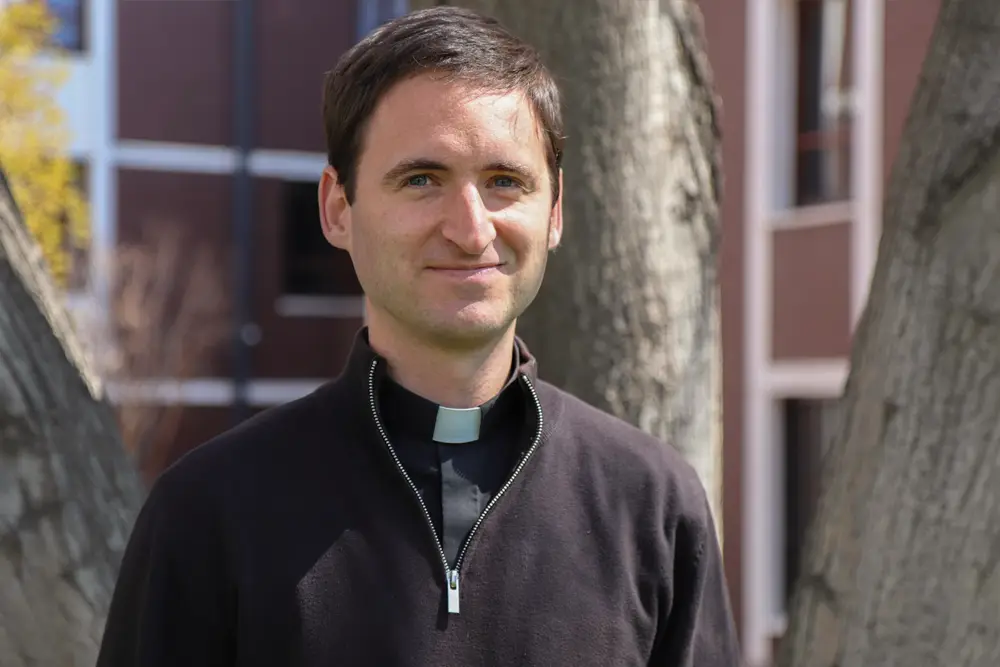
In response to this crisis, the Chilean priest Juan Ignacio Izquierdo Hübner, chaplain of the Tabancura school, has published New eyes. Love is stronger than pornography. (Semillas Editions, 2025), a book aimed especially at young people and born from his years of conversation and pastoral accompaniment. He is a lawyer, theologian, and holds a doctorate in Theology from the University of Navarra.
But New eyes It is not merely an essay on the dangers of pornography: it is also a literary work. Through a theatrical structure, with characters like the angel Lumen and the demon Grimson, humor, dialogue, and a plot that places the reader before a veritable "night tribunal," Father Juan Ignacio attempts to address a complex problem with an engaging and at times even humorous style.
In this interview, he explains why he believes that the fight against pornography is also a quest for freedom, love, and the promotion of the most genuine humanity.

—Why did you decide to write a book about pornography? As I prepared for priestly ordination, I came to understand that an important part of my work would consist of talking to young people about their difficulties with cell phones, social media and pornography. I remember a Spanish priest telling us at the seminary that he had arrived at the school wanting to talk to the students about the Holy Trinity, but ended up dedicating a good part of the conversations to helping them manage their cell phones better.
That made me realize there was a very specific pastoral need here. I decided to study the issue and write a book that could be truly helpful for a young person struggling with pornography. My dream was simple: that someone would finish it thinking, "Now I have more resources to get out of this.".
—What have you discovered by talking to young people? We should dedicate much more time to them. They need us more than ever. Young people crave affection, they need to find trustworthy people to share their innermost thoughts with, they crave companionship, and they have an enormous desire to love and be loved. However, pornography offers immediate gratification, but it ends up distorting precisely what the person was seeking. The result is confusion and, sometimes, discouragement.
I've also discovered that many young people aren't as comfortable with screens as we might think. Some want to quit social media, regain their concentration, or break free from habits they feel are wasting their time. The problem is, they don't always have the energy to do it alone. That's why they need more help from adults.
—Why the title of New eyes? Because I believe that overcoming pornography isn't the end of the story, but the beginning. When a person gets used to seeing the world through pornography, they end up losing sensitivity to many beautiful things in reality.
That's why I didn't want to write simply a book "against pornography." I wanted to talk about something much bigger: about recovering the ability to see. To look at another person and discover that they are not an object. To look at one's own life and discover that it is worthwhile. To look at nature, friendship, art, family, faith. In short, to learn to see the world with new eyes.
—Is pornography solely a moral problem? It's a human problem. It has consequences for freedom, emotions, the ability to form relationships, and how we understand others. Of course, there's a moral dimension (understood as the art of living well), because we're talking about how we treat people and what we do with our freedom.
But it's not about reducing everything to the caricature of censorship or prohibition; rather, it's up to us to help the person understand what they are looking for, what is happening to them, and where they want to take their life to be happy.
—What role does the mobile phone play in this problem? Mobile phones have radically changed the situation. Before, accessing certain content required actively searching for it. Today, it can appear in a child's pocket by chance. And there's another problem: mobile phones not only allow access to endless pornography, but they can also amplify loneliness, comparison, boredom, and the constant search for stimulation.
That's why I believe the problem can't be addressed solely from the perspective of pornography. We must ask ourselves what kind of relationship we are teaching our young people to have with technology.
—In Spain, the first contact with pornography occurs around the age of nine to eleven. What does it mean that a child can encounter this content at that age? This means we're asking a child to process a reality for which they don't yet have the necessary emotional or intellectual tools. And in one out of three cases, the first contact occurs by chance. This means that it's not enough to tell a child "don't look for pornography," because they can encounter it without looking for it.
That's why prevention begins long before a problem arises. It's urgent to protect children and, at the same time, educate them so they can recognize what harms them and ask their parents for help when they encounter something that confuses them.
—What should parents do? First, don't be afraid to talk. Sometimes parents avoid these conversations because they feel uncomfortable. But children need to know they can come to their parents precisely when they feel embarrassed about something.
The second thing is to set boundaries. Love also knows how to say no. Giving a smartphone Giving a child unlimited internet access and expecting them to manage something many adults struggle with is asking too much. I'm sorry, but I find it cruel.
And the third thing is to offer alternatives. It's not enough to remove a screen: you have to fill that space with friendship, sports, reading, music, conversation, nature, family, prayer. Freedom needs something good to turn toward.
—How do you see the Church's current discourse on these issues? I feel very close to the concerns that Pope Leo XIV is expressing about new technologies. He has insisted that we need an educational, ethical, and responsible response, and that technology must be at the service of the human person.
He also pointed out that parents and educators need collaborative networks to support young people. Therefore, the Church is trying to accompany families so they can discern and make good decisions.
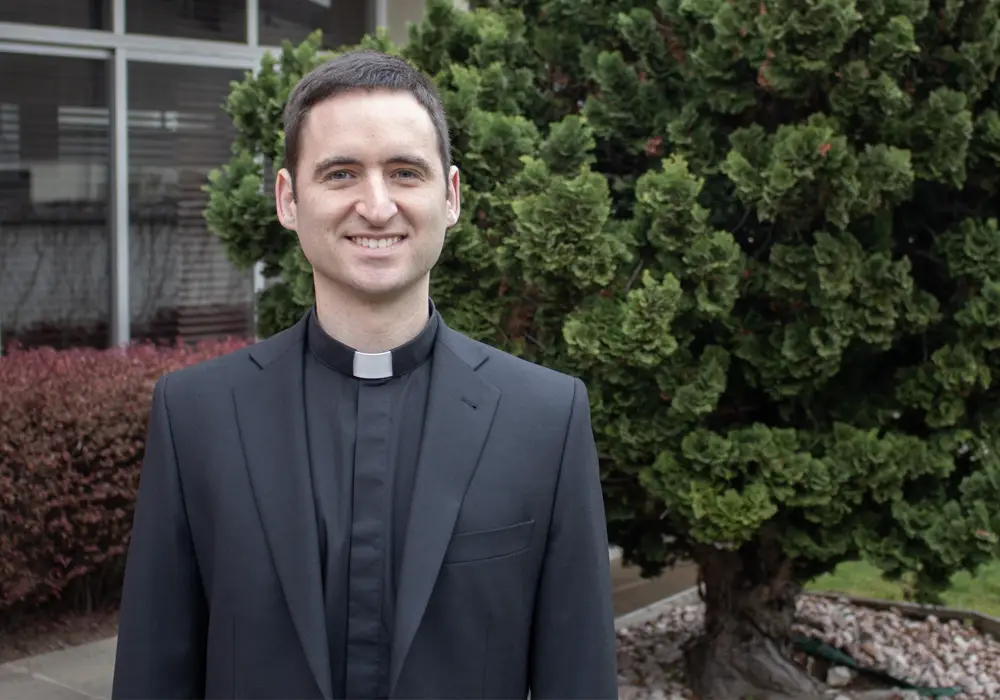
—Do you feel, in some way, that you are following in the footsteps of Pope Leo? Yes, because I share a fundamental conviction: we must put people at the center. Technology is an extraordinary tool, but it ceases to be a tool when it replaces us. And Pope Leo XIII has spoken very clearly about the need to protect children and adolescents from early, unlimited, and unsupervised digital access.
—So the answer is to ban? The answer is to educate, guide, and, when necessary, set limits. Along with that, it will sometimes be necessary to prohibit certain things at certain ages. But an education based solely on prohibitions is inadequate, because we want to develop people capable of choosing what is right even when no one is watching.
That's why I like the word "accompaniment" so much. A young person struggling with pornography doesn't just need someone to tell them they're doing something wrong. They need someone to sit with them, listen without being shocked, and help them discover that they can live differently.
—And what can someone do who is already trapped in this habit? The first thing is not to despair. On the contrary, be encouraged to fight! Shame can be a very bad ally when it turns into hopelessness. Then, ask for help so that someone (ideally a parent) can accompany the child in their challenge of discovering their most vulnerable moments, modifying certain habits, reducing opportunities to stumble, and taking refuge in God's mercy.
—What place does God occupy in this process? A central place. The Christian life consists of discovering a love that compensates for our weaknesses. When a person discovers that they have been created by God, that they possess immense dignity, and that they are called to love, their perspective changes. Chastity, properly understood, is a way of learning to love. And when one discovers this, one begins to ask oneself something that interests everyone: "How can I love better?".
—What message would you give to a young person who feels they cannot get out of pornography? I would tell him not to identify with his problem. You are not "an addict," nor "a lost cause." You are a person who is struggling, like everyone else, and who can ask for help.
I would also tell him not to settle for just surviving. There's a much more beautiful life on the other side of this struggle. When you begin to regain your freedom, you discover that the world has many more colors than you saw before.
—And what message would you give to parents? They shouldn't be afraid. Children need adults who are willing to support them, even though we adults don't have all the answers either. We have a task ahead of us that we can't completely delegate to schools, technology platforms, or the government. We need to work together to reclaim the educational role of families. And we need to do it with humility, while we continue learning.
—What would you like to happen after someone reads New eyes? I would like the reader to experience a surge of hope. That a young person might think, "I can be free." That a parent might say, "Now I know better how to talk to my child.".
Furthermore, we all need to understand that this isn't just a battle against an industry or a screen. It's a fight for something far more valuable: our ability to see others as people, to experience genuine relationships, and to love as we truly are.
 carf@fundacioncarf.orgLandline: +34 914 029 082Mobile: +34 638 078 51145 Conde de Peñalver Street.