Every July 29, the Church commemorates Saints Martha, Mary, and Lazarus, three siblings from Bethany who held a very special place in Jesus’ life. The Gospels show that the Lord not only visited their home on occasion, but returned there time and again. There he found rest, friendship, conversation, and a family atmosphere where he was welcomed with affection.
It is no coincidence that the Pope Francis decided in 2021 to extend this liturgical celebration to all three brothers. The house in Bethany represents one of the most beautiful aspects of the Gospel: that of a family that makes room for Christ in its daily life.
For the CARF Foundation, contemplating Martha, Mary, and Lazarus It means looking to the source of many vocations. Wherever Christ finds an open home, faith, the desire to serve, and the willingness to follow God’s call also flourish.
The three brothers lived in Bethany, a small town located on the eastern slope of the Mount of Olives, very close to Jerusalem. Their home is mentioned several times in the Gospels as one of the places where Jesus was welcomed with trust.
The Evangelist San Juan He sums up this relationship with an extraordinary phrase:
«Jesus loved Martha, her sister, and Lazarus» (John 11:5).
Few people are described so explicitly in the Gospel. They were not merely disciples among many others. They were friends of the Lord.
Each of them has a distinct personality: Martha comes across as an active, generous, and helpful woman. Mary stands out for her ability to listen to Jesus and remain at his feet. Lazarus, for his part, plays a central role in one of the most impressive miracles recounted in the Gospel: his resurrection.
Together, they paint a very complete picture of Christian life: service, prayer, and absolute trust in God.
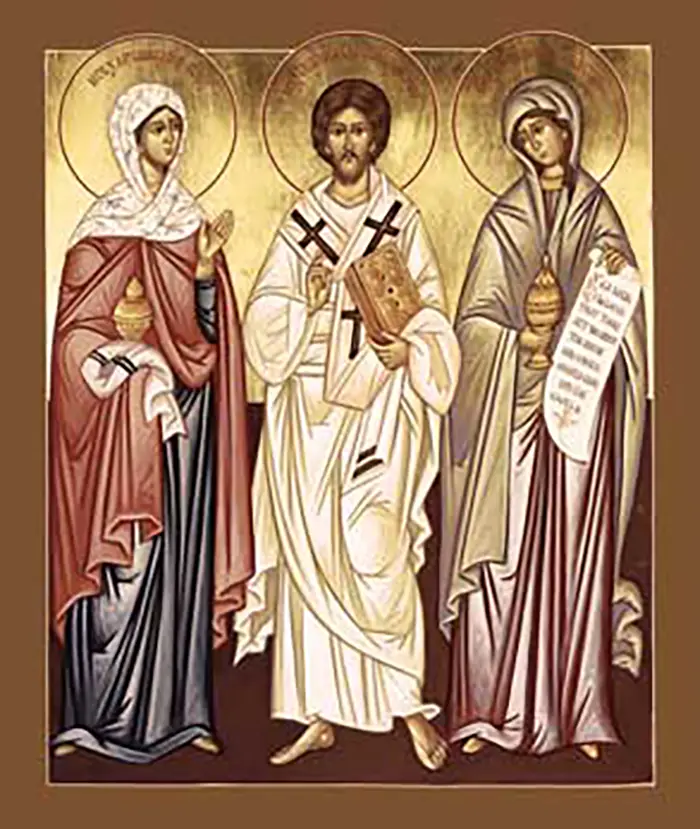
For centuries, the General Roman Calendar commemorated only Saint Martha on July 29.
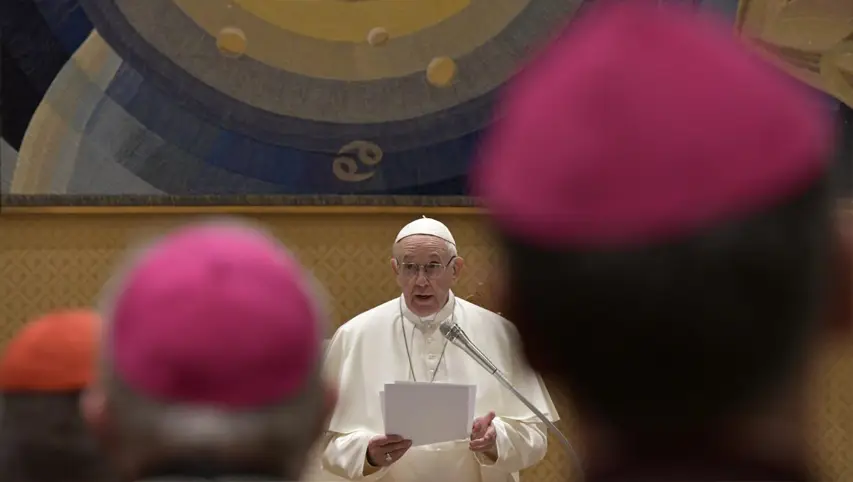
However, on January 26, 2021, the Congregation for Divine Worship and the Discipline of the Sacraments, at the request of Pope Francis, decreed that the liturgical commemoration should also include Mary and Lazarus.
The decree explains that the three brothers offer a unique witness to their friendship with Christ and recalls that: "At the home in Bethany, the Lord Jesus experienced a warm, family-like atmosphere and friendship."
The decision highlights that the holiness It is not always lived out individually. Often it flourishes within a family where each member responds to God through their own vocation.
This message is particularly relevant today. In a society marked by individualism, Betania reminds us that faith also grows within the community, within the family, and through small, everyday gestures.
Faith is opening the doors to Christ, to welcome him into their own home, to share a meal with him, to let him into the very depths of their souls. That is what the family in Bethany—Martha, Mary, and Lazarus—did
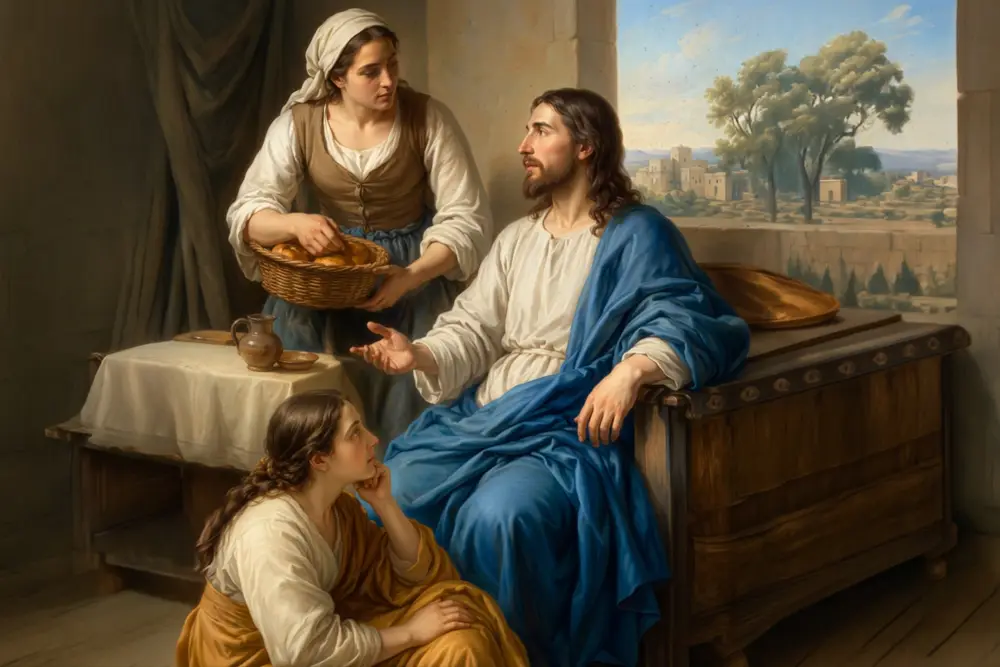
One of the best-known passages appears in the Gospel of Saint Luke.
While Mary sits listening to Jesus, Martha busies herself preparing everything needed to welcome the Teacher.
At one point, she expresses her weariness: «Lord, don’t you mind that my sister leaves me to do all the work by myself?»
Jesus’ response has often been interpreted as pitting action against contemplation. However, Church tradition and the meditations published by Opus Dei remind us that Christ does not criticize Martha’s work.
What it corrects is the restlessness that causes you to lose your composure.
Marta loves the Lord deeply and wants to offer Him the very best. Her service springs from her love for Him, but she needs to learn that her actions only find their full meaning when they flow from her encounter with God.
This teaching remains highly relevant today.
Many Christians are consumed by work, family responsibilities, or daily worries. Martha reminds us that any task can become a form of prayer when it is done out of love and with inner peace.
Holiness does not consist in doing extraordinary things, but in performing ordinary tasks with love.
The Gospel depicts her sitting at Jesus’ feet, a posture typical of a disciple who wishes to learn from her Teacher. Christ then states that Maria has chosen «the best part.».
Not because the work is unimportant, but because every Christian mission begins first with listening. Before proclaiming the Gospel, we must allow the Gospel to transform our hearts. Before teaching, we must learn.
This teaching is especially important for those who feel a calling to serving the Church.
At the CARF Foundation, we are well aware of this reality. The spiritual, personal, intellectual, and pastoral formation of the future priests It begins, in fact, by cultivating a deep relationship with Jesus Christ.
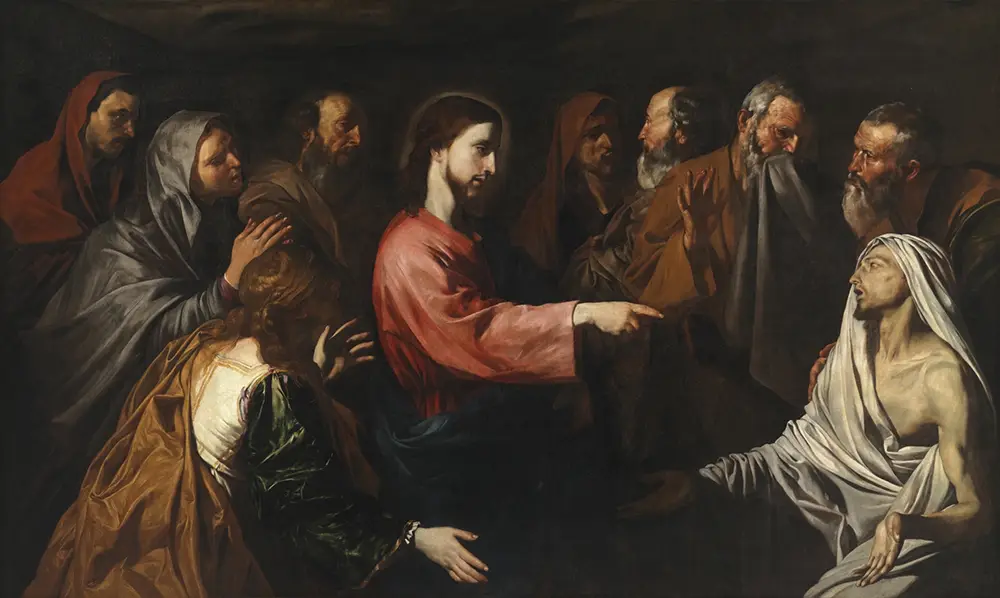
The course of the disease and resurrection The story of Lazarus is one of the highlights of the Gospel of St. John.
When Jesus receives the news that his friend is seriously ill, he does not set out immediately for Bethany.
From a human perspective, He seems to have arrived too late, and Lazarus has already died. Martha goes out to meet Him with words that are at once full of faith and sorrow: «Lord, if You had been here, my brother would not have died.» Despite her suffering, Martha continues to trust in Him. Then Jesus utters one of the Gospel’s greatest declarations: «I am the resurrection and the life.»
The subsequent resurrection of Lazarus foreshadows Christ’s ultimate victory over death. But it also teaches another lesson: God never ceases to act, even when we think all is lost. How many times have we experienced similar situations?
Family problems, personal crises, illness, a lack of hope... Lazarus reminds us that despair never has the last word. It always belongs to God.
Rather than focusing on each of the three siblings individually, it is better to consider them as a family. What is truly extraordinary about Bethany is not just the generosity of Martha, Mary, or Lazarus after Lazarus was raised from the dead. What makes this home special is that Jesus always finds its doors open to him.
The Gospels portray Bethany as a home where Christ is welcomed with simplicity and friendship. Its inhabitants are not known for performing great deeds or delivering memorable speeches; they simply allow the Lord to be a part of their daily lives. That is precisely why this home continues to serve as a model for all the families Christian.
The liturgical commemoration of Saints Martha, Mary, and Lazarus does not belong solely to the past. Their example continues to offer very concrete answers to the challenges of our time. They remind us that service is never a waste of time when it springs from love, that prayer is not a privilege reserved for a select few but the source of all Christian life, and that trust in God can remain steadfast even in the midst of suffering.
Their story also shows that friendship with Jesus can transform an ordinary home into a holy place. In that atmosphere of faith lived out with simplicity, the family remains the primary setting where the Gospel is passed on and where new generations learn to discover God’s presence in everyday life.
That is why, as we reflect on the witness of Saints Martha, Mary, and Lazarus, it is also a cause for gratitude to think of so many anonymous families who, through their daily example, continue to make it possible for the Gospel to reach new generations and for the Church to continue receiving new vocations in the service of God and others.
Opening the door of our home and our hearts to Christ every day transforms family life from within. Wherever He is welcomed with joy, Faith is strengthened, generous vocations are born, and the Church finds the support it needs to continue proclaiming the Gospel to the world.

 carf@fundacioncarf.orgLandline: +34 914 029 082Mobile: +34 638 078 51145 Conde de Peñalver Street.