The history of the Cremades family, and in particular the figure of Don Javier Cremades Sanz-Pastor (Zaragoza, January 27, 1946-Madrid, January 7, 2021), offers a singular testimony of audacious faith and filial trust in God. The Cremades' plans It is a deeply human work, where family memories and anecdotes rich in spiritual meaning come together. It also reflects the personal experience of a mother who knew how to instill in her children the value of living their faith with courage.
The work allows us to discover how, behind every daily gesture, there can be hidden a lesson for priestly life and the dedication to the service to the Church.
Don Javier’s mother, Doña Pilar, is portrayed in the book as a key figure. A woman of strong character and deep devotion, she raised her children in an environment where trust in God was not abstract, but real. One of the most significant episodes took place in 1958, when she saw the car of St. Josemaría Escrivá through the streets of Zaragoza. Without hesitation, she decided to follow him, convinced that she should ask him to bless her and her children.
That scene, described by Don Javier with humor and wonder, is an example of how boldness can spring from the simplest kind of faith: a faith filled with tenderness and a mother’s spiritual intuition.
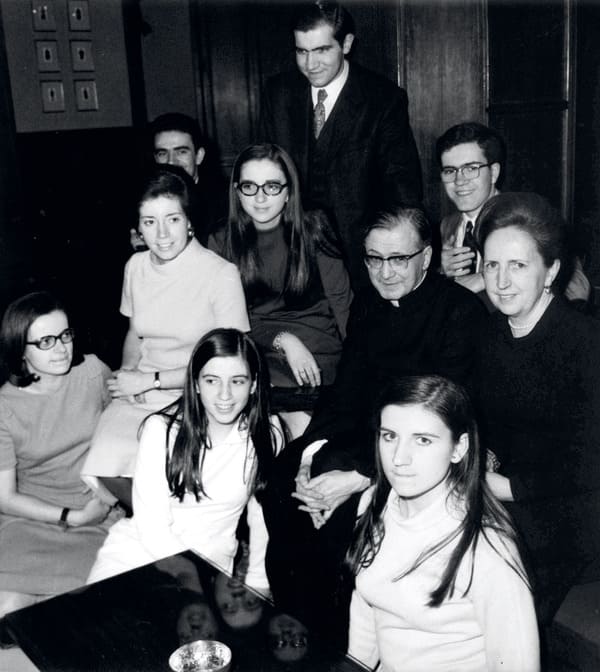
This episode, recounted so many times by the family, captures the essence of the “plans” that give the book its title. For the Cremades, trusting in God meant acting decisively and blazing new trails. It meant attempting what seemed difficult and accepting that Providence is also manifested through small gestures.
Doña Pilar’s attitude had a profound impact on her children, especially Javier, who discovered that love for God is expressed through concrete actions and the ability to take the plunge without fear. This shaped one of the defining characteristics of his life as a priest.
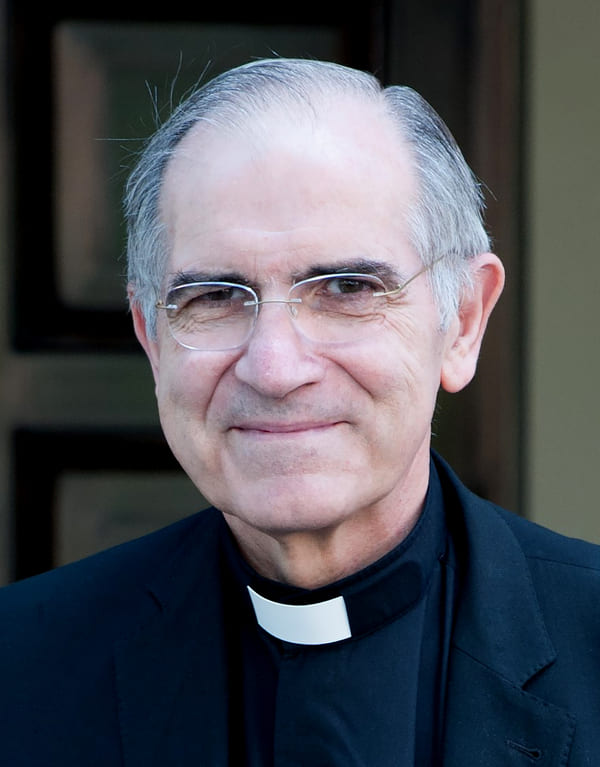
In the pages of the book there is a succession of stories that show the joyful, close and deeply spiritual personality of Don Javier. His direct style and his ability to narrate anecdotes with humor reveal a way of living the faith that does not separate the sacred from the everyday.
From his adolescence until his pastoral work, he appears as a priest which the ministry understood as constant service. It is not just a matter of teaching doctrine, but of accompanying people with patience and comforting them with sensitivity.
Many of the stories in the book show how Don Javier took setbacks and surprises in stride. He turned those situations into opportunities to serve. His mother taught him that nothing is outside of God’s plan, and he applied that conviction to his ministry.
The boldness he learned at home became part of his pastoral style: not fearing challenges and instilling confidence in those around him. That is why the book’s subtitle, “The Boldness of the Impossible,” describes a concrete way of living out one’s faith.
Throughout its pages, one can see the importance Don Javier placed on friendship. He viewed his work as a priest as a form of personal accompaniment. Every soul deserves time, attention, and kind treatment.
In his writings there are stories of young people whom he encouraged to discover their vocation, couples he helped to strengthen their faith and people who found in him a prudent and joyful spiritual guide.
Reading this book is valuable for understanding the relationship between boldness and mission. The Cremades family’s trust in Providence was not naivety, but a deep conviction that faith requires initiative. Don Javier applied this vision throughout his life.
His ministry always had a constructive and encouraging tone, capable of inspiring others to look beyond the present. This attitude is crucial for understand the importance of forming priests that we know how to face the current challenges with serenity and judgment.
In this sense, The Cremades' plans has a special value for the mission of the CARF Foundation. Its content reminds us that the priestly formation should be based on living examples.
The witness of Christian families like the Cremades helps illustrate the importance of raising future priests with a spirit of service and a strong faith.
In addition, the book invites reflection on the role of the family in the emergence of vocations. Doña Pilar’s story is an example of how a mother can have a decisive influence on her children’s spiritual journey. The way she lived out her faith and her trust in Divine Providence created an environment that allowed Javier to hear God’s voice.
The seminarians and priests that today are preparing for serving the Church find in their testimony a call to value their roots and to cultivate a gratitude that strengthens their dedication.
Ultimately, the book conveys a clear lesson: faith, when lived deeply, broadens one’s horizons. It invites us to take action and transforms daily life into an encounter with God.
Christian courage is not an exceptional trait, but an attitude that everyone can cultivate. It is a calm, humble, and steadfast courage that comes from knowing that God does not abandon those who trust in Him.
The Cremades family and the figure of Don Javier offer a contemporary testimony. Their story inspires us and reminds us that “impossibilities” are opportunities to let God work.
For those who work in the formation of priests and seminarians, this book is an invitation to renew confidence in the mission and to transmit the joy of a faith lived responsibly.
Antonio R. Rubio PloDegree in History and Law. Writer and international analyst @blogculturayfe / @arubioplo
Table of Contents
 carf@fundacioncarf.orgLandline: +34 914 029 082Mobile: +34 638 078 51145 Conde de Peñalver Street.