May 1, St. Joseph the Worker: Who was the father of Jesus?

St. Joseph has several feast days on our calendar. In May, on the first day of the month, we celebrate St. Joseph the Worker, patron saint of workers. He was the one who supported and cared for Jesus and Mary with his carpentry skills. On his feast of March 19, Pope Leo XIV invited us to pay special attention to the figure of St. Joseph. To this end, he pointed out the two unique virtues that define the father of Jesus: «Joseph shows us that presence and guardianship are inseparable dimensions.» y «In it we recognize that to welcome, in addition to being present, is also to take care. To be a guardian means to be attentive to others, to respect their choices and to take care of them».

«Love St. Joseph very much, love him with all your soul, because he is the person who, with Jesus, has loved St. Mary the most and the one who has treated God the most: the one who has loved Him the most, after our Mother. He deserves your affection, and it is good for you to treat him, because he is a Master of interior life, and he can do much before the Lord and before the Mother of God», Forge, 554.

Biography of St. Joseph the Worker of Nazareth

Both St. Matthew and St. Luke speak of St. Joseph as a man descended from an illustrious lineage: that of David and Solomon, kings of Israel. The details of this ancestry are historically somewhat confusing: we do not know which of the two genealogies, which the evangelists bring, corresponds to Mary and which to St. Joseph, who was her father according to Jewish law. We do not know if his hometown was Bethlehem, where he went to register, or Nazareth, where he lived and worked.

We know, however, that he was not a rich person: he was a worker, like millions of other men throughout the world; he exercised the laborious and humble office that God had chosen for himself, by taking our flesh and wanting to live thirty years as one more among us.

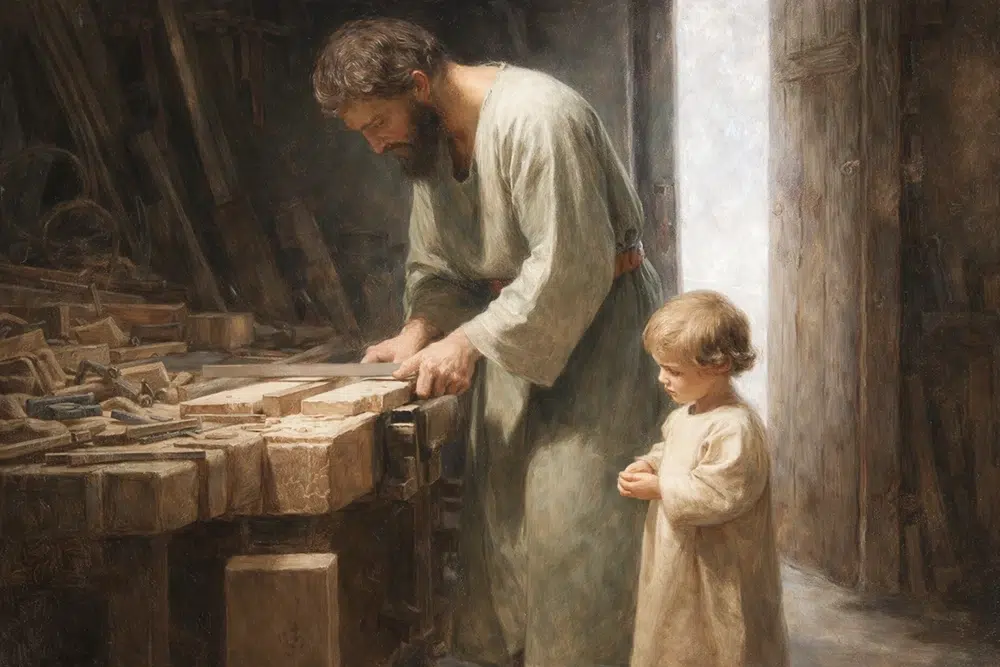
Sacred Scripture says that Joseph was a craftsman. Several Fathers add that he was a carpenter. St. Justin, speaking of Jesus' life of work, affirms that he made plows and yokes. (St. Justin, Dialogus cum Tryphone, 88, 2, 8 (PG 6, 687).Perhaps, based on these words, St. Isidore of Seville concludes that Joseph was a blacksmith. In any case, a worker who worked in the service of his fellow citizens, who had a manual skill, the fruit of years of effort and sweat.

Joseph's great human personality is evident from the Gospel narratives: at no time does he appear to us as a man who is timid or afraid of life; on the contrary, knows how to deal with problems, to get ahead in difficult situations, to assume with responsibility and initiative the tasks entrusted to him/her.
Siete domingos de san José

Who was St. Joseph the Worker in the Catholic Church?

The whole Church recognizes in St. Joseph her protector and patron. Throughout the centuries he has been spoken of, highlighting various aspects of his life, continually faithful to the mission entrusted to him by God.

In the words of St. Josemaría, St. Joseph is really Father and Lord, who protects and accompanies on his earthly journey those who venerate him, as he protected and accompanied Jesus as he grew and became man. In dealing with him, we discover that the Holy Patriarch is also a Master of interior life: because teaches us to know Jesus, to live together with Himto know that we are part of the family of God. This Saint gives us these lessons being, as he was, an ordinary man, a father of a family, a worker who earned his living with the effort of his hands.

The virtues of Joseph of Nazareth

Who is St. Joseph the Worker? He was a craftsman from Galilee, a man like so many others. In his day he had only parenting and workevery day, always with the same effort. And, at the end of the day, a poor and small house, to regain strength and start again.

But Joseph's name means, in Hebrew, God will add. God adds, to the holy life of those who fulfill his will, unsuspected dimensions: what is important, what gives value to everything, the divine. God, to the humble and holy life of Joseph, added the life of the Virgin Mary and that of Jesus, our Lord.

To live by faith, these words were fully realized in St. Joseph. Its fulfillment of God's will is spontaneous and profound..

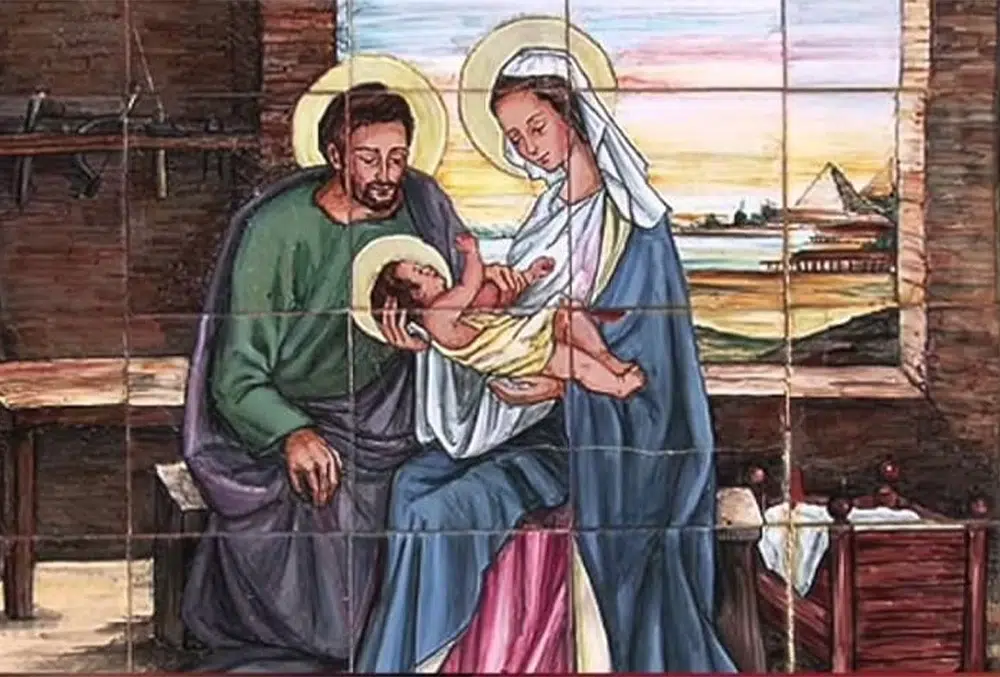
For the story of the Holy Patriarch was a simple life, but not an easy life. After anguishing moments, he knows that the Son of Mary has been conceived by the Holy Spirit. And that Child, Son of God, descendant of David according to the flesh, is born in a cave. Angels celebrate his birth and personalities from distant lands come to adore him, but the King of Judea desires his death and it becomes necessary to flee. The son of God is, in appearance, a helpless child, who will live in Egypt.

In his Gospel, St. Matthew constantly emphasizes Joseph's faithfulness, who fulfills God's commands without hesitation, even though at times the meaning of these mandates might seem obscure or their connection to the rest of the divine plans might be hidden from him.

Faith and hope

On many occasions the Fathers of the Church emphasize the firmness of St. Joseph's faith. Joseph's faith does not waver, his obedience is always strict and prompt.

In order to better understand this lesson given to us here by the Holy Patriarch, it is good to consider that their faith is active. Because the Christian faith is the opposite of conformism, or lack of inner activity and energy.

In the various circumstances of his life, the Patriarch does not give up thinking, nor does he abandon his responsibility. On the contrary, it places all its human experience at the service of faith..

Faith, love, hope: these are the axes of the Saint's life and those of every Christian life.. Joseph of Nazareth's dedication appears woven from this interweaving of faithful love, loving faith and confident hope.

This is what St. Joseph's life teaches us: simple, normal and ordinary, made up of years of work, always the same, of humanly monotonous days that follow one after the other.
Siete domingos de san José

St. Joseph the father of Jesus

«Treat Joseph and you will find Jesus.», saint Josemaría Escriva de Balaguer.

 Through the angel, God himself confides to Joseph what his plans are and how he is counting on him to carry them out. Joseph is called to be the father of Jesus; that will be his vocation, his mission.

Joseph has been, in the human aspect, Jesus' teacher; he has treated Him daily, with delicate affection, and has cared for Him with joyful abnegation.

With St. Joseph, we learn what it is to belong to God and to be fully among men, sanctifying the world. Treat Joseph and you will find Jesus. Treat Joseph and you will find Mary, who always filled the kindly workshop of Nazareth with peace.

Joseph of Nazareth took care of the Son of God and, as a man, introduced him to the hope of the people of Israel. And that is what he does with us: with his powerful intercession he brings us to Jesus. St. Josemaría, whose devotion to St. Joseph grew throughout his life, said that he is truly Father and Lord, who protects and accompanies those who venerate him on their earthly journey, just as he protected and accompanied Jesus as he grew and became man.

God continually demands more, and His ways are not our human ways. St. Joseph, like no man before or after him, learned from Jesus to be attentive to recognize the wonders of God, to have an open heart and soul.

The Feast of St. Joseph

On March 19, the Church celebrates the feast of the Holy Patriarch, patron of the Church and of the Work, a date on which we in Opus Dei renew the commitment of love that unites us to our Lord. But throughout the world we also celebrate on May 1 the feast of St. Joseph the Worker, patron of all workers.

The feast of St. Joseph brings before our eyes the beauty of a faithful life. Joseph trusted God: that is why he was able to be his trusted man on earth to take care of Mary and Jesus, and from heaven he is a good father who takes care of Christian fidelity.

The seven Sundays of St. Joseph

They are a custom of the Church to prepare for the feast of March 19. Dedicating to the Holy Patriarch the seven Sundays prior to that feast in memory of the main joys and sorrows of his life.

The meditation of the Sorrows and joys of St. Joseph helps to get to know the holy Patriarch better and to remember that he too faced joys and difficulties.

It was Pope Gregory XVI who encouraged the devotion of the seven Sundays of St. Joseph, granting him many indulgences; but Pius IX gave them perennial topicality with his desire that the saint should be called upon to alleviate the then afflictive situation of the universal Church.

One day, someone asked St. Josemaría how to get closer to Jesus: "Think of that wonderful man, chosen by God to be his father on earth; think of his sorrows and his joys. Do you do the seven Sundays? If not, I advise you to do them.

How great is the silent and hidden figure of St. Joseph," said St. John XXIII, "because of the spirit with which he fulfilled the mission entrusted to him by God. For the true dignity of man is not measured by the tinsel of showy results, but by the interior dispositions of order and good will."

Curiosities of St. Joseph the Worker

Devotion of Pope Leo XIV

«Joseph leaves behind his human securities and abandons himself completely to God, sailing “out to sea” towards a future entrusted entirely to Providence. St. Augustine describes his consent thus: "«"To the piety and charity of Joseph a son was born of the Virgin Mary, the Son of God at the same time" (Sermon 51, 30)».

Devotion of Pope Francis

"I would also like to tell you something very personal. I love St. Joseph very much. Because he is a strong and silent man. And I have a picture of St. Joseph sleeping on my desk. And while he sleeps he takes care of the Church. Yes, he can do it. We can't. And when I have a problem, a difficulty. And when I have a problem, a difficulty, I write a little piece of paper and I put it under the figure of the Saint so that he will dream it. This means to pray for that problem".

Devotion of St. Josemaría

St. Joseph is the patron of this family that is the Work. In the early years, St. Josemaría had special recourse to him so that Jesus in the Blessed Sacrament could be present in the first center of Opus Dei. Through his intercession, in March 1935 it was possible to have our Lord reserved in the oratory of the DYA Academy-Residence on Ferraz Street in Madrid.

Since then, the founder of the Work wanted the key of the tabernacles of the centers of Opus Dei to have a small medal of St. Joseph with the inscription Ite ad IosephThe reason is to remember that, in a similar way as the Joseph of the Old Testament does with his people, the holy patriarch had provided us with the most precious food: the Eucharist.

St. Joseph the Worker, the saint of silence, the protector

We do not know words expressed by him, we only know his works, his acts of faith, love and protection. He protected the Immaculate Mother of God and was the father of Jesus on earth. However, there is no mention of him in the Gospels. Rather, he was a quiet and humble servant of God who played his role to the full. Working hard to support the Holy Family.

One of the first titles they used to honor him was Nutritor DominiThe "Lord's feeder" dates back to at least the ninth century.

Celebrations in his honor

The Solemnity of St. Joseph is on March 19 and the Feast of St. Joseph the Worker (International Labor Day) is on May 1. It is also included in the Feast of the Holy Family (December 30) and is certainly part of the Christmas story.

St. Joseph has multiple patronages

He is the patron of the Universal Church, the good death, families, parents, pregnant women, travelers, immigrants, artisans, engineers and workers. He is also the patron of the Americas, Canada, China, Croatia, Mexico, Korea, Austria, Belgium, Peru, Philippines and Vietnam.

Let us ask St. Joseph the Worker to continue helping us to draw closer to Jesus in the Sacrament, who is the nourishment that nourishes the Church. This is what he did with Mary in Nazareth, and this is what he will do with her in our homes.


December 26, Saint Stephen: the first martyr

Every December 26, the Church celebrates the feast of Saint Stephen, remembering the first maximumrpull Christian. His story, though brief, is an impressive testimony of faith, courage, and love for the Gospel. Do you know his origins and how he came to be one of the Church's most emblematic models of holiness?

Who was Saint Stephen?

Saint Esteban He was one of the first seven deacons chosen by the apostles to assist in serving the Christian community in Jerusalem. Its main mission was to care for widows and the poorest members of society, ensuring that no one was left destitute.

The Book of Acts of the Apostles tells us that Esteban was a man full of faith and the Holy Spirit (Acts 6:5). He was also known for his wisdom and for the signs and miracles he performed among the people, which attracted both admirers and detractors.

San Esteban, primer mártir de la cristiandad
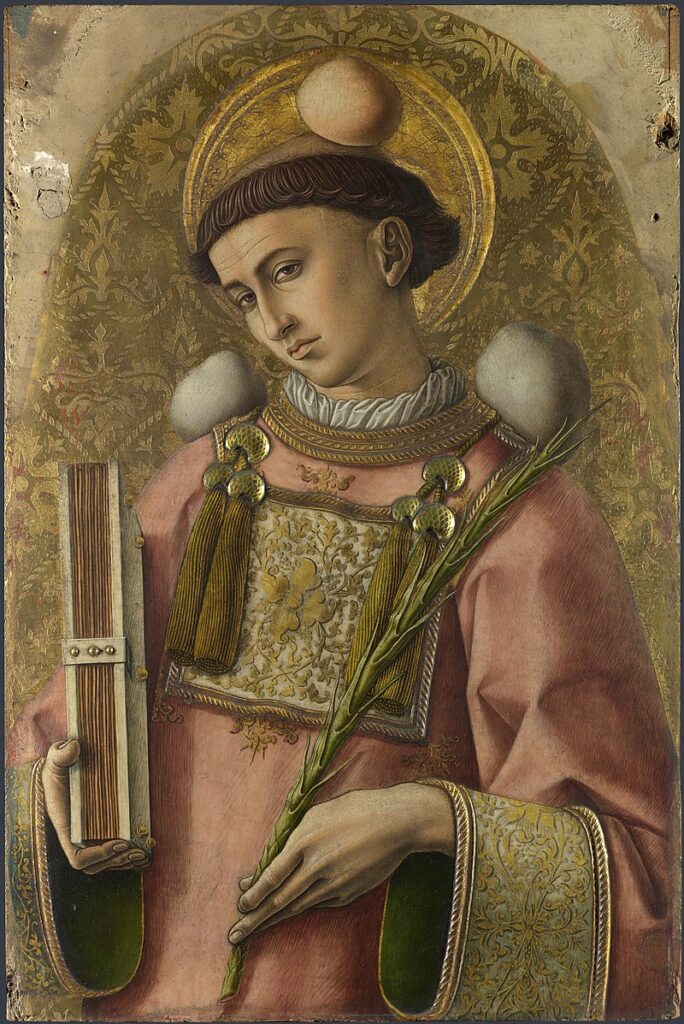
Saint Stephen is depicted as a deacon, wearing a dalmatic, holding the palm of martyrdom and the stones that evoke his stoning. The work emphasizes his serenity and devotion to the Gospel.

The Martyrdom of Saint Stephen

Stephen's preaching caused controversy among some religious leaders of his time. He was falsely accused of blasphemy against Moses and against God, and brought before the Sanhedrin, the supreme council of the Jews.

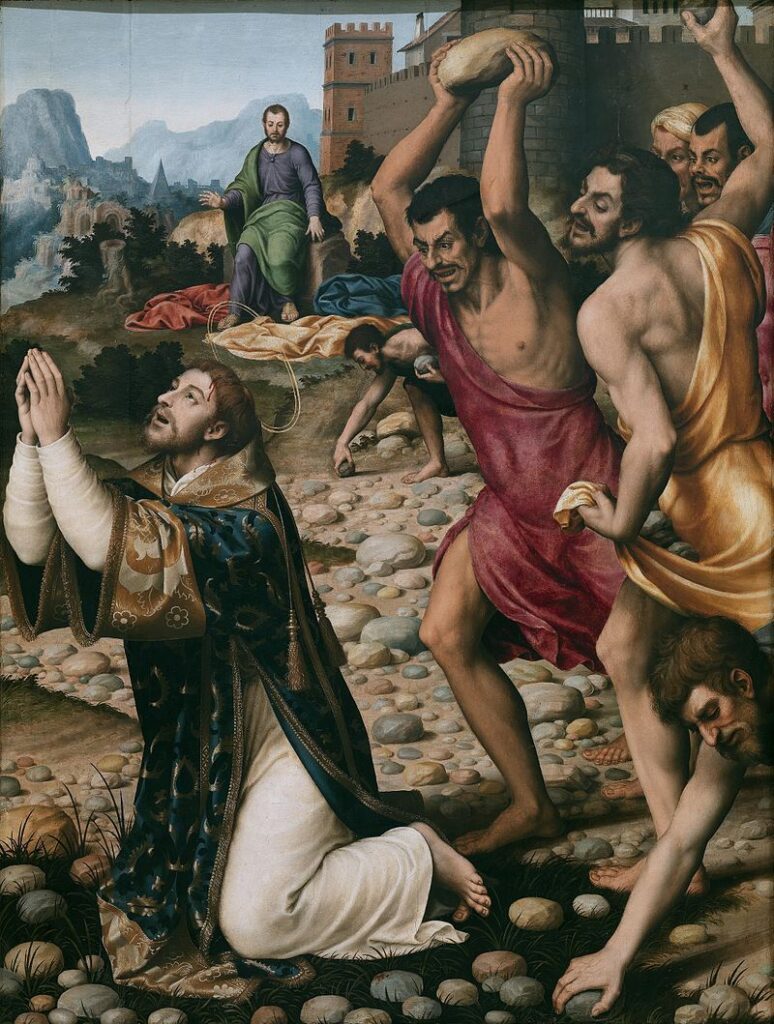
During his defense, he delivered a powerful and courageous speech in which he reviewed the history of Israel and denounced the people's resistance to accepting God's will. This speech enraged his accusers, who took him outside the city and stoned him to death.

As he became the first martyr, Stephen, filled with the Holy Spirit, exclaimed: «Lord Jesus, receive my spirit.» and, with a heart full of forgiveness, he said: «Lord, do not hold this sin against them.» (Acts 7:59-60). His death is a reflection of Christ's love and mercy on the cross.

"Esteban, full of grace and power, performed great wonders and signs among the people» (Acts 6:8). The number of those who believed in the doctrine of Jesus Christ was growing. However, many—either because they did not know Christ or because they knew him poorly—did not consider Jesus to be the Savior.

«They began to argue with Stephen, but they could not withstand his wisdom and the Spirit with which he spoke. So they incited some men to say, “We have heard him speak blasphemous words against Moses and against God”» (Acts 6:9-11).

Saint Stephen He was the first martyr of Christianity. He died filled with Holy Spirit, praying for those who stoned him. «Yesterday, Christ He was wrapped in swaddling clothes by us; today, He covers Stephen with the garment of immortality. Yesterday, the narrowness of a manger held the infant Christ; today, the immensity of heaven has received Stephen triumphant. The Lord descended to lift up many; our King humbled Himself to exalt His soldiers.

Living the joy of the Gospel

We too have received the exciting mission of spreading the message of Jesus Christ with our words and above all with our lives, showing the joy of the Gospel. Perhaps St. Paul, who was present at that event, would be moved by Stephen's testimony and, once he became a Christian, would draw strength from it for his own mission.

«Goodness always tends to communicate itself. Every authentic experience of truth and beauty seeks by its very nature to spread, and anyone who experiences profound liberation becomes more sensitive to the needs of others (...). Let us rediscover and increase our fervor, the sweet and comforting joy of evangelizing, even when we must sow amid tears. And may today's world—which is searching, sometimes with anguish, sometimes with hope—be able to receive the Good News, not through evangelists sad and discouraged, impatient or anxious, but through (...) those who have received, above all in themselves, the joy of Christ» (apostolic exhortation Evangelii Gaudium by Pope Francis, 2013).

What can we learn from Saint Stephen?

Saint Stephen teaches us the importance of defending our faith with courage and humility, but also with love and forgiveness toward those who persecute us. His example invites us to trust fully in God, even in the most difficult moments.

It also reminds us of the value of service. As deacon, He dedicated his life to helping those most in need, living out the commandment to love one's neighbor in a concrete way.

The patron saint of deacons

Saint Stephen He is considered the patron saint of deacons and those who suffer. persecution for his faith. His testimony has inspired generations of Christians throughout history.

In the liturgy, his feast day on December 26 invites us to reflect on the meaning of martyrdom as total surrender to Christ.

In a world that often rejects the values of the Gospel, Saint Stephen encourages us to live our faith with authenticity and courage.

San Esteban, primer mártir de la cristiandad
Martyrdom of Saint Stephen, Juan de Juanes at the Prado Museum.

A reflection

The testimony of the first martyr, Saint Stephen, remains relevant today. How can we be witnesses to Christ in our daily lives? We may not face physical persecution, but we may encounter challenges as we try to live our faith consistently in a world that is often indifferent or critical.

The Gospel of his feast day reflects the faithfulness of Jesus' first disciple, who bore witness to him before men. Faithfulness means likeness, identification with the Master. Like Jesus, Stephen preached to his brothers of the same race, filled with the wisdom of the Holy Spirit, and performed great wonders on behalf of his people. Like Jesus, he was taken outside the city and stoned there, while he forgave his executioners and gave up his spirit to the Lord (cf. Acts of the Apostles, 6:8-10; 7:54-60).

Caring about the environment

But we can ask Jesus: how can we not worry when we feel the threat of an environment hostile to the Gospel? How can we ignore the temptation to fear Or human respect, to avoid having to resist?

Even more so when that hostility arises in one's own family environment, something that the prophet already predicted: “For the son will speak against his father, the daughter against her mother, the daughter-in-law against her mother-in-law; a man's enemies will be the members of his own household” (Micah 7:6). It is true that Jesus does not give us a technique for escaping persecution unscathed. He gives us much more: the assistance of the Holy Spirit to speak and persevere in goodness, thus giving faithful witness to God's love for all humanity, including our persecutors.

On this first day of the Octave of Christmas, there is still room for joy, since what we love most, what makes us happiest, is not our own safety, but salvation for all.

Saint Stephen invites us to remember that the strength to live and defend our faith comes from the Holy Spirit. Let us trust in Him and follow His example of love, forgiveness, and service!

In the CARF Foundation, We pray for persecuted Christians around the world and work to train seminarians and diocesan priests who, like Saint Stephen, will courageously carry the message of Christ. Let us join together in prayer for them!


Enrique Shaw: the Argentine businessman who transformed his company with the Gospel

Enrique Shaw is one of those names that breaks the mold: a deeply humane businessman, a layman committed to the Church, and a family man who understood that holiness also plays a role in the office, in the factory, and in day-to-day management. His life not only left its mark on Argentina, but today inspires thousands of people who seek to live their faith in the midst of the world.

Declared Venerable by the Church in 2021, his cause for beatification is moving forward, driven by the testimony of those who knew him: a man who worked, led, and served as one who wanted to be like Christ. His figure challenges us to rediscover the role of the laity in the mission of the Church, a mission that the CARF Foundation supports supporting the training of seminarians and priests diocesan priests, who will guide as many people as he did, both humanly and spiritually.

Who was Enrique Shaw? A life of faith, work, and service

The Venerable Enrique Ernest Shaw was born in 1921. His mother died when he was very young, and his father decided to entrust his spiritual education to a priest of the Sacramentinos. That early education marked the beginning of a God-centered life.

He later joined the Navy and married Cecilia Bunge, with whom he had a large family: nine children. After leaving military service, he entered the business world, where he developed an innovative vision of Christian leadership. He was one of the founders of the Christian Association of Business Leaders (ACDE) in Argentina, and promoted spaces where ethics, social justice, and charity were lived out in concrete ways.

An entrepreneur who brought the Gospel to the workplace

Shaw believed that faith should permeate all decisions, including economic ones. He did not conceive of the company as a mere place of production, but as a human community where each person had dignity and rights.
Some characteristics that defined his business style:

His leadership style anticipated what the Church would develop decades later as Social Doctrine applied to the world of work: a leadership that seeks prosperity without sacrificing humanity.

A coherent family and spiritual life

Fotografía en blanco y negro de Enrique Shaw y su familia sentados en la playa, sonriendo y mirando a cámara.
The venerable Enrique Shaw and his wife, Cecilia, on a day at the beach with their children. Family life had a profound impact on his journey of faith.

At home, the venerable Shaw lived his faith naturally and joyfully. His warmth, his ability to listen, and his constant search for holiness in everyday life left a mark on his wife, his children, and hundreds of people who crossed his path.

During his illness—a cancer that accompanied him in his final years—he continued to work, encouraging others and offering his suffering for the people he loved. Many testimonies highlight his serenity and his way of facing pain with hope and gratitude.

The cause for beatification of Enrique Shaw

In 2021, Pope Francis approved the decree recognizing heroic virtues by Enrique Shaw, granting him the title of Venerable. This is a decisive step in the beatification process.

The cause continues to move forward thanks to the testimony of those who witnessed his life and the spiritual fruits that his example continues to bear. For the Church, the venerable Shaw represents a model of the laity: a Christian who sanctifies work, accompanies others, and builds a more just society.

What Enrique Shaw inspires in lay people around the world today

His figure answers a question that many believers ask themselves today: How can we live our faith in a demanding professional environment?

Shaw proves that it is possible:

In a world where competitiveness seems to prevail over the individual, his testimony brings the essence of the Gospel back to the center of professional activity.

The CARF Foundation: training those who will accompany and inspire the laity

Enrique Shaw's life shows how decisive it is to have a good Christian education, especially received from childhood and accompanied by trained priests.

Today, that same mission continues with strength in CARF Foundation, which helps seminarians and diocesan priests from around the world receive a comprehensive education: academic, human, and spiritual. They will be the ones who accompany lay people like Shaw, and who will enlighten businesses, families, parishes, and entire communities.

Your support makes it possible for this chain of training to continue unbroken.


Help train those who will lead the Church of the future.

👉 Donate now and put a face to your donation.


Saint Francis Xavier, life and mission of the giant of missions

Saint Francis Xavier He is one of the most prominent figures in the history of Christian evangelization, and each year his feast day reminds the Catholic Church that mission requires prior preparation, sending, and a truly universal vision.

His life, marked by total dedication, is naturally connected to the work carried out by institutions dedicated to priestly formation, such as the CARF Foundation. This relationship allows us to view his life not as an isolated historical episode, but as a living reference for the service that the Church provides throughout the world.

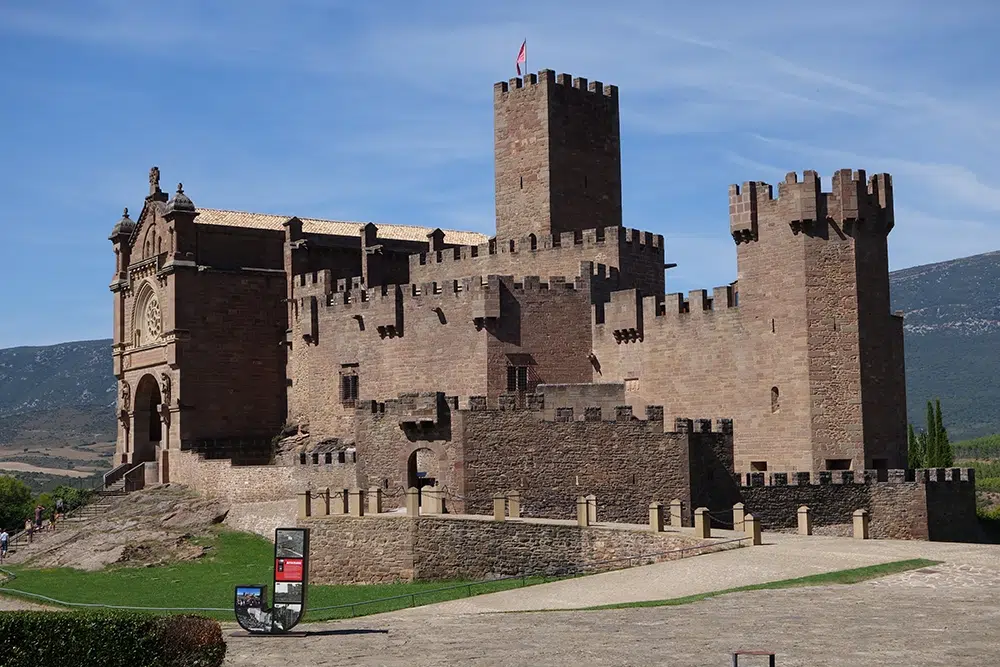
Castillo de Javier en Navarra, fortaleza medieval situada en el lugar de nacimiento de san Francisco Javier.
Javier Castle, in Navarre, is the place of his birth and one of the most striking places in his history.

The Life of Saint Francis Xavier

Francisco de Jasso Azpilicueta was born in 1506 in the Javier Castle, Navarre, into a noble family. From a young age, he stood out for his intellectual and athletic abilities, which opened the doors to the University of Paris, where he became a professor. There he experienced a decisive period for his vocation: his encounter with Íñigo de Loyola, his roommate and friend: Saint Ignatius.

At first, Francisco had no intention of orienting his life toward the religious life or missionary. His goal was to advance academically. However, Ignatius knew how to challenge him with a phrase that became a turning point: «What good is it to gain the whole world if you lose your soul?» Over time, that message transformed his priorities.

This inner change led him to join the founding nucleus of the Society of Jesus in 1534. That decision marked the beginning of a life devoted entirely to serving the Catholic Church throughout the world.

In 1541, at the request of the king of Portugal, the Society of Jesus was commissioned to send missionaries to the kingdom's Asian territories. Although Ignatius had initially considered other companions, circumstances led Francisco Javier to set sail for the East. He accepted without hesitation.

Map of the seven journeys of St. Francis Xavier between 1541 and 1552, with routes differentiated by colors indicating his travels through Africa, India, and Southeast Asia.

His arrival in Goa in 1542 marked the beginning of an unprecedented missionary period. Saint Francis Xavier traveled throughout India, Malacca, the Moluccas, and Japan, always with a clear approach: closeness to the people, learning languages, seeking cultural adaptation, and an attitude of constant listening. His dream was to reach China, but he died in 1552 on the island of Shangchuan, at the gateway to the continent.

His method, based on direct presence and understanding of the local context, laid the foundations for what the Church today recognizes as respectful and deeply human evangelization.

Javier understood that his vocation as a missionary was not an abstract idea, but a concrete task that required humility, study, and perseverance. His ability to move between different cultures, learn languages, understand societies, and love them meant that his inner fire (his love for Jesus Christ) led him to baptize more than thirty thousand people. It is said that sometimes he had to support one arm with the other because his strength failed him from administering the sacrament so often.

His apostolate also reached Europe through passionate and enthusiastic letters that inspired many other young people to become missionaries in the following centuries.

The mission of formation in the Church

One of the most important elements of his work was the training of catechists, the creation of Christian communities, and the preparation of local leaders who would ensure the continuity of the Catholic Church's evangelization. St. Francis Xavier knew that it was not enough to reach new territories: it was essential to train people capable of sustaining the faith in each community.

This emphasis makes his life a direct reference point for those who work today in the comprehensive training of priests. The CARF Foundation carries out work that also connects with the missionary vision of St. Francis Xavier: to train seminarians and diocesan priests with sufficient intellectual, human, and spiritual preparation to evangelize anywhere in the world.

Each year, the Foundation supports seminarians and priests from more than 130 countries, many of them from places where the Church is growing, where resources are scarce, or where pastoral challenges are great. This diversity reflects the universality that St. Francis Xavier embodied during his life as a giant of the missions.

Saint Francis Xavier is known as the man who transformed the missions into a global adventure. His eagerness to save souls led him to never stop, and he always sought to go further. For all these reasons, the Catholic Church named him Universal Patron of Missions (alongside Saint Thérèse of the Child Jesus, although for reasons different from hers).

Young people studying with the support of the CARF Foundation are trained for their home diocese and to serve the universal Church. They learn to engage in dialogue with different cultures, to understand complex social realities, and to support communities where, often, the priest is the only educational or social reference point.

Just as St. Francis Xavier knew that the mission needed well-trained people, the CARF Foundation helps parishes, dioceses, and mission territories to have solidly trained priests. All of these students return to their countries, where the figure of the priest is essential for education, spiritual guidance, community stability, and the transmission of the faith.

From a human perspective, which is difficult to explain, what is most striking about the life of Saint Francis Xavier was the sheer physical magnitude of his work. In the 16th century, without modern means of transportation, he traveled some 100,000 kilometers. kilometers (equivalent to circling the globe more than twice). It is rightly called the giant of missions.

If anything characterized the life of St. Francis Xavier, it was his global vision and his ability to break new ground. The mission of the CARF Foundation replicates his geographical adventure from its very essence: to create conditions for faith to reach where it is most needed, in an orderly, profound, and forward-looking manner.


St. John Paul II: If you feel the call, do not silence it.

On the occasion of the feast of St. John Paul II, of the October 22nd, We recall one of his most emblematic and moving speeches addressed to young people. On May 3, 2003, in Four Winds (Madrid), St. John Paul II, in the twilight of his pontificate, launched a challenge of faith, hope and vocation to young people.

We review the full text of that speech, words that still retain their power to inspire young people of body and spirit.

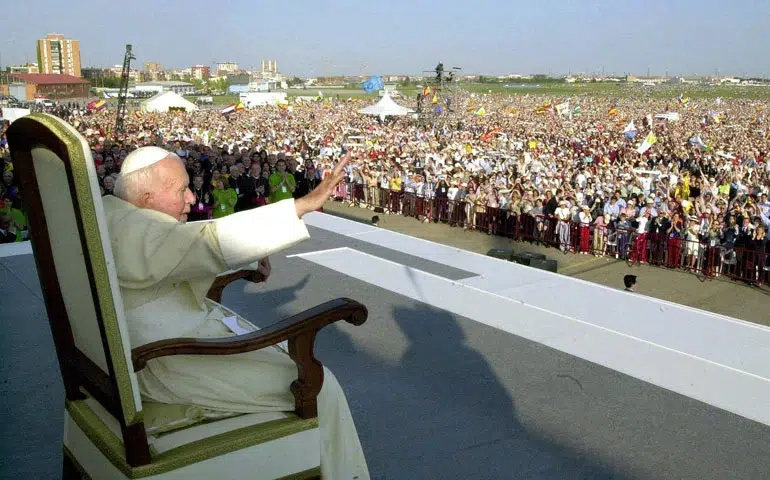
San Juan Pablo II jóvenes llamada de Dios en Cuatro Vientos en el año 2003
St. John Paul II with young people at Cuatro Vientos during his last visit: May 3, 2003.
Photo: Alfa & Omega.

Speech to the youth by St. John Paul II at Cuatro Vientos

1. Led by the hand of the Blessed Virgin Mary and accompanied by the example and intercession of the new Saints, we have journeyed in prayer through various moments in the history of the Church. the life of Jesus

The Rosary, in fact, in its simplicity and depth, is a real compendium of the Gospel and leads to the very heart of the Christian message: “God so loved the world that he gave his only Son, that whoever believes in him should not perish but have eternal life” (Jn 3, 16).

Mary, besides being the close, discreet and understanding Mother, is the best Teacher to reach the knowledge of the truth through contemplation. The drama of today's culture is the lack of interiority, the absence of contemplation. Without interiority, culture lacks entrails, it is like a body that has not yet found its soul.

What is humanity capable of without interiority? Unfortunately, we know the answer all too well. When the contemplative spirit is lacking, life is not defended. and everything human degenerates. Without interiority, modern man endangers his own integrity.

Young people called to be the new Europe

2. Dear young people, I invite you to be part of the “School of the Virgin Mary. She is an unsurpassable model of contemplation and an admirable example of fruitful, joyful and enriching interiority. She will teach you to never separate action from contemplation, so that you will better contribute to the realization of a great dream: the birth of the new Europe of the spirit. 

A Europe faithful to its Christian roots, not closed in on itself but open to dialogue and collaboration with other peoples. of the earth; a Europe conscious of being called upon to be a beacon of civilization and a stimulus to progress for the world, determined to unite its efforts and creativity in the service of peace and solidarity among peoples.

Young peacemakers

3. Beloved young people, you know well how much I am concerned about peace in the world. The spiral of violence, terrorism and war still provokes hatred and death in our days. Peace -we know- is above all a gift from on High that we must insistently ask for. and which, moreover, we must build together through a profound inner conversion. Therefore, today I want to commit you to be peacemakers and peacemakers. Respond to blind violence and inhuman hatred with the fascinating power of love. Overcome enmity with the power of forgiveness. Stay away from all forms of exasperated nationalism, racism and intolerance.

Witness with your life that ideas are not imposed, but proposed. Never let yourselves be discouraged by evil! To this end you need the help of prayer and the consolation that comes from an intimate friendship with Christ. Only in this way, by living the experience of God's love and radiating evangelical brotherhood, can you be builders of a better world, authentic men and women of peace and peacemaking.

Encountering Christ transforms our lives

4. Tomorrow I will have the joy of proclaiming five new saints, sons and daughters of this noble nation and of this Church. They «were young people like yourselves, full of energy, enthusiasm and zest for life. The encounter with Christ transformed their lives (...) For this reason, they were capable of attracting other young people, their friends, and of creating works of prayer, evangelization and charity that still last» (Message of the Spanish Bishops on the occasion of the Holy Father's trip, 4).

Photo via: Vicens + Ramos

Dear young people, go with confidence to meet Jesus and, like the new saints, go with confidence to meet Jesus!, do not be afraid to speak of Him! for Christ is the true answer to all questions. about man and his destiny. You young people must become apostles of your contemporaries. I know very well that this is not easy. Many times you will be tempted to say like the prophet Jeremiah: “Ah, Lord! Behold, I do not know how to express myself, for I am a boy.Jr 1, 6). Do not be discouraged, for you are not alone: the Lord will never fail to accompany you, with his grace and the gift of his Spirit.  

It is worthwhile to dedicate oneself to the cause of Christ

5. This faithful presence of the Lord makes you capable of assuming the commitment of the new evangelization, to which all the children of the Church are called. It is a task for everyone. In it the laity have a leading role, especially married couples and Christian families, but evangelization today urgently requires priests and consecrated persons. This is the reason why I wish to say to each of you, young people: if you feel the call of God saying, “Follow me!” (Mc 2,14; Lc 5:27), do not silence her. Be generous, respond like Mary, offering God the joyful yes of your person and of your life.

I give you my testimony: I was ordained a priest when I was 26 years old. Since then 56 years have passed. So how old is the Pope? Almost 83! A young man of 83! Looking back on these years of my life, I can assure you that it is worthwhile to dedicate oneself to the cause of Christ and, out of love for him, to consecrate oneself to the service of mankind. It is worthwhile to give one's life for the Gospel and for one's brothers and sisters!

How many hours do we have until midnight? Three hours. Just three hours until midnight and then comes the morning.

6. In concluding my remarks, I would like to invoke Mary, the luminous star that announces the dawning of the Sun that rises from on High, Jesus Christ:

Hail Mary, full of grace!
Tonight I pray for the young people of Spain,
young people full of dreams and hopes. 

They are the sentinels of tomorrow,
the people of the beatitudes;
are the living hope of the Church and of the Pope. 

Holy Mary, Mother of the young,
intercede that they may be witnesses of the Risen Christ,
humble and courageous apostles of the third millennium,
generous heralds of the Gospel.

Holy Mary, Immaculate Virgin,
pray with us,
pray for us. Amen.


St. Charles Borromeo, patron saint of seminarians

St. Charles Borromeo was one of the most important persons of the Catholic Reformation, also known as the Counter-Reformation, in the 16th century. A man who was born into the opulence of the nobility and chose service and austerity.

His life shows how a priest, Armed with an iron will and faith, he can help transform the Church. He is remembered as a model pastor for his love of the Church. formation of seminarians and catechists.

The Borromeo family

Charles Borromeo was born on October 2, 1538 in the castle of Arona, on Lake Maggiore (Italy). His family, the Borromeo, was one of the oldest and most influential of the Lombard nobility. His father was Count Gilberto II Borromeo and his mother Margarita de Medici.

This maternal kinship would mark his destiny in a decisive way. His maternal uncle, Giovanni Angelo Medici, would become Pope Pius IV. From a young age, Charles showed remarkable piety and a serious inclination towards study, despite suffering from a slight speech impediment.

At the age of twelve, his family had already destined him for an ecclesiastical career, receiving the tonsure and the title of commendatory abbot. He studied Canonic Law and Civil Engineering at the University of Pavia.

A lay cardinal at the age of 22

The life of St. Charles Borromeo changed in 1559. After the death of Pope Paul IV, his maternal uncle was elected Pope, taking the name Pius IV. Almost immediately, the new pope called his nephew to Rome.

In 1560, at only 22 years of age and without having been ordained priest still, Charles was named cardinal deacon. It is essential to understand that, at that time, the cardinalate was often a political and administrative position. Pius IV also appointed him secretary of state of the Holy See.

It became, de facto, the most powerful man in Rome after the pope. He administered the affairs of the Papal States, managed Vatican diplomacy and oversaw countless projects. He lived like a Renaissance prince, surrounded by luxuries, although he personally maintained his piety.

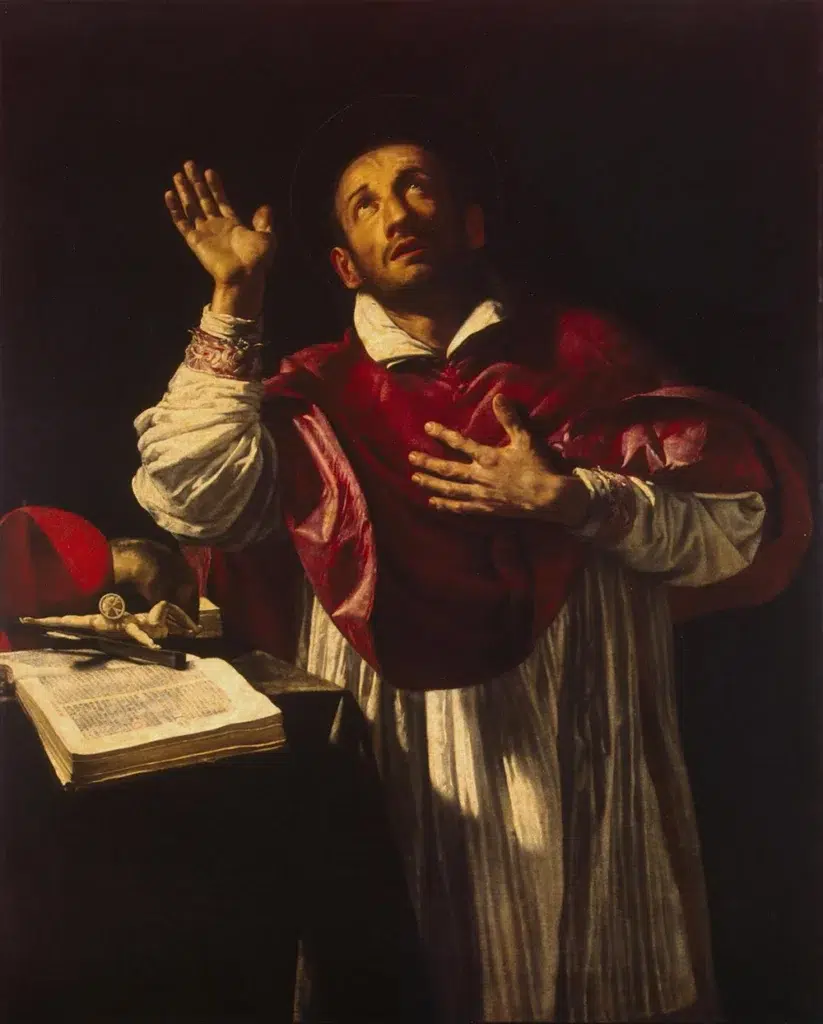
San Carlos Borromeo de Orazio Borgianni
St. Charles Borromeo from Orazio Borgianni.

Conversion and his call to the priesthood

The life of St. Charles Borromeo in Rome, although administratively efficient, was mundane. However, a tragic event shook his conscience: the sudden death of his older brother, Frederick, in 1562.

This loss caused him to reflect deeply on the vanity of the earthly life and the urgency of eternal salvation. Frederick was the heir of the family, and his death put pressure on Charles to leave the ecclesiastical life to ensure offspring.

Charles rejected this idea. He experienced a profound spiritual conversion. He decided that he would no longer be a lay administrator with a cardinal's title, but a true man of God. In 1563, it sought ordination and was consecrated priest, and soon after, bishop. His life changed radically: he adopted a lifestyle of extreme austerity, fasting and prayer.

The driving force behind the Council of Trent

The great work of the pontificate of Pius IV was the resumption and completion of the Council of Trent (1545-1563), which had been blocked for years. St. Charles Borromeo, In his position at the Secretariat of State, he was the diplomatic and organizational driving force that brought the Council to a successful conclusion in its final phase.

It was he who managed the tense negotiations between the European powers (Spain and France), the papal legates and the bishops. His tenacity was key to the council defining Catholic doctrine in the face of the Protestant reform and, crucially, establishing the decrees for the internal reform of the Church.

The council ended, St. Charles Borromeo did not rest. He dedicated himself body and soul to implementing his decrees. He chaired the commission that drafted the Roman Catechism (or Catechism of Trent), a fundamental tool for instructing the faithful and unifying teaching.

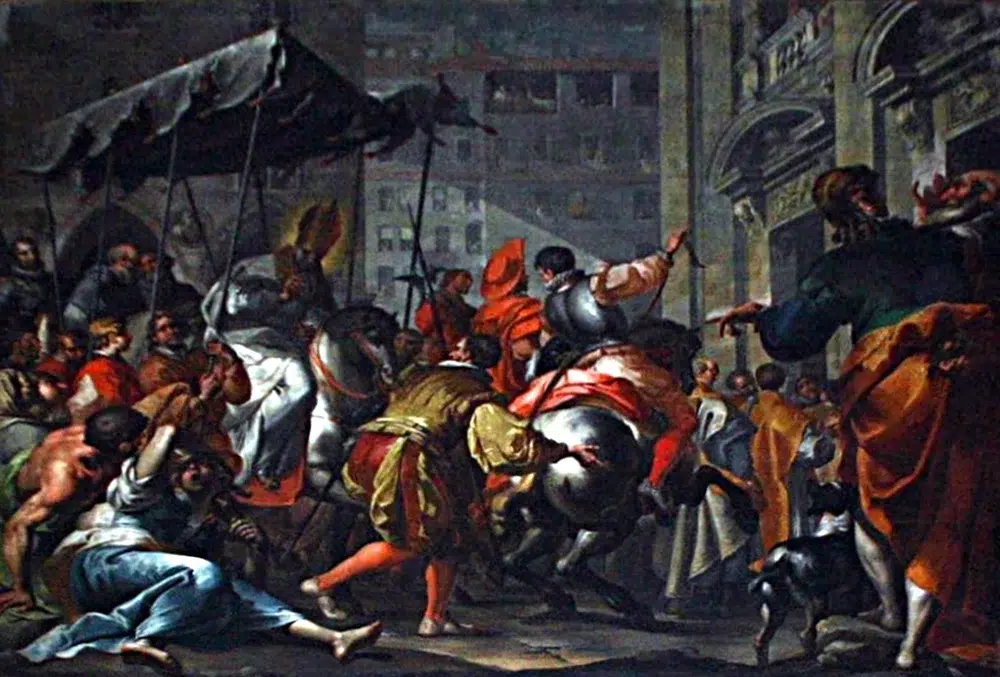
The triumphal entry of St. Charles Borromeo in Milan by Filippo Abbiati, Milan Cathedral.

St. Charles Borromeo: resident archbishop of Milan

While in Rome, St. Charles Borromeo had been appointed archbishop of Milan in 1560. However, as was the custom of the time, he governed his diocese "in absentia" through vicars. He was a "shepherd without a flock".

The very Council of Trent that he helped conclude forbade this practice and required bishops to reside in their dioceses. True to his principles, Charles begged his uncle, the pope, to allow him to leave the glory of Rome for the difficult Milan.

In 1565, Pius IV agreed. The entry of St. Charles Borromeo in Milan marked the beginning of a new era. For the first time in almost 80 years, Milan had a resident archbishop.

Milan's challenge: a diocese in ruins

The archdiocese of Milan which found Charles Borromeo was a reflection of the ills of the pre-Tridentine Church. It was one of the largest and richest dioceses in Europe, but spiritually it was in anarchy.

The clergy were deeply relaxed and poorly trained. Many priests did not keep celibacy, lived luxuriously or were simply ignorant of basic doctrine. The religious ignorance of the people was vast. The monasteries, both male and female, had lost their discipline and had become centers of social life.

The relentless reform of St. Charles Borromeo

St. Charles Borromeo applied the decrees of Trent with superhuman energy. His method was clear: to visit, regulate, form and lead by example.

He began by reforming his own archiepiscopal house. He sold the luxurious furnishings, drastically reduced his servants and adopted an almost monastic regime of life. His example as priest austere was his first reform tool.

He began pastoral visits, tirelessly touring each of the more than 800 parishes in his diocese, many in difficult-to-access mountainous areas in the Alps. He inspected the churches, examined the clergy and preached to the people.

To implement the reform, he convoked numerous diocesan synods and provincial councils, where he promulgated strict laws to correct the abuses of the clergy and laity. He was not afraid to confront the nobles and Spanish governors, who saw his authority as an intrusion.

The creation of the seminar

St. Charles Borromeo understood perfectly well that the reform of the Church was impossible without a well-trained clergy. The Council of Trent had ordered the creation of seminars for this purpose, but the idea was at a very theoretical level.

Charles was the absolute pioneer in its practical implementation. He founded the major seminary in Milan in 1564, making it the model for the entire Catholic Church. He went on to establish minor seminaries and schools (like the Helvetic, to train clergy against Calvinism).

He established strict rules for the spiritual, academic and disciplinary life of every seminarian. I wanted the future priest was a man of deep prayer, learned in theology and morally blameless. The figure of the seminarian modern, dedicated exclusively to his formation for ministry, is a direct inheritance of the vision of St. Charles Borromeo. For this reason, he is considered the patron saint of all seminarian.

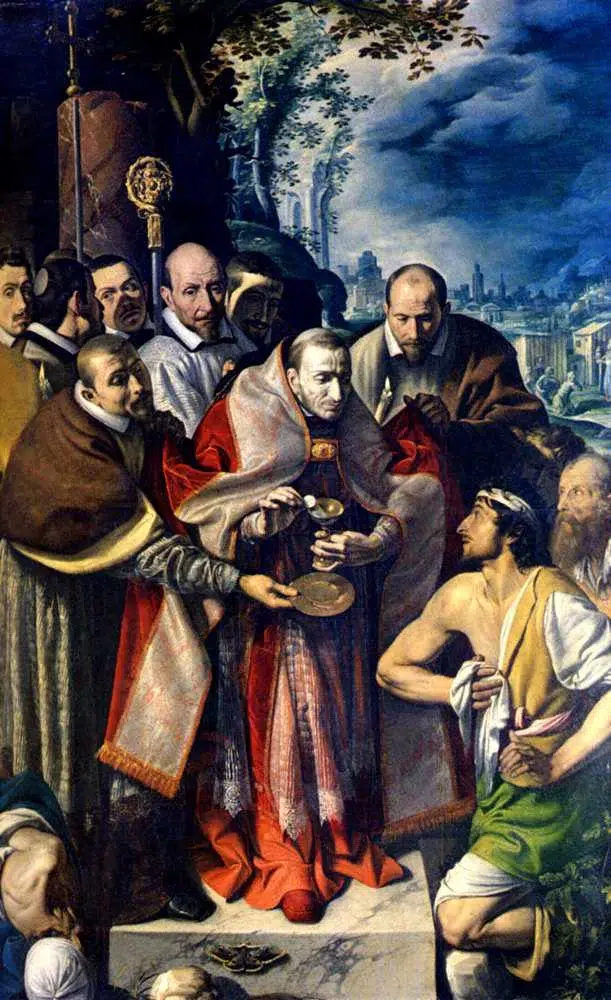
St. Charles Borromeo giving communion to plague victims, by Tanzio da Varallo, ca. 1616 (Domodossola, Italy).

A priest for his people

The defining moment of the heroism of St. Charles Borromeo was the terrible plague that devastated Milan between 1576 and 1577, known as the plague of St. Charles.

When the epidemic broke out, the civil authorities and most of the nobles fled the city to save themselves. St. Charles Borromeo he stayed. He became the moral, spiritual and, in many ways, civil leader of the disease-ridden city.

He organized field hospitals (lazarettos), gathered his faithful clergy and urged them to care for the dying. He himself went through the most infected streets, giving Communion and Extreme Unction to the plague-stricken, without fear of contagion.

He sold his remaining possessions, including the tapestries of his palace, to buy food and medicine for the poor. So that the sick who could not leave their homes could attend Mass, he ordered the Eucharist to be celebrated in public squares. His figure, leading barefoot penitential processions through the city, became an important figure in the city's history. symbol of hope.

Opposition and attack

The reform of St. Charles Borromeo was neither easy nor popular. His rigor earned him powerful enemies. He constantly clashed with the Spanish governors of Milan, who tried to limit his jurisdiction.

But the most violent opposition came from within the Church. The Humiliati, The friars, a religious order that had become morally lax and possessed great wealth, refused to accept his reform. In 1569, a member of this order, Friar Girolamo Donato Farina, attempted to assassinate him.

While St. Charles Borromeo While he was praying on his knees in his chapel, the friar shot him in the back with an arquebus at point-blank range. Miraculously, the bullet only tore his vestments and caused a slight bruise. The people saw this as a divine sign, and Pope Pius V suppressed the order of the Humiliati shortly thereafter.

Legacy, death and canonization

The constant effort, extreme penances and tireless work exhausted the health of St. Charles Borromeo. In 1584, while performing a spiritual retreat on Mount Varallo, he contracted a fever.

He returned to Milan gravely ill and died on the night of November 3, 1584, at the age of 46. His last words were Ecce venio (Here I come).

His reputation for holiness was immediate. The people of Milan venerated him as the priest martyr to charity and reform. The process of canonization was extraordinarily rapid for the time. He was beatified in 1602 and canonized by Pope Paul V in 1610.

St. Charles Borromeo is universally recognized as the patron saint of bishops, catechists and, in a very special way, of all the bishops and catechists. seminarian and spiritual director. His influence on the definition of the priest post-Tridentine - formed, pious and dedicated to his people - is incalculable.