Impressions of nightfall: inner silence and encounter with God

In our walk, we arrive at dusk, at night. Since I was a child, I have been pushed - encouraged, perhaps it would be better - to walk with the day already darkened; and to walk, solitary and in silence, in the midst of the darkness not interrupted by urban lighting. Impregnated in the night, one lives in another way the beating of the earth, the glow of the stars, the aroma of all creation.

Dusk, silence and poetic contemplation

And what a joy, to abandon ourselves to the night without nostalgia, to enter it, almost on tiptoe, and ask it to make us participants in its mystery! A joy that perhaps one day Rainer Maria Rilke glimpsed when he wrote these verses in his Poems to the night:

«And suddenly I understood that you walk with me and play, / oh you, grown night, and I looked at you in amazement.... / ...you, elevated night, / you were not ashamed to know me. Your breath / passed over me. Your dilated seriousness, shared / with a smile, penetrated me».

Inner silence and attitude towards the night

Some welcome the night as a friend, others shun it, as an enemy with whom one can never make peace.

Those who welcome it amicably dispose their spirit to scrutinize the virgin love hidden in darkness and silence. Perhaps with a certain trembling, like Rilke:

«If you felt, O night, as I behold you, how my being recoils at the impulse/ To want to throw itself confidently into your arms/ Can I grasp it so that my brow, arching again/ Will save so vast a flood of gaze?».

I know that I will not find words to sing the beauty of the night -even if I ask poets for help-; perhaps because words exhaust their service in the effort of trying to understand each other; and the night is a land of curds for the hidden human dialogue of the soul with the spirit, which opens and prepares for the ineffable communication -and not only dialogue- between man and God, his creator.

Night is God's creature, and, like all creatures, God's gift to man. Without its darkness, not even the sun would shine. Without the rest it offers us, our walk on earth would be reduced to mere madness; our whole person would lose direction, orientation, and not only the nervous system. The silence and darkness of the night open to man unlimited horizons, more distant and impenetrable than those hidden in the rough sea, and that barely emerge at the edge of the crests of the waves of the ocean sea.
The night keeps the silence

And the night keeps a silence and a darkness for youth; a darkness in silence for maturity; a silence in radiant darkness for the fullness of life. The night enriches our scrutiny; it invites us to penetrate unexplored corners, and the eyes, unable to hold the gaze of the sun, open paths by looking at the stars, and come to unravel the mystery that hides the night: the mystery of man having no other horizon than the Eternal Life, Heaven.

For those who await it as an enemy, the soul of the night is exhausted in darkness and emptiness; and its image seems a foretaste of nothingness.

Silence and darkness, twinned

The night appears then, and appears, twinned with silence and darkness. Tragically twinned. As if darkness were nothing more than darkness, and silence hid the threat of emptiness and oppression. Juan Ramón Jiménez wrote: "The night is leaving, black bull/ -full flesh of mourning, of fright and mystery-, / that has roared terribly, immensely, / to the sweaty fear of all the fallen".

Faced with such an enemy, there is no other recourse but to try to annihilate it, or to flee from it. The night is annihilated by artificially filling it with noise and false light, waiting for the dawn. The candorous mumbled silence becomes anxious shouting, disguised with more or less masked smiles. And the radiant darkness of the universe in the open sky is transformed into tunnel darkness that excludes the stars from our gaze.

The mystery of the disease

Night takes on a different hue when its mystery is combined with that of illness. Some patients await its arrival with anxiety, fearful with a double dread: that sleep will not come, and anguish may turn the hours until dawn into the figure of death, of death itself; or that, if sleep finally overcomes them, it may become the last earthly sleep.

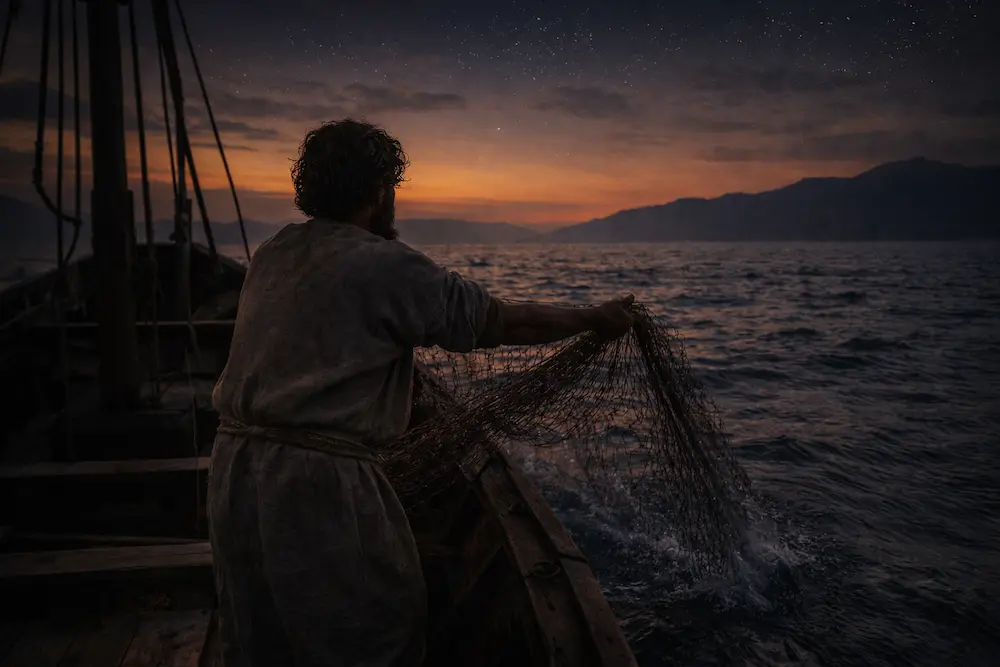
At night the man is aware, without blush or shame, of his penury, of his indigence and even of his misery. He has already discovered, without wonder, that every saint has something - or much - of wretchedness; and that every wretch is in a position to have something - or much - of saint. He has tasted the confirmation of what he had already foreseen in a certain way: that man does not retire: those who stay on land, when the time comes to make the boats to the sea, The best time to fish is always at night. The best fishing is always at night.

The night will be light

Perhaps he feels more helpless in the face of so many fears that assail him at the least opportune moments. Perhaps. And yet, it is worth facing the risk so that at last the night may become light, as the Psalmist prophetically announces: «and the night shall be my light in my delights /for the night, like the day, will be illuminated.»; St. John of the Cross added: «O night you guided, / O night kindlier than the dawn; / O night you joined / Beloved with beloved, / Beloved into Beloved transformed.».

anochecer dios la noche será luz silencio

In a way, Gibran also glimpsed it, who in The Prophet, he wrote:

«I can't teach you how the seas, the mountains, the forests pray. pray in the depths of your heart, / Lend your ear in the peaceful nights, and you will hear murmuring, / Our God, wings of ourselves, we wish with your Will. (...) / We can ask You for nothing; You know our destitution before it is born; / Our need is You; by giving us more of Yourself, You give us everything».   

God has given us Himself to us in the Baby Jesus which we have sung with our lips, worshipped with our intelligence, received in our hearts, with the shepherds, with the magi, with Maria Has his light illuminated the darkness of our night?       


Ernesto Juliá, (ernesto.julia@gmail.com) | Previously published on Religion Confidential.


«Priest to serve and live always for the Church.»

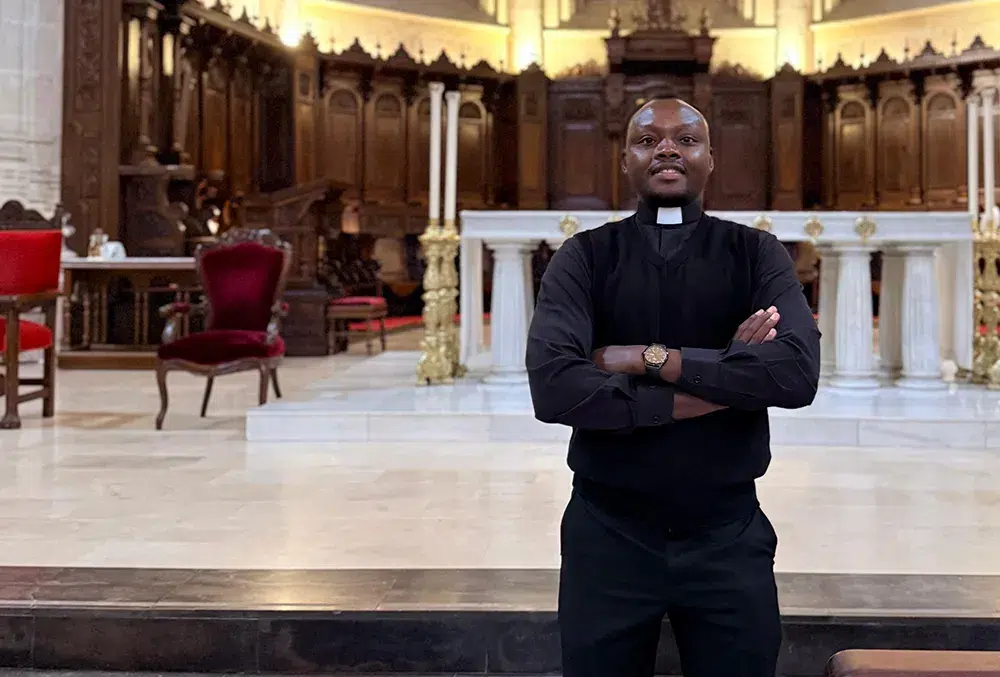
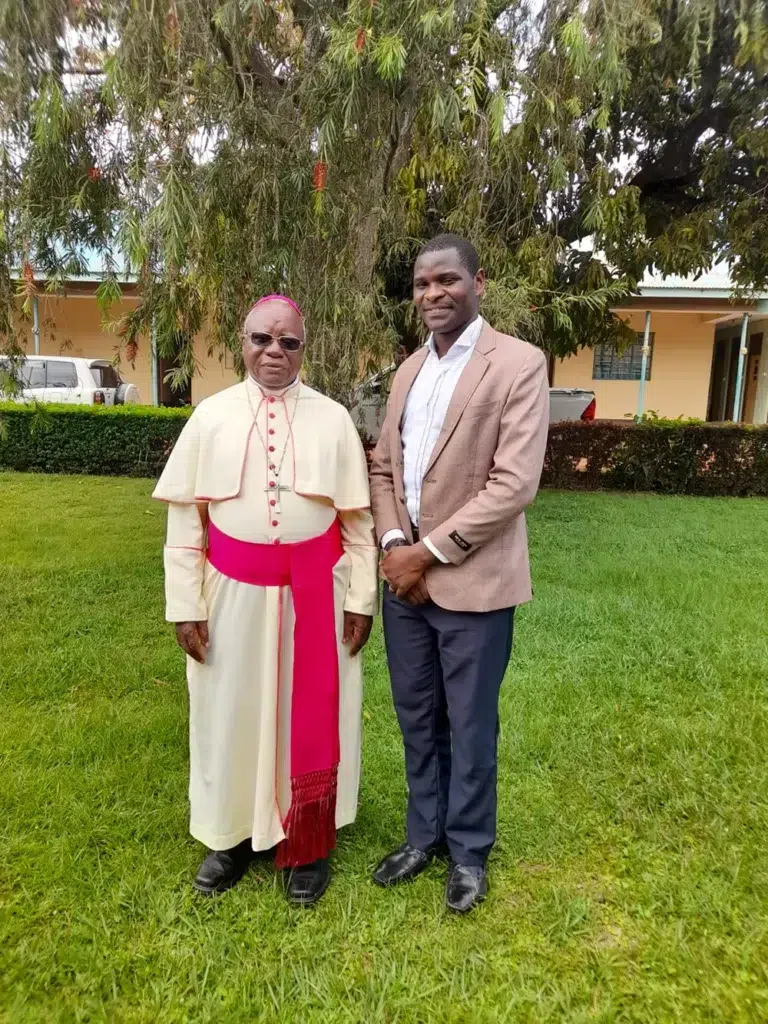
The priest Tadeo Ssemanda is from Uganda, but part of his heart is already Spanish. He speaks perfect Spanish and the customs he has learned during his years in Spain have marked both his life and his priestly ministry.

This young priest of the Diocese of Kasana-Luweero did not have an easy life. His parents died when he was only two years old, but it was the dedication of his aunt, who took him into her home, that would make him know God deeply, to the point of deciding to give his life completely to Him.

«I have clearly seen that my aunt's prayer has helped me to to be a priest. She has offered every day, and still does today, the Rosary for me. And thanks to his support and prayer I have grown a lot in faith and I can be a priest,» explains Tadeo to the CARF Foundation. In fact, he tells us how from a very young age he helped him when he wanted to be an altar boy and took him to Mass at seven in the morning every day so that he could be an altar server. That seed that was sown has sprouted to germinate into a very fruitful vocation.

How God was preparing you

This process was not easy. In addition to the suffering generated by the absence of his parents, there was the economic precariousness of his family and the effort that his aunt made so that he could respond to this call.

«I have seen the hand of God in my life, I have seen the way in which he has been guiding me, making me overcome very complicated barriers and so much suffering. In short, I have perceived how God was preparing me so that I could become a priest,» he adds.

After a first few years in the seminary in Uganda, Thaddeus was sent by his bishop to study in Pamplona, University of Navarra and to train at the University of Navarra. Bidasoa international seminar, where he lived an experience that would change his life, as he has been in two stages in Navarra, first as a seminarian and then as a priest.

In this way, he points out that in Pamplona there is “a different atmosphere” to any seminary in the world due to the universality that is breathed there. «It was a rich experience because I lived with people from all continents and you see how people are and how they live their faith, and this was a great learning experience for me,» he says.

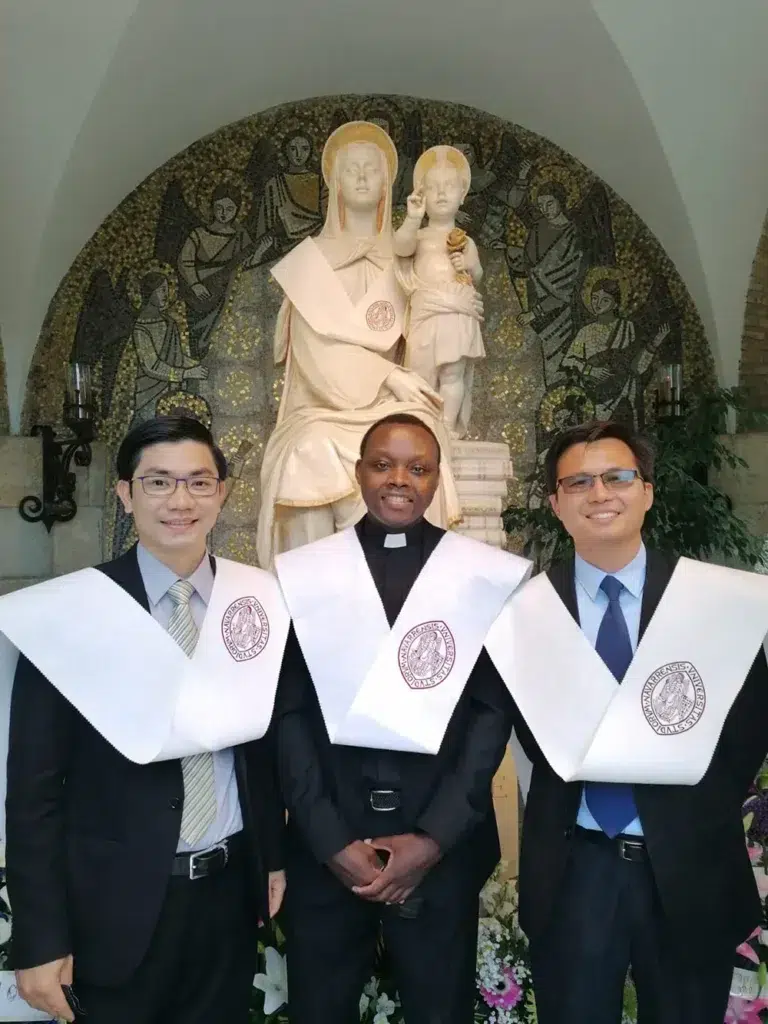
Tadeo, sacerdote de Uganda en su graduación en la Universidad de Navarra, Pamplona.
Tadeo with two classmates on his graduation day.

Ugandan priest trained in Pamplona

From these years he has drawn important lessons for his life, some of which are now fundamental and on which his priestly work is based. Tadeo assures that the first thing was to see the true face of the Church, where “we are all one”, to perceive a communion, both with the priests and with the bishop, because “in Pamplona I learned to be obedient to the bishop and to listen to him«.

Another lesson from Pamplona was to learn to live in a “serene and friendly atmosphere”, something he says he took back to Uganda and which has helped him later on in his coexistence with other priests and in the communities where he has served.

On the other hand, Tadeo emphasizes the fundamental value of prayer. In Pamplona,« he adds, »they taught me to value a life of prayer, to have time for God. And that has helped me a lot to live knowing that there has to be time for everything, but, above all, for God".

But he learned even more lessons from his time in the Ecclesiastical Faculties of the University of Navarre. Tadeo talks about the one that perhaps helps him the most. «We were always taught to be there to serve, serving the Church, We are always serving the people for whom we are there and always living for the Church,» he confesses.

There have been many trials in which he has had to show this service. He recalls that after his return to Uganda as a priest he had neither the means nor the facilities that existed in Spain. With no money and no car for more than a year, but having to attend to widely scattered communities and villages, this experience of joyfully putting himself at the service was always very present to him. «For me, arriving in Uganda and having nothing, but being happy to do God's will, was very fulfilling,» he says.

Not to be distracted from the mission

Now he is back in Spain, specifically in Valencia, finishing a doctoral thesis in Dogmatic Theology, but even here this experience continues to help him. He is a hospital chaplain and on many occasions he receives calls in the early hours of the morning to spiritually assist a sick or dying person. When the temptation to complain arises, Thaddeus remembers that phrase, “we are here to serve”, and so he goes ready to give comfort to those in need.

Asked about the many dangers for today's priests, Thaddeus Ssemanda is clear that the most important thing is «to be very attached to the Lord and recollected in Him, because there are many things that distract us and can make us forget that we are priests. It is easier to lose our way today than in the past.

«One can be a priest and live as if he were working, as if he were a teacher or a bus driver. But our work has to be one of service, of dedication, of giving life and love».

In the face of these dangers, he encourages us to walk holding the hand of the Lord and the Virgin Mary.

To conclude, Father Tadeo Ssemanda remembers with special affection the benefactors of the CARF Foundation., He was able to receive help first as a seminarian and then as a priest to obtain a degree in theology.

«Even though I left there many years ago, I pray for them a lot. I want to encourage them to continue to do this service of supporting seminarians and priests who are trained, because in this way they can participate in some way in the work of a "prophet". Our Lord said that when you help the prophet to fulfill his mission, he also receives the blessings of the prophet. I think that by helping in this way they will receive the graces that this entails», he said.

Documentary Witnesses

The CARF Foundation works to facilitate the integral formation of seminarians and diocesan priests, with the clear objective that they return to their dioceses of origin and put at the service of their communities what they have received during their years of study.

The help The Foundation is not an end in itself. It is oriented to strengthen the intellectual, theological, spiritual and human preparation of those who have been called to the priesthood, so that they can exercise their ministry with solidity, responsibility and a sense of service.

Each seminarian and priest supported assumes the commitment to return to his local Church. There, in their own diocese, they give back in the form of human and pastoral dedication, accompaniment and formation what they have received thanks to the generosity of the benefactors.

The CARF Foundation therefore works with a long-term vision: to form today to serve tomorrow in every diocese in the world.


What is Baptism and what is its symbolism?

The sacrament of baptism signifies and accomplishes death to sin and entrance into the life of the Blessed Trinity through configuration to the paschal mystery of Christ. In the Latin Church, the minister pours water three times over the head of the candidate and pronounces: “I baptize you in the name of the Father, and of the Son and of the Holy Spirit”.

Thanks to Baptism, we are purified of original sin and become part of the Church and the mystical body of Christ. Once we have received the sacrament of Baptism, we have access to the other sacraments and begin to embark on the path of the Spirit. Purified by God's unconditional forgiveness, we become, to all intents and purposes, his children.

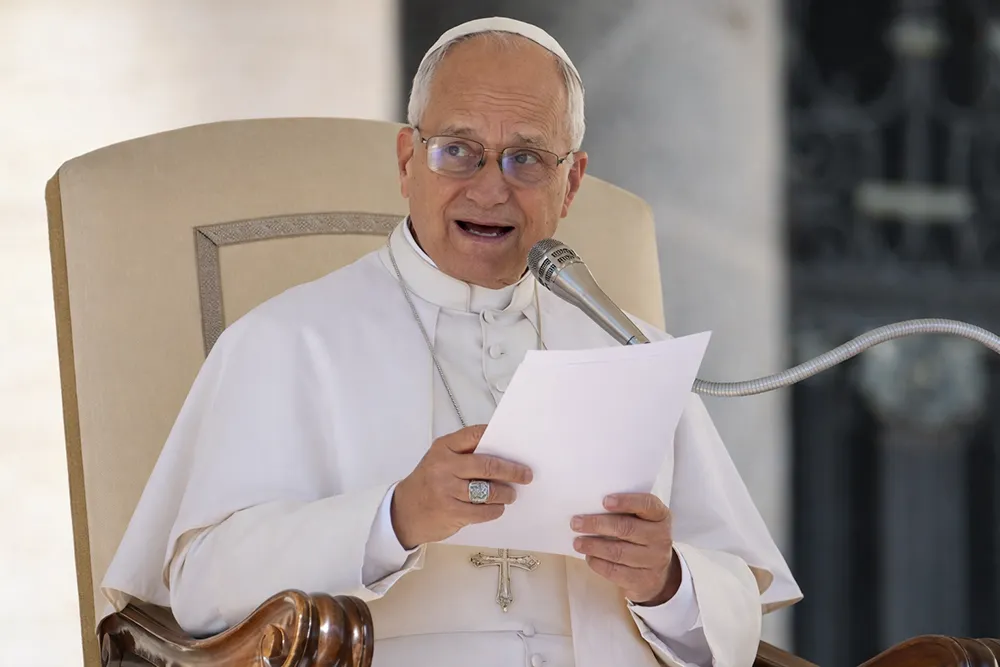
«It frees us from sin and makes us children of God. (...) We renew and confirm our own Baptism, the sacrament that makes us Christians, freeing us from sin and transforming us into children of God, by the power of his Spirit of life. (...) It introduces us all into the Church, which is the people of God, made up of men and women of every nation and culture, regenerated by his Spirit.», Pope Leo XIV, on the Feast of the Baptism of the Lord 2026.

What is Baptism?

Holy Baptism is the foundation of the whole Christian life, the portico of life in the spirit and the door that opens access to the other sacraments. Through baptism we are freed from sin and regenerated as children of God, we become members of Christ and are incorporated into the Church and made sharers in her mission. Catechism of the Catholic Church, no. 1213

Río Jordan Betania  Bautismo Cristo
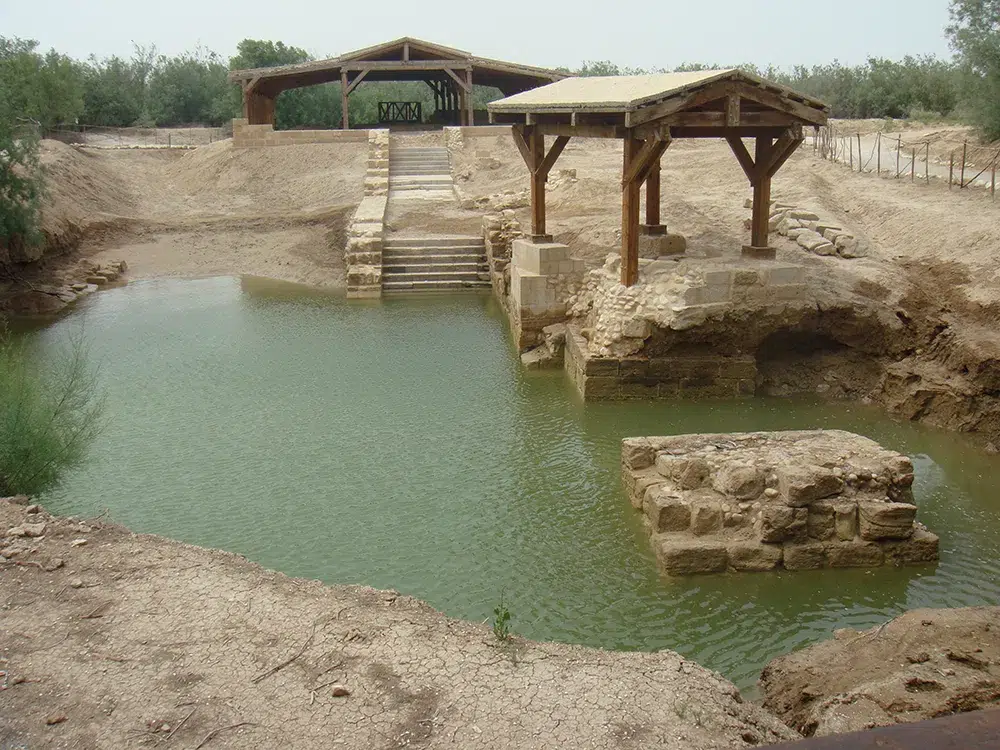
Al-Maghtas, The site where John supposedly baptized Jesus Christ east of the Jordan River.

Brief history of the sacrament

The word baptism comes from the Greek βάπτισμα, baptisma, “immersion". That's exactly what it is, an immersion in purifying water.

The symbology of the water and its saving powerin the Old Testament, it was considered to be instrument of God's will. It happened in the Flood, and in the passage of the Red Sea by Moses and the chosen people to flee Egypt. Also in the baptism of St. John the Baptist, which is the closest thing to the sacrament of Baptism as we know it today.

Jesus came to John to receive Baptism; he truly accepts his own destiny. Coming up out of the water, Jesus sees the heavens open and the Holy Spirit appear in the form of a dove, while from heaven a voice is heard: «You are my beloved Son, my beloved.

The Holy Spirit descends upon him, investing him in his role, transforming him into the Lamb of God. It is the beginning of a new life and the premonition of death, which will lead to the Resurrection. The destiny of a man and of all mankind is achieved on the banks of the Jordan.

From the day of Pentecost, baptism of fire of the Holy Spirit or descent of the Holy Spirit on the Apostles, fifty days after the Resurrection of Jesus, begins the mission of the Apostles and the beginning of the Christian Church.

From this moment on Peter and the other disciples begin to preach the need to repent of their sins and receive Baptism in order to obtain forgiveness and the gift of the Holy Spirit.

"We Christians live in the world and are not exempt from darkness and gloom. However, the grace of Christ received in Baptism brings us out of the night and into the light of day. The most beautiful exhortation we can make to one another is to remind ourselves of our baptism, because through it we have been born for God, being new creatures." Pope Francis, General Audience August 2017.

Why was Jesus baptized?

Jesus begins his public life after being baptized by John the Baptist in the Jordan and, after his Resurrection, he confers this mission to his Apostles: «Go therefore and make disciples of all nations, baptizing them in the name of the Father and of the Son and of the Holy Spirit, and teaching them to observe all that I have commanded you».

Our Lord willingly submitted to the baptism of St. John where the Spirit descended upon Him, and the Father manifested Jesus as His beloved Son.

With his Death and Resurrection, Christ opened to all men the fountains of grace. Therefore, the baptism of the Church erases original sin and makes us children of God. Catechism of the Catholic Church, nn. 1223, 1224, 1225.

Since when have you been baptized in the Church?

Since the day of Pentecost the Church has celebrated and administered holy baptism. In fact, St. Peter declared to the crowd moved by his preaching: "Repent [...] and let every one of you be baptized in the name of Jesus Christ for the remission of your sins, and you will receive the gift of the Holy Spirit" (Acts 2:38). The Apostles and their co-workers offer baptism to whoever believes in Jesus: Jews, God-fearing men, pagans.

Baptism is always linked to faith: "Have faith in the Lord Jesus and you will be saved, you and your household," St. Paul declared to his jailer in Philippi. The account in the Acts of the Apostles continues: "the jailer immediately received baptism, he and all his household".

According to the Apostle Paul, through Baptism the believer participates in the death of Christ; he is buried and rises with Him: «Or do you not know that as many of us as were baptized into Christ Jesus were baptized into his death? We were buried with him through baptism into death, so that, just as Christ was raised from the dead through the glory of the Father, we too might live a new life» (Rom 6:3-4).

The baptized have "clothed themselves with Christ". Through the Holy Spirit, baptism is a bath that purifies, sanctifies and justifies. Catechism of the Catholic Church, n. 1226, 1227.

Symbology of Baptism

Baptism, like all the Sacraments, implies the use of sacred elements in order to impart it. Because they are sacred, they are used only for that purpose and must be blessed by the bishop or a priest. There are also symbolic gestures and non-verbal signs that together give light to this precious and indispensable sacrament in the life of a Christian.

There are many symbols of baptism so that we humans are able to imagine what is happening in the soul of the baptized person, which we cannot see with our eyes:

bautismo

Holy water

Water is the central symbol of the sacrament of Baptism.represents the love of God. It is poured on the forehead of the baptized as a source of inexhaustible love. It has the function of purifying, washing the body and soul of sin. Water is also an element universally recognized as a symbol of life.

At the moment the priest pours water three times over the head of the baptized, the faithful are united with Christ both in his death and in his resurrection and glorification.

As Pope Leo explained, «My dear brothers and sisters, God does not look at the world from afar, at the margins of our lives, our afflictions and our hopes. He comes among us with the wisdom of his Word made flesh, making us part of an amazing plan of love for all humanity.

That is why John the Baptist, filled with astonishment, asked Jesus: «And do you come to me» (v. 14). Yes, in his holiness, the Lord is baptized like all sinners, to reveal the infinite mercy of God. The only-begotten Son, in whom we are brothers and sisters, comes indeed to serve and not to dominate, to save and not to condemn. He is the redeeming Christ; he takes upon himself what is ours, including sin, and gives us what is his, that is, the grace of a new and eternal life.» (St. Peter's Square. Sunday, January 11, 2026, Angelus).

Jesus was baptized in the waters of the Jordan at the beginning of his public ministry (cf. Mt. 3:13-17), not out of necessity, but out of redemptive solidarity. On that occasion, water is definitively indicated as the material element of the sacramental sign. «Unless one is born of water and the Spirit, he cannot enter the Kingdom of God» (Jn 3:5).

Light of the paschal candle

In the Old Testament, the Light, was a symbol of faith, With the advent of Jesus, this symbolism has been enriched with new fundamental meanings in the life of the Christian. The light in baptism is a symbol that represents the guide on the path of encounter with Christ which in turn is light in our lives and in the world. It also symbolizes the resurrection of Christ.

Pope Francis said in a general audience: «This light is a treasure that we must preserve and transmit to others. The Christian is called to be a "Christophore," a bearer of Jesus to the world. Through concrete signs, we manifest the presence and love of Jesus to others, especially to those who are going through difficult situations. If we are faithful to our Baptism, we will spread the light of God's hope and transmit reasons for life to future generations».

Chrism, holy oil or oil of the catechumens

Holy oil is a perfumed and consecrated oil used in the sacrament of Baptism. The anointing with chrism oil symbolizes the full diffusion of grace.. The priest uses the oil to trace a cross on the chest and another between the shoulder blades of the baptized person. He can also use it to anoint the head, stamping it with a seal that consecrates it to its new role.

All this symbolizes strength in the fight against temptations, a kind of shield against sin. The purpose of this symbol of baptism is to consecrate the entrance of the Christian into the great family of the church by symbolizing the gift of the Holy Spirit.

It is also used in the sacrament of confirmation, priestly ordination and anointing of the faithful. patients. The Holy Oil is blessed once a year by the bishop during the Chrism Mass on Holy Thursday.

"Moreover, the heavens are opened, the Spirit descends in the form of a dove, and the voice of God the Father confirms the divine filiation of Christ: events that reveal in the Head of the future Church what will later be sacramentally realized in her members." (Jn 3:5)

The white garment

The white garment symbolizes that the baptized person has "put on Christ" (Galatians 3:27): he has risen with Christ.

The purity of the soul without stain, symbolized by the white garment, after the sacrament of Baptism, the profound change and inner renewal that the sacrament has brought to those who have received it. White is a symbol of a new life, the new dignity that covers the baptized. In ancient times, those who were to be baptized wore a new white robe before joining the other faithful in the Church.

«In baptism, our Father God has taken possession of our lives, has incorporated us into Christ's and has sent us the Holy Spirit. The Lord, Holy Scripture tells us, has saved us by making us reborn through baptism, renewing us by the Holy Spirit, whom He has poured out upon us abundantly through Jesus Christ our Savior, so that, justified by grace, we may become heirs of eternal life according to the hope that we have.». Item 128. It is Christ who passes, in the chapter The Great Unknown, Saint Josemaría Escrivá.

The four gifts of the sacrament of Baptism:


Message of Leo XIV for Lent 2026


Dear brothers and sisters:

The Lent is the time in which the Church, With maternal solicitude, she invites us to place the mystery of God at the center of our lives, so that our faith may regain its impetus and our hearts may not be lost in the worries and distractions of everyday life.

All the way to conversion begins when we allow ourselves to be reached by the Word and welcome it with docility of spirit. There is, therefore, a link between the gift of the Word of God, the space of hospitality that we offer it and the transformation that it brings about. For this reason, the Lenten journey becomes a propitious occasion to listen to the voice of the Lord and to renew our decision to follow Christ, walking with him on the road that leads up to Jerusalem, where the mystery of his coming is fulfilled. Passion, Death and Resurrection.

Listen: Leo XIV's request to live Lent 2026

This year, I would like to draw attention, first of all, to the importance of giving space to the Word through the listen, since the willingness to listen is the first sign with which the desire to enter into a relationship with the other is manifested.

God himself, in revealing himself to Moses from the burning bush, shows that listening is a distinctive feature of his being: «I have seen the oppression of my people, who are in Egypt, and I have heard the cries of their pain» (Ex 3,7). Listening to the cry of the oppressed is the beginning of a story of liberation, in which the Lord also involves Moses, sending him to open a way of salvation for his children reduced to slavery.

He is a God who attracts us, who today also moves us with the thoughts that make his heart vibrate. For this reason, listening to the Word in the liturgy educates us to listen more truly to reality.

Among the many voices that cross our personal and social lives, those that are Sacred Scriptures make us capable of recognizing the voice that cries out from suffering and injustice, so that it does not go unanswered. To enter into this inner disposition of receptivity means to allow ourselves to be instructed by God today to listen to the voice of the Lord. like He even recognized that «the condition of the poor represents a cry that, in the history of humanity, constantly challenges our lives, our societies, political and economic systems, and especially the Church». [1]

Fasting: an ancient and irreplaceable ascetic exercise

If Lent is a time of listening, the fasting constitutes a concrete practice that disposes one to accept the Word of God. Abstinence from food, in fact, is a very ancient and irreplaceable ascetical exercise on the path of conversion. Precisely because it involves the body, it makes more evident what we are “hungry for” and what we consider essential for our sustenance. It serves, therefore, to discern and order the “appetites”, to keep awake the hunger and thirst for justice, to subtract it from resignation, to educate it so that it becomes prayer and responsibility towards our neighbor.

St. Augustine, with spiritual subtlety, lets us glimpse the tension between the present time and the future realization that runs through this care of the heart, When he observes: «It is proper for mortal men to hunger and thirst after righteousness, just as it is proper for the afterlife to be filled with righteousness. Of this bread, of this food, the angels are full; but men, while they hunger, are enlarged; while they are enlarged, they are enlarged; while they are enlarged, they are made capable; and, made capable, in due time they will be filled». [2] 

Fasting, understood in this sense, allows us not only to discipline desire, to purify it and make it freer, but also to expand it, so that it is directed towards God and oriented towards the good.

Fasting with faith and humility

However, if fasting is to preserve its evangelical truth and avoid the temptation to make the heart proud, it must always be lived in faith and humility. It requires remaining rooted in communion with the Lord, because «he does not truly fast who does not know how to nourish himself on the Word of God». [3] As a visible sign of our interior commitment to distance ourselves, with the help of grace, from sin and evil, fasting must also include other forms of deprivation designed to make us acquire a more sober lifestyle, since «only austerity makes the Christian life strong and authentic». [4]

For this reason, I would like to invite you to a very concrete and often unappreciated form of abstinence, that is, to refrain from using words that affect and hurt our neighbor. Let us begin to disarm language, renouncing hurtful words, immediate judgment, speaking ill of those who are absent and unable to defend themselves, slander. Let us strive instead to learn to measure words and cultivate kindness: in the family, among friends, in the workplace, on social networks, in political debates, in the media and in Christian communities. Then, many words of hatred will give way to words of hope and peace.  

Carta de León XIV con motivo de la Asamblea Presbiteral de la Arquidiocesis de Madrid
Together

Finally, Lent emphasizes the communitarian dimension of listening to the Word and the practice of fasting. Scripture also underlines this aspect in many ways. For example, when it recounts in the book of Nehemiah that the people gathered to listen to the public reading of the book of the Law and, practicing fasting, prepared themselves for confession of faith and worship, in order to renew the covenant with God (cf. Ne 9,1-3).

In the same way, our parishes, families, ecclesial groups and religious communities are called to make a shared journey during Lent, in which listening to the Word of God, as well as to the cry of the poor and of the earth, becomes a way of life in common, and fasting sustains real repentance. In this horizon, conversion concerns not only the conscience of the individual, but also the style of relationships, the quality of dialogue, the capacity to allow oneself to be challenged by reality and to recognize what really guides desire, both in our ecclesial communities and in humanity thirsting for justice and reconciliation.

Dear brothers and sisters, let us ask for the grace to live a Lent that will make our ears more attentive to God and to those most in need. Let us ask for the strength of a fast that also reaches the tongue, so that the words that hurt may diminish and the space for the voice of others may grow. And let us commit ourselves so that our communities become places where the cry of those who suffer finds a welcome and listening generates paths of liberation, making us more willing and diligent to contribute to build the civilization of the love.

I heartily bless all of you and your Lenten journey.

Vatican City, February 5, 2026, memorial of St. Agatha, virgin and martyr.


Leo XIV


Antidius James, Tanzanian seminarian: «People in Spain who believe, really believe».»

Antidius James Kaijage is 29 years old and a diocesan seminarian. Thanks to the help of the partners, benefactors and friends of the CARF Foundation, he is in Spain training at the University of Navarra and resides at the Bidasoa Seminary.

He was born in the diocese of Bukoba, in Tanzania, in the heart of Africa. He is the fifth of eight siblings and grew up in a deeply catholic family, where faith has always been a part of daily life.

«We received a Catholic education from the beginning,» she says. Her parents and siblings live their faith naturally and consistently: Sunday Mass and, on vacations, the parish became almost a second home.

Where does Antidius James study and train?

Today Antidius is in the fourth year of Theology in the Ecclesiastical Faculties of the University of Navarre and has been living in the Bidasoa international seminar. He is far from his homeland, but not from his vocation. «God willing, he will choose me as a priest of his Church,» he says humbly.

The example of his parish priest kindled his heart

Your vocation was not born out of an extraordinary event, but from the simple and constant treatment of the sacred, and from the example of her parish priest. If I had to point to a specific moment, it would be the consecration during the Mass of his parish.

«I really liked the way the pastor I celebrated the Mass with great respect. Especially the time of the consecration, the preface... I was very attentive and it felt good,» he says.

I was just a child, but that solemnity, that silence, that silence loaded with mystery, ignited a flame. Enthusiasm then grew in the parish choir, youth activities and community life.

«When we would join together at home for prayer, that also influenced me a lot, because. the life of the priest is a community lifeBeing with the people, serving, consoling, accompanying».

The figure of a parent to discern and support their vocation

Your entry into the seminar was not easy. Her parents were hesitant at first. They told him: «Children have many desires, but when youth comes, everything changes». They feared it was a passing illusion.

seminarista tanzania iglesia formación antidius
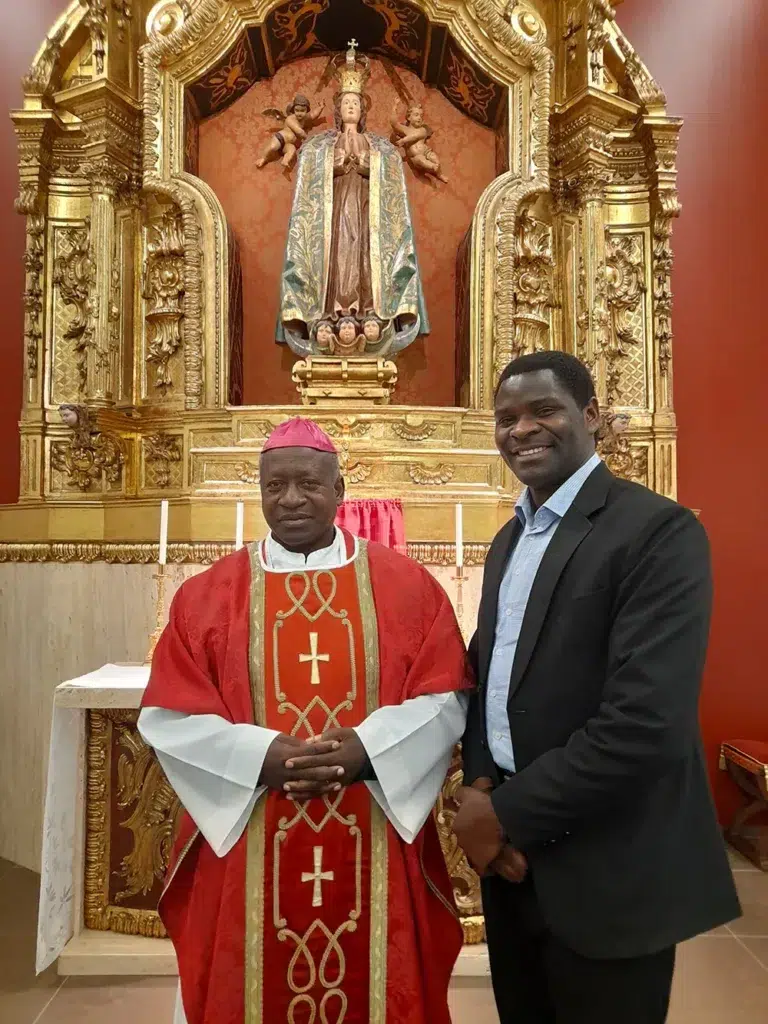
Antidius with Bishop Methodius Kilaini, who sent him to the Bidasoa seminary for training.

But Antidius« desire was not extinguished. On the contrary, he grew up in the midst of adolescence, with its questions, its concerns, its moments of family tension and its desire to be with friends. »My parents were always teaching me, always correcting me," he recalls.

Finally, they gave him permission and their blessing. He entered the seminary supported by the faith of his family.

How is the Church in Tanzania

The Diocese of Bukoba has 150 priests and 766,970 baptized Catholics, nearly 61 % of the population of 1,255,679 people. Catholicism is the majority there, but it is not without its challenges.

«There are some Catholics who change the religion natural of their parents and enter other small religions for economic, psychological, ideological, family or personal reasons».

The Church suffers when those who have received the Baptism and the sacraments go away. That is why he insists on formation, preaching, constant education in the faith.

There is also a real material need. «My diocese needs financial help to do its spiritual, family, pastoral activities better, academic and to assist people in need, so that they are not tempted to deny their faith,» says Antidius.

«We need trained priests, with a universal vision.. Seminarians who can study abroad, learn more and better how the universal Church is, have a global mind in their daily ministries».

Data on religious freedom: latent threat

Tanzania is constitutionally a country with religious freedom.. Religion is separate from government, although there are points of connection.

However, the threat of jihadism worries them. «Tanzania faces a latent threat, although not on the same scale as our neighbors in Somalia, Kenya or Mozambique.» Especially on the islands of Pemba and Zanzibar, which is where the Muslim population is in the majority.

Faced with the problems that arise between the different denominations, this seminarian explains that education, dialogue, political cooperation, control of financing... are important.

Antidius, seminarista de Tanzania en el seminario internacional Bidasoa
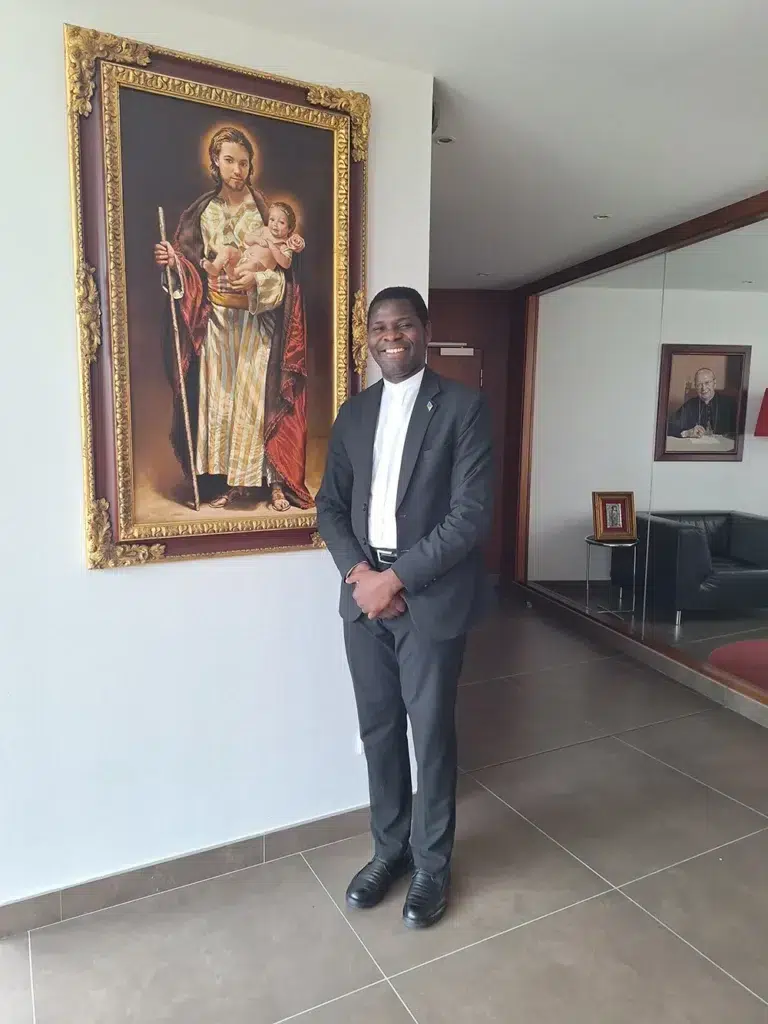
Antidius, next to a painting of St. Joseph in a room in Bidasoa.

«The first thing is to put love and charity, and then everything is solved little by little.».

The humility and patience necessary for evangelization

Antidius also reflects on evangelization in secularized societies, something he is observing in Spain. For him, the starting point is clear: «missionary humility, patience (as Africans have), active listening skills and empathy».

He adds that personal witness has a great power of attraction, both in daily life and through social networks. And he points out as something essential: «to speak the truth about the faith and the teaching of Christ without fear, because that is how the apostles and the Fathers of the Church lived it».

Analyzing faith in Spain

He was coming to a country with a long Christian tradition and discovered a nation where many are «event Catholics, but not practicing Catholics. He verified it in his pastoral experience: »Faith is present in weddings, baptisms, communions, Holy Week, processions... but not in the attendance to the Holy Mass, which is the center of the mystery of our salvation,« he laments.

However, he admires the fact that many Spaniards have great devotion and respect for the Virgin Mary.

But in spite of some shadows, he confesses that he is learning a lot in our country, he is positively surprised by the coexistence in the seminary, the education, the care for customs and norms, and he highlights something hopeful: «people who believe, really believe».

What Africa can teach Spaniards

Antidius affirms that Spaniards and Africans can learn from each other for evangelization, but points out some traits of African Catholics:

Antidius with his current bishop, Bishop Jovitus Mwijage.

The priest of the 21st century

This Tanzanian seminarian speaks of the priesthood with an awareness of today's challenges. «Today's priest must integrate human, spiritual, intellectual and pastoral dimensions to respond to a secularized, technological and constantly changing society.».

For him, he must cultivate the gift of people and kindness in order to generate trust and overcome individualism. In addition, he must acquire a solid cultural and theological formation to respond to all the questions of this century.

«But, above all, he must be a man of deep and constant prayer with God, which is the source of his apostolate and his identity,» he says.

How to understand the identity of the priest

And be clear about the priestly identity and fidelity to the magisterium, spirituality centered on the altar and the Eucharistic sacrifice. As St. John Bosco says: «Priest of Jesus Christ, celebrate this Holy Mass as if it were your first, your last, your only Mass».

And it concludes with a simple and powerful image: «the priest of the 21st century is called to be a good shepherd, a father, a brother, to present and identify the presence of God and who lives in the kingdom of God».


Marta Santínjournalist specializing in religion.


7 Sundays: St. Joseph, a father's heart

The seven Sundays of St. Joseph are a traditional devotion of the Church that invites you to prepare spiritually for its solemnity, the March 19, meditating each week on the seven joys and the seven sorrows of the saint.

The practice, which usually begins in the seventh Sunday before March 19, encourages the faithful to to receive Communion in honor of St. Joseph every Sunday and to pray the traditional prayers linked to their seven sorrows and joys. 

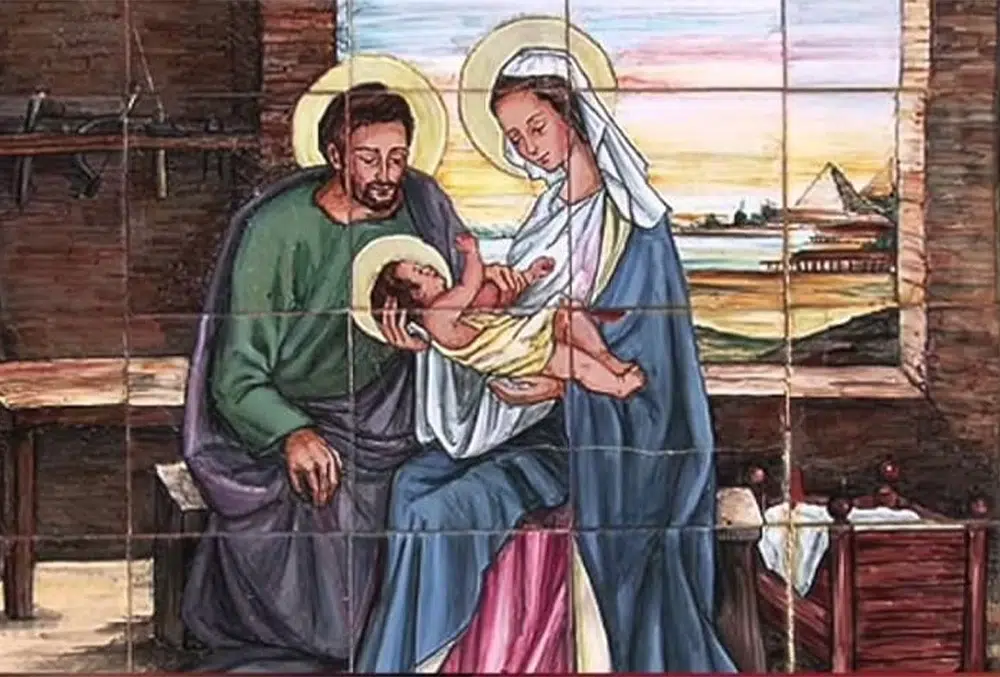
This devotional exercise reflects episodes from the life of St. Joseph such as the doubt before the mystery of the Annunciationthe poverty at the birth of Jesus and the flight to Egypt, along with joys such as the angel's message and the life together with Jesus and Mary in Nazareth

In this context of reflection and preparation, the Pope Leo XIV has given pastoral emphasis to the figure of St. Joseph in his recent public interventions. During the audiences of December 2025, the pontiff underlined the importance of trusting in God's mercy and placing personal and community life in His hands, encouraging the faithful to see in St. Joseph an example of simple fidelity to the divine will. 

«Piety and charity, mercy and abandonment; these are the virtues of the man of Nazareth that the liturgy proposes to us today, so that they may accompany us in these last days of Advent, towards Holy Christmas.» The seven sunday devotion thus offers a concrete way to to approach St. Joseph as a model of faith and dedication in the ordinary life., The Pope invited us to meditate each Sunday on one of the sorrows and joys that marked his life in the service of the Holy Family and the whole Church.

Siete domingos de san José

Seven Sundays of St. Joseph: a journey through his sorrows and joys

The seven Sundays of St. Joseph invite us to retrace, week by week, the moments of light and shadow in the life of the Holy Patriarch. By contemplating his joys and difficulties, this custom of the Church helps us to grow in intimacy with him and prepares us to celebrate his solemnity on March 19.

First Sunday of St. Joseph 

First pain: When his mother Mary was betrothed to Joseph, before they lived together, she was found to have conceived in her womb by the power of the Holy Spirit (Mt 1:18). 

First joy: the angel of the Lord appeared to him in a dream and said, "Joseph, son of David, do not be afraid to take Mary your wife, for that which is conceived in her is of the Holy Spirit. She will bear a son, and you shall call his name Jesus (Mt 1:20-21).

Second Sunday of St. Joseph

Second pain: He came to his own, and his own received him not (Jn 1:11). 

Second joy: They went in haste and found Mary, Joseph and the child reclining in the manger (Lk 2:16).

Third Sunday of St. Joseph

Third pain: When the eight days were fulfilled for circumcising him, they called his name Jesus, as the angel had called him before he was conceived in the womb (Lk 2:21).

Third joy: she will bear a son, and you shall call his name Jesus, for he will save his people from their sins (Mt 1:21).

Fourth Sunday of St. Joseph

Fourth pain: Simeon blessed them, and said to Mary his mother, "Look, this man has been set up as a sign of contradiction so that the thoughts of many hearts may be revealed" (Lk 2:34-35). 

Fourth joy: For my eyes have seen your salvation, which you have prepared for all peoples, a light to enlighten the nations (Lk 2:30-31).

Fifth Sunday of St. Joseph

Fifth pain: the angel of the Lord appeared to Joseph in a dream and said to him: Arise, take the child and his mother, and flee to Egypt, and stay there until I tell you, for Herod is going to seek the child to kill him (Mt 2:13). 

Fifth joy: and was there until the death of Herod, so that what the Lord says through the prophet would be fulfilled: "Out of Egypt I called my son" (Mt 2:15).

Sixth Sunday of St. Joseph

Sixth pain: He arose, took the child and his mother and returned to the land of Israel. But when he heard that Archelaus was reigning in Judea in place of his father Herod, he was afraid to go there (Mt 2:21-22). 

Sixth joy: and went to live in a city called Nazareth, so that what the prophets had said would be fulfilled: he will be called a Nazarene (Mt 2:23).

Seventh Sunday of St. Joseph

Seventh pain: They sought him among their relatives and acquaintances, and when they did not find him, they returned to Jerusalem in search of him (Lk 2:44-45). 

Seventh joy: At the end of three days they found him in the Temple, sitting in the midst of the doctors, listening to them and asking them questions (Lk 2:46).

The Church, following an ancient custom, prepares the feast of St. Joseph on March 19, dedicating to the Holy Patriarch the seven Sundays preceding that feast in memory of the principal joys and sorrows of St. Joseph's life. 

Specifically, it was Pope Gregory XVI who promoted the devotion of the seven Sundays But Blessed Pius IX gave them perennial topicality with his desire to have recourse to St. Joseph, to alleviate the then afflictive situation of the universal Church.

St. Josemaría advises living the seven Sundays of St. Joseph

In a get-together, St. Josemaría proposed a concrete devotion to grow in love for our Lady: to turn to St. Joseph as a sure, close and trusting path in the Christian life.

Father in tenderness, obedience and welcoming

Jesus saw the tenderness of God in Joseph), which is to be expected of all good fathers (cf. Ps 110:13). Joseph taught Jesus, while protecting him in his infant weakness, to 'see' God and to turn to Him in prayer. Also for us «it is important to encounter God's Mercy, especially in the sacrament of Reconciliation, having an experience of truth and tenderness.

There God welcomes us and embraces us, sustains us and forgives us. Joseph also teaches us that, in the midst of life's storms, we must not be afraid to yield the helm of our boat to God..

In a manner similar to that of the Virgin Mary, Joseph also pronounced his "fiat" (go to) to God's plan. He was obedient to what God asked him to do., even though this manifested itself in dreams. And furthermore, what seems amazing, he 'taught' obedience to Jesus. In the hidden life of Nazareth, under the guidance of Joseph, Jesus learned to do the will of the Father. And this, going through the passion and the cross (cf. Jn 4:34; Phil 2:8; Heb 5:8).

As St. John Paul II wrote in his exhortation Redemptoris custos (1989), on St. Joseph: «Joseph was called by God to serve directly the person and mission of Jesus through the exercise of his fatherhood.Thus he cooperates in the fullness of time in the great mystery of redemption and is truly '...'.minister of salvation’».

All this happened through Joseph's acceptance of Mary and of God's plan for her. Joseph assumed this plan, his paternity, mysterious for him, with personal responsibility, without looking for easy solutions. And these events shaped his inner life.