Friendship between saints: Padre Pio and John Paul II

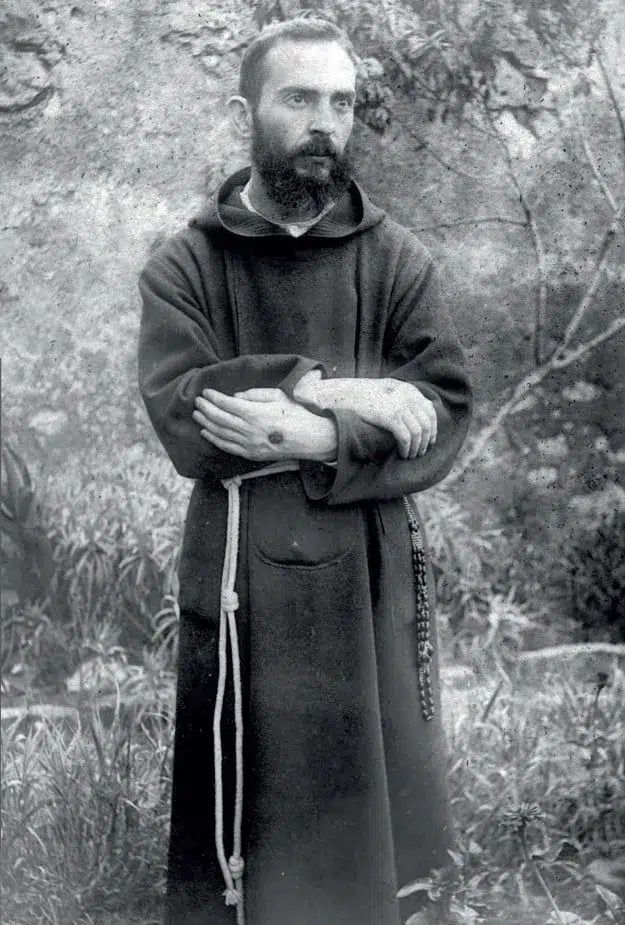
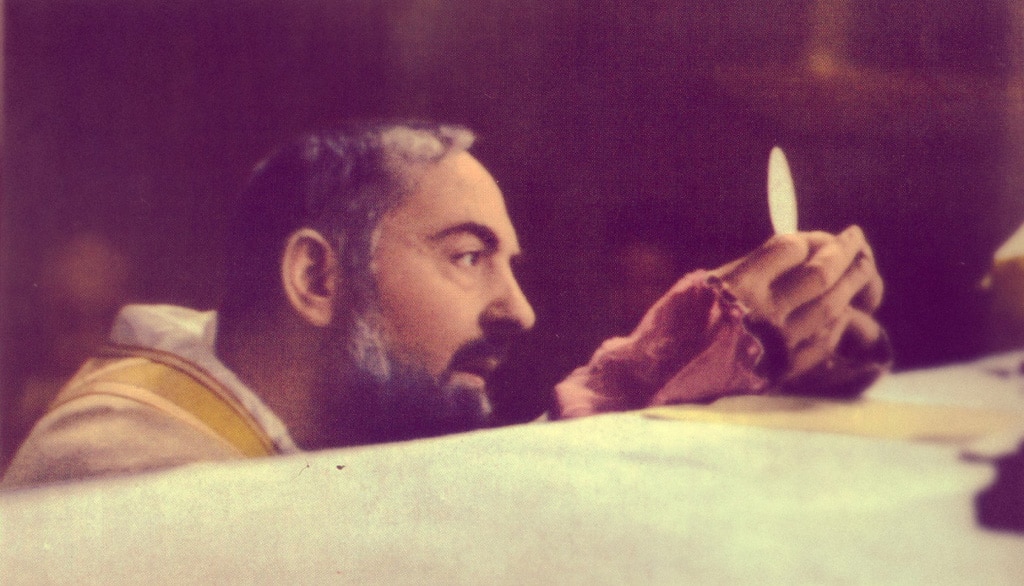
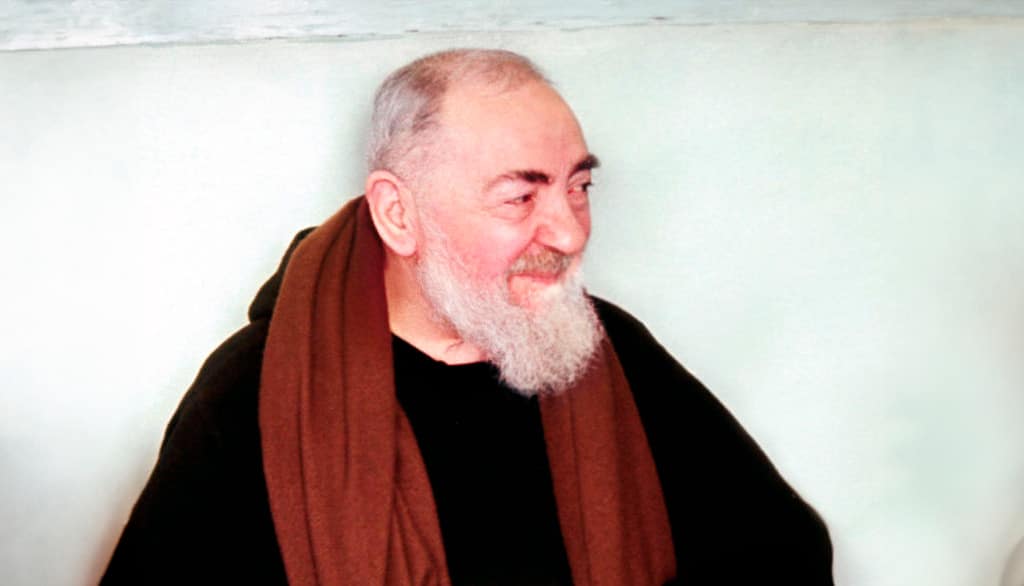
Padre Pio, Italian Capuchin, (1887-1968), canonized in 2002, in a multitudinous ceremony by St. John Paul II under the name of St. Pio of Pietrelcina, this holy priest received an extraordinary spiritual gift to serve all the men and women of his time. This gift marked his life, filling it with suffering, not only with the physical pain caused by his stigmata, but also with the moral and spiritual suffering caused by those who considered him a madman or a swindler.

Padre Pio, generous dispenser of God's mercy

The reality is that this saint helped thousands of people to return to the faith, to convert and come closer to God. Padre Pio performed amazing healings. And predictions difficult to contrast, such as the one made to Karol Wojtyla himself, predicting his future papacy. The Frenchman Emanuele Brunatto credited that same gift of prophecy that allowed him to find out from time to time what was going to happen. "It is Jesus," explained Padre Pio, "who sometimes lets me read his personal notebook...".

Privilege of a penitent

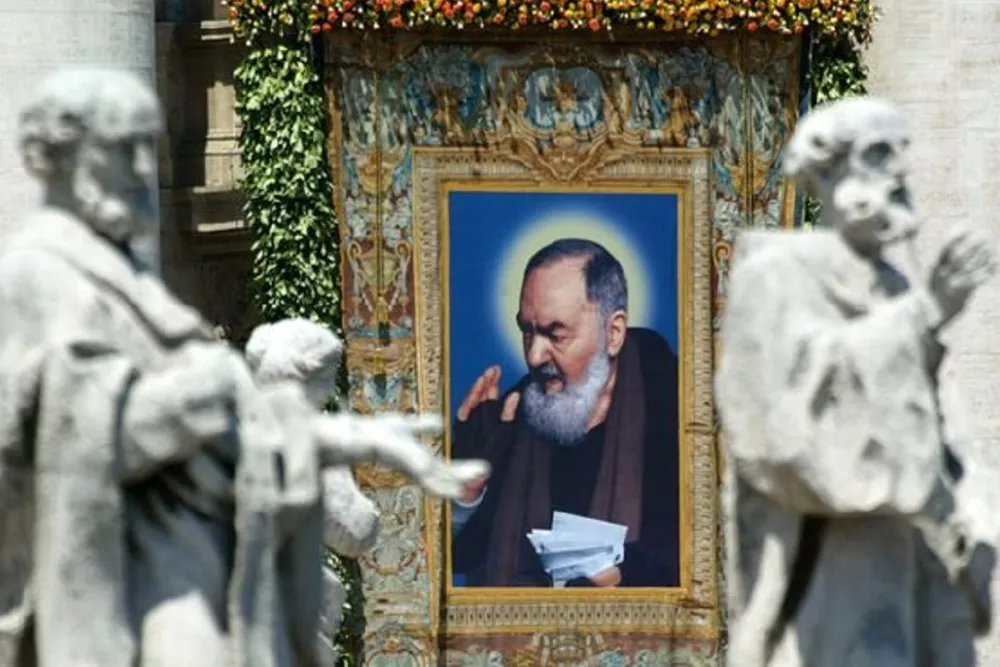
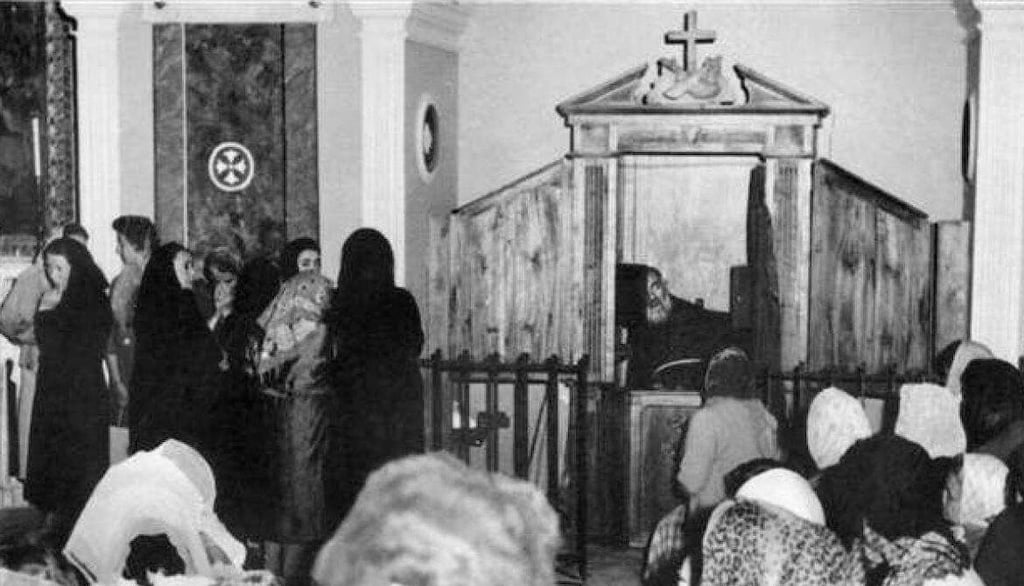
At the Mass of canonization on June 16, 2002 in St. Peter's Square at the Vatican, St. John Paul II affirmed that ".Padre Pio was a generous dispenser of divine mercyHe made himself available to everyone by welcoming them, giving them spiritual direction and especially by administering the sacrament of penance. I too, in my youth, had the privilege of benefiting from his availability to penitents. The ministry of the confessional, which is one of the distinctive features of his apostolate, attracted countless crowds of the faithful to the convent of San Giovanni Rotondo".

How did John Paul II and Padre Pio meet?

The relationship between Padre Pio and St. John Paul II is not only due to the fact that the beatification and canonization ceremonies of the Capuchin friar were held during the Polish pope's pontificate, but also because, in 1948, Karol Wojtyla met Padre Pio at San Giovanni Rotondo.

The first meeting of two saints

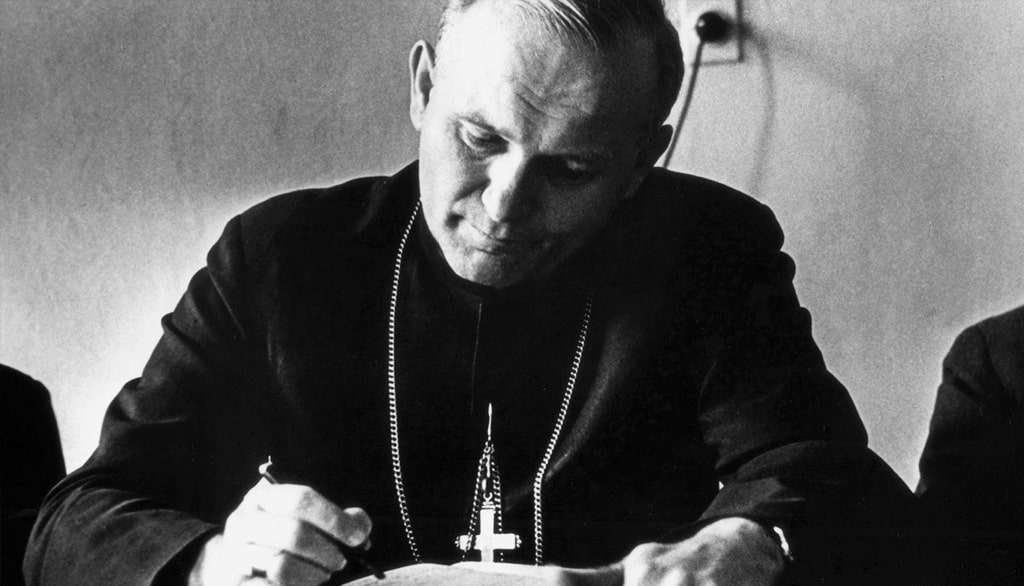
It was in April 1948 that Karol Wojtyla, a newly ordained priest, decided to meet Padre Pio. "I went to San Giovanni Rotondo to see Padre Pio, to participate in his Mass and, if possible, to go to confession with him." 

This first meeting was very important for the future pope. This was reflected years later in a letter he sent in his own handwriting, written in Polish, to the Father Guardian of the convent of San Giovanni Rotondo: "I spoke with him in person and exchanged a few words, it was my first meeting with him and I consider it the most important".

While Padre Pio was celebrating the Eucharist, the young Wojtyla took special notice of the friar's hands, where the stigmata could be seen covered by a black scab. "On the altar of San Giovanni Rotondo the sacrifice of Christ Himself was being fulfilled, and. during confession, Padre Pio offered a clear discernment and simple, addressing the penitent with great love".

The painful wounds of Padre Pio

The young priest was also interested in Padre Pio's wounds: "The only question I asked him was which wound caused him the most pain. I was convinced it was the one on my heart, but Padre Pio surprised me when he said: 'No, the one that hurts me the most is the one on my back, the one on my right side.

This sixth shoulder injuryas the one Jesus suffered while carrying the cross or the patibulum on the road to Calvary. It was the sore "that hurt the most", because it had festered and had never "been treated by the doctors".

The letters of John Paul II and Padre Pio date back to the Council period.

The letter dated November 17, 1962 read: "Venerable Father, I ask you to pray for a forty-year-old mother of four daughters who lives in Krakow, Poland. During the last war she was in the concentration camps in Germany for five years, and is now in grave danger of health, even life, due to cancer.

Pray that God, with the intervention of the Blessed Virgin, will show mercy to her and her family. In Christo obligatissimus, Carolus Wojtyla".

At that time, Monsignor Wojtyla, who was in Rome, received the news of the serious illness of Wanda Poltawska. Convinced that Padre Pio's prayer had a special power before God, he decided to write to him to ask for help and prayers for the woman, mother of four daughters. 

This letter came to Padre Pio from Angelo BattistiAngelo, an official of the Vatican Secretariat of State and administrator of the House of the Relief of Suffering. He himself recounts that after reading the contents to him, Padre Pio uttered the famous phrase: "I can't say no to this one!", and added: "Angelo, keep this letter because one day it will be important".

Thanks for the healing

A few days later, the woman underwent a new diagnostic examination which showed that the cancerous tumor had completely disappeared. Eleven days later, John Paul II again wrote her a letter, this time to thank her.

The letter said: "Venerable Father, the woman who lives in Krakow, Poland, mother of 4 girls, was suddenly cured on November 21 before surgery. We give thanks to God and also to you, Venerable Father.

I express my sincere thanks on behalf of the lady, her husband and the whole family. In Christ, Karol Wojtyla, Capitular Bishop of Krakow". On that occasion the friar said: "Praise be to the Lord!

"Look at the fame that Padre Pio has achieved; the followers he has gathered around him from all over the world. But why, because he was a philosopher, because he was a wise man, because he had the means?
Nothing of the sort: because he said Mass humbly, went to confession from morning to night and was, it is difficult to say, a representative sealed with the wounds of Our Lord. A man of prayer and suffering". Pope St. Paul VI, February 1971.

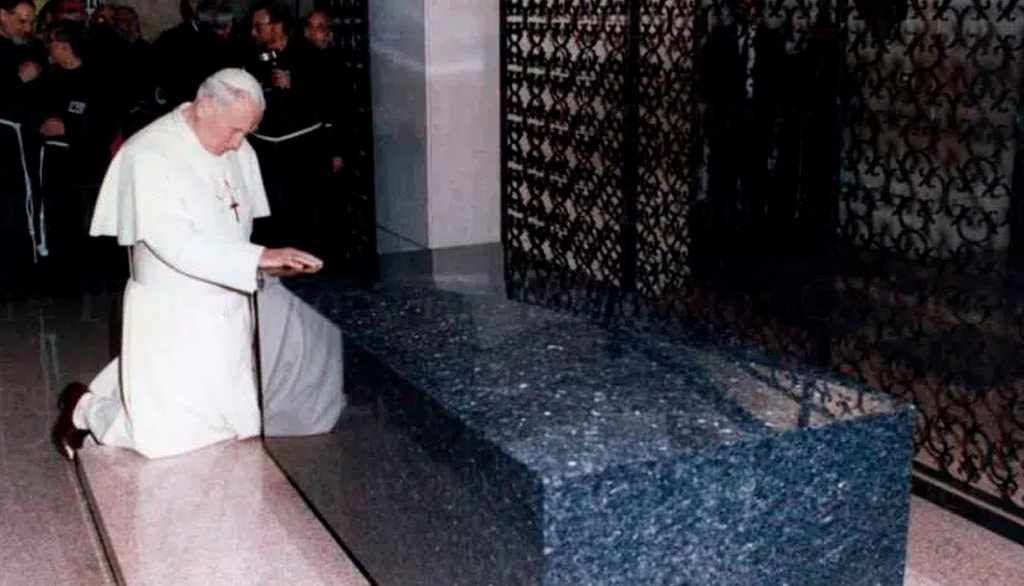
Karol Wojtyla praying at the tomb of Padre Pio in San Giovanni Rotondo.

John Paul II's visits to the tomb of Padre Pio

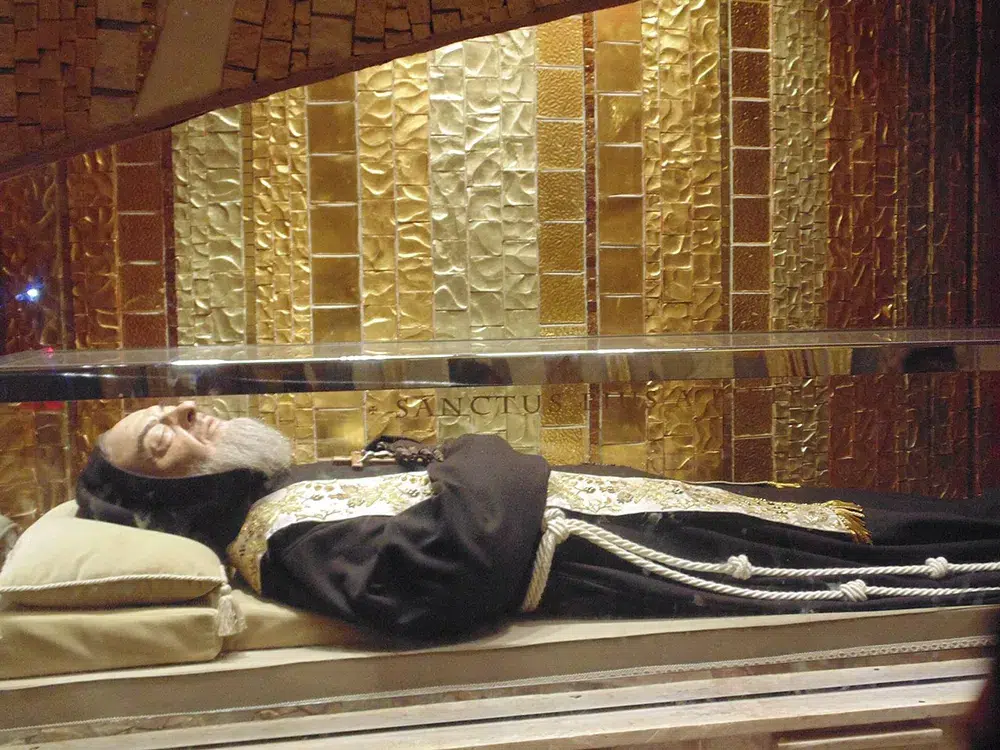
Wojtyla returned to San Giovanni Rotondo on two more occasions. The first, when he was Cardinal of Krakow, in 1974 and the second, when he was already proclaimed Pope, in 1987. On these two trips he visited the mortal remains of Padre Pio and prayed kneeling at the tomb of the Capuchin friar. 

In the autumn of 1974, then Cardinal Karol Wojtyla, was back in Rome and, "as the anniversary of his ordination to the priesthood (November 1, 1946) approached, he decided to commemorate the anniversary in San Giovanni Rotondo and celebrate the Mass at the tomb of Padre Pio. Due to a series of vicissitudes (November 1 was particularly rainy) the group composed of Wojtyla, Deskur and six other Polish priests was delayed considerably, arriving in the evening around 9 pm.

Unfortunately Karol Wojtyla could not fulfill his wish to celebrate Mass at Padre Pio's tomb on the day of his ordination to the priesthood. So he did it the next day. Stefano Campanella, director of Padre Pio TV.

Love for penitents

Padre Pio "had a simple and clear discernment and treated the penitent with great love," John Paul II wrote that day in the visitors' book of the convent in San Giovanni Rotondo.

In May 1987, St. John Paul II, now Pope, visited the tomb of Padre Pio on the occasion of the first centenary of his birth.

Before more than 50,000 people, His Holiness proclaimed: "Great is my joy at this meeting, and it is for several reasons. As you know, these places are linked to personal memories, that is, to my visits to Padre Pio during his earthly life, or spiritually after his death, at his tomb.

St. Pio of Pietrelcina

On May 2, 1999, John Paul II beatified the stigmatized friar, and on June 16, 2002, he proclaimed him a saint. On that day, St. John Paul II canonized him under the name of St. Pio of Pietrelcina. In the homily of his sanctification, John Paul recited the prayer he composed for Padre Pio: 

"Humble and beloved Padre Pio: Teach us too, we ask you, humility of heart, so that we may be considered among the little ones of the Gospel, to whom the Father has promised to reveal the mysteries of his Kingdom. 

Help us to pray without ever tiring, in the certainty that God knows what we need before we ask him for it. Reach out to us with a gaze of faith capable of readily recognizing in the poor and the suffering the very face of Jesus. 

Sustain us in the hour of struggle and trial, and if we fall, grant that we may experience the joy of the sacrament of forgiveness. Transmit to us your tender devotion to Mary, Mother of Jesus and our Mother. 

Accompany us on our earthly pilgrimage towards the happy homeland, where we too hope to arrive to contemplate eternally the glory of the Father, the Son and the Holy Spirit. Amen.

Did St. Pio and St. Josemaría have a relationship?

According to several sources, There is no record that St. Josemaría Escrivá and Padre Pio of Pietrelcina ever met personally.

Although they did not meet directly, there was an indirect relationship and mutual respect between them. Padre Pio even defended Opus Dei on one occasion. It is related that an Italian businessman, Luigi Ghisleri, who had doubts about the Work, consulted Padre Pio, who replied: "Don't worry. Opus Dei is God's work, it is a holy thing!

Moreover, the founder of Opus Dei, St. Josemaría, was convinced of Padre Pio's holiness and defended him whenever anyone questioned the figure of the Capuchin. Both saints were elevated to the altars by St. John Paul II, becoming important intercessors for the Church.


Bibliography

- La Brújula Cotidiana interviews the director of Padre Pio TV, Stefano Campanella.
- Interview with Polish Archbishop Andrew Maria Deskur, 2004.
- Homily of John Paul II. Mass of Sanctification, 2002.

St. Matthew, Apostle and Evangelist, September 21

Every September 21st, the Church celebrates the feast of St. MatthewSt. Matthew, apostle and evangelist, was one of the twelve disciples who followed Jesus and were direct witnesses of his life, teachings, Passion and Resurrection. St. Matthew, also known as Levi, offers us a profound example of conversion, dedication and fidelity to the evangelizing mission, qualities that continue to inspire priests and faithful today.

His life shows how a personal encounter with Jesus can completely transform a person's heart and lead to a radical commitment. The figure of St. Matthew helps us to know the history of early Christianity and to understand how to live the priestly vocation and evangelizing commitment.

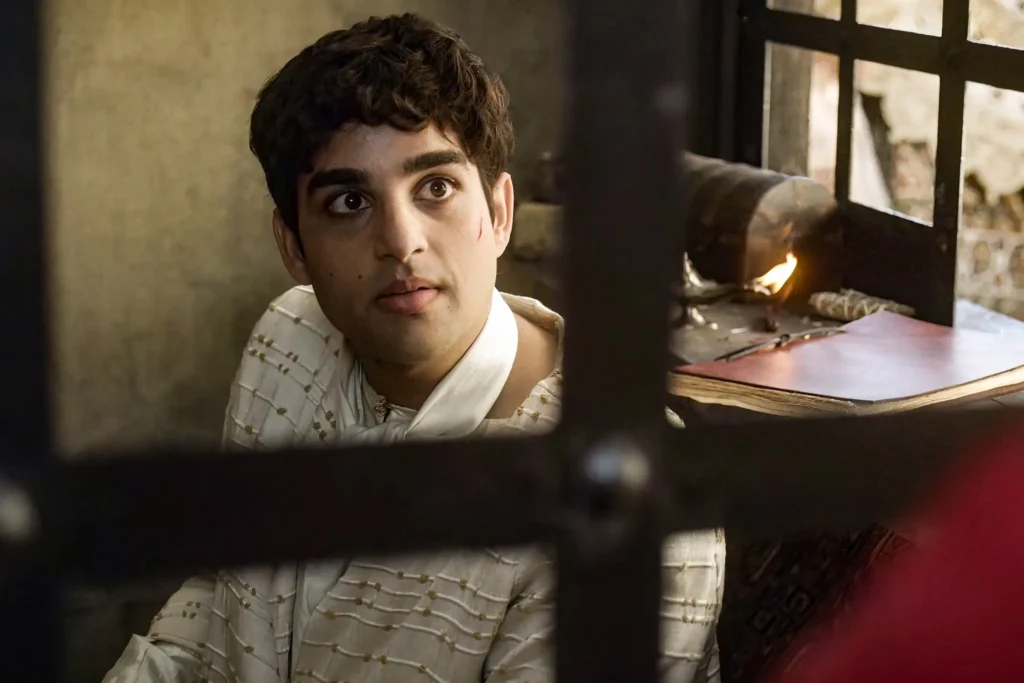
Matthew in his position as tax collector before meeting Jesus. Facebook image via The Chosen.

Before being called by Jesus, Matthew practiced the profession of tax collector in Capernaum. This work, which was socially frowned upon by the Jewish people and often associated with corruption, did not prevent Jesus from choosing him as a disciple. The choice of Matthew underlines a central message of the Gospel: God calls each personregardless of its past, in order to transform it and place it at the service of its mission.

Upon hearing Jesus' invitation, Matthew promptly responded by leaving what he was doing and going away. This resolute act of total self-giving is an opening of the heart to a vocation and serves as a model for all those who feel a call to the priesthood, to total self-giving in celibacy or to the consecrated life. Matthew understood that true richness is found in the surrender of one's life to God and in the mission of bringing his message to others.

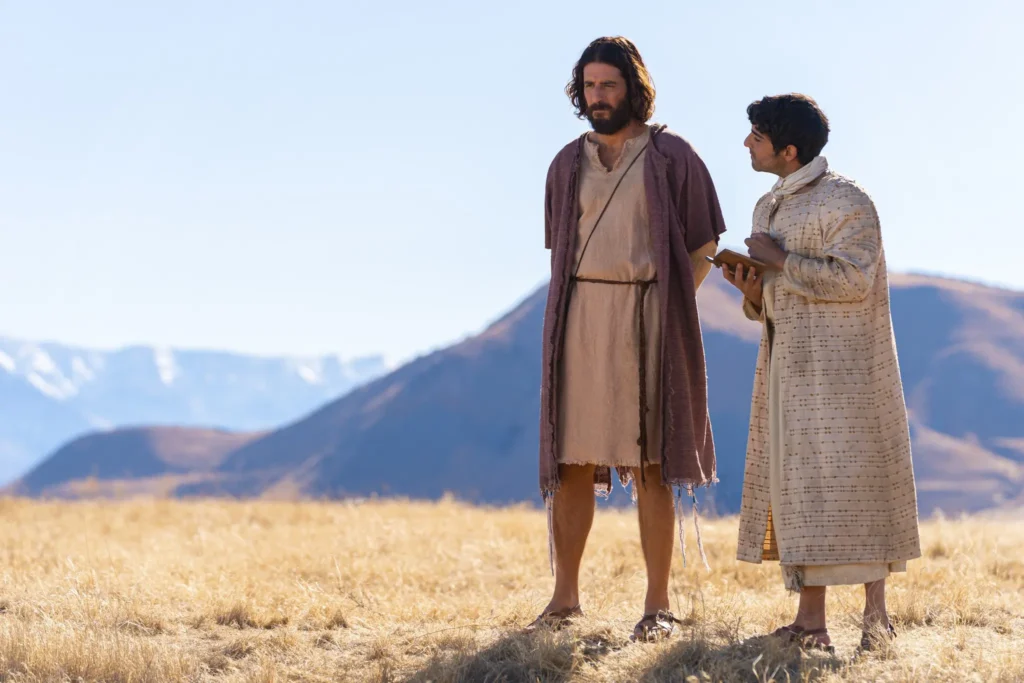
Matthew dedicated himself to following Jesus and being a witness of his work. Later, he will write the Gospel that bears his nameThe first of the four gospels of the New Testament and one of the three synoptic gospels, in which he presents Jesus as the promised Messiah and fulfilling the prophecies of the Old Testament. He tries to convince the Jews through this relationship with the scriptures that he knew well. This Gospel emphasizes Jesus' closeness to the needy and the value of daily life.

Matthew, together with Jesus, takes notes for his Gospel. Facebook image via The Chosen.

The Gospel of Matthew

The Gospel according to St. Matthew is characterized by its pedagogical and moral approachThe book was addressed to both Jews and Christians of all times. His contributions include:

This Gospel thus becomes a source of inspiration for priests and laityreminding them that evangelizing does not mean just preaching words, but setting an example that transforms lives and communities.

Priests: continuers of the mission

Priests are called to be references for all disciples of JesusThe mission of the apostles, continuing the work of Matthew and the twelve apostles. His mission is framed in three basic dimensions:

  1. Preaching the GospelThe aim of the project is to transmit the message of Christ in a clear and accessible way, adapted to the present times.
  2. Administering the sacramentsThe sacraments of Baptism, Confirmation, Marriage, Priestly Ordination and Anointing of the Sick are the most frequent sacraments of the Eucharist and Confession.
  3. Pastoral accompaniment of the faithfulTo guide, educate and support people in their spiritual growth and in the living of their faith.

In a rapidly changing world, priests face the challenge of bringing the faith to new contexts: globalized cities, digital societies, pluralistic cultures. Following the example of St. Matthew, priests are called to adapt to new media and channels of communication. communication without losing the authenticity of the Christian message.

The evangelization in the 21st century has been transformed by digitalization and the global reach of the internet. Social networks, blogs, podcasts and live broadcasts allow the voice of the Gospel to reach millions of people who otherwise would not have direct contact with the Church.

Examples of current initiatives include:

These examples are just a sample that allows evangelizing young people and adults in their natural contextsThe Gospel is a way of integrating faith into daily life and making the witness of Christian life more palpable. Just as St. Matthew transmitted his experience with Jesus through his Gospel, today priests and digital evangelizers seek to share the faith in a concrete and close way.

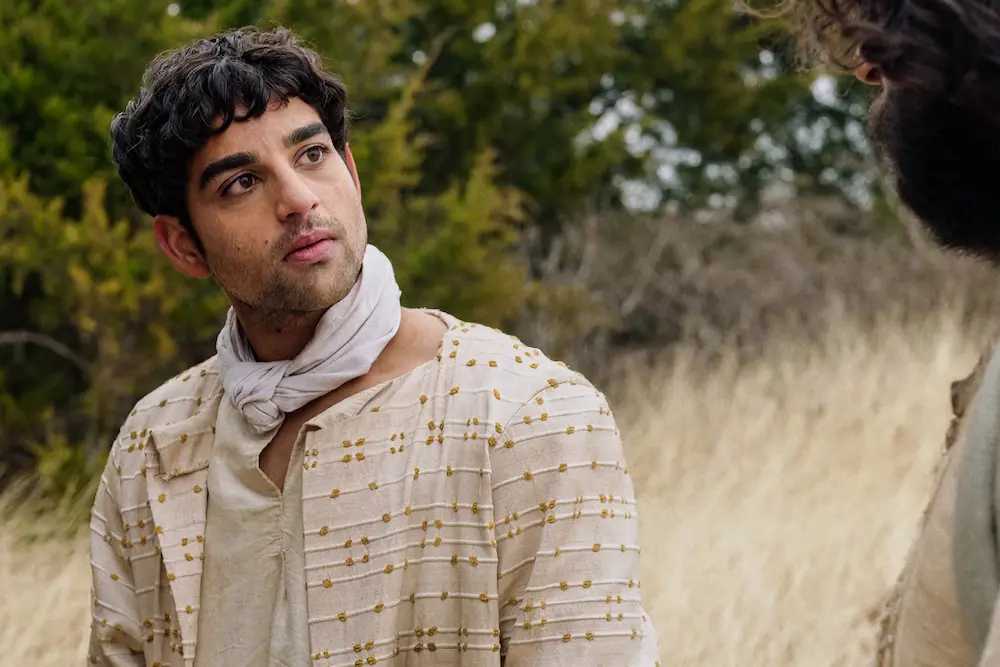
Matthew listens to the words that Jesus speaks to him. Facebook image via The Chosen.

A call for everyone

St. Matthew is a model for priests and evangelizers, and also for all Christians. His life reminds us that we are all called to be witnesses to the Gospel. This implies:

Evangelization is not only a task for priests; every member of the faithful has a role to play in the evangelization process. to bring the message of Christ to their environmentinspiring others with concrete works.

St. Matthew, apostle and evangelist, teaches us that the true vocation is born of a personal encounter with Jesus and is expressed in the dedication of one's life to the service of others. His story is a reminder that no matter what a person's past, God always offers an opportunity for conversion.

In the 21st century, priests and evangelizers continue their work, adapting to the new means of communication and finding innovative ways of reaching people's heartsas St. Matthew reached out to his contemporaries with the power of the Holy Spirit and the Gospel. Following his example, we are all called to be active disciples, witnesses and agents of transformation in the world.

 "As Jesus passed by, he saw a man named Matthew sitting at the tax counter, and he said to him, "Follow me."" If Jesus could transform a tax collector into a servant, a traitor into his close friend, he can also transform us into children of God, into his close friends.

The priestly vocation of Juan Sebastian

Juan Sebastian Miranda (1997) is an Argentinean seminarian from the Diocese of San Roque. He explains with emotion that his vocation is a "vocation to the priesthood".undeserved gift".The story that God wrote through simple people who, without knowing it, were leading him to Him.

Studying the third year of the Bachelor of Theology at the Ecclesiastical Faculties of the University of Navarra and is his second year residing at the international seminary. Bidasoawhere he continues on this path that the Lord has traced for him.

The vocation of the older brother

Juan is the oldest of six siblings. He knows what it means to share and give. He grew up in a family Catholic, although for many years they were not practicing Catholics.

"For some time now, by the grace of God alone, I have seen how my family has started attending Sunday Mass again," he says with enthusiasm.

Juan was studying for a degree in Physical Education. "Between the frenetic pace of the race, he also felt the restlessness of the call to the priesthood."

Juan Sebastián (on the right of the image), in a parish of San Roque.

This seminarian recalls the specific moment that marked a before and after in his vocation. "It was the last day of novena to the Immaculate Conceptionpatroness of my parish. During those days, a preacher would give us a short reflection before Mass, and ask us to bring the Bible.

That afternoon I arrived discouraged, without any desire, and I only went because I was a youth group leader. I sat in the last pew, apart, with the Bible to one side, listening to the preaching in the background without paying too much attention to it," he tells us.

Suddenly an inner voice was telling him: "Open Lk. 5,10". Juan ignored it but repeated himself again: "Open Lk. 5,10". Again he let it pass. The third time he heard that voice urging him on, he could not help but open the New Testament and read the passage.

Luke 5,10 is a biblical verse where Jesus addresses Simon Peter after a miraculous catch of fish and tells him: "Do not be afraid; from now on you will be a fisher of men". 

Juan Sebastian relates that at that time he lived with doubts about whether the Lord was calling him to be a priest. But that day, with those words, everything became clear. That verse illuminated everything. He felt that God was confirming what He wanted from him.. "Since then, my life has been an attempt, imperfect but sincere, to answer that call and fulfill His will." will".

Juan Sebastian en el camino de su vocación como sacerdote

To be the priest the world expects

On this path to the priesthood, he is very clear about what today's world needs, and they are priests that identify deeply with Christ.

"Prayer and intimacy with God cannot be neglected. Only a heart rooted in such a relationship can respond to the needs of society and to guide her along the path of hope".stresses Juan Sebastián.

And so, this seminarian continues to walk, with his limits (like everyone), but with the certainty that God is writing his story. "Every day I ask him to help me to be faithful, so that in my weakness his strength may be manifested," he adds.

The challenges of your diocese at San Roque

Juan is training in Spain before returning to his diocese in San Roque, a very large circumscription with 24 parishes, each with large rural areas and numerous communities.

"My parish serves about 25,000 inhabitants, plus ten rural communities, and has only one priest.". In total, the diocese has more than 500,000 faithful, served by 41 diocesan, missionary and religious priests alone.

For this reason, the formation of the priest is essential, especially in the face of another challenge that is taking hold in the region: the growth of Protestantism.

"One of our great challenges is to reach places where they cannot celebrate daily Holy Mass because of the shortage of priests. In addition, it is also very important to accompany young people, who, in a society marked by the individualismThey seek to fill their existential emptiness with social networks and the constant need to be seen, without finding a deep meaning to life", expresses concern.

Juan Sebastian poses with some friends after celebrating Holy Mass.

Evangelizing in a secularized society

For Juan Sebastian, the prevailing individualism in society is a problem that needs a paradigm shift. And in this change it is vital that Christians show the world that they are not called to live in isolation, but to go out to meet the other.

"In a society that distances itself from God and accommodates the truth to its own convenience -sometimes out of ignorance-, close and communitarian witness is more necessary than ever," he says.

During his years in Spain, he has been struck by the fact that, in general, people are quite religious, especially the elderly. He has observed this appreciation for traditions, such as the processions of Easter.

seminario internacional bidasoa formación sacerdotes

The Bidasoa family

Juan is in Bidasoaan international seminar located in Pamplona. "It is a place where a worldwide family gathers, where one gets to know other brothers who share the same faith, the same madness of wanting to serve the Lord from the call to the priesthood".

"I think it would be beautiful if that the same passion for Holy Week should also be lived in the Eucharist, in Confession and in the sacraments. In my country we don't have that same cultural expression, so for me it has been something new and enriching," concludes Juan Sebastián, hoping to return to Argentina with strength and enthusiasm.


Marta Santínjournalist specializing in religion.


Questions and answers about priests

What are the four vocations of the Catholic Church?

Everyone has a unique vocation to holiness. However, they are distinguished:

Marriage: a sacred vocation in which a man and a woman commit themselves to live together in an indissoluble bond, open to life and to the education of children, seeking their mutual sanctification and that of their family.

Priesthood: call men to serve the Church as ordained ministers (bishops, priests and deacons). Priests are dedicated to the proclamation of the Gospel, the administration of the sacraments and the pastoral care of the community.

Consecrated life: a call to men and women to consecrate their lives to God through the vows of poverty, chastity and obedience, living in community. This includes nuns, monks, friars, brothers and sisters of various religious orders and congregations.

Celibate life: The vocation of persons who, without joining a religious order or marrying, dedicate themselves to serving God and the Church through their professional work, their service to others and their life of prayer, seeking holiness in their particular state of life.

What is the vocation of a priest?

According to a catechesis of Pope Francis "the sacrament of Holy Orders comprises three degrees: the episcopate, the presbyterate and the diaconate.

The one who receives this sacrament exercises the mission entrusted by Jesus to his Apostles and prolongs in time his presence and action as the one true Teacher and Shepherd. What does this mean concretely in the lives of those who are ordained? Those who are ordained are placed at the head of the community as servants, as Jesus did and taught.

The sacrament also helps them to love the Church passionately, dedicating their whole being and their love to the community, which they are not to consider as their own property, but as the Lord's.

Finally, they should strive to revive the gift received in the sacrament, granted through prayer and the laying on of hands. When the ordained ministry is not nourished by prayer, listening to the Word, daily celebration of the Eucharist and frequent reception of the sacrament of Penance, one ends up losing the authentic sense of one's own service and the joy that comes from a profound communion with the Lord".

How many years does a seminarian have to study to become a priest?

The time of formation of a seminarian to become a priest is a long and rigorous process that, in general, lasts between 6 and 8 years, depending on the seminary and the diocese. This period is not only focused on academic study, but on an integral formation that encompasses several dimensions: human, spiritual, intellectual and pastoral.

What qualities should a priest have?

It is best for a newly ordained priest to respond: "I think it is best that the priest be a normal person. I am referring to character and mentality. Besides, the mission we have asks us to be people with a supernatural outlook, with a strong life of relationship with God. And at the same time, very human, close, to relate to all kinds of people who need a more intense contact with God. I would like to be a pious priest, joyful, optimistic, generous, available to all people and all needs. It seems to me that these are aspects that people especially value in Pope Francis".

Marian Family Day at Torreciudad

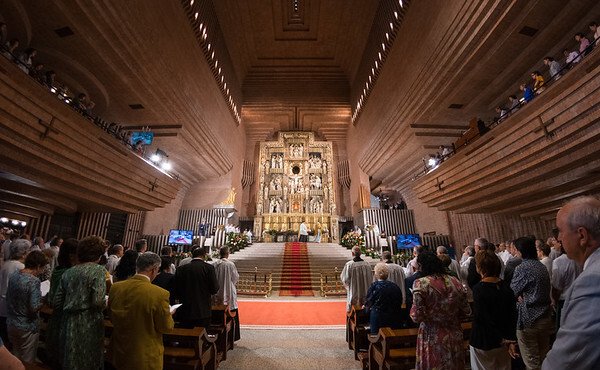
Torreciudad commemorated on this occasion a very special event: the celebration of the 50th anniversary of the opening for worship of the new temple dedicated to the Virgin.

A meeting marked by joy, prayer and the certainty of sharing the faith as a family. As the Vicar of Opus Dei in Spain, Fr. Ignacio Barrera, said: "How much beauty and joy can be transmitted by a family that prays!

The CARF FoundationThe Foundation, faithful to its commitment to priestly formation and to the universal Church, was one of the sponsors of this event, thus joining in the joy of the families who came to the Aragonese sanctuary.

The praying family

The main event was the Eucharist celebrated on the esplanadeIgnacio Barrera, Vicar of Opus Dei in Spain, who invited all those present to be "sowers of peace and joy," recalling the words of St. Josemaría: families are called to be "luminous and joyful homes.

In a world so often marked by haste, division and uncertainty, Barrera recalled that "the Lord will take care of the rest and will kindle many other lights" if each family tries to give witness to love in their daily lives: "The Lord will take care of the rest and will kindle many other lights" if each family tries to give witness to love in their daily lives.Give light in your homes, schools, workplaces, etc.... How much beauty and joy can be transmitted by a family that prays, that loves one another, that forgives one another and is united". And he asked: "Don't you think that there is much need for this in our time, in social life, in political life, in the work environment?

This day breathes fraternity and prayer. After praying the Angelus, there was a varied presentation of offerings by the participating associations, parishes, schools and groups, who offered flowers, products of the earth, images of the Virgin, children's handicrafts and other symbols of gratitude and faith.

In a gesture full of tenderness, the parents offered their children to the Virgin of Torreciudadentrusting them with their future and asking for her protection. This moment, lived with tears and smiles, was a testimony of what it means to walk together as a Christian family: to allow ourselves to be guided by Mary towards her Son.

torreciudad-jornada-mariana-de-la-familia-carf
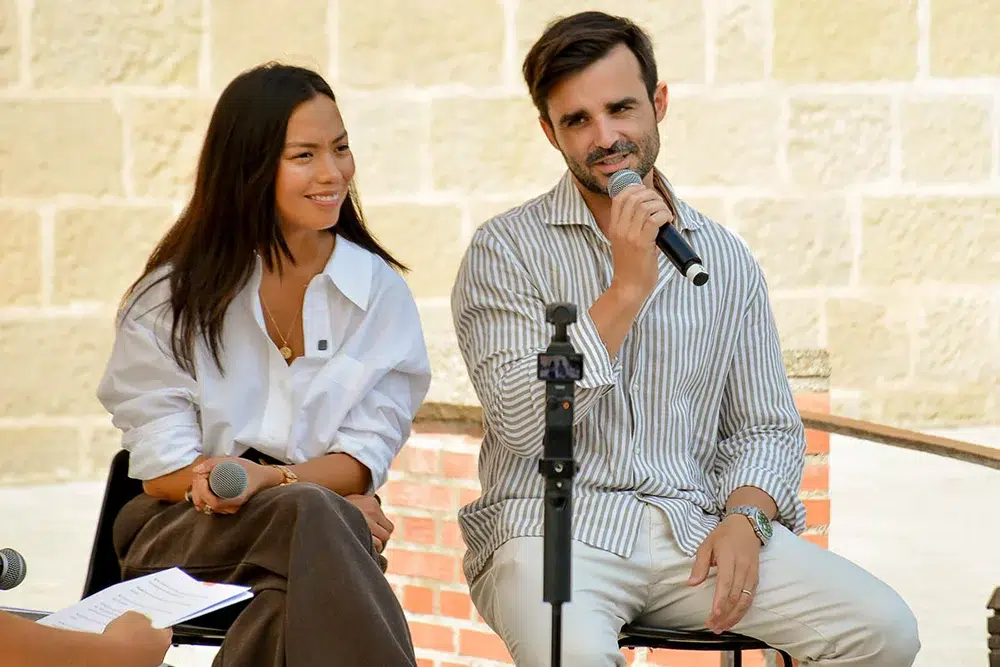
In dialogue with Nachter and Roseanne.

Nachter and Roseanne

The day was full of moments of encounter and testimony. The couple formed by Nachter and Roseanneknown for their humor and closeness in social networks, shared their experience on "how to improve our family relationships with a lot of humor. They recalled that "laughing with others, not at others" is a simple key to living charity in the home, and that "in the face of pain, it is essential that our life is not defined by suffering, but by the help we give each other. And above all God, who is Father and we can fully trust in Him, even if sometimes we do not understand Him".

torreciudad-jornada-mariana-de-la-familia-carf
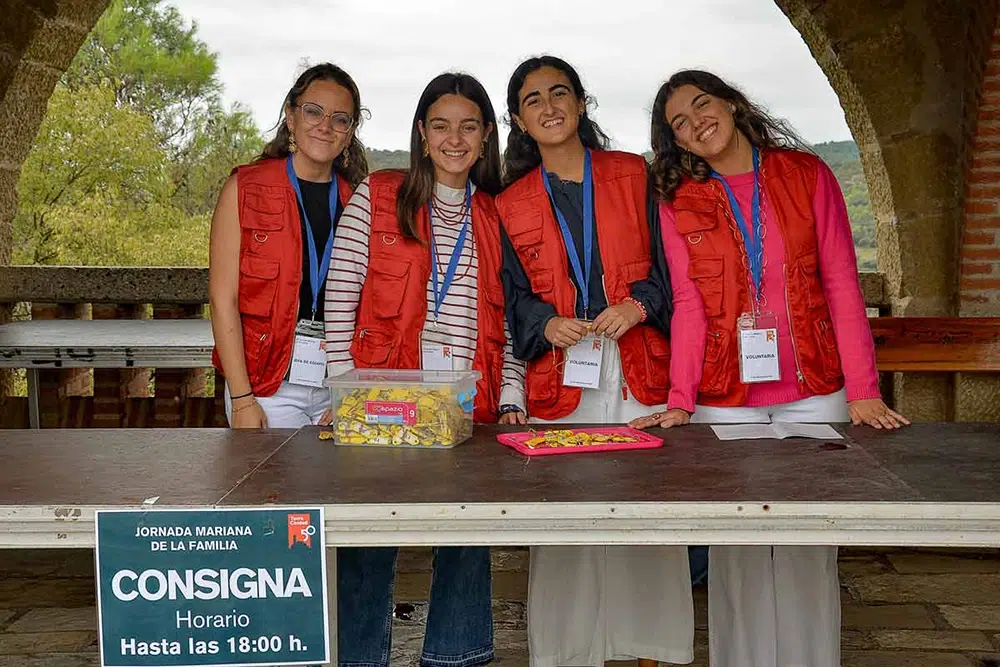
A group of volunteers.

A simple gesture

Throughout the day, more than 200 volunteers collaborated in the reception, parking, information and cleaning services, together with the Guardia Civil, Turismo de Aragón, the regions of Somontano, Ribagorza and Cinca Medio, the municipalities of Secastilla and El Grado, the CARF Foundation and the Mahou San Miguel Group. In addition, hygiene products were collected for needy families, which will be delivered through Cáritas Diocesana de Barbastro-Monzón: a simple gesture that embodies Christian love made service.

On the 50th anniversary of the church, this Marian Day once again showed the vibrant heart of the Church: families united by faith, praying, forgiving and trusting in God.. The CARF Foundationpresent among them, shares this mission of radiating hope and forming priestly hearts that serve so many families throughout the world.

Torreciudad, once again, was light. A light that is born of Mary and that, through the family, illuminates society with the joy of the Gospel.

torreciudad-jornada-mariana-de-la-familia-carf
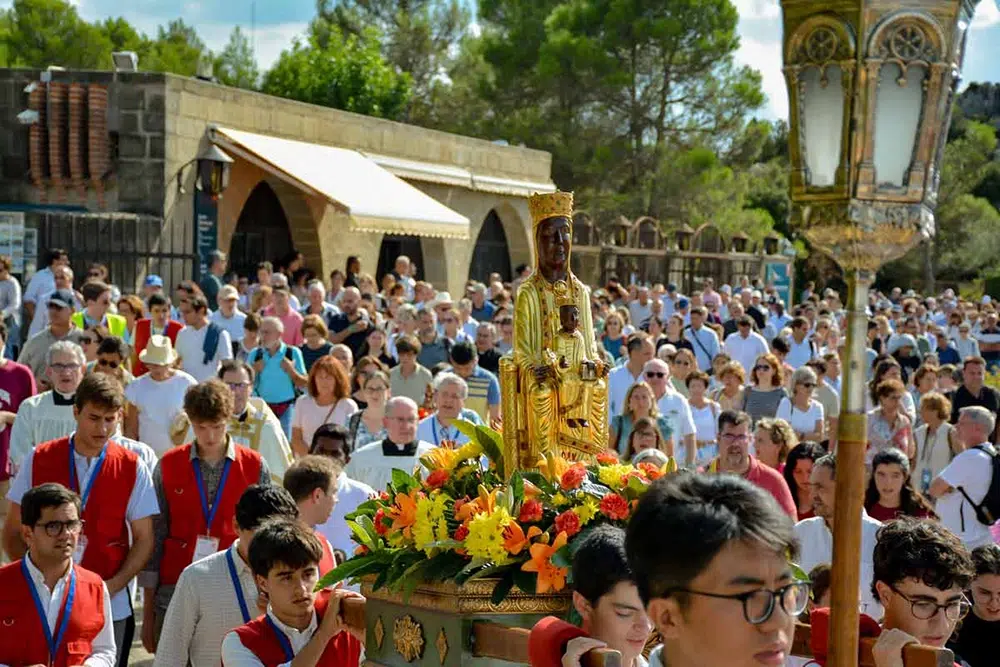
The Virgin of Torreciudad in procession during the recitation of the Rosary.

Mayors encourage repeat business

Javier Betorz, delegate of the Government of Aragon in Huesca, stressed that "Torreciudad is an undoubted focus of attraction, therefore has our full support in promoting religious and cultural tourism". Mari Carmen Obis, mayoress of El Grado, has pointed out the importance of the festival "in these calls to share our heritage and our joy, so that they reach new visitors".

José Luis Arasanz, deputy mayor of Secastilla, and Ana María Rabal, councilor, trust in the road axis project with El Grado and Graus through the municipality. Antonio Comps, mayor of Castejón del Puente, thinks that "the day is a very important event for Alto Aragón, with a deep positive meaning for the family and as an element of promotion".

Fernando Torres, mayor of Barbastro, said he was "very happy to repeat another edition, and to have shared the concern of the sanctuary for the damage caused by last night's storm", while for José Pedro Sierra, mayor of Peraltilla, "the best thing is that I have seen many people, with families that we hope will repeat and make our environment known".

José María Civiac, president of the Cinca Medio region and mayor of Alfántega, commented that "I have seen many people, willing to travel a long way sometimes, and of course, we must all work together to increase the number of visitors".

Lola Ibort, councilor in Almudévar and provincial deputy, said in her second attendance to this day, that "I am very happy to return because I share so many values that promote the family, which is so important. And these young families are, at the same time, the best ambassadors of our territory".

Also in attendance were the mayoress of El Pueyo de Santa Cruz, Teresa Rupín, and municipal representatives from Puente de Montañana, Arén, Enate and Artasona.


Marta Santínjournalist specializing in religion.


Christ, will they have met Him?

The Christian faith, the Holy Mass, is either a living encounter with Christ or it is not. That is why the Liturgy guarantees us the possibility of such an encounter with Him.

In a letter to his family dated July 14, 1929 in New York, Federico García Lorca writes: "Solemnity in religious matters is cordiality, because it is a living proof, for the senses, of the immediate presence of God. It is like saying: God is with us, let us worship and adore him (...) They are the exquisite forms, the nobility with God".

I do not know what Federico had in his heart and in his head when he wrote these words. I can suggest that they are a manifestation of his poet's soul and of his ability to appreciate the beauty of an encounter with the living God; and I do so, because before those lines, he wrote: "Now I understand the fervent spectacle, unique in the world, which is a Mass in Spain".

Holy Mass, an encounter with the living Christ

In his Apostolic Letter "Desiderio Desideravi"in the section The Liturgy: place of encounter with Christ Pope Francis wrote: "Herein lies all the powerful beauty of the Liturgy (...) The Christian faith is either a living encounter with Him, or it is not. The Liturgy guarantees us the possibility of such an encounter. A vague memory of the Last Supper is of no use to us; we need to be present at that Supper, to be able to hear his voice, to eat his Body and drink his Blood: we need him.

In the Eucharist and in all the Sacraments we are guaranteed the possibility of encountering the Lord Jesus and of being touched by the power of his Passover. The saving power of Jesus' sacrifice, of each of his words, of each of his gestures, looks, feelings, reaches us in the celebration of the Sacraments" (nn, 10-11).

"A living encounter with Christ. And if in all the Sacraments Jesus Christ is present and acts, in a very particular way, sacramentally, he does so in the Holy Sacrament of the Blessed Sacrament. Mass.

"It is the Sacrifice of Christ, offered to the Father with the cooperation of the Holy Spirit: an oblation of infinite value, which eternalizes the Redemption in us (...) The Holy Mass thus places us before the primordial mysteries of faith, because it is the very gift of the Trinity to the Church. Thus it is understood that it is the center and the root of the Christian's spiritual life....

In the Mass, the life of grace, which was deposited in us by Baptism and which grows strengthened by Confirmation, is brought to its fullness. When we participate in the Eucharist," writes St. Cyril of Jerusalem, "we experience the deifying spiritualization of the Holy Spirit, who not only configures us to Christ, as happens in Baptism, but also christifies us completely, associating us with the fullness of Christ Jesus" (Josemaría Escrivá. Christ Is Passing By, nn. 86 and 87).

cristo santa misa torreciudad

The beauty of the liturgy at Holy Mass

These texts referring to the beauty of the Liturgy expressed in the celebration of the Holy Mass came to my mind on Sunday afternoon. After taking care of a sick person, I went to a church to accompany the Lord for a while. It was a quarter of an hour before the celebration, at 8:00 in the evening. The parishioners began to arrive, in silence and a certain recollection. A large number of the men were wearing shorts, and a smaller number of women as well.

Would they have shown up in those clothes at the party of a family friend? Or at a meeting with their bosses in the area of their professional work? Would they have gone with those clothes to receive an award for a professional performance, for a published book, etc.?

At the entrance door to the church there were none of those signs - which surely all readers will remember - prohibiting entry into the church dressed in that way. Perhaps the priests would not have said anything when they saw them on other occasions approaching in this way to receive Jesus Christ in Communion.

A good number -more than a hundred- of these men and women approached the altar to receive Communion. As soon as the Mass was over, the church emptied. The priest kept the interior silence for barely half a minute, after picking up the altar, without kneeling as he passed in front of the tabernacle. And the faithful who remained in the church thanking God for having received the Eucharist were barely a dozen. Were the parishioners aware of having met the Son of God made man? And of having lived with Jesus all the moments of the Mass, and of having "eaten" Him in the Holy Host?


Original published in Religion Confidential

Ernesto Juliá, ernesto.julia@gmail.com

"My vocation is founded on Our Lady's love".

Being a priest is the vocation of Francesco Fiorioa young 25 year old Italian seminarian of the Society of Apostolic Life of the Sons of the Cross, a male branch of the House of Mary community, a Marian reality born out of the Medjugorje experience. Thanks to the support of the CARF FoundationMany of its members, seminarians, priests, religious and laity, have been trained at the Pontifical University of the Holy Cross. Now, it is beginning its second year of Theology.

Since childhood, he has lived the parish as a second family.

The roots of his vocational history go back to his childhood. He was born and raised in Rome, in the suburb of Trullo. From an early age he attended the parish, which was entrusted to the Sons of the Cross in 2005. From the age of 6-7 years he went every day to the oratory, which for him had become his second home.

"The priests and the religious Daughters of the Cross accompanied me to receive all the sacraments: from my first Confession, my first Communion to Confirmation. The Sons and Daughters of the Cross, together with the other boys of the parish, were a second family, and I believe that all the good they did me was to make me feel that I had a second family. left a mark indelible in my heart and in my conscience".

"I remember once, as a child, I was asked what I wanted to be when I grew up and I calmly answered: 'the priest', because I saw the Sons of the Cross who every day played soccer and were simply happy, and so I wanted to be like them." 

Another anecdote that explains this link with his childhood is that the Daughters of the Cross, who were his catechists, are now the same ones who attend to his daily needs in the seminary. "These people were for me the extension of the hands of Our Lady who took care of me since I was a child. Through them I came to know and come into contact with the reality of the House of Mary, our superiors and the other boys in the community."

vocación  sacerdote de Francesco Fiorio virgen maría
Francesco Fiorio during the interview with the CARF Foundation.

Adolescence and the distancing from faith

Everything was going well until his teenage years, when he began to seek out other friendships that took him away from the true bonds offered to him by the Virgin Mary. "I started to have my foot in two shoes. I never completely broke with the faith: I continued to go to Mass on Sundays, to frequent the parish; but at the same time the only thing that interested me was to build an image of myself in front of the world and to conquer the girls."

It went on like this for a while until 2016 when, at WYD in Krakowgoing on a pilgrimage to the sanctuary of the Black Madonna of CzęstochowaHe felt the call to the priesthood. "This call had left me totally bewildered, because it was like a bolt of lightning in the serene sky, in fact, I can say that it came precisely in the period when I was most out of it.

When I returned home, I totally closed myself off, because there was no way I wanted to be a priest: I had other projects and other programs. I wanted to build a self-managed life for myself. I opposed it for several years, until 2018, when, going to Medjugorje for the summer retreat, we passed through Široki Brijeg, a village at the center of Catholicity in Bosnia and Herzegovina."

The impact of Široki Brijeg

On February 7, 1945, Yugoslav communist partisans murdered 30 Franciscan friars, burning their bodies and destroying the convent, library and archives. It was an attempt to erase the Catholic cultural and religious presence in Herzegovina. In total, more than 120 Franciscans from the province of Herzegovina were killed.
were killed during that persecution. Today the friars are remembered as martyrs for the faith, and their sacrifice is commemorated every year.

"When I visited Široki Brijeg, I learned that dozens of Franciscan friars were martyred there during the period of communist occupation in the 20th century and many others still in the preceding centuries of Turkish domination.

The history of that place was explained to us by a local lady. I remember very well that she was moved and wept as she told us about the dedication of the priests to the point of giving their lives for the people, and also the dedication of the people themselves for their priests. She wept as she spoke of the priestsof the Holy Mass.

That testimony of his touched me intimately and began to move something in my hardened heart. Going down to the
In the place of martyrdom, one of our priests who was following our group of young people said to me: "Do you want other answers?", realizing that I had not been indifferent to those words".

Lent 2019, rediscovering the love of Christ

In Lent 2019 rediscovered the love of Christ and the centrality of prayer. Lent that year was guided by the words of St. Benedict: "to put nothing before the love of Christ". "These words stayed with me and I associated them with those of St. Paul: "For his sake I gave up all these things, and consider them garbage, that I might gain Christ". Thus I began once again to place prayer, the relationship with the Lord, at the center, considering superfluous all that I had previously desperately sought."

The ordination of eight Sons of the Cross became an occasion that confirmed in Francesco the certainty of his vocation, showing him the joy of a life given.

"However, the priestly ordination of eight Sons of the Cross, which took place on May 12 of that same year, was decisive for me. Seeing the joy and happiness of those new priests, who had welcomed and loved me as a younger brother, in giving themselves totally to the Lord in virginity, in the offering of their whole life for the Church, for the brothers and sisters of the House of Mary and for so many other souls that the Virgin would have them meet, made me say: "Lord, if this is what you want of me, what you are calling me to, all right, I accept".

A spiritual family

Vocation in the House of Mary, made him understand that the Virgin Mary was already offering him everything he desired in that place: a spiritual family and the meaning of their dedication.

"Then I realized that everything I was looking for and desired Our Lady had been offering me for a long time in Mary's House, waiting only for me to welcome and accept her call. She fulfilled all my most sincere desires: she gave me a spiritual family, brothers and sisters, the love of a spiritual father and mother, the realization of my affectivity, calling me, not to love a particular person, but to a total gift to the Lord and to others. It was clear to me from the beginning that, if I had to be a priest, I would never have wanted to be a priest outside the House of Mary, because only in this family does my vocation make sense.

Francesco Fiorio with his spiritual brothers.

In 2021 she consecrated herself to Our Lady and in 2022 she entered the House of Mary, where she lives her vocation in community today.

"Thus I began a more radical approach to the House of Mary. On January 6, 2021, I consecrated myself to Our Lady. On December 4, 2022, I entered the community, and to this day I have been living in the House of Mary for two years".

Thanks to the benefactors

"I want to conclude my testimony by explaining how, beyond particular events or experiences that I can relate, my vocation is founded on the love that the Virgin Mary has had for me throughout my life and that she has manifested to me through the people she has placed at my side accompanying me in every moment and circumstance."

"Therefore, I also take this opportunity to thank the benefactors of the CARF Foundation for the financial help with which they are supporting my studies and those of my brothers at the Pontifical University of the Holy Cross. I hope to be able to reward them with my prayers and also with good results in the university path".

Francesco Fiorio, una vocación fundada por la Virgen María

Gerardo FerraraDegree in History and Political Science, specializing in the Middle East. Head of the student body at the Pontifical University of the Holy Cross in Rome.