The 5 Joyful Mysteries of the Holy Rosary

The Joyful Mysteries deal with the Incarnation and infancy of Jesus. They are also prayed, the Luminous Mysteries of the public life of Christ, the Sorrowful Mysteries of the Passion of our Lord and the Glorious Mysteries of the events that occurred after the Resurrection.

"The recitation of the Holy Rosary, with the consideration of the mysteries, the repetition of the Our Father and the Hail Mary, the praises of the Blessed Trinity and the constant invocation of the Mother of God,
is a continuous act of faith, of hope and love, of adoration and reparation."
Josemaría Escrivá de Balaguer.

In the first of the Joyful Mysteries we remember The Incarnation

In the first of the Joyful Mysteries we recall the Annunciation to the Virgin Mary and the Incarnation of the Word.

  • Luke 1:26-27: "In the sixth month the angel Gabriel was sent from God to a city of Galilee, called Nazareth, to a virgin betrothed to a man whose name was Joseph, of the seed of David; the virgin's name was Mary."
    The Angel greets her, "Rejoice, full of grace: the Lord is with you."

Mary icon of obedient faith

Benedict XVI says: "In the angel's greeting to the Virgin Mary, he finds in her an attitude of trust, even in difficult moments. A capacity to consider events in the light of faith; a humility that knows how to listen and respond to God with dedication.

With this, the Pope points out, the reason for Mary's rejoicing is reaffirmed: "Joy comes from grace, that is, from communion with God, from having such a vital connection with Him, from being indwelt by the Holy Spirit, totally shaped by God's action."

Mary gives herself with complete trust to the word announced to her by God's messenger and becomes the model and mother of all believers. Faith is, therefore, trust, but it also implies a certain degree of obscurity. Mary opens herself totally to God, she succeeds in accepting the divine will, even if it is mysterious, even if it often does not correspond to her own will and is a sword that pierces the soul."

Benedict XVI points out, "He does not consider it superficially, but pauses and allows it to penetrate his mind and heart in order to understand what the Lord wants of it, the meaning of the proclamation.

In the second of the Joyful Mysteries, we recall the Visitation of Our Lady to her cousin St. Elizabeth.

  • Luke 1:39-42 In those days Mary set out and went in haste into the hill country to a city of Judah, and she entered the house of Zechariah and greeted Elizabeth. And it came to pass, as soon as Elizabeth heard Mary's greeting, that the babe leaped in her womb, and Elizabeth was filled with the Holy Spirit; and she cried out with a loud voice and said, "Blessed are you among women, and blessed is the fruit of your womb!"

Mary is an example of love and humility

The humility of the Virgin Mary, says St. Bernard, is the foundation and guardian of all the virtues. And rightly so, for without humility no virtue is possible in the soul.

All virtues vanish if humility disappears. On the contrary, said St. Francis de Sales, God is such a friend of humility that he immediately goes wherever he sees it.
Misterios gozosos santo rosario

In the third of the Joyful Mysteries we remember the Birth of the Son of God in Bethlehem.

  • Luke 2:1-7: It happened that in those days an edict went out from Caesar Augustus ordering that the whole world should be registered. This first census took place when Quirinius was governor of Syria.
    And they went every one to register, every man to his own city. And Joseph also went up from Galilee, out of the city of Nazareth, into Judea, to the city of David, which is called Bethlehem, because he was of the house and family of David, to register with Mary his wife, who was with child.
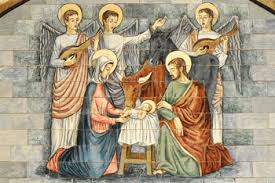
  • And it came to pass, while they were there, that the days of her childbearing were fulfilled, and she gave birth to her firstborn son, and wrapped him in swaddling clothes, and laid him in a manger, because they had no room in the inn. Jesus was born in the humility of a stable to a poor family.
  • Catechism of the Catholic Church, 525: Those simple shepherds are the first witnesses of the event. In this poverty the glory of heaven is manifested.

Mary at the service of others

The same attitude is seen in Virgin Virgin Mary after the worship of the shepherds: "he kept all these things, pondering them in his heart."

"It is the profound humility of Mary's obedient faith, who accepts in herself even what she does not understand of God's work, leaving it to God to open her mind and heart". Hence Elizabeth can say: "Blessed is she who has believed in the fulfillment of the word of the Lord." (Lk 1:45)and that is why it will be called that way for all generations.

Faith tells us, then, that the helpless power of that Child in the end overcomes the rumor of the powers of the world."
misterios gozosos

In the fourth of the Joyful Mysteries we remember the Presentation of Jesus and the Purification of Mary.

In the fourth of the Joyful Mysteries we recall The Presentation in the Temple

Purifying Mary

Mary no longer appears as impure. She does not go up to the temple to purify herself, but to share in the redemptive journey of Jesus. Mary appears as a collaborator of Jesus, sharing his journey in the service of God's people. She is not an impure woman but a purifier.

In the fifth of the Joyful Mysteries we remember the Child lost and found in the Temple.

  • Luke 2:41-47: "His parents went to Jerusalem every year to the feast of the Passover. When he was twelve years old, they went up as usual to the feast, and when they returned, the child Jesus remained in Jerusalem, his parents did not know it.
    And it came to pass at the end of three days, that they found him in the Temple sitting in the midst of the teachers, listening to them and asking them questions; and all who heard him were amazed at his intelligence and his answers.
  • Catechism of the Catholic Church, 534: "The finding of Jesus in the Temple is the only event that breaks the silence of the Gospels on the hidden years of Jesus. Jesus lets us glimpse in it the mystery of his total consecration to a mission derived from his divine filiation: "Did you not know that I owe myself to my Father's business?".

Mary listens, also in the dark

Mary's faith, Benedict XVI points out, lives from the joy of the Annunciation, but passes through the mist of her Son's crucifixion, in order to reach the light of the Resurrection.

Therefore, the path of our faith is not substantially different from that of Mary: "We find moments of light, but we also find passages in which God seems absent".

The solution is clear: "The more we open ourselves to God, accept the gift of faith, place our trust totally in Him, as Mary did, the more He enables us, by His presence, to live all situations of life in peace and in the certainty of His fidelity and of His

However, this means going out of ourselves and our own projects, so that the Word of God may be the lamp that guides our thoughts and actions.

When they find the Child in the temple, after three days of searching, he answers them mysteriously: "Why were you looking for me, did you not know that I must be in my Father's house?

So, observes the Pope, "Mary must renew the deep faith with which she said 'yes' at the annunciation; she must accept that precedence belongs to the true and proper Father; she must know how to set free the Son she has begotten to follow his.

Prayer at the end of the Joyful Mysteries of the Holy Rosary

My friend: if you want to be big, make yourself small.
To be small requires believing as children believe, loving as children love, abandoning oneself as children abandon themselves, praying as children pray.
And all this together is necessary to put into practice what I am going to discover in these lines:
The beginning of the journey, which ends in complete madness for Jesus, is a trusting love for Mary Most Holy.
-Do you want to love Our Lady? -Well, treat her! How? - By praying Our Lady's Rosary well.
But in the Rosary... we always say the same thing! -And don't those who love each other always say the same thing to each other? Is there not monotony in your Rosary, because instead of uttering words like a man, you utter sounds like an animal, your thoughts being far away from God? -And look: before each decade, the mystery to be contemplated is indicated.
-Have you... have you ever contemplated these mysteries?
Make yourself small. Come with me and - this is the nerve of my confidence - we will live the life of Jesus, Mary and Joseph.

St. Josemaría Escrivá.

With the collaboration of:

OpusDei.org
Meditations on the mysteries of the Holy Rosary, Pope Francis.
How to recite the Chaplet of Divine Mercy?

The devotion to the Divine Mercy, consists of a set of prayers generally prayed with the help of a rosary, although they can easily be done without it because of its simplicity.

Jesus appears to St. Faustina on September 14, the feast of the Exaltation of the Holy Cross, to teach her the Chaplet of Divine Mercy.

What is the Chaplet of Divine Mercy?

Sister Faustina KowalskaShe received the message of God's mercy from a vision she had in 1935. The saint recorded the vision in her diary. And little by little she began to spread the prayer that Jesus himself taught him.

It asks for trust in God and an attitude of mercy towards our neighbor. The prayer calls to proclaim and pray for Divine Mercy for the world.

"When you pray this Tertius with the dying, I will stand between the Father and the dying soul, not as a just Judge, but as a Merciful Savior." Diary of Saint Faustina

With these words we see, once again, how Jesus comes to meet us again and again. In his infinite love we see throughout history how he fulfills this promise to stay with us until the end.

Devotion to the Divine Mercy grew very rapidly after the beatification (April 18, 1993) and canonization (April 30, 2000) of Sister Faustina and also due to the pilgrimages of Pope John Paul II to Lagiewniki (1997 and 2002).

When Pope John Paul II canonized St. Faustina in 2000, during the ceremony he declared: "It is therefore important that we fully embrace the message transmitted to us by the Word of God on this Second Sunday of Easter, which will henceforth be known throughout the Church as Divine Mercy Sunday. Homily, April 30, 2000.

Both Benedict XVI and Pope Francis have recommended this devotion.

The Message 

"Encourage people to say the Chaplet I have given you (...) Whoever recites it will receive great mercy at the hour of death. Priests will recommend it to sinners as their last refuge of salvation. Even if the most hardened sinner has recited this Chaplet at least once, he will receive the grace of My infinite Mercy. I desire to grant unimaginable graces to those who trust in My Mercy."
Diary of Saint Faustina

Divina misericordia coronilla

Guide for reciting the Chaplet. 

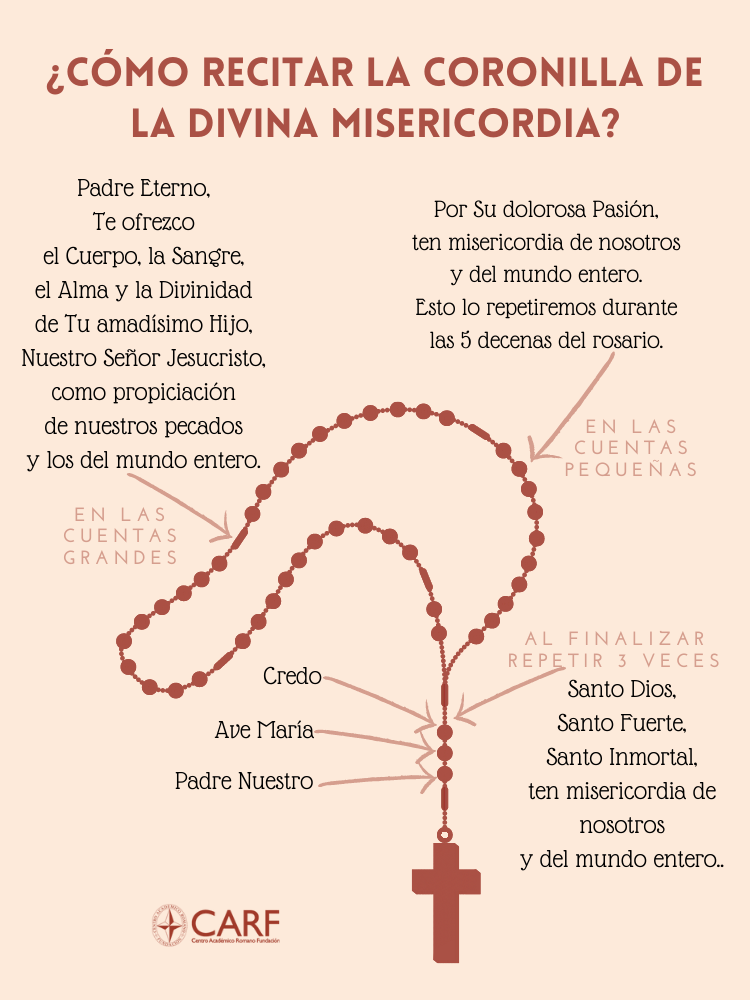
How to recite the Chaplet of Divine Mercy?

The recitation of the Chaplet to the Divine Mercy is preceded by two prayers taken from the Diary of St. Faustina and followed by a final prayer.

To recite the Chaplet of Divine Mercy, use a normal Rosary and follow this sequence

Rosary in hand

With a common 5-decade rosary in hand, we begin this chaplet:

The sign of the Cross

Our Father

Ave Maria

Credo

The first three beads of the Rosary can be used for this part.

Large accounts

At each major grain of the Rosary, where we usually pray the Our Father, we will pray the following prayer:

Eternal Father,
I offer you
the Body, the Blood,
Soul and Divinity
of Your most beloved Son,
Our Lord Jesus Christ,
as propitiation
of our sins
and those of the entire world.

Small accounts

At each minor grain of the Rosary, where we usually pray the Hail Mary, we will say the following prayer:

For His painful Passion,
have mercy on us
and the whole world.
We will repeat this during the 5 decades of the rosary.

Invocation

At the end of the 5 decades of the rosary, with the aforementioned prayers, we will recite the following final prayer three times in a row

Holy God,
Santo Fuerte,
Immortal Saint,
have mercy on us
and the whole world.

Concluding prayer (optional)

O Eternal God, in whom mercy is infinite and the treasury of compassion inexhaustible, turn to us Thy gracious gaze and increase Thy mercy in us, so that in difficult times we may not despair or become discouraged, but with great confidence submit to Thy holy will, which is Love and Mercy itself.
Amen.

We conclude with the sign of the Cross: In the name of the Father and of the Son and of the Holy Spirit, Amen.

St. Faustina Kowalska with the image of the Divine Mercy. It is an extraordinary image, not only because it is so well known in so many countries. Jesus appeared to St. Faustina showing Himself as He appears in the image when she was in her cell in the convent of the Congregation of the Sisters of the Mother of God of Mercy in Plock on February 22, 1931. There Jesus asked her to paint this image.

Resources

  1. Sanctuary of the Divine Mercy and Congregation of the Sisters of the Mother of God of Mercy: both sites have numerous resources on this devotion, texts by St. Faustina and St. John Paul II, etc.
  2. Gospel of Divine Mercy Sunday.
  3.  Pope Francis at the Shrine of Divine Mercy (July 30, 2016), during World Youth Day (eBook).
  4. Apostolic Letter "Misericordia et Misera" by Pope Francis at the conclusion of the Extraordinary Jubilee of Mercy.

How to recite the novena?

This Chaplet can be prayed at any time, but our Lord specifically asked that it be recited in the form of a novena, in a special way, during the nine days preceding the Feast of Mercy.

During this novena, the Lord said to St. Faustina: "During this novena, I will grant souls all kinds of graces. Diary of Saint Faustina

We can pray this novena for our own particular intentions or we can offer it together with the Novena for the daily intentions dictated by our Lord to St. Faustina.

If we pray with confidence the novena that Jesus asked of Sister Faustina, we will be able to obtain, by virtue of the confidence we have, graces, since there is a concrete promise linked to the prayer of the novena.


Bibliography:

Opusdei.org
santafaustina.es

The importance of liturgical formation

Pope Francis' letter states that Christian liturgy is understood and lived as an encounter with Christ, especially in the Eucharist.. Distinguishes the meaning of the liturgy with respect to certain ideologies. It proposes the amazement before the created, as a way to rediscover the beauty and symbolism of the liturgy, relying on prayer, the action of the Holy Spirit and the reality of the Church.

Encountering Christ in the liturgy

The The purpose of the Catholic liturgy, whose center is the celebration of the sacraments and especially the Eucharist, is the communion of Christians with the body and blood of Christ.. It is the encounter of each one and of the Christian community as one body and one family, with the Lord.

The liturgy, the Pope points out, guarantees the possibility of an encounter with Jesus Christ in the "today" of our life, in order to transform all our activities - work, family relationships, efforts to improve society and help those who need us - into divine light and strength.

This is what Christ wanted at his Last Supper. This is the purpose of his words: "Do this in remembrance of me". Since then, he has been waiting for us in the Eucharist. Y the Church's evangelizing mission is nothing other than the call to the encounter that God desires with all the people of the world.The encounter begins at baptism.

The objectives of this document are progressively stated on several occasions: "With this letter I would simply like to invite the whole Church to rediscover, guard and live the truth and strength of the Christian celebration." (n. 16); "to rediscover every day the beauty of the truth of the Christian celebration" (n. 16); "to rediscover every day the beauty of the truth of the Christian celebration" (n. 17). (before n. 20);

to rekindle wonder at the beauty of the truth of the Christian celebration; recalling the need for authentic liturgical formation and recognizing the importance of an art of celebration that it be at the service of the truth of the paschal mystery and of the participation of all the baptized, each one with the specificity of his or her vocation". (n. 62).

Apostolic letter Desiderio desideravi (29-VI-2022), by Pope Francis.

Lack of knowledge of the liturgy

In addition to ignorance about the liturgy -or a superficial and reductive understanding-, Francis laments the instrumentalization of the Eucharist in the service of two ideological visions: an individualistic subjectivism that encloses man in his own reason and feelings, and a reliance solely on one's own strengths. (cf. Evangelii Gaudium, 94)..

. For both poisons, which Francis has denounced as variants of an anthropocentrism disguised as Catholic truth, the following are the most important. (cf. Apostolic Exhortation Gaudete et exsultate, 35). proposes here, as an antidote, liturgical formation.

With respect to the former, the poison of individualism (a variant of neognosticism), warns: "The celebratory action does not belong to the individual but to Christ-Church.to the totality of the faithful united in Christ". (n. 19)through the Word of God and sacramental signs. These signs, following the path of the Incarnation, are in accordance with the language of the body, which extends to things, space and time.

Regarding the latter, the presumption of saving ourselves on our own (neo-pelagianism), "the liturgical celebration purifies us by proclaiming the gratuitousness of the gift of salvation received in faith". It is the Lord who saves us.

This is why the liturgy has nothing to do with "ascetic moralism", that is, the proposal to seek holiness first of all with our strength and our struggles; but with Jesus' desire to give himself to be light, nourishment and strength for our life.

The beauty of the Catholic liturgy

The Pope stops at the theological meaning of the liturgy, according to Vatican Council II (cf. Const. Sacrosanctum concilium, 7). in relation to Christ, his priesthood and the paschal mystery of his death and resurrection.

In the words of Francisco: "The liturgy is the priesthood of Christ revealed and given to us. in its Easterpresent and active today through sensible signs (water, oil, bread, wine, gestures, words) so that the Spirit, immersing us in the paschal mystery, may transform our whole life, conforming us more and more to Christ". (n. 21). 

As for the beauty of the liturgy, he warns that it is not a question of a "ritual aestheticism" (that is to say, one that focuses only on the external rites). But it is also far from "banal slovenliness", from an "ignorant superficiality", and also from an exaggerated "practical functionalism".

"Let us be clear: all aspects of the celebration must be taken care of"; but even this would not be enough for full liturgical participation. What does Francis propose in addition?

First of all, "wonder before the paschal mystery," that is, the attitude of one who appreciates the wonder and significance of what is being celebrated. For this reason a "serious and vital liturgical formation" is necessary.

As a historical framework, he argues that postmodernity has inherited from modernity the tendency to individualism and subjectivism. On the other hand, the Second Vatican Council has placed in the first place, not man, but God, through prayer and liturgy (the Constitution on the Liturgy was the first to be approved).

In the words of St. Paul VI: "The liturgy, the first source of the divine life that is communicated to us, the first school of our spiritual life.

The first gift that we can make to the Christian people, who with us who believe and pray, and the first invitation to the world to unleash in blissful and truthful prayer its mute tongue and feel the ineffable regenerating power of singing with us the divine praises and human hopes, for Christ the Lord in the (Conclusion of the second session of the Council, December 4, 1963).

Liturgy expression of the Church

The liturgy, declares the Council, is "the summit towards which the action of the Church tends and, at the same time, the source from which all her strength flows". (Sacrosanctum concilium, 10). Hence, Francis deduces, it would be banal to interpret the tensions that are evident today in the interpretation of the liturgy as mere divergences of sensibilities.

In reality, the Pope points out, the underlying question is ecclesiological; that is, understand that the liturgy is an expression of the Church, as is the Council itself..

For this reason, he stresses that only the Church - the community of those who follow the risen Christ united in his body by the Holy Spirit - overcomes "the narrow space of spiritual individualism". (n. 32). Indeed, the very reality of what it is to be a person in the full sense is at stake here: a being called to subsist in oneself and to mature in relation to others.

In this regard, the Pope adds with an expression that may rightly attract attention: "Only the Church of Pentecost can conceive of man as a person, open to a full relationship with God, with creation and with his brothers and sisters". (n. 33).

. One might ask: Is it outside the Church that the person does not find fulfillment and recognition? And one could then answer: it may be, more or less, but not fully, according to the Christian faith.

Formation for and from the liturgy

Thus we come to liturgical formation in particular. And here Francis takes the sure hand of Guardini to propose a "formation for the liturgy and formation from the liturgy". (n. 34).

First of all, formation "for" the liturgy. This includes, the Pope points out, knowledge of the theological meaning of the liturgyThis is combined with an understanding of the euchological (liturgical) texts, the ritual dynamisms and their anthropological value.

The theological meaning of the liturgy includes the fact that the one who celebrates is not only the priest but the whole Church, the Body of Christ.

This "meaning" of the liturgy requires not only study and explanation, but also: the "experience of living faith, nourished by prayer." (n. 36)the connection of each and every discipline of theology with the liturgy (attention to the priestly formation); placing the Sunday Eucharistic celebration at the center of Christian life; living the proclamation of the faith or evangelization as a consequence of the liturgical celebration; ongoing liturgical formation for ministers and all the baptized.

Secondly, formation "from" the liturgy. That is to say, the formation that each baptized person requires to participate in the celebration, whose primary purpose is praise and thanksgiving to God the Father, through Christ in the Holy Spirit. At the same time, through Eucharistic communion, we become what we eat. (St. Leo the Great).

Through the liturgy, its gestures and signs, all of creation is drawn to Christ and placed at the service of the Father's love and glory.. Thus it is, and thus is confirmed the teaching of the book of Genesis, made complete by the work of Christ: man, all his activity, and his work are at the service of the worship of God and the service, for the love of God, of all men.

For this reason, man is fully "alive" when he knows God and lives according to him (St. Irenaeus). It is necessary, says the Pope, to rediscover created things with wonder, "with a new, not superficial, respectful and grateful gaze" (n. 46).

In addition, and in relation to what Francis said above about "ritual dynamisms and their anthropological value", he underlines with Guardini the need for liturgical formation to help restore man's ability to understand and live what is expressed in the symbols.

To begin with, Francis adds, the profound and beautiful meaning of the body itself, at the service of the soul. The successor of St. Peter observes that, although today the meaning of the symbol has been lost, we must not give up this task because symbolic language is constitutive of man and is at the service of his transcendence.

Initiation into symbolic language in a simple way can be done by parents or grandparents, parish priests and catechists teaching the sign of the cross, kneeling or the formulas of faith. In fact, symbolic language goes beyond the conceptual and begins rather along the path of beauty, trust and affection.

Among the liturgical signs, the Pope highlights three: silence, kneeling, and the Word. Silence, where it is foreseen in the liturgy, is a symbol of the presence and action of the Holy Spirit, who moves to repentance and listening, to adoration and generous surrender.

Kneeling is a manifestation of repentance, humility and gratitude, and also of faith in the presence of God. The Word is proclaimed and heard, it inspires prayer and becomes the life of the person and of the community.

In addition, Francis invites us to rediscover the meaning of the liturgical year (as a path of formation, centered on Easter, and configuration with Christ) and Sunday, the Lord's Day (as a gift from God to his people, a means of formation, light and impetus for fraternal communion and service).

What is the role of ministers in liturgical formation?

Above all, Francis points out, they must take care of the "art of celebrating" (which is neither a mere observance of the rubrics nor creativity without rules) and explain the primacy of the action of the Holy Spirit (ahead of subjectivisms or culturalisms, which give prevalence to individual sensibilities or incorporate cultural elements without criteria). They must also teach the dynamics of symbolic language, already mentioned.

With Guardini, Pope insists on overcoming individualism and subjectivism through prayer obedient to the Church. In this way the same "discipline" of the Church forms our feelings, attitudes and behavior in conformity with what we are: one body, the Church.

With regard to the manner of presiding over liturgical assemblies, Francis warns against the risk of an "exaggerated personalism" of the ministers. And he points out the need for them to be "a particular presence of the Risen One".

In any case, the "art of celebrating" is learned to a great extent through prayer and contact with the fire of the Holy Spirit.. The Spirit is the modeler of the minister, so that he may adequately preside over the liturgy while shaping his life according to what he celebrates.

He concludes by requesting that, in the face of the importance of communion and the beauty of the liturgy, let us abandon the polemics that divide us..

. On three occasions he refers to the apostolic letter "Traditionis custodes" (2021) on the use of the Roman liturgy before the reform of 1970. Here he claims to have written it "so that the Church can raise up, in the variety of languages, a single and identical prayer capable of expressing her unity" which he wishes to re-establish in the whole Church of the Roman Rite. (n. 61).

Bibliography

  • Among the books of Romano Guardini concerning liturgical formation are: El espíritu de la liturgia (1918), Barcelona CPL 2000; Los signos sagrados (1922-1925), Ed. litúrgica española, Barcelona 1965; Formazione litúrgica (1923), Morcelliana, Brescia 2008.
  • On the theological significance of the liturgy, see also J. Ratzinger, The Spirit of the Liturgy: An Introduction, Cristiandad, Madrid 2001; Benedict XVI, Apostolic Exhortation Sacramentum caritatis (2007).
  • Cf. John Paul II, Apostolic Letter Vicesimus quintus annus (1988).
  • On the educational role of the liturgy, cf. D. von Hildebrand, Liturgia y personalidad, Fax, Madrid 1966.

Mr. Ramiro Pellitero Iglesias
Professor of Pastoral Theology at the Faculty of Theology of the University of Navarra.

Published in "Church and new evangelization".

How to renew your wedding vows

Marriage is reminiscent of a lifelong committed journey. Where perseverance, respect, generosity, patience and above all love, will be fundamental to reach the goal. The grace and strength conferred by the sacrament of Catholic marriage is key in the insistence and persistence of married life.

What are marriage vows?

"The wife and the husband are not alone; Jesus accompanies them". Getting married and sharing life is a beautiful thing. It is a committed journey, sometimes difficult, sometimes complicated, but it is worth the encouragement. And in this lifelong journey, the wife and husband are not alone; they are accompanied by Jesus." Pope Francis, Catechesis 02/06/2021

The marriage vows are the promises made during the sacrament of marriage. God has willed the project of each and every marriage. They represent the will to be united in respect and love, even in the most adverse circumstances.

What are the Catholic marriage vows?

There are three vows to which the bride and groom commit themselves in the ceremony to receive the sacrament of marriage:

Fidelity

"It is necessary to restore social honor to the fidelity of love, knowing that man's fidelity to the promise always depends on the grace and mercy of God, and that the bond created by love or friendship is beautiful and never destroys freedom. On the contrary, freedom and fidelity sustain each other in both interpersonal and social relationships." Papa francisco, Catechesis 21/10/2015

Perpetual love

All love tends to expand, it is spiritually and materially fertile. Sterility has never been an attribute of love. It is neither stingy nor stingy; the measure of love is to love without measure, said St. Augustine.

Respect

Mature men and women know how to practice, with common sense, respect for each other's autonomy and personality. Moreover, each lives the life of the other as his own. In this sense, the expression "one flesh

"Marriage on trial? How little he knows about love who talks like that! Love is a more secure, more real, more human reality. Something that cannot be treated as a commercial product, to be experienced and then accepted or discarded, according to whim, comfort or interest." St. Josemaría, Conversations, 105
 
votos matrimoniales renovar

Renewal of marriage vows

The renewal of the marriage vows is an everyday thing, but, like everything in life, it needs a concrete expression, some formulas, some words, a place.

It is in today's marriage that we can pray as Jesus asked us to pray "in spirit and in truth". Renewing the vows made in the sacrament of marriage requires that interior disposition of present self-giving which is more important than the exterior.

For this reason, marriage renewal can begin with a special day of spiritual retreat where the main focus is on dialogue with the couple and with God. It can be led by a spiritual director or a priest.

Another fundamental part is the celebration of the Holy Mass in which they will renew their marriage promises.

When it comes to renewing our marriage vows, as Christians we know that we have been chosen for this vocation and God has placed the right person in our lives to fulfill this vocation.

The importance of renewing marriage vows

Living in grace is fundamental for Christian marriage to remain fruitful in the broad sense. Therefore, a purpose for the future of any couple should be to care for the life of union with God, the life of grace.

That is where trust comes from, trust not in our own strength but in the fact that the same One who chose them and cared for them until this day will keep them until "death do them part".

The renewal of the marriage vows is based on three verbs, that of reflecting, dialoguing and projecting. It is not to get married again, because that would not be possible, but to renew the marriage vows as a sign, as a sign that there is indeed in us the effort, the interest to go forward on this path.

When to celebrate the renewal of Catholic marriage vows?

Holy Mass for the renewal of Catholic wedding vows can be celebrated at any auspicious time for the couple. But the most common is celebrating at 25 or 50 years of marriage, when it is the silver and golden wedding anniversary.

The sacrament of marriage is a gift that God has given us. It is a grace that grows and enriches our life to the extent that we cultivate it and are faithful to it.

 
"Marriage is not just a "social" act; it is a vocation that comes from the heart, it is a conscious decision for life that needs specific preparation. Please, never forget this. God has a dream for us, love, and He asks us to make it ours. Let us make love our own, which is God's dream." Pope Francis

How to renew the wedding vows?

We want to renew our will to follow the path of marital holiness to which we have been called, and also to thank the Lord for the gifts that he has given us as a couple and as a family through this sacrament.

The celebration of Holy Mass is the best way to pronounce our wedding vows. We will do so before God and before our loved ones. Because, we want to renew our commitment as spouses and as parents; to renew ourselves in Jesus Christ our Lord, from the depths of our hearts in our love and in our mission.

A part of the Mass We will express our commitment to strive for our marital holiness in order to contribute to the renewal of vows.

We implore the Holy Spirit to make the richness of the sacrament of marriage fruitful within our families.

We pray that we may be transparent of God's love for our children. That as a married couple we may embody and prolong this deep love of Christ for his Church.

What are the steps to follow to renew wedding vows at Holy Mass?

Renewal can be expressed in a personal way during the celebration of the Eucharist or in a public way guided by the priest.

  • Priest: Are you willing to renew your marriage vows on this occasion?
  • Both: Yes, we are willing.
  • Priest: To the Bridegroom Do you want to renew your total dedication to your bride by receiving her in the same way and, with the help of the Holy Spirit, promise her fidelity in good times and in bad, and thus love and respect her as Christ does his Church, for the rest of your life?
  • Husband: Yes, I do.
  • Priest: To the Bride: Do you want to renew your total surrender to your husband by receiving him in the same way and, with the help of the Holy Spirit, promise them fidelity in good times and in bad, and thus love and respect them as Christ does his Church, for the rest of your life?
  • Wife: Yes, I do.
  • Priest: May God, who united the first couple in Paradise, confirm and bless this consent in Christ, so that what He Himself has united may not be separated by man.
  • Both: We ask you to help us to keep faithfully our love for one another, so that we may be faithful witnesses of the covenant you have established with mankind.

Readings for Renewal of Wedding Vows

Some appropriate Bible readings to read during the liturgy of the word of the Holy Mass of renewal of vows may include:

  • Genesis 1:27
  • Mark 10:6-8
  • Ephesians 5:21-28
  • Philippians 2:1-5
  • 1 Corinthians 13:1-7
  • Revelation 19:6-9
  • 1Peter 3:7-8

The importance of Catholic marriage vows in family life

The foundations of the Christian family arise from the marital union. Married life must be renewed every day. Pope Francis says "...I prefer wrinkled families, with wounds, with scars, but that continue to walk, because those wounds, those scars, those wrinkles are the fruit of the fidelity of a love that was not always easy for them. Love is not easy; it is not easy, no, but it is the most beautiful thing that a man and a woman can give each other, true love, for life." Meeting with families in Mexico 2016

The secret of love is to want the other to be happy. In this way, the marital relationship and the education of children is built on the solid foundation of devotion.

And at the end of the days, in old age, alone again as when you started on this journey, leaning on God as on the first day. Because they have taken care of these small details that have woven the tapestry of a marriage united in faith.

Prayer for the family

Jesus, Mary and Joseph
in you we contemplate
the splendor of true love,
to you, with confidence, we turn.
Holy Family of Nazareth,
also make our families
place of communion and cenacle of prayer,
authentic schools of the Gospel
and small domestic churches.
Holy Family of Nazareth,
that there will never again be episodes in families
of violence, closed-mindedness and division;
that whoever has been injured or scandalized
be soon comforted and healed.
Holy Family of Nazareth,
that the forthcoming Synod of Bishops
to raise everyone's awareness
of the sacred and inviolable character of the family,
of its beauty in God's plan.
Jesus, Mary and Joseph,
hear, receive our plea.
Amen.


Bibliography:

OpusDei.org
Vatican News

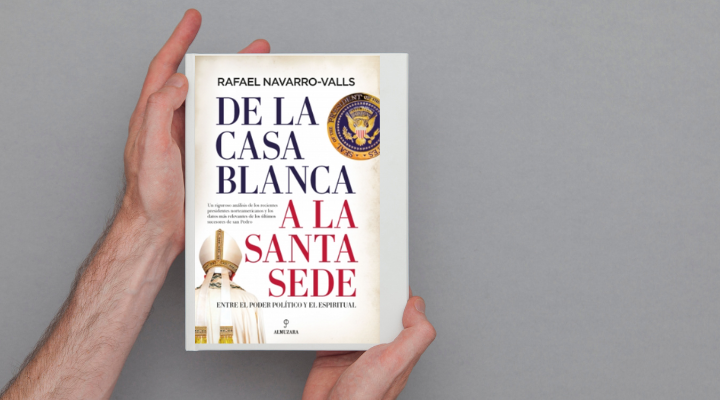
29th book by Rafael Navarro-Valls

A book on political and spiritual power

The Kennedys, and in particular President J.F.K., occupy an important part of this work. For a long time the Kennedy myth was alive and well, fueled by conspiracy theories about his death, although the current perception of the mythical presidency could be summed up in the question of who the American politician really was.

In contrast, the author presents his brother Robert, also assassinated, as the best of the Kennedys. The internal struggles of U.S. politics are presented with rigor and a look of humanity on the different characters.whether it is Richard Nixon, Jeb Bush, Barack Obama or Hillary Clinton. No less interesting is the examination of the Trump and Biden presidencies..

nuevo-libro-Rafael-Navarro-Valls

Book concerning the Holy See

The author intends to counteract the opinions that point out the differences between the last Popes. This perception, basically more political than religious, proves to be mistaken, as Navarro rightly points out, because the differences are in style, not in content.. The great contribution of St. John Paul II, in his opinion, is to have been able to change the political parameter for the historical-cultural one at the time of acting and interpreting events. The Polish Pontiff undoubtedly influenced the fall of the communist regimes, not from an opposing ideology but from the recourse to ethical and moral conscience.which is present in the roots of history and culture.

With respect to the Pope FrancisIn this book, self-serving political interpretations are rejected. Instead, Navarro stresses his closeness as a pastorLike his Master, he goes out in search of everyone, without exception.


Collaboration:

Antonio R. Rubio Plo, Graduate in History and Law. Writer and international analyst.
@blogculturayfe / @arubioplo

On self-acceptance

Self-acceptance

This does not mean "letting go" but working on reality and, if necessary, fighting for it.We have to transform it, to improve it as far as it depends on us, even if it is only "a grain of sand".

In the animal there is only an agreement with itself, the dynamics of the human spirit, which consists of a tension between being and desire, does not exist.Tension: between what we are and what we want to be. Tension is good, as long as it keeps us in reality and does not make us take refuge in fantasies.

Start with self-acceptance

One can begin by accepting oneself: circumstances, character, temperament, strengths and weaknesses, possibilities and limits. This is not obvious, because one often does not accept oneselfThere is boredom, protest, evasion by imagination, disguises and masks of what we are, not only before others but also before ourselves.

And this is not good. But it hides the reality of a desire to grow, which belongs to wisdom. "I can and must work on my vital structurebut, above all, I must say 'yes' to what it is, otherwise everything becomes inauthentic" (ibid., pp. 142f.).

Thus, he who has been given by nature a practical sense, must take advantage of it, but conscious that he lacks imagination and creativity. While the artist must suffer seasons of emptiness and discouragement, he who is very sensitive sees more, but suffers more. He who is cold-hearted and unaffected by anything, risks being unaware of great aspects of human existence. Each one must accept what he has, purify it in order to serve others with it, and fight for what he does not have, counting also on others. 

In practice: Present

This is not easy. You have to start by calling good good things good, bad things bad; without getting upset when something goes wrong or you are corrected. Only by recognizing my own defects, which are gradually becoming known, do I have the real basis for my self-improvement.

It is also necessary to accept the life situation, the stage of life we are in and the historical era in which I live.I do not try to escape from these realities: I try to know them and to improve them. One cannot escape into the past or into the future, without to value the present.

Nuevo Libro de Ramiro Pellitero Iglesias - Educación y humanismo cristiano - Expertos CARF

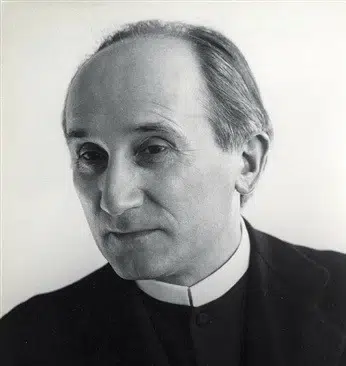
Romano Guardini (Italy 1885-Munich 1968) German Catholic priest, thinker, writer and academic. He is considered to be one of the most accredited theologians of the twentieth century.

Acceptance of destination

This is where the acceptance of destiny comes in (discussed by R. Spaemann in the last chapter of Ethics: Fundamental Questions, Pamplona 2010). Destiny is not random, but the result of the connection of interior and exterior elements.some of which depend on us. First of all on our dispositions, character, nature, etc. (again: self-acceptance). But it is also the result of our freedom in the day to day, also in the small things that we let or do not let pass.

Accepting oneself or fate can become difficult when pain or suffering comes. That is why it includes the ability to learn from suffering, without limiting oneself to avoiding itWe are trying to understand it, of course, as far as possible, but we are trying to understand it, learn from him.

To accept one's own life is to accept it as received, received from one's parents, from the historical situation and from one's ancestors, but also, one might wisely think, from God.

According to Christianity, God has experience of our problems because he has taken on flesh in Jesus Christ, who made himself vulnerable to the extreme, but with full freedom. Y In God there is no lack of meaning. A meaning that is not only rational but at the same time love..

For this reason we must not confuse the fact that I do not understand the meaning of this situation today and now, with the fact that this situation has a meaning in the whole of my life.that I must discover and take advantage of with confidence.


An ethics for our times

In addition to the book cited in this article, see the first part (original 1953) of his little book: "La aceptación de sí mismo; las edades de la vida", Cristiandad, Madrid 1977. The theme of acceptance was developed by the author ten years later in a second book on the virtues, which is the one referred to in our text. Cf. "Acceptance", in An ethics for our times (originally titled "Tugenden," virtues, and published as the second part of The essence of Christianity, Cristiandad, Madrid 2007, pp. 139-151); in this case acceptance is considered a virtue along with others in the area of self-mastery (such as respect and fidelity, patience and asceticism, courage and bravery, concentration and silence), the search for truth and solidarity.


Mr. Ramiro Pellitero Iglesias
Professor of Pastoral Theology
Faculty of Theology
University of Navarra


Published in "Church and new evangelization".