Palm Sunday: biblical meaning and history

What do we celebrate on Palm Sunday?

Palm Sunday is the last Sunday before the Easter Triduum. We also call it Passion Sunday.

This is a Christian feast of peace. The branches, with their ancient symbolism, remind us now of the covenant between God and his people. Confirmed and established in Christ, because He is our peace.

In the liturgy of our Holy Catholic Church, we read today these words of profound joy: the sons of the Hebrews, bearing olive branches, went out to meet the Lord, crying out and saying, "Glory in the highest!

While Jesus As he passed by, St. Luke tells us, the people spread their garments on the road. And when they were near the descent of the Mount of Olives, the disciples in great numbers, overcome with joy, began to praise God with a loud voice for all the wonders they had seen: Blessed is the King who comes in the name of the Lord, peace in heaven and glory in the highest.

"By works of service, we can prepare for the Lord a greater triumph than that of his entry into Jerusalem." St. Josemaría Escrivá.

History and origin

On this day, Christians commemorate Christ's entry into Jerusalem to consummate his Paschal Mystery. For this reason, two Gospels have long been read at Mass on this day.

As Pope Francis explains, "this celebration has a double taste, sweet and bitter, it is joyful and sorrowful, because in it we celebrate the Lord's entry into Jerusalem, acclaimed by his disciples as king, at the same time as the Gospel account of his passion is solemnly proclaimed.

So our heart feels that painful contrast and experiences in some measure what Jesus felt in his heart on that day, the day he rejoiced with his friends and wept over Jerusalem."

It is on Palm Sunday, when our Lord begins the decisive week for our salvation, that St. Josemaría recommends that "we leave aside superficial considerations and go to what is central, to what is truly important. Look:

Look: what we have to pretend is to go to heaven. Otherwise, nothing is worthwhile. To go to heaven, fidelity to the doctrine of Christ is indispensable. In order to be faithful, it is indispensable to persevere with constancy in our struggle against the obstacles that oppose our eternal happiness...."

Palm leaves, writes St. Augustine, are a symbol of homage, because they signify victory. The Lord was about to conquer, dying on the Cross. He was going to triumph, in the sign of the Cross, over the Devil, the prince of death.

He comes to save us; and we are called to choose his way: the way of service, of self-giving, of self-forgetfulness. We can follow this path by stopping during these days to look at the Crucifix, the "Chair of God".

Meaning of Palm Sunday

Bishop Javier Echevarría, makes us see the Christian meaning of this feast: "We, who are nothing, are often vain and arrogant: we seek to stand out, to attract attention; we try to be admired and praised by others. 

The enthusiasm of the people is not usually long-lasting. A few days later, those who had welcomed him with cheers will cry out for his death. And we, will we let ourselves be carried away by a passing enthusiasm?

If in these days we notice the divine fluttering of God's grace, which passes close by, let us make room for it in our souls. Let us spread our hearts on the ground, more than palms or olive branches. Let us be humble, mortified and understanding with others. This is the homage that Jesus expects from us.

"Just as the Lord then entered the Holy City on the back of the donkey," says Benedict XVI, "so the Church always saw him arrive again under the humble appearance of bread and wine.

The scene of Palm Sunday is repeated in a certain way in our own lives. Jesus approaches the city of our soul on the back of the ordinary: in the sobriety of the sacraments; or in the gentle hints, such as those that St. Josemaría pointed out in his homily on this feast:

"Live punctually the fulfillment of your duty; smile at those who need it, even if your soul is in pain; dedicate, without hesitation, the necessary time to prayer; come to the aid of those who seek you; practice justice, extending it with the grace of charity".

Pope Francis points out that nothing could stop the enthusiasm for the entry of Jesus; let nothing prevent us from finding in him the source of our joy, of authentic joy, which remains and gives peace; because only Jesus saves us from the bonds of sin, death, fear and sadness.

Whoever receives Jesus with humility and simplicity, then carries him everywhere.

Domingo de ramos: significado bíblico e historia

Palm Sunday in the Bible

The Palm Sunday liturgy puts this canticle on the lips of Christians: Lift up your lintels, O ye gates; lift up your lintels, ye ancient doors, that the King of glory may come in.

First Gospel of Palm Sunday (Luke 19:28-40)

Having said this, he walked ahead of them going up to Jerusalem.
And when he drew near to Bethphage and Bethany, by the mount called the Mount of Olives, he sent two disciples, saying:
-Go to the village opposite; when you enter it you will find a donkey tied up, on which no one has yet ridden; untie it and bring it to him. And if anyone asks you why you are untying it, you shall answer him, "Because the Lord has need of it."
The envoys went and found it just as he had told them. When they untied the donkey their masters said to them:
- Why do you untie the donkey?
-Because the Lord needs it," they answered.
They took him to Jesus. And they threw their cloaks on the donkey and made Jesus ride on it. As he went on, they spread their cloaks along the road. And as he drew near, as he was going down the Mount of Olives, the whole multitude of the disciples, filled with joy, began to praise God with a loud voice for all the wonders they had seen, saying:
Blessed is the King who comes in the name of the Lord!
Peace in heaven and glory in the highest!
Some Pharisees from the crowd said to him, "Teacher, rebuke your disciples.
He answered them, "I tell you, if these keep silent, the stones will cry out.

Gospel of Palm Sunday (Mark 11:1-10)

As he drew near to Jerusalem, to Bethphage and Bethany, by the Mount of Olives, he sent two of his disciples and said to them:
-Go to the village opposite you, and as soon as you enter it you will find a donkey tied up, on which no one has yet ridden; untie it and bring it back. And if anyone says to you, "Why do you do that?" answer him, "The Lord needs him, and he will bring him back here at once."
They went away and found a donkey tied by a gate outside at a crossroads, and they untied it. Some of those who were there said to them:
-What are you doing untying the donkey?
They answered them as Jesus had told them, and allowed them to do so.
Then they brought the donkey to Jesus, threw their cloaks on it, and he mounted on it. Many spread their cloaks on the road, others the branches they cut from the fields. Those who went before and those who followed behind shouted:
-Blessed is he who comes in the name of the Lord, blessed is the coming kingdom, the kingdom of our father David, Hosanna in the highest, Hosanna in the highest!
And he went into Jerusalem into the Temple; and when he had carefully observed everything, as it was toward evening, he departed for Bethany with the twelve.

"There are hundreds of animals more beautiful, more skillful and more cruel. But Christ looked to the donkey to present himself as king before the people who acclaimed him. For Jesus does not know what to do with calculating cunning, with the cruelty of cold hearts, with showy but hollow beauty.

Our Lord esteems the joy of a young heart, the simple step, the voice without falsetto, the clear eyes, the ear attentive to his word of affection. Thus he reigns in the soul". St. Josemaría

Palm Sunday processions

The tradition of celebrating Palm Sunday is hundreds of years old. For centuries, the blessing of the olive trees has been part of this feast, as well as the processions, The Holy Mass and the recounting during it of the Passion of Christ. Today they are celebrated in many countries.

The faithful participating in the Jerusalem procession, which dates back to the 4th century, They also carry palm branches, olive trees or other trees in their hands, and sing Palm Sunday songs.. The priests carry bouquets and lead the faithful.

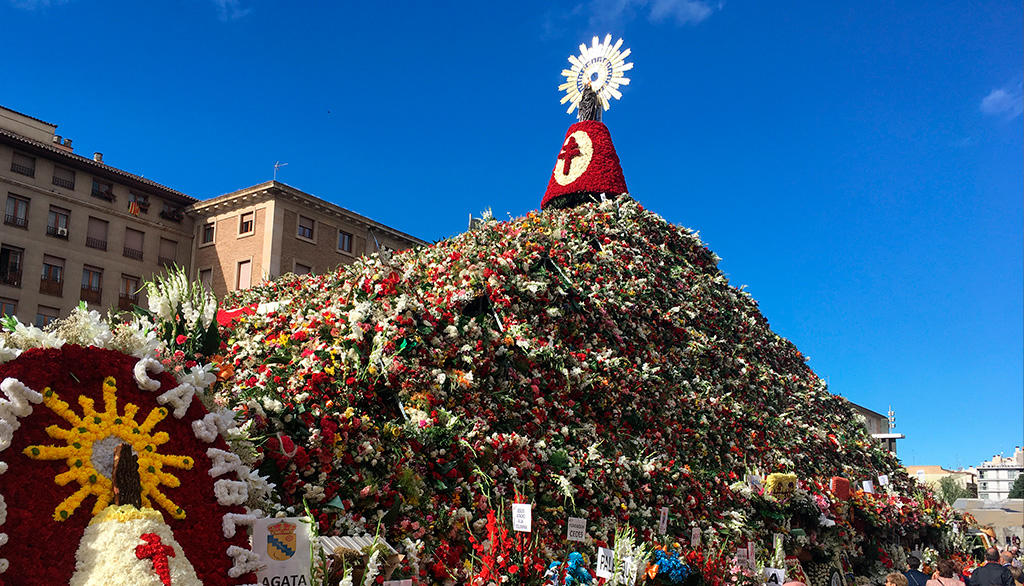
In Spain, a cheerful Palm Sunday procession commemorates Jesus' entry into Jerusalem. Gathered together we sing hosanna and waves his palms as a gesture of praise and welcome.

The olive branches are a reminder that Lent is a time of hope and renewal of faith in God. They are attributed to be a symbol of the life and resurrection of Jesus Christ.. They also recall the Church's faith in Christ and his proclamation as King of Heaven and Earth.

At the end of the pilgrimage, it is customary to place the blessed palms next to the crosses in our homes as a reminder of Jesus' Easter victory.

These same olive trees will be prepared for the following Ash Wednesday. For this important ceremony, the remains of the palms blessed on Palm Sunday of the previous year are burned. These are sprinkled with holy water and then scented with incense.

Songs for Palm Sunday

Brief list of recommended songs for Palm Sunday celebrations

  • Processional song: YOU WILL REIGN
  • Entrance chant: HOSANNA, HOSANNA
  • From Psalm 21: MY GOD, MY GOD, WHY HAVE YOU FORSAKEN ME?
  •  Acclamation before the Gospel: HONOR AND GLORY TO YOU, LORD JESUS
  • Verse: CHRIST SUBMITTED HIMSELF FOR OUR SAKE
  • Offertory song: LET US BRING THE LORD
  • Saint: HOLY, HOLY, HOLY - Alberto Taulé.mp3
  • Lamb of God: LAMB OF GOD
  • Communion song: LORD, WHERE WILL WE GO?
  • Song of reflection: IN YOUR CROSS YOU STAND TODAY
  • Departure song: AL PIE DE LA CRUZ (AT THE FOOT OF THE CROSS)
  • Before the readings: GLORY TO YOU, LORD

Bibliography:
Pope Francis, Homily for Palm Sunday 2017.
Benedict XVI, Jesus of Nazareth.
St. Josemaría, Christ Is Passing By.
St. Josemaría, Forge.

New expert diplomas from the School of Theology of the University of Navarra

The subjects of these diplomas are not designed as a mere study of psychology or exclusively technical knowledge. Since they are taught in a Faculty of Theology, the approach is necessarily multidisciplinary, focusing on their theological, spiritual and pastoral dimension.

Why Psychology and Spiritual Life Studies?

Many trainers in Church-related centers detect a gap in basic psychological knowledge, which prevents them from adequately caring for the people entrusted to their care.

The complexity of culture and society in the 21st century greatly influences the formation of young people's personalities and the way they face life and problems at all ages.

The dedication to formative tasks and spiritual accompaniment requires specific and profound knowledge of psychological normality and its variants, as well as of possible disorders.

Everyone is aware of the significant increase in psychic symptomatology in current times, particularly in relation to anxiety, addictions, depression and professional stress.

For all these reasons, it seems necessary to offer an in-depth training in psychology and related subjects, as a complement to the training of teachers, spiritual guides or people with managerial tasks or sensitive areas in both secular and religious educational entities.

What are the objectives of these expert diplomas?

  • To provide people with sufficient knowledge in psychology and related sciences to welcome, understand and accompany people of all ages and conditions in their moral and spiritual life.
  • To provide theoretical and practical tools to know the normal modes of personal maturity, its variants and possible crises; as well as the useful strategies to face them. This will enable to make a first diagnosis of possible alterations or variants of normality.
  • To help prevent, recognize and assist in conflictive or risky situations that hinder the development of personal identity, interpersonal relationships and spiritual life.

Offering of Expert diplomas

Dates of the expert diplomas

The Diplomas are taken on-site at the Pamplona campus of the University of Navarra. They have their own degree from the University of Navarra.

  • Diploma in Psychology and Moral Life. From September 4 to October 10, 2023. Monday to Friday.
  • Diploma in Spiritual Accompaniment and Conflict Resolution. From October 26 to December 7, 2023. Monday to Friday.


For more information: José María Pardo Sáenz: jmpardo@unav.es

Works of mercy: spiritual and corporal

What are the works of mercy?

They are selfless acts performed with detachment and generosity that we do for other people. The works of mercy are fourteen, seven corporal and seven spiritual. To instruct, to counsel, to console, to comfort, are spiritual works of mercy, as are forgiving and suffering with patience. Among the corporal works of mercy we find almsgiving, which is one of the principal testimonies of fraternal charity, as well as a practice of justice that pleases God. Catechism of the Catholic Church, 2447

Pope Francis named the year 2014 as the Year of Mercy, here we are going to make a review to remember what they are and what are the works of mercy that he has recommended to meditate and perform during that time but that can not be forgotten.

Every Christian must keep these works in mind as "a way to awaken our conscience, often lethargic in the face of the drama of poverty, and to enter even more deeply into the heart of the Gospel, where the poor are the privileged of divine mercy".

The Church has the wisdom of a good mother, who knows what her children need to grow up healthy and strong, in body and spirit. Through the works of mercy, he invites us to rediscover that both the body and soul of our fellow human beings are in need of care, and that God entrusts each one of us with this attentive care..

. "The object of mercy is human life itself in its totality. Our very life as "flesh" is hungry and thirsty, in need of clothing, a home and visitors, as well as a dignified burial, which no one can give to himself (...). Our very life as "spirit" needs to be educated, corrected, encouraged, consoled (...). We need others to counsel us, forgive us, bear with us and pray for us."  Francis, 3rd meditation at the Jubilee of priests, 2-VI-2016.

Impact of the works of mercy on the person who performs them

The practice of the works of mercy generates grace for those who practice them. The Gospel of Luke relates the words of Jesus: "Give, and it will be given to you". So with the works of mercy we do the Will of God, we give something of ourselves to others and the Lord promises us that he will also give us what we need.

On the other hand, performing works of mercy is a way to compensate and restore our soul for our sins already forgiven in the sacrament of confession. By performing good works as are, of course, the Works of Mercy. "Blessed are the merciful, for they shall obtain mercy." Mt.5, 7.

Moreover, the Works of Mercy help us to advance on the road to Heaven, because they make us similar to Jesus, our model, who taught us how our attitude towards others should be. In Matthew we find the following words of Christ: "Lay not up for yourselves treasures upon earth, where moth and rust doth corrupt, and where thieves break in and steal: but lay up for yourselves treasures in heaven, where neither moth nor rust doth corrupt, and where thieves do not break in and steal. For where your treasure is, there will your heart be also".

By following this teaching of the Lord, we exchange temporal goods for eternal goods, which are those that are truly valuable.

Corporal Works of Mercy

1 Visiting the sick
2 Feeding the hungry
3 Give drink to the thirsty.
4 Providing lodging for pilgrims.
5 Naked dressing.
6 Visiting prisoners.
7 Burying the deceased.

"A man who does not react to tribulations or injustices, and who does not strive to alleviate them, is not a man after the measure of the love of Christ's heart."
Pope Francis

Feed the hungry and give drink to the thirsty.

"He who has two coats, let him distribute them to those who have none; and he who has enough to eat, let him do the same" (Lk 3:11). These two works of mercy complement each other and refer to the help that we should procure in food and other goods for the most needy.

Providing lodging for pilgrims

It is not a common case nowadays, but it could happen that we receive someone in our home, not out of pure hospitality of friendship or family, but because of a real need.

Naked dressing

This work of mercy is directed to alleviate another basic need: clothing. Many times, it is made easier for us with the collections of clothes that are made in parishes and other centers. When it is time to give our clothes, it is good to think that we can give what we have left over or what is no longer useful, but we can also give what is still useful.

In the letter of James we are encouraged to be generous: "If a brother or sister is naked and lacking daily sustenance, and one of you says to them, 'Go in peace, be warmed or fed,' but you do not give them what is necessary for the body, what good is it?" James 2:15-16.

Visiting the sick

In this time of global pandemic this work of mercy takes on a strong meaning. It is about true care, both in terms of physical needs, as well as keeping them company and praying for the sick and the elderly. A good example from Sacred Scripture is the Parable of the Good Samaritan in the Gospel of St. Luke.

Visiting the incarcerated

It consists of visiting the prisoners and providing them not only with material help but also with spiritual assistance that will help them to improve as persons, to mend their ways, to learn to develop a job that can be useful to them when they finish the time assigned by the justice system. Today it is the priests and consecrated women who carry out this complicated task of solidarity, we must pray for the priests, accompany them and support them in this work of social solidarity.

Burying the deceased

Offering a mass for the deceased and burying the dead with dignity seems like a superfluous command, but it is not. In time of war, it can be a very demanding command. Why is it important to give a dignified burial to the human body? Because the human body has been the dwelling place of the Holy Spirit. We are "temples of the Holy Spirit". 1 Cor 6:19.

Spiritual Works of Mercy

1 Teaching those who do not know.
2 Give good advice to those who need it.
3 Correct the wrongdoer.
4 Forgive those who offend us.
5 To comfort the sad.
6 To suffer with patience the defects of others.
7 Pray to God for the living and the deceased.

"A Christian cannot dwell only on personal problems, for he must live with the universal Church in mind, thinking of the salvation of all souls."
Pope Francis

obras-de-misericordia
Teaching those who do not know

"Those who teach righteousness to the multitude shall shine like the stars for ever and ever." (Dan 12:3b).

It refers to teaching on any subject: also on religious subjects. This teaching can be in writing or by word of mouth, by any means of communication or directly. Giving help and support to priestly formation is also a work of spiritual mercy.

Giving good advice to those who need it

One of the gifts of the Holy Spirit is the gift of counsel. Therefore, whoever intends to give good advice must, first of all, be in tune with God, since it is not a matter of giving personal opinions, but of giving good advice to those in need of guidance.

Correcting the wrongdoer

Fraternal correction is explained by Jesus himself in the Gospel of Matthew: "If your brother sins, go and speak to him alone and reproach him. If he listens to you, you have won your brother." (Mt 18:15-17).

To correct our neighbor we must do it with meekness and humility. Many times it will be difficult, but we can remember what the apostle James says at the end of his letter: "He who turns a sinner from his evil way will save his soul from death and obtain forgiveness for many sins" (James 5:20).

Forgiveness of insults

When we pray the Our Father we say "Forgive us our trespasses, as we forgive those who trespass against us" and Jesus Christ tells us: "If you forgive the trespasses of men, the heavenly Father will also forgive you. But if you do not forgive the trespasses of men, neither will the Father forgive you". (Mt 6:14-15).

To forgive is to overcome revenge and resentment. It means treating kindly those who have offended us. The greatest forgiveness is that of Christ on the Cross, who teaches us that we must forgive everything and always: "Father, forgive them, for they know not what they do". (Lk 23:34).

Comfort the sad

Comfort for the sad person, for the one who suffers some personal difficulty or finds himself in a moment where he has to overcoming grief is another work of spiritual mercy. Often, it will be complemented by giving good advice, which will help to overcome those situations of pain or sadness. To accompany our neighbor at all times, but especially in the most difficult moments, is to put into practice the example of Jesus in the Gospel, who had compassion on the pain of others whenever he saw it.

To suffer with patience the defects of others.

Patience in the face of the defects of others is a virtue and a work of mercy. When bearing those defects causes more harm than good, with much charity and gentleness, a warning should be given.

Praying for the living and the deceased

St. Paul recommends praying for all, without distinction, also for rulers and persons in positions of responsibility. Prayer for priestly and religious vocations and the Pope's intentions. It is also important to pray for the deceased who are in the Purgatorypray for them and ask for plenary indulgence that their souls may be free from sin. 

Tucking in the weakness of others

Although it is certainly appropriate to give life to projects where we have the possibility of lending a hand, the usual terrain of mercy is a day-to-day work governed by the passion to help: what else can I do? who else can I involve? All this is mercy in action, without timetables, without calculations: "a dynamic mercy, not as a reified and defined noun, nor as an adjective that decorates life a little, but as a verb - to mercy and to be merciful". Francis, 1st meditation at the Jubilee of priests, 2-VI-2016.


Bibliography:

Discernment of the heart

He has paid special attention to the importance of the affections in the examination of conscience and in prayer. It does not refer, therefore, to the role of accompaniment or spiritual direction, except in the last general audience; nor does it refer to discernment at other social or ecclesial levels.

We all need to know how to discern to make the right decisions. This is proper to the virtue of prudence, although today this term has acquired a reductive sense of caution or precaution. But prudence itself is "right reason in acting" and, therefore, it can also lead us to act without delay and with generosity.

From the Christian point of view, moreover, discernment requires taking into account our condition as children of God, friendship and personal contact with Jesus Christ, and the action of the Holy Spirit.

The Pope encouraged knowing how to recognize the signs We must also learn to perceive something that can make us worse along the way, even if it presents itself in an attractive way.

Elements of discernment

In the first part of his catecheses (up to and including October 19) Pope Francis pointed out four main elements of this spiritual discernment that we could call "individual".

First, the friendship or familiarity with the Lord: to speak with Him in prayer, with closeness and trust, because He never abandons us.

Second, the self-knowledgeThis is not easy, because we tend, on the one hand, to hide - even from ourselves - and, on the other hand, we are easily carried away by superficial fashions or slogans.

For all this, it helps to do the following examination of conscience. And the Pope is not referring here to the examination prior to sacramental confession (to discover the sins of which we are to be accused), but to the general examination of conscience at the end of the day. The general examination of conscience at the end of the day: "What has happened in my heart this day? Many things happened... Which ones, why, what traces did they leave in my heart?

The third 'ingredient' of discernment would be to know what and how the our wishes, We must make sure that our desires are great and operative, because sometimes we remain in our complaints (cf. Jn 5:6 ff), which rather dwarf or atrophy our desire.

Fourth, he advises us reading or interpreting one's own history. If we do this, a little every day, we will be able to detect so many toxic or pessimistic elements that hold us back (I am worthless, everything goes wrong for me, etc.), perhaps with the help of someone who can help us to also recognize our qualities, the good things that God sows in us.

Expertos Fundación CARF

Pope Francis' audience on September 28, 2022. Source: Vatican News.

Desolation and consolation

In a second part of the catechesis (until November 23), he focused on the binomial desolation-consolation.

First, the desolation or spiritual sadness. This sadness need not be bad in itself. Sometimes it is the result of remorse for having done something wrong, but other times it is simply like a "pain in the soul", a red light, which invites us to stop, to see what is wrong; at other times it can be a temptation of discouragement, which the devil sends us to stop us on the path of good.

In any case, it is advisable to ask yourself where it comes from that sadness, without forgetting that God never abandons us, and that with him we can overcome every temptation, as Jesus taught us (cf. Mt 3:14-15; 4:11-11; 16:21-23).

The Pope insists that sometimes such desolation can be good. "In fact," he warns, "if there is not a little dissatisfaction, a little healthy sadness, a healthy capacity to live solitude and to be with ourselves without running away, we run the risk of always remaining on the surface of things, and never getting in touch with the center of our existence. A certain 'healthy restlessness' is a good thing as the saints have had".

Catequesis-discernimiento-corazón-papa-Francisco

And he explains that the desolation gives us the opportunity for growthWe need to mature in the capacity to give ourselves freely to others, without seeking our own interests or our own well-being. For example, in prayer we may be dry or feel empty or tempted to abandon it. But we must learn to be with the Lord, while we continue to seek him, perhaps in the midst of that temptation, or that emptiness that we experience. But without leaving prayer, because his answer always comes.

There are also 'consolations' in the spiritual life, joys. But it is necessary to know distinguishing true from false consolations. The first ones lead us to continue seeking the Lord, grateful for what he gives us. The second are those that lead us to seek ourselves, to evade our duties or to mistreat others.

Controlling our path

In the last part of the catechesis (from December 7) Francis invited us to look at the phase after the decisions have been made, to verify whether they have been adequate or not. As signs that they have been good decisions, pointed out: inner peace and joy, concern for the needs of others, "feeling in one's own place", growth in order, unity and energy in our spiritual life.

He added the importance of surveillanceWe must not become drowsy, not get used to it, not let ourselves be carried away by routine (cf. Lk. 12:35-37). This is necessary to ensure perseverance, consistency and the good fruit of our decisions.

The reason is because he who becomes too sure of himself loses humility and through lack of vigilance of heart can let the evil one back in (cf. Mt 12:44 ff). If left unattended, weeds grow: pride, the presumption of being good, the comfort of being at ease, excessive self-confidence... In a word, the lack of humility... and you end up losing everything.

This is the advice: "Watch over your heart, because vigilance is a sign of wisdom, it is a sign above all of humility, because we are afraid of falling and humility is the master path of the Christian life".

Discernment aids

Later the Pope pointed out some aids to discernment. He referred mainly to thehe Word of God and the doctrine of the Church. The Word of God is found in Sacred Scripture (especially in the assiduous reading of the Gospels) with the help of the Holy Spirit.

This is why Francis insists, as he has done on other occasions: "Let us take the Gospel, let us take the Bible in our hands: five minutes a day, no more. Carries a pocket GospelIt's a good idea to keep it in your bag, and when you travel, take it and read it a little during the day, letting the Word of God come close to your heart".

He also alluded, in accordance with the experience of the saints, to the importance of contemplate the passion of the Lord and view it in the Crucifixto the use of the Virgin Mary; to ask for lights to the Holy Spirit (which is "discernment in action") and treat it with confidence, together with the Father and the Son.

In the last catechesis (cfr. General Audience of January 4, 2023) Francis pointed out the importance of the spiritual guidance and to make oneself known in order to know oneself and to walk in the spiritual life.


Mr. Ramiro Pellitero IglesiasProfessor of Pastoral Theology at the Faculty of Theology of the University of Navarra.

Published in "Church and New Evangelization". This text (revised on January 4, 2023) is a synthesis of a more complete one, published in the magazine "Omnes", January 2023 issue.

Why make a solidarity bequest or will to the CARF Foundation?

By including the CARF Foundation in your will, you will give continuity to its commitment to integral formation. You will help priests and seminarians around the world receive a solid academic, theological, human and spiritual preparation.

What is a legacy of solidarity?

The solidarity bequest is a testamentary disposition in favor of a non-profit institution. It is in the will where it is decided to allocate a very specific part of the assets and/or rights to support the objectives of a person, natural or legal. These assets, which are called legacies, are separated from the inheritance and are not subject to distribution among the forced heirs. They can be a specific asset such as a house, apartment, apartment, rural property, etc. or a right such as a benefit, a percentage of the estate, etc.

Bequests have a limit, they can in no case be detrimental to the legitimate inheritance of the heirs. In addition, they must be granted by will and must be expressly indicated.

For the CARF Foundation your collaboration is essential and one way to make it tangible is through the legacy of solidarity. It is a boost in your commitment to the formation of priests, the spreading of their good name and prayer for vocations.

What is a joint and several will?

Article 667 of the Civil Code defines a will as the written declaration of a person's will by which he/she disposes of the destination of his/her assets and obligations, or part of them, after his/her death, depending on the extent to which it was made.

Making a will is a right that entails a simple procedure, with which you can avoid problems for your family and loved ones. The will also serves to order your wishes and be certain that they will be perpetuated when you are gone.
A will is revocable until the time of death. The subsequent valid will revokes the previous one. It can be modified by complying with the same requirements that were necessary to grant the previous one, that is to say, to go to the notary to manifest the changes that are wanted to be made.

Types of wills you can make

The current Spanish legal system includes three ways of making a will:

  • Open: In this way, the testator expresses his or her wishes about the destiny of his or her assets before the notary who will draft it according to the legal prescriptions. It is a secret procedure until the death of the testator. The open will is the most advisable modality, as it is the safest and most comfortable as well as the most used.
  • Closed: The testator delivers the signed will to the notary in a sealed envelope.
  • Ológrafo: It will be written by the testator by hand. But before it is fulfilled, it will be necessary to initiate a notarial procedure to verify its authenticity.

Find out how you can make a solidarity testimony in favor of the CARF Foundation or make a bequest.

vasos sagrados

Did you know that you don't need to be a member of the CARF Foundation to leave your will or legacy?

All you have to do is decide to express your commitment to solidarity in the form of a will or bequest. This gesture will always be present, since the CARF Foundation is an institution declared of public utility, your entire bequest or will will will be destined to the foundational purposes of supporting the integral formation of priests and seminarians around the world.

The CARF Foundation will see to it that, when the young men in formation return to their dioceses to be ordained priests, they will be able to transmit all the light, science and doctrine they have received. We try to inspire the hearts of our benefactors and friends so that every day there will be more of us building a more just society.

What can I donate as a legacy of solidarity?

Most of the vocations are born today in countries in Africa or America that lack the means to do so. Every year, more than 800 bishops from all over the world ask the CARF Foundation for help in training their candidates. Leaving part of your legacy of solidarity is easy and accessible, and can be done without affecting the interests of your heirs. When your voice falls silent, your ideals can continue with strength and courage by supporting these candidates so that they can complete their training at the ecclesiastical universities of Rome and Pamplona. You can donate:

  • Real estate, such as a house, apartment, apartment, rural property, etc.
  • Other assets such as jewelry, works of art, cash in banks or in cash.
  • You can also donate a percentage of your assets, mutual funds, stocks or life insurance to the Foundation.

How does the CARF Foundation manage its legacy of solidarity?

The proceeds from the sale of the bequeathed assets will be used for a significant investment. Guaranteeing a secure procedure for the treatment of the bequeathed assets. The constant support to the integral formation of priests and seminarians goes beyond the cycles of the economy. That is why, at the CARF Foundation, we work in the endowment fund (endowment) of the foundation so that we can always support them.

It is a commitment to think that, behind every priestly vocation, there is another call from the Lord to each one of us Christians, asking for personal effort to ensure the means for formation.

How can I make a solidarity bequest to the CARF Foundation?

Depending on your intention and family circumstances, and within the provisions of current legislation, there are several ways to have us present in your last will:

  • If you have no heirs, you can name the CARF Foundation as your universal heir, making it the beneficiary of all your assets, rights and/or shares.
  • You can also leave your assets to more than one person or institution, you can designate the CARF Foundation as co-heir, indicating in the will the percentage assigned to each of the parties.
  • Or, you can nominate the CARF Foundation. legatee, leaving a legacy of a concrete good.

Once you have made the decision to collaborate by making a will or solidarity legacy in favor of the CARF Foundation, you only need to go to a notary and express your will to testament or bequeath, all or part of your assets in favor of:

Centro Académico Romano Foundation
Conde de Peñalver, 45, Entre planta of 1 - 28006 Madrid
CIF: G-79059218

If your personal circumstances or intention change, your final decision can always be modified, you can contact the Foundation with any questions you may have.

The solidarity bequest is a tax-exempt donation.

In the liquidation of the will, non-profit entities are not subject to the Inheritance and Donations Tax set forth in the Decentralization Act 49/2022 and therefore joint and several legacies are tax exempt for the beneficiaries.

The totality of the donated bequest is entirely dedicated to the purposes of the CARF Foundation, which is why the allocated portion will be tax exempt.

"The message of Divine Mercy constitutes a very concrete and demanding program of life, for it involves works."

Pope Francis
Message of Pope Francis for the XXXI World Youth Day 2016.

Find out how you can make a solidarity testimony in favor of the CARF Foundation or make a bequest.

Bibliography

  • Civil Code Art. 667
  • Law 49/2002, of December 23, 2002, on the tax regime for non-profit entities and tax incentives for patronage.

Glorious Mysteries of the Holy Rosary

"They nourish in believers hope in the eschatological goal toward which they are journeying as members of the pilgrim People of God in history. This will necessarily impel them to give courageous witness to that 'joyful proclamation' which gives meaning to their whole life." St. John Paul II in the encyclical Rosarium Virginis Mariae.

The Five Glorious Mysteries

On Wednesdays and Sunday we pray the Glorious Mysteries. For the Joyful Mysteries which contemplate the Annunciation and the infancy of Jesus are reserved for Mondays and Saturdays. Tuesday and Friday are reserved for the Sorrowful mysteries and the Luminous mysteries are prayed on Thursdays. The Glorious mysteries of the Holy Rosary unite earth and heaven, from the Resurrection of Christ to the Coronation of Mary in Heaven.

Jesus Christ cannot be reduced to his crucified image. He is the Risen One! The Rosary has always expressed this conviction of faith.The Passion of Christ, inviting us to contemplate the Passion and then to fix our attention on the glory of Christ, on his Resurrection and Ascension. Contemplating the Risen Jesus, we discover anew the reasons for our faith, we relive the joy of the Virgin Mary, who experienced in an intense way the new life of the glorified Son.

la resurrección

Oil painting on board The resurrection of Christ attributed to the Italian Renaissance master Raphael Sanzio.

In the first of the Glorious Mysteries we meditate on the resurrection of the Lord

  • Mark 16:6-8: As they entered the tomb, they saw a young man sitting on the right side, dressed in a white robe, and they were frightened. But he said to them, "Do not be frightened. You are looking for Jesus of Nazareth, the Crucified One; he is risen, he is not here. See the place where they laid him. But go and tell his disciples and Peter that he is going before you to Galilee; there you will see him, just as he told you." And they fled from the tomb, for great fear and trembling had seized them, and they said nothing to anyone because they were afraid.

Christ lives

Jesus is Emmanuel, God with us, Jesus is risen! He is not in the tomb. This is the great truth that fills our faith with content. He appeared to the Virgin Mary, to Peter and to the other apostles. He also comes to meet us who are his disciples.

Because Jesus is alive, he has the power to change our lives, and he calls us to a personal relationship with him. The Easter season is a time of joy, a joy that is not limited to this time of the liturgical year, but is always present in the heart of the Christian. Because Christ lives. He remains in his Church: in her sacraments, in her liturgy, in her preaching, in all her activity. In a special way Christ continues to be present among us, in the daily self-giving of the Holy Eucharist. That is why the Catholic Mass is the center and root of Christian life.

Also in the light of his resurrection we contemplate, united to Christ, all the souls who were dearest to us. Whose mourning we share. We remember them in the sacrifice of the crucified and risen Lord and they form part of our prayer.

giotto la ascensión del señor

Giotto, The Ascension of the Lord (1305). Chapel of the Scrovegni, Padua, Italy. Tempera on fresco.

In the second Glorious Mysteries, we meditate on the Ascension of the Lord.

  • Matthew 28:18-20: Jesus came to them and spoke to them in this way:
    "All power in heaven and on earth has been given unto me. Go therefore and make disciples of all nations, baptizing them in the name of the Father and of the Son and of the Holy Spirit, and teaching them to observe all that I have commanded you. And behold, I am with you always, even to the end of the age."
    And when he had said this, he was lifted up before them, and a cloud hid him from their eyes. And while they were gazing steadfastly into heaven as he went away, there appeared to them two men clothed in white, who said to them:
    "Galileans, what are you doing there looking up to heaven? This one who has been taken away from you, this same Jesus, will thus come just as you have seen him ascend into heaven."

Christ has ascended into heaven

The Second Glorious Mystery of the Rosary teaches us to trust in the Lord's will. 

Jesus goes to the Father. It is right that the Holy Humanity of Christ should receive the homage, acclamation and adoration of all the hierarchies of angels. The Father is pleased with the surrender of the Son, he has accepted his sacrifice, and now Jesus, the Messiah, forever occupies his position as Lord over all creation..

As long as we are on Earth, we will no longer see him. Our first reaction is to feel like orphans. We miss him. But this is a false impression. In reality, he is not gone. He stays with us in another way. "He is closer to you than you are to yourself." said St. Augustine.

The great mission we received, in the Baptismis co-redemption. The charity of Christ urges us to take upon our shoulders a part of this divine task of rescuing souls.

"The human family is constantly being renewed; in each generation we must continue our efforts to help people discover the greatness of their vocation as children of God.In this way, it is necessary to inculcate the commandment of love for the Creator and for our neighbor". St. Josemaría

Let us know how to bear witness, by example and word, to the faith we profess.

pentecostés greco el prado

PentecostThe painting was painted by El Greco. It is part of the collection of the Prado Museum in Madrid.

Glorious Mysteries: en the third, we meditate on the coming of the Holy Spirit.

  • Acts 2:1-4: "When the day of Pentecost had come, they were all together in one place. Suddenly there came from heaven a sound like the rush of a mighty wind, and it filled the whole house where they were sitting.
    And there appeared to them tongues as of fire, which parted and rested on each of them; and they were all filled with the Holy Spirit and began to speak in other tongues, as the Spirit gave them utterance."

The grace of the Holy Spirit

The divine virtue that infuses receiving the gifts of the Holy Spirit in the Christian soul is a great support of hope, a powerful force, the only true help for human life. We are referring to the grace that sanctifies us, which in reality is preceded and followed by effective graces. What is truly important is that the spirit of man be renewed from within, being born to new life.

The coming of the Holy Spirit is a profound reality, which the Bible makes known to us. It is not a memory of the past. It is, over and above the miseries and sins of each one of us, the reality also of the Church of today and of the Church of all times. Let us have recourse to his graces, let us have recourse through prayer to the Holy Spirit to thank him or ask for favors.

"Jesus has kept his promises: he is risen, he has ascended to heaven and, in union with the Eternal Father, he sends us the Holy Spirit to sanctify us and give us life. To live according to the Holy Spirit is to live in faith, hope and charity; to let God take possession of us and change our hearts from their roots, to make them conform to his measure," St. Josemaría said.

la asunción martín cabezalero

This work by the Spanish artist Juan Martín Cabezalero, The Assumption of the Virgin (1665). It is painted in oil on canvas and is preserved in the Prado Museum.

Glorious Mysteries: In the fourth we meditate on the Assumption of the Virgin Mary.

  • Catechism of the Catholic Church, 974: "The Blessed Virgin Mary, having completed the course of her earthly life, was taken body and soul to the glory of heaven, where she already shares in the glory of the resurrection of her Son, anticipating the resurrection of all the members of her Body".

Mary is taken to heaven

Assumpta est Maria in coelum: gaudent angeli: Mary has been taken by God, body and soul, to heaven, and the angels rejoice! Thus sings the Church. The place of the Virgin Mary was in Heaven, where her Son awaited her. For she is full of grace. The intensity and nature of her graces are different throughout her life; one is the grace at her Conception, another at the Incarnation. And different is the grace she receives at the Assumption of Mary to heaven. For, in the latter the Virgin Mary receives the fullness of holiness.

And we as Christians can contemplate in this Glorious Mystery of the Holy Rosary this marvel.

coronación de la virgen velázquez el prado

Coronation of the Virginoil on canvas painted by Velázquez in 1645 and can be seen in the Prado Museum.

In the fifth of the Glorious Mysteries we meditate on the crowning of Mary as Queen and Mistress of all creation

  • Revelation (11-12): "And there appeared a great wonder in heaven. And the sanctuary of God in heaven was opened, and the ark of his covenant appeared in the sanctuary, and there were lightnings and rumblings and thunderings and an earthquake and a great hailstorm.
    A great sign appeared in heaven: a woman clothed with the sun, with the moon under her feet, and a crown of twelve stars on her head."

Mary in heavenly glory

Mary, Queen of the Universe, repaired the fall of Eve, and has trampled, with her immaculate sole, the head of the infernal dragon. Daughter of God, Mother of God, Spouse of God. The Father, the Son and the Holy Spirit crown her as Empress of the Universe. And angels and patriarchs, prophets and apostles, martyrs, confessors and virgins honor her. All saints and all sinners. You and me. The reflection must be on ourselves; on our vocation by which one day we will be associated with the angels and the saints and whose sanctifying graces anticipate already from this life the mysterious and consoling reality.

The Church invites us to have recourse to her, to the Virgin Mary, our Mother and our Queen, in all our needs. Being Mother of God and Mother of mankind is the solid foundation of filial trust in her powerful intercession, which comforts us and urges us to rise from our falls.

It is the synthesis of the whole Rosary, which thus closes in joy, in glory.


Bibliography

Opusdei.org.
Meditations on the mysteries of the Holy Rosary, Pope Francis.