Healing woundsThe fragility of life strikes us in many ways, with losses, uncertainties, visible and invisible wounds. And in the face of this personal anguish, the words of Erik Varden, Bishop of Trondheim (Norway) and Cistercian monk, emerge as the wind of hope. His message, profoundly Catholic and at the same time contemporary, has made him one of the most lucid and heard voices of Catholicism in the 21st century.
For this reason, its presence always causes expectation and excitement, because his speech has an impact on every person who has ever felt the weight of pain, loss or uncertainty.
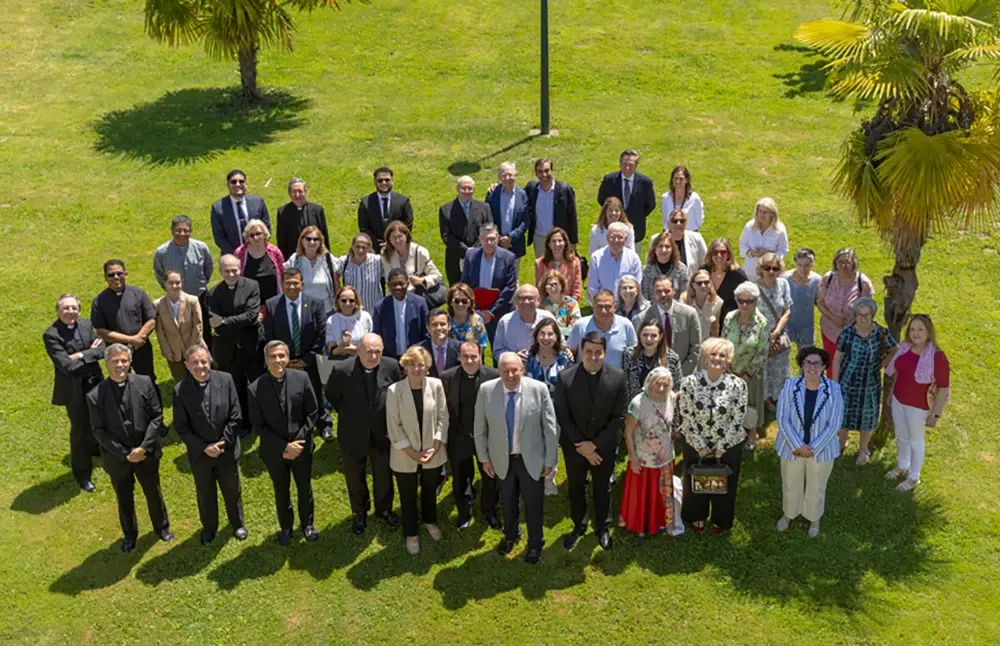
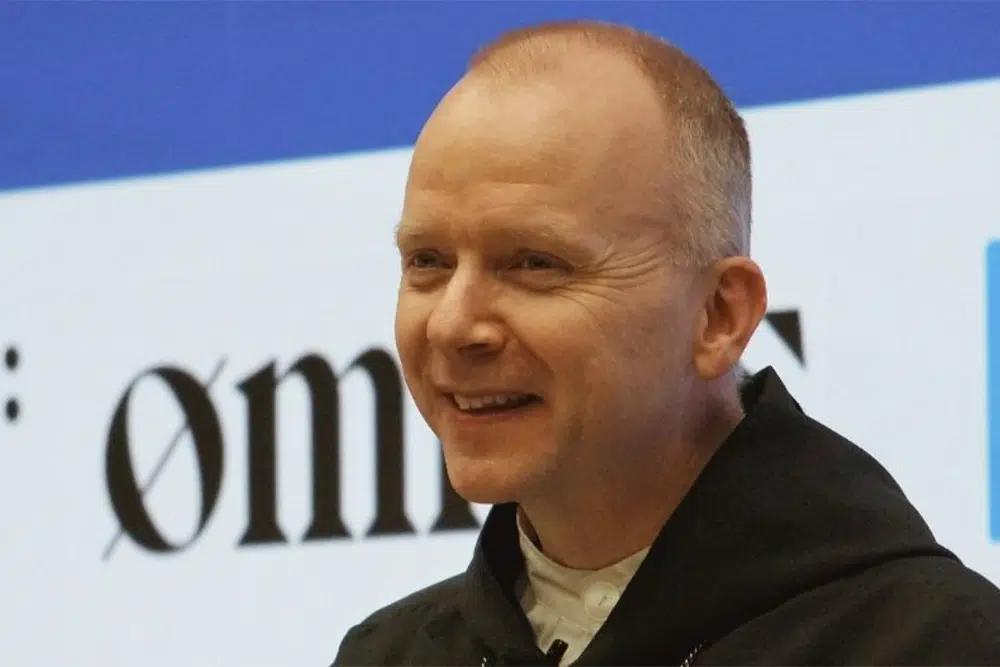
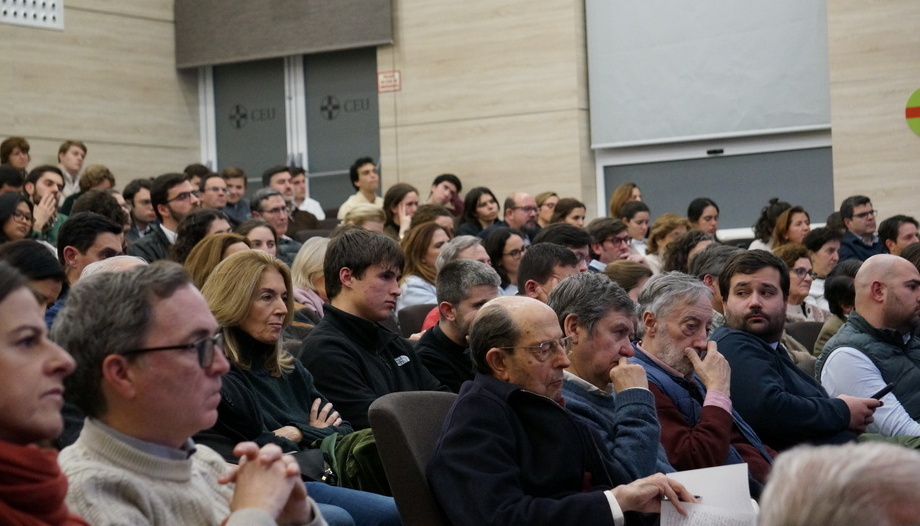
In Madrid, more than 250 people crowded the Aula Magna of the CEU San Pablo University to attend the Omnes Forum and listen to him. The bishop of Trondheim and author reflected on his latest book Healing wounds, which touches on human suffering and its Christian meaning. The Forum, organized by Omnes Magazine together with Ediciones Encuentro and the Ángel Herrera Oria Cultural Foundation, was also sponsored by the CARF Foundation.
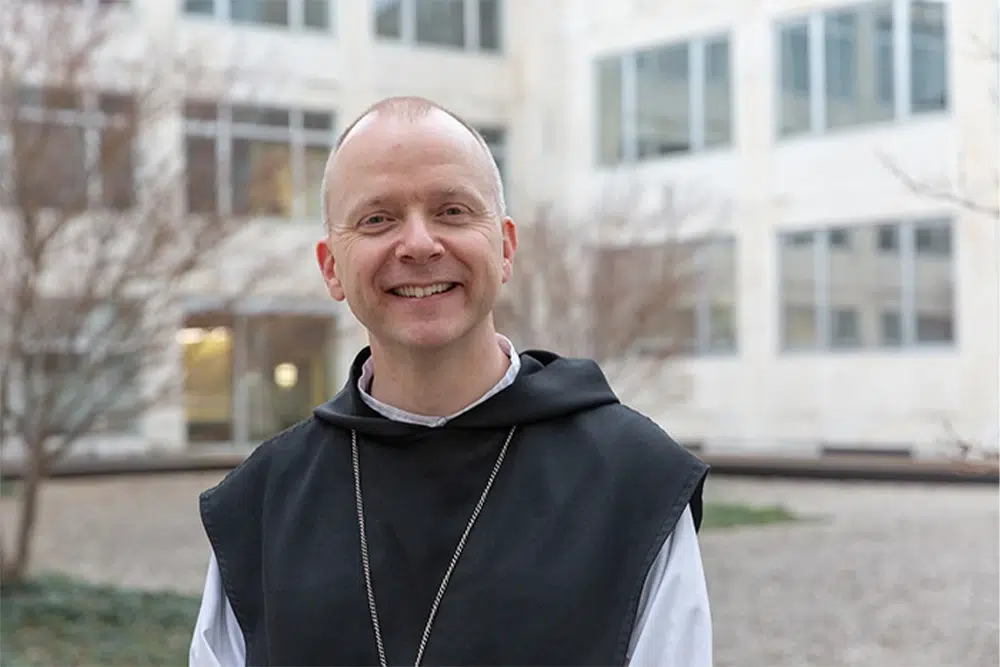
Erik Varden (Sarpsborg, Norway, 1974) is an accessible monk, a religious man who turns the meaning of suffering upside down: «it is not an enemy, but a mystery that demands to be seen, welcomed and transformed from the heart», he pointed out.
From a Christian point of view, suffering cannot be simply explained or eliminated. Christianity does not offer theories that annul pain, but a presence capable of assuming and redeeming it. And that presence is Christ incarnate. For this reason, this monk, born into a non-practicing family of Lutheran tradition, explained that the core of the Christian mystery is in the IncarnationGod, being absolute transcendence, enters into the human condition to heal it from within. «The Incarnation takes place in view of the Redemption,» he said, insisting that the suffering is not the end of the story.
A beauty that heals
In a slow but firm voice, Varden reminds us that suffering is not a cosmic accident or a failure of the universe, but a deep mystery which, if contemplated with faith, reveals a beauty that heals.
In his lecture, he evoked a passage from Crime and punishment where a man, in the face of unjust pain, cries out in anger: «I'm not a man.«there can be no answer to this». Faced with this cry, his brother does not try to correct or explain it; he simply remains silent and looks at the cross. That, he said, is the Christian response: «not an explanation that cancels out the pain, but a silent presence in the face of suffering».
Between denial and victimization: two contemporary pitfalls
Varden pointed to two typical responses of our time to suffering. On one hand, the culture of surface and appearance, what he called the “Instagram trend” that pushes us to projecting perfect and invulnerable lives, hiding any wounds. On the other hand, the growing inclination to victimization may cause wounds to become closed and absolute identities.
The danger, he explained, is to be caught between these two dynamics: denying pain or trapping it as a static identity. And both distort the Christian perspective.
Experiencing pain firsthand
Erik Varden is a man who has experienced firsthand the search for meaning in the face of pain. Born in a family A non-practicing Lutheran, his life took a radical turn when, as a teenager, he experienced a spiritual awakening that led him to deepen his Christian faith and, eventually, to enter the monastic life.
With studies at the University of Cambridge and the Pontifical Oriental Institute in Rome, he entered the Cistercian monastery of Mount St. Bernard in England in 2002, where he became a member of the Cistercian monastery of Mount St. Bernard in England. ordained priest and later elected abbot.
His works, which include titles such as Chastity, On Christian conversion y Healing wounds, The work combines a deep spirituality with a sensitive look at the human condition.
His latest book, Healing wounds stands as a profound meditation on that same experience. Drawing from an ancient Cistercian poem, Varden invites us to contemplate the wounds of Christ not as a sad or defeated symbol, but as the living source from which healing can be found.
«We all carry scars - some visible, others hidden deep in the soul - and we look for answers in therapies, philosophies or spiritual advice that often fall short of the question that tears us most: why does life hurt?»He launched as if it were a missile before the silence of the Aula Magna of the CEU.
But this contemporary monk knows how to give a comforting answer: «on the path of life, suffering is not eliminated, but transformed by to join in Christ's redemptive suffering, becoming not only a consolation but also a source of life and grace».
The cross: symbol of freedom and communion
The Norwegian bishop also reflected on the cross as a symbol that breaks with our logic of self-sufficiency. He noted that contemplate the cross -where nails pierce the flesh and mobility is nullified - seems to represent the absolute negation of freedom. But, he said, read from the perspective of faith, reveals an extreme freedom: «if it be possible, let this cup pass from me, but let your will be done.".
Even when physical freedom is restricted, a completely free inner response is still possible. The cross shows that we are not mere spectators of suffering, but can respond freely in the midst of it.
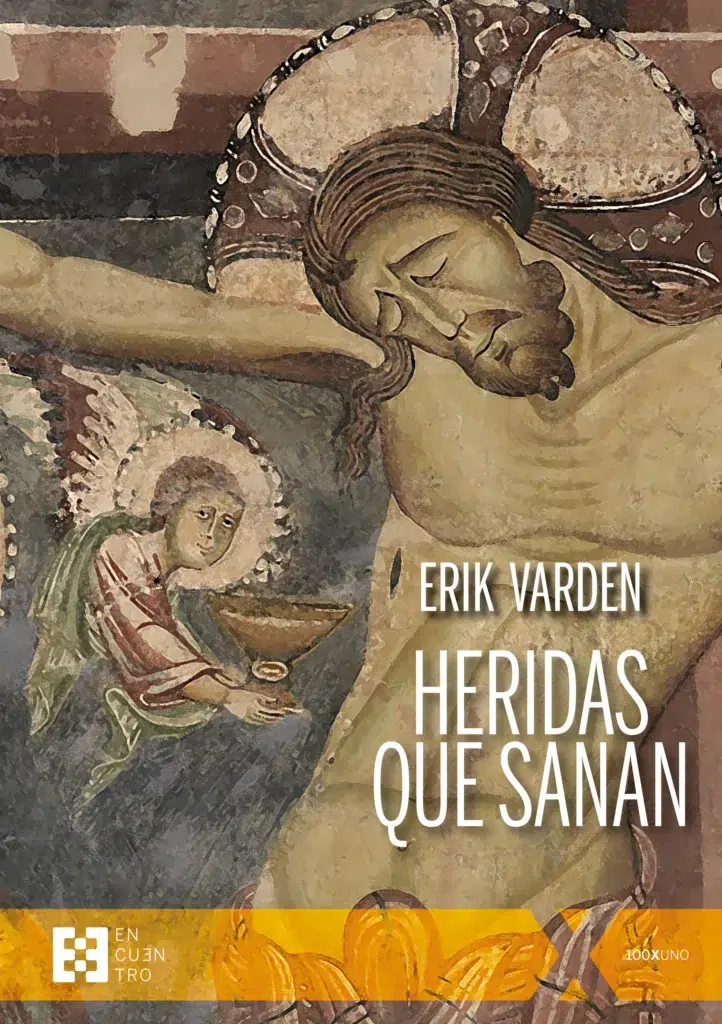
The bishop insisted that healing is not instantaneous nor does it automatically eliminate pain. Some physical or emotional fractures may remain, but that does not exclude them from the healing action of grace. «The Christian faith proclaims not only a God who is capable of eliminating suffering, but a God who carries it with us and transforms it into a source of healing and life.".
And here he quoted the words of Isaiah which he himself put as an epigraph in his book: “By his wounds we have been healed”to add that learning to say “Lord, this is yours.”, Even wounds that hurt can be turned into bridges of healing for oneself and others.
At the conclusion of his speech at the Forum, Varden stated with serenity and depth: «we live in this world as in a valley of tears, but it is a valley illuminated by the light of Christ.".
It is not an empty phrase of consolation, but an affirmation that recognizes the reality of human pain and the Christian hope that we are not alone in our wounds. Every painful experience, when accepted and interpreted in faith, can be transformed into a path of communion with God and with others.
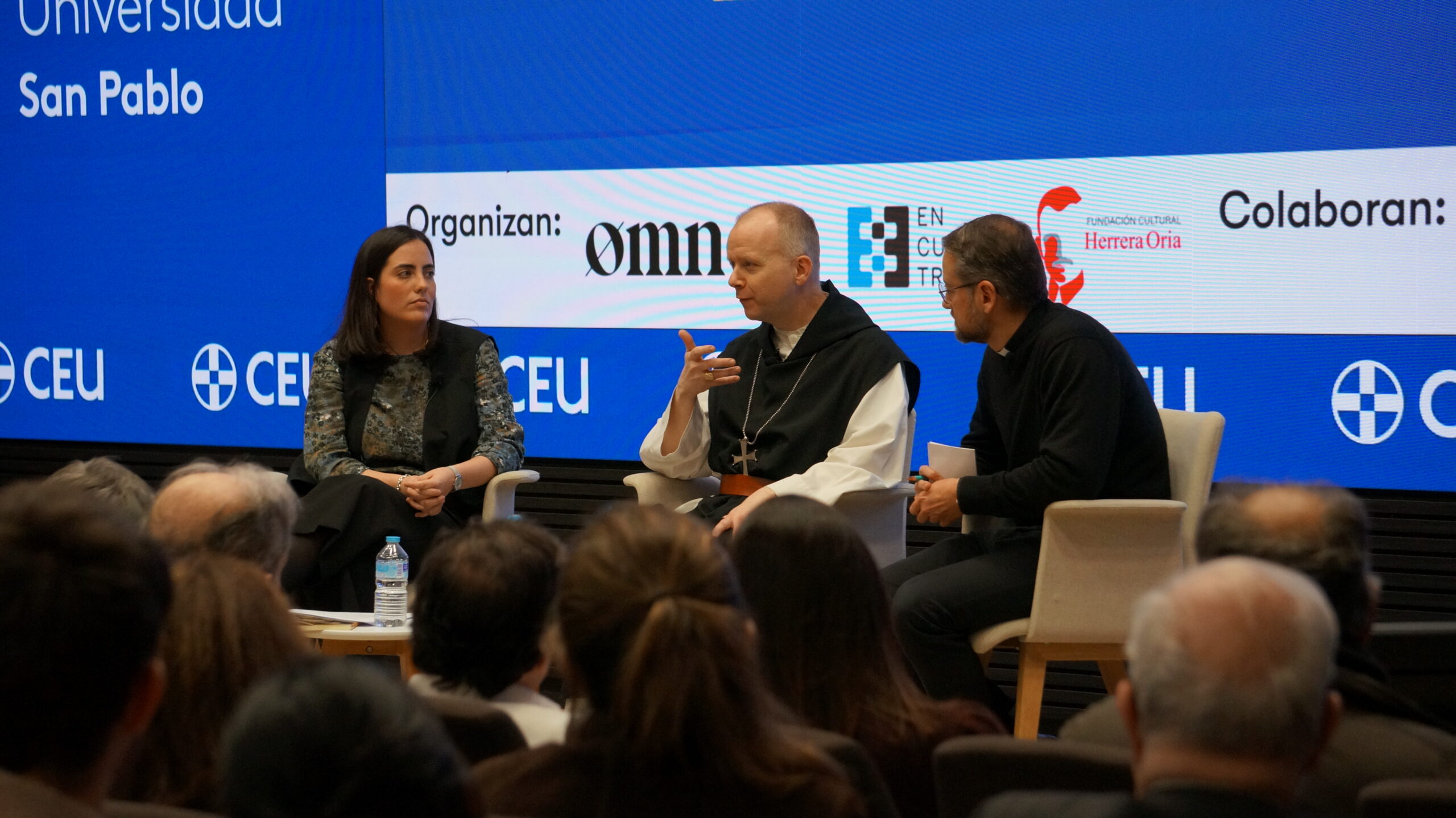
In a interview granted to María José Atienza, Varden, editor-in-chief of Omnes Magazine, shortly after the Forum, Varden spoke of what he called a real catholic turn in our time. For him, the Christian faith «is not simply to add a layer of comfort to an already “perfect” or “self-sufficient” life, but to accept that the deepest part of human existence revolves around our wounds, which we usually prefer to hide or deny.».
Varden explained that under the prism of faith, suffering acquires a totally different dimension: «we begin to be able to see our own wounds as potentially life-giving and life-enhancing.".
This Catholic turn, according to him, is neither sentimental nor superficial, but a profound return to the Christian tradition that recognizes - but does not avoid - human wounds and places them before the mystery of Christ. It is a call not to lose oneself in the denial of pain, nor in a permanent victimization, but to situate suffering within a larger story that leads to life.
Marta Santínjournalist specializing in religion.
Table of Contents
 carf@fundacioncarf.orgLandline: +34 914 029 082Mobile: +34 638 078 51145 Conde de Peñalver Street.