Purgatory: what is it and what is its origin and meaning?

What is Purgatory?

Those who die in the grace and friendship of God, but imperfectly purified, they undergo a purification after their death, in order to obtain the holiness necessary and enter into the joy of heaven. The Church calls this final purification of the elect "purgatory".The punishment of the damned is completely different from the punishment of the damned, although it is certain of their eternal salvation.

This teaching is also supported by the practice of prayer for the dead and of possible plenary indulgences of which Scripture already speaks: "Therefore he [Judas Maccabaeus] commanded this atoning sacrifice for the dead, that they might be freed from sin". 2 M 12, 46

Pope Benedict XVI, in 2011, explained that purgatory is a temporary status that the person goes through after death while atoning for his sins. Purgatory is never eternal; the doctrine of the Church indicates that all souls gain access to Heaven.

"Purgatory is not an element of the bowels of the Earth, it is not an external fire, but an internal one. It is the fire that purifies souls on the path to full union with God," the Pope affirmed." Pope Benedict XVI at the Wednesday public audience in 2011.

What are the origins of Purgatory?

The etymological origin of the term purgatory comes from the Latin "purgatorium", which can be translated as "that purifies" and which derives, in turn, from the verb "purgare", equivalent to cleanse or purify. And although the word Purgatory does not appear literally in the Bible, its concept does appear.

St. Catherine spoke of Purgatory

On the same day, the Holy Father highlighted the figure of St. Catherine of Genoa (1447-1510), known for her vision of purgatory. The saint does not depart from the afterlife to recount the torments of purgatory and then indicate the path of the purification or conversion, but starts from the "inner experience of man on his way to eternity".

Benedict XVI added that the soul appears before God still bound to the desires and sorrow that derive from the sin and that this makes it impossible for him to enjoy the vision of God and that it is the love of God for mankind that purifies it of the dregs of sin.

Jesus spoke of Purgatory

In the sermon on the mount our Jesus shows the listener what awaits us after death as a consequence of his actions in life. He begins with the beatitudes. He warns the Pharisees that they will not enter the Kingdom of Heaven and finally mentions the words found in the Gospel of Matthew:

"Be at once on good terms with your adversary as you go with him by the way; lest your adversary deliver you to the judge, and the judge deliver you to the guard, and you be put in prison. I assure you: you will not get out of there until you have paid every penny." Matthew 5:25-26.

St. Paul spoke of Purgatory

In his first letter to the Corinthians, St. Paul speaks about the personal judgment of those who have faith in Jesus Christ and his doctrine. They are people who have attained salvation, but they must go through the fire so that their works may be tested. Some works will be so good that they will receive immediate reward; on the other hand, others will "suffer harm" but will still "be saved". This is precisely what purgatory is, a purification that some will need in order to fully enjoy eternal friendship with God.:

"For no one can lay any foundation other than the one already laid, Jesus Christ. And if one builds on this foundation with gold, silver, precious stones, wood, hay, straw, each one's work will be uncovered; it will be revealed by the Day, which is to be revealed by fire. And the quality of every man's work shall be uncovered; it shall be made manifest by the Day, which shall be revealed by fire. And the quality of every man's work shall be tested by fire. He whose work, built on the foundation, endures, will receive the reward. But he whose work is burned shall suffer harm. He, however, shall be safe, but as one passing through the fire." 1 Corinthians 3:11-15

In the 18th century, out of devotion to the deceased, the residents of Santiago de Compostela built the chapel of As Ánimas. Its construction was paid for by the neighbors themselves, with their alms and donations. A temple to alleviate the sorrows of the souls of Purgatory with plans by architect Miguel Ferro Caaveiro and construction management of the master builder Juan López Freire.

"Purgatory is a mercy of God, to cleanse the defects of those who wish to identify themselves with Him". St. Josemaría Escrivá, Furrow, 889.

There are many reasons to believe in Purgatory

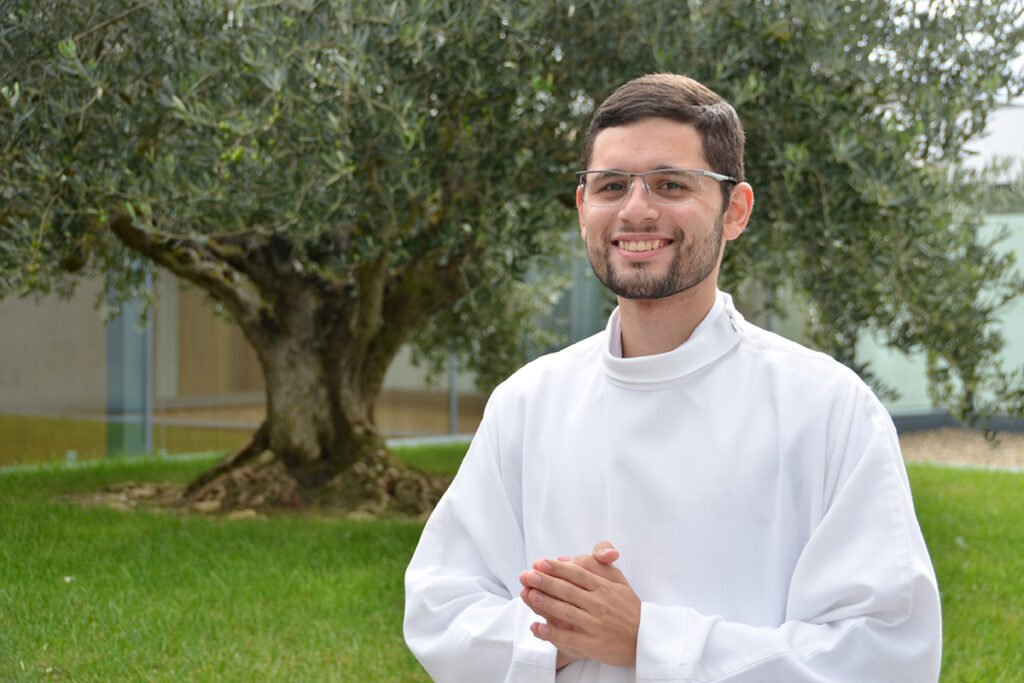
Ajo Joy, India, a priestly vocation inspired by her mother

The priestly vocation of Ajo Joy (India) began at the age of 15. He is now a 26-year-old seminarian studying fourth year of Theology at the Ecclesiastical Faculties of the University of Navarra and residing in the Bidasoa International Seminar.

Priestly vocation and the loss of his mother

His mother died of cancer when he was 15 years old. The next day, Ajo entered St. Raphael's minor seminary in the diocese of Quilon (Kerala, India), taking the first step in his priestly vocation: "My mother was like a teacher and friend to me. I am convinced that I owe my vocation to her. From heaven she intercedes for me".

After his experience, sends a message to young people who lose their parents or relatives at a young ageWith love and pride I tell you that our parents are a gift from God; we should share our desires and ambitions with them. When you lose one of them, don't break down, pray for them. Be happy and think that they are supporting and loving you in the same way as when they were alive."

The Diocese of Quilon: cradle of Christianity in India

This seminarian from India discovered his priestly vocation at a very early age. Despite being an only child, his parents not only did not object, but actively encouraged him along the way. Born into a Catholic family belonging to the Diocese of Quilon (also known as the Diocese of Kollam), the first Catholic diocese established in India, often considered the cradle of Indian Christianity. It was erected by Pope John XXII on August 9, 1329. The diocese covers an area of 1,950 km² and has a community of approximately 239,400 faithful Catholics.

Religious coexistence in Kerala, a model of unity

"In Kerala Catholics live in a diverse and multi-religious society. Although they constitute a minority, about 18 % of the population, Kerala is home to two churches: eastern and western. The Western Church includes the siro-malabar rite and the siro-malankar riteThe population is also very large, with a large population of Latin rite.

In Kerala, Catholics have maintained a relationship of respect and cooperation with other religions, such as Hinduism and Islam, and we also maintain a respect for the diverse cultures in the country," explains this young seminarian.

In difficult times, united communities

The ability to live and thrive in a multi-religious society is one of the most valuable lessons that European Catholics could learn from the Catholics of India, particularly those of Kerala, who have created a strong culture of respect and cooperation with other religions.

Ajo puts it this way: "Harmony among religions is fundamental. This could improve the life and practice of the Catholic faith in Spain by fostering coexistence and dialogue among religions. The focus on community is another crucial lesson.

In difficult times, Catholic communities in India are often close-knit and mutually supportive. Spanish Catholics can find inspiration from this solidarity and sense of belonging". 

Priestly formation in a secularized world

Ajo Joy is one of the young seminarians of the 21st century who is being formed to respond to the challenges of a secularized world. He believes that a The young priest of today's world faces a world in constant change and, for this reason, it is essential to strengthen his vocation by seeing God as a companion, as a friend. "The priestly vocation is friendship, and I have always seen God as a friend who has helped me a lot in my life," he tells us with a big smile. 

Moreover, this young seminarian from India believes that, in addition to nourishing himself with prayer and the Eucharist, the formation of a priest The current situation also needs to strengthen its vocation in social justice, working in community projects and advocating for the human rights and dignity of all. "But the essential thing is to share the experience of God with others," concludes Ajo Joy.

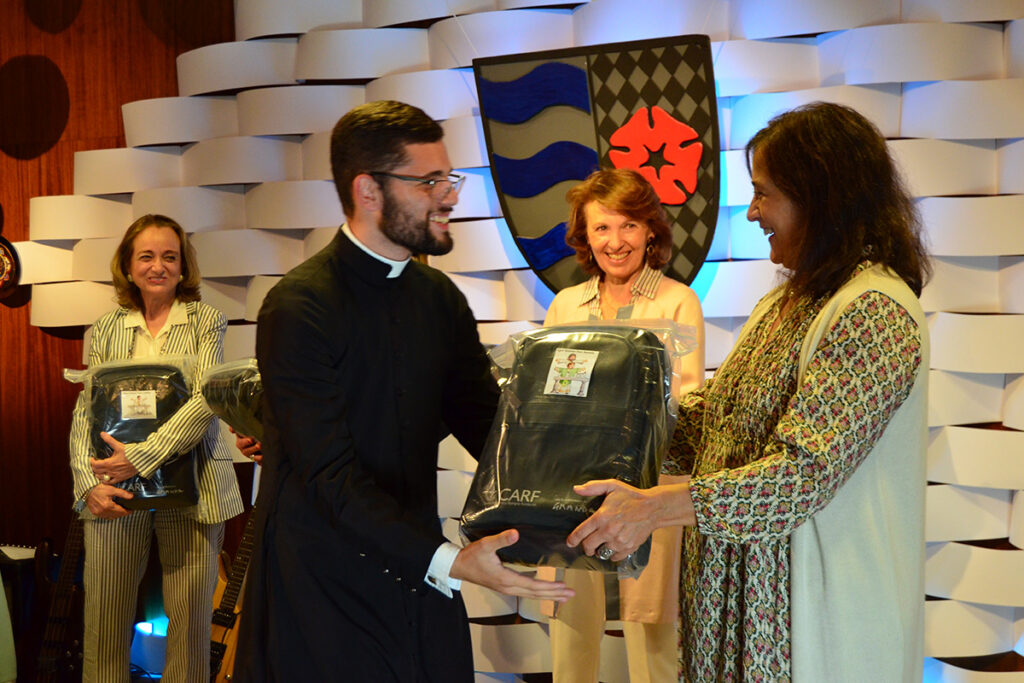
Ajo is very grateful to all the benefactors of the CARF Foundation who make it possible for him to complete his theological training, his goal is to be able to train very well and return to his diocese in India to help future priests, religious men and women in India.


Marta Santínjournalist specializing in religion.

Candles for the deceased: meaning

The tradition of lighting candles for the deceased in the house is a possible way to keep their memory alive. The light also represents the union of the living and the deceased. Faith is the best refuge for those who have to go through the process of overcoming the grief of a loss of any kind and particularity. And the lighted candle symbolizes Jesus as the Light of the World.. Light that we also want to participate in and offer to God.

Jesus said to his disciples: "I am the true light" and "You are the light of the world... Let your light so shine before men, that they may see your good deeds and glorify your Father who is in heaven", Mt 5:16.

When should candles be lit for the deceased?

In the origins of Christianity, candles or oil lamps were lit on the tombs of deceased saints, particularly martyrs, using the symbolism of light as a representation of Jesus Christ. "In him was life; and the life was the light of men", John 1:4.

That is why today we are accustomed to light candles for the deceased, placing in the hands of God the prayer that we offer in faith. It also symbolizes the desire to stay there, with them, with God, praying and interceding for our needs and those of the whole world, giving thanks, praising and adoring Jesus. For where there is God there can be no darkness.

There is an intimate dimension, related to lighting candles for our deceased, something that concerns each one of us and our silent dialogue with God. This lit candle becomes the symbol of the divine fire that burns in each one of us.The light of which Jesus is a symbol, but of which all of us, as Christians, are a part, makes us an integral part of that light.

"In the light of faith, we beseech the Blessed Virgin Mary to pray with us. And may she intercede with God for our prayers."

velas para difuntos
Candles for the deceased

The Christian meaning of lighting candles for the deceased and other candles

Liturgical candles are linked to the firm belief in Jesus Christ as the "light that enlightens the world". "Again Jesus spake unto them, saying, I am the light of the world: he that followeth me shall not walk in darkness, but shall have the light of life." John 8:12.

Lighting candles means, in this case, knowledge of God who is a guide in the darkness. and who, through his Son who descends upon us, opens our eyes and makes us worthy of his presence, of his consideration.

That is why, in the Catholic Church, in addition to candles for the deceased, candles are placed on the altar and near the tabernacle. They accompany the celebrations and are used in almost all the sacraments, from Baptism to Extreme Unction, except for the sacrament of Reconciliation as irreplaceable symbolic elements.

The paschal candle

It is lit during the Easter Vigil, the Holy Mass celebrated on Holy Saturday, after sunset and before sunrise on Easter Sunday, to celebrate the resurrection of Jesus. It is then left on the altar for the entire Easter season and extinguished at Pentecost.

It is lit as a sign of the risen light of Christ, who returns from the dead to illuminate the path of his children and to offer himself for their salvation.

Baptismal candle

During the Baptism, the priest presents a candle, which was lit with the paschal candle.

The white candle in the sacrament of Baptism is a symbol that represents guidance on the path of encounter with Christ. which in turn is the light of our lives and the light of the world. It also symbolizes the resurrection of Christ.

Votive candles

It comes from Latin votumwhich means promise, commitment or simply prayer.

These candles are similar to the candles for the deceased. They are lit by the faithful in front of an altar, a crucifix, an image of the Virgin Mary or of a saint. They have a precise meaning: they express the desire to entrust our words and our thoughts. These lighted candles are common in most churches. They serve an offering, a particular intention and are accompanied by a time of personal prayer.

Tabernacle Candle

The light that illuminates the Tabernacle, indicating the presence of the Body of Christ, is easily recognizable to any Christian who enters a Church.

Nowadays, in many places it is a lamp, not a candle, but still it is one of the most important and precious: the burning flame that symbolizes Jesus and the faith of those who love him. An inexhaustible light that remains lit even when we leave the church.

Advent candles

The Advent wreath, a European custom, began in the mid-19th century to mark the weeks leading up to Christmas.

It consists of a wreath of evergreen branches intertwined together, holding four candles. Each Sunday of Advent a candle is lit and a prayer is said accompanied by a reading from the Bible and a carol may be sung.

Altar candles

They have been used during Holy Mass since at least the 12th century. These candles remind us of the persecuted Christians in the early centuries who secretly celebrated Mass at night or in the catacombs by candlelight.

They can also be used in the entrance and closing processions of the Mass. They are taken to where the Gospel is read as a sign of triumphant joy in the presence of Christ's words.

During the Easter Vigil, when the deacon or priest enters the darkened church with the paschal candle, he recites or sings Light of Christ, to which the faithful respond: Let us give thanks to God. This song reminds us how Jesus came into our world of sin and death to bring us the light of God.

Lighting candles for the deceased

This ancient custom of lighting candles for the deceased was already practiced by the Romans, even earlier by the Etruscans and, even further back, by the Egyptians and the Greeks, who used candles for the deceased in funeral rites, In the Christian religion, visiting the grave of a loved one, bringing flowers, lighting candles for the deceased and stopping to pray, is something comforting and consoling.

Because candles for the deceased are pulsating sentinels, small fragments of light that draw the path to peace for our departed loved ones, it is therefore a good custom to light candles for the deceased and leave them on the tombstones to illuminate the night of the cemeteries. In the light of the candles for the deceased that is consumed, feeding on its own wax, we recognize the human life that is slowly extinguished.

The offering we leave by lighting candles for the deceased is a sacrifice that accompanies our prayer with deeds and makes our intention of faith tangible. Protection, therefore, and guidance, these are the main functions of lighting candles for the deceased mourning. That every year it is customary to re-light, on November 1, All Saints Day, and on the 2nd, All Souls Day or Day of the Dead.

Candle lighting days by color

In addition to candles for the deceased, candles play an important role in the blessing of ashes and palms on Palm Sunday. Also in the sacraments, the consecration of churches and cemeteries and the mass of a newly ordained priest. By color and by day, candles can help us to enhance and stimulate moments of prayer.

These candles that we light can be blessed by a priest to help us pray for the sick and place ourselves in God's hands.

White candles

In the 2nd century, it was the Romans who decided that the official color of mourning was white, so the candles for the deceased were white. A color recognized by European queens until the 16th century. A white mourning reminds us of the pallor of death and how fragile we are before it, reaffirming the purity of our soul.

For symbolize the time of special waiting and preparation, for example, we can light the white candles of the Advent wreath during Christmas dinner.. In the meantime, we can pray as a family asking for the Child Jesus to be born in the heart of each of its members.

It is also white, the paschal candle. Perhaps the most recognizable for its size and appearance, as it can measure more than a meter high and has colorful designs.

Red candles

In Ancient Egypt, the color red was considered a symbol of anger and fire. It was also associated with the desert, a place associated with death. In Ancient Rome, it was associated with the color of spilled blood and was linked to both mourning and death.

For example, lighting the red, pink or burgundy candles on the advent wreath represents our love for God and God's love that surrounds us. They correspond to the third Sunday of Advent, and their meaning is one of joy and gladness, because the birth of Jesus is near.

Black candles

The Catholic Monarchs dictated, in 1502, that black should be the official color of mourning. All this is reflected in the "Pragmatic of Mourning and Wax", a written protocol on how mourning should be carried at that time.

What do we celebrate on All Saints' Day?

On November 1, Christians celebrate All Saints' Day. On this day the Church remembers all those deceased who, having overcome purgatory, have been totally sanctified and enjoy eternal life in the presence of God.

All Saints' Day, a Christian Solemnity

On All Saints' Day, November 1, we look to the sky. It is the day on which all the saints are honored.to those who are on the altars and to so many Christians. To those who are on the altars and to so many Christians who, after a life according to the Gospel, share in the eternal happiness of heaven. They are our intercessors and our models of Christian life.

"Holiness is the most beautiful face of the Church." writes Pope Francis in "Gaudete et exsultate", his apostolic exhortation on the call to holiness in today's world (March 2018).

The Pope reminds us that this call is addressed to each one of us. The Lord also addresses you: "Be holy, for I am holy" (Lv 11:45; cf. 1P 1,16). 

On November 1, we remember each one of those who said yes to this call. This is why All Saints' Day is not only celebrated in honor of the blessed or saints who are on the list of those canonized and for whom the Church celebrates on a special day of the year. honor all those who are not canonized, but are already living in the presence of God.. These souls are already considered saints because they are under the presence of God.

Día de todos los santos
All Saints, painted by Fra Angelico. Italian painter who knew how to combine the life of a Dominican friar with that of a painter. He was beatified by John Paul II in 1982.

History of All Saints' Day

This celebration had its origins in the IV century due to the great number of martyrs of the church. Later on May 13, 610, Pope Boniface IV dedicated the Roman Pantheon to the Christian cult. This is how they began to be celebrated on this date. Later Pope Gregory IV, in the 7th century, moved the feast to November 1st.

Several thousand saints have been officially canonized by the Catholic Church. But there is an immense number of non-canonized saints, who are already enjoying God in heaven. To these, the non-canonized saints, this feast is especially dedicated. The church seeks to recognize the work of the "unknown saints" who risked their lives for justice and freedom anonymously.

Difference between All Saints' Day and All Souls' Day

Pope Francis explained in a very clear way the difference between All Saints' Day and All Souls' Day:

"On November 1 we celebrate the Solemnity of All Saints. On November 2, the Commemoration of the Faithful Departed. These two celebrations are closely linked to each other, how joy and tears find in Jesus Christ a synthesis that is the foundation of our faith and hope.

. Indeed, on the one hand, the Church, a pilgrim in history, rejoices through the intercession of the saints and blessed who support her in the mission of proclaiming the Gospel; on the other hand, she, like Jesus, shares the weeping of those who suffer the separation from their loved ones, and like Him and thanks to Him, she makes her thanksgiving resound to the Father who has freed us from the dominion of sin and death".

"There are many wonderfully holy Christians, there are many wonderfully, delightfully holy mothers of families; there are many wonderful fathers of families. They will occupy in heaven places of wonder." St. Josemaría Escrivá.

All Saints' Day

On November 1, the Catholic Church celebrates the Solemnity of All Saints. A feast instituted in honor of each and every saint, known or unknown, for their great work in spreading God's message. Many people attend a special Mass in their honor today.

On this feast day of All Saints, the Church asks us to look to heaven, which is our future homeland. We remember all those who are already in the presence of God and who are not remembered as canonized saints. There are millions who have already reached the presence of God. Most certainly a majority of them did not arrive in a direct way, perhaps they went through purgatory, but in the end they managed to be in the presence of God.

As a commentary on the Solemnity of All Saints. "Rejoice and be glad, for your reward will be great in heaven." We were born never to die again, we were born to enjoy God's happiness! The Lord encourages us and wants us to take the path of the Beatitudes to be happy.

All Souls Day

November 2 is All Souls Day. Although it seems to be the same, it is far from it. First of all, we must keep in mind that the celebration of the dead is a cultural tradition where people remember those who have already died, and altars are dedicated where photos, flowers and the food that the person remembered liked so much in life are placed. According to historians, this tradition is mainly found in Mexico 1,800 years before Christ.

On this day the Church invites us to pray for all those who have already died but who may not have reached eternal joy. Perhaps they are in purgatory and need our prayers, so we must remember them in the Holy Mass for the dead and pray at all times for their eternal rest.

You can be a saint

All the baptized are called to follow Jesus Christ, to live and make known the Gospel. 

The purpose of Opus Dei is to contribute to the evangelizing mission of the Catholic Church by promoting a life consistent with the faith in the ordinary circumstances of life, especially through the sanctification of work, among the Christian faithful of all walks of life.


Links of interest:


Jesús Eduardo, seminarian: "we priests of the 21st century should not be afraid of tribulations".

"In my adolescence and early youth, many people invited me to participate in a youth or worship group, and my answer was always the same: thank you very much, but no. At that time in my life, I did not see all the good that God offered me. At that time in my life I didn't see all the good that God was offering me".

The new evangelization in Mexico

Now 33 years old, he is a seminarian in the diocese of Tabasco (Mexico), studying at the University of Navarra and residing and training in the Bidasoa International Seminar (Pamplona). He is aware that a good formation is necessary to be able to evangelize in a post-modern society of the 21st century, especially in Mexico, a country with strong Catholic roots where Protestantism is also gaining ground.

"One of the main evangelization needs, not only in my diocese but in the whole country, is how to evangelize in the face of the multiple Protestant groups that are growing." 

According to his experience, it is necessary to begin with the families, catechizing and making known the beauty of the Word of God. "To achieve this, parishes must foster more of a missionary spirit in their own communities (which is something that is done) but it must be promoted much more, and thus, together with the participation of the whole community, bring God closer to those who do not yet know him or who have even moved away."

celebración por los 500 años de evangelización en México. seminarista y sacerdotes

Catholic families, the cradle of vocations

Faced with the proliferation of Protestant or anti-clerical groups, this seminarian is convinced of the power of every Catholic being a witness to the Catholic faith, and as he suggests, starting with families.

"Families are the domestic churches where the cultivation of faith begins, as well as those values, virtues, teachings and customs that will gradually mold the character and personality of each of its members."

Jesus is convinced that if the Catholic faith is lived in every family, its witness will give an answer to those anti-clerical groups that seek to attack the Church. "This is not a war between the Catholic faith and Protestant sects, but as Catholics we have a great responsibility, and illuminated by the light of faith, we must acquire the best preparation to face the new challenges of this era."

The example of his family

This seminarian, who wants to become a priest, transmits his own experience of what he learned in his family. He is the youngest of three brothers and has grown up with the support of his family, a fundamental factor in becoming the person he is today, always hand in hand with God in every project of his life.

"The good moments of my childhood are full of the union between brothers, playing, having fun, protecting each other. Something good about my childhood is that since I was little I have been a constant person in my studies, which my parents always instilled in me, something that has characterized me all my life."

A turning point: the seminar

He also recalls that adolescence was one of the best stages of his life because he began to grow and mature in his personality. "The good thing about my adolescence is that I was defining my way of being, I knew how to distinguish good from bad and above all the confidence that my parents had in me and my siblings. I thank my parents who always gave me an education based on values, creating in my brothers and me, the sense of responsibility, dedication and effort in all our activities," says this seminarian.

His parents supported him in the most important moment of his life: entering the seminary at the age of thirty, after a professional career and a stable job, always trusting in God's will, "calling me to go beyond my abilities to give back to God, in a generous way, all that He had given me throughout my life".

BIDASOA. JESUS EDUARDO FLORES seminarista

Evangelizing Mexican youth

The dream of this seminarian is to evangelize the youth of Mexico. "There is something that calls my attention and that is that the youth in Mexico, despite the changes that have occurred in recent years, is a youth that has a voice and makes itself heard, it is a youth where it is clearly seen that when there is union and all connect towards the same interest they achieve the goals they set, it is a youth where there is much hope especially in these times of modernity".

In his opinion, what is needed to bring young people closer to the Catholic faith is to give them and allow them to participate more in parishesIt is of great importance to make them feel part of the church, integrating them in the activities to generate in them attitudes of love and responsibility not only to the service they are rendering, but also to God.

"However, families are fundamental to achieve this, since it is there that love for God is fostered, as well as love for the Church," Jesus insists.

The seminarian of the 21st century

What must the seminarian and priest of the 21st century be like for Jesús Eduardo? "In my opinion he must have a great love and dedication to what God has called him to; have a sense of commitment and responsibility wherever he is; have a solidity in all his areas of formation, which will allow him to face the challenges that our Church has and will have in the future." 

In addition, he considers it necessary that the current seminarians and priests maintain a constant ongoing formation in order to be able to respond to the needs and concerns of the people of God, since we are facing future generations that are preparing themselves very well.

Losing fear and trusting in God

"A seminarian in the 21st century must not extinguish the flame of his vocation in the face of what the world has to offer, which could divert him from what he was called to do. He must always keep in mind the reason why he decided to follow God and not to be afraid of the tribulations they may experience".

Jesús Eduardo Flores concludes: "answering God's call is and will be one of the most enriching experiences that will mark the life of a seminarian, who will never forget all his efforts throughout his formation and will be reflected in his service to the Church and to all God's people as a priest". 

In closing, Jesus is very grateful to all the benefactors of the CARF Foundation who make his studies in Pamplona possible. "Thank you to the benefactors for their generosity and for their prayers, because by helping seminarians like me, they help many Christian communities around the world. I keep you in my prayers.


Marta Santín, journalist specializing in religion.

Halloween! Witches? Something much better

On All Saints' Day we rejoice and treat those who have died in God's grace and are already in heaven. On All Souls' Day we pray for those who are still in purgatory, so that, purified as soon as possible, they may enjoy heavenly glory. And on Halloween we do not celebrate anything.

Halloween, celebrations to reflect on

Both celebrations invite us to think about the mystery of death that Jesus himself wanted to take on so that we could overcome it.

It should also make us reflect on the final destiny of our lives: achieve the ultimate happiness for which you have made us (heaven)the real failure of hell, or the 'repechage' of the purgatory once properly purified. There is no room for witches or consumerist celebrations such as Halloween, imported from the United States. We celebrate life, not death.

dia-de-todos-los-santos-halloween-difuntos

The Communion of Saints

And, at the heart of this celebration, there is the faith in the communion of saints which we confess at the end of the Creed.

"Since all believers form one body, the good of one is communicated to the others.... It is therefore necessary to believe that there is a communion of goods in the Church.. But the most important member is Christsince He is the head....

Thus, the good of Christ is communicated to all the members, and this communication is made through the sacraments of the Church" (St. Thomassymb. 10) (Catechism, 947).

We are never alone, Jesus Christ and all our brothers and sisters in faith accompany and support us.

In the early Jerusalem community, the disciples persevered in the apostles' teaching, communionthe breaking of bread and the prayers (Acts 2:42).

Communion in the faith: The faith of the faithful is the faith of the Church received from the Apostles, a treasure of life that is enriched when it is shared (Catechism, 949).

The multitude of those who believed were of one heart and soul, and no one considered what he possessed as his own, but they shared all things (Acts 4:32).

Pintura de Caravaggio que representa a Santo Tomás metiendo su dedo en la herida de Cristo, rodeado por otros apóstoles.
The Unbelief of St. Thomas" (c. 1601-1602) by Caravaggio, a masterpiece that captures the biblical moment of doubt.

Charity in the mystical body of Christ

Communion of charityIn the "communion of saints". none of us lives to himself, any more than any of us dies to himself. (Rm 14:7).

If one member suffers, all the others suffer with him. If one member is honored, all the others share in his joy. Now ye are the body of Christ, and the members thereof every man severally (1 Cor. 12:26-27).

The least of our acts done in charity has repercussions for the benefit of all, in this solidarity among all men, living or dead, which is founded on the communion of saints.

"There is a communion of life among us who believe in Christ and have been incorporated into Him through the Baptism. The relationship between Jesus and the Father is the model of this fire of love.

And the "communion of saints" is one big family. All of us are family, a family where we all try to help and support each other". Catechesis of Pope Francis.

Intercession of the saints

Let us also count on the intercession of the saints. "Because those in heaven are more intimately united with Christ, they consolidate the whole Church more firmly in holiness... they do not cease to intercede for us before the Father.

They present, through the one Mediator between God and man, Christ Jesus, the merits they have acquired on earth... Their fraternal solicitude is thus of great help to our weakness" (Vatican II, Lumen gentium 49).

Some saints, near the time of their death, were aware of the great good they could continue to do from Heaven: "Do not weep, I will be more useful to you after my death and I will help you more effectively than during my life" (St. Dominic of Guzman, dying, to his brothers, cf. Jordan of Saxony, lib 43).

"I will spend my heaven doing good on earth" (St. Teresa of the Child Jesus, verba) (cf. Catechism 956).

Let us especially invoke Mary, Mother of the Lord and mirror of all holiness. May she, the all holy one, make us faithful disciples of her son Jesus Christ, and may she take the deceased who are in purgatory to Heaven as soon as possible. Amen.

Where is there room for a celebration of death and not of life, of witches? No doubt in our lives, Halloween, or whatever you want to call it in every latitude, makes little sense. We are of saints and of praying for our deceased.


Mr. Francisco Varo Pineda
Director of Research at the University of Navarra.
Faculty of Theology. Professor of Sacred Scripture.