«Spain must preserve the faith it once passed on to us.»

Al John Madrilejos Clet, 23 years old, is a Filipino seminarian residing in Pamplona, Spain, at the international seminary Bidasoa. He is in Spain studying third year of Theology at the Ecclesiastical Faculties of the University of Navarra because his diocese has sent him to our country for training.

History and origin of this Filipino seminarian's vocation

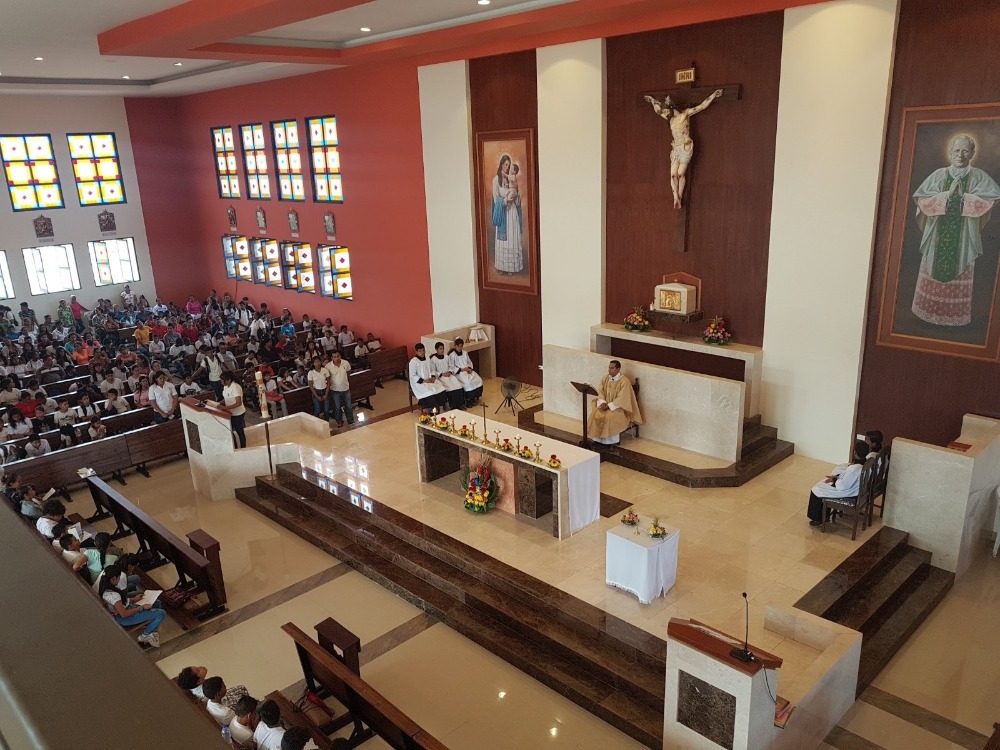
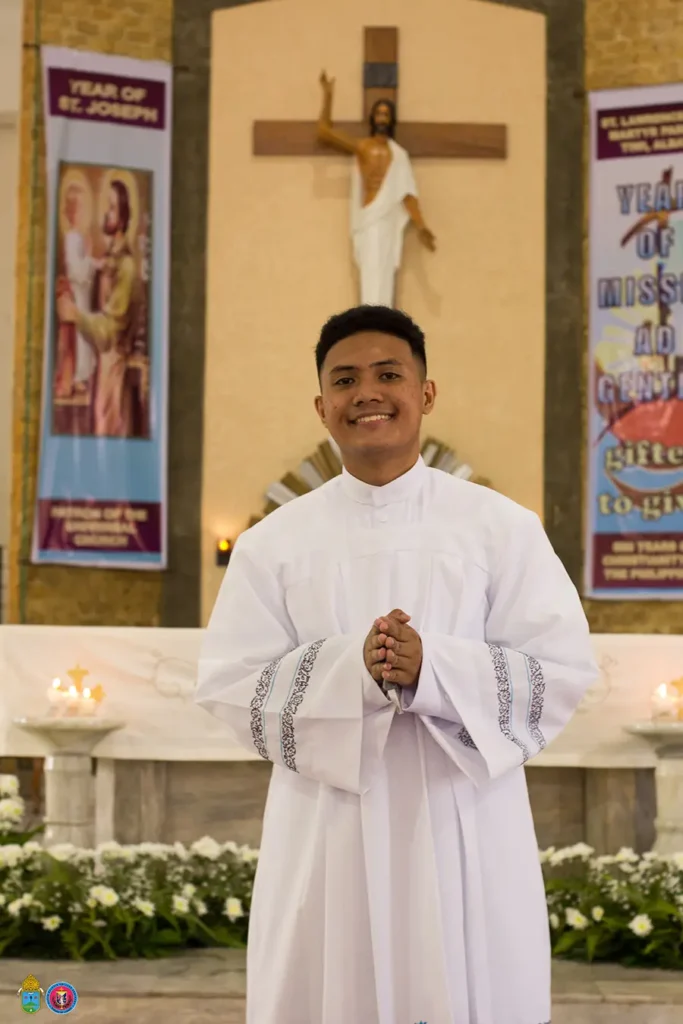
He belongs to the Diocese of Legazpi, Philippines, and tells how the flame of vocation was lit within him: "When I was a child, my grandmother always took me to church, she is a very religious woman and taught me what the Church is. I was very struck by the man who 'dressed in different colors at Mass. Then, when I was 10 years old, I became an altar boy. That's when I learned a little more about the mission of this man who wore a chasuble and colors and who was the priest.

Afterwards, his mother enrolled him in the minor seminary school in his hometown to study primary school. Mª Teresa, a teacher and nurse at the University of Bicol (Tobacco Campus), thought it was a good school and, besides, it was close to the hospital where she works. She continued her studies at St. Gregory the Great Seminary up to the Baccalaureate.

A vocation supported by family in spite of distance

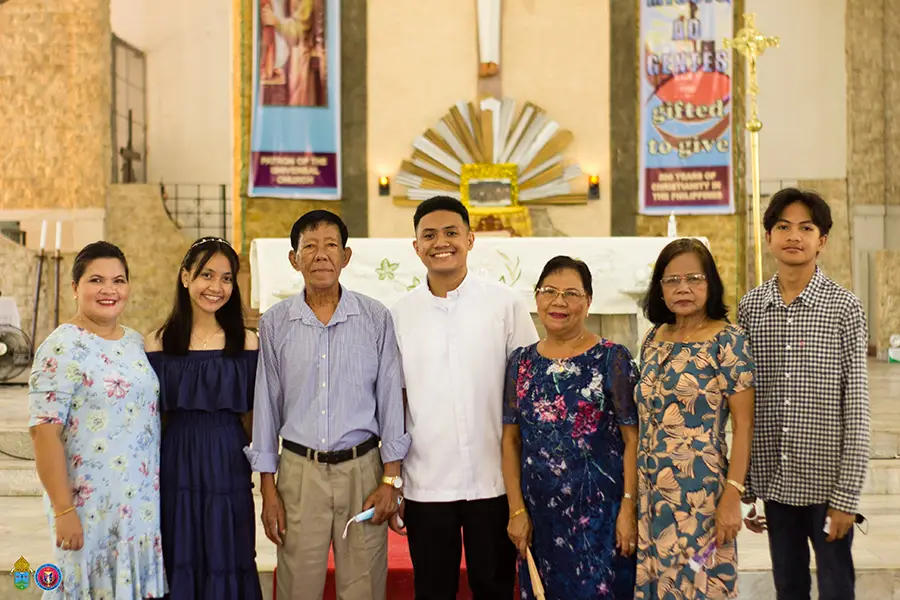
Al John's father, Alex Madrilejos, is an overseas Filipino worker. His brother is studying computer engineering at the University of Bicol (Polangui Campus in the Philippines). And his sister is finishing high school at the University of Santo Tomas (Legazpi) and wants to become a doctor. Despite the distance, our seminarian feels the support of his whole family for his vocation.

With all this, Al John knew that his father had alternatives for his professional future if his vocation was not to be. "At the end of high school, I gave myself some time to think about whether I was going to pursue the path of the priesthood and enter the major seminary, already as a seminarian.

My father asked me if I wanted to continue, because he had a different plan for me. After months of prayer, I decided to continue at the Mater Salutis major seminary. My father did not hesitate to support my decision"Al John, the eldest of three siblings, says.

Thus, after completing four years of philosophy at the Mater Salutis major seminary of his diocese, his formators suggested that he continue his formation in Spain.

Trust in God

"I have to admit that I had a lot of doubts because the level of the University of Navarra is high, but also I have experienced that nothing is impossible for God", states.

Of his stay in the seminaries of his diocese, he has fond memories: many friends and great learning, not only academically, but also the discovery of some personal talents and hobbies such as music and sports. "And the most important thing: deep love and relationship with Jesus, something I am also learning at the Bidasoa International Seminary."

Similarities between Spain and the Philippines

He is happy in Spain. For him, there are similarities in terms of the beliefs of our country and the Philippines since they were colonized. "I want to focus more on the religious practices that Spain has from the point of view of a Filipino. The liturgy is very nice, because here. things are present in Spain that we do not use in the PhilippinesThe deacon's dalmatic and the processional umbrella used when exposing the Sacrament," explains Al John.

He is attracted by the Spanish churches, which exude a peaceful atmosphere conducive to prayer and to attend Mass. "However, it saddens me a little when I see that the temples I have been to, especially in Madrid and Barcelona, are half-empty.not many people attend. And I ask myself: is it the result of secularization or a lack of faith of this generation?"confesses this young seminarian.

Al John and his love for the Virgin Mary

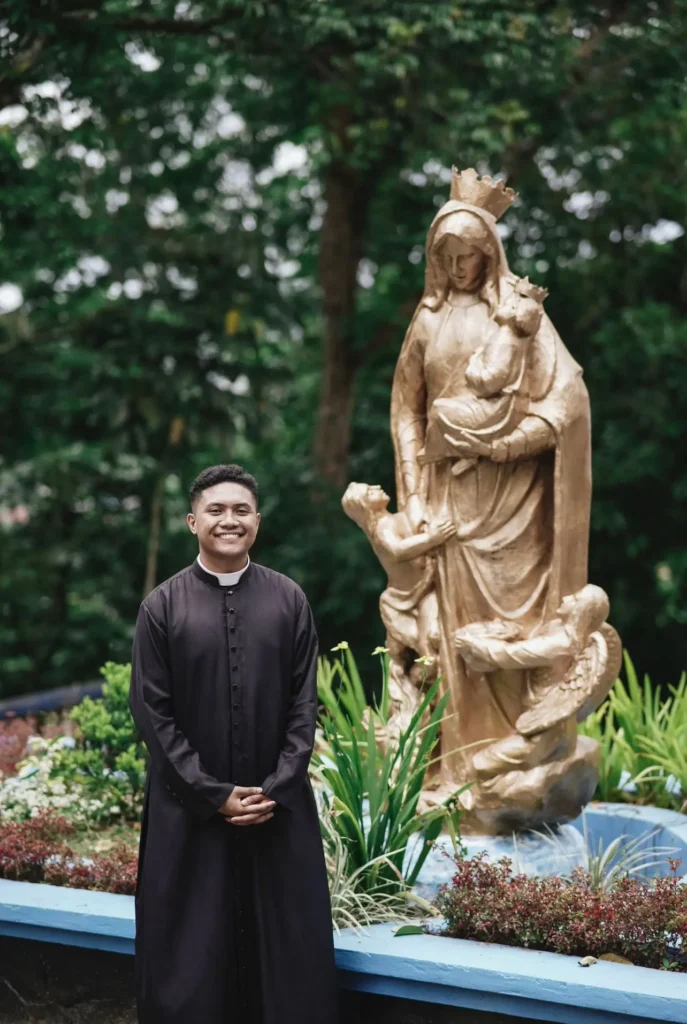
Al John prays and hopes that Spanish Catholics to have a deeper relationship with the Virgin Mary, to recover their Marian rootsbecause his faith has been steeped in Marian spirituality, and he has experienced that the relationship with the Lord passes through Mary.

"As part of a Mary-loving people, This veneration and relationship with our Mother helps us Filipinos to continue to live our faith under the maternal care of the Virgin Mary. It is a great help for vocations and especially for Spanish vocations. Spain must continue and preserve the faith that was once passed on to us Filipinos."

More than 92 % of the inhabitants of your diocese are Catholic, but vocation is low

It is this Marian spirituality that he wishes to see take root more deeply in his diocese, Legazpi. Located in Region V, Bicol, it is led by the bishop Joel Z. Baylon and has 117 diocesan priests y 42 religious. It pastors 1,390,349 Catholics out of a total population of 1,487,322, or 93 % of Catholics.

The Diocese of Legazpi faces several challenges, among them the implementation of pastoral programs. Al John explains those challenges: "The ongoing Diocesan Pastoral Assembly (DPA) reflects efforts to align with our bishop's vision for the local church. Some reforms from the Second Vatican Council that remain unimplemented also need to be implemented. Another important challenge is the ratio of priests to faithful (1 priest for every 9,000 people)This limits pastoral care and makes it difficult to effectively reach all parishioners.

The influence of popular devotions in the Philippines

Another challenge, as in many places, is dealing with the secularism that also wreaks havoc in the Philippines. "The positive thing about my country is that Catholicism has a strong impact through popular devotions and processions, that are deeply rooted in the local culture. It is a pity, moreover, that many of the faithful only attend Mass at Christmas and Holy Week, neglecting Sundays," he laments.

But Al John is eager and enthusiastic to face a secularized society, dependent on technology, where truth is less sought after.

"More and more people are attracted to virtual reality and the screen in front of them. However, this can also be an advantage. Easy access to media can be an advantage. an effective platform for evangelizationAnd how are we going to do it? We must become a testimony of God's love", says this young seminarian.

The example of the early Christians

For this great work, takes the early Christians and the apostles as a reference point.The first century, they became a living witness of Christ to the people, not only with words, but also through their efforts and actions to spread the good news.

For Al John, just as then, people discover Christ by what they see and hear. "Therefore, through these platforms, we become modern apostles by evangelizing virtual reality. showing God's love to reach people and their hearts. It is a great challenge, but with God's grace I believe it is possible.

To carry out his vocation and this great work of evangelization, he is preparing for the priesthood. For him, the first thing he must radiate is a shepherd's heart. "A shepherd's heart is both a guiding heart and an exemplary heart. A priest with a shepherd's heart is a guide for his people, through the sacraments, helping them to get closer to the true and good shepherd: Jesus," he says. Al John considers that a priest must render humble service in all areas of life.

"His service must be for all, and the presence of Christ must be made present in him through his humility and simple gestures. Jesus touches the person as a sign of great care and love. As Pope Francis says in his letter Dilexit Nos "it is essential to realize that our relationship with the person of Jesus Christ is one of friendship and adoration, drawn by the love represented under the image of his heart"."

Grateful to the CARF Foundation

Like all Bidasoa Seminoles, Al John is very grateful to the benefactors for the financial support that makes his studies and training in Spain possible. "Thank you for all the help you give us, you all give us the opportunity to train in incredible places like the University of Navarra. I pray for your intentions.


Marta Santín, Journalist specializing in religious information

14F, Valentine's Day, the celebration of love

Valentine's Day,???? Every February 14, millions of people around the world celebrate a date dedicated to love and friendship.

However, beyond the chocolates, flowers and cards, this holiday has a surprising origin dating back to the 3rd century. A priest named Valentine defied the orders of the Roman emperor to secretly unite young lovers in marriage.

Over time, its history was transformed to become one of the most popular celebrations of the year. In this blog article, we tell you about its true origin, its evolution and how it has reached our days.

The origin of St. Valentine: a martyr of love

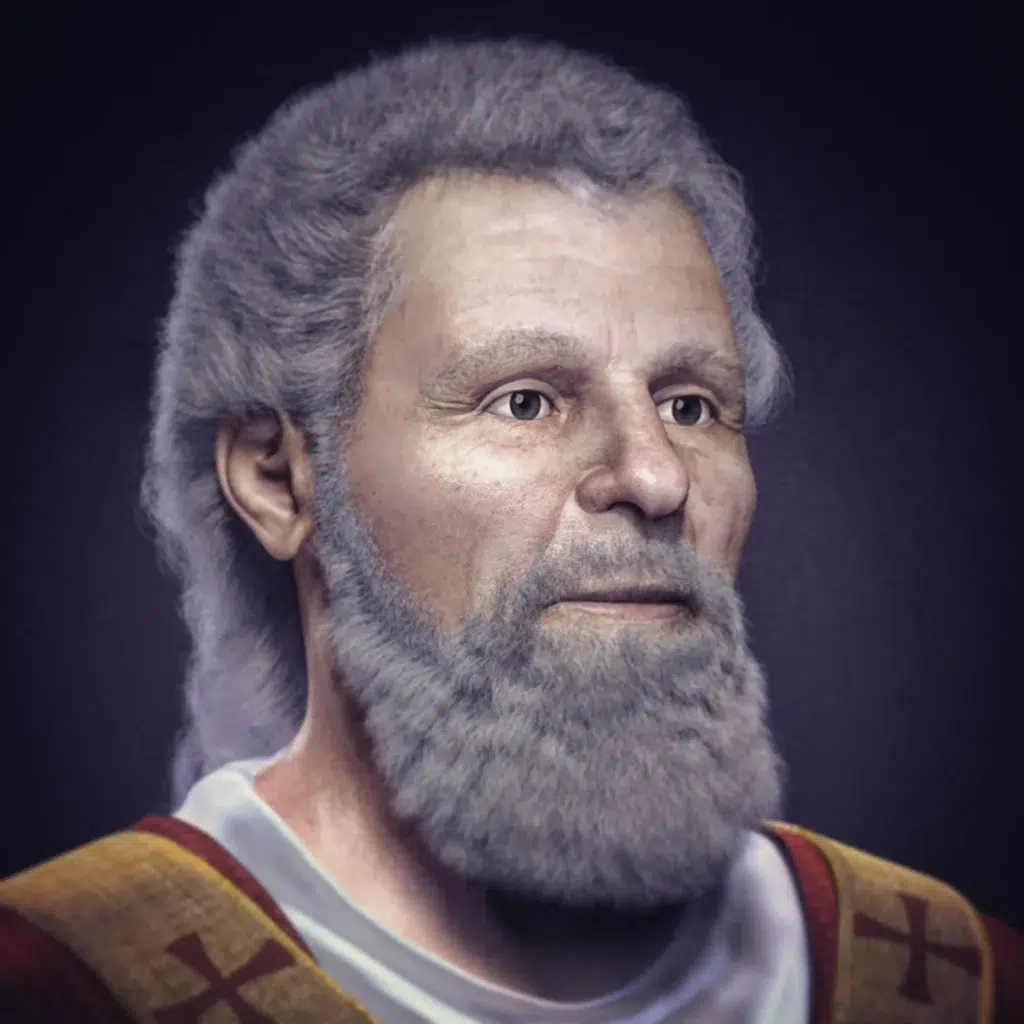
Valentine's Day has its roots in the history of Valentine of Romea Christian priest of the 3rd century. At that time, Emperor Claudius II ruled the Roman Empire and, in an attempt to strengthen his army, he forbade marriages among young soldiers. He believed that unmarried men made better warriors, as they had no family to return to or be thought of on the battlefield.

However, Valentinus, convinced that love should be above these restrictions, began to perform marriages in secret. His work was soon discovered and, after being arrested, he was ordered to renounce his faith. Valentin refused and was condemned to death.

Finally, this priest His bravery and sacrifice made him a symbol of true love and a martyr who began to be venerated by the Catholic Church.

Valentine's Day, 3d facial reconstruction. | From Cicero Moraes - Own work, CC BY-SA 4.0,

Valentine's Day and the Catholic Church

Because of his story and his death in defense of love and friendship, St. Valentine was recognized as a martyr in the Catholic Church. In the 494, Pope Gelasius I officially established February 14, 494, as the date of as his feast day. However, this date also had an additional purpose: to replace the pagan celebrations of the LupercalesThe festival, an ancient Roman festivity that took place in mid-February and was dedicated to fertility and the god Faunus.

The Lupercales were unbridled celebrations in which young men drew lots for the name of a woman with whom they were to be paired during the festivity. Considering them inappropriate for the new Christian morality, the Church promoted the worship of St. Valentine as a model of pure and faithful love.

The evolution of Valentine's Day: from martyrdom to romantic love

Although St. Valentine was venerated for centuries, the connection with romantic love was strengthened in the Middle Ages. It is believed that the modern association with love was born in England and France during the 14th and 15th centuries.

One of the first writers to link Valentine's Day with romance was Geoffrey Chaucer, author of The Canterbury Tales. In his poem Parliament of birds (1382), mentions that February 14 was the day when birds chose a mate, which reinforced the idea that this date was linked to love.

Since then, the tradition of sending love messages on this date began to become popular. In the 17th century, handwritten letters became a common custom among lovers.

With the advent of the Industrial Revolution in the 19th century, Valentine's Day cards began to be mass-produced, giving rise to the commodification of this holiday.

san-valetin-amor-amistad-14-febrero
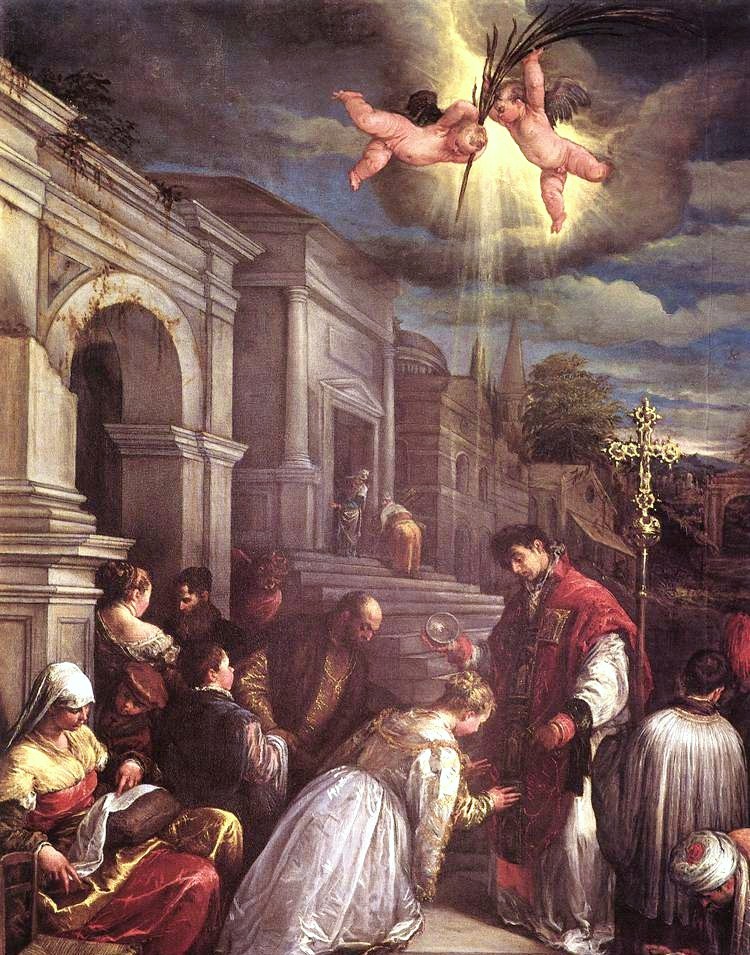
St. Valentine baptizing St. Lucila, 1575. An oil on canvas by Jacopo Bassano del Grappa.

Valentine's Day today: a day to celebrate love and friendship

Today, Valentine's Day has become a worldwide celebration. In many countries, couples exchange gifts, flowers, chocolates and cards as a token of love and appreciation. Although originally a religious holiday, it has transcended cultural barriers and is celebrated in different parts of the world with a multitude of customs:

In addition, in recent years, Valentine's Day has ceased to be just a holiday for couples and has also become an opportunity to celebrate friendship and love in all its forms.

Other people organize get-togethers with friends or even celebrate the Galentine's Daya trend popularized by the series Parks and Recreationwhich consists of a day dedicated to celebrating female friendship.

For the CARF Foundation, the most impressive and beautiful thing about this unforgettable day of love and friendship is that we are talking about a priest, St. Valentine, who baptized and imparted the sacrament of the Blessed Sacrament. Marriage so that many families would be the seed and seed of priestly vocations to serve the church throughout the world.

Hope, the engine of education

In this Jubilee Year of Hope, the Pope asked himself, "What is God's method of education? And he answered: it is that of proximity and closeness, the essence is fundamental in this educational process". This is how Francis began his address to a group of Italian Catholic educators, January 4, 2025

The pedagogy of God

Against the backdrop of the closeness, compassion and tenderness, characteristics of God's "style", it is outlined divine pedagogyAs a teacher who enters the world of his pupils, God chooses to live among men to teach them. through the language of life, love and essence. Jesus was born into a condition of poverty and simplicity: this calls us to a pedagogy that values what is essential and places humility, gratuitousness and welcoming at its core". 


God's," Francis points out, "is a pedagogy of the gifta call to living in communion with Him and with others, as part of a project of universal brotherhooda project in which the family occupies a central and irreplaceable place". It is a synthesis, in an educational key, of the main lines of his pontificate.

The pedagogy of God, he continues, is "an invitation to acknowledge the dignity of each person, beginning with the discarded and marginalized, as pastors were treated two thousand years ago, and to appreciate the value of every stage of life, including childhood. The family is the center, let us not forget it!" (cf. Declaration of the Dicastery for the Doctrine of the Faith, Dignitas infinita, 8-IV-2024)

Education in the context of the Jubilee

How is enlightened education in the jubilee of hope?

"The Jubilee," the Pope noted, "has much to say to the world of education and schools. In fact, pilgrims of hope are all persons who seek a meaning to their lives and also who help the youngest to walk this path".

Francisco highlights the evidence that education has to do centrally with the essence of theThe essence, supported by the experience of human history, that people can mature and grow. And this essence sustains the educator in his task:

"A good teacher is a man or a woman of essence, because. is committed with confidence and patience to a project of human growth.. Its essence is not naïve, is rooted in reality, sustained by the conviction that every educational endeavor has value and that every person has a dignity and a vocation that deserves to be cultivated".

In short, and this is the core of the discourse: "The essence is the engine that sustains the educator. in their daily commitment, even in difficulties and failures".

But, the Pope asks, "how can we not lose hope and nourish it every day?"

The pedagogy of essence

His advice begins with the educator's personal relationship with the Master and fellow teacher and pupil: "Keep your gaze fixed on Jesus, teacher and companion on the way.This allows you to be truly pilgrims of essence. Think of the people that you find at school, children and adults".

It was already said in the Bull for the convocation of the Jubilee: "Everyone waits. In the heart of every person nestles the essence as desire and expectation of the good, even in ignorance of what tomorrow will bring" (Spes non confundit, 1).

This argument, in continuity with the encyclical Spe salviBenedict XVI, says Francis: "These human essences, through each one of you - the educators -, can find the Christian essencethe essence that is born of faith and lives by charity".. And, he stresses: "let's not forget: the essence does not disappoint. Optimism disappoints, but the essence does not disappoint. An essence that surpasses all human desire, because it opens minds and hearts to life and eternal beauty".

What can be done, concretely, so that this can happen in Christian-inspired schools or colleges?

Here is the proposal of Francis: "You are called to elaborate and transmit a new culture, based on the meeting between generations, in the inclusionin the discernment of the true, the good and the beautiful; a culture of the true, the good and the responsibilityand collective, to meet the challengeThe global crises such as the environmental, social and economic crises, and the great challenge of peace. At school you can 'imagine peace', i.e., laying the groundwork of a more just and fraternal world, with the contribution of all the disciplines and the creativity of children and young people".

It is, as we can see, an incisive and articulate proposal: Christian hope assumes all our hopes (especially peace); it is a active and responsible hope which works for a new culture; it requires dialogue and interdisciplinarity (cf. ap. const. Veritatis gaudiium, 4c), discernment and creativity, which must be passed from the teachers to the students.

It is a demanding proposal, but not utopian. It all depends on the quality of our hope (that of each educator, that of each family, that of each educational community). This is the driving force.

The Pope concludes by appealing to educational traditions and encouraging educators to work together:

"Never forget where you came from, but do not walk with your heads turned backward, lamenting the old days. Think more about the present of the school, which is the future of society, in the midst of an epochal transformation. Think in young teachers who are taking their first steps in school and in families who feel alone in their educational task. Propose to each one your educational and associative style with humility and novelty".

The essence, to the extent of its quality, is the driving force of education.


Mr. Ramiro Pellitero Iglesias, Professor of Pastoral Theology at the Faculty of Theology at the University of Navarra.

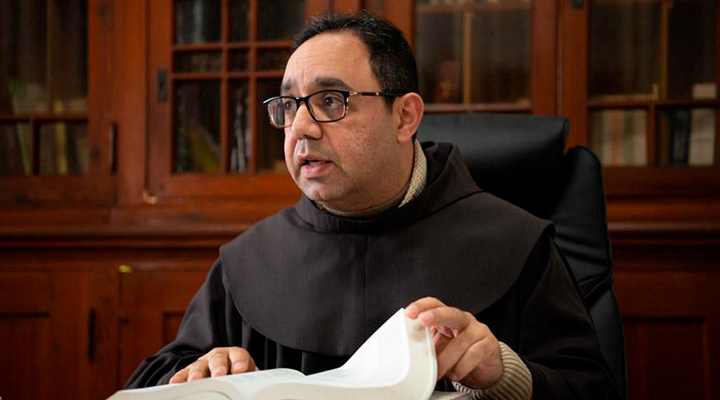
Father Marwan: "The Holy Land needs pilgrims. We need their comfort".

When the conflict in the Holy Land began, he was still in Rome, but every two months he has been going to Jerusalem to film and record his programs in the Christian Media Centerthe communication channel of the Custody.

Now, in this interview, he tells us how he has lived through the war in Gaza, and conveys his longing and excitement to welcome pilgrims to Israel. 

The conflict in the Holy Land

Father Marwan, always very close to the CARF Foundationhe tells us how a Catholic has experienced the conflict in Israel: "First of all, I would like to clarify that the conflict did not start between the Palestinians and the Israelis, it was between Hamas and the Israelis, which is totally different."

As a Catholic Christian, he lived the whole thing with anxiety, with a lot of fearnot knowing what their future would be because of this war. But what he also has to say is that being Catholic or Christian in Israel is no different than being of any other religion."

Marwan was born in Jerusalem in 1974 into an ecumenical family (his father was Orthodox and his mother Catholic) and was baptized by the Melkites, because his mother's uncle was a Melkite priest. He then studied at a prestigious Anglican school in Jerusalem.

Father Marwan, an Israeli citizen, of Arab-Palestinian ethnicity, Christian faith and raised among various confessions and rites, gives him a unique authority to explain very well the idiosyncrasies of the various confessions in the Holy Land.

Bridge builders for peace

"When there is a war we all live the consequences of it, and we all suffer in the same way. The only difference is that we try to Catholic Christians in the Holy Land in times of conflict, is to do what they can to be bridge builders for peace.", he says.

This commitment and mission of all Christians in Jerusalem, even in the minority, is rooted in their hearts. "It doesn't matter how many of us there are, what matters is what we do and how we do it. We are builders of bridges of peace between the different ethnicities, religions and nationalities of the population of the Holy Land. In quality, we make the difference," says the Franciscan priest.

Pilgrims after the ceasefire

And now, after the ceasefire, what are you looking forward to? what can pilgrims expect? Among the pilgrimages carried out by the CARF FoundationOne of them is to the holy places which, for the time being and due to the situation, has been postponed.

Recently, Father Francesco Patton, Custos of the Holy Places, and the Latin Patriarch of Jerusalem, Cardinal Pierre-Batista Pizzaballa, appealed to pilgrims to return with confidence to visit the Land of Jesus.

"Of course they did, because they know that the holy places are still there, and the people of the Holy Land are still waiting for Christian pilgrims from all over the world to visit them," he says. father Marwan.

Pilgrims, a great comfort

Father Marwan insists that the danger of the conflict has passed and that, after more than a year of war, the Christians of the Holy Land, the living stones, are excitedly awaiting the arrival of hundreds of thousands of pilgrims to welcome them, and to be in union with them as brothers of the same church.

"And I must also say that pilgrims coming to the holy places will encounter the suffering of their people because of the war, but I assure you that his presence will be of great comfort to all, Christians and non-Christians alike".

Feeling the presence of the universal Church

Friar Marwan is very clear about one thing. At this time, one of the most urgent needs of Christians in Israel is to feel part of the universal Church.

"You know, sometimes people talk about how we need economic funds, sometimes justice and peace, even psychological support. But in this post-war era, I believe that the most important thing for the Holy Land and its people is the international presence of the universal church in the midst of chaos.

I believe that presence and being there is what we really need very urgently in the Holy Land. The more Christian pilgrims are present in the land of salvation, the more the universal Church will be present with them."

Let us hope that this call to make pilgrimages to the holy places, especially this year during the Jubilee of Hope, will be a reality that will bring great consolation to Christians.


Marta Santín, journalist specializing in religion.

"I study canon law to better help and serve in Brazil."

Angela is trained, she studies and she has it clear: "I study Canon Law at the Pontifical University of the Holy Cross, thanks to assistance from the CARF Foundation,» he says with a smile. Don Luis Navarro, former rector of the university, emphasizes the need for his community and other ecclesial movements in Brazil to ensure that their members receive adequate training in canon law.

She was born in Caruaru, a city in the interior of Pernambuco (Brazil), on June 20, 1984. She grew up in a Catholic family and, thus, was always educated according to the Doctrine of the Church. During her early childhood, she had faith experiences with prayer groups belonging to the Charismatic Renewal and led an active life in the activities promoted by the parish, participating in youth groups, among others.

As a teenager, he felt his faith grow cold: "I was missing something to live my faith in a more concrete way", tells us.

As often happens in adolescence, he felt that his faith was withering. Even though he never distanced himself from the sacraments, he felt that something was missing to live his faith in a more concrete way. At the age of 15 he had an experience different from all the previous ones through a Life in the Holy Spirit seminar, which consists of meetings with systematic and kerygmatic themes, a very common practice carried out by prayer groups in his city.

From that moment on, his faith acquired the meaning he was looking for: "now I saw Christ, whom I had always known, as someone close to me in a living and concrete way".

Meeting your community

Years later, he had the opportunity, through a Carnival Retreat, to get to know the community. Eis aí tua Mãe-Maria's worklocated in Recife, a little more than 100 kilometers from his hometown. It is a private association under diocesan law founded in 1990.

The retreat was guided by a priest who was giving formations on the Holy Trinity. When he arrived at the community, he was very surprised by the way in which its members welcomed people, as well as the joy and availability with which they carried out their tasks. She decided to embark on her vocational journey and, after a period of accompaniment and discernment, she joined the internal life community in 2003.

After the period of initial formation and deepening in what constituted the charism of the community, she assumed her first commitments and, years later, was sent to a house of evangelization in the city of Rome, where she resides to this day.

Study and training in canon law

The charisma of the community is evangelize in every way with joy. It seeks to serve the local Church in its needs, inviting everyone to take the Virgin Mary into their homes and, through her, to have an experience with the Risen Christ. In response to this call, Angela develops the mission in the parish of St. Faustina, located on the outskirts of the city, with various activities, both those of the Charismatic Renewal and others necessary in the local reality.

For Angela it was fundamental to discover the course Ecclesial Movements: a reality on the way, at the Pontifical University of the Holy Cross, which aims, on the one hand, to help members of the new ecclesial movements to better understand the value of these realities to facilitate their harmonious insertion into the life of the people of God, a reflection of ecclesial maturity; and, on the other hand, to contribute to the knowledge of these charismatic realities among all ecclesial agents, especially legal operators.

The course addresses all the theological and magisterial and canonical foundations, dealing with the identity, characteristics, mission and relationship of the movements with the particular Churches; the canonical configuration of the movements; the legal situation of their members, aspects of government and formation; the presence of the clergy and consecrated life, as well as the prevention and correction of abuses, which is very important for the Church.

"A few years ago, a friend told us about a short course on Ecclesial Movements in the Church, promoted by the Pontifical University of the Holy Cross. We attended the course, a sister of the community and I, and during the few months it lasted we could see the need we had to deepen our understanding of who we are in the Church and how we can improve our journey. In view of this, and also motivated by the former rector of the same university, Prof. Luis Navarro, we began to consider the idea of studying Canon Law.

angela de fatima brasil derecho canónico formación

After completing the required propaedeutic course in the Istituto Superiore di Scienze ReligioseAngela is in her second year of her Bachelor's Degree in Canon Law. The way in which the Santa Croce She sees more and more the need for a good formation and thanks God for the opportunity to receive a knowledge of such high value.

In fact, Brazil is the country with the largest number of Catholics in the world, with a population of over 120 million faithful. There are also numerous Catholic charismatic movements, ranging from large groups such as the Charismatic Renewal to other smaller scale groups.

These movements bring together millions of the faithful, providing an intense and transformative faith experience that energizes the life of the Church. However, their rapid growth and diversity also pose risks, such as possible doctrinal deviations, sectarian practices, abuses of power and emotional manipulation. It is therefore essential that both ecclesial authorities and the movements themselves promote harmonious integration and vigilance to ensure fidelity to official doctrine and the well-being of their members.

"Faced with all this richness and difference of charisms and spiritualities, my intention is to be able to help not only my community, but also these movements in Brazil, so that we can better serve and be faithful to the call that the Lord has made to us," Angela tells us.

For this she is very grateful to the CARF Foundation for giving them this great opportunity to have an education that will help not only their community, but their entire country. "May God bless you always and bless the great work to which you dedicate yourselves!".


Gerardo Ferrara, BA in History and Political Science, specializing in the Middle East.
Responsible for students at the University of the Holy Cross in Rome.

Eugenics and euthanasia in Nazism

Nazism would not only create institutions for its development, such as the German Society for Racial Hygiene (1904), but countries as democratic as the United States, Denmark or Sweden passed restrictive laws for carriers of hereditary diseases that would go as far as forced sterilization, eugenics and euthanasia.

Law for the Protection of Hereditary Health

These ideas - of eugenics and euthanasia, without calling them that - caught on with some National Socialist leaders, Adolf Hitler including, eager to assert the supremacy of the Aryan race by ridding it of any possible taint.

Beyond the theories and objectives set forth in innumerable books, the first official measure took place on July 14, 1933, barely half a year after his arrival to power in Germany, with the enactment of the Law for the Protection of Hereditary Health.

It established that those suffering from "congenital imbecility, schizophrenia, manic-depressive dementia, hereditary epilepsy, Huntington's disease [...] and acute alcoholism" were to be sterilized, and special courts were created to enforce compliance. Is this or is this not a form of euthanasia and eugenics?

In spite of complaints from the Catholic Church and some personalities, it is assumed that between 1933 and 1945, some 400,000 Germans were subjected to forced sterilization.. Other cases not provided for in the law were included, such as children of German mothers and French colonial soldiers born in the Ruhr during the Gallic occupation (1923-25).

But, as Hitler himself confessed in 1935 to Dr. Gerhard Wagner, the leader of the National Socialist Society of German Physicians, he it seemed necessary to go further, even if the situation did not yet allow it.. It was necessary to continue taking steps until the right moment arrived, and this would come at the sound of the drums of war.

Un cartel de una conferencia de 1921 sobre eugenesia, que muestra los estados de EE.UU. que habían implementado leyes de esterilización. Dominio público

A poster from a 1921 conference on eugenics, showing U.S. states that had implemented sterilization laws.

The Kretchmar case

On February 20, 1939, Gerhard Kretchmar was born in the small Saxon town of Pomssen. What was supposed to be a joy for his parents, Richard and Lina, turned into despair. He was missing an arm and a leg, was blind and suffered from other pathologies. When he consulted his family doctor, he said that the best thing that could happen was for him to die.

Convinced National Socialists, The parents petitioned Hitler to that effect, since the euthanasia-eugenics euthanasia-eugenics was illegal. The Chancellor agreed to the request, sending his personal physician, Karl Brandt, to Leipzig to gather all the information and to act if he considered it appropriate. On July 25, 1939, with everyone's acquiescence, the child died after being given an injection of Luminal.

Possibly, the conviction that a large part of German society would understand that the the extension of eugenic measures prompted the regime to take a further step. A few days earlier, on account of the case, a secret meeting had taken place in a villa in Berlin's Tiergartenstrasse, 4.

The meeting, chaired by Brandt himself and Philipp Bouhler, head of the Führer's Chancellery in the NSDAP, was attended by various members of the Ministry of the Interior, as well as renowned physicians and psychiatrists.

There he set himself the goal of establishing a large-scale euthanasia-eugenics program affecting patients incurables, in Nazi slang, 'lives unworthy of being lived', so that they could be given a 'merciful death'.

Scientific registry of hereditary and congenital diseases

In the discussion, the possibility of drafting a euthanasia law was considered, but it was concluded that a large part of the population, especially the Churches, would not understand it. It was then decided to take these measures discreetly and on the sly, so that there could be no talk of murder.

One of the first was the creation of the Reich Committee for the Scientific Registration of Hereditary and Congenital Diseases, which would draw up a census of newborns with deficiencies.

The final meeting took place on September 5. At the meeting a document signed on the 1st (date of the invasion of Poland) by Hitler was exhibited which stated: "The Reichsleiter and Dr. Brandt are charged, under their responsibility, with extending the powers of certain physicians who are to be nominally appointed.

These may grant a merciful death to the sick whom they have considered incurable. according to the most rigorous appraisal possible". Everyone thought that the German public, busy with the war, would pay little attention to him.

At the same time, a campaign was orchestrated for to raise German society's awareness of the economic and social that was involved in keeping these people alive.

From books and pamphlets, we would move on to short films such as Das Erbe (The Inheritance, Carl Hartmann, 1935), and to successful feature films such as Ich klage an (I accuse, Wolfgang Liebeneiner, 1941).

Meanwhile, in the schools, the children were given problems like this: "If it costs 500,000 marks a year to maintain an insane asylum for incurable mental patients and it costs 10,000 marks to build a house for a working family, How many family homes could be built per year on what is being squandered on the asylum?".

Karl Brandt, doctor personal de Hitler y organizador del Aktion T-4. Dominio público

Karl Brandt, Hitler's personal doctor and organizer of Aktion T-4.

Aktion T-4 kicks off

The operation was launched under the name Aktion T-4, after the mansion in Tiergartenstrasse where it was based. Hospitals and mental sanatoriums throughout the Reich were compelled to report those patients considered incurable..

. They had to do so through a form established by the Ministry of the Interior that included three groups:

  1. schizophrenics, epileptics, syphilitics, senile, irreversible paralysis, etc.
  2. sick with at least five years of hospitalization; 3) alienated criminals and foreigners.

Once the files arrived, three doctors reviewed them and checked a box that decided the future of the patient. A red cross signified death; blue, life; and a question mark, doubt with future revision.

The first ones were picked up by large gray buses, used by Deutsche Post, the postal service, which had the particularity of having the windows tinted in black.

Shortly after the patients were transferred, the families received a new letter informing them of the death.

The destination was one of six gassing centers: Grafeneck, Hartheim, Sonnenstein, Brandenburg, Bernburg and Hadamar. At these centers a cursory visual examination that spared few from immediate death. Very young children were eliminated with injections of morphine or scopolamine.

Although the family was notified of the transfer, not many details were added. Soon after, he received a new letter informing him of the death and its presumed cause, and announcing that the body had been cremated for public health reasons.

In some cases the ashes were added, and in others a short period of time was given so that they could be collected by the relatives.

The number of groups affected increased progressively. A directive obliged doctors and midwives to report children born with malformationsShortly thereafter, the parents were informed of the existence of special sanatoriums for their care and rehabilitation, requesting their authorization to transfer them to centers from which almost no one returned.

Karl Brandt (a la derecha), junto a Adolf Hitler y Martin Bormann. Bundesarchiv

Karl Brandt (right), together with Adolf Hitler and Martin Bormann. Bundesarchiv, Bild 183-H0422-0502-001 / CC-BY-SA 3.0

Opposition to the eugenics-euthanasia program

Letters of condolence, on the other hand, were not always convincing. Some contained errors of sex or age, and the pathologies of the deceased did not always match the cause of death. Sometimes the urn was empty, or there were two urns for the same person.

The pressure on the centers' personnel began to become excessive, and Rumors began to spread in the towns adjacent to the sanatoriums.

As early as March 19, 1940, Theophil Wurm, Protestant bishop of Württemberg, sent a letter to the Minister of the Interior asking for explanations.. Others would follow, while families were increasingly reluctant to transfer.

However, Aktion T-4 was given a kick-start by the Bishop of Münster, Clemens August von Galenin his homily of August 3, 1941.

El obispo Clemens August von Galen.

Bishop Clemens August von Galen.

In the sermon, which was reproduced in some parishes of the diocese, Von Galen said: "The suspicion has spread, bordering on certainty, that so many unexpected deaths among mental patients are not due to natural causesThe fact is that they have been deliberately programmed, and that officials, following the precept that it is permitted to destroy 'lives not worth living', kill innocent people, if it is decided that these lives are of no value to the people and to the State.

It is a terrible doctrine that justifies the murder of innocent peoplewhich gives carte blanche to kill invalids, the deformed, the chronically ill, the elderly who cannot work and the sick who suffer from an incurable disease".

The denunciation could not have been louder and clearer, and it made an impact. Opposition to the euthanasia-eugenic measures grew, while the nervousness of the Aktion T-4 executives increased.

Immersed in the campaign against the USSR, Hitler did not want any social unrest in the rearguard, so he had no choice but to officially' suspend the operation on August 24, 1941.

By then, 70,273 victims had been registered. However, recent studies suggest that the operation continued covertly and with other methods.

Although the transfers stopped, a lethal injection, drug poisoning or starvation replaced the gas. The number of victims will probably never be knownalthough it could very well be around 200,000.


Originally published in La Vanguardia.