How to live Holy Week?
Upon completion of the LentDuring Holy Week we commemorate the crucifixion, death and resurrection of the Lord. All of salvation history revolves around these holy days. They are days to accompany Jesus with prayer and penance. All leading up to Easter where Christ with his resurrection confirms that he has conquered death and that his heart longs to enjoy man for all eternity. In this article we review how to live Holy Week.
To live Holy Week well, we have to put God at the center of our lives, accompanying Him in each of the celebrations of this liturgical season that begins with Palm Sunday and ends with Easter Sunday.
Palm Sunday
"This threshold of Holy Week, so close already to the moment when the Redemption of all humanity was consummated on Calvary, seems to me a particularly appropriate time for you and me to consider by what ways Jesus our Lord has saved us; for us to contemplate that love of his - truly ineffable - for poor creatures, formed from the clay of the earth." - How to live Holy Week. san Josemaría, Friends of God, no. 110.
The Palm Sunday We remember the triumphal entry of Jesus into Jerusalem in which all the people praise him as king with songs and palms. The branches remind us of the covenant between God and his people, confirmed in Christ.
In the liturgy of this day we read these words of profound joy: "the sons of the Hebrews, bearing olive branches, went out to meet the Lord, crying out and saying: Glory in the highest".
"Holy Week begins and we remember Christ's triumphal entry into Jerusalem. St. Luke writes: "As he drew near to Bethphage and Bethany, by the mount called the Mount of Olives, he sent two of his disciples, saying to them, "Go to the hamlet opposite you. When you enter, you will find a little donkey tied up that no one has yet ridden. Untie it and bring it here. If anyone asks you why you are untying him, tell him: the Lord needs him." They went and found everything just as the Lord had told them.".
What a poor mount Our Lord chooses! Perhaps we, conceited, would have chosen a spirited steed. But Jesus is not guided by merely human reasons, but by divine criteria. "This happened -San Mateo notes that the words of the prophet might be fulfilled: "Say to the daughter of Zion: behold, your king is coming to you, gentle and riding on a donkey, on a donkey, the son of a yoke animal""..
Jesus Christ, who is God, is content with a little donkey for a throne. We, who are nothing, are often vain and arrogant: We seek to stand out, to attract attention; we try to be admired and praised by others. St. Josemaría Escrivá, canonized by John Paul II two years ago, took this Gospel scene to heart.
He said of himself that he was a mangy donkey, that he was worthless; but since humility is the truth, he also recognized that he was the depositary of many gifts from God, especially the task of opening divine paths on earth, showing millions of men and women that they can be saints in the fulfillment of their professional work and ordinary duties.
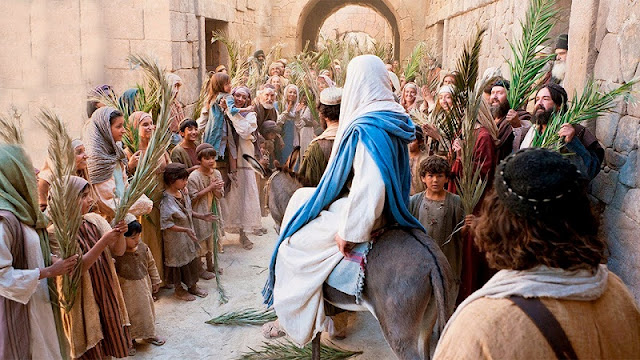
Jesus enters Jerusalem on a donkey. We must draw consequences from this scene. Every Christian can and should become Christ's throne. And here the words of St. Josemaría come as a ringing endorsement. "If the condition for Jesus to reign in my soul, in your soul, were to have a perfect place in us beforehand, we would have reason to despair. However, he adds, Jesus is content with a poor animal, for a throne (...).
"There are hundreds of animals more beautiful, more skillful and more cruel. But Christ looked to the donkey to present himself as king before the people who acclaimed him. For Jesus does not know what to do with calculating cunning, with the cruelty of cold hearts, with showy but hollow beauty. Our Lord values the joy of a young heart, the simple step, the voice without falsetto, the clear eyes, the attentive ear to his word of affection. Thus he reigns in the soul".
Let him take possession of our thoughts, words and actions!
Above all, let us cast off self-love, which is the greatest obstacle to the reign of Christ! Let us be humble, without appropriating merits that are not ours. Can you imagine how ridiculous the donkey would have been if he had appropriated the cheers and applause that the people addressed to the Master?
Commenting on this Gospel scene, John Paul II recalls that Jesus did not understand his earthly existence as a quest for power, for success and for a careeror as a will to dominate others. On the contrary, he renounced the privileges of his equality with God, assumed the condition of a servant, making himself in the likeness of men, and obeyed the Father's plan until death on the Cross (Homily, April 8, 2001).
The enthusiasm of the people is not usually long-lasting. A few days later, those who had welcomed him with cheers will cry out for his death. And we, will we let ourselves be carried away by a passing enthusiasm? If in these days we notice the divine fluttering of God's grace, which passes close by, let us make room for it in our souls. Let us spread on the ground, more than palms or olive branches, our hearts. Let us be humble. Let us be mortified. Let us be understanding with others. This is the homage that Jesus expects from us.
Holy Week offers us the opportunity to relive the fundamental moments of our Redemption. But let us not forget that, as St. Josemaría writes, "To accompany Christ in his glory at the end of Holy Week, it is necessary that we first enter into his holocaust, and that we feel that we are one with him, dead on Calvary" (1)..
For this, there is nothing better than walking hand in hand with Mary. May she obtain for us the grace that these days may leave a deep impression on our souls. May they be, for each and every one of us, an opportunity to deepen our understanding of God's love, so as to be able to show it to others. EWTN).
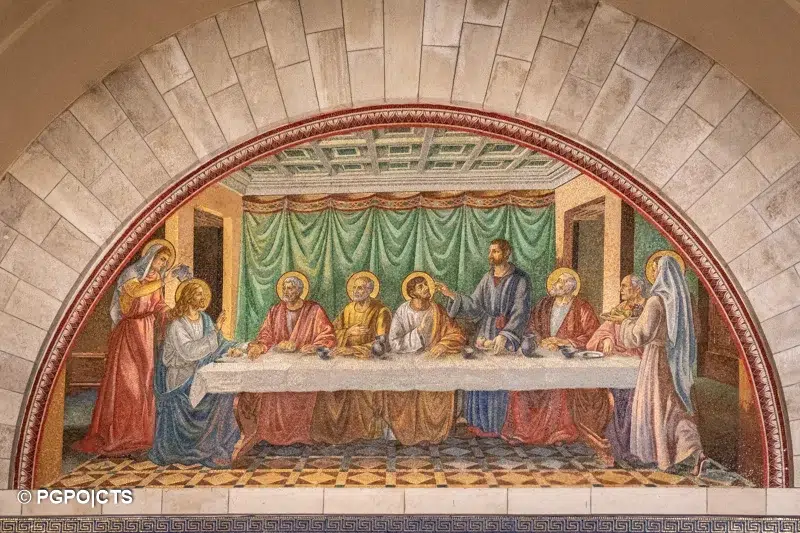
Easter Monday
Yesterday we remembered Christ's triumphal entry into Jerusalem. The crowd of disciples and others acclaimed him as Messiah and King of Israel. At the end of the day, tired, he returned to Bethany, a village very close to the capital, where he used to stay on his visits to Jerusalem.
There, a friendly family always had a place ready for him and his family. Lazarus, whom Jesus raised from the dead, is the head of the family; with him live Martha and Mary, his sisters, who eagerly await the arrival of the Master, happy to be able to offer him their services.
In the last days of his life on earth, Jesus spends long hours in Jerusalem, engaged in a very intense preaching. In the evening, he regained his strength at the home of his friends. And in Bethany there takes place an episode that the Gospel of today's Mass reports.
Six days before the Passover," recounts St. John, "Jesus went to Bethany. There He was offered a supper; Martha was serving and Lazarus was one of those at table with Him. Mary then took a pound of real nard perfume, very costly, anointed Jesus' feet with it and wiped them with her hair, and the house was filled with the fragrance of the perfume.
The generosity of this woman is immediately evident. She wishes to express her gratitude to the Master for having restored her brother to life and for so many other gifts received, and she spares no expense. Judas, present at the dinner, calculates exactly the price of the perfume.
But, instead of praising Mary's delicacy, he abandons himself to murmuring: why was this perfume not sold for three hundred denarii to give to the poor? In reality, as St. John notes, she did not care about the poor; she was interested in handling the money in the purse and stealing its contents.
"The valuation of Jesus is very diverse."writes John Paul II. "Without taking anything away from the duty of charity towards the needy, to whom the disciples must always dedicate themselves - "the poor you will always have with you" - He looks at the event of His death and burial, and appreciates the anointing that is done to Him as an anticipation of the honor that His body deserves also after death, because it is indissolubly united to the mystery of His person." (Ecclesia de Eucharistia, 47).
To be a true virtue, charity must be ordered. And the first place goes to God: You shall love the Lord your God with all your heart and with all your soul and with all your mind. This is the greatest and the first commandment. The second is like it: you shall love your neighbor as yourself.
On these two commandments depend all the Law and the Prophets. Therefore, those who, with the excuse of alleviating the material needs of mankind, neglect the needs of the Church and of her sacred ministers, are mistaken. St. Josemaría Escrivá writes:
"The woman who, in the house of Simon the leper in Bethany, anoints the Master's head with rich perfume, reminds us of our duty to be splendid in the worship of God.
-All luxury, majesty and beauty seem little to me. -And against those who attack the richness of sacred vessels, ornaments and altarpieces, the praise of Jesus is heard: "opus enim bonum operata est in me" - a good work has he done with me.
How many people behave like Judas! They see the good that others do, but they don't want to recognize it: they insist on discovering crooked intentions, they tend to criticize, to murmur, to make rash judgments. They reduce charity to what is purely material-giving a few coins to the needy, perhaps to ease their conscience-and they forget that, as St. Josemaría Escrivá also writes, "charity is not just a matter of giving. "Christian charity is not limited to helping those in need of economic goods; it is directed, above all, to respecting and understanding each individual as such, in his intrinsic dignity as man and as a child of the Creator".
The Virgin Mary gave herself completely to the Lord and was always attentive to mankind. Today we ask her to intercede for us, so that, in our lives, love of God and love of neighbor may become one, like two sides of the same coin.
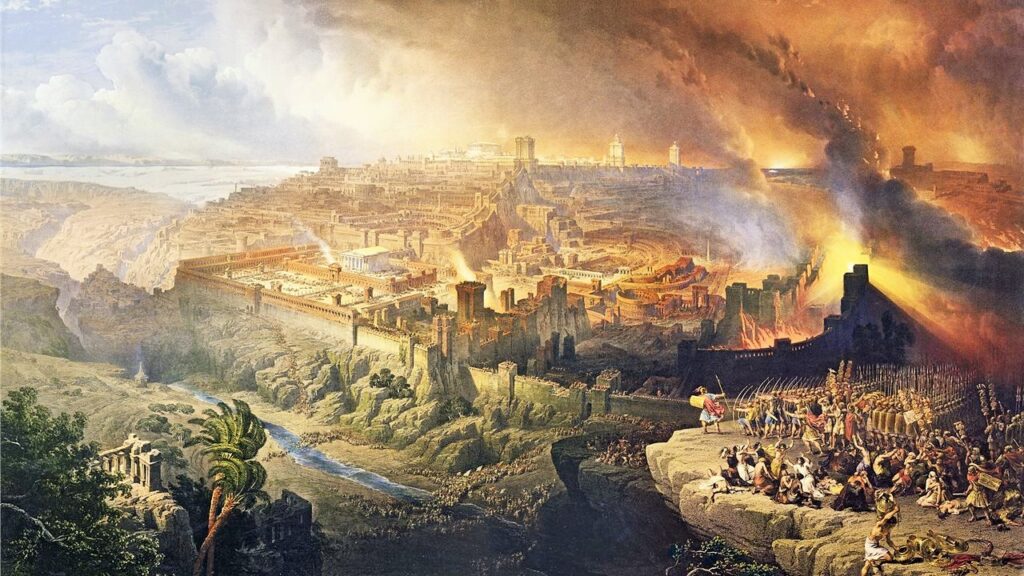
Holy Tuesday
The Gospel of the Mass ends with the announcement that the Apostles would leave Christ alone during the Passion. To Simon Peter who, full of presumption, affirmed: I will give my life for you, the Lord replied: Will you give my life for me? I assure you that the cock will not crow before you have denied me three times. A few days later, the prediction came true.
However, a few hours before, the Master had given them a clear lesson, as if preparing them for the moments of darkness to come. It happened the day after the triumphal entry into Jerusalem. Jesus and the Apostles had left Bethany very early and, in their haste, perhaps they did not even take refreshments. The fact is that, as St. Mark tells us, the Lord felt hungry.
And seeing a fig tree afar off, which had leaves on it, he came near, lest he might find anything on it; but when he came to it he found nothing but leaves, for it was not the season for figs. And he rebuked it: "may no one ever eat fruit from you!". His disciples were listening to him.
At dusk they returned to the village. It must have been late and they did not notice the cursed fig tree. But the next day, Tuesday, when they returned to Jerusalem, they all saw that tree, once a leafy one, with its branches bare and withered. Peter remarked to Jesus, "Master, look, the fig tree which you cursed has withered.
Jesus answered them: "Have faith in God. Truly I say to you, whoever says to this mountain, 'Be uprooted and cast into the sea,' not doubting in his heart, but believing that what he says will be done, it will be granted to him." During his public life, to perform miracles, Jesus asked only one thing: faith. To two blind men who begged him for healing, he had asked: Do you think I can do that? -They answered him, "Yes, Lord. Then he touched their eyes, saying, "May it be done to you according to your faith. And their eyes were opened. And the Gospels tell us that in many places he hardly performed any wonders, because the people lacked faith.
We must also ask ourselves: What is our faith like? Do we fully trust in the word of God? Do we ask in prayer for what we need, certain that we will obtain it if it is for our good? Do we insist in our supplications as much as necessary, without becoming discouraged? St. Josemaría Escrivá commented on this scene from the Gospel. "Jesus -write- Jesus, hungry and thirsty for souls, has cried out from the Cross: "Room! From the Cross he has cried out: "Come, I thirst (Jn 19:28). Thirst for us, for our love, for our souls and for all the souls that we must bring to Him, on the way of the Cross, which is the way to immortality and the glory of Heaven".
He came to the fig tree and found nothing but leaves (Mt 21:19). Is it sadly lacking in our lives? Is it sadly lacking in faith, in the vibration of humility, in the absence of sacrifices and works? The disciples marveled at the miracle, but to no avail: a few days later they would deny their Master. Faith should inform one's entire life.
"Jesus Christ sets this condition."continues St. Josemaría: "Let us live by faith, because then we will be able to remove the mountains. And there are so many things to remove... in the world and, first of all, in our hearts. So many obstacles to grace! Faith, then; faith with works, faith with sacrifice, faith with humility.".
Mary, through her faith, made the work of the Redemption possible. John Paul II affirms that at the center of this mystery, at the very heart of this wonder of faith, is Mary, the sovereign Mother of the Redeemer (Redemptoris Mater, 51). She constantly accompanies all men and women along the paths that lead to eternal life.
The Church, writes the Pope, sees Mary deeply rooted in the history of humanity, in the eternal vocation of man according to the providential plan that God has eternally predisposed for him; She sees her maternally present and participating in the multiple and complex problems that today accompany the life of individuals, families and nations; she sees her helping the Christian people in the unceasing struggle between good and evil, so that "they may not fall" or, if they fall, "they may rise again" (Redemptoris Mater, 52). Mary, our Mother, obtain for us through your powerful intercession a sincere faith.a sure hope, a burning love.
Holy Wednesday
On Holy Wednesday we remember the sad story of one who was an Apostle of Christ: Judas. This is how St. Matthew tells it in his Gospel: One of the Twelve, named Judas Iscariot, went to the chief priests and said: "How much will you give me if I hand Jesus over to you?" They agreed to give him thirty pieces of silver. And from that moment on, he was looking for an opportunity to give him to them. Why does the Church remember this event? To make us realize that we can all behave like Judas.
That we may ask the Lord that, on our part, there may be no betrayal, no distancing, no abandonment. Not only because of the negative consequences that this could bring to our personal lives, which would already be a lot; but also because we could drag others, who need the help of our good example, of our encouragement, of our friendship.
In some places in America, images of the crucified Christ show a deep wound on the Lord's left cheek. And they say that this wound represents the kiss of Judas. So great is the pain that our sins cause Jesus! Let us tell him that we want to be faithful to him: that we do not want to sell him - like Judas - for thirty coins, for a small thing, for all sins: pride, envy, impurity, hatred, resentment....
When temptation threatens to throw us to the ground, let us think that it is not worthwhile to exchange the happiness of the children of God, which is what we are, for a pleasure that ends immediately and leaves the bitter aftertaste of defeat and infidelity. We must feel the weight of the Church and of all humanity.
Isn't it great to know that any one of us can have influence on the whole world? Where we are, by doing our work well, taking care of our family, serving our friends, we can help the happiness of so many people. As St. Josemaría Escrivá writes, with the fulfillment of our Christian duties, We must be like the stone that fell into the lake. -Produce, by your example and by your word, a first circle... and this, another... and another, and another... and another... and another... and another... and another... and another... and another... and another.... Up to the most remote places.
Let us ask the Lord that we may no longer betray him; that we may know how to reject, with his grace, the temptations that the devil presents to us, deceiving us. We must say no, decisively, to everything that separates us from God. In this way the unhappy story of Judas will not be repeated in our lives. Y if we feel weak, let us run to the Holy Sacrament of Penance! There the Lord awaits us, like the father in the parable of the prodigal son, to embrace us and offer us his friendship. He continually comes to meet us, even if we have fallen low, very low. It is always time to return to God!
Let us not react with discouragement or pessimism. Let us not think: what am I to do, if I am a heap of miseries? greater is the mercy of God! what am I to do, if I fall again and again because of my weakness? greater is the power of God to raise us up from our falls! Great were the sins of Judas and Peter. Both betrayed the Master: one delivered Him into the hands of the persecutors, the other denied Him three times.
And yet, how differently each reacted! For both of them the Lord kept torrents of mercy. Peter repented, wept over his sin, asked for forgiveness, and was confirmed by Christ in faith and love; in time, he would come to lay down his life for Our Lord. Judas, on the other hand, did not trust in the mercy of Christ. Until the last moment the doors of God's forgiveness were open to him, but he did not want to enter through them by means of penance.
In his first encyclical, John Paul II speaks of Christ's right to meet each one of us at that key moment in the life of the soul, which is the moment of conversion and forgiveness (Redemptor hominis, 20). Let us not deprive Jesus of this right! Let us not deprive God the Father of the joy of giving us the embrace of welcome!
Let us not grieve the Holy Spirit, who desires to restore supernatural life to souls! Let us ask Holy Mary, the Hope of Christians, not to allow the Holy Spirit to give souls supernatural life!e may be discouraged in the face of our mistakes and sins, perhaps repeated. May she obtain for us from her Son the grace of conversion, the effective desire to go to Confession, the sacrament of divine mercy, humbly and contritely, beginning and beginning again whenever necessary.
Maundy Thursday
"Our Lord Jesus Christ, as if all the other proofs of his mercy were still not enough, institutes the Eucharist so that we can always have him near us and - as far as we can understand - because, moved by his love, who needs nothing, he does not want to do without us. The Trinity has fallen in love with man." How to live Holy Week - St. Josemaría, Christ Is Passing By, no. 84.
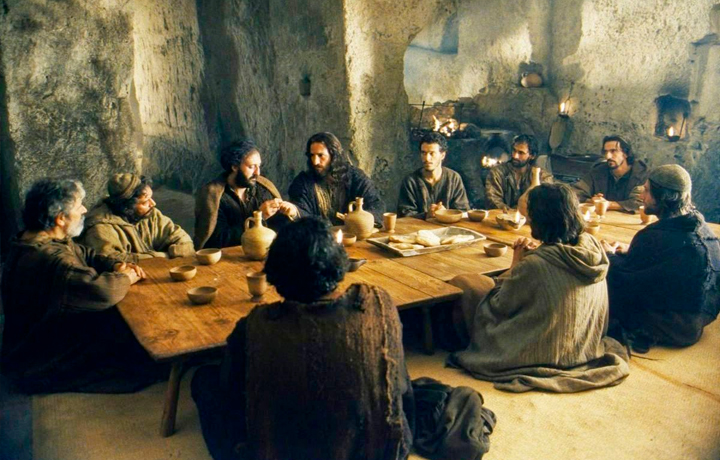
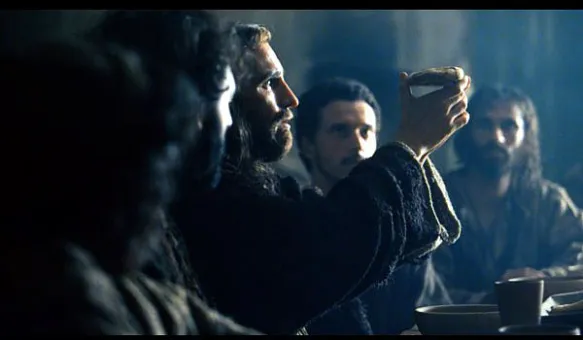
The Easter Triduum begins with the Holy Mass of the Lord's Supper. The common thread of the whole celebration is the Paschal Mystery of Christ. The supper in which Jesus, before giving himself up to death, entrusted to the Church the testament of his love and instituted the Eucharist and the priesthood. At the end, Jesus went to pray in the Garden of Olives, where he was later arrested. In the morning, the bishops gather with the priests of their dioceses and bless the holy oils. The washing of the feet takes place during the Mass of the Lord's Supper.
The liturgy of Holy Thursday is very rich in content. It is the great day of the institution of the Holy Eucharist, Heaven's gift to mankind; the day of the institution of the priesthood, a new divine gift that assures the real and actual presence of the Sacrifice of Calvary in all times and places, making it possible for us to appropriate its fruits. The moment was approaching when Jesus was going to offer his life for mankind. So great was his love, that in his infinite Wisdom he found the way to go and to stay at the same time.
St. Josemaría Escrivá, in considering the behavior of those who are obliged to leave their family and home to earn their living elsewhere, commented that man's love has recourse to a symbol: those who say goodbye exchange a memory, perhaps a photograph.... Jesus Christ, perfect God and perfect Man, does not leave a symbol, but the reality: He Himself remains. He will go to the Father, but He will remain with men. Under the species of bread and wine He is really present: with His Body, His Blood, His Soul and His Divinity.
How can we correspond to this immense love? By attending Holy Mass with faith and devotion.We are preparing ourselves very well for communion, with a clean soul. Preparing ourselves very well to receive Communion, with a clean soul. Visiting frequently Jesus hidden in the Tabernacle. In the first reading of the Mass, we are reminded of what God established in the Old Testament, so that the Israelite people would not forget the benefits received.
It goes down to many details: from how the paschal lamb should be, to the details that had to be taken care of to remember the passage of the Lord. If that was prescribed to commemorate some facts, which were only an image of the liberation from sin worked by Jesus Christ, how should we behave now, when we have truly been rescued from the slavery of sin and made children of God! This is the reason why the Church instills in us great care in everything that refers to the Eucharist.
Do we attend the Holy Sacrifice every Sunday and feast day, knowing that we are participating in a divine action? St. John relates that Jesus washed the feet of the disciples before the Last Supper. It is necessary to be clean, in the soul and in the body, to approach to receive him with dignity. That is why he left us the sacrament of Penance. We also commemorate the institution of the priesthood.
It is a good time to pray for the Pope, for the Bishops, for priests, and to pray for many vocations throughout the world. We will pray better to the extent that we have more contact with this Jesus of ours, who has instituted the Eucharist and the Priesthood. Let us say, in all sincerity, what St. Josemaría Escrivá used to say: Lord, put in my heart the love with which you want me to love you.
The Virgin Mary does not appear physically in today's scene, even though she was in Jerusalem in those days: we will meet her tomorrow at the foot of the Cross. But already today, with her discreet and silent presence, she accompanies her Son closely, in a profound union of prayer, sacrifice and self-giving.
John Paul II points out that, after the Ascension of the Lord into Heaven, he would assiduously participate in the Eucharistic celebrations of the early Christians. And the Pope adds: "That body given as a sacrifice and present in the sacramental signs was the same body conceived in her womb! To receive the Eucharist must have meant, for Mary, as if she were welcoming back into her womb the heart that had beat in unison with her own." (Ecclesia de Eucharistia, 56).
Even now the Virgin Mary accompanies Christ in all the tabernacles of the earth. We ask her to teach us to be souls of the Eucharist, men and women of sure faith and strong piety, who strive not to leave Jesus alone. May we know how to adore him, ask his forgiveness, thank him for his benefits, and keep him company.
Good Friday
"In admiring and truly loving the Most Holy Humanity of Jesus, we will discover one by one his wounds (...). We will need to enter into each of those most holy wounds: to purify ourselves, to rejoice in that redeeming blood, to strengthen ourselves. We will go like the doves who, according to Scripture, take shelter in the holes of the rocks at the hour of the storm. We hide in that shelter, to find the intimacy of Christ." How to live Holy Week - St. Josemaría, Friends of God, no. 302.
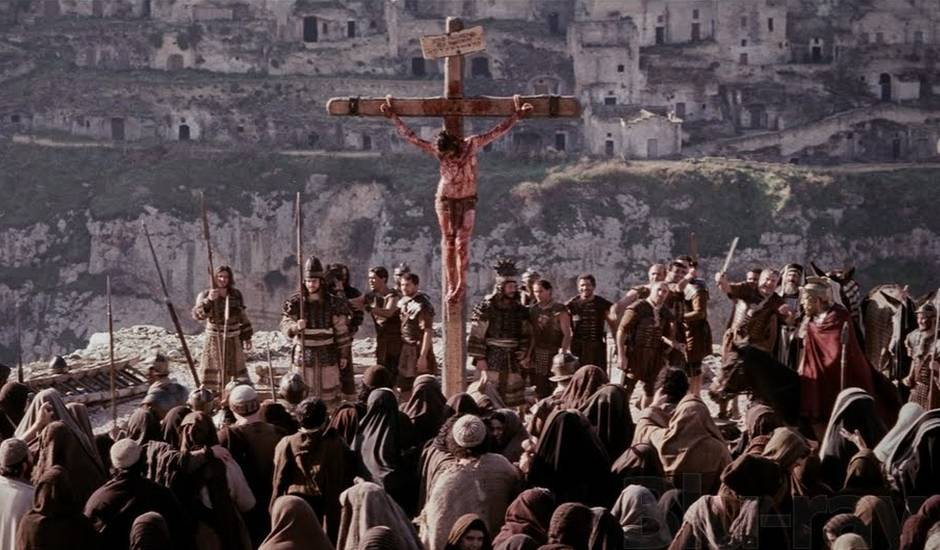
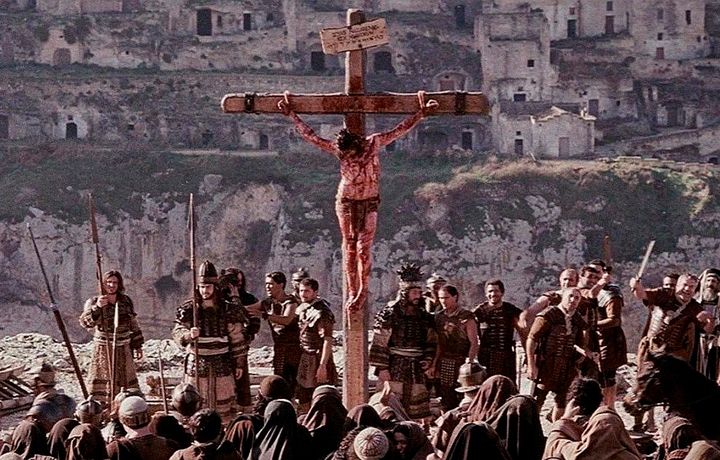
On Good Friday we reach the culminating moment of Love, a Love that wants to embrace everyone, excluding no one, with absolute self-giving. On that day we accompany Christ remembering the Passion: from the agony of Jesus in the Garden of Olives to the scourging, the crowning with thorns and death on the Cross. We commemorate it with a solemn Stations of the Cross and with the ceremony of the Adoration of the Cross. The liturgy teaches us how to live Holy Week on Good Friday.
It begins with the prostration of the priestsinstead of the usual initial kiss. It is a gesture of special veneration for the altar, which is naked, exempt from everything, evoking the Crucified One at the hour of the Passion. The silence is broken by a tender prayer in which the priest appeals to God's mercy: "Reminiscere miserationum tuarum, Domine", and ask the Father for the eternal protection that the Son has won for us with his blood.
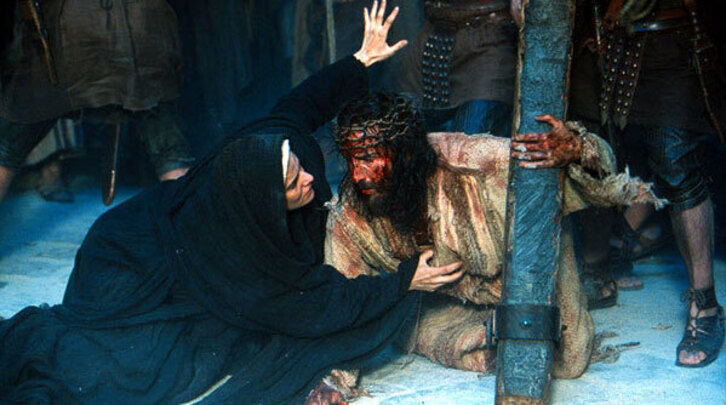
Today we want to accompany Christ on the Cross. I remember some words of St. Josemaría Escrivá, on a Good Friday. He invited us to relive personally the hours of the Passion: from the agony of Jesus in the Garden of Olives to the scourging, the crowning with thorns and death on the Cross. He said: The omnipotence of God bound by the hand of man, they lead my Jesus from one side to the other, amidst the insults and the pushing and shoving of the plebs.
Each one of us must see himself in the midst of that crowd, because our sins have been the cause of the immense pain that is being poured upon the soul and body of the Lord. Yes: each one of us carries Christ, who has become an object of mockery, from one place to another. It is we who, with our sins, cry aloud for his death. And He, perfect God and perfect Man, lets it be done.
The prophet Isaiah had foretold it: he was mistreated, he opened not his mouth; he was like a lamb led to the slaughter, like a sheep dumb before the shearers. It is only right that we feel the responsibility for our sins. It is logical that we should be very grateful to Jesus. It is natural that we seek reparation, because to our manifestations of unlove, He always responds with total love. In this time of Holy Week, we see the Lord as closer, more similar to his human brothers and sisters....
Let us meditate on some words of John Paul II: "He who believes in Jesus carries the Cross in triumph, as an unquestionable proof that God is love..... But faith in Christ is never taken for granted. The paschal mystery, which we relive during the days of Holy Week, is always current." (Homily, March 24, 2002). Let us ask Jesus, during this Holy Week, to awaken in our souls the awareness of being truly Christian men and women, because we live in the face of God and, with God, in the face of all people.
Let us not allow the Lord to carry the Cross alone. Let us joyfully accept the small daily sacrifices. Let us take advantage of the capacity to love, which God has granted us, to make resolutions, but without remaining merely sentimental. Let us sincerely say: Lord, no more, no more, no more! Let us pray in faith that we and all the people of the earth may discover the need to hate mortal sin and to abhor deliberate venial sin, which has caused so much suffering to our God.
How great is the power of the Cross! When Christ is an object of derision and mockery for the whole world; when He is on the Cross without wanting to tear Himself from those nails; when no one would give a penny for His life, the good thief - one like us - discovers the love of the dying Christ, and asks for forgiveness. Today you will be with me in Paradise.
What strength suffering has, when it is accepted with Our Lord! He is capable of drawing - from the most painful situations - moments of glory and life. That man who turns to the dying Christ finds the remission of his sins, happiness forever. We must do the same. If we lose our fear of the Cross, if we unite ourselves to Christ on the Cross, we will receive his grace, his strength, his efficacy.
And we will be filled with peace. At the foot of the Cross we discover Mary, faithful Virgin. Let us ask her, on this Good Friday, to lend us her love and strength, so that we too may know how to accompany Jesus. We turn to her with some words of St. Josemaría Escrivá, which have helped millions of people. Di: My Mother - yours, for you are his by many titles - may your love bind me to the Cross of your Son: may I not lack the Faith, nor the courage, nor the audacity, to fulfill the will of our Jesus.
Holy Saturday
"The work of our redemption has been accomplished. We are now children of God, because Jesus has died for us and his death has redeemed us". How to live Holy Week - St. Josemaría, Way of the Cross, XIV Station.
How to live Holy Week on Holy Saturday? It is a day of silence in the Church: Christ lies in the tomb and the Church meditates, in admiration, on what the Lord has done for us. However, it is not a sad day. The Lord has conquered the devil and sin, and in a few hours he will also conquer death with his glorious Resurrection.
"In a little while you will no longer see me, and in a little while you will see me again" Jn 16:16. On this day, love does not hesitate, like Mary, it keeps silent and waits. Love waits trusting in the word of the Lord until Christ rises resplendent on Easter Day. Today is a day of silence in the Church: Christ lies in the tomb and the Church meditates, in admiration, on what this Lord of ours has done for us.
Be silent to learn from the Master, as you contemplate his broken body. Each of us can and must join in the silence of the Church. And in considering that we are responsible for that death, we will strive to keep silent our passions, our rebelliousness, everything that separates us from God. But without being merely passive: it is a grace that God grants us when we ask him for it before the dead Body of his Son, when we strive to remove from our lives everything that distances us from him.
Holy Saturday is not a sad day. The Lord has conquered the devil and sin, and in a few hours He will also conquer death with His glorious Resurrection. He has reconciled us with the heavenly Father: we are now children of God! It is necessary that we make resolutions of thanksgiving, that we have the assurance that we will overcome all obstacles, whatever they may be, if we remain well united to Jesus through prayer and the sacraments. The world hungers for God, although it often does not know it.
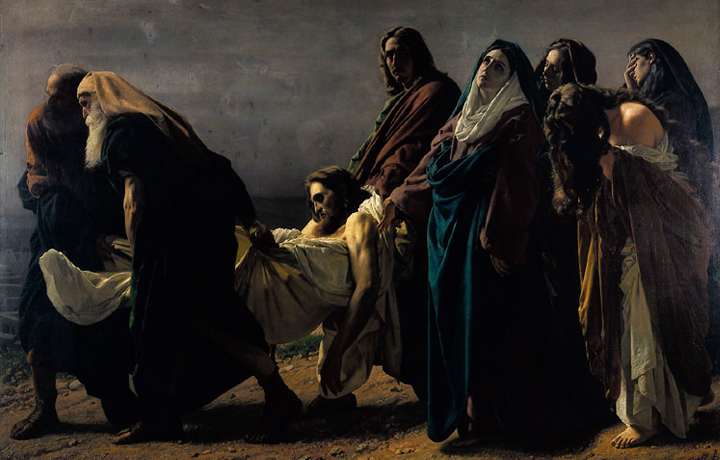
People are eager to be told about this joyful reality-the encounter with the Lord-and that is what we Christians are for. Let us have the courage of those two men - Nicodemus and Joseph of Arimathea - who during the life of Jesus Christ showed human respect, but who at the definitive moment dared to ask Pilate for the dead body of Jesus, in order to bury him. Or that of those holy women who, when Christ is already a corpse, buy scents and go to embalm him, without being afraid of the soldiers guarding the tomb.
At the time of the general disbandment, when everyone has felt entitled to insult, laugh and mock Jesus, they will say: give us that Body, which belongs to us. How carefully they would take him down from the Cross and look at his Wounds! Let us ask for forgiveness and say, in the words of St. Josemaría Escrivá: I will go up with them to the foot of the Cross, I will cling to the cold Body, the corpse of Christ, with the fire of my love..., I will unnail Him with my atonements and mortifications....I will wrap it in the new linen of my clean life, and bury it in my breast of living rock, from where no one can tear it from me, and there, Lord, rest!
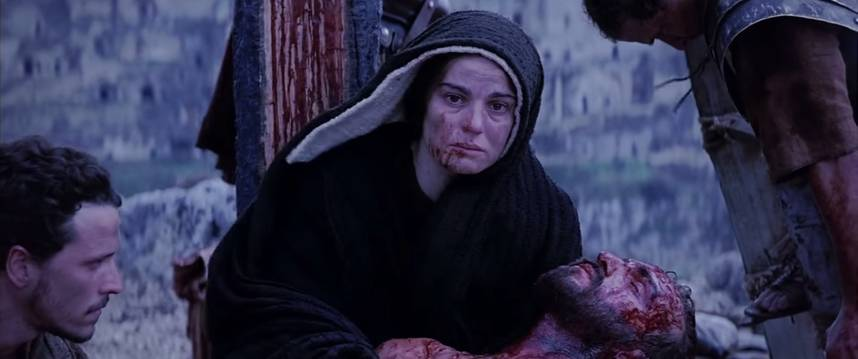
It is understandable that they placed the dead body of the Son in the arms of the Mother, before burying Him. Mary was the only creature capable of telling him that she perfectly understands his Love for mankind, since she was not the cause of these pains. The Most Pure Virgin speaks for us; but she speaks to make us react, so that we experience her sorrow, made one with the sorrow of Christ.
Let us make resolutions of conversion and apostolate, of identifying ourselves more with Christ, of being totally attentive to souls. Let us ask the Lord to transmit to us the saving efficacy of his Passion and Death. Let us consider the panorama that lies before us. The people around us expect us Christians to show them the wonders of the encounter with God.
It is necessary that this Holy Week - and then every day - be for us a leap of quality, a way of telling the Lord to enter totally into our lives. It is necessary to communicate to many people the new Life that Jesus Christ has obtained for us with the Redemption.
Let us turn to Holy Mary: Our Lady of Solitude, Mother of God and our Mother, help us to understand, as St. Josemaría writes, that we must make Christ's life and death our own.. To die by mortification and penance, so that Christ may live in us through Love. And then follow in the footsteps of Christ, with the desire to co-redeem all souls. To give one's life for others. This is the only way to live the life of Jesus Christ and become one with Him.
Easter Vigil
The celebration of the Easter Vigil on the night of Holy Saturday is the most important of all the celebrations of Holy Week, because it commemorates the Resurrection of Jesus Christ. The passage from darkness to light is expressed with different elements: fire, candle, water, incense, music and bells. The light of the candle is a sign of Christ, the light of the world, which radiates and floods everything. The fire is the Holy Spirit, kindled by Christ in the hearts of the faithful.
Water signifies the passage to new life in Christ, the source of life. The Easter alleluia is the hymn of the pilgrimage toward the Jerusalem of heaven. The bread and wine of the Eucharist are a pledge of the heavenly banquet. As we participate in the Easter Vigil we recognize that time is a new time, open to the definitive today of the glorious Christ. This is the new day inaugurated by the Lord, the day "which knows no sunset" (Roman Missal, Easter Vigil, Easter Proclamation).
Easter Sunday
"The Easter season is a time of joy, a joy that is not limited to that time of the liturgical year, but is always present in the heart of the Christian. Because Christ lives: Christ is not a figure who passed away, who existed at one time and then went away, leaving us a wonderful memory and example". How to live Holy Week St. Josemaría, Homily Christ present in Christians.
This is the most important and most joyful day for Catholics, Jesus has conquered death and has given us Life. Christ gives us the opportunity to be saved, to enter Heaven and live in the company of God. Easter is the passage from death to life. Resurrection Sunday marks the end of the Easter Triduum and Holy Week and inaugurates the liturgical period of 50 days called the Easter Season, which ends with Easter Sunday. Pentecost.
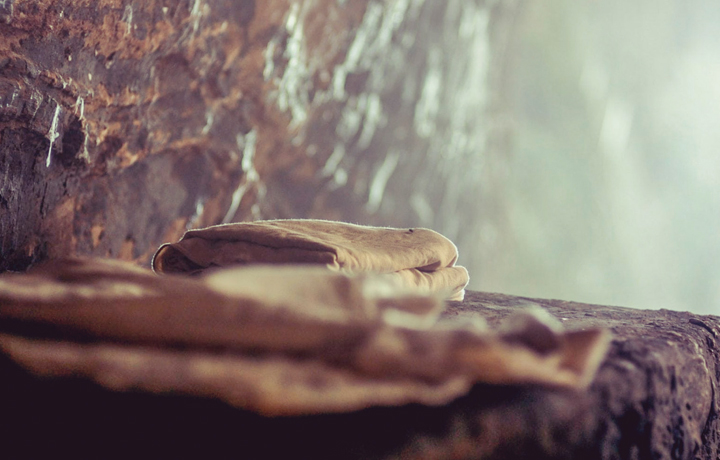
After Saturday, Mary Magdalene, Mary the mother of James, and Salome, bought perfumes to go and embalm Jesus. Very early in the morning, on the first day of the week, at sunrise, they went to the tomb. Thus begins St. Mark's account of what happened that early morning two thousand years ago, at the first Christian Easter. Jesus had been buried.
In the eyes of men, his life and his message had ended in the most profound failure. His disciples, confused and frightened, had dispersed. The same women who come to make a pious gesture, ask each other: who will take away the stone from the entrance of the tomb? Nevertheless," St. Josemaría Escrivá remarked, "they go ahead? Do we have this holy decision, or must we confess that we feel ashamed when we contemplate the decision, the fearlessness, the audacity of these women?".
To fulfill the Will of God, to be faithful to the law of Christ, to live our faith coherently, can sometimes seem very difficult. Obstacles present themselves that seem insurmountable. However, this is not so. God always wins. The epic of Jesus of Nazareth does not end with his ignominious death on the Cross. The last word is that of the glorious Resurrection. And we Christians, in Baptism, have died and risen with Christ: dead to sin and alive to God.
O Christ," we say with the Holy Father John Paul II, "how can we fail to thank you for the ineffable gift that you give us tonight! The mystery of your Death and Resurrection is infused in the baptismal water that welcomes the old and carnal man, and makes him pure with the same divine youth." (Homily, April 15, 2001).
Today the Church, filled with joy, exclaims: this is the day the Lord has made: let us rejoice and be glad in it! A shout of jubilation that will continue for fifty days, throughout the Easter season, echoing the words of St. Paul: since you have been raised with Christ, seek the good things that are above, where Christ is seated at the right hand of God. Set your whole heart on the goods of heaven, not on those of earth; for you have died and your life is hidden with Christ in God.
It is logical to think - and this is how the Tradition of the Church considers it - that Jesus Christ, once resurrected, appeared first of all to his Blessed Mother. The fact that she does not appear in the Gospel accounts, with the other women, is - as John Paul II points out - an indication that Our Lady had already met Jesus. "This deduction would also be confirmed - the Pope adds - by the fact that the first witnesses of the resurrection, by the will of Jesus, were the women, who remained faithful at the foot of the Cross and, therefore, more firm in the faith." (Hearing, May 21, 1997).
Only Mary had fully preserved her faith during the bitter hours of the Passion; therefore it is natural that the Lord appeared to her first. We must always remain close to Our Lady, but even more so during the Easter season.With what eagerness he had awaited the Resurrection! He knew that Jesus had come to save the world and that, therefore, He had to suffer and die; but he also knew that He could not be subject to death, because He is Life.
A good way to live Easter is to make an effort to share Christ's life with others.We are fulfilling the new commandment of charity, which the Lord gave us on the eve of his Passion: "By this shall all men know that you are my disciples, if you have love for one another. The Risen Christ now repeats it to each one of us. He tells us: truly love one another, strive every day to serve others, be attentive to the smallest details, to make life pleasant for those with whom you live.
But let us return to Jesus' encounter with his Blessed Mother. How happy Our Lady would be to contemplate that Most Holy Humanity - flesh of her flesh and life of her life - fully glorified! Let us ask him to teach us to sacrifice ourselves for others without being noticed, without even expecting to be thanked: may we hunger to go unnoticed, so as to possess the life of God and communicate it to others.
Today we address to him the Regina Caeli, a greeting proper to the Easter season. Rejoice, Queen of heaven, alleluia. / For he whom you deserved to carry in your womb, alleluia. / Has risen as you foretold, alleluia. / Pray to God for us, alleluia. / Rejoice and be glad, Virgin Mary, alleluia. / For the Lord is risen indeed, alleluia. How to live Holy Week? Let us ask God that this week that is about to begin may fill us with renewed hope and unwavering faith.
May it transform us into messengers of God to proclaim one more year that Christ, the Divine Redeemer, gives himself for his people on a cross out of love.