Guide for pilgrimage to the Holy Land

Benefits of making a pilgrimage to the Holy Land with the CARF Foundation

A pilgrimage to Holy Land is to open the pages of the "fifth gospel". To travel the roads where Jesus walked, to go to the places where he performed miracles, and to pray in the places where he carried out the redemption of men and his surrender to the extreme out of pure love. These experiences - lived as one more character - stir inside and soften even the hardest heart. The pilgrimage to the Holy Land that organized every year by the CARF Foundation facilitates openness to the Life that is poured out in the places where the Son of God lived. Throughout the trip, a priest accompanies us, provides spiritual care and celebrates Holy Mass daily. In addition, we select the guides who help us to achieve a full understanding of the holy places. It is also about a comfortable trip that facilitates contemplation and not having to be aware of other operational details, so we have full board in a four-star hotel and permanent transportation at our disposal. 

Four must-see places in the Holy Land  

Discover these four must-see places on your pilgrimage to the Holy Land which, of course, are included in the CARF Foundation itinerary.

1. Sea of Galilee 

Also known as Lake Tiberias, a freshwater lake fed by the Jordan River. It was the place where Simon, Andrew and their companions worked. It was the scene of numerous miracles of Jesus, such as walking on its waters or the multiplication of the loaves and fishes. On a pilgrimage to the Holy Land you can enjoy a boat ride on its calm waters and explore the towns and villages on the shores of the lake, such as Tiberias or Capernaum. 

2. The Basilica of the Nativity

Located in the city of Bethlehem, whose name means "house of bread", the basilica of the Nativity is one of the most sacred sites of Christianity. It was built over the birthplace of Jesus. Its impressive architecture combines Byzantine and Crusader elements. The highlight is the grotto of the Nativity, where tradition places the exact spot where Mary gave birth to Jesus.

Despite invasions, earthquakes and restorations throughout its history, much of the original structure built in the 4th century still stands. One of the most curious aspects of the building is the so-called Door of Humility, a small entrance through which visitors must shrink to enter. It is said that this gate was built to prevent people on horseback from passing through without dismounting, recalling the humility that characterized the birth of Jesus in a stable. This gate also has a deeper meaning as a reminder that all who enter God's presence must do so with a humble heart.

peregrinación a tierra santa

3. Holy Sepulcher, Jerusalem

The Holy Sepulchre of Jerusalem was built by Emperor Constantine in the 4th century A.D. on the site where Jesus Christ is believed to have been crucified, buried and resurrected. Over the centuries, it has suffered damages, reconstructions and divisions among the different Christian denominations. Today, it is guarded by several Christian denominations, mainly the Greek Orthodox Church, the Armenian Apostolic Church and the Roman Catholic Church - through the Franciscan Custody of the Holy Land - who share the responsibility of maintaining and administering the site. The Holy Sepulchre is located in the heart of the Old City of Jerusalem, in the Church of the Holy Sepulchre, a complex that includes:

El Santo Edicule: This small structure houses the tomb of Jesus, the only empty tomb in history. This is the place where Jesus was resurrected.

The chapel of Calvary or Golgotha: In the same church is the site traditionally identified as Mount Calvary or Golgotha, where Jesus was crucified. Pilgrims can see a crack in the rock that is believed to have formed during the earthquake that occurred at the time of Jesus' death.

The Angel Chapel: In the vestibule of the Edicule there is a chapel dedicated to the Angel who announced the Resurrection to the women who visited the tomb.

The Chapel of St. HelenaIn the complex, there is also the Chapel of St. Helena, a 12th century Armenian church dedicated to the mother of Emperor Constantine, who is believed to have found the cross of Christ in Jerusalem.

The Chapel of the Invention of the Cross: This is the deepest point of the Holy Sepulcher. It is the place where St. Helena discovered the Veracruz, the nails, and the titulus of the Crucifixion. After the destruction of Jerusalem in the year 70, the emperor Hadrian erected a temple to Jupiter on the site, thanks to which St. Helena, mother of another emperor - Constantine - knew the exact location of the relics.

4. Cenacle, Jerusalem

In the Upper Room, on Mount Zion, is where Jesus celebrated the Last Supper, when he instituted the Eucharist and washed the feet of his disciples.

It is a room about 15 meters long and 10 meters wide, practically empty of ornaments and furnishings. Several pilasters on the walls and two columns in the center, with reused ancient capitals, support a vaulted ceiling. In the keystones there are remains of reliefs with figures of animals, in particular, a lamb can be recognized. 

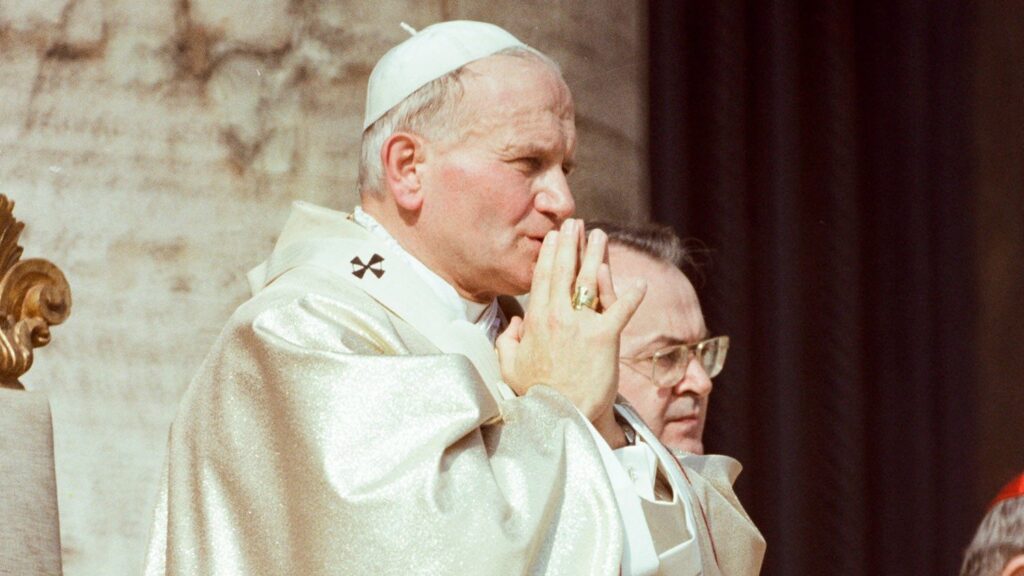
At present, it is not possible to worship in the Cenacle, because Jewish tradition places the tomb of King David, a sacred place for the Jews, in the same place. Only two popes have enjoyed the privilege of celebrating Holy Mass in this room: St. John Paul II, on March 23, 2000, and Francis, on May 26, 2014. On our pilgrimage to the Holy Land, Mass is celebrated in a chapel nearby known as the Cenacolino.

How much does a pilgrimage to the Holy Land cost?

The cost of a pilgrimage to the Holy Land can vary greatly depending on factors such as the length of the trip, the quality of the type of accommodation or the number of activities you do. The pilgrimage to Holy Land with the CARF Foundation takes care of all logistical details. 

We travel with the help of Halcón Peregrinaciones, a well-known travel agency, which has preferential agreements with hotels and tourism service providers, allowing us to obtain very reasonable rates.

We also have a planned and optimized itinerary, in terms of time and distance, which allows us to reduce the costs associated with travel and accommodation changes that you would otherwise have.

Therefore, although an organized pilgrimage to the Holy Land may involve an initial cost, the efficiency and additional benefits make it a reasonable expense. In addition, the comfort and enriching experience provided by this type of experience makes it worth the price.

How many days are needed to visit the Holy Land?

The pilgrimage to the Holy Land organized by the CARF Foundation lasts eight days, enough time to explore and see the most important sites. 

It is organized to make the most of every second, with plenty of time for contemplation, meditation and prayer at the sacred sites.

What not to miss on a pilgrimage to the Holy Land?

On a pilgrimage to the Holy Land you cannot miss the unique opportunity to immerse yourself in the culture of Palestine and Israel. You can participate in religious devotions and ceremonies at the holy sites of Jerusalem, where the Christian faith is embedded in the history of mankind. 

Exploring the traditional markets and savoring the local cuisine will give you a glimpse into daily life in this very special region of the world. And it allows you to take the opportunity to meet people of diverse religious traditions and hear their personal stories of faith and convictions on our pilgrimage to the Holy Land.

The amazement of collaborating with God 1

In this Homily of Pope Francis the central issue is that of wonder. The readings chosen from the letter to the Ephesians (cf. Eph 1:2-14) and from the Gospel of St. Matthew (cf. Mt 28:16-20), suggest to Pope Francis that astonishment, that "astonishment" produced by the action of the Holy Spirit in the Church. We divide the exposition of the Pope's arguments into three points:

Amazement at the plan of salvation

1. St. Paul takes up a liturgical hymn that blesses God for his plan of salvation. And Francis says that our amazement at this plan of salvation should be no less than our amazement at the universe around us, where, for example, everything in the cosmos moves or stops according to the force of gravity. Thus, in God's plan through time, that center of gravity, where everything has its origin, meaning and purpose is Christ.

In the words of Francis, glossing St. Paul: "In Christ we have been blessed before creation; in Him we have been called; in Him we have been redeemed; in Him every creature is brought back to unity, and all, near and far, first and last, are destined, thanks to the work of the Holy Spirit, to be in praise of the glory of God". For this reason the Papa the Pope invites us to praise, bless, adore and give thanks for this work of God, this plan of salvation. 

That's right, taking into account that this 'plan' will meets us in the life of each one of usThe Catechism of the Catholic Church indicates that it leaves us free to respond to this loving plan, which originates in the heart of God the Father.

It is not, therefore, a plan that God has made behind our backs, without counting on us or our freedom. On the contrary: is a loving project that presents us, and that fills the history of the world and human life with meaning., although many aspects of this plan are not fully known to us and may be known at a later date.

And Francis asks us all: "How is your wonder? Do you sometimes feel wonder? Or have you forgotten what it means?". Indeed. It is very convenient to marvel at God's gifts.Otherwise, we may enter, first, into habituation and then into meaninglessness.

In a train, Antoine de Saint-Éxupéry observed in The Little Prince (ch. XXII), it is the children who are left with their noses pressed to the windows, while the adults continue in other routine occupations.

"This, dear brothers and sisters, is a minister of the Church: someone who knows how to marvel at God's design and in this spirit passionately loves the Church, ready to serve in her mission wherever and however the Holy Spirit wills." Pope Francis, St. Peter's Basilica, marts, August 30, 2022.

 The amazement that God offers to collaborate with us

2. Secondly, Pope Francis observes that If we now enter into the call that the Lord makes to the disciples in Galilee, we discover a new amazement.. This time it is not so much because of the plan of salvation itself; but because, surprisingly, God involves us in this plan, He involves us in the. The Lord's words to his eleven disciples are: "Go (...) make disciples of all nations, baptizing them in the name of the Father and of the Son and of the Holy Spirit, teaching them everything I have commanded you" (Mt 28:19-20); and then the final promise that instills hope and consolation: "I will be with you always, even to the end of the age" (v. 20).

And Peter's successor points out that these words of the risen Jesus "still have the power to make our hearts vibrate, two thousand years later" Why? Because it is amazing that the Lord decided to evangelize the world starting from that poor group of disciples. 

Don Ramiro Pellitero reflexiona sobre la homilía del Papa con los nuevos cardenales, donde la cuestión central es la del asombro.

Here one might ask if only Christians enter into this plan of salvation or if only they collaborate in it. In reality any person -and all other beings, according to their own being. enter into these loving plans of God. At the same time, Christians, by divine election (before the constitution of the world, cf. Eph. 1:4), have a special place in this project, similar to that which Mary, the twelve apostles and the women who followed the Lord from the beginning had. This is what God does: he comes to some through others.

What does Pope Francis seek in raising this need for 'awe' to the new cardinals?

Pope Francis himself has said so, and this is also true for all Christians. To make us aware of our littleness, of our disproportion to collaborate in the divine plans. To free us from the temptation to feel "at the height" of the divine plan. (most eminent, as the cardinals are called), to lean on a false security, perhaps thinking that the Church is great and solid....

All this, Francis says, has some truth in it (if we look at it with the eyes of faith, since it is God who has called us and gives us the possibility of collaborating with Him). But it is an approach that can lead us to to be fooled by "el Mentiroso" (the Liar) (i.e. the devil). And become, first, "worldly" (with the worm of spiritual worldliness); and secondly "harmless", that is, without strength and without hope to collaborate effectively in salvation.

The wonder of being Church

3. Finally, the Bishop of Rome points out that the whole of these passages awakens (or should awaken) in us "the wonder of being Church"; of belonging to this family, to this community of believers that forms one body with Christ, since our baptism. It is there that we have received the two roots of wonder as we have seen: first to be blessed in Christ and second to go with Christ into the world.

And Francisco explains that it is an astonishment that neither diminishes with age nor declines with responsibility.s (we could say: with the tasks, gifts, ministries and charisms that each of us can receive in the Church, at the service of the Church and the world).

At this point, Francis evokes the figure of the saintly Pope Paul VI and his programmatic encyclical Ecclesiam suamwritten during the Second Vatican Council. Pope Montini says there: "This is the hour in which the Church must deepen her awareness of herself, [...] of her own origin, [...] of her own mission.". And referring precisely to the Letter to the Ephesians, he places this mission in the perspective of the plan of salvation; of "the dispensation of the mystery hidden for ages in God... that it might be made known... through the Church" (Eph 3:9-10).

Francisco He uses St. Paul VI as a model to present the profile of what a minister in the Church should be like.He who knows how to marvel at God's plan and passionately loves the Church in that spirit, ready to serve his mission wherever and however the Holy Spirit wills. Such was, before St. Paul VI, the apostle to the Gentiles: with this ability to be astonished, to be passionate and to serve. And that should also be the measure or thermometer of our spiritual life.

Pope Francis concludes by once again addressing to the Cardinals some questions that are useful to all of us; for we all - faithful and ministers in the Church - participate, in very different and complementary ways, in that great and unique "ministry of salvation" which is the mission of the Church in the world:

"How is your ability to be amazed? Or have you gotten used to it, so used to it, that you've lost it? Are you capable of being amazed again?" He warns that it is not a simple human capacity, but above all a grace of God that we must ask for and be grateful for, guard and make fruitful, like Mary and with her intercession.


Mr. Ramiro Pellitero IglesiasProfessor of Pastoral Theology at the Faculty of Theology of the University of Navarra.

(1) Published in Church and new evangelization.

The 7 sorrows of Our Lady: What are they?

The feast of Passion week reminds us especially of the participation of the Virgin Mary in the sacrifice of Christ, represented by the 7 sorrows of the Virgin.

The feast of Our Lady of Sorrows conveys the compassion that Our Lady feels for the Church, always subjected to trials and persecutions.

Brief historical review

Around the year 1320, the Virgin Mary manifested herself to St. Bridget in a place in Sweden. On this occasion, her heart was wounded by 7 swords. These wounds represented the 7 sorrows of the Virgin Mary experienced at the side of her Son Jesus.

Then the suffering Virgin told St. Bridget that those who prayed remembering her pain and sorrow would receive 7 special graces: peace in their families, confidence in God's action, consolation in their sorrows, defense and protection from evil, as well as the favors they ask of her that are not contrary to the will of Jesus. Finally, forgiveness of sins and eternal life to the souls who propagate her devotion.

Devotion to the Sorrowful Virgin took root among the Christian people, especially in the Servite Order, who devoted themselves to the meditation of the 7 sorrows of the Virgin Mary. And this same devotion was extended to the whole Church through Pope Pius VII in 1817.

Santa Brigida de Suecia. Donde la Virgen se apareció y le explico la devoción de los 7 dolores de la Virgen

Representation of the 7 sorrows of the Virgin Mary, antique stamp

The devotion of the 7 sorrows of the Virgin Mary

Meditating on Our Lady's sorrows is a way of sharing the deepest sufferings of Mary's life on earth. She promised that she would grant seven graces to the souls who honor and accompany her by praying 7 Hail Marys and an Our Father while meditating on the 7 sorrows of Our Lady. If you are experiencing any suffering today, take the opportunity to place your pain and mourning in the heart of the Virgin Mary.

First Sorrow: The Prophecy of Simeon at the Presentation of the Christ Child

Reading the Gospel of Luke (cf. 2:22-35)

The first of the 7 sorrows of the Virgin Mary was when Simeon announced to her that a sword of sorrow would pierce her soul for the sufferings of Jesus. In a certain way Simon manifested that the participation of the Virgin Mary in the redemption would be based on pain.

Imagine what a great impact she felt in Mary's heart when she heard the words with which Simeon prophesied the bitter Passion and death of her Son, Jesus.

Our Lady listens attentively to what God wants, ponders what she does not understand, and asks what she does not know. Then, she gives herself totally to the fulfillment of the divine will: behold the handmaid of the Lord, let it be done to me according to your word. Do you see the wonder? St. Mary, teacher of all our conduct, teaches us now that obedience to God is not servility, it does not subjugate the conscience: it moves us intimately to discover the freedom of the children of God. (It is Christ who passes by, 173).

Second Sorrow: The Flight to Egypt with Jesus and Joseph

Read the Gospel of Matthew (2:13-15)

It represents the second of the 7 sorrows of the Virgin, the one she felt when she had to flee with Joseph and Jesus suddenly and at night so far away in order to save her Son from the slaughter decreed by Herod. Mary experienced real sufferings when she saw that Jesus was already being persecuted to death as a baby. How many sufferings she experienced in the land of exile.

The Holy Gospel, briefly, makes it easier for us to understand the example of Our Mother: Mary kept all these things within herself, pondering them in her heart. Let us try to imitate her, dealing with the Lord, in a loving dialogue, with everything that happens to us, even the smallest events. Let us not forget that we must weigh them, evaluate them, see them with eyes of faith, in order to discover the Will of God (Friends of God, 284; Friends of God, 285).

Third Sorrow: The loss of Jesus - The Child lost in the Temple

Read the Gospel of Luke (2,41 -50)

The tears shed by the Virgin Mary and the pain she felt at the loss of your Son are the third of the 7 sorrows of the Virgin. Three days searching for him in anguish until she found him. found in the temple. In order to understand this, we can imagine that Jesus was lost at a very early age, still dependent on the care of Mary and St. Joseph. How distressing was Our Lady's grief when she realized that Jesus was not there.

"The Mother of God, who eagerly sought her son, lost through no fault of hers, who experienced the greatest joy in finding him, will help us to retrace our steps, to rectify what is necessary when, because of our lightness or sins, we fail to distinguish Christ. We will thus attain the joy of embracing Him again, to tell Him that we will not lose Him any more (Friends of God, 278).

Fourth Sorrow: Mary encounters Jesus on the road to Calvary

We read the IV Station of the Cross

In the fourth of the 7 sorrows of the Virgin Mary we think of the deep sorrow that the Virgin Mary felt when she saw Jesus carried with the crosscarrying the instrument of her own martyrdom. Let us imagine Mary meeting her Son in the midst of those who drag him to such a cruel death. Let us live the tremendous pain she felt when their eyes met, the pain of a Mother trying to support her Son.

Hardly has Jesus risen from his first fall, when he meets his Blessed Mother, beside the road through which he is passing.
With immense love Mary looks at Jesus, and Jesus looks at his Mother; their eyes meet, and each heart pours into the other its own sorrow. Mary's soul is flooded with bitterness, in the bitterness of Jesus Christ.
O you who pass by on the way, look and see if there is any sorrow comparable to my sorrow (Lam I, 12).

Fifth Sorrow: The Crucifixion and Agony of Jesus - Jesus dies on the Cross

Reading the Gospel of John (19:17-39)

This sorrow contemplates the two sacrifices on Calvary, that of Jesus' body and that of Mary's heart. The fifth of the 7 sorrows of the Virgin Mary is the suffering she felt when she saw the cruelty of the nails being driven into the hands and feet of her beloved Son. Mary's agony watching Jesus suffering on the cross; to give life to us. Mary stood at the foot of the cross and heard her Son promise heaven to a thief and forgive His enemies.

"Happy fault, sings the Church, happy fault, because she has achieved to have such a great Redeemer. Happy fault, we can also add, that we have merited to receive Holy Mary as our Mother. We are already sure, nothing should worry us anymore: because Our Lady, crowned Queen of heaven and earth, is the omnipotence supplicant before God. Jesus can deny nothing to Mary, nor can He deny anything to us, children of His own Mother (Friends of God, 288).

Sixth Sorrow: La Lanzada - Jesus is taken down from the Cross and handed over to his Mother.

Read the Gospel of Mark (15, 42-46)

We consider the pain Our Lady felt when she saw the spear thrown into the heart of Jesus. In the sixth of Our Lady's 7 sorrows, we relive the suffering Mary's Heart felt when the lifeless body of her beloved Jesus was taken down from the cross and placed in her lap.

Now, as we stand before that moment of Calvary, when Jesus has already died and the glory of his triumph has not yet been manifested, it is a good opportunity to examine our desires for Christian life, for holiness; to react with an act of faith to our weaknesses, and trusting in the power of God, to resolve to put love into the things of our day. The experience of sin should lead us to sorrow, to a more mature and deeper decision to be faithful, to truly identify ourselves with Christ, to persevere, whatever the cost, in that priestly mission that he has entrusted to all his disciples without exception, which urges us to be salt and light of the world. (Christ Is Passing By, 96).

Seventh Sorrow: The Burial of Jesus in the Sepulcher and the Loneliness of Mary

Reading the Gospel of John (19:38-42)

This is the infinite suffering that a Mother feels when burying your Son and although You know that on the third day He will rise again, the trance of death is real for the Virgin. Jesus was taken from her with the most unjust death in the whole world and Mary, who accompanied Him in all His sufferings, now remains alone and full of affliction. This is the last of Our Lady's seven sorrows and the hardest of all.

Scripture also sings of this love in glowing words: the abundant waters could not extinguish charity, nor the rivers sweep it away. This love always filled the Heart of Holy Mary, to the point of enriching her with the bowels of a Mother for all humanity. In the Virgin, love for God is also confused with solicitude for all her children. Her most sweet and attentive Heart must have suffered greatly, down to the smallest details - they have no wine - when she witnessed that collective cruelty, that cruelty which was, on the part of the executioners, the Passion and Death of Jesus. But Mary does not speak. Like her Son, she loves, keeps silent and forgives. That is the power of love (Friends of God, 237).

Los 7 dolores de la Virgen, comunicados a Santa Brigida para devoción de los cristianos.

Prayer for the 7 sorrows of the Virgin Mary.

O Sorrowful and Immaculate Heart of Mary, abode of purity and holiness, cover my soul with your maternal protection so that being always faithful to the voice of Jesus, I may respond to His love and obey His divine will.

I want, my Mother, to live intimately united to your Heart which is totally united to the Heart of your Divine Son.

Abide with us and give us your help, that we may turn struggles into victories, and sorrows into joys.

Our Lady of Sorrows, strengthen me in the sufferings of life.

Pray for us, O Mother, for you are not only the Mother of Sorrows, but also the Mistress of all graces. Amen.


Bibliography

The Cross, the Holy Spirit and the Church

Let us better understand the mystery of the cross and the Christian meaning of suffering in the Church. We should consider that "we were born there" and that is where our strength lies: in the love of God the Father, in the grace that Jesus won for us through his self-giving and in the communion of the Holy Spirit (cf. 2 Cor 13:14).

The Christian's interior life is identified with his relationship with Christ.. Well, this life passes through the Church, and vice versa: our relationship with the Church necessarily passes through our personal relationship with Christ. In this body of Christ all the members must become like Christ "until Christ is formed in them" (Gal 4:9).

Therefore, says Vatican II and the Catechism of the Catholic Church, "We are integrated into the mysteries of his life (...), we are united to his sufferings as the body to its head. We suffer with him in order to be glorified with him" (Lumen gentium, 7; CCC 793).

Solidarity in the Mystical Body through the Holy Spirit

The mystery of the cross of Christ, and with it the Christian meaning of suffering, is illuminated when we consider that it is the Holy Spirit who unites us in the Mystical Body (the Church). So much so that every Christian should one day be able to say: "I complete in my flesh what is lacking in the sufferings of Christ for the sake of his Body, which is the Church" (Col 1:24). And this, in order to accompany the Lord in his profound and total solidarity that led him to die for us, in reparation and expiation for the sins of all people of all times.

Santa Edith Stein

Jewess, philosopher, Christian, nun, martyr, mystic and co-patroness of Europe. She considers that man naturally flees from suffering. Whoever finds pleasure in suffering can only do so in an unnatural, unhealthy and destructive way.

cruz edith stein

On August 9, the feast of saint Edith Steinwhose testimony of conversion from Judaism to Catholicism has touched thousands of faithful.

And he writes, "Only someone whose spiritual eye is open to the supernatural connections of world events can desire the atonement; but this is only possible with persons in whom the Spirit of Christ lives, who receive his life, power, meaning and direction as members of the head" (E.Stein, Werke, XI, L. Gelber and R. Leuven [eds.], Druten and Freiburg i. Br.-Basel-Vienna 1983).

On the other hand," he adds, "the atonement connects us more intimately with Christ, just as a community is more deeply united when all work together, and as the members of a body are ever more strongly united in their organic interaction. And from this he draws a surprisingly profound conclusion:

But since "to be one with Christ is our happiness and to be one with Him is our blessing on earth, love for the cross of Christ is in no way opposed to the joy of our divine sonship" (froher Gotteskindschaft). Helping to carry the cross of Christ gives a strong and pure joy.And those who are allowed and able to do so, the builders of the Kingdom of God, are the most genuine children of God (Ibid.).

The Cross and divine filiation in St. Josemaría

As a seal (reinforcement and confirmation) that Opus Dei was truly of God and that it was born in the Church and for the service of the Church, St. Josemaría experienced in the early years of the Work difficulties and at the same time lights and consolations from God.

Years later he wrote: "When the Lord gave me those blows, around the year thirty-one, I did not understand. And suddenly, in the midst of that great bitterness, those words: you are my son (Ps. II, 7), you are Christ. And I only knew how to repeat: Abba, Pater, Abba, Pater, Abba, Abba, Abba, Abba!

Now I see it in a new light, as a new discovery: as one sees, as the years go by, the hand of the Lord, of divine Wisdom, of the Almighty. You have made me understand, Lord, that to have the Cross of Christ is to find happiness, joy. And the reason - I see it more clearly than ever - is this: to have the Cross is to identify oneself with Christ, to be Christ, and, therefore, to be a child of God" (Meditation, April 28, 1963, quoted by A. de Fuenmayor, V. Gómez-Iglesias and J. L. Illanes, El itinerario jurídico del Opus Dei. Historia y defensa de un carisma, Pamplona 1989, p. 31).

Jesus suffers for us. He bears all the pains and sins of the world. To overcome the immensity of evil and its consequences, he ascends the cross as a "sacrament" of the passion of love that God experiences for us.

Turning defeats into victories

As a fruit of the cross and on behalf of the Father, Jesus gives us the Holy Spirit, who unites us in his Mystical Body and gives us the life that comes from the pierced Heart. He invites us, in fact, to complete with our life (the greater part of it are small and ordinary things) what is lacking in the sufferings of Christ in and for this body that we form with Him, the Church.

Therefore, "what heals man is not the avoidance of suffering and flight from pain, but the ability to accept tribulation, to mature in it and to find meaning in it through union with Christ, who suffered with infinite love" (Benedict XVI, Encyclical Spe Salvi, 37).

Two years ago, on the feast of the Exaltation of the Holy Cross, and in his homily at Santa Marta (14-IX-2018), Francis said that. the cross teaches us this, that in life there is failure and victory.. We must be able to tolerate and patiently endure defeats.

Even those that correspond to our sins because He paid for us. "Tolerate them in Him, ask forgiveness in Him" but never allow ourselves to be seduced by that chained dog that is the devil. And he advised us to be quiet at home, we were to take 5, 10, 15 minutes in front of a crucifixThe small crucifix on the rosary, perhaps: to look at it, because it is certainly a sign of defeat that provokes persecution, but it is also "our sign of victory because God has won there." In this way we can turn (our) defeats into (God's) victories.


Mr. Ramiro Pellitero Iglesias
Professor of Pastoral Theology, School of Theology, University of Navarra.

Published in Church and new evangelization.

The integration of ecclesial groups in parish life

What did we talk about in this meeting?

The development and implementation of movements and new ecclesial realities in the parishes implies a renewal and enrichment of the life of the Church. The acceptance by the parish priests and the commitment of these movements with the community that welcomes them also involves a series of challenges, for both, that must be carried out correctly so that these movements are revitalizers of the community and not "parallel groups". This topic was the focus of the Omnes Forum "The integration of ecclesial groups in parish life" which took place on Wednesday, September 20, at the Ateneo de Teología in Madrid. Antonio Prieto, Bishop of Alcalá de Henares, Eduardo Toraño, National Consiliary of Charismatic Renewal and María Dolores Negrillo, member of the Executive of Cursillos de Cristiandad.

What is a pilgrimage and what places to visit

Origin of the pilgrimages?

Pilgrimages date back to the first centuries of Christianity. One of the earliest documented records of Christian pilgrimages dates back to the 4th century, when sacred sites were identified in Holy Land associated with the life of Jesus Christ. This led an increasing number of pilgrims to travel to places such as Jerusalem, Bethlehem and Nazareth.

However, one of the most significant events in the history of pilgrimages was the discovery of the relics of St. Peter and St. Paul in Rome in the 1st century. Since then the Eternal City has become a favorite destination for pilgrims of all ages and nations.

When did Christian pilgrimages begin?

Over the centuries, important pilgrimage routes began to develop in Europe, such as the Camino de Santiago in Spain. These roads connected sacred places with each other and were traveled by pilgrims from all over the world.

Pope Francis encouraged people to visit the Marian shrines of Guadalupe, Lourdes and Fatima: "oases of consolation and mercy". General Audience on Wednesday, August 23, 2023 in the Paul VI Hall.

8 Catholic pilgrimage sites

We review below the main pilgrimage sites of the Catholic Church. Holy places since ancient times and some sanctuaries and basilicas dedicated to the Virgin Mary, which attract a multitude of pilgrims.

Every year the CARF Foundation organizes pilgrimages, in collaboration with travel agencies and specialists in religious tourism, with an important participation of benefactors and friends, who share these unique and unforgettable experiences. A different way to get closer to the Lord.

Pilgrimage to the Holy Land

At Holy Land Jesus was born, lived and died. Its roads are the pages of the "fifth gospel". It was also the scene of the events of the Old and New Testament. It was a land of battles, such as the Crusades; the object of political and religious disputes.

Among the places you can visit is Jerusalem in Israel, the city where Christ did part of his public life and where he entered in triumph on Palm Sunday. You can also visit the Holy Sepulcher, the Wailing Wall, the Church of the Multiplication of the Loaves and Fishes, the Church of the Condemnation and Imposition of the Cross, the Church of the Visitation, the Basilica of the Nativity, and much more.

Pilgrimage to Rome and the Vatican

Rome, the Eternal City, is home to the Vatican City, the heart of the Catholic Church. It features St. Peter's Basilica and the Vatican Museums, which house masterpieces such as Michelangelo's Sistine Chapel frescoes. On the outskirts of Rome are the Catacombs of St. Callixtus, also known as the Crypt of the Popes.

Pilgrimage to Rome offers the opportunity to experience the Catholic Church as a mother. It is an experience that strengthens faith and helps to live in communion with the tradition and teachings of the Catholic Church.

Pilgrimage to Santiago de Compostela

In Spain we have one of the most important Catholic pilgrimages in the world, Santiago de Compostela. In the 12th century, thanks to the impulse of Archbishop Diego Gelmirez (1100-1140), the Cathedral of Santiago was consolidated as a destination for millions of Catholic pilgrims. Last Xacobeo 2021-2022 year, 38,134 pilgrims from all over the world walked the route.

There are different routes to make this pilgrimage. The most used of all is the French Way. It is the route par excellence, traditionally used by pilgrims from all over Europe and has the most complete network of services, accommodation and signposting of all.

Marian pilgrimage to the shrine of Medjugorje

Located in Bosnia Herzegovina, the town of Medjugorje is famous for the numerous apparitions of the Virgin Mary from 1981 to the present day. Although the Church has not yet officially recognized these apparitions, Pope Francis authorized in 2019 the organization of official pilgrimages of dioceses and parishes, giving it an official character.  

The Sanctuary surrounded by mountains where the image of the Virgin Mary is located. Our Lady of Medjugorjeis an essential stop for pilgrims in search of solace, healing and a profound faith experience.

Marian pilgrimage to the basilica of the Virgen del Pilar

The Cathedral-Basilica of the Virgin of Pilar is the first Marian temple of Christianity. Tradition has it that in the year 40 of the first century, the Virgin appeared to the apostle Santiago, who was preaching in what is now Zaragoza.

The basilica, with its impressive architecture and atmosphere of recollection, is an ideal space for prayer and meditation. Pilgrims come to this sacred place to pay homage to the Virgin of Pilar, patron saint of Latin America. On October 12, the celebration of the festivity, offerings of flowers and fruits are made. Also on that day takes place the crystal rosary, a parade of 29 crystal floats that are internally illuminated and represent the mysteries of the rosary.

Marian pilgrimage to the sanctuary of Torreciudad

Located in the province of Huesca, Spain, this sanctuary is a place of great Marian devotion and is known in the region for being a natural enclave of great beauty. 

Pilgrims come to pay homage to Our Lady of Torreciudad and experience a conversion of heart, especially through the sacrament of confession. 

This shrine, erected thanks to the impulse of St. Josemaría Escrivá de Balaguer, attracts faithful from all over the world who seek to strengthen their relationship with the Virgin Mary and grow in their faith. The feast of Our Lady of Torreciudad is celebrated on the Sunday following August 15. Every year, it celebrates the multitudinous Marian Family Day which takes place on a Saturday in September.

Marian pilgrimage to the sanctuary of Our Lady of Fatima (Portugal)

This is one of the most important Marian shrines. Where the Virgin Mary appeared Our Lady of Fatima in 1917 to three little shepherds (Lucia, Francisco and Jacinta).

The sanctuary of Fatima is composed of several chapels and basilicas. The main one is the basilica of Our Lady of the Rosary where the tombs of the three seers are located. The exterior is flanked by a colonnade of about 200 columns. Inside there are 14 altars that also represent the Stations of the Cross.

The climate of prayer at Fatima has left an indelible mark on the faith of generations of Catholics, making this shrine a point of encounter with the divine and a symbol of the intercession of the Virgin Mary in the history of mankind.

Marian pilgrimage to the sanctuary of Lourdes (France)

It is the place of pilgrimage for the sick par excellence. From the grotto of Massabielle, where the Virgin Mary appeared to St. Bernadette, a spring of pure water gushed forth from which water has never ceased to flow. A miraculous water responsible for countless cures. Visitors also leave thousands and thousands of candles in thanksgiving or for a petition.

On the rock where the grotto is located, the Basilica of the Immaculate Conception was erected, inaugurated in 1871. Lourdes is also home to the Basilica of Our Lady of the Rosary.