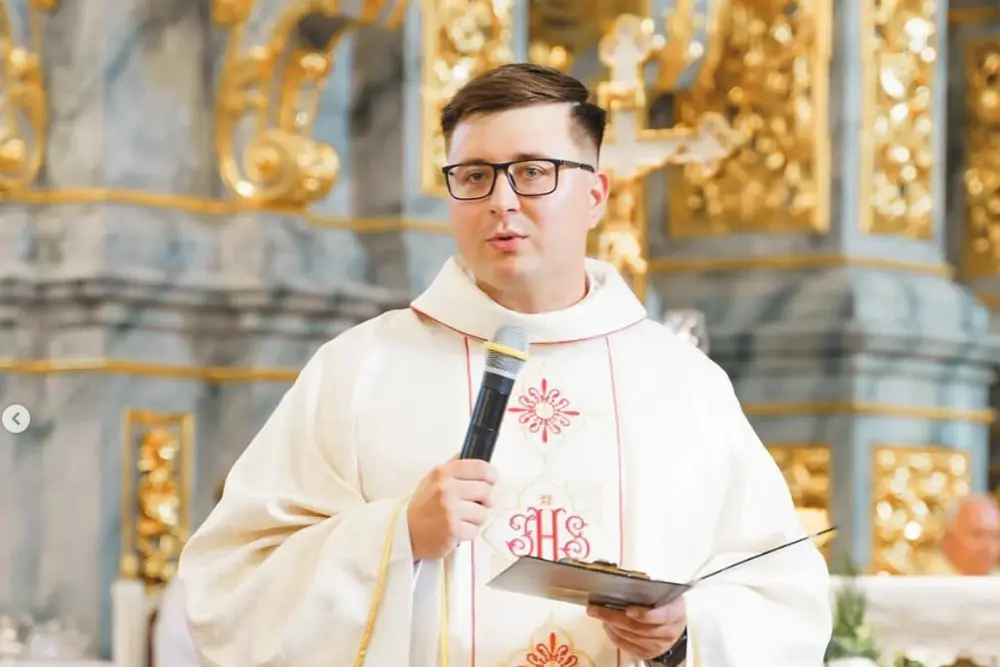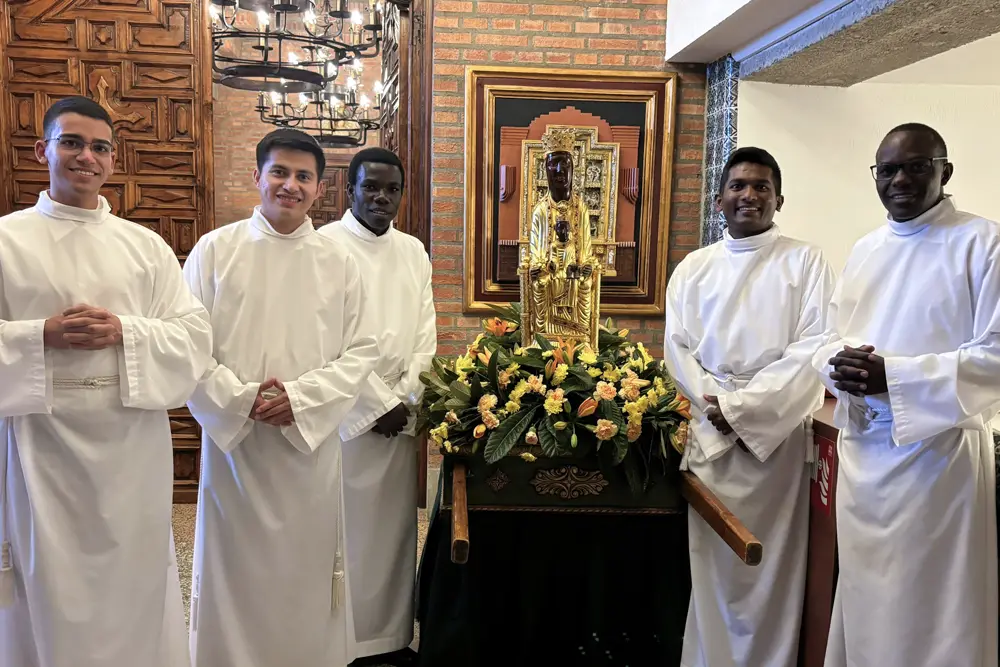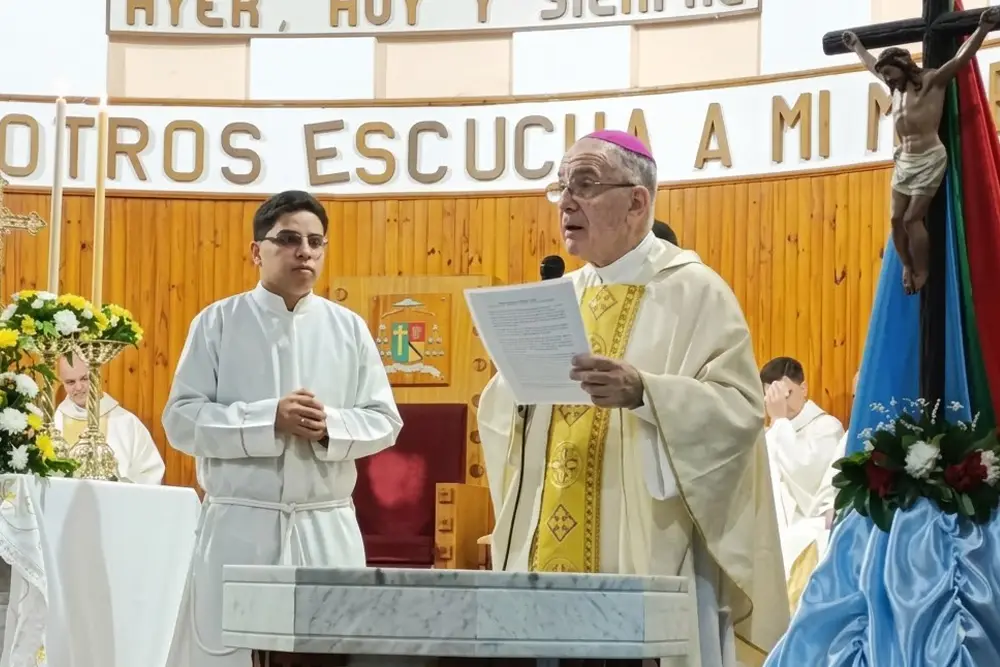
From the earliest centuries of the Church, the manner of dress has been an outward sign of an inner reality. The word cassock comes from Italian sottana, which means "under", referring to the tunic worn under other garments. However, its theological meaning goes much further: it is a sign of "death to the world" in order to be born to a new life in Christ. Almost the same could be said of the habit of the religious.
The distinction in the dress of the consecrated is not a medieval invention. Already in the Old Testament, God instructs Moses in detail about the garments of Aaron and his sons:
"And thou shalt make holy garments for Aaron thy brother, for honor and for beauty." (Exodus 28:2).
In the New Testament, The robe of Christ, "seamless, woven in one piece from top to bottom" (Jn. 19:23), becomes the model of unity and simplicity for the priest. St. Paul also exhorts us to "put on the new human condition" (Eph 4:24), something that the religious habit symbolizes in a physical and constant way.
In the early centuries, clergymen did not dress very differently from laymen, but they did dress with more sobriety and modesty. After the fall of the Roman Empire, while civil fashion evolved towards short garments, the Church kept the long Roman tunic as a sign of stability and rejection of passing fashions.
The classic cassock, the talar suit, is more than just a piece of black cloth; every detail has a reason:
| Element | Meaning |
| Black color | It symbolizes poverty and renunciation of vanities and death to the world. The Pope, and in warm and tropical areas, uses the color white. |
| The myth of the 33 buttons | Although it could represent the 33 years of Jesus' earthly life. Almost no cassock wears them for a question of the priest's stature. |
| The collar | It could be a reminder of purity. It is also associated with the ring worn by married couples. It becomes common in the Church in the 18th century. |
| The girdle | It would symbolize the yoke of readiness for service. Its colors vary according to the rank of the clergyman. |
Cardinals usually wear a sundress (round skullcap to cover the head; from the Latin word for "cardinal"). soli Deo, The bishops wear a red (scarlet) girdle and sash, while the bishops wear a purple (violet) sash and noodle, as do the archbishops and monsignors. The pope is reserved the white sash and solideo. There are religious priests and seminarians who wear the black sash. But different are the choir habits that wear almost completely the colors of the rank of each clergyman.
Unlike the cassock (proper of the secular clergy), the habits of the religious orders (such as Dominicans, Franciscans or Carmelites) include elements such as the scapular -The hood or cord, reflecting the specific charism of each community, is a sign of the Virgin Mary's protection.
White: purity and resurrection
White symbolizes Easter joy, purity of life and total surrender to the Virgin Mary.
The black habit: penitence and death to the world
Traditionally, black has been the color of mourning and renunciation. By wearing black, the religious indicates that he has "died to the world" and lives only for God.
The brown habit: the humility of the earth
The brown color is closely linked to the earth (humus), from which the word humility.
The gray habit: renunciation and simplicity
The gray, often called the "ash habit", symbolizes constant conversion.
Bicolor or special habits
There are orders that combine colors to express mixed charisms:
Here's a thought for you: the habit does not make the monk, but it helps him. The vestment is a constant reminder to the consecrated person of who she belongs to. It also helps her to distinguish herself among all people, to be a wake-up call to transcendence and to be able to ask for their help and service since it is easy to locate them. In the CARF Foundation, We support seminarians and priests and religious throughout the world so that, whatever the color of their habit or cassock, they may always be the light of Christ in the midst of society.
As we often reflect at the CARF Foundation, the priest is a "bridge" between God and mankind. Seeing a priest in his cassock on the street is often an opportunity of grace for those who look at him: it provokes a question, a prayer or even a spontaneous confession. It is a sacramental that sanctifies the public space.
[Curiosity]
Did you know? The color of the buttons and piping indicates the hierarchy: black for priests, purple for bishops, prelates and monsignors; red for cardinals and total white for the Pope (tradition initiated by the Dominican Pope St. Pius V around 1566, the beginning of his pontificate).
Priestly dignity in the words of St. Josemaria
St. Josemaría Escrivá, founder of Opus Dei, lived with a constant passion for the figure of the priest, whom he called «the priest of Opus Dei".«Alter Christus, another Christ, the same Christ». These quotations underscore why the presbyter's bearing and identity are so relevant:
Church Instructions
The Holy See has insisted that the priest must be recognizable as such, not out of pride, but in order to be a sign of hope for the people of God:
As we have seen from a number of sources, the cassock and habit are much more than a tradition; they are a tool of apostolate and a wake-up call. An identified priest is a constant invitation to prayer and a refuge for those seeking spiritual comfort.
In the CARF Foundation, We work so that no seminarian is left without the human, theological and spiritual formation necessary to carry out this sacred ministry with dignity.
Do you want to be part of this mission? Your prayer is vital, but your financial support allows thousands of priests in needy countries to be formed and serve their communities with the excellence that God deserves.
If the world is to continue to have shepherds who put on Christ and carry his Word to every corner of the world, their good formation is essential. Many seminarians and diocesan and religious priests from around the world count on the support of the partners, benefactors and friends of the CARF Foundation to carry out their studies and receive a solid and integral formation in Rome or Pamplona.
Your donation makes it possible for the habit and the cassock to continue to be signs of hope in our streets.
For more content about the life of the Church and the formation of priests, follow us on our social networks: @fundacioncarf.
 carf@fundacioncarf.orgLandline: +34 914 029 082Mobile: +34 638 078 51145 Conde de Peñalver Street.