Many Catholics attend Mass every Sunday, but few have ever wondered what each gesture, each moment of silence, or each word really means. Understanding them is not a luxury reserved for priests or specialists with liturgical training.
The The purpose of the Catholic liturgy, whose center is the celebration of the sacraments and especially the Eucharist, is the communion of Christians with the body and blood of Christ.. It is the encounter of each one and of the Christian community as one body and one family, with the Lord.
The liturgy, the Pope notes, ensures that we can encounter Jesus Christ in the “here and now” of our lives, so that all our activities—our work, our family relationships, our efforts to improve society, and our efforts to help those in need—may be transformed into divine light and strength.
This is what Christ intended at the Last Supper. This is the meaning of his words: «Do this in remembrance of me.» Since then, he has been waiting for us at the Eucharist. Y the Church's evangelizing mission is nothing other than the call to the encounter that God desires with all the people of the world., a journey that begins with Baptism.
The objectives of this document are progressively stated on several occasions: "With this letter I would simply like to invite the whole Church to rediscover, guard and live the truth and strength of the Christian celebration." (No. 16); «to rediscover each day the beauty of the truth of Christian celebration» (before n. 20);
«…to rekindle a sense of wonder at the beauty of the truth of the Christian celebration; recalling the need for authentic liturgical formation and recognizing the importance of an art of celebration that it be at the service of the truth of the paschal mystery and of the participation of all the baptized, each one with the specificity of his or her vocation". (n. 62). Apostolic Letter Desiderio desideravi (June 29, 2022), by Pope Francis.
Lack of knowledge of the liturgy
One of the greatest risks to the Christian life is approaching the liturgy superficially, as a set of rituals repeated without understanding their true meaning. Another risk is thinking that faith depends solely on personal experience or human effort, forgetting that salvation is, above all, a free gift from God.
The liturgy reminds us precisely of that truth. In every celebration, we do not act in isolation, but as members of the Church gathered around Christ. Through the Word of God and the sacraments, the Lord comes to meet us and communicates his grace to us.
That is why fully participating in the liturgy is not just a matter of gaining a better understanding of the rites, but of allowing ourselves to be transformed by God’s action. Holiness does not come solely from our own efforts, but from our free response to the grace we receive in every celebration.
The liturgy occupies a central place in the life of the Church because it is the moment when Christ continues to act and make himself present through the Word, the sacraments, and the community gathered to celebrate the faith. In every Eucharist, we participate in the Paschal Mystery of his death and resurrection, the source of Christian life.
For this reason, caring for the liturgical celebration goes far beyond simply observing certain rites or ensuring that everything goes smoothly. The true beauty of the liturgy does not depend solely on the solemnity of the gestures or the quality of the music, but on the awareness with which the faithful participate in the mystery they are celebrating.
A solid liturgical formation helps us precisely to discover that deeper meaning. It teaches us to understand the signs, the silences, the words, and the liturgical seasons, so that we may experience each celebration as a genuine encounter with Christ and not merely as a custom.
The Second Vatican Council sought to restore the liturgy to its rightful place in the life of the Church, recalling that in the liturgy God takes the initiative and comes to meet his people. As St. Paul VI affirmed, the liturgy is «the primary source of divine life that is communicated to us», and it is a true school of spiritual life.
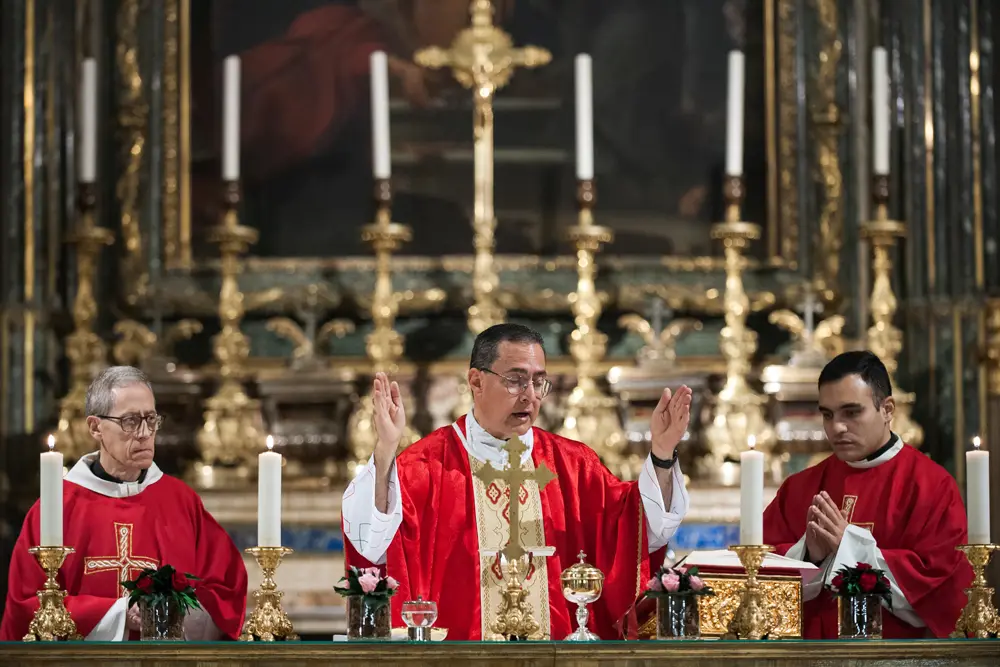
The liturgy is neither a private act nor an exclusively personal experience. Each celebration gathers the people of God around Christ and makes the communion of the Church visible. That is why the Second Vatican Council defines it as «the summit toward which the Church's mission is directed and, at the same time, the source from which all its strength flows» (Sacrosanctum concilium, 10).
When we participate in the Eucharist or any other sacrament, we do not live our faith in isolation. We are part of a community united by the same baptism and called to walk together toward God.
This communal dimension helps us move beyond an individualistic view of faith. The liturgy reminds us that we are members of the same Body and that Christ acts in the midst of his Church, nourishing our spiritual life and strengthening the communion among all the faithful.
That is why a good liturgical formation not only enables us to better understand the signs and rites, but also to discover that each celebration unites us with the whole Church and sends us forth to live the Gospel in our daily lives.
Liturgical formation is not merely about learning the meaning of the rites or gaining a better understanding of the texts of the Mass. Its true purpose is to help us discover that, in every celebration, it is Christ who acts and gathers the whole Church around Him.
Therefore, preparing for the liturgy involves learning about the meaning of the sacraments, understanding the significance of the gestures, words, and liturgical seasons, and cultivating a life of prayer that enables one to participate consciously and actively in each celebration.
At the same time, the liturgy itself shapes us. Every Eucharist, every sacrament, and every celebration of the liturgical year strengthens our faith and helps us to model our lives on Christ. It is not merely a matter of participating in rituals, but of allowing grace to transform the way we think, love, and serve others.
Liturgical signs play a fundamental role on this journey. Silence prepares the heart to listen to God; the proclamation of the Word enlightens the believer’s life; and bodily gestures—such as standing, sitting, responding, or kneeling—simply express the faith of the entire community. These signs are not mere customs, but a language that helps us live out the mystery we celebrate.
The family, the parish, and catechesis play a decisive role in passing on this language from childhood onward. Learning to make the sign of the cross, attending Sunday Mass, or discovering the meaning of the liturgical year are simple steps that help us grow in the Christian life and participate more deeply in the Church’s liturgy.
Priests play a vital role in helping the faithful experience the liturgy more deeply. Their task is not only to preside over the celebrations, but also to guide the community so that it may understand and participate fully in the mystery being celebrated.
Celebrating the liturgy well means doing so in fidelity to the Church, paying attention to every gesture, every word, and every sign, without turning the celebration into a routine or an expression of self-aggrandizement. When the liturgy is experienced with simplicity, beauty, and reverence, it facilitates an encounter with Christ.
This way of celebrating stems, above all, from the priest’s spiritual life. Prayer, a personal relationship with God, and a solid liturgical formation help him to carry out his ministry with humility and to always place Christ at the center of the celebration.
For this reason, liturgical formation plays an essential role in the preparation of future priests. Understanding the profound meaning of the liturgy and learning to celebrate it faithfully and with love will enable them, in the future, to guide Christian communities and help many of the faithful to participate in the sacraments in an increasingly conscious and fruitful way.
Further Reading
This article compiles and adapts the Church’s main teachings on liturgical formation, drawing particularly on the reflections of Romano Guardini, whose work had a profound impact on the liturgical renewal of the 20th century, as well as on the Church’s recent teaching.
Among the main references are:
This article is based on the work of Ramiro Pellitero Iglesias, professor of Pastoral Theology at the Faculty of Theology of the University of Navarra, and has been adapted and updated for readers of the CARF Foundation.
 carf@fundacioncarf.orgLandline: +34 914 029 082Mobile: +34 638 078 51145 Conde de Peñalver Street.