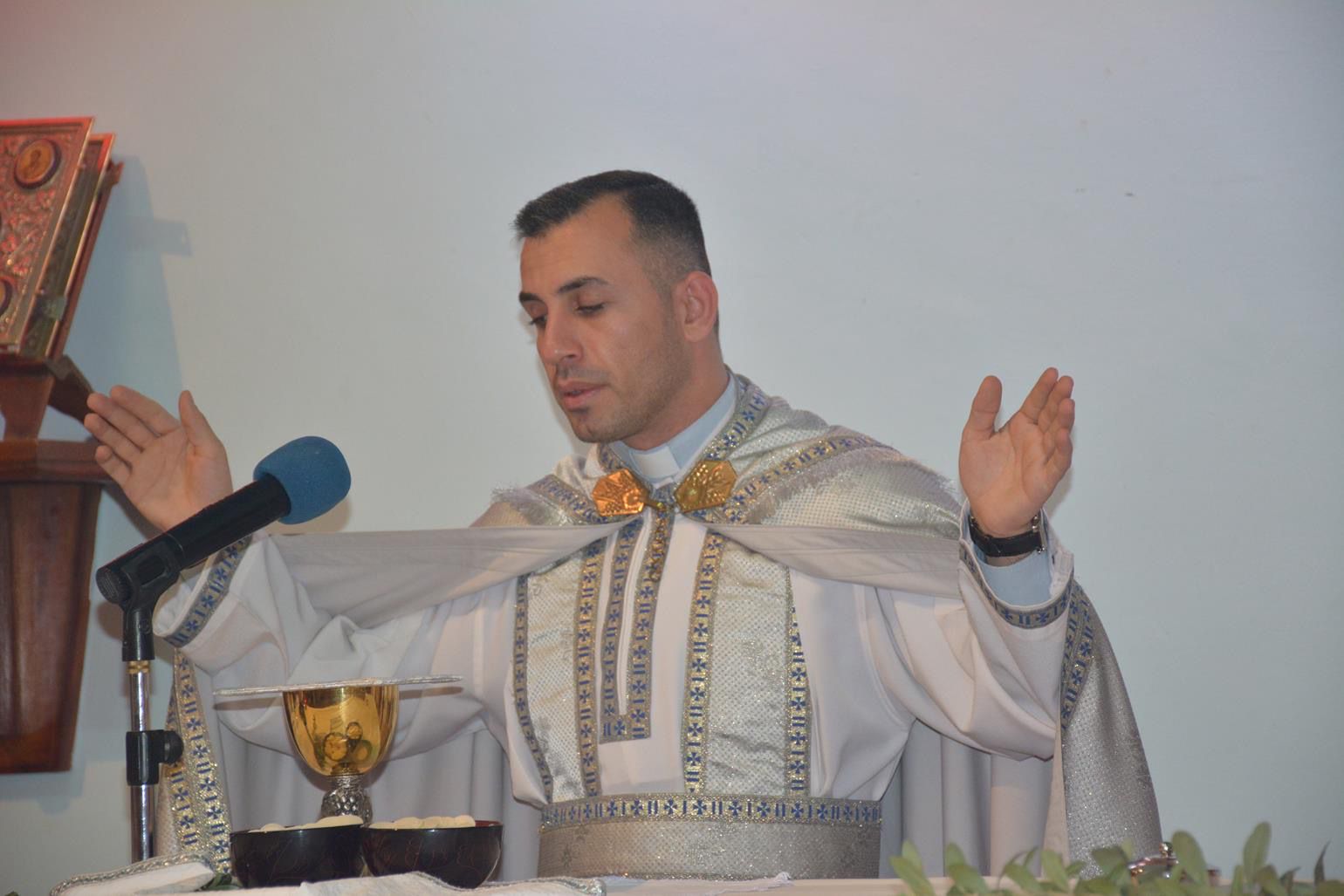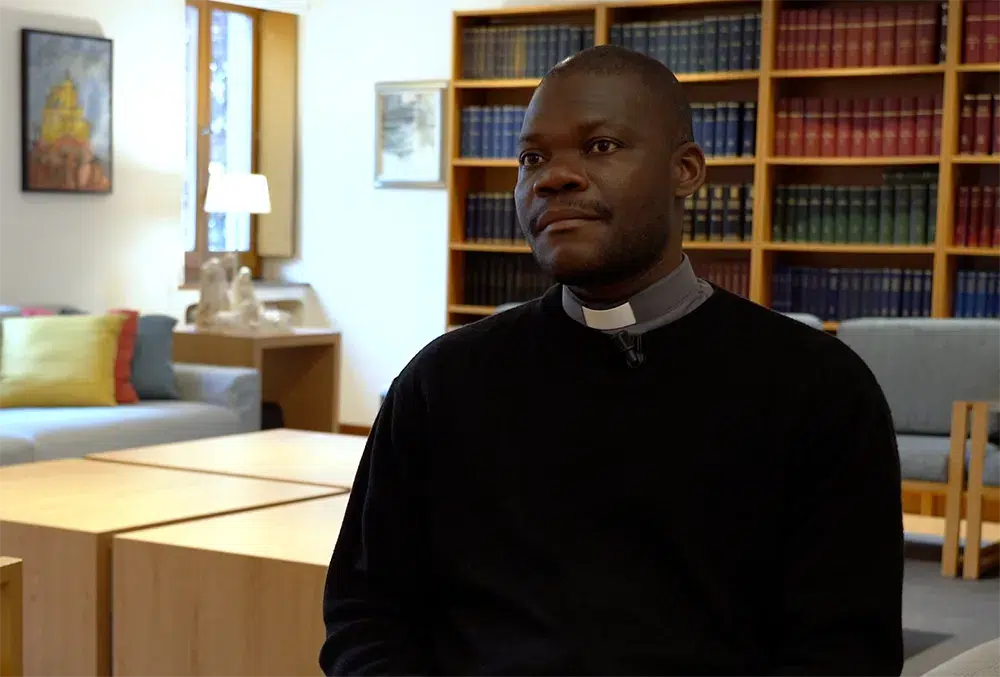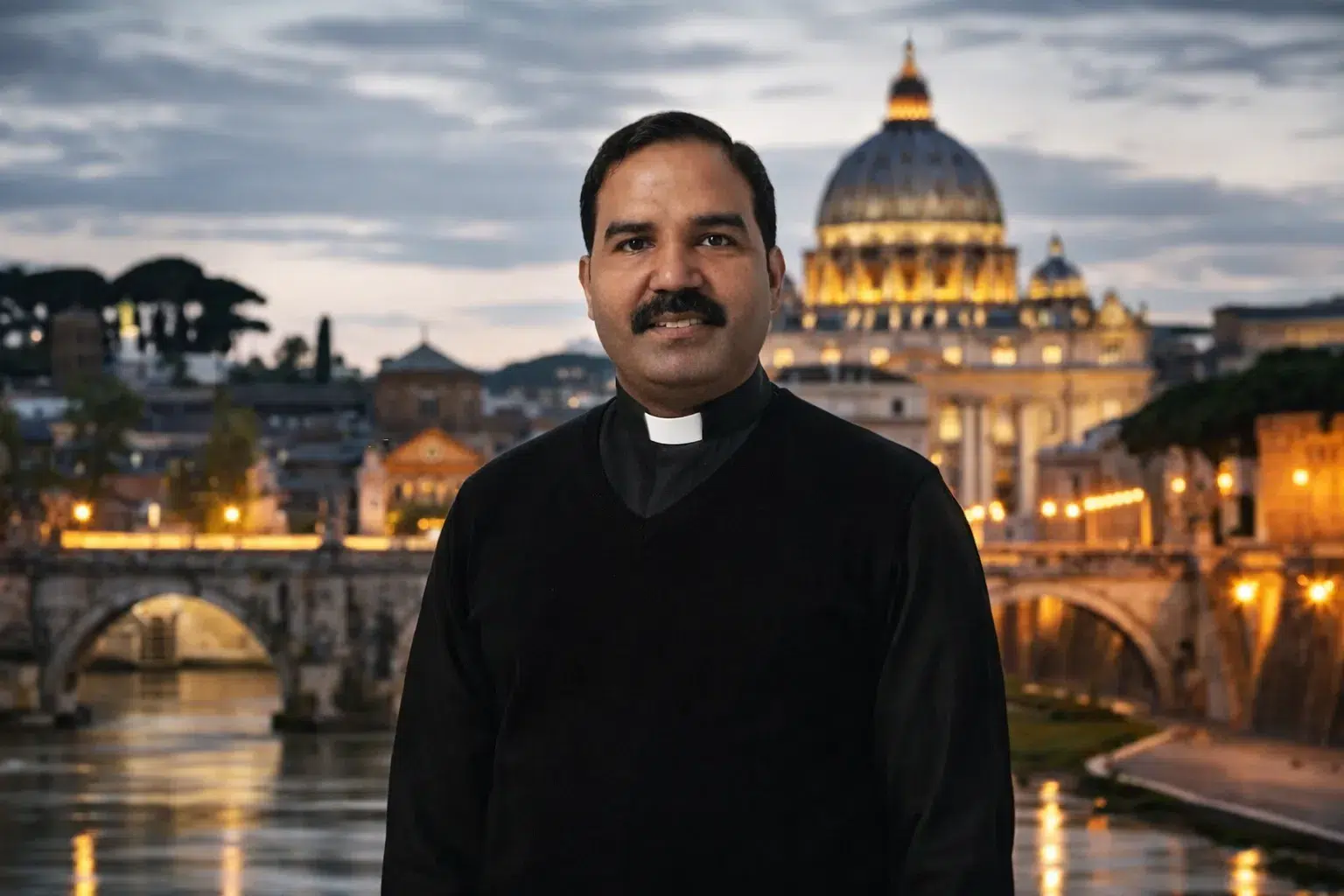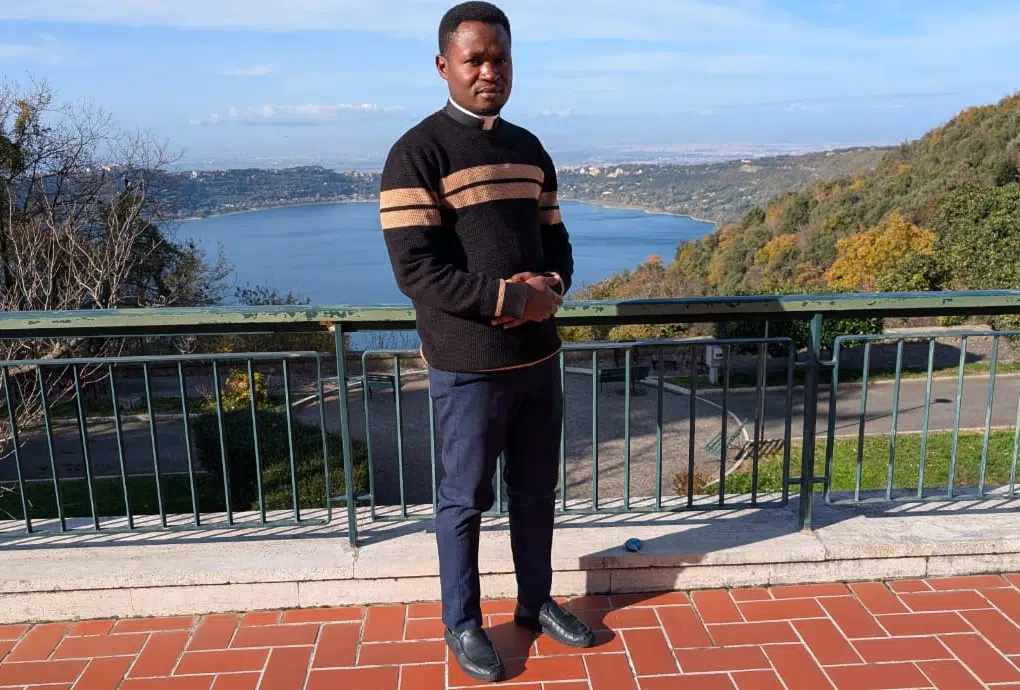
Pasteur Uwubashye He is a priest of the Diocese of Nyundo, Rwanda. His vocation He is dedicated to reconciliation and the training of other priests. He was born in Kigeyo, in the Rutsiro district in the west of the country, and is currently in Rome, where he is studying for his first year of a Bachelor's degree in Philosophy at the Pontifical University of the Holy Cross, thanks to a grant from the CARF Foundation.
Pasteur's story begins with a childhood marked by orphanhood and the decisive figure of his grandfather, a catechist for decades, who taught him to pray with his family and to love the Eucharist. It is also the story of a diocese deeply marked by the 1994 genocide, in which thirty priests were murdered and the Catholic community was severely wounded.
Pasteur has a clear goal: to help the Rwandan people rediscover the value of each human being, after violence that radically denied that value. That is why he insists that the training he receives is not only for himself, but also for the young people he has worked with, for the priests of his diocese and for a country that is still seeking reconciliation and peace.
«My name is Pasteur Uwubashye, and I am a priest in the Diocese of Nyundo, Rwanda. I was born on March 4, 1988, in the Kigeyo sector of Rutsiro district in the western province.
My parents, Gérard Musugusugu and Pascasie Nabonibo, died when I was still a child.
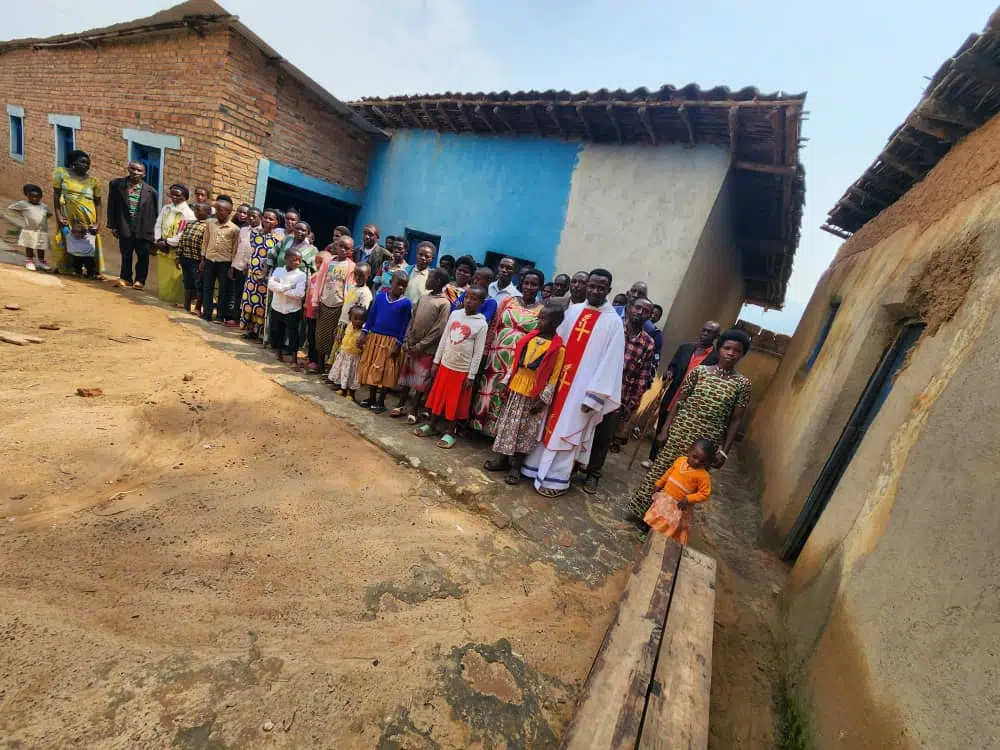
«Since then, I was raised by my paternal grandfather, Gérard Mvunabandi, who was a catechist for forty-five years in my home parish of Biruyi. He had a profound influence on me. Christian life. I owe my faith to him.
From a very young age, he taught me to pray. Every morning and every evening, we prayed together in family, and each member had a designated day to lead the prayer. That is how I learned the morning and evening prayers, the Rosary, and also how to help others pray.
My grandfather instilled in me a love for Holy Mass. I felt great respect and affection for the priests, who visited him frequently. That close relationship awakened in me a deep love for the Church and the desire to become a priest. The day of my ordination was a great joy for him. He passed away in March 2023, at the age of 93.
After completing primary and secondary school at the Saint Pius X minor seminary in Nyundo, Pasteur pursued higher ecclesiastical studies and was ordained a priest on July 13, 2019, by Bishop Anaclet Mwumvaneza in his home parish of Biruyi.
He was assigned to the parish of Nyange as parish treasurer, pastoral coordinator for children, and choir director. In 2021, he was appointed chaplain. diocesan for youth ministry in the Kibuye area, a mission he carried out for six years.
«I thank God for the fruits of this ministry, especially for the growth in the number of choirs and for the involvement of children and young people in the life of the Church» he explains. The diocese of Nyundo is divided into two areas: Gisenyi, with a Catholic majority, and Kibuye, where different religious denominations coexist.
In the latter, Pasteur and other priests worked to reach out to young people, bring them together, help them love the Church, encourage them to pray, participate in wholesome activities, and support one another in their faith.
During the Covid pandemic, many young people helped the most vulnerable when hunger threatened numerous families. This solidarity left a deep mark on the community and led several young people from other denominations to approach the Catholic Church.
The 1994 genocide and the choice of studies
Rwanda continues to be marked by ethnic divisions between Hutus and Tutsis, which led to the 1994 genocide against the Tutsis. This event continues to influence the social and spiritual life of the country.
For this reason, Pasteur chose to study ethics and anthropology: «the Rwandan people still need to rediscover the value of the human person and the meaning of their existence.».
In his diocese, Nyundo, the genocide had a particularly severe impact: in addition to thousands of faithful who were killed, some thirty priests died. Reconstruction was slow and difficult.
Thanks to the efforts of the bishop at that time, churches and presbyteries were restored and vocations were encouraged. Today, the diocese has some 120 priests serving 30 parishes.
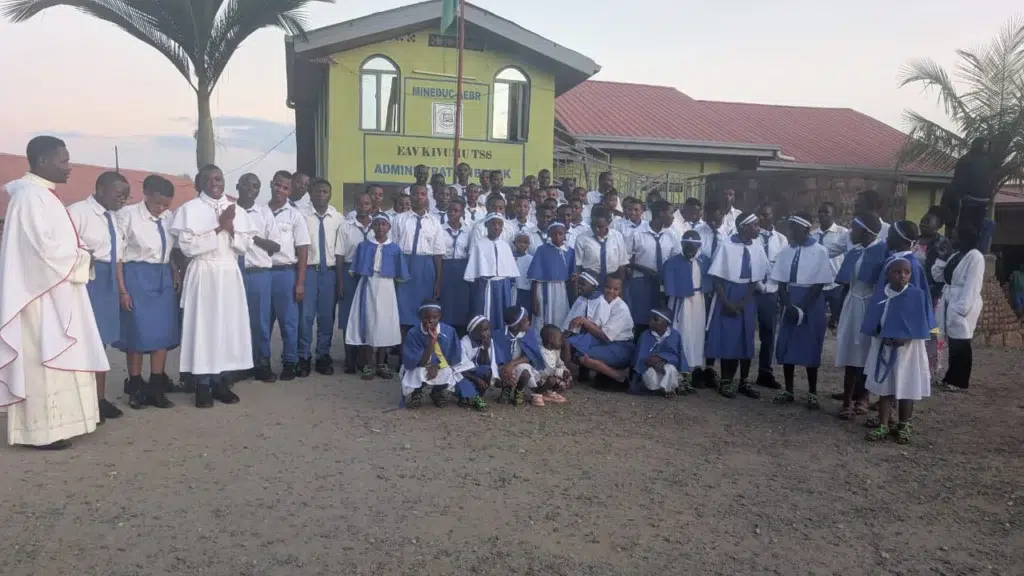
However, after the genocide, many priests were assigned as a priority to parishes in need, which limited the possibility of sending some to pursue higher education. This reduced the number of formators available in major seminaries and other diocesan services that require academic preparation.
Currently, the diocese has a very small number of permanent teachers. For this reason, there is a continuing education program for priests, designed to share the knowledge acquired by those who have been able to study abroad.
The bishop remains committed to priestly formation, but resources are limited. In this context, the support of institutions such as the CARF Foundation is essential.
Since September 10, 2025, Pasteur has been in Italy, at the Pontifical University of the Holy Cross. He sees this stage of his life as an opportunity that will benefit not only him, but also his diocese and his country.
He thanks his bishop for his trust, the university for its welcome, and the CARF Foundation for its assistance, which is invaluable support for a diocese that is still suffering the consequences of genocide and needs well-trained priests to better serve its people.
Gerardo FerraraBA in History and Political Science, specializing in the Middle East.
Responsible for students at the University of the Holy Cross in Rome.
Table of Contents
 carf@fundacioncarf.orgLandline: +34 914 029 082Mobile: +34 638 078 51145 Conde de Peñalver Street.