The seven Sundays of St. Joseph are a traditional devotion of the Church that invites you to prepare spiritually for its solemnity, the March 19, meditating each week on the seven joys and the seven sorrows of the saint.
The practice, which usually begins in the seventh Sunday before March 19, encourages the faithful to to receive Communion in honor of St. Joseph every Sunday and to pray the traditional prayers linked to their seven sorrows and joys.
This devotional exercise reflects episodes from the life of St. Joseph such as the doubt before the mystery of the Annunciationthe poverty at the birth of Jesus and the flight to Egypt, along with joys such as the angel's message and the life together with Jesus and Mary in Nazareth.
In this context of reflection and preparation, the Pope Leo XIV has given pastoral emphasis to the figure of St. Joseph in his recent public interventions. During the audiences of December 2025, the pontiff underlined the importance of trusting in God's mercy and placing personal and community life in His hands, encouraging the faithful to see in St. Joseph an example of simple fidelity to the divine will.
«Piety and charity, mercy and abandonment; these are the virtues of the man of Nazareth that the liturgy proposes to us today, so that they may accompany us in these last days of Advent, towards Holy Christmas.» The seven sunday devotion thus offers a concrete way to to approach St. Joseph as a model of faith and dedication in the ordinary life., The Pope invited us to meditate each Sunday on one of the sorrows and joys that marked his life in the service of the Holy Family and the whole Church.
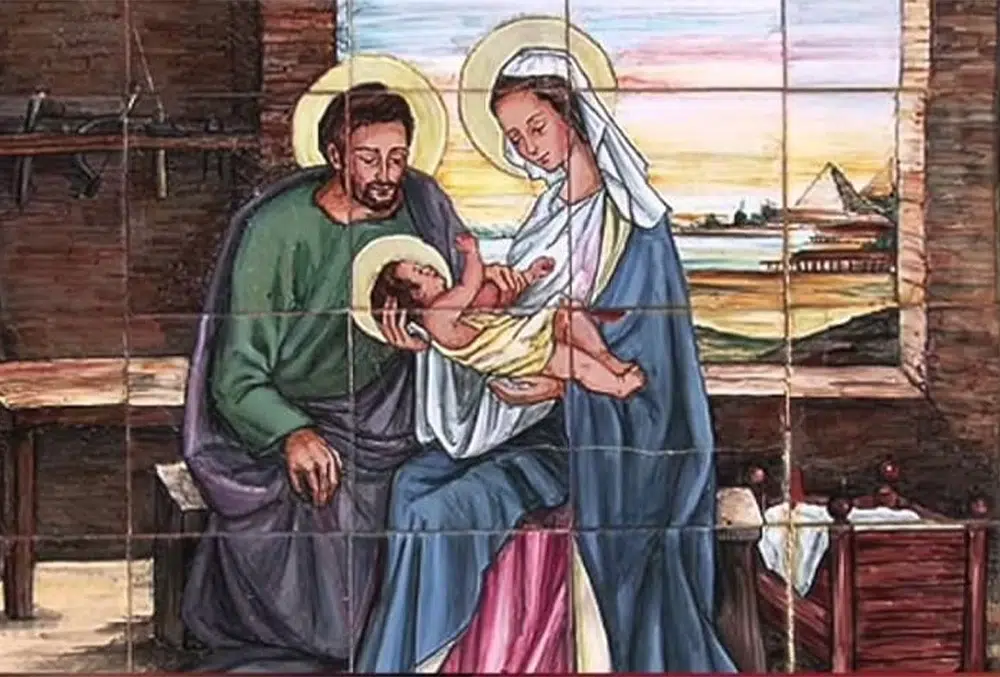
The seven Sundays of St. Joseph invite us to retrace, week by week, the moments of light and shadow in the life of the Holy Patriarch. By contemplating his joys and difficulties, this custom of the Church helps us to grow in intimacy with him and prepares us to celebrate his solemnity on March 19.
First Sunday of St. Joseph
First pain: When his mother Mary was betrothed to Joseph, before they lived together, she was found to have conceived in her womb by the power of the Holy Spirit (Mt 1:18).
First joy: the angel of the Lord appeared to him in a dream and said, "Joseph, son of David, do not be afraid to take Mary your wife, for that which is conceived in her is of the Holy Spirit. She will bear a son, and you shall call his name Jesus (Mt 1:20-21).
Second Sunday of St. Joseph
Second pain: He came to his own, and his own received him not (Jn 1:11).
Second joy: They went in haste and found Mary, Joseph and the child reclining in the manger (Lk 2:16).
Third Sunday of St. Joseph
Third pain: When the eight days were fulfilled for circumcising him, they called his name Jesus, as the angel had called him before he was conceived in the womb (Lk 2:21).
Third joy: she will bear a son, and you shall call his name Jesus, for he will save his people from their sins (Mt 1:21).
Fourth Sunday of St. Joseph
Fourth pain: Simeon blessed them, and said to Mary his mother, "Look, this man has been set up as a sign of contradiction so that the thoughts of many hearts may be revealed" (Lk 2:34-35).
Fourth joy: For my eyes have seen your salvation, which you have prepared for all peoples, a light to enlighten the nations (Lk 2:30-31).
Fifth Sunday of St. Joseph
Fifth pain: the angel of the Lord appeared to Joseph in a dream and said to him: Arise, take the child and his mother, and flee to Egypt, and stay there until I tell you, for Herod is going to seek the child to kill him (Mt 2:13).
Fifth joy: and was there until the death of Herod, so that what the Lord says through the prophet would be fulfilled: "Out of Egypt I called my son" (Mt 2:15).
Sixth Sunday of St. Joseph
Sixth pain: He arose, took the child and his mother and returned to the land of Israel. But when he heard that Archelaus was reigning in Judea in place of his father Herod, he was afraid to go there (Mt 2:21-22).
Sixth joy: and went to live in a city called Nazareth, so that what the prophets had said would be fulfilled: he will be called a Nazarene (Mt 2:23).
Seventh Sunday of St. Joseph
Seventh pain: They sought him among their relatives and acquaintances, and when they did not find him, they returned to Jerusalem in search of him (Lk 2:44-45).
Seventh joy: At the end of three days they found him in the Temple, sitting in the midst of the doctors, listening to them and asking them questions (Lk 2:46).
The Church, following an ancient custom, prepares the feast of St. Joseph on March 19, dedicating to the Holy Patriarch the seven Sundays preceding that feast in memory of the principal joys and sorrows of St. Joseph's life.
Specifically, it was Pope Gregory XVI who promoted the devotion of the seven Sundays But Blessed Pius IX gave them perennial topicality with his desire to have recourse to St. Joseph, to alleviate the then afflictive situation of the universal Church.
St. Josemaría advises living the seven Sundays of St. Joseph
In a get-together, St. Josemaría proposed a concrete devotion to grow in love for our Lady: to turn to St. Joseph as a sure, close and trusting path in the Christian life.
Father in tenderness, obedience and welcoming
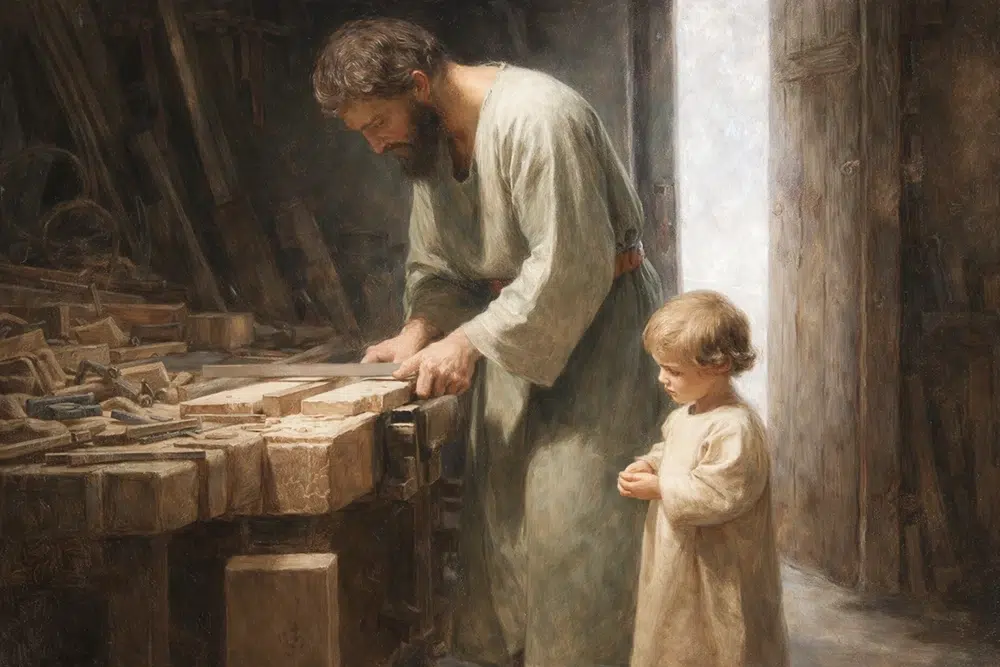
Jesus saw the tenderness of God in Joseph), which is to be expected of all good fathers (cf. Ps 110:13). Joseph taught Jesus, while protecting him in his infant weakness, to 'see' God and to turn to Him in prayer. Also for us «it is important to encounter God's Mercy, especially in the sacrament of Reconciliation, having an experience of truth and tenderness.
There God welcomes us and embraces us, sustains us and forgives us. Joseph also teaches us that, in the midst of life's storms, we must not be afraid to yield the helm of our boat to God..
In a manner similar to that of the Virgin Mary, Joseph also pronounced his "fiat" (go to) to God's plan. He was obedient to what God asked him to do., even though this manifested itself in dreams. And furthermore, what seems amazing, he 'taught' obedience to Jesus. In the hidden life of Nazareth, under the guidance of Joseph, Jesus learned to do the will of the Father. And this, going through the passion and the cross (cf. Jn 4:34; Phil 2:8; Heb 5:8).
As St. John Paul II wrote in his exhortation Redemptoris custos (1989), on St. Joseph: «Joseph was called by God to serve directly the person and mission of Jesus through the exercise of his fatherhood.Thus he cooperates in the fullness of time in the great mystery of redemption and is truly '...'.minister of salvation’».
All this happened through Joseph's acceptance of Mary and of God's plan for her. Joseph assumed this plan, his paternity, mysterious for him, with personal responsibility, without looking for easy solutions. And these events shaped his inner life.
Table of Contents
 carf@fundacioncarf.orgLandline: +34 914 029 082Mobile: +34 638 078 51145 Conde de Peñalver Street.