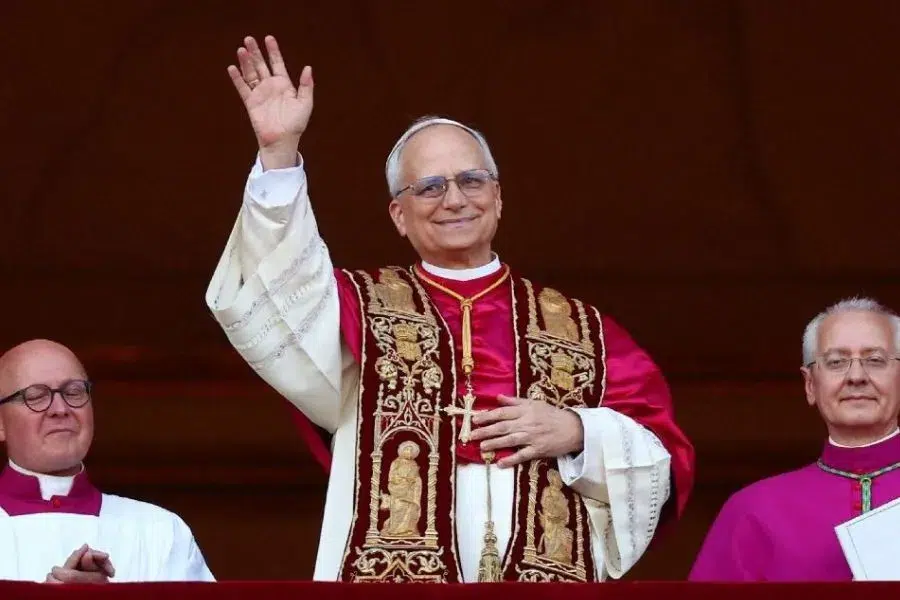
At this point in the year, more than a few commentators are launching into a review of the first few months of the pontificate of Pope Leo XIV. My impression is that perhaps too much is being pretended, and that such a short time barely serves to glimpse the horizons of a pontificate that, if God does not provide otherwise, has a long life ahead of it.
And, without wanting to interpret anything, I will only underline three details that are doing a lot of good to the souls of believers who are well disposed to pray and venerate the Pope Leo XIV. These three details are: the centrality of Jesus Christ, true God and true man; the veneration and devotion to Mary, Mother of God; and the prospect of eternal life.
The centrality of Christ was clearly manifested in the episode that occurred while Leo XIV was visiting the Blue Mosque in Istanbul. He wanted to follow the visit, and not stop to pray with the Emirs. In an interview a few days later, the Pope indicated that he wanted to pray in a church, before Jesus in the Blessed Sacrament. That is, to pray adoring the true God the Son, made Eucharist, food for eternity.
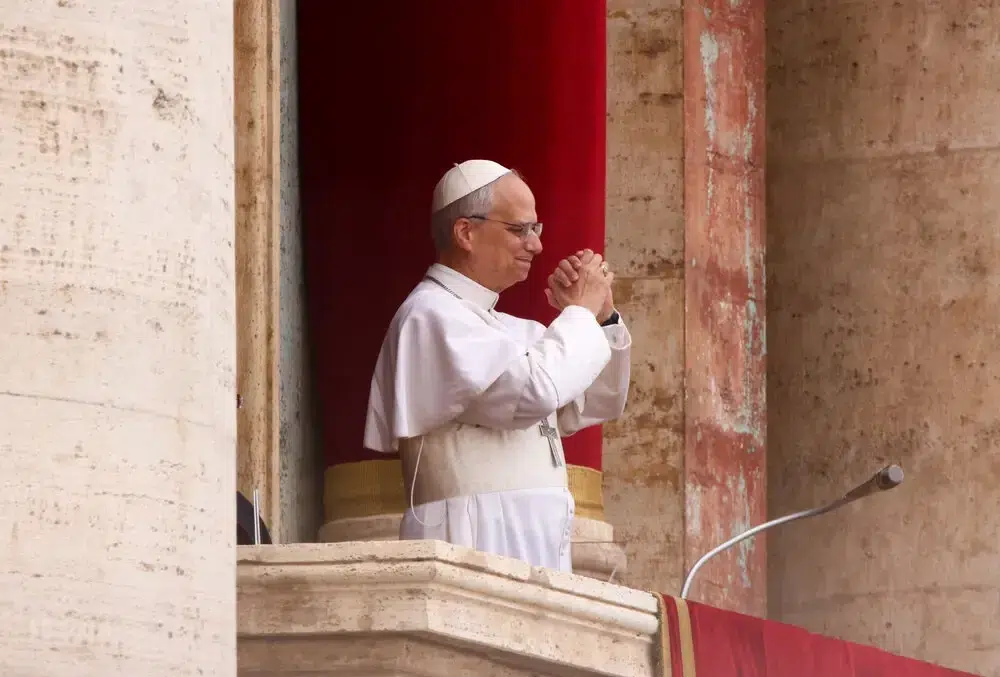
Devotion to the Virgin Mary was deeply engraved in the souls of the pilgrims who attended the last audience of the Jubilee Year, which Pope Francis Leo XIV held in St. Peter's Square on Saturday, December 20.
«Sisters and brothers, if Christian prayer is so profoundly Marian, it is because in Mary of Nazareth we see one of us who generates. God made her fruitful and she came forth to meet us with her features, as every child resembles its mother. She is the Mother of God and our mother. "Our hope," we say in the Salve Regina. She resembles the Son and the Son resembles her».
«And we resemble this Mother who gave face, body and voice to the Word of God. We resemble her, because we can generate the Word of God down here, transform the cry we hear into a birth. Jesus wants to be born again: we can give him body and voice. This is the birth that creation is waiting for».
«To hope is to generate. To hope is to see this world become God's world: the world in which God, human beings and all creatures walk together again, in the garden city, the new Jerusalem. Mary, our hope, always accompanies our pilgrimage of faith and hope».
The prospect of eternal life, which, unfortunately, is hardly mentioned in all its fullness - death, judgment, hell and glory - Leo XIV addressed it masterfully in the audience of December 10 last, from which I transcribe a few paragraphs:
«The mystery of death has always raised profound questions in human beings (...). It is natural, because all living beings on earth die. It is unnatural because the desire for life and eternity that we feel for ourselves and for the people we love makes us see death as a condemnation, as a "contradiction in terms"».
«Many ancient peoples developed rites and customs related to the cult of the dead, to accompany and remember those who were on their way to the supreme mystery. Today, however, there is a different trend. Death seems to be a kind of taboo, an event to be kept at a distance, something to be spoken of in a low voice, so as not to disturb our sensibility and tranquility. For this reason, we often avoid even visiting cemeteries, where those who have gone before us rest while awaiting the resurrection».
«What is death, then, and is it really the last word on our life? Only human beings ask themselves this question, because only they know that they must die. But being aware of it does not save him from death, but in a certain sense "burdens" him more than all other living creatures.».
(...) «St. Alphonsus Maria de Liguori, in his famous writing titled Preparation for death, reflects on the pedagogical value of death, stressing that it is a great teacher of life. Knowing that it exists and, above all, meditating on it teaches us to choose what to really do with our existence. To pray, to understand what is good in view of the kingdom of heaven, and to let go of what is superfluous, which instead binds us to ephemeral things, is the secret to living authentically, with the awareness that our passage on earth prepares us for eternity».
«However, many current anthropological views promise immanent immortality and theorize about prolonging earthly life through technology. It is the scenario of “transhumanism”which is making its way on the horizon of the challenges of our time» (...).
«The event of Christ's resurrection reveals to us that death is not opposed to life, but is a constitutive part of it as a passage to eternal life. The Passover of Jesus makes us prelike, in this time still full of sufferings and trials, the fullness of what will happen after death» (...).
"Resurrection -the pope assures Leo XIV- is capable of illuminating the mystery of death to its very depths. In this light, and only in this light, what our heart desires and hopes for becomes a reality: that death is not the end, but the passage towards full light, towards a happy eternity».
«The Risen One has preceded us in the great trial of death, emerging victorious thanks to the power of divine Love. Thus he has prepared for us the place of eternal rest, the house where we are expected; he has given us the fullness of life in which there are no longer shadows or contradictions (...). To await it with the certainty of the resurrection preserves us from the fear of disappearing forever and prepares us for the joy of life without end».
And, before the new year, may the Light of the manger of Bethlehem, the Light of God, continue to illuminate our journey. Light of God, may it continue to illuminate our journey.
Ernesto Juliá, (ernesto.julia@gmail.com) | Previously published in Religión Confidencial.
Table of Contents
 carf@fundacioncarf.orgLandline: +34 914 029 082Mobile: +34 638 078 51145 Conde de Peñalver Street.