Our Lady of Fatima: May 13, light of hope for the world

The Our Lady of Fatima is one of the best known and most venerated Marian invocations in the Catholic Church. Its history begins in a small village in Portugal and has spread throughout the world as a message of hope, conversion and peace. This Marian devotion has touched the hearts of millions of faithful who see in it a manifestation of Mary's maternal love for humanity and an urgent call to conversion.
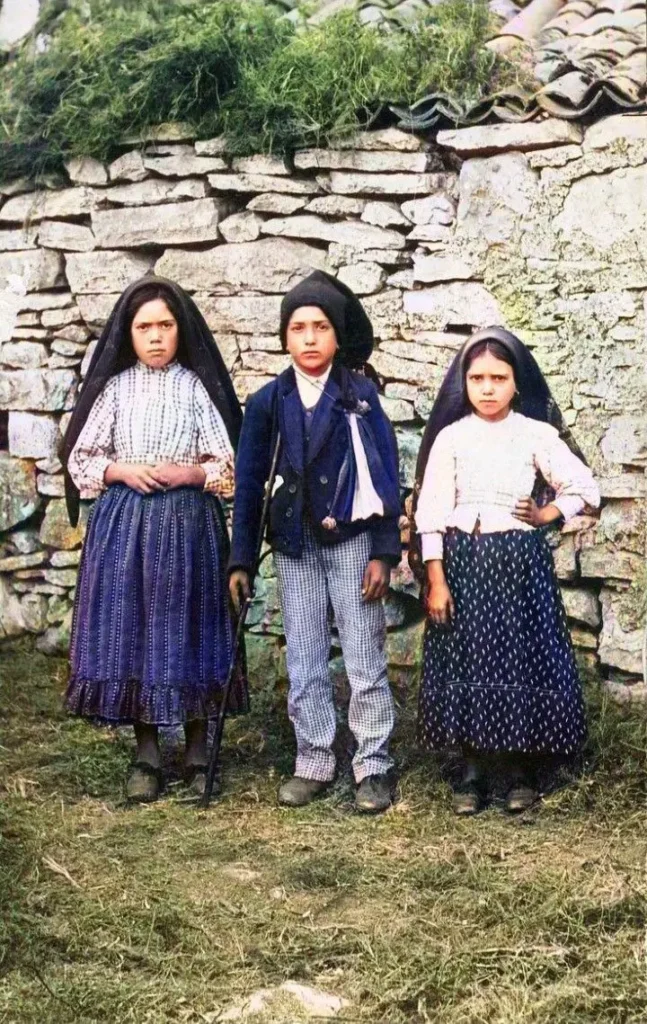
Pastores de Fátima

The origin of the invocation of Fatima

It all began in 1917, in the village of Cova da Iria, near the town of Fátima, in central Portugal. In that year, three young shepherds - 10-year-old Lucia dos Santos and her cousins Francisco and Jacinta Marto, aged 9 and 7 respectively - claimed to have seen a "Lady brighter than the sun" during one of their shepherding days. This vision took place on May 13 and was the first of a series of six apparitions that were repeated on the 13th of each month until October of the same year.

The children described Our Lady of Fatima as a woman dressed in white, with a rosary in her hands and a countenance full of gentleness and serenity. Despite the initial skepticism of many, crowds began to flock to the site of the apparitions as rumors spread. The last apparition, on October 13, 1917, was accompanied by what became known as the "miracle of the sun," witnessed by tens of thousands of people, believers and non-believers alike. Many witnesses reported seeing the sun dance, spin around and emit extraordinary colors, before appearing to plunge to Earth and then return to its place in the sky.

A Marian invocation with a profound message

Our Lady of Fatima not only appeared to the three children as an extraordinary gesture, but she came with a very specific message. Her apparition took place in a particularly convulsive historical context: Europe was in the midst of World War I and, in Russia, the communist revolution was brewing. In this context, Mary brought words that, while profoundly spiritual, have concrete implications for the history and life of the people.

In the apparitions, Our Lady of Fatima spoke mainly of three key themes: conversion of heart, penance for sins and prayer - especially of the Holy Rosary - as a means to achieve peace.
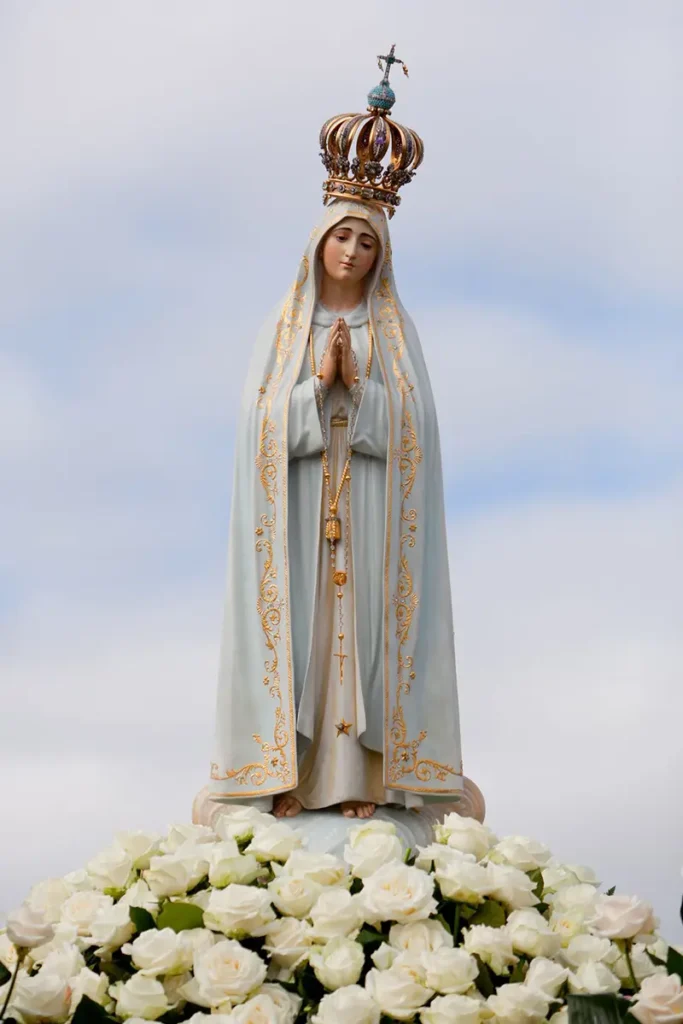
Virgen de Fátima

The three secrets of Our Lady of Fatima

One of the best known and most debated aspects of the apparitions of Our Lady of Fatima are the so-called "three secrets". These were revelations that Our Lady confided to the little shepherds, and that would eventually be divulged, each in its own time.

First secret: the vision of hell

In the apparition of July 13, the children received a shocking vision of hell. Lucia described it as a great sea of fire, where there were suffering souls accompanied by horrible demons. This vision was not given to spread fear, but to show the seriousness of sin and the urgent need for prayer and penance for the salvation of souls.

Second secret: devotion to the Immaculate Heart and the conversion of Russia.

In that same apparition, Our Lady prophesied the coming world war (if the world did not convert) and spoke of the need to consecrate Russia to her Immaculate Heart. She said that if this was done, Russia would convert and there would be peace; otherwise, she would spread her errors throughout the world. This message was interpreted by many as a direct allusion to the atheistic communism that would spread after the Russian Revolution.

Third secret: martyrdom and persecution of the Church

The third secret was kept secret for many years and was only publicly revealed by the Vatican in 2000. It contained a symbolic vision of a "bishop dressed in white" walking among ruins and the bodies of martyrs, and finally falling dead from gunshots. This image was interpreted as a representation of the persecutions suffered by the Church in the 20th century, and in particular it has been linked to the attack against St. John Paul II on May 13, 1981, the anniversary of the first apparition.

Our Lady of Fatima and the call to prayer

One of the most repeated elements in the messages of Our Lady of Fatima was the prayer of the Holy Rosary. Mary insisted that the Rosary be prayed every day to bring about peace in the world and an end to war. This insistence underscores the importance the Church attaches to this prayer as a powerful spiritual weapon.

He also asked that sacrifices be offered for the conversion of sinners and that a life of penance be lived. This does not necessarily imply great suffering, but the daily living of difficulties in a spirit of love and self-giving.
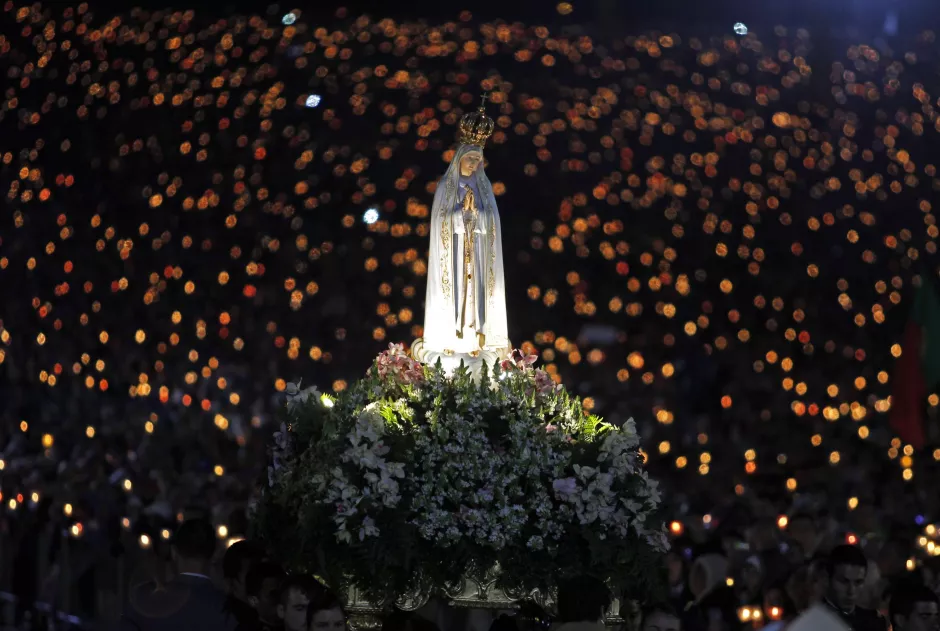
The ecclesial and prophetic dimension of Fatima

The message of Fatima is not limited to a personal experience of the three little shepherds, but has a prophetic and ecclesial dimension. The Pope Benedict XVIduring his visit to Fatima in 2010, said that "those who think that the prophetic mission of Fatima is over would be deceived. Our Lady of Fatima continues to challenge the world today, inviting us to a change of life, to a heart that is more humble, prayerful and open to God.

In addition, devotion to Our Lady of Fatima has been especially embraced by the Popes of the 20th and 21st centuries. St. John Paul II, who attributed his salvation from the May 13, 1981 attack to the protection of Our Lady of Fatima, visited the sanctuary on several occasions and consecrated the world to the Immaculate Heart of Mary. Benedict XVI and Pope Francis have also shown a deep devotion to this invocation.
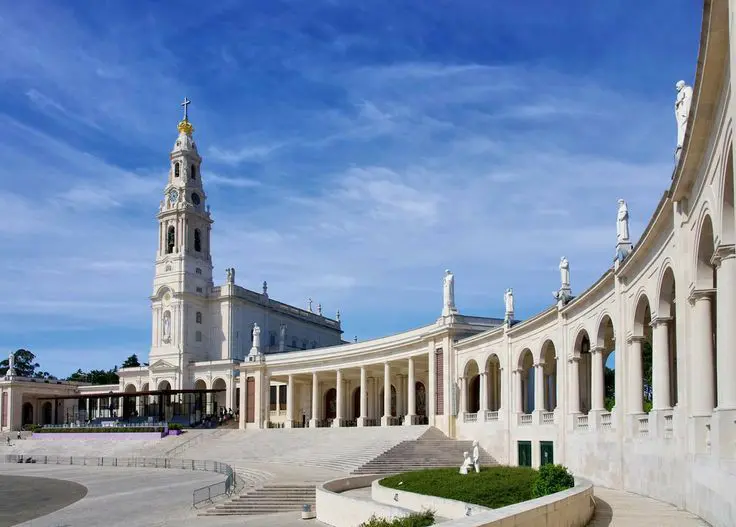
Santuario de la Virgen de Fátima
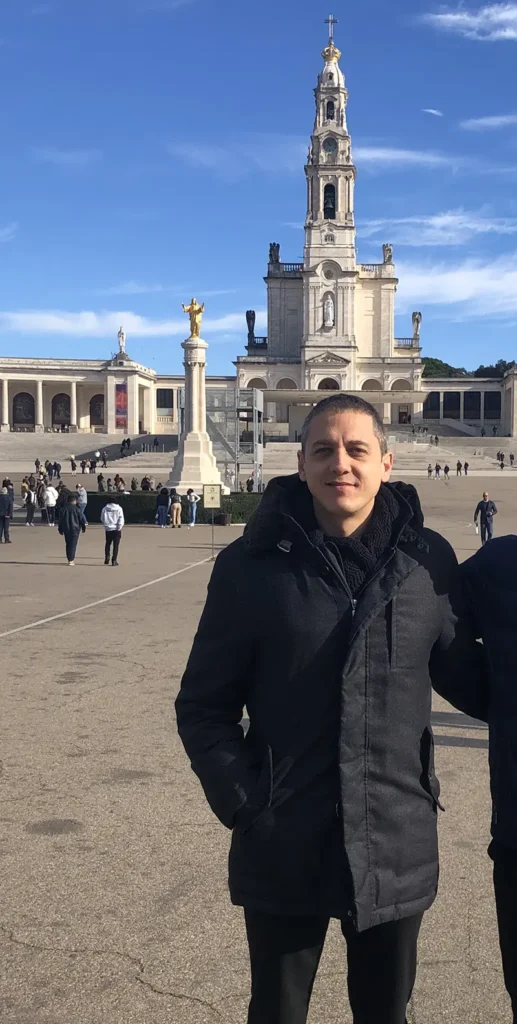
Sanctuary of the Virgin of Fatima, Portugal.

A current message

More than a century after the apparitions, the message of Fatima remains profoundly relevant today. In a world marked by violence, materialism and relativism, Our Lady continues to ask for the same things: prayer, conversion and reparation. Fatima is not a message of condemnation, but of hope: the hope that, with God's help and Mary's intercession, the human heart can be transformed, history can change and good can triumph over evil.

"In the end, my Immaculate Heart will triumph," promised Our Lady of Fatima. This phrase resounds as a guiding light for believers in the midst of the darkness of the world. To trust in it is to walk with hope towards the Kingdom of God.
Pope Leo XIV: Welcome Holy Father

To their 69 years oldRobert Francis Prevost, chose the name Leo XIV. Pope Leo XIV, and still the current prefect of the Dicastery for Bishops and president of the Pontifical Commission for Latin America, is the first American and the first Augustinian to become Supreme Pontiff in the history of the institution.

Biography of Pope Leo XIV

Pope Leo XIV, born Robert Francis Prevost on September 14, 1955 in Chicago (Illinois, USA), is the 267th pontiff of the Catholic Church. A member of the Order of St. Augustine (O.S.A.), he entered the novitiate in 1977 and made his solemn vows in 1981. He studied theology at the Catholic Theological Union from Chicago and later specialized in canon law at the Pontifical University of St. Thomas Aquinas in Rome.

In 1985, he was sent as a missionary to Peru, where he served in various pastoral and academic roles. He has been the bishop of Chiclayo since 2015 and in 2023, the Pope Francis appointed him prefect of the Dicastery for Bishops and president of the Pontifical Commission for Latin America. That same year, he was created a cardinal with the diaconia of St. Monica.

On May 8, 2025, he was elected Pope, adopting the name Leo XIV. His election marks a milestone as the first American and Augustinian pontiff in the history of the Church. His career stands out for his commitment to missionary ministry, academic formation and ecclesiastical administration both in Latin America and at the Vatican.

You can read his complete biography on the official Opus Dei website: Biography of Pope Leo XIV.

May 8, 2025, appointment by Pope Leo XIV

At 7:13 p.m. on May 8, 2025, 65 minutes after the white smoke, thousands of faithful and pilgrims saw the curtains of the central balcony of the Vatican Basilica open. The Cardinal Protodeacon, Dominique Mamberti, appeared before the crowd and in a solemn voice pronounced the historic words: "Annuntio vobis gaudium magnum: Habemus Papam..."followed by the name of the new Pontiff: Cardinal Prevost, who has taken the name Leo XIV.

The square erupted in jubilation. Hundreds of bells rang throughout Rome as flags waved and many faithful embraced excitedly. Amid shouts of "Long live the Pope!" and the singing of the You are Petrusthe new successor of Peter appeared before the world for the first time. Dressed in white and with a serene gesture, he greeted the crowd with an apostolic blessing, thanking his brother cardinals for their confidence and asking for prayers for his mission.

Thus begins a new stage for the Catholic Church, marked by hope and expectation. In the next few hours Pope Leo XIV will address the faithful once again and will formally begin his pontificate with an inaugural Mass in the coming days.

Robert Francis Prevost
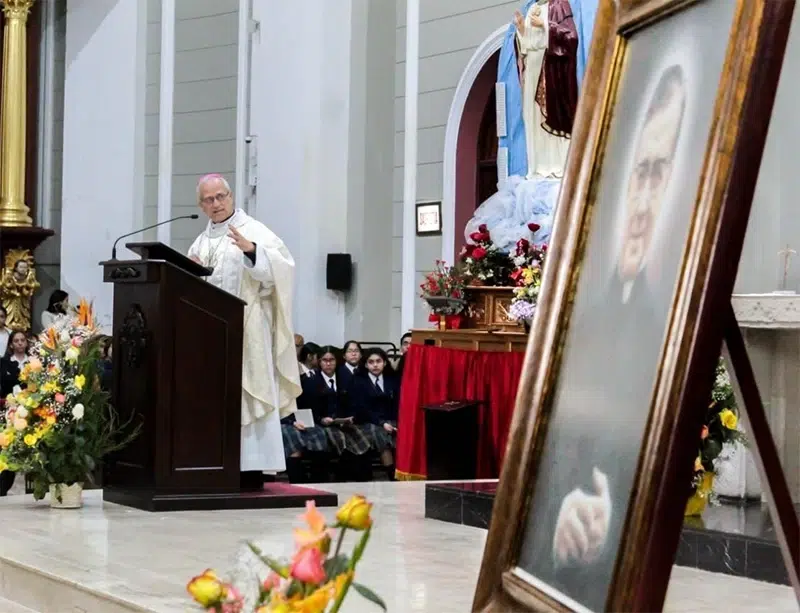
Robert Francis Prevost, during a homily.

Message from the Prelate of Opus Dei, Msgr. Fernando Ocáriz

On May 8, 2025, Bishop Fernando Ocáriz, Prelate of Opus Dei, issued a message on the occasion of the election of Pope Leo XIV. He expressed his joy and gratitude for the appointment of the new Vicar of Christ, urging the community to unite in prayer for him and for the mission he undertakes at the head of the Church.

In his message, Bishop Ocáriz stressed the importance of unity of hearts and prayers at times like this, underscoring the faith of the Church that shines with particular splendor. He recalled the words of St. Josemaría Escrivá in ForgeThe Pope, who is considered the cornerstone of the Church, is exhorted to love, venerate, pray and mortify oneself for the Roman Pontiff.

The prelate emphasized that Pope Leo XIV, as successor of PeterHe encouraged the faithful to renew their commitment to prayer and support the Holy Father, recognizing the responsibility and service involved in his new ministry. He encouraged the faithful to renew their commitment to pray for and support the Holy Father, recognizing the responsibility and service that his new ministry entails..

Finally, Bishop Ocáriz invited everyone to live this event with faith and hope, seeing in the election of the new Pope an opportunity to strengthen ecclesial communion and the commitment to the Church's evangelizing mission.

You can read the full message on the official website of Opus Dei: Prelate's message on the occasion of the election of Pope Leo XIV.

Priestly formation for a seminarian

Franklin received his priestly formation in our country, in the Bidasoa international seminarthanks to the help that the benefactors of the CARF Foundation provide with such generosity. He is in Pamplona studying theology and is very clear about his vocation.

Good priestly formation is necessary to be a good priest

Before meeting the Lord and discovering his priestly vocation, he thought that happiness came from having a ball at his feet, like so many young men in his country. His father, Vincent, was not very religious. His mother was more so and taught him the basics of the faith from an early age, although the Church did not appeal to him at all. But that Mass changed everything. He could hear God speaking to him.

Then, he began to take the Christian life seriously. He started going to Mass more often. He entered a Chrism course, received the sacrament of Confirmation and began to help in the parish as a catechist and preacher in a prayer group.

Jeususus became the pillar of her Christian existence, where her desire to receive a solid and deep formation was consolidated as an essential element of her life, motivating her search for a continuous and meaningful formation. This journey was fundamental for his personal and spiritual development, becoming a transforming process that defined his faith journey.

This whole process fueled his desire to make Jesus Christ known to others, while nurturing his priestly vocation without being very conscious of it. He recognizes that being well formed is essential for spiritual growth and maturity in faith, as well as an invaluable resource for the integral formation of new generations. His experience shows that study and formation not only transforms lives, but also strengthens the community as a whole.

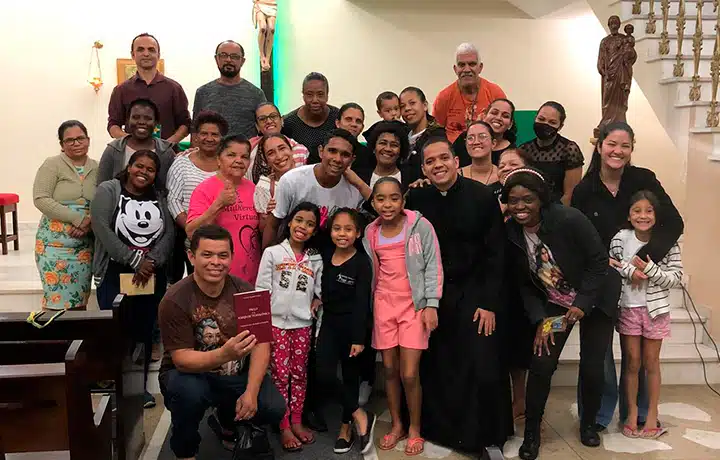
Sacerdote Franklin Cavalcante con su familia

Discovering vocation: "Christ is what makes me happy".

Little by little he discovered that it was Jesus Christ who gave fullness to his life and made him truly happy. Until then he had never considered his priestly vocation, but his pastoral work in the parish made him realize that the people needed shepherds.

"I had a deep conversation with my parish priest and began my vocational journey. After two years of participating in vocational meetings, I discerned my priestly vocation and my path to happiness. To make Jesus Christ known and to make people friends of God is the mission I hope to carry out throughout my life".

The Bidasoa international seminar, a blessing

After studying philosophy at the Pontifical University of Rio de Janeiro, his bishop sent him to complete his studies at the Bidasoa International Seminary and in the Faculties of Ecclesiastical Studies of the University of Navarra. There he had the opportunity to experience the richness of the Universal Church, living with seminarians from different countries. "It is like living a new pentecost".

For Franklyn, Bidasoa is a blessing for the theological formation of the priest. He received a very good formation that allowed him to grow in friendship with Christ and to mature in his vocation.

Formación sacerdotal

Being a priest and fostering vocations among young people

As Pope Francis said, we are living a "change of epoch". Many young people are far from God and the Church. "If we want to foster priestly vocations," says Franklyn, it is essential that the people pray that the Lord of the harvest will send out workers. Priests have to witness to the beauty of the priestly vocation. A priest of the 21st century must be above all a friend of Christ.who witnesses with his life to his love for the Church and for souls".

Secularization and evangelization

In Brazil, secularization and the irruption of Protestantism threaten the life of the Catholic Church. "Today more than ever, the Church has the obligation to announce the good news of Jesus Christ, to promote the encounter of young people with the Person of Jesus, so that they may discover in Him the sure path to happiness". In the face of secularization, Franklyn proposes to live the faith as witnesses of the Risen One and, in the face of Protestantism, to present the truth of the faith. present the truth of the faith.

"The most important apostolic needs of Rio de Janeiro are: the personal conversion of each Christian and, from there, to promote an evangelization that presents all the richness and truth that Jesus Christ entrusted to the Catholic Church".


Marta SantínJournalist specializing in religious information.

The priest, psychology of a vocation

A book that raises many questions about happiness and the vocation of the priest: Is the figure of the Catholic priest still attractive? Can a person who renounces marriage be happy? When to advise against the priesthood or other specific paths of dedication? Christian? These and other questions find useful answers, sprinkled with real life and pastoral experience.

sacerdote y felicidad

The book shows the inner world of the one who responds to God's call

The author of Psychological and spiritual maturity addresses the luminous panorama of the Christian vocation, beginning with the priesthood. The identity and mission of the priest, as of other vocations within the Church, are understood in the light of Jesus Christ, who came to earth to serve and not to be served.

The priest - the book explains - must see the sacred in others, confirming them in their value; and, at the same time, bring the divine, the sacred, to each person. This is the mission that characterizes him and from which comes his dignity and great responsibility before God, before each person and before society as a whole.

It introduces the psychological dynamics, its conflicts and challenges, its sources of peace and harmony. Being a priest implies giving light, comfort and hope.The Church, insofar as it strives to identify itself with Jesus Christ, God made man.

Many of the above ideas apply to other forms of vocation within the Church, especially if they assume the gift of celibacy.

"Life is attained and matures as it is given to give life to others."
Document of Aparecida, 2007, quoted in Francis, Apostolic Exhortation Evangelii gaudium, November 24, 2013, n. 10.

Jesús

Jesus Christ is the common model for happiness

In the first chapter, the process of maturity is presented, underlining the freedom and the moments of crisis along the development. The notes of a mature personality are defined, in order to welcome and make fruitful the free gift of a divine call.

How to discern that call, with the types of vocationThe examination of the person's aptitudes and intention is the subject of the second chapter. It is also mentioned when it is necessary to have recourse to psychologists, following the guidelines of the Ratio for the formation of priests, of the Congregation for the Clergy: The Gift of the Priestly Vocation, 2016.

Sacerdote
Wencesleao Vial, cars of the book. Photo via Zenit.

Harmony of daily life

The third chapter is entitled Harmony of daily life. Here we distinguish between and explain the concepts of good loneliness and harmful loneliness. The psychological importance of prayer and the need for a healthy balance between activity and rest are discussed in depth. Healthy habits and hobbies form a special section, which shows in its development the unity of the three human dimensions: physical, psychic and spiritual.

A dimension of particular strength in the individual is the sexuality. The fourth chapter explains how it can be a source of joy or tormentdepending on whether it is integrated or not, whether it lives humanely or not.

The theme of human love, the understanding of which is the basis for understanding divine love and self-giving, is addressed. It touches on psychological and behavioral obstacles, in particular pornography and homosexual activity, which hinder a serene advancement in the vocation; and ends with some notes on spiritual paternity and the defense of a charism: the celibacy.

agotamiento o burnout

Priest burnout

The fifth chapter analyzes a frequent phenomenon among many service professions or professions on which others depend: burnout, with reference to pastoral practice. The forms of presentation, the persons at risk, and the how to deal with and prevent it. All with the intention of better understanding this picture, similar to depression, which makes many people suffer in different environments, including priests and people engaged in the apostolates of the Church.

The last chapter presents a series of attitudes for the prevention of psychic symptomatology. It deals with the mindfulness or focused awareness and its relationship with Christian meditation and the presence of God. Self-transcendence as an essential characteristic of the human being is related to the apostolic mission and pastoral challenges.

It ends with a reference to the Youth and strength of the spirit, capable of overcoming many difficulties and guiding us along paths of peace and joy. At the end there is a list of recommended books and useful websites.

Where to buy it and in which languages it can be obtained

The book The priest, psychology of a vocation is also published in Italian (The priest, the psychology of a vocationEdusc 2021) and in Portuguese (The Psychology of a VocationQuadrante 2021).

Buy in Word

Buy in Amazon

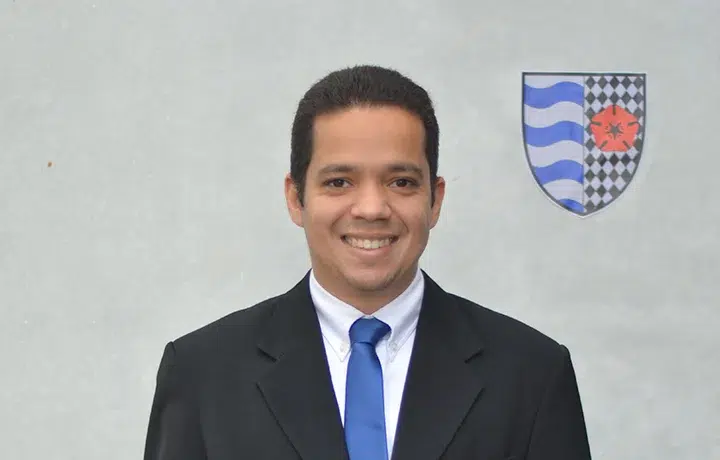
Riccardo's religious vocation

Riccardo Dimida tells us how he found his religious vocation as a priest through the grace of God acting in him through small gestures.

It belongs to the Instituto de los Servants of the Immaculate Heart of Marya religious community - or association of the faithful - that centers its spirituality on love and reparation to the Immaculate Heart of Mary, in deep communion with the Heart of Jesus. Although there are several communities with similar names in different countries, they all share common elements in their identity and charism.

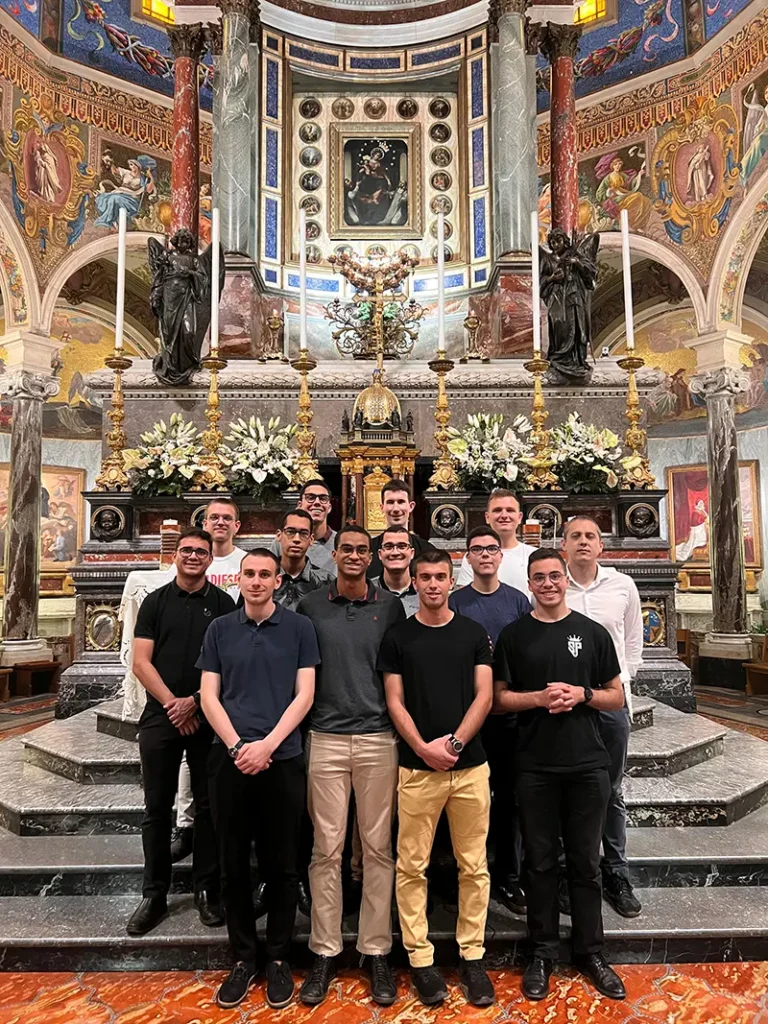
At present, all the young people of this community are being formed in Rome, at the Pontifical University of the Holy Cross (PUSC), thanks to grants funded by the CARF Foundation.

Riccardo was born on September 18, 1985 in Volterra, an ancient city of Etruscan origin located in the region of Tuscany, Italy. He is currently in his second year of philosophy, before beginning his bachelor's degree in theology next year. He tells us his story through his testimony.

Riccardo Dimida haciendo deporte

From a serene childhood to the discovery of a religious vocation

"I was born into a Catholic family that gave me a healthy upbringing and an admirable example. My parents have always been morally blameless people, and they encouraged me to receive a Catholic formation. I grew up in a small village in Tuscany, enjoying a happy and carefree childhood.

After receiving Confirmation, I joined the activities of Catholic Action, where I remained until I was over 30 years old, organizing camps, pilgrimages and leading groups of teenagers and young people.

After high school I entered university, and there I began to discover the world in all its breadth and diversity, something unknown to me as a small-town boy. University life can be very stimulating - sometimes even too much so - and, in fact, I expanded my social circles and friendships.

I participated in student representation groups and in many other activities, some more academic than others. I say "more or less" because, among so many educational and personal development proposals, there is always some unexpected risk. So it happened that, in the first years, the time dedicated to study was scarce. On the other hand, I devoted many hours to all kinds of activities.

I have been playing the guitar since I was 15 years old, an instrument I have always been passionate about. I have been volunteering since I was 17, and I played in my town's basketball team from the age of 7 until I was 25. In addition, I practiced swimming, athletics, indoor soccer and hiking. I have always been attracted to learning languages and getting to know other cultures, and of course, meeting new people and experiences".

Riccardo went to university and there he began his 'exploration' of the world.

"In all this great web of interests and associated amusements, I had the opportunity to live many, many experiences. Unfortunately, not all of them were positive or uplifting: the parties, the friends, the concerts....

The trips -very frequent- gave me the opportunity to transgress the rules, to always step on the accelerator in the search for pleasure and strong emotions.

Those were very intense years at the university, also because, at the same time, I never stopped attending Sunday Mass, participated in pilgrimages and prayer meetings, and collaborated in the diocesan organization of Catholic Action, where I even had organizational roles and responsibilities.

Obviously, what I suffered the most was the study. All this was possible thanks to the energy of my early youth (today I am 39 years old) and the enthusiasm to discover the world and to discover myself.

Vida en la universidad

Inside me it was all a great mix of good principles, though never truly deepened. I wanted my good and the good of others, but I also wanted to enjoy the pleasures of life, and I wanted all of that to happen as much as possible. It was as if I lived one life by day and another by night, trying not to leave anything to experience.

I remember that many times, in spite of coming home very late on a Saturday night (or very early on Sunday morning...), even with little sleep, I still went to Sunday Mass. Anything could happen, but I couldn't stop going to Mass; it was like a card I had to punch at all costs.

At one point, I realized that not everything was going well. I understood that there was a "better way" to do things. I had faith, yes, but I was not living it fully. I remember a friend, with whom I shared much of my faith journey, made me reflect on the fact that abortion is never acceptable, whereas I was convinced that in certain cases it was.

With that realization, something was ignited in me that, since then, has functioned as a true paradigm of life: I understood that there were things that had to be assumed completely or not assumed at all.

I then committed myself to finish my studies and to make the most of them. I started working as a waiter and tutoring math and English in order to support myself during my studies".

Vocación religiosa

A search for meaning in the midst of studies and inner struggle

"After obtaining my bachelor's degree, I started my master's degree and won two scholarships that took me, first, six months in Antwerp (Belgium), and the following year, another six months in Mexico City, at the National Autonomous University of Mexico.

They were two important, intense, eventful experiences that involved me both intellectually and emotionally. I took with me from Mexico a strong emotional wound that had consequences for many years to come.

With today's eyes, I realize that it was a great battle that I fought to fulfill my duty as a student abroad. without getting lost in the many, many occasions of debauchery, trying to make the luminous part of me prevail over the dark one.

In those last years, until I obtained my master's degree with the highest qualification, I became much more aware of myself, of the world and of the good and evil that inhabit it. My behavior, both interior and exterior, was contrasting and conflicting, but I still tried to do good, to be close to God or, at least, to return to Him for forgiveness in spite of frequent falls.

After the title, started working as a receptionist in a hotelAfter a year I decided to open a small company together with other partners. We were dedicated to LED lighting, automation and energy saving.

This initiative marked me deeply, as it demanded from me a great commitment, enormous efforts and the assumption of important risks, including economic ones. Although at the beginning it started with enthusiasm and drive - coinciding with the great diffusion of LED lighting in Italy in those years - it soon turned into a whirlwind of difficulties and disappointments.

Also one of the founding partners died of leukemia.with whom I had a very close bond. The subject of illness, and in particular cancer, also entered my family in those years and, since then, it has not left us. To this day, thank God, we are still fighting, living miracle after miracle.

That period, from my master's degree to my work in the company, was for me a source of great physical and psychological stress. It was a very dark period, marked by a work environment that constantly put me in critical situations, while I tried to relieve the stress through toxic behaviors, both towards myself and in my relationship with others.

It is true that a few years earlier I had begun a serious journey of conversion, but my nightlife was still present and I had not yet hit bottom. I couldn't sleep, I had lost weight, and I was living everything in a deeply negative way".

Gracia de Dios

Spiritual paths to your religious vocation

"In my spiritual journey, as the years went by, I moved away a little bit from the Catholic Action and spent time in Communion and Liberation. Subsequently, I approached the atmosphere of the Mass in the ancient rite (Vetus Ordo), which deeply helped me to live the liturgy and the sacraments in a more serious and committed way.

Above all, it allowed me to deepen the doctrinal aspect of the faith: in the truths that we profess as Catholics and in the principles that sustain our religion. It was a fundamental step in my life, since, on the one hand, it accentuated the volitional and demanding character of my faith, but on the other, it laid the solid rational foundations on which my adherence to it rested.

The big step forward came when I hit rock bottom. I was in a deep work and personal crisis: alone, defeated, unable to sleep, increasingly aggressive towards others and myself.

Changing the center of life

"Until then, my relationship with God was like an exchange: I complied and He rewarded me. I had visited many shrines - Lourdes, the Holy Land, Montenegro... - but God took a back seat, and I was the protagonist. Everything revolved around "my effort", "my merit".

In 2018 I found a good job that gave me stability and led me to think seriously about starting a family, fully aware of the difficulties that this implies today for a Catholic.

Then came the COVID years, which caused me much suffering and bitterness because of the way many people reacted: with fear, selfishness and coldness. I lived under great stress and with no clear direction.

In 2021 I made a pilgrimage to Mount Athos with some friends. The sacredness of that place had a profound impact on me, to the point of briefly shaking my faith. In September of the same year I went to Lourdes and prayed fervently to find a spiritual director. A month later, a nun took me to a priest of the Institute, and I finally found the guidance I had longed for.

Consecration and new stage

In June 2022, I consecrated myself to the Blessed Mother as a lay member of the Immaculate Heart of Mary Family Movement. Discernment continued, with difficulties, yes, but also with firmness. Finally, in October 2023 I took a leave of absence, and in October 2024 I officially left my job. There are no more "signings" to mark.

Discernment continues, and, as with people, I believe that we never fully know ourselves or God. Today I am in Rome, thanks to Providence, living in a religious institute and studying at the Pontifical University of the Holy Cross.

God's grace acts even through the smallest gestures: a Rosary prayed half asleep, an improvised pilgrimage, a donation. He alone knows the extent of this charity. And it is better this way than to keep on signing up.

Thanks to the benefactors

I want to express my gratitude to all those people I met along the way who literally saved me. Our Lady, inevitably, always led me to Jesus. A special thanks goes to the benefactors of the CARF Foundation, instruments of Providence in the formation of all of us, the Servants of the Immaculate Heart of Mary. May God bless you always!".


Gerardo Ferrara, Degree in History and Political Science, specialized in the Middle East. Head of the student body at the University of the Holy Cross in Rome.

The X in favor of the Church, a gesture that helps many

Marking the X, a decision that does not cost on the Renta, but does count

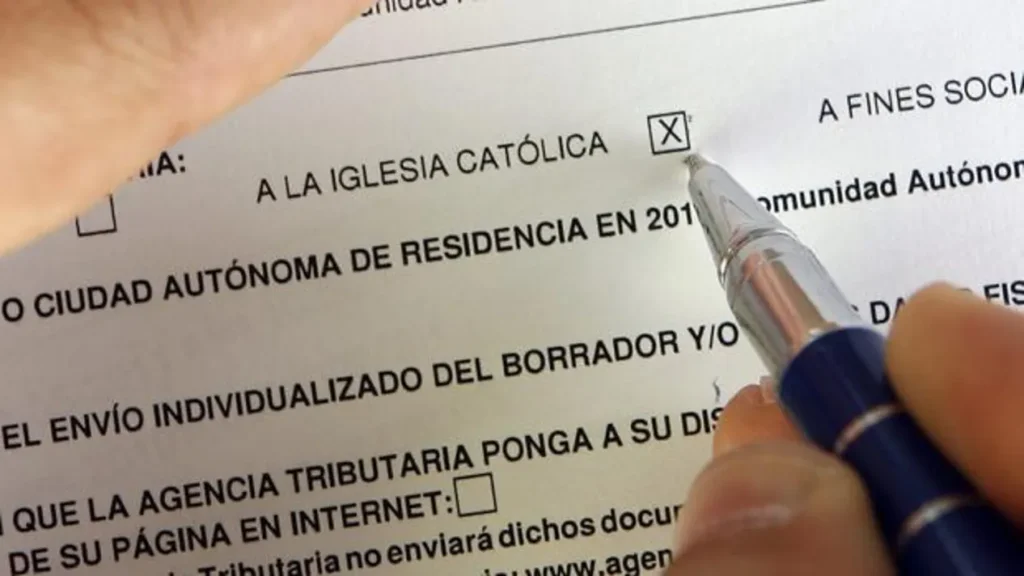
When you make your income tax returnYou have the option of marking the X (box 105) to allocate 0.7 % of your full tax liability to the financial support of the Catholic Church. This choice does not imply higher tax payments nor does it reduce the refund you may receive. In addition, it is compatible with box 106, intended for activities of social interest, allowing you to allocate an additional 0.7 % to social projects at no additional cost to you.

Updated data for the 2024 Income Tax Campaign

In the Renta 2024 campaign, corresponding to the 2023 tax year, 208,841 more declarations were registered in favor of the Catholic Church compared to the previous year. This represents a significant increase in taxpayer support.

The total amount allocated to the Church reached 382,437,998 euros, an increase of 23.6 million euros over the previous year. The average contribution per taxpayer who checked the box was 42.5 euros.

Marca la X a favor de la Iglesia

Where is the Church box on the tax return?

The box 105The "Tax Allocation to the Catholic Church", is located in the "Tax Allocation to the Catholic Church" section of the page 1 of the Model 100 on your income tax return. If you wish to contribute to the support of the Church, you must check this box. Remember that you can also simultaneously check box 106 to support activities of social interest.

Tax deductions for donations

In addition to the tax allowance, you can collaborate with the Church through donations, which are tax deductible according to Law 49/2002 on Patronage. For example, donations of up to 250 euros have a deduction of 80 %, which means that the Treasury will give you 200 euros back on your income tax return. This tax incentive makes it easier to support the work of the Church and its institutions.

What is the tax allocation?

It is the voluntary option to allocate a percentage of the full membership fee to collaborate with the economic support of the Catholic Church and/or other purposes of social interest.

Marking the X in the box for the Catholic Church in the income tax return does not mean that the taxpayer has to pay more or be refunded less and is fully compatible and independent of the allocation for other purposes of social interest. In both cases, 0.7 % of the total tax liability will be allocated to each option.

On the contrary, do not check any option. It will mean that 0.7 % of the total personal income tax liability will be imputed to the General State Budget for general purposes.

In any case, whatever your decision regarding the tax allocation, does not change the final amount of the tax you pay or the refund to which you are entitled. It does not affect your tax liability.You simply decide where you want a portion of your taxes to go.

marca la x de la iglesia web por tantos y ayuda
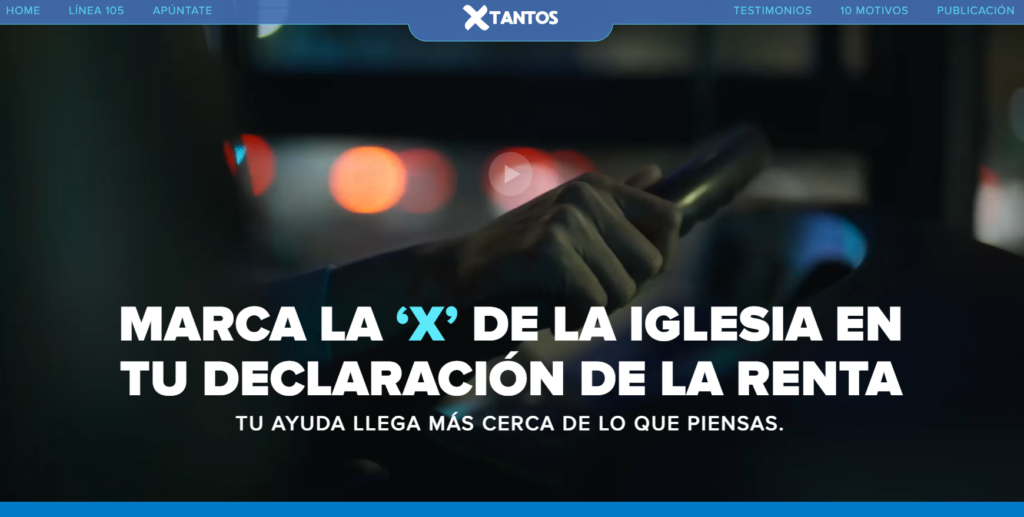
Check the X on the web church for so many, and help.

Tax deductions: will I pay more taxes?

Another to help the Church is by carrying out a recurring donation or punctual. Collaborating in this way with NGOs that support the work of the Catholic Church. These donations can be tax deductible in the tax return.

The tax deductibility of donations to NGOs is governed by the new Patronage Law 49/2002, which rewards private efforts in activities of general interest.

Tax benefits for donors

Thanks to the new Patronage Law, donations of up to 250 € will have an income tax deduction of 80 %. That is, by donating 20.83 €/month or 250 €/year, the Treasury will refund you 200 € in your income tax return.

For 20 € per month you can help us to our seminarians continue their formation and thus ensure that no vocation is lost.

The importance of checking the box for the Catholic Church on your income tax returns

Since 2007 the Church does not receive money from the General State Budget and renounces to the VAT exemption. That year the 1979 Agreement between Spain and the Holy See on economic matters was modified and the box 105 for the support of the Catholic Church was created.

The amount received from taxpayers who check the Catholic Church box on their income tax returns is distributed in solidarity from the Interdiocesan Common Fund.

This fund, which is made up of direct contributions from the faithful and taxpayers, is distributed among the different dioceses according to their size and needs. It accounts for an average of 25 % of the financing of the dioceses in Spain.

According to the latest available data, nearly 9 million people mark the "X" in favor of the Catholic Church in our country.

A gesture that the Church appreciates and encourages to continue doing so, in order to be able to continue with all the work it does for the benefit of society as a whole.

How is the Church financed?

The Church in Spain relies on several sources of financing to sustain its activities. The main ones are:

The transparency portal of the Church

The Church in an exercise of transparency, each year reports the amount of taxpayers' tax allocations received each yearand what has been the destination of this amount.

Once this amount is distributed, mainly to the dioceses, it becomes part of their diocesan economy. All this information is reflected each year in the Annual Report of activities of the EEC.

On the website of the Episcopal Conference, each year they report the amount received by checking the box for the Catholic Church on the income tax return.

It has as mission to bring the Church closer to society by promoting measures of transparency and good economic governance in the Episcopal Conference and its works, as well as in the rest of the entities that depend on it.

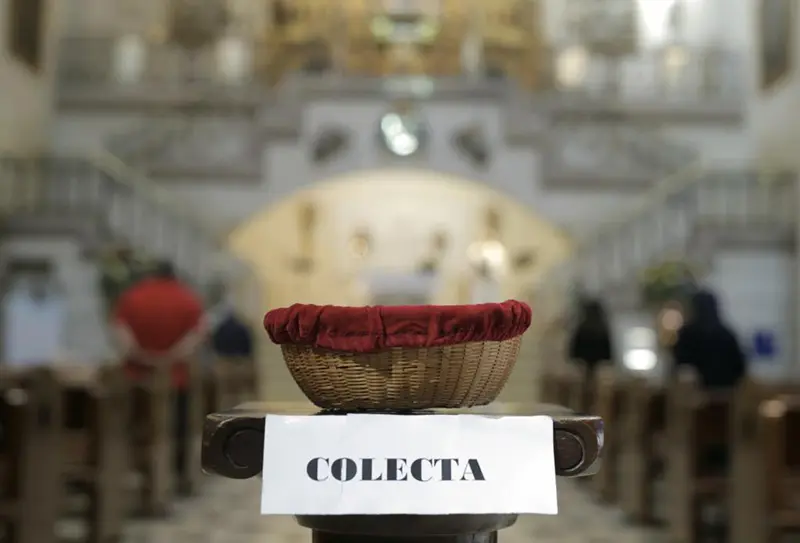
Cestillo de la colecta

Destination of funds contributed by checking the church box on the Income Tax Return

The amount from the tax allocation is sent to the 70 dioceses in Spain.. The dioceses integrate it into their diocesan budget to undertake the activities proper to the Church.

More than half of the the expenses of all Spanish dioceses were pastoral and welfare expensesThe cost of the buildings, together with building maintenance and operating expenses.

The Episcopal Conference annually requests information from the dioceses on their consolidated financial accounts, including the parishes, in order to provide transparency to the process and obtain information on the origin of their resources and the applications that have been given each year.

With the action of marking the "X" in the church box on the income tax, we contribute resources for the Church to continue carrying out activities that benefit the whole of Spanish society.

That is why the Church thanks all those Spaniards who contribute with this gesture and with the rest of the campaigns carried out throughout the year to support the religious, spiritual and social work at the service of millions of Spaniards.

This contribution is decisive in sustaining the immense work of the Church, which, in order to continue helping, needs more than ever the collaboration of everyone.

For all these reasons CARF encourages you to check the box for the Catholic Church. in this year's income tax return.