The Feast of the Baptism of the Lord is a Christian celebration that commemorates a central moment in the life of Jesus: his death. baptism in the Jordan River by his cousin John the Baptist, The solemnity, which marks the beginning of his public mission, is celebrated on the feast of St. Josemaría. This solemnity is celebrated in the Catholic Church on the Sunday following Epiphany, and in 2026 the Sunday, January 11.
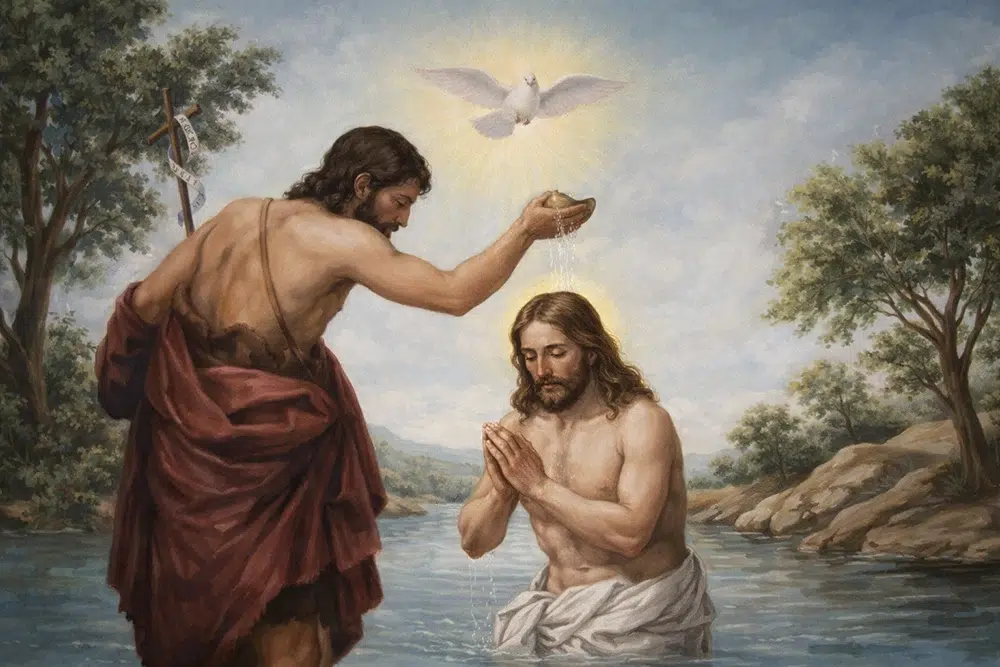
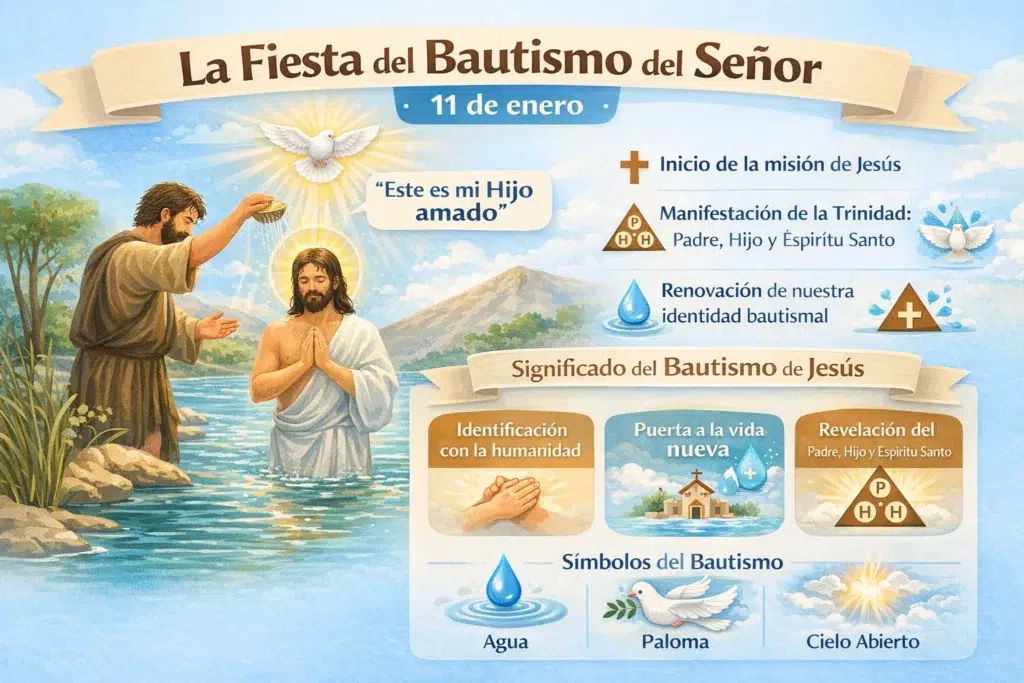
The feast recalls the event narrated in the synoptic gospels (Matthew 3, Mark 1 and Luke 3): Jesus arrives at the Jordan River and receives the baptism from the hands of St. John the Baptist. As they emerge from the water, the skies open up and the Holy Spirit descends upon Him in the form of a dove, while a voice from heaven confirms: “This is my beloved Son”.
This episode is interpreted as a public manifestation of the identity of Jesus as the Son of God, the inauguration of its public ministry and the revelation of the Trinity -Father, Son and Holy Spirit - who becomes present at that moment.
Thus, it is not just a historical memory, but a profound theological revelation about who Jesus is and how he relates to humanity and to God the Father.
Location in the liturgical calendar
The Feast of the Baptism of the Lord closes the Christmas time and gives way to the Ordinary Time in the Catholic liturgy.
If we make a brief context of dates: The Christmas season begins on December 25th with the birth of Jesus. It includes the Solemnity of Mary, Mother of God (January 1), the Epiphany (January 6) and other commemorations (the Holy Innocents). Finally, it culminates with the Feast of the Baptism of the Lord, which this year is celebrated on Sunday, January 11, 2026.
After this Solemnity, the Church faces the Ordinary Time, The year is a more stable stage of the liturgical year that lasts until Lent.
Jesus identifies with humanity. Although Jesus was without sin, he submitted to John's baptism in order to identify with us, men and women in need of redemption. His gesture was not a sign of personal need, but of solidarity and acceptance of the human condition and obedience to the Father's will.
Baptism is salvation . The baptism that Jesus receives becomes the symbol and foundation of the sacrament of Baptism in the Church. From this point on, Christian baptism will be seen as: a sign of conversion and forgiveness of sins; access to life in the Holy Spirit and our divine filiation; and entrance into the Church as the People of God.
Revelation of the Holy Trinity
The gospel account of this day shows the simultaneous presence of the Son (Jesus), of the Father (the voice from heaven) and of the Holy Spirit (the dove). This event is one of the clearest scenes of the Trinitarian Theophany in the gospels.
Liturgical readings and symbols
Liturgy of the day
In the Eucharistic celebration of this Sunday, the readings usually include texts that present the figure of Jesus as Servant of the Lord, The Gospel narrates the baptism of Jesus himself in the Jordan, and shows the call to the disciples to live the faith with coherence.
These texts invite the faithful to remember your own baptism, to renew baptismal promises and to live an active faith in the world.
Symbols
A reflection for the faithful
The Feast of the Baptism of the Lord is a ritual commemoration and an opportunity to reflect on Christian identity. The Church, in various reflections and homilies, invites us to see this day as a call to remembering our baptism and the commitment it implies; an invitation to live a faith that is consistent with the following of Jesus; and an opportunity to deepen the gift of the Holy Spirit in our lives.
Pope Leo XIV reflected on the Feast of the Baptism of the Lord, recalling that with this celebration begins the Ordinary Time of the liturgical year, «a period that invites us to follow the Lord, to listen to his Word and to imitate his gestures of love for our neighbor.". According to the Pope, in this way «we renew and confirm our own Baptism, the sacrament that makes us Christians, freeing us from sin and transforming us into children of God, through the power of his Spirit of life».
The relationship with John the Baptist
John the Baptist has a central role in this feast. His mission was to prepare the way for the Messiah, calling the people to the conversion of sins and to a new life in the Spirit. By baptizing Jesus, John fulfills the mission entrusted to him and recognizes Jesus as the Lamb of God.
The Feast of the Baptism of the Lord is closely linked to Epiphany, which celebrates the manifestation of Jesus to the world on January 6, but also to Christmas, which celebrates the birth of Christ on December 25. This feast opens the door to the beginning of Ordinary Time, which calls the faithful to live their faith in daily life.
On this day, the Church recalls a historic event and proposes a current experienceThe first step is to return to the origin of our faith, to renew our baptismal commitment and to move forward in our daily Christian mission.
Some baptism stories
Table of Contents
 carf@fundacioncarf.orgLandline: +34 914 029 082Mobile: +34 638 078 51145 Conde de Peñalver Street.