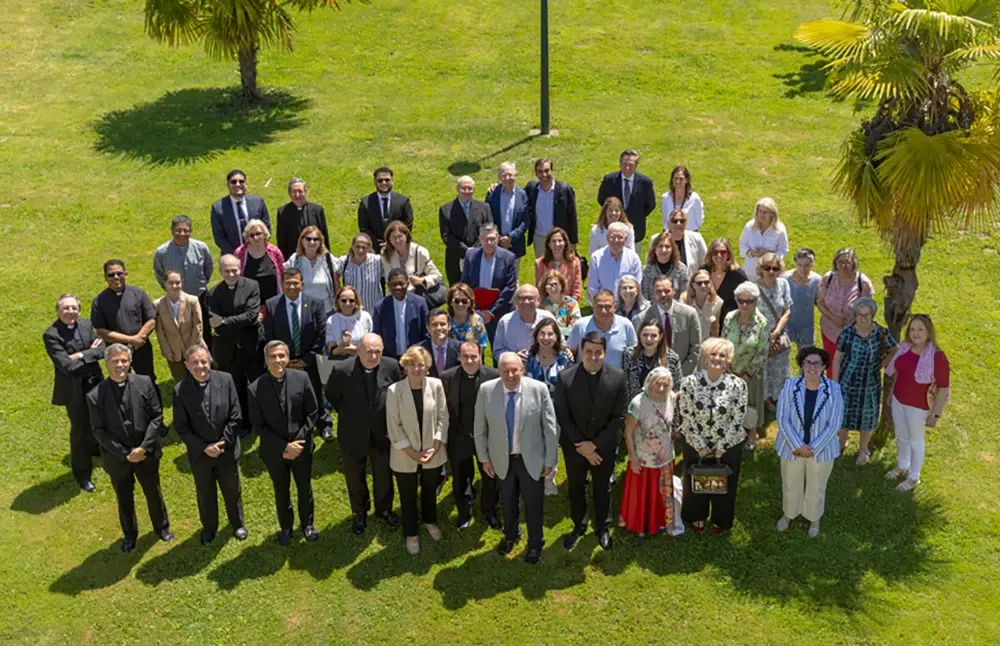
As is customary, the annual gathering of benefactors, seminarians, and priests is held in Pamplona on the last Friday in May. This event is an opportunity to give thanks to God for vocations, pray for priests and seminarians, and learn about the work the CARF Foundation has been carrying out since 1989.
During this visit, we toured the Ecclesiastical Faculties of the University of Navarra and the Bidasoa International Seminary, where the seminarians supported by the CARF Foundation live and study. The priests live in college dormitories and priestly residences throughout Pamplona. The city is grateful for the work they all do in the parishes of the diocese.
«There are days that can’t be understood through the agenda alone, but rather through what they stir up inside. And that was much more than an institutional visit or an academic gathering. It was a glimpse—almost unintentional—into the silent heart of the universal Church,» is how the journalist describes the gathering Matilde Latorre in *Religión en Libertad*, who attended this gathering filled with excitement.
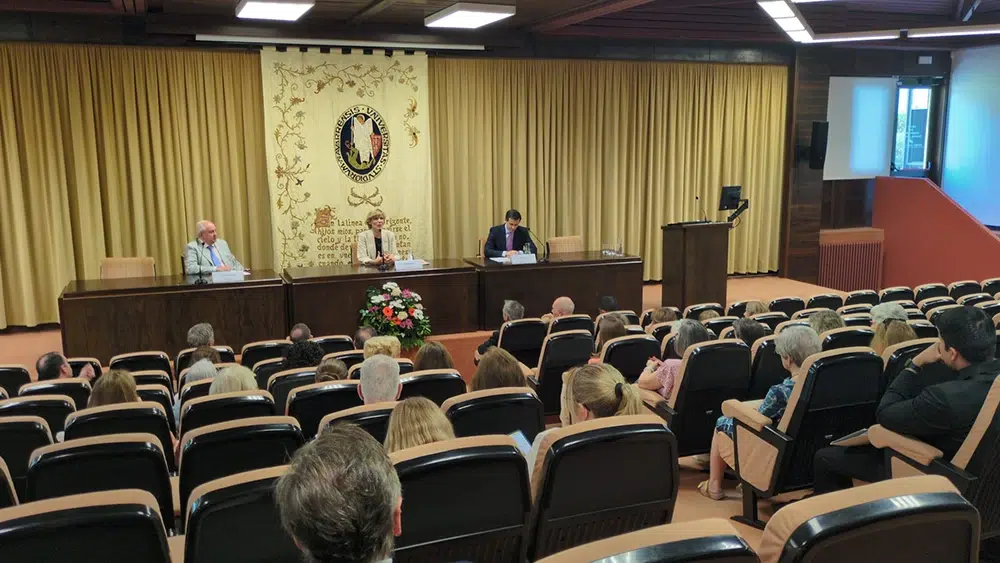
The morning began with opening remarks from María Iraburu Elizalde, president of the University of Navarra since January 2022 and the first woman to lead the institution.
A professor of biochemistry and molecular biology, Iraburu welcomed the attendees by emphasizing the University’s commitment to the holistic formation of those who, in a few years, will serve the Church on all five continents. Her remarks set the tone for a day in which the academic and spiritual dimensions were consistently linked to the institution’s service and mission.
«We are the beneficiaries of the generosity of many donors. We are serving the universal Church by training well-prepared individuals for service in the diocesan curias. Our mission has a catalytic effect: to nourish the Church across the five continents,» said the rector.
A priest trained to offer hope to those who are suffering
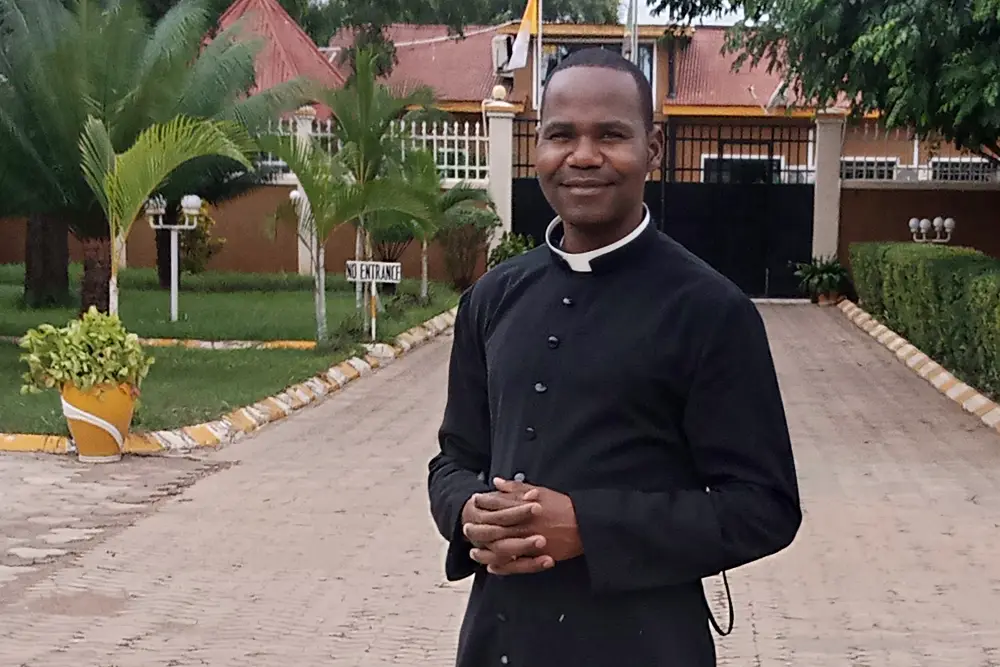
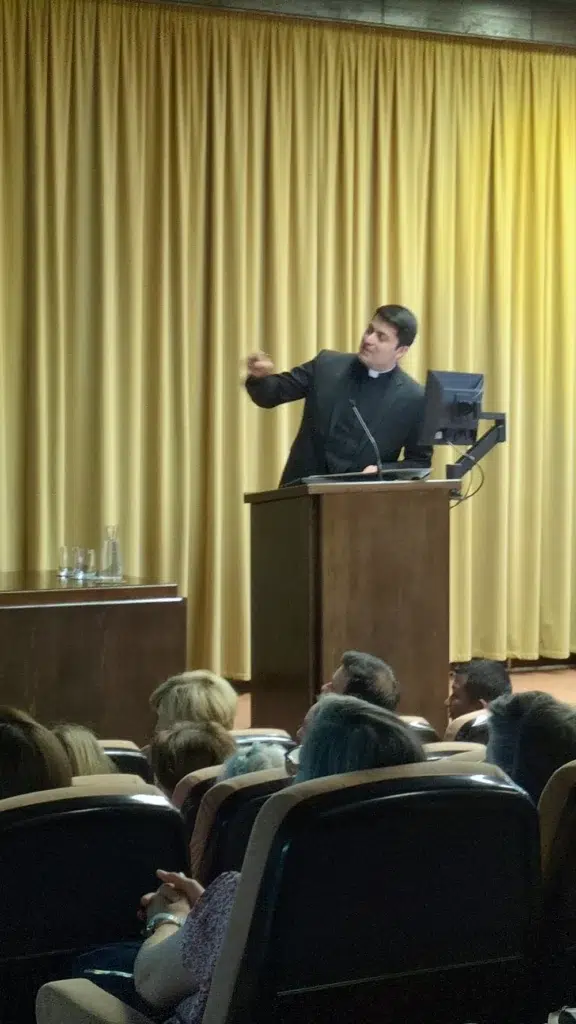
One of the most moving moments of the morning came with the testimony of the Mexican priest Francisco Javier Navarro, a former student at Bidasoa, who has now, years later, returned to continue his education.
A native of the Diocese of Culiacán, in the Mexican state of Sinaloa, Father Javier described a reality marked by violence, where peace has become an urgent necessity for thousands of people. «We need peace. In this context, being a priest is not easy. Our mission is to sustain the hope of all who suffer,» he explained to those in attendance.
«Bidasoa Shapes Character»
Ordained a priest twelve years ago, he recalled with particular fondness his time at Bidasoa and the profound impact that formative period had on him. «At Bidasoa, they prepared me to face even the most difficult moments of my ministry. Those years there had a profound impact on us because Bidasoa 'builds character,'» he said.
His ministry got off to a particularly challenging start. Just eight months after being ordained a priest, his bishop appointed him, at the age of 26, as pastor of the Church of Mary Help of Christians, where he began working with many young people.
Currently, 174 priests serve in his diocese, many of whom were trained in Bidasoa and at the international seminary Sedes Sapientiae in Rome.
But it was the most painful experiences of his ministry that gave him a better understanding of the significance of the training he had received. «There are very difficult moments, such as having to tell a mother that her son has been kidnapped or informing a wife that her husband has been murdered. For that, you need to have a Catholic heart,» he said.
The father Navarro He wanted to give special thanks to the Social Action Board (PAS) of the CARF Foundation the custom-made dawn she received back then and, above all, the backpack with sacred vessels which allows him to celebrate Holy Mass in places where there isn't even a chapel.
His conclusion was one of the most meaningful statements of the entire day: the CARF Foundation It is not only funding studies, but also training priests who are capable of bringing hope to places where conditions are most difficult.
A Mass that 'renews you from within''
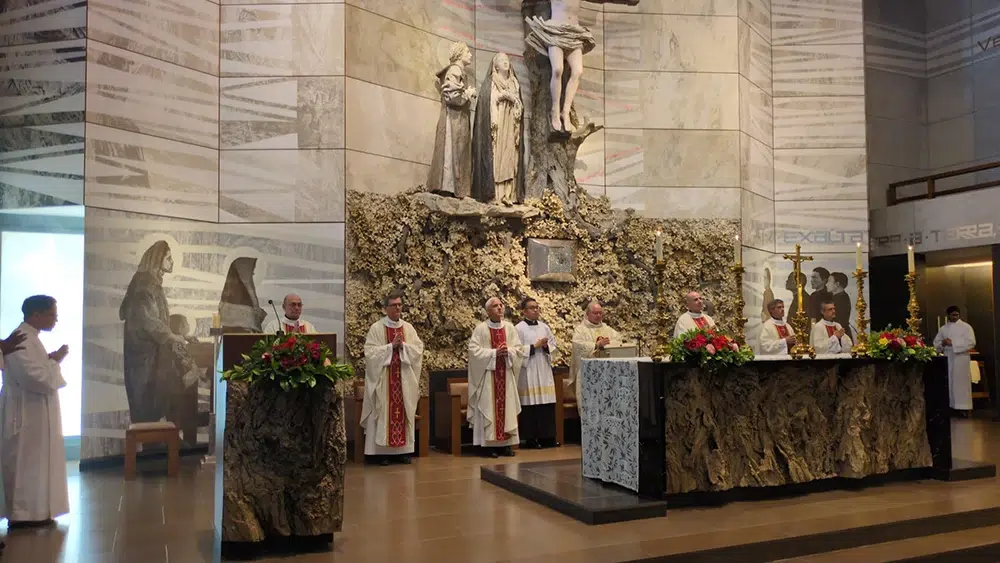
Following the testimonies, the benefactors and friends of the CARF Foundation participated in the solemn Mass celebrated in the main chapel of the Bidasoa International Seminary.
It's hard to find a better description than the one provided by Matilde Latorre: «Then came the solemn Mass. And There are times when words just aren't enough. Because there was something about that Eucharist that was hard to explain: beauty without spectacle. Silence full of meaning. A pure, unpretentious solemnity that seemed to lift you, for a few minutes, out of the constant noise in which we find ourselves trapped.
»The voices, the incense, the rhythm of the liturgy, the young faces praying with serene depth… everything had a quality that lifted the soul almost without asking permission. There are Masses that you simply listen to. And there are others that truly transform you from within.".
That celebration was exactly that: a prayerful experience capable of restoring a sense of what is essential.
Conversations That Bring the Whole World Closer Together
The meal that followed provided another of the most enriching moments of the gathering. Seated alongside the seminarians and formators, the benefactors were able to talk with them, learn about their concerns, hear about their plans, and discover the realities of the countries they come from.
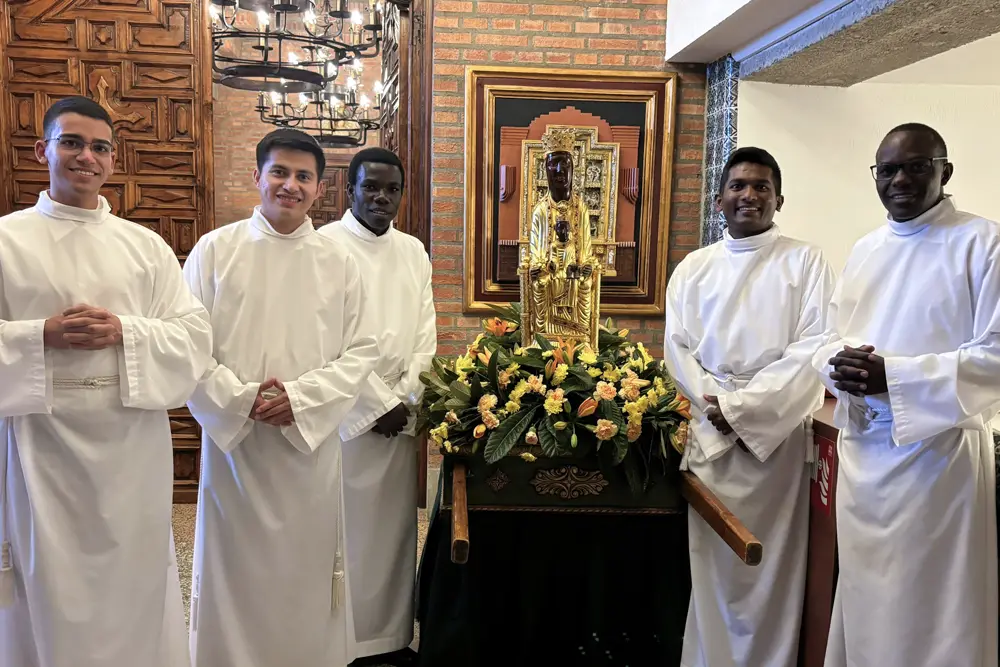
Bidasoa is currently home to nearly a hundred seminarians from around the world. Each table thus becomes a small window onto Africa, the Americas, Asia, Europe, and Oceania—all united by the same faith.
Learning about their lives helps us understand that behind every act of support and every prayer there are people who will one day return to their dioceses to serve millions of the faithful.
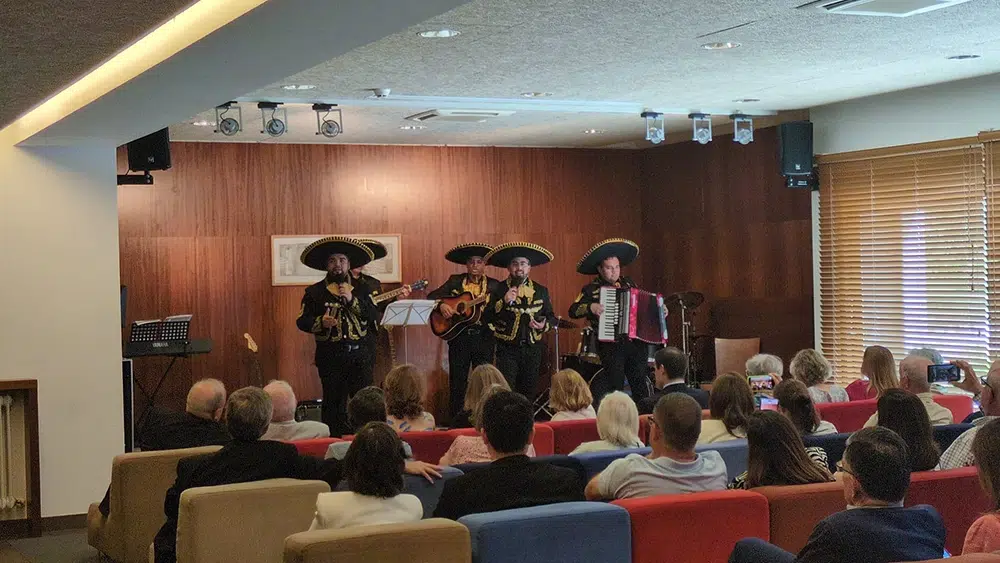
While the morning was marked by reflection and testimonies, the afternoon was filled with joy and music. The traditional show put on by the seminarians once again turned into a family celebration.
Attendees enjoyed the singing in Swahili and the vibrant Afro dance performed by eight seminarians from Tanzania and the regular mariachi band from Bidasoa, which never fails to bring smiles and applause.
The band from Bidasoa was also there, performing songs such as The Heart in the Suitcase y When No One Is Watching Me. One of the most celebrated moments came with the performance of “Noa Noa,” which had many audience members on their feet amid applause, cheers, and displays of enthusiasm.
In every performance, one could sense the care with which the seminarians had prepared the show to thank their benefactors for their support during their years of training.
The Most Valuable Gift for a Future Priest
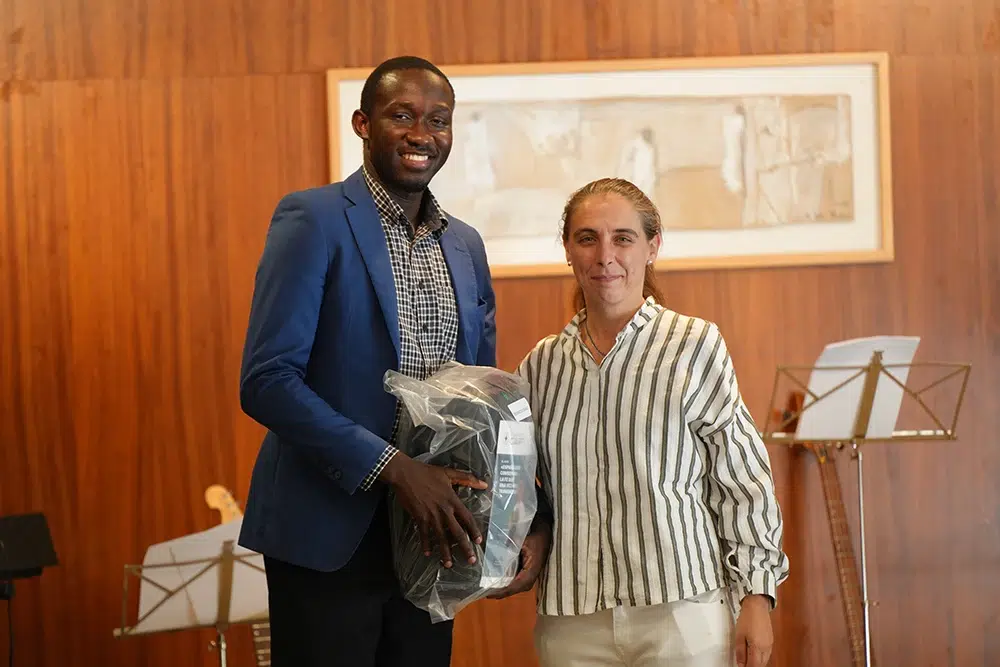
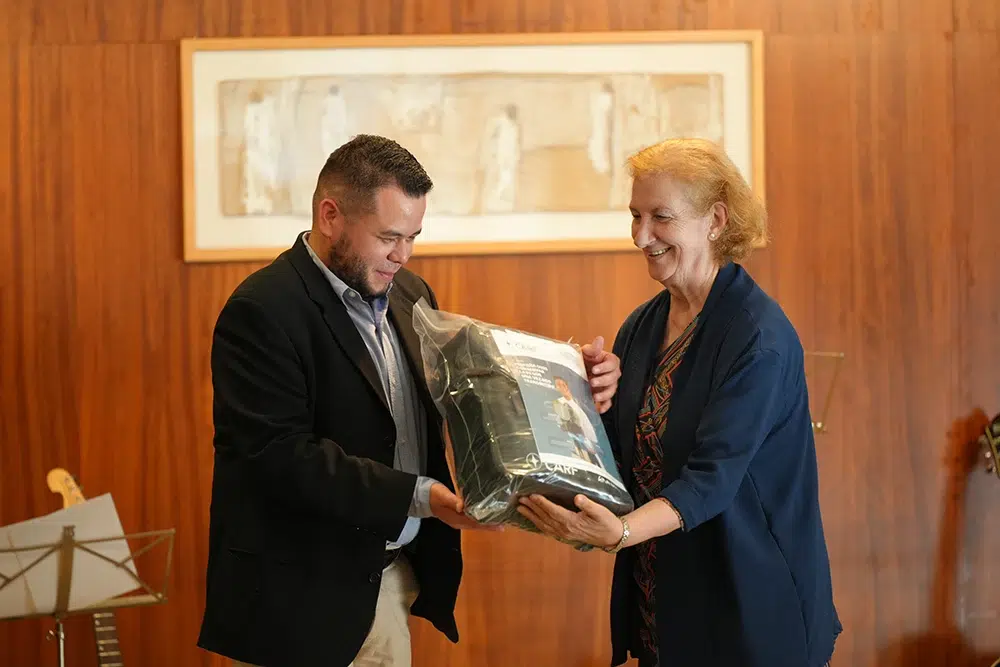
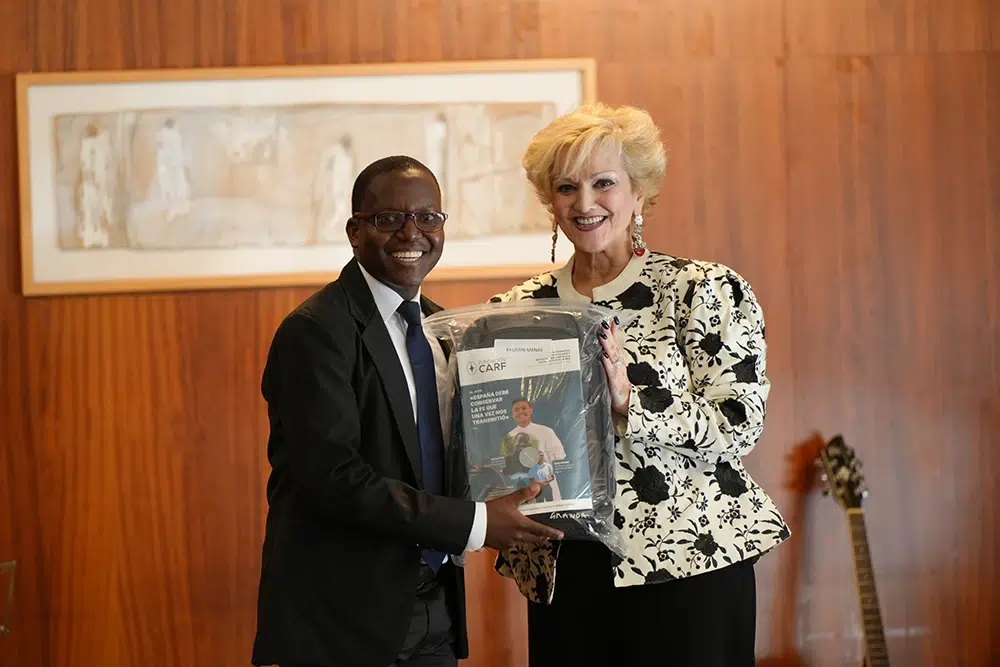
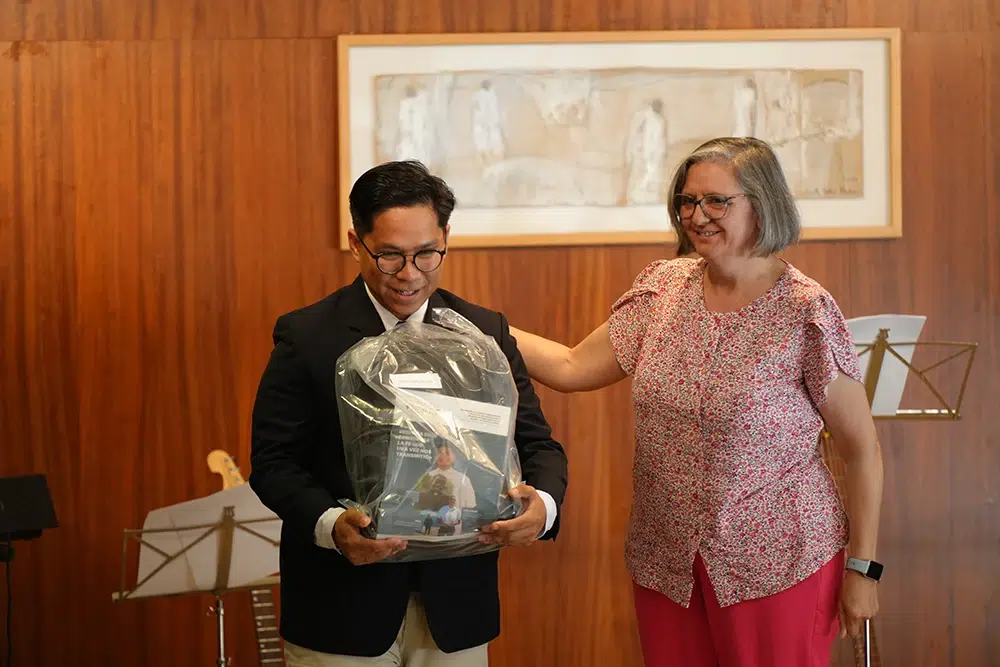
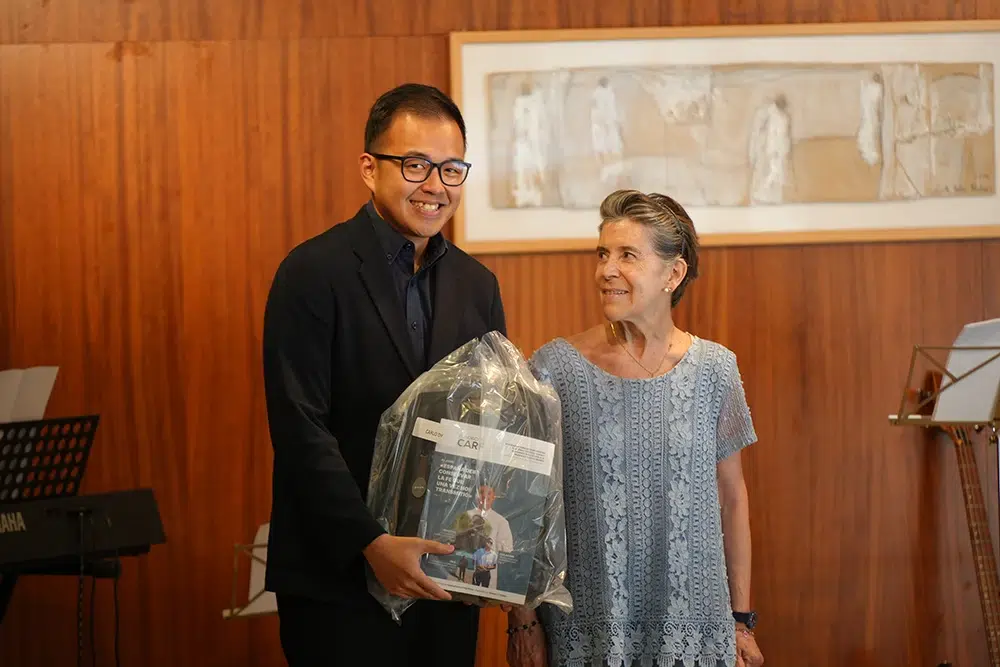
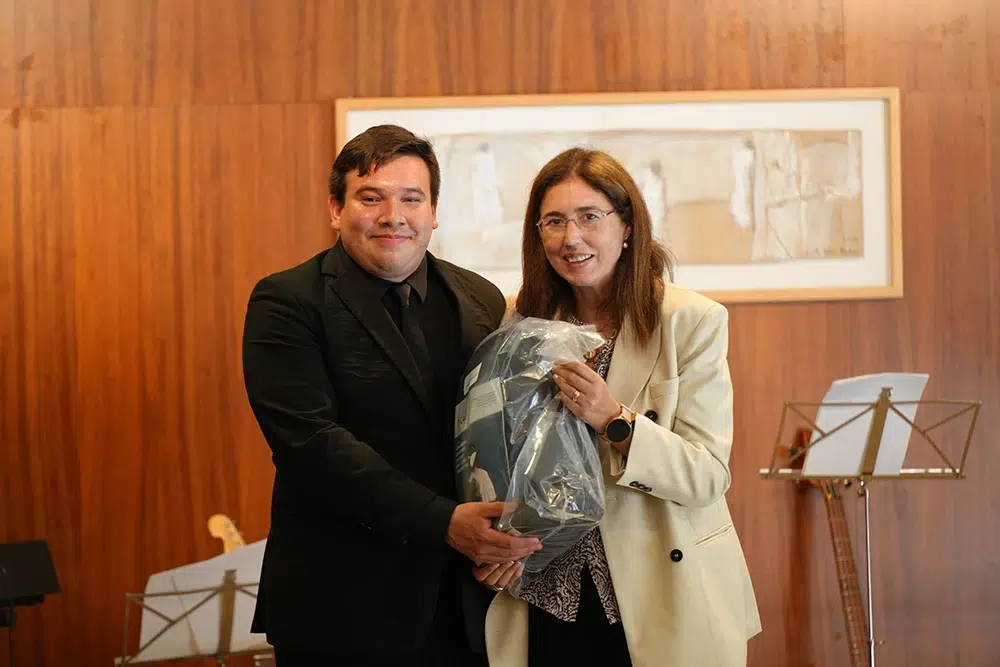
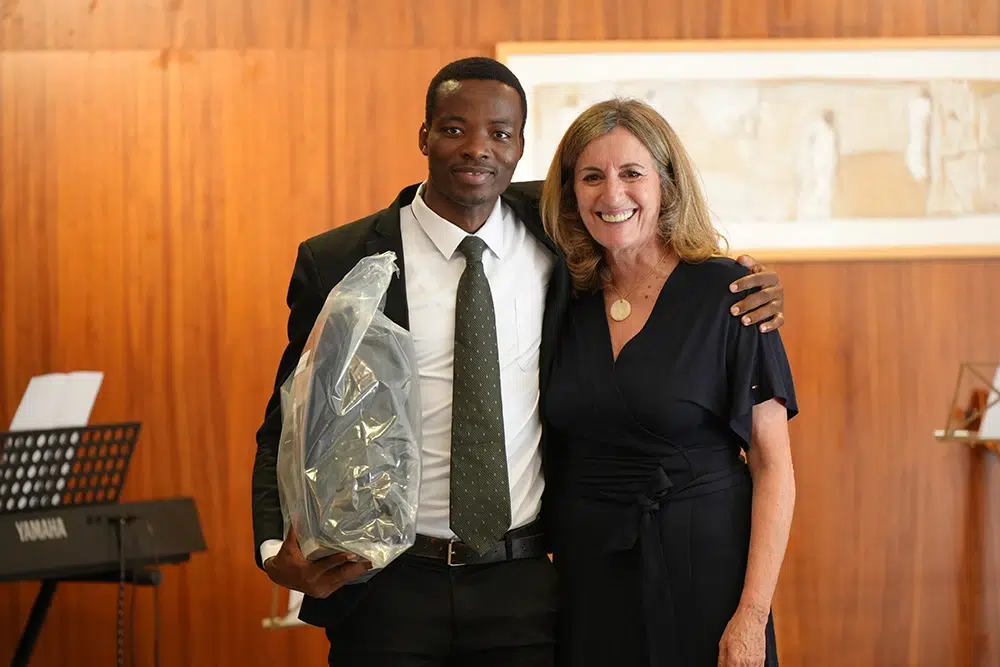
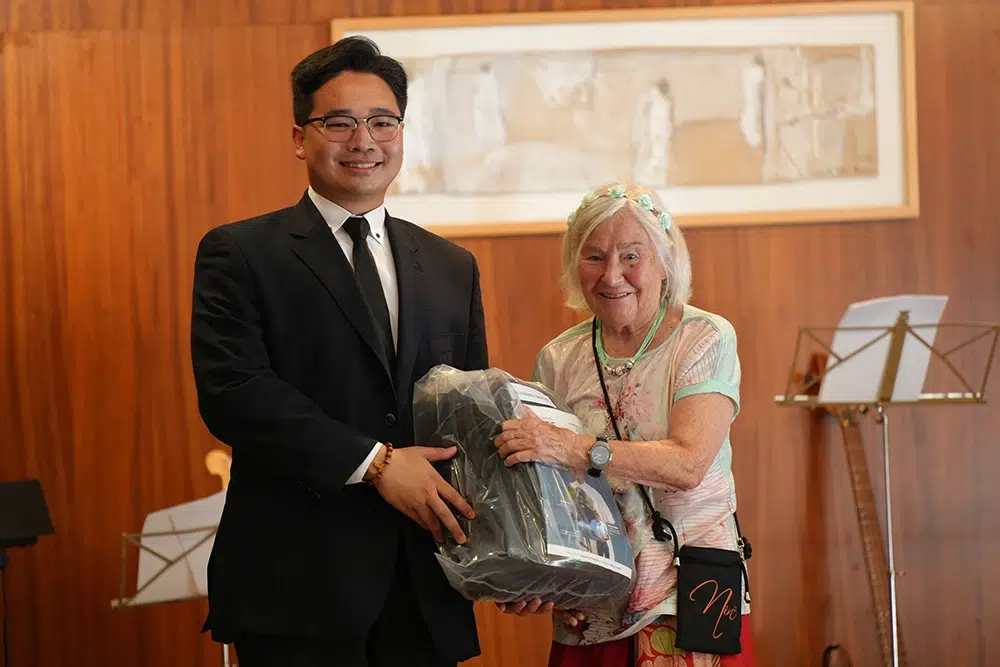
The highlight of the day came, as it does every year, with the presentation to the seminarians of the sacred vessel backpacks prepared by the PAS of the CARF Foundation for those who, after completing their studies at the Ecclesiastical Faculties of Navarra, return to their home countries to be ordained as priests by their bishops.
For many of them—who were visibly moved—that backpack means more than just a gift. Valued at 700 euros, contains all the elements necessary to celebrate Holy Mass in a dignified manner and to administer the sacraments in places where the necessary materials are not available.
That is why it has become the most cherished gift for a newly ordained priest. Thanks to it, they will be able to celebrate the Eucharist in remote villages, rural communities, mission areas, or places where there isn’t even a church building. It helps the Church continue to reach the forgotten corners of the world.
A Heartfelt Prayer Before the Blessed Sacrament
The day concluded with a solemn exposition and blessing of the Blessed Sacrament and the recitation of the Holy Rosary at the campus chapel. After so many moving moments, songs, conversations, and testimonies, the day ended in the very place where everything makes sense: Christ.
On the way home, many shared the same feeling. Matilde Latorre described it once again in words that are hard to improve upon: «At the end of the day, as we were returning, one had the strange sensation of having touched upon something very essential about the Church. Something that doesn’t usually make the news. Because far from the noise, the controversies, and the constant oversimplifications, there are places like Bidasoa where dozens of Young people continue to say yes, continue to prepare themselves to serve, and continue to believe that it's worth giving your life for".
Perhaps that is the best way to describe what we experienced on May 29. A day that broadens the soul and gladdens the heart. An event that allows us to contemplate the fruits of the generosity of thousands of people. And, above all, an opportunity to discover that, quietly, in places like Bidasoa, the future of the universal Church continues to be built.
Marta Santínjournalist specializing in religion.
 carf@fundacioncarf.orgLandline: +34 914 029 082Mobile: +34 638 078 51145 Conde de Peñalver Street.