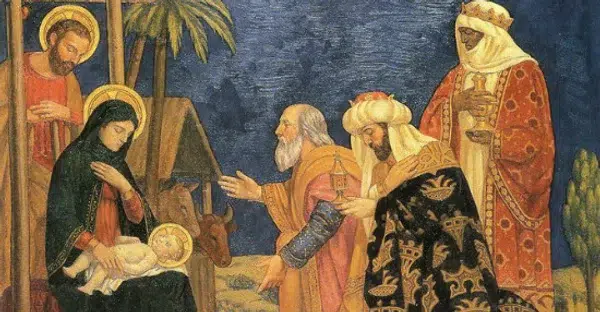
Every January 6, the Church celebrates the Epiphany of the Lord, one of the oldest solemnities in the liturgical calendar. This feast commemorates the manifestation of Jesus Christ as Savior and universal king, symbolically represented in the adoration of the Three Wise Men from the East.
This is more than just a pious memory; it is a central affirmation of the Christian faith: Christ has come and manifests himself to save everyone, regardless of people, cultures, or races.
The word epiphany comes from the Greek epiphany, which means manifestation or appearance. In Christian tradition, this solemnity emphasizes that the Baby Jesus, born in Nativity scene, belongs to the people of Israel and is also recognized by the Gentiles, symbolized by the Magi. The liturgy of this day thus emphasizes the universality of salvation.
Since the early centuries of Christianity, Epiphany has had a marked missionary character. The Magi—wise men from the East, guided by a star—represent humanity seeking the truth and who, even without knowing the law or the prophets, are able to recognize God when he manifests himself. Their pilgrimage to Bethlehem shows the path of faith, made up of searching, questioning, and worship.
The gifts they offer to the Child Jesus –gold, frankincense, and myrrh– have profound theological significance. Gold recognizes his royalty; frankincense, his divinity; and myrrh anticipates his Passion and Death. In a simple gesture, yet one laden with symbolism, the Magi confess who that Child lying in a manger truly is.
Epiphany also reminds us that Christian faith must be lived openly and never with a self-referential approach. Those who have found Christ are called, like the Magi from the East, to return by another route, that is, to live transformed or transforming others to bear witness with a life consistent and devoted to the worship of the Child Jesus.
Gospel according to Saint Matthew (Mt 2:1-12)
«Having been born Jesus In Bethlehem of Judea, during the time of King Herod, magi from the East arrived in Jerusalem asking:
— Where is the King of the Jews who has been born? For we have seen his star and have come to worship him.
When King Herod heard this, he was greatly disturbed, and all Jerusalem with him. He called together all the chief priests and scribes of the land and inquired of them where the Messiah was to be born. They replied,
— «In Bethlehem of Judea, for thus it is written by the prophet: “And you, Bethlehem, land of Judah, are by no means the least among the towns of Judah, for out of you will come a leader who will shepherd my people Israel.”.
Then Herod secretly summoned the magi to find out the exact time the star had appeared, and sent them to Bethlehem, saying to them:
— «Go and find out carefully what has happened to the child, and when you find him, let me know, so that I too may go and worship him.».
After hearing the king, they set out, and suddenly the star they had seen rising began to guide them until it came to rest above the place where the child was.
When they saw the star, they were filled with great joy. They entered the house, saw the child with Mary, his mother, and falling on their knees, they worshiped him. Then, opening their chests, they offered him gifts: gold, frankincense, and myrrh. And having received a warning in a dream not to return to Herod, they departed for their own country by another route.
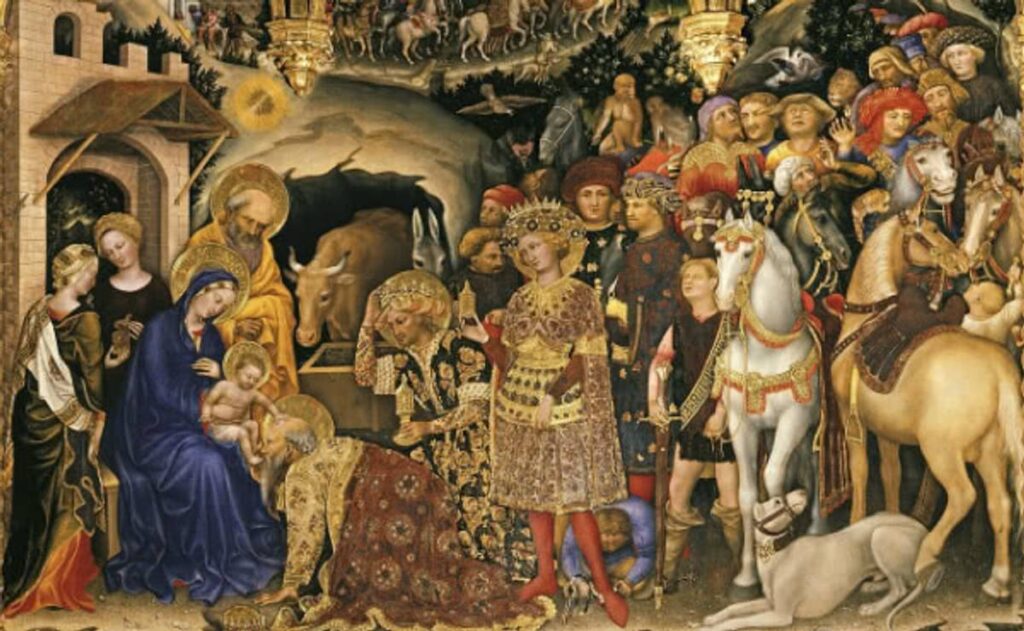
The Gospel story contrasts two attitudes toward the arrival of Christ. On the one hand, there is Herod, who sees his power threatened and responds with fear and violence. On the other hand, there are the Magi, who allow themselves to be guided by the light and welcome the truth with joy. This tension remains relevant today: Epiphany challenges each person to consider how they react to the presence of God in their lives.
The star that guides the Magi occupies a central place in the iconography and spirituality of this holiday. It is not just an astronomical phenomenon, but a sign of the light of God that guides those who seek with a sincere heart. The liturgy presents Christ as the “light of the nations,” the fulfillment of the promises made to Israel, and the hope for all humanity.
In many countries, especially in Spain, Epiphany also has a strong cultural and family dimension, associated with the tradition of the Three Kings. However, the liturgy Remember that the deeper meaning of the feast goes beyond folklore: celebrating Epiphany is renewing the certainty that God has become close and accessible to all.
The solemnity also invites us to rediscover the missionary vocation of the Church. Just as the Magi brought with them the news of what they had seen, Christians are called to be witnesses of Christ in the world, through consistent words and deeds.
On the Epiphany of the Lord, the Church proclaims that God allows himself to be found, who comes out to meet humanity and reveals himself in humility. A message that is especially relevant in a time marked by uncertainty and the search for meaning.
Table of Contents
 carf@fundacioncarf.orgLandline: +34 914 029 082Mobile: +34 638 078 51145 Conde de Peñalver Street.