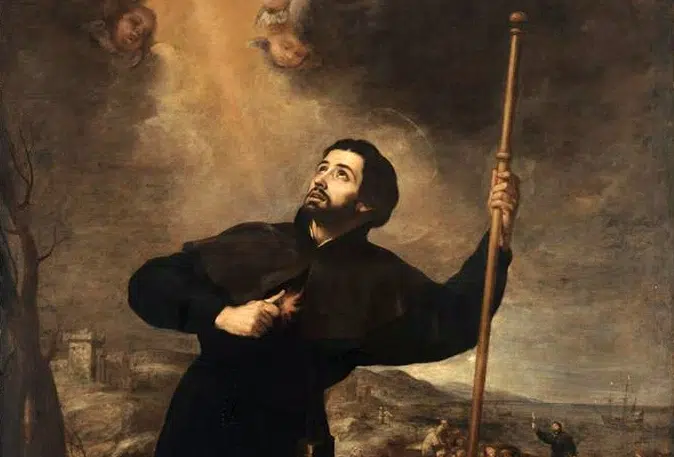
Saint Francis Xavier He is one of the most prominent figures in the history of Christian evangelization, and each year his feast day reminds the Catholic Church that mission requires prior preparation, sending, and a truly universal vision.
His life, marked by total dedication, is naturally connected to the work carried out by institutions dedicated to priestly formation, such as the CARF Foundation. This relationship allows us to view his life not as an isolated historical episode, but as a living reference for the service that the Church provides throughout the world.
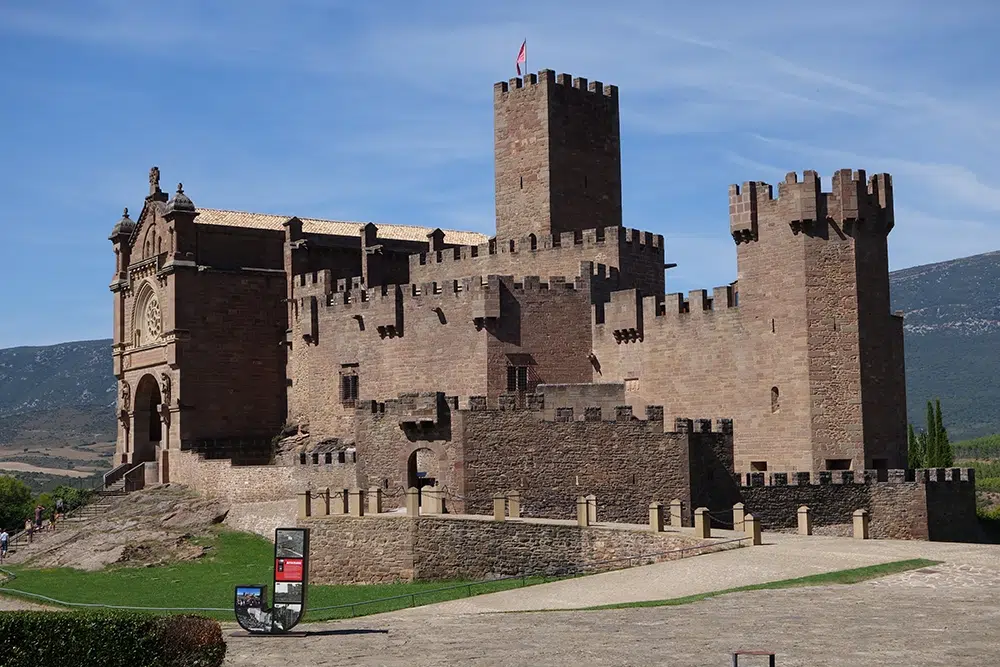
Francisco de Jasso Azpilicueta was born in 1506 in the Javier Castle, Navarre, into a noble family. From a young age, he stood out for his intellectual and athletic abilities, which opened the doors to the University of Paris, where he became a professor. There he experienced a decisive period for his vocation: his encounter with Íñigo de Loyola, his roommate and friend: Saint Ignatius.
At first, Francisco had no intention of orienting his life toward the religious life or missionary. His goal was to advance academically. However, Ignatius knew how to challenge him with a phrase that became a turning point: «What good is it to gain the whole world if you lose your soul?» Over time, that message transformed his priorities.
This inner change led him to join the founding nucleus of the Society of Jesus in 1534. That decision marked the beginning of a life devoted entirely to serving the Catholic Church throughout the world.
In 1541, at the request of the king of Portugal, the Society of Jesus was commissioned to send missionaries to the kingdom's Asian territories. Although Ignatius had initially considered other companions, circumstances led Francisco Javier to set sail for the East. He accepted without hesitation.

His arrival in Goa in 1542 marked the beginning of an unprecedented missionary period. Saint Francis Xavier traveled throughout India, Malacca, the Moluccas, and Japan, always with a clear approach: closeness to the people, learning languages, seeking cultural adaptation, and an attitude of constant listening. His dream was to reach China, but he died in 1552 on the island of Shangchuan, at the gateway to the continent.
His method, based on direct presence and understanding of the local context, laid the foundations for what the Church today recognizes as respectful and deeply human evangelization.
Javier understood that his vocation as a missionary was not an abstract idea, but a concrete task that required humility, study, and perseverance. His ability to move between different cultures, learn languages, understand societies, and love them meant that his inner fire (his love for Jesus Christ) led him to baptize more than thirty thousand people. It is said that sometimes he had to support one arm with the other because his strength failed him from administering the sacrament so often.
His apostolate also reached Europe through passionate and enthusiastic letters that inspired many other young people to become missionaries in the following centuries.
One of the most important elements of his work was the training of catechists, the creation of Christian communities, and the preparation of local leaders who would ensure the continuity of the Catholic Church's evangelization. St. Francis Xavier knew that it was not enough to reach new territories: it was essential to train people capable of sustaining the faith in each community.
This emphasis makes his life a direct reference point for those who work today in the comprehensive training of priests. The CARF Foundation carries out work that also connects with the missionary vision of St. Francis Xavier: to train seminarians and diocesan priests with sufficient intellectual, human, and spiritual preparation to evangelize anywhere in the world.
Each year, the Foundation supports seminarians and priests from more than 130 countries, many of them from places where the Church is growing, where resources are scarce, or where pastoral challenges are great. This diversity reflects the universality that St. Francis Xavier embodied during his life as a giant of the missions.
Saint Francis Xavier is known as the man who transformed the missions into a global adventure. His eagerness to save souls led him to never stop, and he always sought to go further. For all these reasons, the Catholic Church named him Universal Patron of Missions (alongside Saint Thérèse of the Child Jesus, although for reasons different from hers).
Young people studying with the support of the CARF Foundation are trained for their home diocese and to serve the universal Church. They learn to engage in dialogue with different cultures, to understand complex social realities, and to support communities where, often, the priest is the only educational or social reference point.
Just as St. Francis Xavier knew that the mission needed well-trained people, the CARF Foundation helps parishes, dioceses, and mission territories to have solidly trained priests. All of these students return to their countries, where the figure of the priest is essential for education, spiritual guidance, community stability, and the transmission of the faith.
From a human perspective, which is difficult to explain, what is most striking about the life of Saint Francis Xavier was the sheer physical magnitude of his work. In the 16th century, without modern means of transportation, he traveled some 100,000 kilometers. kilometers (equivalent to circling the globe more than twice). It is rightly called the giant of missions.
If anything characterized the life of St. Francis Xavier, it was his global vision and his ability to break new ground. The mission of the CARF Foundation replicates his geographical adventure from its very essence: to create conditions for faith to reach where it is most needed, in an orderly, profound, and forward-looking manner.
 carf@fundacioncarf.orgLandline: +34 914 029 082Mobile: +34 638 078 51145 Conde de Peñalver Street.