The Holy Mass, the Fullness of Time

In this meditation by Father Ricardo Sada, he explores how the Holy Mass It renews the significance of Christ's sacrifice, revealing our identity as children of God and becoming the very heart of every Christian's life.

«We know that the Bible is the word of God; it is not merely human words, even though they were written by the sacred writers, but rather it is the revealed word, the word of eternal life.".

And St. Paul teaches us: "When the fullness of time had come, God sent his Son, born of a woman, born under the law.".

When the fullness of time had come—the pivotal moment in human history, when several thousand years had passed (we do not know exactly how many) since the Fall, and the people of Israel had been chosen so that the Messiah might be born among them, when everything was already in place—God sent His Son. His only Son, born of a woman, born under the law. Born of a woman, He took on human flesh in a woman’s womb and is therefore truly human, while at the same time being the true Son of God.

And why? St. Paul says: "So that we might attain the fullness of sonship." It is not something that remains merely in God’s Word; rather, it affects us deeply. And so the Church says: "Christ reveals man to himself." Christ reveals to us the profound mystery of man. What is man? Who are you? Or who am I?

The Mass, Elevated to the Divine Order

We are a spirit incarnate, made for union with God forever, to live in intimacy with God because God unites us to His Son and gives us the life of His Son. And so He tells us, "This is who you are—you are a spirit dwelling in the flesh." But it is not just that; you are not merely body and soul, but because you have a soul, you are capable of being elevated to the divine order.

And so I think it’s important that we always adjust our understanding of what it means to be human and our understanding of who we are. You are not your body; you have a body. You are, above all, a soul; you are a spirit. You are a spirit. If you didn’t have a body, you would be an angel. But since you have a body, you are a human being.

But what matters isn't so much your body, even though we see, for example, that there are major—well, I don't know—medical advances, right? It's great that they bring relief to our bodies. But anyway, in the end, all bodies are going to—well—die; they’re going to decay and die, for one reason or another, but the soul lives forever.

And just as we often worry about our physical health and go to the doctor, who prescribes medication, and we follow a treatment regimen and all that, well, we can't think that the soul is any less important—quite the opposite, in fact.

That we are, above all, a spirit—a spirit in the flesh—but that spirit and that flesh, raised to the reality of the children of God, are divinized by grace, sanctifying grace. Grace is the life of Christ communicated to us as if it were a blood transfusion that, instead of blood, infuses us with divinity.

Delving into the Mystery of Love

Well, let’s value ourselves properly. We are so much more than we seem to be. We were saying yesterday that man should be like birds because he flies and sings; well, here God tells us, "Look, there’s no limit to your ability to fly—your spirit can always fly." Just as the body is very limited—because it gets tired and can only lift so many kilograms or run at a certain speed—your soul is not; your soul can always rise higher and higher and higher and higher—you have no limits. You have no limits in love.

Well, that’s the mystery—the mystery of every person—and that’s why, during a retreat or a moment of prayer, what we’re always seeking is… let’s see… to go deep within yourself; that’s where the truth lives. God dwells within you; that’s where you have that encounter.

Well, Christ reveals man to himself and leaves us the sacraments. He is a sacrament. What is a sacrament? A sacrament is something tangible that possesses—or rather, contains—an invisible grace. And Christ is a mystery because the people who saw him saw a man who spoke, who made certain gestures, who performed miracles. But those who had faith also saw in him the Son of God, a sacrament.

And then He says, "I will leave you sacraments—as signs of my presence—so that you will not forget me, but will always remember me." And He leaves us the seven sacraments.

And I wanted us to talk a little bit about the Eucharist, but not the Eucharist as in the consecrated host, but rather the Eucharist as in the celebration of the Mass. What is called the Eucharist in Progress, that is, in the act itself, which is the sacrifice of the Mass, the holy sacrifice of the Mass. May our faith and our love grow as we reflect a little on the Mass.

The Love of Christ on Calvary

Because it's a reality that, if we look at it superficially, can seem really boring. It's always the same. Like, "I could be doing much more interesting things." I’ve got, I don’t know, a whole world of fun on my phone and stuff, but this is so slow and I’m starting to doze off—plus, maybe I got here, I don’t know, there wasn’t any room, and I don’t like the way this priest talks or the way he preaches." And we say again, "Try to go deeper; try to get to the very heart of it.” And what are you doing when you’re at Mass? You’re taking part in Christ’s sacrifice on Calvary.

And all of us are called to strengthen our faith and also to pray, for example, for the priests. It’s very important because we priests celebrate many Masses. Yesterday a priest called me to ask if I could help him because he had so many Masses. I told him, "Hey, I’m sorry, but the other priest won’t be here, so I can’t make it—but let me know again.".

Maybe I was going to celebrate four or five Masses on a Sunday or a day when Mass is obligatory. We say, "Hey, after the third Mass, or the fourth Mass, doesn’t your faith start to waver a little? Don’t you feel tired? Or don’t you start to feel a little annoyed about celebrating Mass? Maybe you’re already losing your voice and it’s getting hoarse because you’ve talked a lot and given a homily at every Mass. And besides, since so many people have gathered, you’ve had to stand for a long time.".

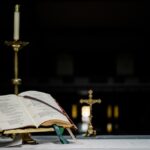
And I don’t know if we should pray that this priest never loses sight of the fact that he is making present the sacrifice of Christ. And that the most important thing is not the Liturgy of the Word—or, I don’t know, the series of parish announcements they’re giving us—but rather the double consecration. That moment when the bread and wine are consecrated separately, symbolizing the bloody separation of Jesus’ body and blood on Calvary. And divine wisdom has found a wonderful way to make that moment present.

The Month of Nisan

None of us were there on the 14th day of the month of Nisan in the year 33, in Jerusalem, from 12:00 to 3:00 p.m. No, we weren’t. But it says, "Look, now I’m going to give you the opportunity to be there. You’re going to be present at the sacrifice on Calvary. You’re going to set out with your faith as if you were boarding a spaceship that transports you through time and space and places you in Jerusalem on that day and at that hour. And your faith will tell you, 'Here you are.'”.

"Here you are, and there is no other Christ who dies 'in the fullness of time.' When the Earth's axis begins to make everything revolve around the cross of Christ, everything is resolved there.".

That is why the priest, after performing the double consecration, says: "This is the sacrament of our faith." A mystery. Sacrament means mystery. A mystery—I see one thing, but there is so much more. "Of faith," because we are not creating special effects. We’re not playing a video or the sounds of the hammer as they nailed Christ to the cross, or the shouts of the soldiers or the crowd, or the seven words of Jesus, right? We’re not saying, "The blood is falling; right now, well, I don’t know, he’s saying this word or that one," right?

But faith tells us that in the double consecration, the body and blood of Christ are separated. Therefore, Christ is dead; he has just died. He has just died; he is dead. The recipient says, "This is the sacrament of our faith; we proclaim your death." Yes, you are dead. And the mystery is so profound that it then leads us to say, "But we proclaim your resurrection.".

He is risen. The risen One is the same One who was dead; that is why the risen One appears with the marks of the nails and the wounds in His hands and in His side. And we conclude by saying, "Come, Lord Jesus." You are coming to establish Your kingdom, Your definitive kingdom. It’s already here—your kingdom has already begun—but come and establish it in its fullness.

What happens during Mass?

That’s why it’s so good that we hold the Mass in such high regard. I mean, let’s try to understand it—I’m not saying we’ll ever fully understand it, but at least a little better. With God’s help, and the Holy Spirit’s, let’s understand the Mass a little better and see it as an enormous, enormous sign of God’s love—an explosion of love.

And may we also understand how much this might resemble Christ’s suffering when we do not appreciate Mass or simply when we do not attend it—when we do not regard it as an absolute priority that gives meaning not only to Sunday but to the entire week.

What happens during Mass? Well, as we were saying, Christ dies, and therefore the gates of heaven—which had been closed because of the sin of our first parents—are opened to us. Once again, we can enter heaven because Jesus has paid the price for our redemption with his infinite love.

And besides, we save souls from Purgatory. That’s why this custom is so wonderful: whenever someone passes away, we always, always try to have a Mass celebrated, and then perhaps—if possible—a novena of Masses, or if not, once a month, or if not, once a year, because every Mass rescues souls from Purgatory. Perhaps that person—this relative of ours, whoever it may be—is still in Purgatory. Well, "I’m going to offer you, Lord, this Mass for my deceased grandfather.".

I’m going to help him get out of purgatory, or I’m going to help other souls get out of purgatory. And when I go to my judgment, perhaps there will be saints there who will say, "We’re going to speak very highly of you because you helped us get out of Purgatory." Because you also offered the Mass for us, the departed.
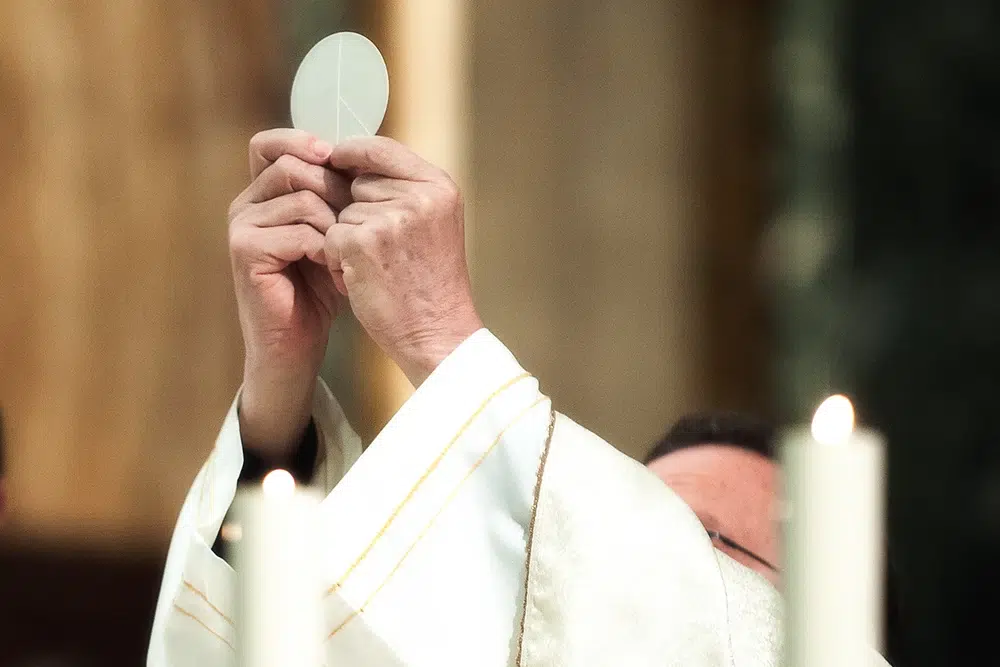
Mass—one Mass is worth more than individual prayers. Isn’t that right? Let’s not lose our sacramental awareness of the Mass; the Church is sacramental. And often people say, "No, but I already went, for example, to the Tepalcingo fair." Well, you went to buy things—or whatever it was you went for. "No, I went to see Jesús Nazareno." Well, but did you go to Mass or didn’t you? "I went to the procession." But did you go to Mass or didn’t you? Because everything else—we’re not trying to say it isn’t—isn’t the act of Christ, isn’t the action of Christ, which is of infinite value.

A book on the Mass says: "After the consecration, just as on the cross, everything has been fulfilled. He becomes incarnate in the priest’s hands, just as He did in Mary’s womb. We are all filled with grace, and the Lord is with us." There is Jesus, doing good, healing all kinds of ailments, performing all manner of wonders, giving sight to the blind, multiplying the loaves, calming the waves of passions and sorrows, and raising the dead to the life of grace.

Giving himself entirely as in the Upper Room, surrendering himself as in the Garden of Gethsemane, remaining silent as in Jerusalem, ascending as on Calvary, shedding his blood as on the cross, glorious and alive as on the day of his victory, pouring out his blessing upon all flesh, His Spirit and His grace. Oh, the depth of God’s mysteries! Who would not be overwhelmed at the very thought of this sacrifice, in which God never ceases to work what He once accomplished on Calvary, making Himself the temple, the altar, the priest, and the victim?

God gives everything

God gives in a way that befits who He is, doesn’t He? God gives infinitely. God performs miracles that are truly incredible. Not only because He remains present in the bread with His body and blood, His soul, and His divinity, but also because He makes His sacrifice a reality. Just how miraculous is that? If we stop to think about it, for example, how many tabernacles are there? I mean, here in this house there’s this one, there’s the one at the administration office, there’s the one at the school, and there are the ones at the retreat house.

Well, and in all those tabernacles there’s a ciborium that holds many hosts? And Jesus is present in each host, and He’s also present in every piece of every host—if you break the host, He’s present in each piece. Well, what if you multiply that by all the tabernacles in the world? That right there—what a miracle! I mean, what an incredible miracle.

Well, all of that, you see, comes from the great miracle of God’s love. And we could say the same thing right now, right here where we are, at this latitude, at this hour—there must be, I don’t know, 10, 15, 20 thousand Masses being celebrated at this very moment. And in an hour there will be another 10, 15, 20—where? Well, I don’t know—in Africa, in Australia, in Japan, or maybe even here, because there might be an evening Mass, and well, there must be many Masses being celebrated right now in Mexico, since it’s the evening Mass.

The Sacrifice on Calvary

And what a miracle, isn't it? That the sacrifice on Calvary is being made present here and there, a hundred times, a thousand times—and who can do this? Well, only the power of God—a miracle of the highest order.

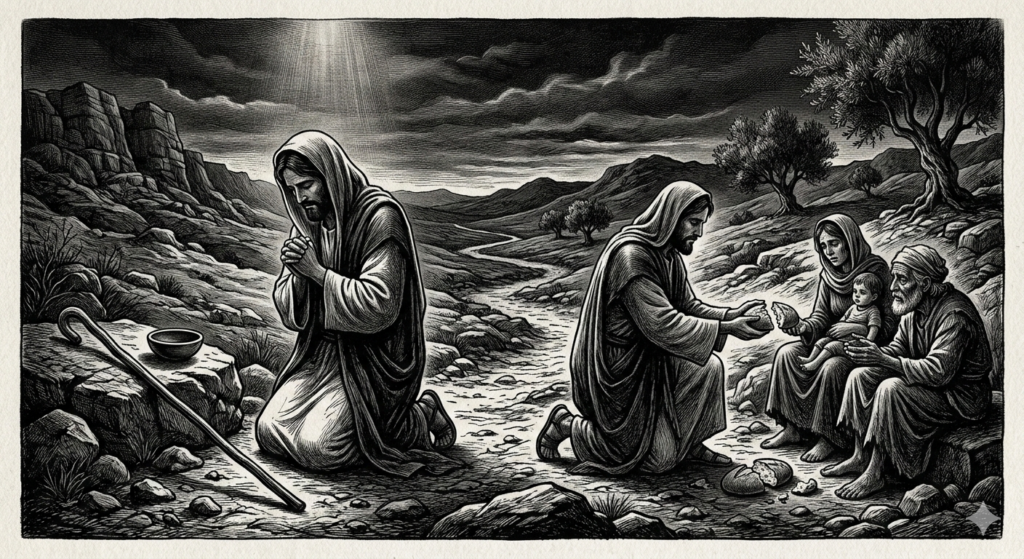
And so we’re going to say, "I can’t just… how can I put it… diminish God’s gift," right? It would be very sad if you saw it, for example, as a mere obligation. "I just have to go." It’s not that you’re doing God a favor by going to Mass; it’s He who is doing you a tremendous favor by inviting you. There’s an invitation, He says, "Come to my sacrifice; join me." Don’t be like Peter and the other apostles who left—they weren’t present at the sacrifice; only Mary, John, and the holy women were there.

The apostles—all the others, well, Judas had already gone off to hang himself, but the other ten ran off in fear. And Jesus tells us, "Come on, I’m coming again; I’m calling you again; I’m with you again; I want you to accompany me again; comfort me; take advantage of all the graces I’m going to pour out in this Eucharist.".

First of all, because you’re going to join in the praise I’m offering to the Heavenly Father, and therefore you’re fulfilling your first duty as a creature, which is to glorify God. "But I can pray just as well at home." Yes, but who are you praying with? You’re praying with Christ, united to Christ, together with the whole Church. And what you pray is a personal prayer. This is the moment of redemption, the fullness of time. This is where all blessings and graces are poured out upon the world.

Well, help us, Lord, to understand just a little bit; help all the faithful Christians, help all the priests, so that we don’t turn the Mass into something trivial, superficial, or purely human, right? As if it were a show where the priest is the main focus, right? The priest isn’t the main focus.

If the priest were what mattered, then we’d do what Protestant pastors do—who, when they finish their… I don’t know what it’s called—their Sunday service or their psalm readings and hymns, they go to the church entrance and start saying goodbye to all the parishioners.

No, the point here is that "I didn’t go to see Father So-and-so." No, no, I didn’t go to see the priest—he doesn’t have to come out to greet me—I went to see Christ, to be with Christ. And so, the priest is the least of it. "It’s just that I don’t like his tone of voice"—it doesn’t matter. As long as he’s a validly ordained priest, he’s making Christ’s sacrifice present.

Let this be the opportune moment, the greatest treasure. There is an author who says: "At the hour of your death, your greatest consolation will be the Masses you have devoutly attended throughout your life. Every Mass you attended will accompany you to the divine judgment seat, and there it will intercede on your behalf so that you may receive forgiveness." Indeed, your greatest consolation. Not so much—I don’t know—a single act of charity I performed, right? Because I am present at the very moment when Jesus is offering himself to the Father, and I joined in, participating with devotion. How wonderful that we have this awareness.

Well, let’s hope we can say, "Mass is the center of my life." That’s how St. Josemaría liked to put it: "In other words, let it be the center of your life." There’s nothing more important—not today, not tomorrow, not even when you finish college, or anything else—than being at Mass. Make Mass the center of your Sunday. "I just didn’t have time to go to Mass." Well, put it first, and you’ll see that you’ll always have time. If you put it first—that is, at the center—everything else revolves around Mass, just as the planets revolve around the sun.

Let’s try to break out of the routine and participate with enthusiasm. Maybe—I don’t know—I don’t have to sing, or I don’t have to, I don’t know, respond too loudly, but what I do have to do is be mindful of what I’m doing. Pay attention—inward attention. Outwardly, too—I’m not going to be spacing out, right? But I might just be staring off into the distance and having my head in the clouds. I’m going to try to, uh, truly participate, to take part in the sacrifice.

Make sure you’re prepared and on time. Right? I mean, I thought about what I’m going to do, where I’m going to be—I’m going to the sacrifice of Christ, I’m going to unite myself with Him, and I’m going to get there early. Man, because a lot of times if I’m late, I can’t find a place to sit, and then I’m going to be really uncomfortable. No, get there early—don’t be late—because you’ll end up way back there, among the crowd of people in the back, and people keep arriving late, so you’ll get distracted. Well, I got there early and ended up with a good spot.

I can also attend with a specific intention, saying, "Jesus, I’m going to offer this Mass to you for this need I have, for this person, or for the Church, or for the Pope, or for the souls in purgatory, or for this family member who has died." So, with the intention of offering it, we try, therefore, not to miss Sunday Mass.

And that’s what Mass is all about—that is, the importance I’m giving to God, right? And the importance that every Christian gives as well. Well, Mass is for me, for you, for each one of us; it’s your Mass—it’s the Mass in which you unite yourself with Jesus.

And Pope Saint John Paul II liked to say that what happened on Calvary also happens at every celebration. Not only Christ’s death, but also, for example, Mary’s presence. Mary is on Calvary; Mary is at every Mass; she is the only one who never misses Mass. There might be nothing more than an elderly woman at Mass, or perhaps no one at all; or maybe there was one person there, but they were a tourist and left.

Well, but there’s Mary—she’s always there at every Mass, just as she was at Calvary and beyond. The Pope also says that there Jesus repeats the words he spoke to John: "Behold your mother, and to her I entrust you." Between the consecration of the bread and the consecration of the wine, Jesus is crucified, but he is not yet dead.

And that’s when He says those words: "Woman, here is your son" and "here is your mother," because that’s when she’s giving it to me—right now I’m receiving it, and I have this joy—and I’ve tried to live this celebration with reverence, from the depths of my heart, because I’ve prepared myself; because maybe as early as Saturday I’m already thinking, "What time am I going to Mass tomorrow?" and "How can I hurry up so I have enough time and don’t have to rush?".

And "I’m going to try to get there a little early and say a few prayers," or I can say, "I’m going to have a missal or look online to see what tomorrow’s Mass is, what tomorrow’s Gospel is, and what the proper prayers for tomorrow are; I’ll reflect on them a little, and I’ll pray a little using those prayers.".

»But first and foremost, I am going to attune myself to the heart of Jesus, who offers himself to the Father and saves us. You are no longer purely earthly; you are no longer even purely psychological—you are of a divine nature, because when Jesus died, he gave us the ability to be children of God as well.".


Ricardo Sada Fernández, a Mexican priest of the Prelature of the Holy Cross and Opus Dei, is a computer engineer and holds a doctorate in theology. Ordained in 1981 and with extensive experience as a preacher and spiritual director, he is the author of several books and is known for his website www.medita.cc, which publishes daily audio meditations.


Pope Leo XIV prays for priests in crisis

At the beginning of Easter, the Pope Leo XIV announced its prayer intention for the month of April, dedicated to priests in crisis, opening a space for reflection on the need to care for them, listen to them and accompany them.  

Through the Pope's Worldwide Prayer Network - with the support of campaign Pray with the Pope- the Holy Father invited the faithful and people of good will to pause for a moment in prayer, to recognize and deepen their awareness that behind every ministry there is a life that also needs closeness and listening.

In his prayer, the Holy Father addressed a profound plea for priests who are going through difficult times: «when loneliness weighs heavy, doubts darken the heart and weariness seems stronger than hope». Pope Leo XIV recalled that priests «are neither officials nor solitary heroes, but beloved sons, humble and beloved disciples, and shepherds sustained by the prayers of their people».

Furthermore, Pope Leo XIV stressed the importance of rediscovering the communitarian dimension of the priestly ministry. In particular, he invited the faithful to «listen without judging, thank without demanding perfection and accompany with closeness and sincere prayer,» recognizing that the care of priests is a responsibility shared by the entire People of God.

In his prayer, the Pope asked especially that priests may be able to count on «healthy friendships, networks of fraternal support» and the grace to rediscover the beauty of their vocation.

Pope Leo XIV asks to support those who sustain

The international director of the Pope's World Prayer Network, Father Cristobal Fones, noted that this prayer intention was particularly close to his heart: «The Pope reminds us that we need to fraternally support those who support. I myself feel it very closely, for so many of my fellow priests and friends who are going through difficult times. It is essential to remember the importance of human accompaniment, of sincere friendship and, above all, of prayerful support. Priests need to know that they are not alone».

In the light of the recent magisterium of the Church - from the Second Vatican Council to the teachings of recent popes - it is emphasized that the priest is a fragile man in need of mercy, closeness and understanding. 

For this reason, it is insisted that they should not face moments of discouragement alone, but allow themselves to be accompanied and sustained by the community. The priestly fraternity, the shared life and prayer of the people of God thus appear as essential sources of grace, capable of renewing their vocation and sustaining them in their daily mission.

«Do not fear your frailty: the Lord does not seek perfect priests.»

A synodal Church is also one that cares for and sustains the vocation of priests, helping them to be better pastors, better brothers, better people. Pope Francis, in The Pope's Video of July 2018, already showed his concern for his brother priests, beginning his speech with, «the weariness of priests... Do you know how often I think about that?».

On June 27, 2025, Pope Leo XIV himself, on the occasion of the Day of Priestly Sanctification, addressed priests with the words: «do not be afraid of your fragility: the Lord does not seek perfect priests, but humble hearts, available to conversion and ready to love as he himself has loved us». 

Leo XIV himself, on June 26, 2025, also appealed to the participants in the international meeting Happy priests-I call them friends (Jn 15:15), promoted by the Dicastery for the Clergy during the Jubilee of Priests, said to them: «in the heart of the Holy Year, together we want to bear witness that it is possible to be happy priests, because Christ has called us; Christ has made us his friends. (cf. Jn 15:15); it is a grace that we want to welcome with gratitude and responsibility».

The Pope's World Network of Prayer emphasizes that this intention is not only an invitation to pray, but also to act: to promote spaces for listening, to foster welcoming communities, to avoid destructive criticism, and to strengthen bonds as a community.

Priests in crisis and the mystery of vocation

The call to the vocation of the priesthood asks the man who receives it to dedicate his life to helping his brothers and sisters live closer to God.

What is a priestly vocation? Vocation is a mystery of love between God, who calls man with love, and a man who responds to him freely and out of love. However, the vocation to the priesthood is not simply a feeling. Rather, it is an inner certainty born of God's grace, which touches the soul and calls for a free response.

If God calls, the certainty will grow as the response becomes more generous. The call to the priesthood asks the man who receives it to dedicate his life to helping his brothers and sisters live closer to God. He has been called to perform a humble service on behalf of all humanity in the name and on behalf of Christ himself.

When he is ordained a priest, he receives the Sacrament of Holy Orders and is prepared to lend his body and spirit, that is, his whole being, to the Lord. He will make use of it especially in those moments in which he performs the Sacrifice of the Body and Blood of Christ and when, in the name of God, in sacramental Confession, he forgives sins.

How do I know if I have a vocation to the priesthood?

God calls everyone and some with a specific mission, designed personally for them: «each one on his own way», says the Second Vatican Council with its universal call to holiness.

Each believer must discern his own path, make the decision to follow it and bring out the best, that which is so personal that God has placed in him, and not allow him to wear himself out by trying to imitate something else that was not intended for him.

The tool we Christians have to discover our vocation, whether it is marriage, priesthood or apostolic celibacy, is prayer. Prayer is absolutely necessary for the life of the soul. This dialogue with God allows the spirit to develop. «If you say enough, you are lost,» St. Augustine reminds us. Take note.

Prayer for vocational discernment

In prayer, faith in the presence of God and his love is actualized. It fosters the hope that leads us to direct our lives towards him and to trust in his providence. And the heart is enlarged by responding with one's own love to divine Love.

Our example is Jesus, who prays before the decisive moments of his mission. With his prayer, Jesus teaches us to pray, to discover the will of our Father God and to identify ourselves with it. Moreover, as the Catechism recommends, at the moment of vocational discernment, the figure of a spiritual director can be of great help, that is, a person to whom we can entrust ourselves and who helps us to discover the will of God.

Vocational signs

The duty to awaken vocations is incumbent upon the entire Christian community. At the CARF Foundation we support this commitment.

In the formation of a priestly vocation, one can take into account some general aspects or traits that help discern whether a man is being called by God to the priesthood. Canon Law describes some details. Point 257 states: «the formation of students should be carried out in such a way that they feel concerned not only for the particular Church in whose service they are incardinated, but also for the universal Church, and are ready to dedicate themselves to those particular Churches which are in grave need».

Love for the Church, the Eucharist, our Blessed Mother Mary, frequent Confession, the Liturgy of the Hours, are the clear signs of the call to the priesthood. The taste for the things of God, can come suddenly as a magnificent discovery from an encounter with Christ, or having felt it all our lives since we were little, instilled by our family. You, pray for vocations!


Lent and God's forgiveness

The Lent is the liturgical season in which the Church invites Christians to pause, look at their lives before God and return to Him with a renewed heart. For forty days a journey of conversion marked by prayer, penance and charity is proposed to us. It is not just an outward change, but a profound call to recognize our fragility and to open ourselves anew to God's mercy.

«You have compassion on all, O Lord, and hate nothing that You have done; You close Your eyes to the sins of men that they may repent and forgive them, for You are our God and Lord» (Ash Wednesday, Entrance Antiphon).

On that day, during the celebration of the Holy Mass, or in a separate ceremony, the faithful who wish to do so, approach the altar so that the priest may impose the ashes on them, while saying: «Remember that you are dust, and to dust you shall return»; or, «Convert and believe the Gospel».

These two phrases do not have a contradictory meaning. They complement each other, and if we know how to put them together, they give us the profound meaning of what the Church wants us to live in this liturgical season: a new Conversion in our Christian living.

With what disposition should we begin to live these days? Josemaría Escrivá, in It is Christ who passes, n. 57, reminds us: «We have entered the season of Lent: a time of penance, purification and conversion. It is not an easy task. Christianity is not a comfortable path. be in the Church and let the years go by. In our life, in the life of Christians, the first conversion - that unique moment, which each of us remembers, in which we clearly perceive all that the Lord asks of us - is important; but even more important, and more difficult, are the successive conversions.

And to facilitate the work of divine grace with these successive conversions, it is necessary to keep the soul young, to invoke the Lord, to know how to listen, to have discovered what is wrong, to ask for forgiveness» (...).

What is the best way to begin Lent?

We renew faith, hope, charity. This is the source of the spirit of penance, of the desire for purification. The Lent is not only an occasion to intensify our external practices of mortification: if we were to think that it is only that, we would miss its deep meaning in the Christian life, because these external acts are -I repeat- the fruit of faith, hope and love.

In order for us to live this willingness to convert, we need to prepare our spirit to listen attentively to, and then put into practice, the lights that the Lord wants to give us during these days of Lent. We can summarize this disposition in three words: sorry y ask for forgiveness.

Cuaresma perdón, tiempo para rezar a Dios

When blessing the ashes, the priest can say this prayer: «O God, who does not want the death of the sinner, but his repentance, hear with goodness our supplications and deign to bless this ash that we are going to impose on our head; and because we know that we are dust and to dust we shall return, grant us, by means of the Lenten practices, the forgiveness of sins, so that we may attain, in the image of your risen Son, the new life of your Kingdom».

Everything begins by humbly asking the Lord for forgiveness for our sins, for our lack of love for Him and for our lack of love for our neighbor. «If in bringing your offering to the altar you remember that your brother has something against you, leave your offering there before the altar; go first to be reconciled to your brother, and then return to present your offering.» (Mt. 5:23-24)

This request for forgiveness, and the thought of Christ's joy in forgiving us our sins, will move our soul to forgive wholeheartedly the offenses, injustices, mistreatments, insults, and abandonments that we may have received, and not to allow even the slightest seed of hatred, resentment, or revenge to nestle in our hearts.

Forgive as Christ forgives us. In this way we will have the humility of spirit so necessary to live our life in union with Christ, and following in his footsteps, which he pointed out to us with these words: «Learn from me, for I am meek and humble of heart». And asking the Lord for forgiveness in the sacrament of Reconciliation and Confession, as Leo XIV reminded the priests of Madrid:

«Therefore, dear children, celebrate the sacraments with dignity and faith, being aware that what is produced in them is the true strength that builds up the Church and that they are the ultimate goal to which our whole ministry is ordered. But do not forget that you are not the source, but the channel, and that you also need to drink from that water. Therefore, do not cease to confess yourselves, to return always to the mercy that you proclaim».

Lenten Messages

In many Lenten messages, the Popes remind us of the three classic works recommended by saints and spiritual doctors to live Lent well: «prayer, fasting, almsgiving, and almsgiving.".

«Lent is a propitious time to intensify the life of the spirit through the holy means that the Church offers us: fasting, prayer and almsgiving. At the basis of everything is the Word of God, which at this time invites us to listen to and meditate on more frequently.» (Francis, Lenten Message, 2017).

By forgiving and asking for forgiveness, our prayer will reach heaven; our fasting will lead us not to seek ourselves in our actions, and to want to give glory to God in everything we do; and our almsgiving will be to accompany the needy, to encourage sinners to repent.

Our prayer is a deep manifestation of Faith that springs from the depths of our soul. Faith that leads us to have full confidence in Christ, to unite ourselves with Him in His Life, to know Him better, and thus, we will have the joy of quenching His thirst. And it opens our hearts to love the Lord with all our strength, and with the best of ourselves.

Our fasting leads us to detach ourselves from ourselves, to seek only the glory of God in all our actions, not to think always of ourselves and not to dwell on useless worries or memories. Fasting from ourselves and our interests will elevate our heart, our soul to hunger to love Christ, to live with Him, and truly nourish ourselves on his Word, and say to him with St. Peter: «You have the words of eternal life» (Jn. 6:68). And we will renew our Hope in the Lord, who opens for us the horizon of Eternal Life.

In his Lenten Message, Leo XIV suggests us to live an abstinence that can do great good to our spirit:

«For this reason, I would like to invite you to a very concrete and often underappreciated form of abstinence, namely, that of refrain from using words that affect and hurt our neighbor. Let us begin to disarm language, renouncing hurtful words, immediate judgment, speaking ill of those who are absent and cannot defend themselves, and slander.

Let us strive, instead, to learn to measure words and cultivate kindness: in the family, among friends, in the workplace, in social networks, in political debates, in the media and in Christian communities. Then, many words of hatred will give way to words of hope and peace.».  

Our almsgiving will lead us to be generous in serving others and thus follow in the footsteps of Christ who told us «The Son of Man did not come to be served but to serve, and to give his life as a ransom for many» (Mt. 20:28). We have many people around us who, besides needing material help in some cases, need our affection, our understanding, our company. And our Charity will purify our spirit, adoring Jesus in the Blessed Sacrament of the Altar: the deepest alms of love that we offer to God. 

By living prayer, fasting and almsgiving, we are accompanying Christ in the temptations in the desert, with our Faith, with our Hope and with our Charity.

With our Faith uniting us to his response to the devil in the first temptation: «Man does not live by bread alone, but by every word that proceeds from the mouth of God» (Mt. 4:4). Faith that helps us to discover his loving heart in all the difficulties - in all the stones we may encounter on our path - and to carry with him our daily cross. He is, and will always be, our Bread.

By fasting from ourselves, and feeding on His Bread, we will revive our Hope in the Incarnation of Our Lord Jesus Christ, and we will not tempt God by asking Him to do extraordinary things to dazzle us, and force us, in some way, to follow Him, as the devil tried to do in the second temptation. We will unite our sorrows, sacrifices and sufferings in life and in our daily work, to those that He lives in His eagerness to redeem us from sin.

And we will do it without drawing attention to ourselves, in the silence of our soul, in the secret of our heart, as he reminded us: «When you help, do not pretend to be sad as the hypocrites, who disfigure their faces so that people may see that they are fasting» (Mt 6:16).

With the alms of love, Charity, we will give Him our whole heart, He alone we will adore, He alone we will serve, when we go out to meet the material and spiritual needs of the people we live with, the people in our families, our friends, and those whom the Lord wants us to meet on our journey. There are so many who are waiting for us on the roadside of our life, as that man mistreated by the bandits waited for the Good Samaritan to pass by!

Lent: sin and God's forgiveness

In accompanying Christ during these days of Lent, we are living with Him his triumph over the three lusts that will tempt us until we finish our journey on earth: the devil, the world and the flesh, and we prepare ourselves to enjoy with Him the triumph of his Resurrection, in which, in addition to these three temptations, death and sin are conquered. The light of Christ's Resurrection blinds the devil in our soul. We open the eyes of body and spirit to the horizon of Eternal Life.

The Gospel of the Fourth Sunday of Lent narrates the Lord's encounter with a man blind from birth. Jesus Christ performs the miracle of restoring his sight, and reminds us that he is the light of the world: «While I am in the world, I am the light of the world».

Filled with the light of the Lord, with his teachings, with his commandments, we will not be deceived by those words of the devil in the third temptation: «I will give you the whole world, all that you see, if you worship me». We will not sell our soul to the devil, and we will not fall into the seduction of purely material perspectives and our own triumph. that this world can offer us, and that yearn to fill our pride and our pride: our flesh, our selfishness.

We will worship the Lord alone

How can we overcome these temptations, follow the commandments and live with Christ, who purifies our heart, and thus make our life a true life “hidden with Christ in God”? Psalm 94:8 tells us: «Do not harden your hearts; listen to the voice of the Lord».

The Lord speaks to us with his life, and with his words recorded in the Gospels, and also shows us the way so that we can live hidden with him in God - «I am the Way, the Truth, the Life» -: he institutes the Eucharist, and invites us to nourish ourselves with his Body and Blood.

By receiving Christ with faith and love in the Eucharist, and by living the Holy Mass with Him, our life of Faith, Hope and Charity is deeply rooted in our soul. How and why? Because we make an act of faith in the divinity and humanity of Christ; in his words, in his Resurrection and in Eternal Life. Christ celebrates the Mass, Christ we eat, and He is Eternal Life.

When we receive Him, after offering with Him, and moved by the Holy Spirit, our life to God the Father, we live the Hope of Heaven: “Whoever eats my Flesh and drinks my Blood has eternal life”; the Church reminds us that the Eucharist is “the pledge of eternal life”.

And by living with Christ we learn to love our brothers and sisters, all men and women, as He loves them. To be able to live the Mass “with Christ, in Christ and through Christ” is already a foretaste of living with the Love that God has for us; and to receive Christ given to us in the Eucharist is to receive in our body and in our soul, the greatest Love that Christ offers us on earth: the total donation of his whole Being., for our salvation.

Following this journey, and renewing our Faith, our Hope, and our Charity, as we contemplate the Passion and Death of Christ, which we live on Good Friday, and in the sorrowful mysteries of the Holy Rosary, we will also live in the Holy Spirit and with the Blessed Virgin, the joy of the Resurrection.


Ernesto Juliá, (ernesto.julia@gmail.com) | Previously published in Religion Confidential.


Frequently Asked Questions

- What is the meaning of Lent?

Lent is 40 days before Easter, a special time to prepare ourselves for the most important feast of Christianity: the Resurrection of Jesus. This period of reflection and change began to be recognized by the Church since the 4th century, as a time to renew ourselves, practice penance and get closer to God.<br><br>In the Catechism of the Catholic Church (540) we are told that "the Church unites herself every year, during the forty days of Great Lent, to the Mystery of Jesus in the desert". Just as Jesus spent 40 days in the desert to prepare for his mission, we use these days to purify our hearts, strengthen our Christian life and live with a penitential attitude. It is a time to return to the essentials, reflect on our lives and strengthen our relationship with God.

- Why does the Church celebrate Lent?

The Church invites us to live Lent as a time of spiritual retreat, a space to pause and reflect. It is a time to strengthen our relationship with God through prayer and meditation, but also to make a personal effort, as a kind of "spiritual detoxification," in which we put aside what distances us from Him.

This effort of mortification (like fasting or almsgiving) is something that each one decides according to what he or she can give, but always with generosity. Lent is not only a sacrifice, but an opportunity to grow and prepare ourselves for the great feast of Easter: the Resurrection of Jesus. It is the time for a deep conversion, to renew our hearts and be more prepared to live Resurrection Sunday with joy and peace.

- When does Lent begin and when does it end?

Lent begins on Ash Wednesday and ends just before the Holy Thursday Mass, the Mass of the Lord's Supper. It is a time to prepare ourselves, in a more intense way, to live Easter.

- What is the point of practicing fasting and abstinence?

Fasting and abstinence are ways that the Church proposes to us to grow in the spirit of penance. But, beyond external acts, what is important is inner conversion. It is not only about what we do externally, but about changing our attitude and getting closer to God with our heart. If there is no inner change, fasting loses its meaning.<br><br>In addition to fasting from food, fasting can be lived more broadly. Sometimes, fasting means giving up good things, such as social networks, series, music or even some comforts, as a sacrifice to focus more on God.

But fasting also implies fighting against those habits or attitudes that keep us away from Him. It can be a "fast" from bad moods, from looking at ourselves too much in the mirror, or from rushing when we pray. It is about making conscious efforts to improve in those aspects of our life that do not help us to get closer to God.

Impressions of nightfall: inner silence and encounter with God

In our walk, we arrive at dusk, at night. Since I was a child, I have been pushed - encouraged, perhaps it would be better - to walk with the day already darkened; and to walk, solitary and in silence, in the midst of the darkness not interrupted by urban lighting. Impregnated in the night, one lives in another way the beating of the earth, the glow of the stars, the aroma of all creation.

Dusk, silence and poetic contemplation

And what a joy, to abandon ourselves to the night without nostalgia, to enter it, almost on tiptoe, and ask it to make us participants in its mystery! A joy that perhaps one day Rainer Maria Rilke glimpsed when he wrote these verses in his Poems to the night:

«And suddenly I understood that you walk with me and play, / oh you, grown night, and I looked at you in amazement.... / ...you, elevated night, / you were not ashamed to know me. Your breath / passed over me. Your dilated seriousness, shared / with a smile, penetrated me».

Inner silence and attitude towards the night

Some welcome the night as a friend, others shun it, as an enemy with whom one can never make peace.

Those who welcome it amicably dispose their spirit to scrutinize the virgin love hidden in darkness and silence. Perhaps with a certain trembling, like Rilke:

«If you felt, O night, as I behold you, how my being recoils at the impulse/ To want to throw itself confidently into your arms/ Can I grasp it so that my brow, arching again/ Will save so vast a flood of gaze?».

I know that I will not find words to sing the beauty of the night -even if I ask poets for help-; perhaps because words exhaust their service in the effort of trying to understand each other; and the night is a land of curds for the hidden human dialogue of the soul with the spirit, which opens and prepares for the ineffable communication -and not only dialogue- between man and God, his creator.

Night is God's creature, and, like all creatures, God's gift to man. Without its darkness, not even the sun would shine. Without the rest it offers us, our walk on earth would be reduced to mere madness; our whole person would lose direction, orientation, and not only the nervous system. The silence and darkness of the night open to man unlimited horizons, more distant and impenetrable than those hidden in the rough sea, and that barely emerge at the edge of the crests of the waves of the ocean sea.

The night keeps the silence

And the night keeps a silence and a darkness for youth; a darkness in silence for maturity; a silence in radiant darkness for the fullness of life. The night enriches our scrutiny; it invites us to penetrate unexplored corners, and the eyes, unable to hold the gaze of the sun, open paths by looking at the stars, and come to unravel the mystery that hides the night: the mystery of man having no other horizon than the Eternal Life, Heaven.

For those who await it as an enemy, the soul of the night is exhausted in darkness and emptiness; and its image seems a foretaste of nothingness.

Silence and darkness, twinned

The night appears then, and appears, twinned with silence and darkness. Tragically twinned. As if darkness were nothing more than darkness, and silence hid the threat of emptiness and oppression. Juan Ramón Jiménez wrote: "The night is leaving, black bull/ -full flesh of mourning, of fright and mystery-, / that has roared terribly, immensely, / to the sweaty fear of all the fallen".

Faced with such an enemy, there is no other recourse but to try to annihilate it, or to flee from it. The night is annihilated by artificially filling it with noise and false light, waiting for the dawn. The candorous mumbled silence becomes anxious shouting, disguised with more or less masked smiles. And the radiant darkness of the universe in the open sky is transformed into tunnel darkness that excludes the stars from our gaze.

The mystery of the disease

Night takes on a different hue when its mystery is combined with that of illness. Some patients await its arrival with anxiety, fearful with a double dread: that sleep will not come, and anguish may turn the hours until dawn into the figure of death, of death itself; or that, if sleep finally overcomes them, it may become the last earthly sleep.

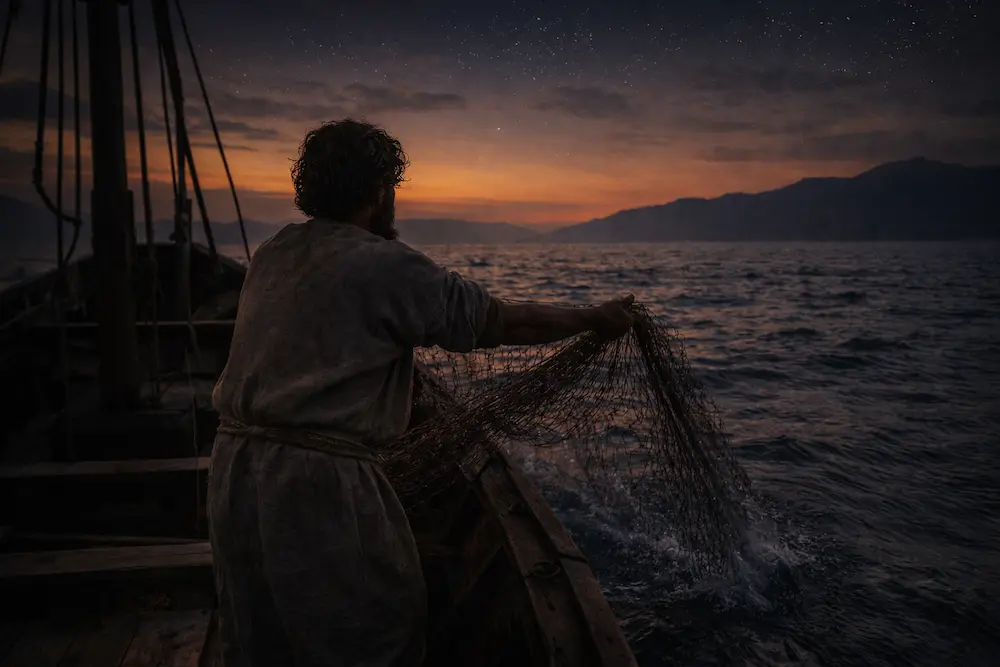
At night the man is aware, without blush or shame, of his penury, of his indigence and even of his misery. He has already discovered, without wonder, that every saint has something - or much - of wretchedness; and that every wretch is in a position to have something - or much - of saint. He has tasted the confirmation of what he had already foreseen in a certain way: that man does not retire: those who stay on land, when the time comes to make the boats to the sea, The best time to fish is always at night. The best fishing is always at night.

The night will be light

Perhaps he feels more helpless in the face of so many fears that assail him at the least opportune moments. Perhaps. And yet, it is worth facing the risk so that at last the night may become light, as the Psalmist prophetically announces: «and the night shall be my light in my delights /for the night, like the day, will be illuminated.»; St. John of the Cross added: «O night you guided, / O night kindlier than the dawn; / O night you joined / Beloved with beloved, / Beloved into Beloved transformed.».

anochecer dios la noche será luz silencio

In a way, Gibran also glimpsed it, who in The Prophet, he wrote:

«I can't teach you how the seas, the mountains, the forests pray. pray in the depths of your heart, / Lend your ear in the peaceful nights, and you will hear murmuring, / Our God, wings of ourselves, we wish with your Will. (...) / We can ask You for nothing; You know our destitution before it is born; / Our need is You; by giving us more of Yourself, You give us everything».   

God has given us Himself to us in the Baby Jesus which we have sung with our lips, worshipped with our intelligence, received in our hearts, with the shepherds, with the magi, with Maria Has his light illuminated the darkness of our night?       


Ernesto Juliá, (ernesto.julia@gmail.com) | Previously published on Religion Confidential.


Why do we recommend listening to 10 minutes with Jesus every day?

The 10 Minutes with Jesus (10mcJ) have one objective: to bring the life of Christ to the listeners. To show the beauty of Jesus' life, his doctrine and virtues, and to serve as a 'loudspeaker' to touch people's hearts and bring them closer to God.

In addition, 10 minutes with Jesus has decided that donations made through its YouTube channel will contribute to the study grants funded by the CARF Foundation for diocesan priests, seminarians and religious men and women serving the Church around the world.

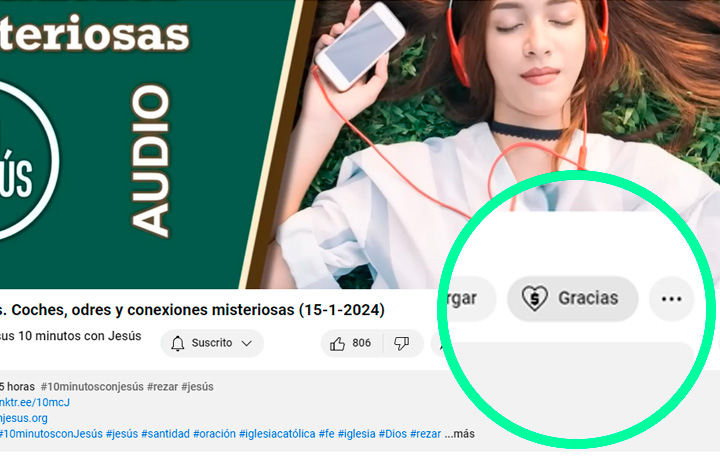
How do I make donations on YouTube? The Super Thanks

YouTube has recently activated the possibility of entering donations via a button called Super Thankswhich allows content creators to earn revenue and interact with users who want to show them greater appreciation for their content than the simple Like or I like it, which we all know.

In each 10-minute video with Jesus, a Thank You button will appear. Clicking on it opens the option to donate different amounts.

What is 10 minutes with Jesus?

This content, called 10 minutes with Jesus, are audios recorded by priests with the aim of helping to pray. The project was born in 2018, at the suggestion of Maria Feria, a mother and teacher. In view of the summer vacations, Maria suggested to the chaplain of her school to record short spiritual talks to share during those vacations with her children and young people around her.

At the mother's insistence, Father José María García de Castro, a priest incardinated in the Prelature of Opus Dei, agreed. He set up a first audio, using his own cell phone and a simple and accessible language. 

On that first occasion, Fr. José María thought of talking about everyday things and how to bring the Gospel closer to daily life. Specifically, he related the contents of a letter sent to him by a young man who had been collaborating with the nuns of Mother Teresa of Calcutta in a children's home in Nairobi, Kenya. 

In the letter, the young man told the priest, among other things, about one of the moments that marked him the most during his stay in Africa. Specifically, when a Sister of Charity asked him to take in his arms a baby who would not stop crying and invited him to give him affection.

The young man was paralyzed because the baby was so hot from the fever, but the nun's words gave him security. She began to coo to the little one, to caress him, to smile at him, to give him kisses. The child stopped whimpering and smiled. A few seconds later, he fell asleep. However, the university student noticed that the child was not breathing and called the Sister of Charity, who confirmed his death. 

"She knew that the child was dying and looking into my eyes she said to me: he has died in your arms and you have gone a few seconds ahead of the Love that God is going to give him for all eternity," the young man recounted in the letter that inspired Don José María to speak in that first audio of how each person in his day to day life can advance that Heaven, avoiding arguments at home, smiling at loved ones or being kind to others. 

Maria Feria's children connected with the message. The priest recorded a second audio and a third and then many more.

10 minutes with Jesus continued to grow

Don José María contacted other priest friends of his to join this exciting project. This is how the first WhatsApp group was created and people from all over the world began to join as listeners to this initiative. By the end of the summer of 2018, thousands of people were receiving these audios daily. The priests decided to continue recording 10 minutes until today.

Currently the 10 minutes with Jesus team is all over the world. They do not know each other, they are united by the Internet and the love for Jesus Christ.

Today, 10 minutes with Jesus has become a mass phenomenon. This is due to its ability to adapt to people's needs and lifestyles. It offers convenient access to spirituality and reflection in a busy world. It adds an immense variety of channels to cater to a very diverse audience. And it has become a valuable tool for those seeking to strengthen their spiritual life in the midst of everyday life.

"We priests speak very strangely and we don't want to fall into that; here we speak clearly and in order to be understood."

Javier Sánchez-Cervera, parish priest of San Sebastián de los Reyes.
You can listen to 10mcJ in several languages

The 10 minutes with Jesus has a YouTube channel, where you have the possibility to enjoy the content. The channel has more than 147,000 subscribers and offers you access to all the content. Here you can find the audios translated into English, Portuguese, French and German.

"In spite of all the sorrows, the world has 400,000 priests who adore the Lord and are dedicated to Him, serving all souls regardless of their creed. And what better way to help the formation of diocesan priests and seminarians, as well as religious men and women to be trained in the universities supported by the CARF Foundation?"

Javier Sánchez-Cervera, parish priest of San Sebastián de los Reyes.

Channels where you can receive or listen to the 10 Minutes with Jesus  

You can listen to 10 minutes with Jesus on a wide variety of platforms and apps. 10mcJ has a dedicated app that you can download to your Apple or Android device. In it, you can listen to the audios directly. With this tool 10 minutes with Jesus, brings to your device the content of more than 700 audios, updated daily and classified by themes, ages, priests and with links to more content related to the meditation of the day.

The APP works in the background, the audios can be listened to with the screen off or when opening other applications. In addition, it offers you different possibilities such as free access to the audio of each day and suggestions of other audios that can help you. It also allows you to search for meditations in the database. And it provides access to the Scripture quotations that accompany each meditation or any other relevant text. 

On the other hand, it has a section to take your own notes as a spiritual diary. And it allows you to download audios to your device to listen to them offline.

There are also other channels available so as not to miss the 10 minutes with Jesus. The choice of platform will depend on your personal preferences and the device you use.

"Currently the 10mcJ team is scattered around the world. We don't even know each other. We are united by the Internet and the love of Jesus Christ. Priests and lay people from the USA, Mexico, England, Spain, Colombia, Kenya, Philippines form the team that makes it possible for tens of thousands of people around the planet to spend 10 minutes a day in conversation with Jesus through WhatsApp audios, Spotify, Telegram, Instagram, YouTube, Ivoox, Apple podcast, Google Podcast in five languages." 

Javier Sánchez-Cervera, parish priest of San Sebastián de los Reyes.

Look for your moment, think that you are with Him and give the play.

It is important to note that the promoters of this initiative also offer direct contact with the priests. That is, anyone who wants to contact one of the priests of the 10 Minutes with Jesus team can do so by filling out a form on the website. 


Prayer for the Pope

Prayer was already sustaining the early Church. That same night an angel came down to the prison, woke Peter, opened all the doors, and when he left Peter in the street, he disappeared from his presence. Herod's plans to kill Peter were frustrated; and the Church began to grow in all the territories bordering Israel.

The challenges of the new pontificate

Today we do not have any Herod who wants to do away with the Pope, but there are more than one with more power and more influence than the miserable -perhaps the best adjective we can apply to him- Herod, who try to influence him not to carry out the mission for which he has been chosen by the founder of the Church who has chosen him as its visible head: the Church of Christ. The One, Holy, Catholic and Apostolic Church.

Commentaries and articles that lucubrate on whether he is conservative, progressive, etc., or what qualifier can be applied to him; and thus have an open channel to judge him in what he can do. Qualifiers that make no sense when it comes to living, or not living, the life and doctrine of Christ.

The weight of apostolic succession

From the very first day of his pontificate it seems to me that he has made it clear that the center of their entire mission, is to follow Jesus Christ, His mission in the Church is the same that Peter received: «to strengthen the Faith of all believers»; and to strengthen it by following the Magisterium of the Tradition of the two thousand years of life that the Church has been transmitting the teachings of Christ.

We are all well aware of the problems that Pope Leo XIV has to face, which are a legacy of currents of thought, behavior and practices that have become established in various areas of the Church and society, which have relied on the weakness of pastors; and in some cases, unfortunately, not only of weakness, but also of bad example.

Evangelizing in a secularized world

Finding the best measures to solve all these problems, in addition to requiring a certain amount of time to think, consult, and discover the most appropriate channels to implement the possible measures; time about which the pope Leo XIV made a comment at the Audience on May 28, regarding the parable of the Good Samaritan.

«We can imagine that, after having stayed a long time in Jerusalem, the priest and the Levite are in a hurry to return home. It is precisely the hurry, so present in our lives, that often prevents us from feeling compassion. He who thinks that his journey must have priority, is not willing to stop for another».

jornada mundial de los pobres león XIV papa

The Pope: a man in need of filial support

It is only five months since his election, and it is logical to realize that he needs to think, to meditate, to consult, in matters as serious and grave as those he has encountered; and ask for many lights from the Blessed Trinity, Father, Son and Holy Spirit.

In his homily at the Holy Mass at the beginning of his pontificate, and after pointing out that «We face this moment - he refers to the conclave - with the certainty that the Lord never abandons his people., He gathers it together when it is scattered and cares for it “like a shepherd for his flock” (Jer 31:10),” he adds:

«We have placed in God's hands the desire to elect the new successor of Peter, the Bishop of Rome, a pastor capable of guarding the rich patrimony of the Christian faith and, at the same time, of looking beyond it, to know how to face the questions, concerns and challenges of today. Accompanied by their prayers, we have experienced the work of the Holy Spirit, who has been able to harmonize the different musical instruments, making the strings of our heart vibrate in a single melody».

«I was elected without having any merit and, with fear and trepidation, I come to you as a brother who wants to become a servant of your faith and joy, walking with you on the path of God's love, who wants us all united in a single family.».

“Pedro estaba encerrado en la cárcel, mientras la Iglesia rogaba incesantemente por él a Dios” (Hechos 12, 5)

Prayer as communion and service

The Pope Leo XIV asks all Christians to pray for God's grace to flood their spirit when making decisions. on doctrine, on persons, to help all believers to be firm in the Faith and Morals that the holy Church has lived throughout the centuries, and to continue to discover the mysteries of love hidden in the Incarnation of the Son of God. This is their mission, the mission entrusted to Peter by Our Lord Jesus Christ.

Supporting the Pontiff

And like him, let us leave our prayers in the hands of the Mother of God, Mary Most Holy, as Pope Leo XIV did, when he prayed the Regina Coeli, at the end of the Mass at the beginning of his pontificate: «While we entrust to Mary the service of the Bishop of Rome, Pastor of the universal Church, From Peter's boat, let us contemplate her, Star of the Sea, Mother of Good Counsel, as a sign of hope. Let us implore through her intercession the gift of peace, help and consolation for those who suffer and, for all of us, the grace to be witnesses of the Risen Lord».


Ernesto Juliá (ernesto.julia@gmail.com) | Previously published in Religion Confidential.