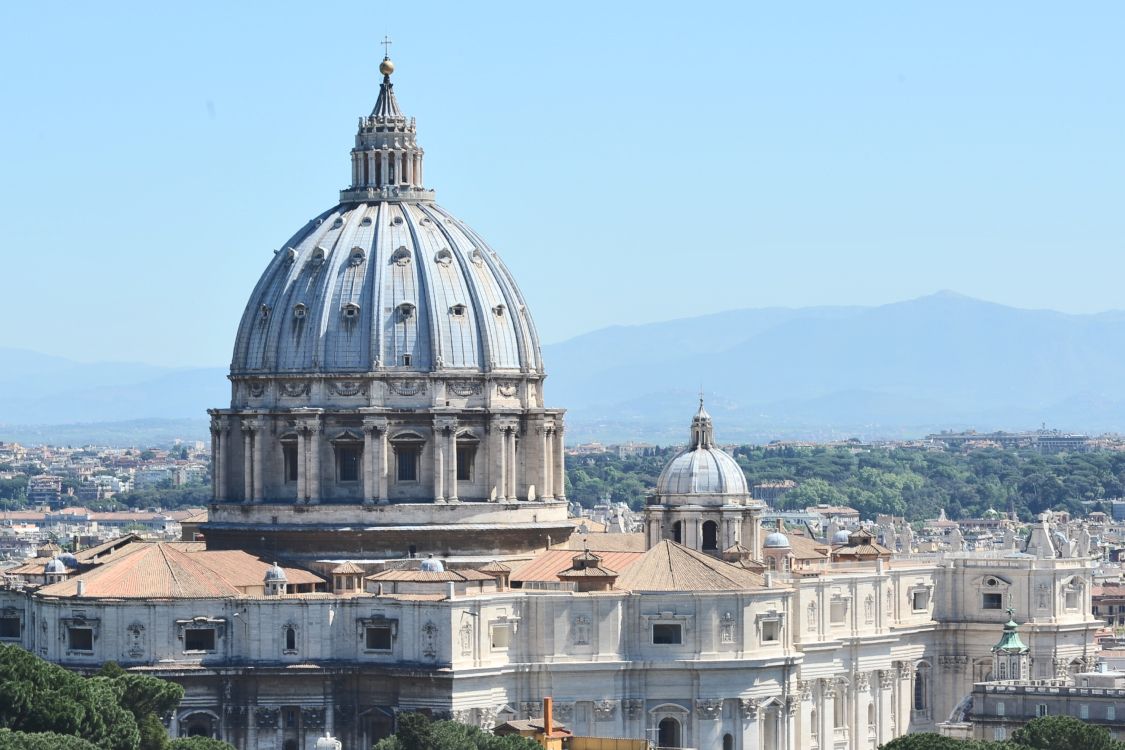
Located in the heart of Vatican City, and built by Bramante, Michelangelo and Bernini, St. Peter's Basilica is the center of Christianity and one of the greatest works of the Renaissance. The Holy See has recently presented several events to commemorate the 400th anniversary of its dedication.
St. Peter's Basilica is a work of art and faith that no one doubts. Its construction, which spanned more than a century (1506-1626), represents the transition and culmination of the Renaissance and Baroque styles.
In 1626, the great basilica erected over the tomb of the Apostle Peter was officially consecrated. Four centuries later, in 2026, St. Peter's Basilica celebrates its 400th birthday as one of the most influential buildings in the history of Western architecture.
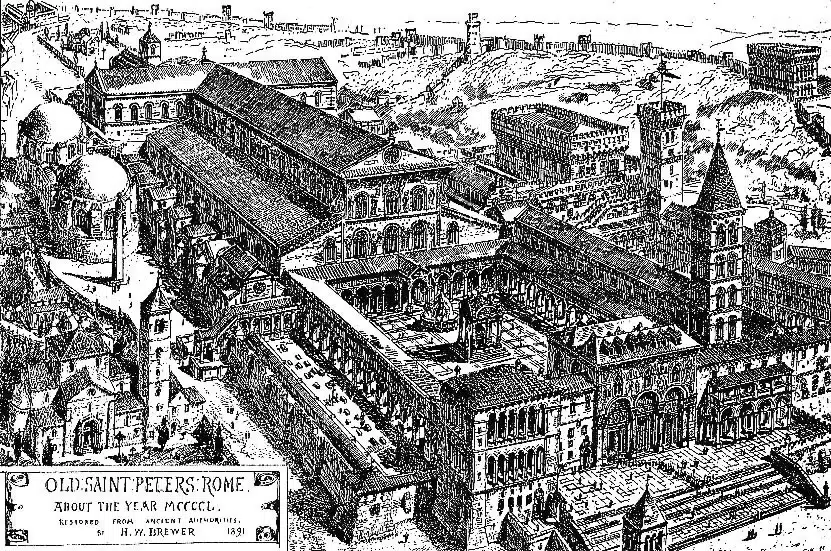
The present basilica replaced the ancient 4th century Constantinian church. The project officially began in 1506 on the initiative of Pope Julius II, who commissioned the design to Donato Bramante.
Throughout more than a century of construction, the building passed through the hands of decisive architects: Michelangelo, which redefined the dome and gave the ensemble its definitive monumentality; Carlo Maderno, responsible for the current façade and the longitudinal extension that turned the church into a Latin cross; and Gian Lorenzo Bernini, He is the author of the imposing bronze baldachin under the dome and of the design of the elliptical square that embraces the pilgrims.
The consecration took place on November 18, 1626.. Since then, St. Peter's has been the scene of papal coronations, great public celebrations, historic funerals and key moments in contemporary history.
On this anniversary, rediscover the history of San Pedro through digital resources now available:
The basilica is a compendium of European art between the sixteenth and seventeenth centuries. The dome of Michelangelo -136 meters high- became a model for countless later churches. Bernini's baldachin introduced a baroque language that dialogues with the colossal scale of the building. The side chapels house sculptures, mosaics and funerary monuments that trace five centuries of history.
On the occasion of the anniversary, the program presented in February 2026 includes an exhibition dedicated to the design and construction phases of the temple, from Bramante's first sketches to its completion in the 17th century. The aim is to show the creative process behind a work that, more than a building, was an ongoing architectural experiment for more than a hundred years.
In addition, on February 20, a new Stations of the Cross by Swiss artist Manuel Dürr was added, integrating contemporary creation into a historic space, something that has happened periodically over the centuries.
The basilica welcomed more than 30 million pilgrims in 2025, a record number due to the Jubilee of Hope. The anniversary was the occasion to reinforce the management of flows through a booking system integrated into the official website.
In addition, a mobile app will offer simultaneous translation of liturgies, chants and readings in 60 languages, facilitating a more immersive and orderly experience. New areas of the complex will also be opened, such as the Gregorian and Clementine domes, and the terrace that runs along the three apses.
One of the most eye-catching projects of the 400th anniversary is Beyond the visible, a comprehensive digital model of the monumental complex. This is a technological and preservation project promoted by the Fabbrica di San Pietro and ENI, in collaboration with Microsoft.
During 18 months of work and more than 4,500 hours of data collection, the 80,000 square meters of the basilica have been digitally scanned.
Few buildings can claim to have shaped for four centuries the visual identity of a city and, at the same time, the history of Western art. St. Peter's Basilica is not only the symbolic center of the Vatican; it is a synthesis of faith, architecture, sculpture, engineering and urban planning.
St. Peter's turns 400 years old not as a relic, but as a living building: a space where history, art and technology continue to dialogue under the same dome that Michelangelo imagined more than five centuries ago.
Every February 22nd, the Catholic Church celebrates the feast of the Virgin Mary. Chair of St. Peter, The Pope's role as successor of St. Peter and his mission to guide the faithful in faith and unity, as preached by Leo XIV since the beginning of his pontificate, is highlighted on this special occasion.
This day that challenges us to look with more love to the Pope who exercises his humble leadership in times that some call difficult; it urges us to walk fortes in fide.
The celebration of the Chair of St. Peter becomes an opportunity to unite in prayer and strengthen our faith. The Chair symbolizes the teaching and guidance that the Pope offers to the Church and all the faithful.
The Cathedra Sancti Petri Apostoli is considered by tradition to be the episcopal chair of St. Peter. It is an ancient wooden throne - symbol of the primacy and magisterium of the Pope - adorned with ivory plaques depicting the works of Hercules, and with friezes, also in ivory, from the Carolingian period (IX century).
To dignify it even more, the architect Gian Lorenzo Bernini He realized a grandiose gilded bronze monument that was completed in 1666, after ten years of difficult and costly work, especially for the fusion of the statues and the bronze elements, which weighed 74 tons. On the throne containing the relic, two angels hold the papal insignia: the keys and the tiara. The whole reaches a height of 14.74 meters.
The original tomb of the apostle St. Peter is located in the exactly under the main altar of St. Peter's Basilica.. It cannot be seen with the naked eye, but is located in a deep subway level, which can be visited in a very restricted way, known as the Vatican Necropolis, It is below the level of the Vatican grottoes (the place where most of the popes are buried).
Under the present high altar, archaeologists, during the 60s of the last century, found a small edicule (shrine) dating from the second century, which was built in front of a wall painted red. On it there was a graffiti in ancient Greek that said Petros eni (Pedro is here).
In a secret niche, inside that red wall, bones belonging to a robust man of about 60 to 70 years of age were found. The bones had a lot of soil stuck to them and were wrapped in a purple cloth embroidered with gold thread (a sign of great respect). After years of forensic studies, in 1968, Pope St. Paul VI officially announced that these remains could be convincingly considered to be the authentic remains of St. Peter the Apostle.
Access to the Scavi Vatican is very restricted (only about 250 visitors per day) to protect the microclimate and conditions of the ruins. Reservations must be requested months in advance by sending a form or email to Ufficio Scavi (Excavations Office of the San Pedro Factory).
As more operative details, the tour lasts approximately 90 minutes. It is an enclosed space, somewhat hot and humid, not suitable for people with claustrophobia. Children under 15 years of age are not allowed to enter and photography is not allowed.
Just below the floor of the present St. Peter's Basilica are the Vatican Grottoes. To get your bearings, physically, they occupy an intermediate level between the present cathedral and the old ruins of the necropolis.
To summarize, the floor of the Vatican Grottoes is the original floor of the basilica that Emperor Constantine ordered to be built in the 4th century.
The extensive crypt of the Vatican grottoes serves as the papal cemetery. There are the tombs and chapels of more than 90 popes (including Blessed John Paul I, Pius XII, St. Paul VI, among others), as well as some kings, queens and nobles who stood out for their support of the Catholic Church (such as Queen Christina of Sweden). The tomb of St. John Paul II was initially there until it was moved after his beatification to make it easier for the files to visit and pray. It is currently located to the left of Michelangelo's Pieta.
 carf@fundacioncarf.orgLandline: +34 914 029 082Mobile: +34 638 078 51145 Conde de Peñalver Street.