Talking about inheritances and legacies usually makes us think of property, goods or money that are passed on from parents to children or other loved ones. But a legacy of solidarity can go well beyond the materialis to leave a mark of faith that will endure over time, a witness that will continue to bear fruit in the Church after we are gone.
The history of the Church is full of examples of how legacies, large or small, have sustained its mission and made it possible for the Gospel to reach millions of people.
The relationship between culture, art, charity and the Catholic Church is probably the longest and most fruitful sponsorship contract of mankind. For centuries, the Church has been a spiritual guide, and the main "creative director" of the West.
At various times in history, bishops, abbots and religious founders who lived in holiness They used part of their goods or ecclesiastical revenues to found seminaries, hospices or houses of formation. They were not merchants or passing patrons, they were pastors and religious who, with their austere life, gave testimony that they had everything “borrowed” from God and that their mission was to take care of souls.
Some monastic communities, following their spirituality, assumed that their surplus land or rents should be used for their maintenance, but also for a broader mission: to train priests, support missions or help in poor areas. Thus, monasteries became economic centers that redistributed goods for ecclesiastical purposes.
We also find legacies of lay faithful: relevant royalty or even historical figures such as Catholic kings, merchants, families with visible Christian lives who, at the end of their lives, offered part of what they owned to the Church to support schools, orphanages or priestly formation.
These physical legacies, sometimes translated into cathedrals, monasteries or universities, are the visible expression of a conviction that faith deserves to be transmitted and guarded for future generations.
There are also discrete legacies that, although invisible, have transformed the course of the Church.
In many villages, chapels and parishes were built thanks to collections from simple families, farmers and artisans who contributed what little they had. Their names do not appear in the history books, but without them, the faith would not have taken root in so many communities.
Other legacies are even more profound: the legacy of faith transmitted in the family. Let's think about St. Monica, who bequeathed to the Church nothing less than St. Augustine thanks to his constant weeping and prayer. Or in the parents of St. Therese of the Child Jesus, whose spiritual legacy was the atmosphere of faith and love that made holiness blossom in their daughter. The legacy of a Christian is not measured in numbers, but in the impact he or she leaves on souls.
The great and small legacies of history remind us that Christian generosity is never lost, but is always transformed into life for the Church.. We see that same reality today in those who, anonymously and discreetly, decide to leave a legacy that contributes to the future of the church.
As a tribute and token of our gratitude, the CARF Foundation created the Page From HeavenA memorial where we remember those deceased benefactors who made it possible for thousands of diocesan and religious priests and seminarians to be formed each year.
Holy Mass is offered daily for their souls at the Sanctuary of Torreciudad, The priests who have received help from the CARF Foundation carry in their daily prayers the memory of those benefactors who now continue to help from heaven. The priests who have received help from the CARF Foundation carry in their daily prayers the memory of those benefactors who now continue to help from heaven.
This gesture consolidates an intimate spiritual relationship: those who bequeathed their generosity not only sustain the Church from earth, but now intercede and accompany her from eternity. It is a beautiful and clear expression that the Christian legacy of solidarity does not end at death, but continues in the communion of saints.
For a Christian, leaving a legacy of solidarity means much more than distributing goods. It is a spiritual decision, a way of prolonging charity beyond one's own life.
The Gospel reminds us: «where your treasure is, there your heart will be» (Mt 6:21). Whoever decides to include the CARF Foundation in his or her solidarity will transforms his or her assets into a seed of faith, allowing others to find God through priests and priests well trained.
Today, that same logic is still alive: the legacy is the bridge between your earthly life and the eternal fruits that others will receive thanks to your generosity.
At present, through the CARF Foundation, your legacy becomes a direct support to seminarians and diocesan priests around the world.. Young people who wish to give themselves to God and serve the universal Church, but who need help in their formation.
Just as in the past legacies built temples, universities, hospitals, convents and missions, today your legacy can build living temples: priests prepared to proclaim the Gospel and accompany thousands of people. A Christian takes nothing to heaven, but can leave a lot on earth.. As kings, saints and anonymous families did, today you have the opportunity to decide that what God entrusted to you in life will continue to be transformed into hope, faith and service.
Your legacy may be the most valuable inheritance: the one that sustains the Church and accompanies thousands of people to God.
Table of Contents
Inheritance is the succession in all the assets, rights and obligations of the deceased. While the bequest, a specific donation of a specific asset (a car, a house, a jewel).
Before there were great art collectors, it was political leaders who consolidated the Church's holdings.
- Constantine the Great (IV century): The original patron. After legalizing Christianity, he financed the construction of the first large basilicas, such as the Former St. Peter's Basilica in Rome and that of the Holy Sepulchre in Jerusalem.
- Charlemagne (IX century): He promoted the "Carolingian Renaissance". His support was vital for the preservation of illuminated manuscripts and the reform of ecclesiastical architecture in Europe.
In the 15th and 16th centuries, patronage became a matter of status, faith and, let's face it, a bit of family ego supported by the great families who supported artists and bequeathed and donated much heritage to the Church.
- The MediciThey produced four popes (Leo X, Clement VII, among others) and financed the splendor of Florence and the Vatican. They promoted Michelangelo and Raphael.
- Pope Julius IIknown as the Warrior Pope, was the one who ordered the demolition of the old St. Peter's Basilica to build the current one. He supported Michelangelo (Sistine Chapel) and Bramante.
- The BorgheseCardinal Scipione Borghese was the great patron of the early Baroque. He promoted the careers of Bernini and Caravaggio.
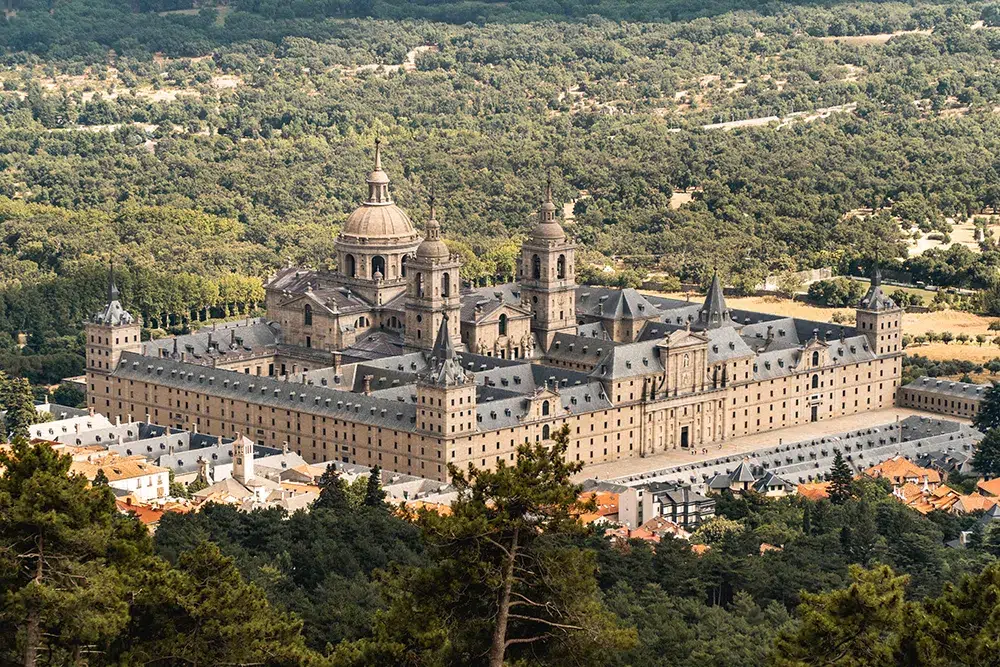
- Philip II of Spain: the great defender of the faith. His greatest work of patronage was El Escorial, a monastery-palace that symbolized the union of royal power and religious fervor.
- The Habsburgs of Austria: turned Vienna and Central Europe into bastions of ecclesiastical baroque, financing abbeys and churches of almost overwhelming sumptuousness.
Today, patronage has gone from being a matter of kings and popes to being managed by institutions and foundations.
- Knights of Columbus: This organization has financed numerous restorations in St. Peter's Basilica and supports Vatican communication projects.
- Private Foundations and Museums: institutions such as the Vatican Museums are self-financed, but depend on international donations (such as the Patrons of the Arts in the Vatican Museums) for the restoration of some masterpieces.
- Billionaires and Philanthropists: after the fire in Notre Dame de Paris in 2019, families such as the Pinault and the Arnault (LVMH) donated hundreds of millions of euros, demonstrating that Catholic patronage today is also an act of preservation of the global cultural heritage.
 carf@fundacioncarf.orgLandline: +34 914 029 082Mobile: +34 638 078 51145 Conde de Peñalver Street.