The life of St. John Paul II, a journey to the heart of mankind

The life and legacy of St. John Paul II, whose birth name was Karol Wojtyła, is a theme that resonates deeply in the history of the Catholic Church and the world at large. Born in Wadowice, Poland, on May 18, 1920, St. John Paul became one of the most influential popes of the 20th century.

His papacy, which lasted from 1978 to 2005, witnessed profound cultural, political and social changes. From his focus on human rights and interreligious dialogue to his role in the fall of communism in Eastern Europe, St. John Paul II left an indelible mark. This article will explore his life, from his origins in Poland to his impact as a spiritual and cultural leader in the world.

Origins in Wadowice

The childhood of St. John Paul

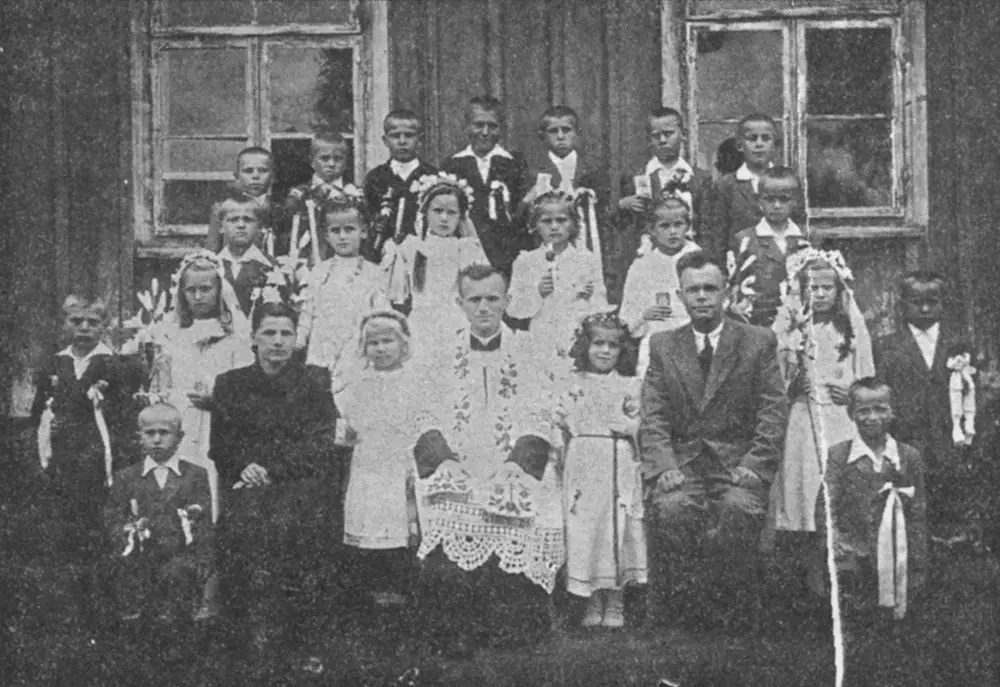
St. John Paul II was born into a working-class family. His father, a Polish army officer, and his mother, an educator, instilled in him values of faith, hard work and dedication. The untimely death of his mother when he was only 9 years old marked the beginning of a life that would face numerous adversities. Despite the difficulties, St. John Paul excelled in school and showed an interest in theater and poetry.

san juan pablo ii

St. John Paul's childhood was deeply influenced by the Catholic community of Wadowice. There, he attended the local church, where he developed a personal relationship with God that would grow stronger throughout his life. This religious foundation was fundamental in his spiritual and moral formation, motivating him to follow a path to the priesthood.

Family and cultural influences

In his youth, St. John Paul witnessed the impact of World War II in Poland, which left a deep mark on his worldview. His relationship with his father, who taught him about the importance of faith and endurance, was vital to his personal development. In addition, his interest in literature and theater led him to explore existential and philosophical themes that would later influence his teachings as pope.

Polish culture, rich in tradition and spirituality, also played a key role in the formation of his identity. The teachings of the Catholic Church in this cultural context provided him with a framework that would guide him in his priestly life and, later, in his papacy.

First steps in faith

As Karol Wojtyła moved into adolescence, his commitment to the Catholic faith deepened. He studied in an underground seminary during the Nazi occupation, a testament to his determination and courage. It was a time when many Catholics in Poland faced severe persecution, and his decision to become a priest reflected remarkable courage.

The influence of religious figures and mentors during this time also helped shape his character. St. John Paul II would not only be a religious leader, but an advocate for human dignity and fundamental rights, themes that would resonate throughout his life and papacy.

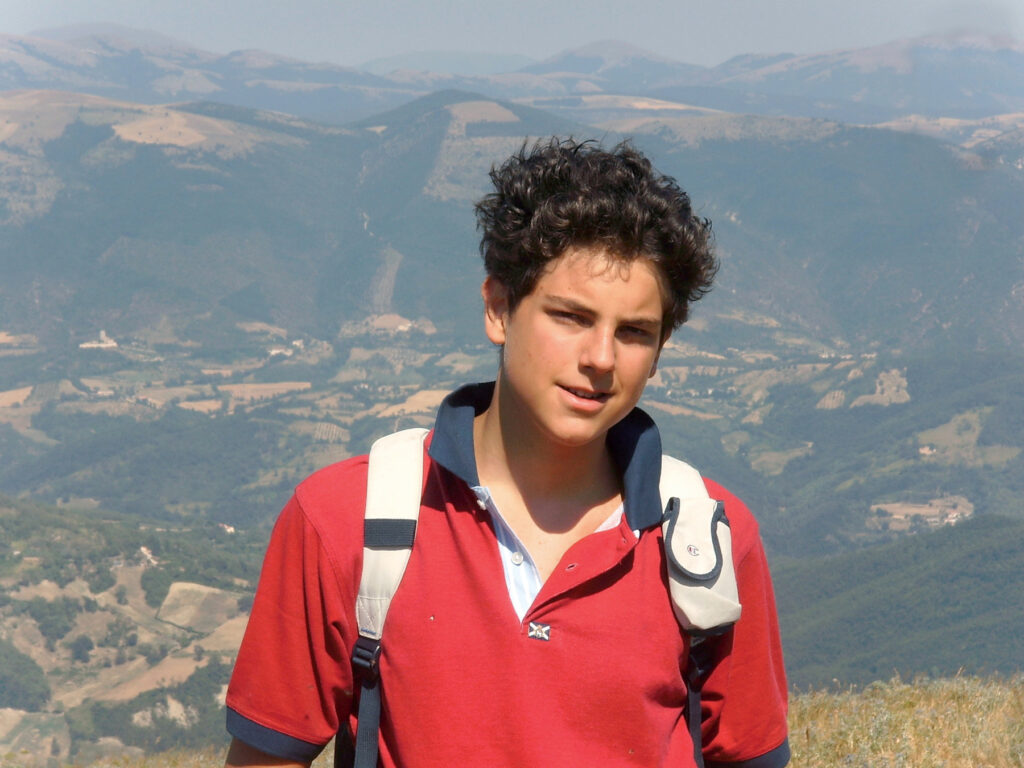
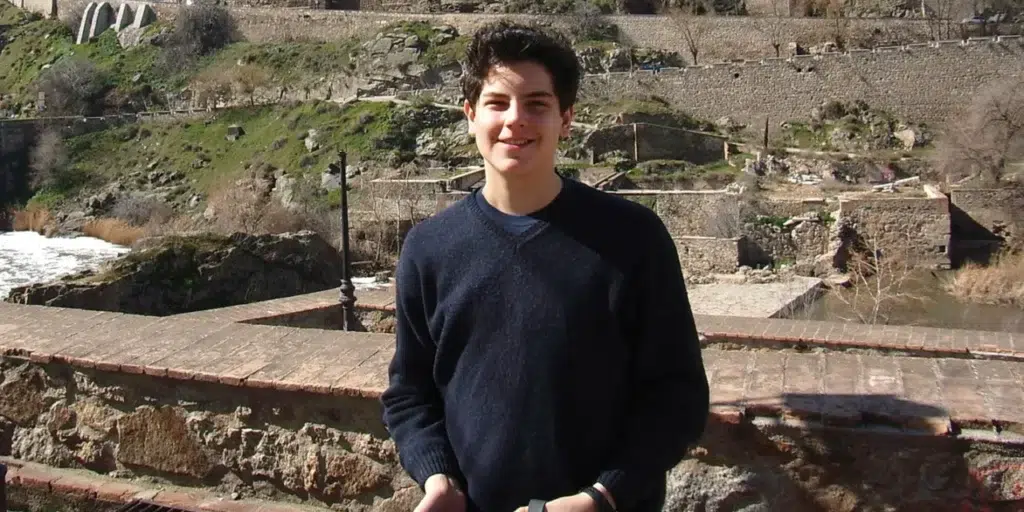
san juan pablo ii joven

Road to the Priesthood

University life and theater

Karol continued his education at the Jagiellonian University in Krakow, where he studied philology and became actively involved in theater. This period at the university not only provided him with a solid academic background, but also allowed him to explore his passion for the arts. Through theater, he developed communication and empathy skills that he would later use in his ministry.

The combination of his love of literature and theater with his growing religious devotion laid a unique foundation for his future. The college experience also allowed him to form meaningful friendships, many of which would remain throughout his life and contribute to his perspective on social and political issues.

World War II and its impact

The German invasion of Poland in 1939 abruptly interrupted the life of the Karol Wojtyła. The brutality of the war and the Nazi occupation had a profound impact on him, leading him to reflect on the human condition and the need for faith. During this time, he continued his priestly formation in secret, and his passion for social justice began to grow.

The war not only led him to question the nature of suffering, but also strengthened his determination to become a leader who would advocate for the oppressed. This period of adversity was crucial in his development, as it shaped his character and his future mission as pope.

Ordination and first years as priest

Wojtyła was ordained a priest in 1946 and quickly earned a reputation as a charismatic leader and deep thinker. His work in the diocese of Krakow led him to become involved in social and cultural activities, seeking to connect faith with people's daily lives. During these years, he devoted himself to ministering to youth and working with the working-class community, which foreshadowed his pastoral approach in his papacy.

As he advanced in his career, Wojtyła was appointed auxiliary bishop of Krakow and then archbishop. His ability to dialogue with people of different backgrounds and his ability to tackle difficult issues made him stand out. His time in Krakow provided him with a platform to develop his theological thinking and commitment to human rights.

Rise in the Catholic Church

Experiences in Krakow

As Archbishop of Krakow, Wojtyła worked tirelessly to revitalize the Catholic faith in Poland. He organized spiritual retreats and promoted Christian education, establishing formation centers for young people. His innovative approach and connection to the community made him a respected leader, not only in Poland, but also internationally.

Wojtyła excelled in his opposition to the communist regime, defending freedom of conscience and the rights of believers. His commitment to social justice earned him the admiration of both the Catholic community and those fighting for freedom in Poland.

The Second Vatican Council

The Second Vatican Council, which took place between 1962 and 1965, was a turning point for the Catholic Church. Wojtyła was present as a bishop and actively participated in the discussion on the modernization of the Church. He advocated an openness to the modern world, emphasizing the importance of interreligious dialogue and the need for the Church to be involved in contemporary social issues.

His participation in the Council strengthened his position within the Church and laid the foundation for his future teachings as Pope. The experience reinforced his belief in the importance of peace and reconciliation in a divided world.

Cardinal of Krakow

In 1964, Wojtyła was named a cardinal, consolidating his influence within the Vatican. His leadership in Krakow and his active participation in the Council positioned him as a candidate for papacy. During these years, he continued to work for justice and human dignity, establishing a legacy that would accompany him until his election as pope in 1978.

Wojtyła's relationship with young people, as well as his ability to communicate with different groups, made him an internationally respected figure. His charisma and vision of a Church committed to peace and social justice resonated throughout the world.

juan pablo II elección

Papacy: a new direction for the Church

Election as successor of St. Peter

Wojtyła's election as pope on October 16, 1978 marked a historic moment. He was the first non-Italian pope in more than 400 years and his election was greeted with joy around the world, especially in his native Poland. He adopted the name John Paul II, paying homage to his predecessor and signaling his intention to continue his legacy of openness and dialogue.

His papacy began in a complicated international context, with political and social tensions on the rise. John Paul II set out to address these problems from the outset, using his platform to advocate for peace and justice throughout the world.

Early teachings and apostolic journeys

One of the highlights of his papacy was his dedication to apostolic travel. John Paul II made more than 100 international visits, bringing his message of hope and renewal to millions of people. During these trips, he focused on the importance of human dignity and religious freedom, addressing social and political problems in each country he visited.

His first encyclicals reflected his vision of a Church in dialogue with the modern world. In Redemptor Hominis, he emphasized the centrality of Christ in the life of man, while Dives in Misericordia underscored God's mercy as a response to the injustices of the world. These teachings set a tone for his papacy and laid the foundation for his ongoing commitment to human rights.

Confrontation with communism

John Paul II became an emblematic figure in the struggle against communism, especially in Eastern Europe. His visit to Poland in 1979 was a pivotal event that inspired millions to question the communist regime. His call for freedom and human dignity resonated with the population, giving rise to a solidarity movement that would culminate in the fall of communism in Poland in 1989.

John Paul II's influence on global politics was significant. His close relationship with world leaders, as well as his commitment to interreligious dialogue, contributed to the de-escalation of tensions between the superpowers and promoted peace in various regions of the world.

A world leader

Interreligious dialogue

John Paul II was a pioneer in interreligious dialogue, emphasizing the importance of understanding and cooperation between different traditions. In 1986, he organized a historic meeting with leaders of various religions in Assisi, Italy, where they united in prayer for world peace. This event symbolized his commitment to peace and his desire to build bridges between different religious communities.

His focus on dialogue helped foster greater openness among religions and promoted a sense of unity in diversity. As he reached out to other traditions, his message of respect and love spread, laying the foundation for a more peaceful future.

Your defense of human rights

The defense of human rights was a pillar of John Paul II's papacy. His work in this area was not only limited to the fight against communism, but also encompassed issues such as racism, poverty and social injustice. He was a fervent defender of human dignity, advocating for the oppressed and denouncing violations of fundamental rights.

In his famous 1995 speech on the anniversary of the United Nations, John Paul II urged the international community to work together for a more just and equitable world. His focus on human dignity and social justice made him a powerful voice in the international arena, influencing policy and promoting significant change.

The impact on youth

John Paul II was a pope particularly beloved by young people, to whom he dedicated a special place in his ministry. He established World Youth Days, an initiative that brought together millions of young people from around the world in celebrations of faith and community. These events not only strengthened the faith of young people, but also provided them with a platform to voice their concerns and aspirations.

His message to young people emphasized the importance of hope, authenticity and commitment to Christian values. Through his interaction with them, John Paul II left an indelible mark on the lives of many young people, inspiring them to live with purpose and dedication.

juan pablo II vejez

Spiritual and cultural legacy

Canonization and recognition

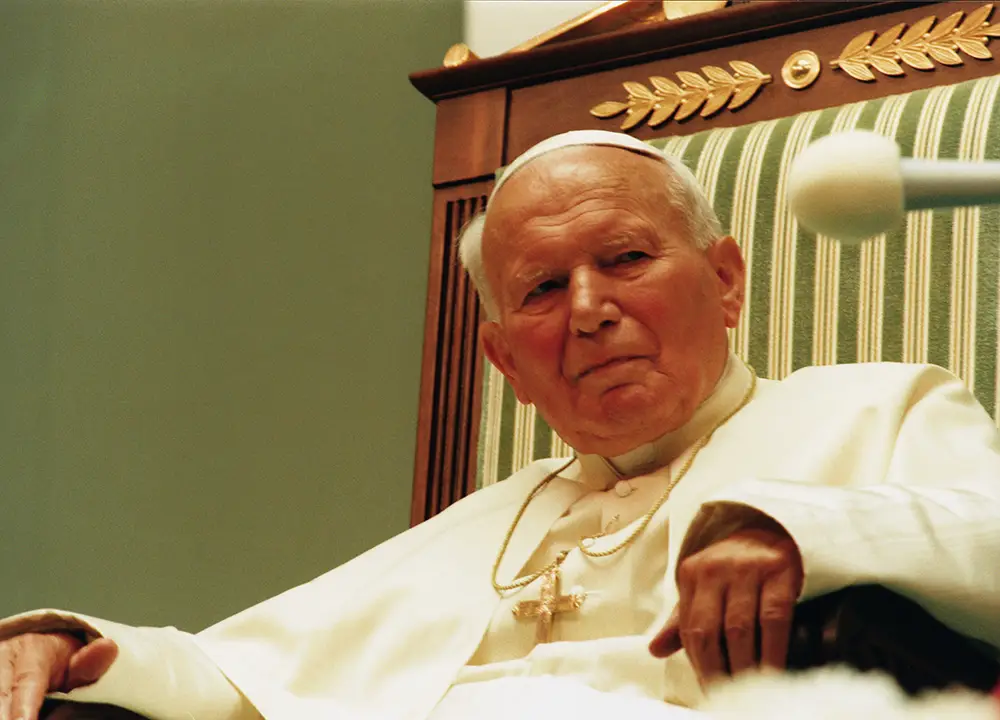
St. John Paul II was canonized on April 27, 2014, a recognition of his life of service and his impact on the Church and the world. His canonization was a significant event, drawing millions of pilgrims to Rome to celebrate his legacy. This recognition not only solidified his place in the history of the Catholic Church, but also reaffirmed his continuing influence.

The canonization was a moment of reflection on his life and teachings. Many people remembered his dedication to peace, justice and human dignity, considering his legacy as an example for future generations to follow.

Influence on contemporary society

St. John Paul II's legacy goes beyond his time as pope. His focus on human dignity, social rights and interreligious dialogue continues to influence contemporary thought. Organizations and movements promoting social justice often cite his teachings as inspiration and guidance in their work.

In addition, his emphasis on the importance of family and life has left a lasting mark on modern society, where the defense of family values and respect for life are topics of ongoing discussion. His legacy is still present in culture, politics and spirituality throughout the world.

Memorial and celebrations in his honor

The memory of St. John Paul II is celebrated around the world through various activities and events in his honor. From memorial Masses to social justice initiatives, his life and teachings continue to inspire millions. World Youth Days, which he established, remain a prominent event on the Church's calendar, fostering faith and community among young people.

Cities and communities have also erected monuments and spaces dedicated to his memory, recalling his commitment to peace and dialogue. His legacy lives on in the lives of those who seek to follow his example of love, hope and service to others.

Conclusion

san juan pablo ii canonización

The life and legacy of St. John Paul II is a testament to an individual's ability to influence the world through faith, dedication and love. From his childhood in Wadowice to his papacy and beyond, his message of human dignity and justice continues to resonate today. In a world that often faces conflict and division, his life reminds us of the importance of working for peace, mutual respect and unity.

The figure of St. John Paul II is not only a symbol of the Catholic faith, but also a beacon of hope for all those who seek justice and reconciliation in society. His legacy will live on in the collective memory, inspiring future generations to follow his path of love and service.


Questions frequent

When was St. John Paul II elected Pope?

St. John Paul II was elected Pope on October 16, 1978.

What impact did St. John Paul II have on the fall of communism?

St. John Paul II played a crucial role in inspiring the Solidarity movement in Poland, which was instrumental in the fall of the communist regime in 1989.

Why are you known as a human rights advocate?

John Paul II advocated for human dignity and fundamental rights throughout the world, confronting social and political injustices both at home and globally.

What was St. John Paul II's approach to interreligious dialogue?

John Paul II promoted interreligious dialogue as a way of building bridges between different traditions, emphasizing mutual respect and understanding.

How does St. John Paul II continue to influence us today?

His legacy continues to inspire movements for justice, peace and human dignity, as well as celebrations and events in his honor around the world.

san juan pablo ii alvaro del portillo

What did St. John Paul II inspire in his friend Blessed Alvaro del Portillo?

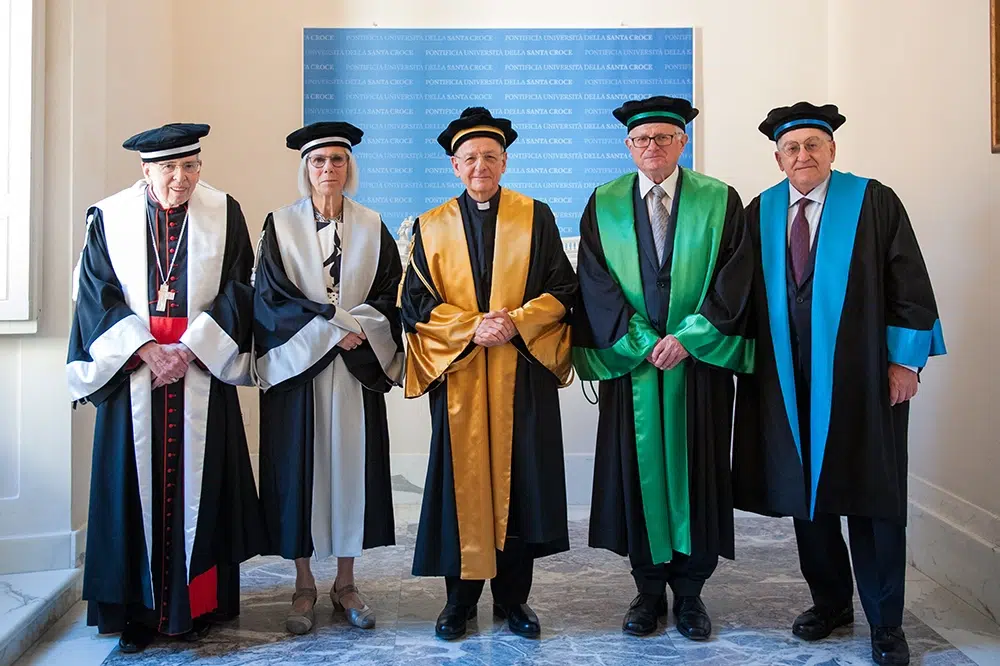
Blessed Alvaro del Portillo was inspired by Saint John Paul II to carry out the Roman Academic Center of the Holy Cross erected on January 9, 1985 by the then Congregation for Catholic Education.

Saint Josemaría Escrivá Opus Dei's founder, had desired a center of university studies that, in collaboration with other universities in Rome, would carry out a broad and profound work of research and formation in the various ecclesiastical sciences, at the service of the whole Church.

The challenge was taken up by his successor, Bl. Álvaro del Portillo The project was materially carried out by him, directing the entire execution phase and assuming the role of first Grand Chancellor.

Who grants the title of pontifical to the PUSC?

With the passage of time and with the addition of other academic activities, the Center became 
the Roman Athenaeum of the Holy Cross, with the Faculties of Theology, Philosophy, Canon Law and the Higher Institute of Religious Sciences of Apollinare.

On June 26, 1995, Saint John Paul II conferred on the Ateneo the title of Pontifical. Three years later (1998), with the establishment of the fourth Faculty of Institutional Social Communication on February 26, 1996, the title of Pontifical University was finally conferred.

The historical figure of Jesus of Nazareth

For a deeper knowledge of the life of Jesus of Nazareth, it is obviously necessary to refer to the Gospels and the books cited in the bibliography.

Chronology of the life of Jesus

I will speak here about some fundamental biographical facts, starting from the birth of the Nazarene.

You can read here the first part of this historical research article about the The historical figure of Jesus.

Christmas: does what the Gospels tell us make sense?

From the Gospel of Luke (chapter 2) we know that the birth of Jesus coincided with a census announced throughout the land by Caesar Augustus: "In those days Augustus Caesar decreed that a census should be taken throughout the Roman Empire". This first census was taken when Quirinius ruled in Syria.
So they all went to register, each to his own town.

What do we know about it? From what we read in lines VII, VIII and X of the transcript of the Res gestae of Augustus, located in the Ara PacisIn Rome, we learn that Caesar Octavian Augustus took a census on three occasions, in 28 B.C., 8 B.C. and 14 A.D., of the entire Roman population.

In ancient times, conducting a census of that size obviously had to take some time for the procedure to actually be completed. And here is another clarification from the evangelist Luke that gives us a clue: Quirinius was the governor of Syria at the time this "first"census.

Well, Quirinius was governor of Syria probably from 6-7 A.D. On this question there are discordant opinions of historians: some hypothesize, in fact, that Quirinius himself had an earlier term of office. (1) in the years 8-6 B.C.

Others, on the other hand, translate the term ".first(which in Latin and Greek, being neutral, can also have an adverbial value)as "first" or rather "before Quirinius became governor of Syria". Both hypotheses are admissible, so it is probable what is narrated in the Gospels about the census that took place at the time of Jesus' birth (2).

We add, then, that the practice of these censuses provided that one went to the village of origin, and not to the place where one lived, for registration.It is plausible, then, that Joseph went to Bethlehem to be searched.

Do we have other temporal clues? Yes, the death of Herod the Great, in 4 B.C., since he died at that time and, from what is narrated in the Gospels, about two years had to pass between the birth of Jesus and the death of the king.which would coincide precisely with 6 BC.

As for the dies nataliswhich is the actual day of Jesus' birthFor a long time it was assumed that this would be fixed on December 25 at a later period, to coincide with the dies Solis Invicti, a feast of pagan origin. (probably associated with the cult of Mithras).and thus replaces the pagan commemoration with a Christian one.

Recent discoveries, from the inexhaustible Qumran, have made it possible to establish that, however, this may not have been the case, and that we have reasons to celebrate Christmas on December 25.

We know, therefore, always from the evangelist Luke (the most richly detailed account of how Jesus was born) that Mary became pregnant when her cousin Elizabeth was already six months pregnant.. Western Christians have always celebrated the Annunciation of Mary on March 25, which is nine months before Christmas..

The Easterners also celebrate the Annunciation to Zechariah on September 23rd. (father of John the Baptist and husband of Elizabeth). Luke goes into even more detail when he tells us that, when Zechariah learned that his wife, already at an advanced age like him, would become pregnant, he was serving in the Temple, being of priestly caste, according to the class of Abijah.

However, Luke himself, writing at a time when the Temple was still in operation and the priestly classes were following their perennial shifts, does not offer, taking it for granted, the time in which the class of Abijah was to serve. Well, numerous fragments of the Book of Jubilees, found at Qumran, have allowed scholars such as the French Annie Jaubert and the Israeli Shemarjahu Talmon, to reconstruct with precision that Abijah's shift took place twice a year:

Corresponding to the last ten days of SeptemberThe festival is in perfect harmony with the oriental festival of September 23rd and six months before March 25th, which would lead us to suppose that the birth of Jesus really took place in the last decade of December: maybe not exactly on the 25th, but around there.

Qumran QUMRAN is a city on the northwestern shore of the Dead Sea, 19 km south of Jericho, located in the foothills of the mountains of the Desert of Judah extending into the plain of the lake from which it is only 2 km away. A torrid and desert-like place (the only source is Ein Feshka, a few kilometers further south). A narrow, steep road, now asphalted, leads to a terrace surrounded by ravines and completely exposed to the torrid and relentless sun; on it are the ruins of Qumran. The site, although never directly mentioned in the Bible, is of great biblical interest because of the important discoveries made there in the years 1947-58.

Life: so much ado about nothing?

We continue with the excursus in the life of Jesus of Nazareth.

We have seen that, around 6 B.C., both Elizabeth, wife of the priest Zechariah of the Abijah class, and her cousin Mary, who, according to Christian scripture, was a virgin and betrothed to a man of the house of David named Joseph, became pregnant.

Josédue to the census announced by the emperor Augustus (where men had to return to their family's hometowns to register).he went to the city of David, Bethlehem, and there his wife Mary gave birth to a son whom he named Jesus.

The Gospels then relate that the Magi came from the East after seeing a star to worship the new king of the world, foretold by the ancient scriptures, and that Herod, having learned that the prophecy about the Messiah, the new king of Israel, was to be fulfilled, decided to kill all male children two years old and under.

Episode of which we find some traces in Flavius Josephus but of which no one else tells; on the other hand, as Giuseppe Ricciotti points out, in a context like that of Bethlehem and its surroundings, sparsely populated, and especially at a time when the life of a child was of little value, it is difficult to imagine that anyone would bother to notice the violent death of some poor infant son of no one important.

Having come to know in some way the intentions of Herod (Matthew's gospel speaks of an angel who warns Joseph in a dream)mother, father and newborn son flee to Egypt, where they remain for a few years.until the death of Herod (therefore, after 4 B.C.).

Except for Luke's reference to Jesus, who, at the age of twelve years, during a pilgrimage to Jerusalem, was lost by his parents who later found after three days of searching while discussing doctrinal matters with the doctors of the Temple, nothing more is known about the childhood and youthful life of the Nazarene., until its effective entry into the public scene in Israel, which can be placed around 27-28 AD..

When he must have been about thirty-three years old, shortly after John the Baptist, who must have begun his ministry a few months or a year earlier, more or less. We can go back to the time of the beginning of the preaching of Jesus thanks to an indication contained in the Gospel of John (the most accurate, from a chronological, historical and geographical point of view): Disputing with Jesus in the Temple, the Jewish notables object, "In forty-six years was this temple built, and will you raise it up in three days?"

If we calculate that Herod the Great began the rebuilding of the Temple in 20-19 B.C. and consider the forty-six years of the Gospel sentence, we find ourselves right in the year 27-28 B.C.

The ministry of John the Baptist

In any case, it preceded only a little that of Jesus and, according to the evangelists, John represented only the forerunner of the man from Galilee, who was the true messiah of Israel.

John, who is believed to have been, at the beginning of his life, an Essene, certainly separated himself, as demonstrated above, from the rigid elite doctrine of the Qumran sect. He preached a baptism of penitence, by immersion in the Jordan. (in an area not far from Qumran)precisely to prepare for the advent of the deliverer, the messiah king.

Of himself he said, "I am the voice of one crying in the wilderness: make straight the way of the Lord." (Gospel of John 1:23). However, he was soon killed by Herod Antipas. (3)tetrarch of Galilee and son of Herod the Great.

John's death did not prevent Jesus from continuing his ministry.. The man from Nazareth preached peace, love of enemies and the coming of a new era of justice and peace, the Kingdom of God.which, however, would not be what his Jewish contemporaries expected of him. (and how anticipated by the same prophecies about the Messiah). That is, an earthly kingdom in which Israel would be delivered from its oppressors and dominate other nations, the Gentiles, but a kingdom for the poor, the humble and the meek.

The preaching of Jesus

To which we will return in more detail in the next paragraph, initially appeared to be very successfulespecially because, the Gospels tell us.

Accompanied by a large number of prodigious signals (multiplication of loaves and fishes by thousands; healings of lepers, the lame, the blind and the deaf; resurrection of the dead; transformation of water into wine). However, after encountered considerable difficulties, when Jesus himself began to suggest that he was much more than a man, or proclaimed himself to be the son of God.

In addition, he clashed harshly with the religious elite of the time. (the Pharisees and scribes, whom he called "vipers" and "vultures"). by proclaiming that man was more important than the Shabbat and the Sabbath rest (and, in the Pharisee conception, the Sabbath was almost more important than God). and that he himself was even more important than the Temple in Jerusalem.

Nor did he like the Sadducees, with whom he was no less harsh, and who, for their part, together with the Herodians, were his greatest adversaries, since they Jesus was loved by the crowds and they feared that the people would rise up against themselves and the Romans.

All this lasted about three years

Three Passovers are mentionedThe first one, on the account of the life of Jesus, by the evangelist John, as we have said, is the most accurate in correcting the inaccuracies of the other three evangelists and in pointing out neglected details, even from the chronological point of view.

After which the Nazarene went up to Jerusalem for the last time to celebrate the Passover. Here, besides a cheering crowd, Pharisees, scribes, Sadducees and Herodians were waiting for him, who conspired to kill him, arrested him, taking advantage of the treachery of one of his disciples. (Judas Iscariot) and handed him over to the Romans. After a summary trial, the procurator or prefect, Pontius Pilate, washed his hands and crucified Him.

The death of Jesus on the Cross

All the evangelists agree in fixing the death of Jesus on the cross on a Friday. (the parasceve) within the Easter holidays.

Giuseppe Ricciotti, enumerating a series of possibilities all analyzed by scholars, comes to the conclusion that the exact date of this event, in the Jewish calendar, is the 14th day of the lunar month of Nisan. (Friday, April 7) 30 A.D.

So, if Jesus was born two years before Herod's death and was about thirty years of age (possibly thirty-two or thirty-three) at the beginning of his public life, must have been about 35 years old when he died.

The Gospels tell us that Jesus suffered the most excruciating deathThe "Roman Empire" was reserved for slaves, murderers, thieves and those who were not Roman citizens: the crucifixionHe was then subjected to an equally terrible torture which, in Roman custom, preceded crucifixion: the flagellation (described by Horace as horribile flagellum)inflicted with the terrible instrument called flagrum, a whip with metal balls and bone nails that tore the skin and tore shreds of flesh.

The cross used could be of two types: crux commissa, T-shaped, or crux immissa, dagger-shaped. (4)

From what we read in the Gospels, once condemned, Jesus was forced to carry the cross (most likely the cross beam of the crux immissa, the patibulum) at a height just outside the walls of Jerusalem (Golgotha, exactly where the Basilica of the Holy Sepulcher stands today).In that place, according to Roman procedure, he was stripped.

Other details of the punishment can be learned precisely from the Roman custom of crucifying those condemned to death: they were tied or nailed with their arms extended to the scaffold and raised on the vertical post already fixed to the ground. On the other hand, the feet were tied or nailed to the vertical post, on which a kind of support seat protruded at the level of the buttocks.

Death was slow, very slow and accompanied by unbearable suffering.The victim, raised from the ground no more than half a meter, was completely naked and could hang for hours, if not days, shaken by tetanic cramps and spasms due to the impossibility of breathing properly, as the blood could not flow to the extremities which were strained to the point of exhaustion, as well as to the heart and lungs which could not hatch properly.

We know from the evangelists, however, that Jesus' agony did not last more than a few hours. (from the sixth hour to the ninth hour), probably due to the enormous loss of blood (hypovolemic shock) due to flagellation and that, after death, was placed in a new tomb, excavated in the rock near the site of the crucifixion. (a few meters away).

And here ends the story of the life of the "historical Jesus" and begins that of the "Christ of faith".The Gospels later read that after three days, Jesus of Nazareth rose from the dead, appearing first to some women (something unheard of, at a time when a woman's testimony was worthless)The first time that Paul of Tarsus, at the time of his ascension to heaven at the right hand of God, was alive, he was still alive, as Paul of Tarsus specifies, at the time of his ascension to heaven at the right hand of God. (around 50) Paul himself was writing his letters.

Who said it was: the kerygma

The story of the "historical Jesus" is the story of a failure, at least an apparent one: perhaps, in fact, the greatest failure in history.

Unlike other characters who have marked the course of time and have been engraved in the memory of posterity, Jesus did practically nothing exceptional, from a purely human point of view, or rather macrohistorical: he did not lead armies to conquer new territories, he did not defeat hordes of enemies, he did not accumulate quantities of booty and women, slaves and servants, he did not write literary works, he did not paint or sculpt anything.

Considering, then, the way in which his earthly existence ended, in mockery, in disappointment, in violent death and in anonymous burial, as he did, therefore, to quote a friend who asked me precisely this question, A "bandit killed by the Romans" to become the cornerstone of history? Well, it seems that what was said about him, that he was "the stone rejected by the builders, but which has become the cornerstone." (Acts 4:11)Isn't that a paradox?

If, on the other hand, we look at the course of events in his life from a "..." point of view, we can see that he is a "man of the future".microhistorical"In other words, in terms of the influence he had on the people he came across, on those he would have healed, moved, affected, changed, then it is easier for us to believe in something else that he himself would have told his followers: "you will do even greater things".

It was his disciples and apostles, therefore, who initiated his missionary work and spread his message throughout the world.. When Jesus was alive, his message, the "gospel" (the good news)The fact is that it had not crossed the borders of Palestine and, in fact, from the way its existence ended, it also seemed destined to die.

A new and unstoppable force

And at the same time small and hidden, it began to ferment like yeast in that little corner of the East, in a way, I repeat, completely inexplicable, given that, as Paul of Tarsus testifies to us, the difficulty in the propagation of the gospel lies not only in the paradox that it containsthat is, in proclaiming  (something unheard of until then) Blessed are the little ones, the lowly, the humble, the children and the ignorant, but also in having to identify the gospel itself with a person who had died in utter ignominy and who later claimed to have risen from the dead.

Paul, in fact, defines this announcement, the cross, "for the Jews indeed a stumbling block, and for the Gentiles foolishness", "for the Jews ask for signs, and the Greeks seek wisdom". (First Letter to the Corinthians 1, 21-22).

As already mentioned, this is not the place to discuss this topic, as the objective of this paper is simply a look at the "Historical Jesus" and not to the "Christ of faith".

However, it can already be stated that one is not understandable without the otherI will therefore only provide a few hints about what was, in fact, the focal point of the message of Jesus of Nazareth, the heart of the Gospel. (εὐαγγγέλιον, euanguélion, literally good news, or good announcement).i.e. the kerigma.

The good news

The term is of Greek origin (κήρυγμα, from the verb κηρύσσσω, kēryssō, which is to shout like a crier, to spread an announcement).. And the announcement is this: the life, death, resurrection and glorious return of Jesus of Nazareth, called Christ, through the work of the Holy Spirit.

According to Christians, this work constitutes a direct intervention of God in history.God who becomes incarnate in a man, who lowers himself to the level of creatures in order to raise them to the dignity of his children, to free them from the slavery of sin. (a new Easter) and from death and to give them eternal life, by virtue of the sacrifice of his only begotten Son.

This process by which God stoops down to man has been defined κένωσις (kénōsis)also a Greek word that literally indicates a "...".emptying"God lowers himself and empties himself, in practice stripping himself of his own prerogatives and his own divine attributes in order to give them, to share them with man, in a movement between heaven and earth. That presupposes, after the descent, also an ascent, from earth to heaven: the théosis (θέοσις)the elevation of human nature that becomes divine because, in Christian doctrine, the baptized person is Christ himself. (5). In fact, the humiliation of God leads to the apotheosis of man.

The concept of kerygma constitutes, from a historical point of view, a fundamental fact to understand how, from the beginning of Christianity, this proclamation and identification of Jesus of Nazareth with God, and the fact of his identification with God, is a fundamental factor in the development of the Church. was present in the words and writings of his disciples and apostles, constituting, among other things, the very reason for his death sentence by the notables of Judaism at the time.

Its traces are found, in fact, not only in all the Gospels, but also and above all in the Pauline letters. (whose wording is even older: the first Letter to the Thessalonians was written in 52 A.D.[2]).In them, Paul of Tarsus writes Paul himself tells of having previously learned, namely, that Jesus of Nazareth was born, died and rose again for the sins of the world, according to the scriptures.

There is no doubt, therefore, that the identification of the "historical Jesus" with the "Christ of faith" is not at all late, but immediate and derived from the same words used by Jesus of Nazareth to define himself and attribute to himself the prophecies and messianic images of the entire history of the people of Israel.

The pedagogy of the Nazarene

Another interesting aspect is the method: it "educa" (etymologically the Latin term educĕre presupposes driving from one place to another and, by extension, taking something out).and does so as an excellent teacheras he points to himself as an example to follow.

In fact, from the analysis of his words, his gestures, his actions, Jesus seems almost not only to want to carry out a work by himself, but to want those who decide to follow him to do so with him, to learn to act like him, to follow him in the ascent towards God, in a constant dialogue that is concretized in the symbols used, in the places, in the contents of the scriptures.

It almost seems to mean, and in fact does say: "Learn from me!". The phrase we have just quoted is contained, among other things, in a passage from Matthew's Gospel in which Jesus invites his followers to be like him in meekness and humility (ch. 11:29).

In meekness, in humility, in not reacting with violence or disrespect, his figure remains coherent also from a literary point of view, not only intellectually: firm, constant until death, never in contradiction.

Jesus teaches his followers not only not to kill, but to lay down their lives for others.not only not to steal, but to undress for others; not only to love friends, but also enemies; not only to be good people, but to be perfect like God. And in doing sodoes not indicate an abstract model, someone far away in time and space or a divinity lost in the heavens: he points to himself. He says: "Do as I do!".

His pilgrimage through the land of Israel

It also seems to be an expression of his mission that begins, with the baptism in the Jordan River by John the Baptist, at the lowest point of the Earth. (the banks of the Jordan around Jericho) and culminates in what was considered, in the collective imagination of the Jewish people, the highest point: Jerusalem.

Jesus descends, like the Jordan (whose Hebrew name ירדן, Yardén, means "he who descends"). to the Dead Sea, a deserted, despoiled and low place, to lead upward, where he would have been "lifted up from the earth" and "drawn all to himself." (John 12:32)but in a completely different sense than one would have expected from him.

It is a pilgrimage that finds its meaning in the very idea of the Jewish pilgrimage to the Holy City.The "Songs of Ascents" were sung during the main feasts, while ascending from the plain of Esdraelon or, more frequently, from the road from Jericho to the mountains of Judea.

By extension, this idea of pilgrimage, of "ascension", can be found in the modern concept of "ascent". from עלייה ('aliyah). emigration or pilgrimage to Israel of Jews (but also Christians) going to the Holy Land to visit the country or stay and live there (and define themselves עולים, 'ōlīm - from the same root 'al - i.e., "those who ascend")..

In fact, the name of the Israeli airline, the The Al (אל על)means "to the top". (and with a double meaning: high is the sky, but "high" is also the Land of Israel and Jerusalem in particular).

Finally, the overturning of the very idea of "world dominatorThe "the one that his contemporaries had hoped for, takes place in the so-called Sermon on the Mount, the programmatic discourse on the mission of Jesus of NazarethBlessed are not the rich, but the poor in spirit; not the strong, but the weak; not the mighty, but the humble; not those who wage war, but those who seek peace.

And then, last but not least, the great message of consolation to mankind: God is fathernot a collective father, in the sense of a protector of this or that people against others, but a tender father, a "daddy". (Jesus calls him thus in Aramaic: אבא, abba). for every man, as the biblical scholar Jean Carmignac explains it very well (6) :

For Jesus, God is essentially Father, just as He is Love (1 John 4:8).

Glory to God the Father

Jesus is above all the "Son" of God in a way that no one could have imagined before him, so that God is for him "the Father" in the strictest sense of the term. This paternity of the Father and this filiation of the Son also imply participation in the one divine nature.

This theme occupies such a central place in the preaching of Jesus that the incarnation of the Son is intended to give men "the power to become children of God." (Jn 1:12) and that his message could be defined as a revelation from the Father (John 1:18)to teach men that they are God's children (1 John 3:1).

This truth assumes, through the mouth of Jesus, such importance that it becomes the basis for his teachingThe purpose of good works is the glory of the Father. (Matthew 5:16)The fullness of the moral life consists in being merciful as the Father is merciful (Matthew 6, 14-15; Mark 11: 25-26), the entrance to the kingdom of heaven is reserved for those who do the will of the Father (Matthew 7, 21), the fullness of the moral life consists in being merciful as the Father is merciful (Matthew 6, 14-15; Mark 11: 25-26), the entrance to the kingdom of heaven is reserved for those who do the will of the Father (Matthew 7, 21). (Luke 6:36) and perfect as the Father is perfect (Matthew 5:48).

From this paternity of God an obvious consequence follows.having the same "Father", men are in reality brothers who should love each other and treat each other as such. There is a fundamental principle that inspires all the morality and spirituality of Christianity and that the Gospel had already explicitly proclaimed: "You are all brothers [-] because one is your Father in heaven". (Matthew 23:8-9).

 Thus ends our journey in search of the "historical Jesus", with the awareness that, for believers and non-believers alike, his figure will forever remain the greatest and most fascinating mystery of history.


References throughout the article

  1. This hypothesis would be supported by the Tombstone of Tivoli (in Latin Lapis o Titulus Tiburtinus).
  2. Go to note 9 on Dionysius the Lesser.
  3. We read in Flavius Josephus (Ant. 18, 109-119): "Herod had John, called the Baptist, put to death. Herod had him put to death, even though he was a just man who preached the practice of virtue, inciting to live with mutual justice and with piety toward God, so that he might receive baptism. [Men from all sides had gathered with him, for they were enthusiastic when they heard him speak. Herod, however, fearful lest his great authority should induce the subjects to revolt, for the people seemed disposed to follow his advice, thought it safer, before anything new arose, to remove him out of the way, otherwise he might perhaps have to repent later, if any conspiracy should take place. Because of these suspicions of Herod he was imprisoned and sent to the fortress of Macherus, of which we have spoken before, and there he went." Another example of a non-Christian source confirming what is told in the Gospels.
  4. The one we know today, which is likely given that, as we know from the Gospel of Matthew, a titulum was placed on Jesus' head, a title that carries the motivation for the death sentence.
  5. In the preface to Book V of the work Adversus haereses (Against Heresies), St. Irenaeus of Lyons speaks of "Jesus Christ who, because of his superabundant love, became what we are in order to make us what he is".
  6. The proximity of the written sources found on Jesus is an argument that impresses historians, since the oldest manuscripts containing the New Testament date back to the beginning of the third century, while, for example, the oldest complete manuscript of the Iliad dates back to the tenth century.
  7. Jean Carmignac, Ascoltando il Padre Nostro. La preghiera del Signore come può averla pronunciata Gesù, Amazon Publishing, 2020, pag. 10. Traduzione dal francese e adattamento in italiano di Gerardo Ferrara.

Reference bibliography:

Books

 Articles

 Websites

Lent begins with Ash Wednesday

We have ahead of us a path marked by prayer and sharing, by silence and fasting, in expectation of living the joy of Easter.

We begin Lent with Ash Wednesday and Scripture tells us: "Now, O oracle of the Lord, turn to me with all your heart with fasting, with weeping, with mourning. Rend your hearts and not your garments; turn to the Lord your God, for he is compassionate and gracious, slow to anger, rich in mercy; and he repents of threats" Joel 2:12-13.

These are words pronounced by the prophet when Judah was plunged into a deep crisis. Its territory was desolate. A plague of grasshoppers had passed through, which had devastated everything; they had eaten everything that grew in the field, even the buds of the vineyards. They had completely lost all the crops and fruits of the year.

In the face of these misfortunes Joel invites the people to reflect on their way of life in the previous years. When everything was going well for them, they had forgotten God, they did not pray, and they had forgotten their neighbor.. They were confident that the land was bearing fruit on its own and it seemed to them that they owed nothing to anyone. They were comfortable doing what they were doing and did not think it was necessary to live life any other way.

The crisis they were going through, Joel suggests, should make them realize that they could do nothing on their own, with their backs to God. If they had peace and food, it was not because of their own merits. All this is a gift from God, for which it is necessary to be thankful.. Hence the urgent call for change: convert wholeheartedly with fastingwith weeping, with mourning, with weeping, with weeping, with mourning, tear your hearts: change!

Hearing such strong words from the prophet, perhaps we can think: Okay, okay, let the inhabitants of Judea change, but I don't have to change: I'm quite comfortable as I am!

It's been a long time since I've seen a grasshopper, I have good things to eat and drink every day, I have several movies to watch, this week I have several games to win,... and I'm not in a hurry because the finals are still far away and I will study seriously when they arrive..

I don't know about you, but I'm always too lazy to get serious about changing anything in Lent. The truth is that it is not a particularly pleasant time like, for example, the Christmas.

Lent, a time for reflection

Listening to the responsorial Psalm, we may have thought something similar: "In your great compassion and mercy, O Lord, have mercy on me and forget my sins. Wash me thoroughly from all my transgressions and purify me from my sins".

cuaresma-ayuno-abstinencia-limosna-oración-miércoles-de-ceniza
Lent is a time of forty days, beginning with Ash Wednesday and ending on Holy Thursday, "every Friday, unless it coincides with a solemnity, abstinence from meat, or other food determined by the Episcopal Conference, is to be observed; fasting and abstinence are to be observed on Ash Wednesday and Good Friday." Code of Canon Law, canon 1251.

And even in repeating "Mercy, Lord, we have sinned," perhaps it occurred to us inside to say: But I have no sins, ... in any case "little sins". I don't do wrong to anyone, I haven't robbed any bank, I haven't killed anyone, in any case, only "little things" of little importance. And, besides, I have nothing against God, I have not wanted to offend him, why should I say that I have sinned or beg for his mercy?

If we look at things this way, the words of St. Paul in the second reading may sound repetitive, but they raise the tone, pressing: "Brethren, we act as Christ's messengers, and it is as if God himself were exhorting you through us. In the name of Christ we ask you to be reconciled to God".

Am I so important and what I do so important that today everyone comes against me: the prophet Joel, David with his Psalm, and St. Paul pressing?

Well, the truth is yes, I am important to the Lord. None of us is indifferent to God, we are not just another number among the millions of people in the world. It's me, it's you. Someone you are thinking about, someone you miss a little, someone you want to talk to.

Haven't you ever been happy, after leaving class tired, to receive a message on your cell phone from someone you like and who asks you: "Do you have any plans this afternoon? Well, finally, someone who thinks of me! In general, one of the most pleasant things is to see that there are people who love us, who think of us, and call us to see us and spend a nice time together.

Lent, a time to look to God

This week while reading the Bible I came across some words of human love, which are divine. They are the refrain of a song from the Song of Songs sung by the beloved to his beloved. They go like this: "Turn around, turn around, Shulamite! Turn around, turn around, I want to see you". Qty 7.1.

In fact, it seems that more than singing, they invite you to dance: "Turn around, turn around, Sulamita! Turn around, turn around, I want to see you". In Hebrew it sounds good: šubi, šubi šulamit, šubi, šubi... it even has its rhythm. The verb šub means "turn back, turn aroundbut it is the verb that in the Hebrew Bible also means "...".become".

These words of the Song help us to understand what is happening today. God, the beloved, invites each of us to dance, telling us: "turn around, turn around, I want to see you".

The invitation to conversion is not the scolding of someone demanding who is angry with what we do, but a loving call to turn around to meet Love face to face. No one pushes us to scold us. Someone who loves us has remembered us and sends us a message so that we can meet and talk in depth, opening our hearts.

Lent, a time of conversion

Good. But, in any case, "I have no sins" what am I going to become?

There are many ways to explain what sin isI believe that Holy Scripture also helps us to clarify what it is. In Hebrew "sin" it is said jattatDo you know what the antonym is in the Bible, the word that expresses the concept "bet on"? jattat? In Spanish, perhaps we would say that the opposite of sin is "sin".good deed"or some theologian would say that "grace". In Hebrew, the antonym of chattat is šalom, peace.. This means that for the Bible neither "sin" nor "peace"are exactly the same as for us.

In the book of Job it is said that that man whom God invites to reflect and change, will experience šalom (peace) in his tent and when they search his dwelling, there shall be no jattat (nothing will be missing) cf. Jb 5:24.

They were nomads and for them the tent was their home. A house is in "sin" when something necessary is missing or when what is there is untidy. It is in "peace" when it is a pleasure to see it and to be there: everything is well installed, clean and in its place.

When we look inside ourselvesPerhaps our heart and soul are like our bedroom or the apartment in which we live: with the bed unmade, the table without removing the leftovers from dinner, with newspapers lying on the sofa, or the sink full of dishes waiting for someone to wash them. How our heart and soul feel at ease when we clean up the junk and tidy up!

That is why in confession, when we make a clean sweep of the jattat we carry inside, they give us absolution and tell us "....go in peace (šalom).", you are in order.

This week we begin LentOn the day of Ash Wednesday, the Lord calls us with love: 'turn around, turn around, I want to see you'.

He loves us and knows us well. He knows that sometimes we are a little careless, and he wants to help us clean up so that we may recover serenity, peace and joy.

How can we make the most of these days of Lent?

That is why St. Paul insists so strongly: "in the name of Christ we ask you to be reconciled to God", and why delay? why put it off for another day? St. Paul also knows us and hurries us alongLook, now is the favorable time, now is the day of salvation.

This Ash Wednesday, we can surely find a confessor in any church, who in five minutes will help us to get in shape.

And, once, with everything in order, the Gospel of the Holy Mass we hear that Jesus himself gives us some interesting clues to make resolutions that help us rediscover the joy of loving God and others..

Time of generosity

The first thing he suggests is that we realize that there are many people in need. around us, near and far from us, and we cannot remain indifferent to those who suffer.

In the first reading we remembered that, in the face of the grasshopper crisis in Judea, Joel said that it is necessary to tear out one's heart, to share the suffering with those who are suffering.

Today we are living in a deep crisis. Millions of people are unemployed. Many suffer, we suffer with them, the lack of work and all the needs that this brings with it. We cannot ignore their problems, as if nothing happened, nor close our hearts. They must notice that we are with them.

With those who die every day from the coronavirus pandemic or in the Mediterranean fleeing from the terror of war, or seeking a dignified life for themselves and their families in the tragedy of the migration crisis. In other parts of the world, too, daily life is even more difficult than here, and they urgently need help. "When you give alms, Jesus says, let not your left hand know what your right hand is doing; so your alms will remain secret, and your Father, who sees in secret, will repay you." Mt 6:3-4GenerosityThis is a good first resolution for Lent.

There is also another type of "almsgiving", which does not seem so, because it is very discreet, but it is very necessary. Today we are generally very sensitive to the aspect of care and charity in relation to the physical and material good of others, but we are almost completely silent about the spiritual responsibility towards our brothers and sisters. This was not so in the early Church.

This effective form of "almsgiving" is fraternal correction: help each other to discover what is not going well in our lives, or what can go better. Are we not Christians who, out of human respect or simple comfort, conform to the common mentality, instead of warning our brothers and sisters about ways of thinking and acting that contradict the truth and do not follow the path of goodness?

Even if we have to overcome the impression that we are meddling in the lives of others, we must not forget that it is a great service to help others.It will also be good for us to let ourselves be helped. "A gaze that loves and corrects, that knows and recognizes, that discerns and forgives is always needed." cf. Lk 22:61as God has done and does with each one of us.

Time for prayer

Along with almsgiving, prayer. "You, Jesus tells us, when you go to pray, go into your room, close the door and pray to your Father, who is in the hidden place, and your Father, who sees in the hidden place, will repay you." Mt 6:6.

Prayer is not the mere mechanical recitation of a few words we learned as children; it is a time of loving dialogue with the one who loves us so much.. These are intimate conversations where the Lord encourages us, comforts us, forgives us, helps us to put our lives in order, suggests to us how we can help others, fills us with encouragement and joy of life.

Ash Wednesday and Lent, a time of fasting

And, thirdly, along with almsgiving and prayer, fasting. Not sad, but happyJesus also suggests in the Gospel: "You, when you fast, cleanse your head and wash your face, so that your fast may be noticed, not by the people, but by your Father, who is in the secret place; and your Father, who sees in the secret place, will reward you". Mt 6:17-18.

Nowadays many people fast, depriving themselves of appetizing things, and not for supernatural reasons, but to keep in line or improve their physical shape. It is clear that fasting is good for the physical wellbeing, but for Christians it is, in the first place, a "therapy" to cure everything that hinders us from adjusting our life to God's will.

In a culture in which we lack nothing, going a little hungry one day is very good, and not only for the health of the body. It is also good for the soul. It helps us realize how hard it is for so many people who have nothing to eat.

It is true that fasting means abstaining from food, but the practice of piety recommended in Sacred Scripture also includes other forms of deprivation that help to lead a more sober life.

Therefore, it is also good for us to fast from other things that are not necessary but that we find it difficult to do without. We could go on an Internet fast, limiting our use of the Internet to what is necessary for work, and dispensing with aimless surfing. It would be good for us to have a clear head, read books and think about interesting things. We could also fast from going out drinking on the weekend, it would be good for our pocket, and we would be fresher to talk quietly with friends. Or we could fast from watching movies and series on weekdays, it would be good for our study.

Would it be all right if we fasted for a whole day from mp3 and similar formats, and walked down the street without headphones, listening to the wind and the birds singing?

To deprive oneself of the material food that nourishes the body (on Ash Wednesday or during Lent), of the alcohol that gladdens the heart, of the noise that fills the ears and the images that quickly follow one another on the retina, facilitates an interior disposition to look at others, to listen to Christ and to be nourished by his word of salvation. By fasting we allow him to come and satisfy the deepest hunger we experience in our innermost heart: the hunger and thirst for God.

In two days, priests and deacons will impose ashes on our heads while saying: "Remember that you are dust and to dust you shall return". These are not words to frighten us into thinking of death, but to put us in reality and help us find happiness. Alone we are nothing: dust and ashes. But God has designed for each and every one of us a love story to make us happy.

As the poet Francisco de Quevedo said, referring to those who have lived close to God in their lifetime, who will keep their love constant beyond death, "dust they shall be, but dust in love."

We begin the season of Lent. A joyful and festive time to turn to the Lord and see Him face to face.. šubi, šubi šulamit, šubi, šubi... "Turn around, turn around, tells us once againturn around, turn around, I want to see you." These are not sad days. They are days to make way for Love.

We turn to the Blessed Virgin, Mother of Fair Love, so that in contemplating the reality of our life, even if our limitations and defects are obvious, we may see the reality: "dust we shall be, but dust in love".


Mr. Francisco Varo PinedaDirector of Research at the University of Navarra. Professor of Sacred Scripture at the Faculty of Theology.


Lenten Message 2025 of Pope Francis

Dear brothers and sisters:

With the penitential sign of ashes on our heads, we begin the annual pilgrimage of Holy Lent, in faith and hope. The Church, mother and teacher, invites us to prepare our hearts and to open ourselves to God's grace so that we can celebrate with great joy the Easter triumph of Christ, the Lord, over sin and death, as St. Paul exclaimed: "Death has been conquered. Where is your victory, death? Where is your sting?" ( 1 Cor 15:54-55).

Jesus Christ, dead and risen, is indeed the center of our faith and the guarantor of our hope in the great promise of the Father: eternal life, which he has already realized in him, his beloved Son (cf. Jn 10:28; 17:3) [1].

In this Lent, enriched by the grace of the Jubilee Year, I wish to offer you some reflections on what it means to walk together in hope and to discover the calls to conversion that God's mercy addresses to all of us, personally and as a community.

First of all, to walk. The Jubilee motto, "Pilgrims of Hope," evokes the long journey of the people of Israel toward the Promised Land, narrated in the book of Exodus; the difficult journey from slavery to freedom, willed and guided by the Lord, who loves his people and always remains faithful to them.

We cannot recall the biblical exodus without thinking of so many brothers and sisters who today are fleeing situations of misery and violence, seeking a better life for themselves and their loved ones. A first call to conversion arises here, because we are all pilgrims in life.

Each one of us can ask ourselves: how do I allow myself to be challenged by this condition? Am I really on the way or a bit paralyzed, static, fearful and hopeless; or satisfied in my comfort zone? Am I looking for ways to liberate myself from situations of sin and lack of dignity? It would be a good Lenten exercise to confront ourselves with the concrete reality of an immigrant or pilgrim, letting them challenge us, in order to discover what God is asking of us, to be better travelers towards the Father's house. This is a good "examination" for the wayfarer.

Secondly, let us make this journey together. The vocation of the Church is to walk together, to be synodal [2]. Christians are called to journey together, never as solitary travelers. The Holy Spirit urges us to go out of ourselves to go towards God and towards our brothers and sisters, and never to close in on ourselves [3].

Walking together means being artisans of unity, starting from the common dignity of children of God (cf. Gal 3:26-28); it means walking side by side, without trampling on or dominating the other, without harboring envy or hypocrisy, without letting anyone be left behind or feel excluded. We are going in the same direction, towards the same goal, listening to one another with love and patience.

This Lent, God asks us to check whether in our lives, in our families, in the places where we work, in parish or religious communities, we are capable of walking with others, of listening, of overcoming the temptation to close ourselves in our self-referentiality, taking care only of our own needs.

Let us ask ourselves before the Lord if we are capable of working together as bishops, priests, consecrated and lay people, at the service of the Kingdom of God; if we have an attitude of welcome, with concrete gestures, towards the people who approach us and those who are far away; if we make people feel part of the community or if we marginalize them [4]. This is a second call: conversion to synodality.

Thirdly, let us travel this path together in the hope of a promise. May the hope that does not disappoint (cf. Rom 5:5), the central message of the Jubilee [5], be for us the horizon of the Lenten journey towards Easter victory. As Pope Benedict XVI taught us in the Encyclical Spe Salvi, "human beings need unconditional love.

He needs that certainty that makes him say: "Neither death, nor life, nor angels, nor principalities, nor present, nor future, nor powers, nor height, nor depth, nor any creature can separate us from the love of God, made manifest in Christ Jesus our Lord" ( Romans 8:38-39). Jesus, our love and our hope, is risen [7], and he lives and reigns in glory. Death has been transformed into victory, and in this lies the faith and hope of Christians, in the resurrection of Christ.

This is, therefore, the third call to conversion: that of hope, of trust in God and in his great promise, eternal life. We must ask ourselves: do I possess the conviction that God forgives my sins, or do I behave as if I could save myself? Do I long for salvation and invoke God's help to receive it? Do I live concretely the hope that helps me to read the events of history and impels me to commit myself to justice, fraternity and care for the common home, acting in such a way that no one is left behind?

Sisters and brothers, thanks to the love of God in Jesus Christ, we are protected by the hope that does not disappoint (cf. Rom 5:5). Hope is "the anchor of the soul," sure and steadfast. In it the Church prays that "all may be saved" ( 1 Tim 2:4) and hopes that one day she will be united to Christ, her Spouse, in the glory of heaven. This is how St. Teresa of Jesus expressed herself: "Wait, wait, for you do not know when the day or the hour will come. Watch carefully, for everything passes quickly, although your desire makes the certain doubtful, and the short time long" (Exclamations of the soul to God, 15, 3) [9].

May the Virgin Mary, Mother of Hope, intercede for us and accompany us on our Lenten journey.

Rome, St. John Lateran, February 6, 2025, memorial of Saints Paul Miki and companions, martyrs.

FRANCISCO.


[1] Cf. Dilexit nos (24 October 2024), 220.

[2] Cf. Homily at the Holy Mass for the canonization of Blessed John Baptist Scalabrini and Blessed Artemides Zatti (October 9, 2022).

[3] Cf. ibid.

[4] Cf. ibid.

[5] Cf. Bull Spes non confundit, 1.

[6] Encyclical Letter Spe salvi (30 November 2007), 26.

[7] Cf. Sequence of Easter Sunday.

[8] Cf. Catechism of the Catholic Church, 1820.

[9] Ibid., 1821.

Ash Wednesday: when is it, what is it celebrated and its meaning?

"Remember that you are dust and to dust you shall return."

The imposition of ashes reminds us that our life on earth is fleeting and that our final life is in Heaven.

When is Ash Wednesday?

The Lent is a time of forty days, which begins with Ash Wednesday y ends on Maundy Thursday, before the Mass in coena Domini (the Lord's Supper) with which the Paschal Triduum begins. This is a time of prayer, penance and fasting. Forty days that the Church marks for the conversion of the heart.

This Christian feast has the singularity of changing its date every year. Resurrection of the Lord which is the celebration that marks the liturgical calendar.. It can take place between February 4 and March 10. It is always celebrated on Wednesday.

Meaning of Ash Wednesday

The purpose of receiving the ashes is to remind us of our origin, "Remember that you are dust and to dust you shall return". With a symbolic sense of death, expiration, humility and penitence, the ashes help us to look inside ourselves.

This look at one's interiority, of recognizing one's mistakes and wanting to rectify them, enters into the dynamics of the two key words of Lent. By recognizing our sins, we regret and wanting to change them, we become.

It is a day of light in the life of the Christian that allows us to recognize that we are weak and that we need the Passion, Death and Resurrection of Jesus to be able to live with Him in the Kingdom of Heaven.

Why do they impose ashes on us?

In the Church this tradition has lasted since the ninth century and exists to remind us that, at the end of our life, we will take with us only what we have done for God and for others.

The Wednesday On Ash Wednesday, the priest traces the sign of the cross with ashes on our forehead to symbolize penitence and repentance, while repeating the words of imposition of ashes that are inspired by the Holy Scriptures:

  • "Remember that you are dust and to dust you shall return." Genesis, 3, 19
  • "The time is fulfilled, and the kingdom of God is at hand; repent ye, and believe the gospel." Mark 1,15

These words serve to remind us that our final place is in Heaven. Their purpose is to immerse us more intensely in the paschal mystery of Jesus, in his death and resurrection, through participation in the Eucharist and in the life of charity.

The ashes are the remains of what has been consumed, of the branches blessed on the Sunday of the Passion of the Lord, of the previous year. A sign that reminds us of our closeness to sin.

One can also look at oneself in the fire that has produced those ashes. That fire is divine love and the Lentarises, like that fire that burns under the ashes: this is a reminder of God's presence in our lives.is the realization that God, through Christ, makes himself poor for the enrichment of our life through his poverty.

A time of preparation and purification of the heart begins. A path to reach the goal of being filled with God's love.

What is celebrated on Ash Wednesday?

Ash WednesdayIt is a feast of repentance, of penance, but above all of conversion. It is the beginning of the Lenten journey, to accompany Jesus from his desert to the day of his triumph, which is Easter Sunday..

Que se celebra el miércoles de ceniza
Pope Francis when he was Cardinal of Buenos Aires, Argentina in February 2013. Celebrating the Ash Wednesday Holy Mass at the Metropolitan Cathedral (by Filippo Fiorini, Pangea News).

It should be a time to reflect on our life, to understand where we are going, to analyze how our behavior is with our family and in general with all the beings that surround us.

At this time, as we reflect on our life, we must convert it from now on into a following of Jesus, deepening our understanding of His message of love and approaching the Sacrament of Reconciliation during this Lenten season.

This Reconciliation with God is integrated by Repentance, Confession of our sins, Penance and finally Conversion:

  • The repentance must be sincere and it is good that it begins with the Examination of Conscience.
  • The confession of our sins is expressed by the priest in the sacrament of confession.
  • The penance The first thing we must do, of course, begins with the one imposed on us by the priest, but we must continue it with prayer, which is intimate communication with God, and with fasting, which represents renunciation.
  • Finally, the Conversion which represents the following of Jesus. Remembering the word of Jesus, listening, reading the Gospel, meditating on it and believing in it. Transmitting his message with our actions and our words.

In remembrance of the day on which Jesus Christ died on the Holy Cross, "every Friday, unless it coincides with a solemnity, abstinence from meat, or other food determined by the Episcopal Conference, is to be observed; fasting and abstinence are to be observed on Ash Wednesday and Good Friday." Code of Canon Law, canon 1251

Fasting and abstinence on Ash Wednesdays

To live this time in the best possible way, the Church proposes three key activities, aimed at fostering spiritual growth and a certain interior mortification: prayer, abstinence and fasting. These three forms of penance demonstrate an intention to be reconciled with God, oneself and others.

Ash Wednesday and Good Friday are days of fasting and abstinence:

  • The fasting consists of eating only one large meal a day.
  • The abstinence is not to eat meat, it is obligatory from the age of 14 and fasting from the age of 18 until the age of 59.

This is a way of asking God's forgiveness for having offended Him and to tell Him that we want to change our lives to please Him always.

Making sacrifices

Whose meaning is "making things sacred", we must do them with joyfor it is for the love of God. If we do not do so, we will cause pity and compassion and lose eternal happiness. God is the one who sees our sacrifice from heaven and is the one who will reward us..

"When ye fast, appear not sad, as the hypocrites do, who disfigure their faces that men may see that they fast: verily I say unto you, they have received their reward. You when you fast, anoint your head and wash your face, that men may not see that you fast, but Your Father who is in secret: and Your Father who sees in secret will reward you. " Mt 6:6"

On the other hand, fasting is aimed at achieving mastery over our instincts in order to free our heart.

As Jesus said: "Man does not live by bread alone but by every word that comes from the mouth of God. Learning to put aside that which we want to eat or drink, to give place to God in our life, is another excellent way to live Lent." Catechism of the Catholic Church 2043

The alms

At this time, the Church proposes another practice of generosity and detachment, almsgiving. It is the voluntary renunciation of different worldly satisfactions. with the intention of pleasing God and with charity towards our neighbor. Knowing how to put aside to put the neighbor above the material things, restores the natural order to our interior.

Prayer for Ash Wednesday

The prayer with an open heart is the best way to prepare for Easter.. Prayer sincerely opens our heart to the presence of the Father. It allows us to recognize the littleness of our being and to understand the need for God in our own existence.

Constant dialogue with God, conscious meditation on his word, is the personal relationship that every Christian should aspire to. It is becoming stronger, the fruit of that relationship that is established in speaking with Him.

Prayer is the valve that oxygenates the soul. It is the encounter with the unconditional love that is Christ.

We are the mud of sin but the dust of ashes invites us to convert and believe in the Gospel, putting everything in the hands of the Lord and not in our own hands because only He is the one who frees us from death and the corruption of our life.


Bibliography:

Catholic.net
Opus Dei.org 
Catechism of the Catholic Church
Vaticannews

Lent 2025: meaning, definition and prayers

"Every year, during the forty days of Great Lent, the Church unites herself to the Mystery of Jesus in the desert." Catechism of the Catholic Church, 540

What is Lent?

The meaning of Lent comes from Latin quadragesima, a liturgical period of forty days reserved for the preparation of Easter. Forty days in allusion to the 40 years that the people of Israel spent in the desert with Moses and the 40 days that Jesus spent in the desert before beginning his public life.

This is a preparation and conversion time to participate in the culminating moment of our liturgy, together with the entire Catholic Church.

In the Catechism, the Church proposes to follow the example of Christ in his desert retreat, in preparation for the Easter solemnities.. It is a particularly appropriate time for spiritual exercisesthe liturgies penitential, penitential pilgrimages as a sign of penitence, voluntary deprivations such as the fasting and the almsand the Christian communication of goods by means of charitable and missionary works.

This effort of conversion is the movement of the contrite heart, attracted and moved by the grace to to respond to the merciful love of God who has loved us first.

We cannot consider this Lent as just another season, a cyclical repetition of the liturgical season. This moment is unique; it is a divine help to be welcomed. Jesus passes by our side and expects from us - today, now - a great change. It is Christ who passes, 59.

When does Lent begin?

The imposition of ashes on the foreheads of the faithful on Ash Wednesday, is the beginning of this road. It constitutes a invitation to conversion and penance. It is an invitation to go through the Lenten season as a more conscious and intense immersion in the paschal mystery of Jesus, in his death and resurrection, through participation in the Eucharist and in the life of charity.

The time of Lent ends on Holy Thursdaybefore the Mass in coena Domini (the Lord's Supper), which begins the Easter Triduum, Good Friday and Glory Saturday.

During these days we look inside ourselves and we assimilate the mystery of the Lord being tempted in the desert by Satan and his going up to Jerusalem for his Passion, Death, Resurrection and Ascension to the Heavens.

We remember that we must convert and believe in the Gospel and that we are dust, sinful men, creatures and not God.

What better way to begin Lent? We renew faith, hope, charity. This is the source of the spirit of penance, of the desire for purification. Lent is not only an occasion to intensify our external practices of mortification: if we were to think that it is only that, we would miss its deep meaning in the Christian life, because these external acts are - I repeat - the fruit of faith, hope and love. It is Christ who passes, 57.

 
cuaresma miercoles de ceniza iglesia semana santa

How to live Lent?

Lent can be experienced through the sacrament of Confession, prayer and positive attitudes.

Catholics we prepare for the key events of the Holy Week through the pillars of the prayer, fasting and almsgiving. These guide us in our daily reflection on our own life while we strive to deepen our relationship with God and with our neighborno matter what part of the world the neighbor lives in. Lent is a time of personal and spiritual growth, a time to look outward and inward. It is a time of mercy.

Repentance and Confession

As a time of penitence, Lent is a season of it is a good time to go to confession. It is not obligatory, nor is there any Church mandate to do so, but it fits very well with the words of the Gospel that the priest repeats on Ash Wednesday.

"Remember that dust you are and to dust you shall return" "Convert and believe in the Gospel"

In these holy words there is a common element: the conversion. And this is only possible with repentance and a change of life.. Therefore, confession during Lent is a practical way of ask God's forgiveness for our sins and start over again.. The ideal way to begin this exercise of introspection is through an examination of conscience.

Penance

Penance, the Latin translation of the Greek word "metanoia" which in the Bible means the conversion of the sinner. Designates an entire all the interior and exterior acts aimed at the reparation of the committed sinand the resulting state of affairs for the sinner. Literally change of life, it is said of the act of the sinner who returns to God after having been far from Him, or of the unbeliever who attains faith.

Conversion

Converting is reconciliation with GodWe are to turn away from evil in order to establish friendship with the Creator. Once in grace, after confession and what it implies, we must set out to change from within everything that does not please God.

To concretize the desire for conversion, it is possible to do the following conversion workssuch as, for example: Attending the sacramentsto overcome divisions, to forgive and to grow in a fraternal spirit; practicing the Works of Mercy.

Fasting and abstinence

The Church invites its faithful to observance of the precept of fasting and abstinence of flesh, compendium of the Catechism 432

The fasting consists of eating only one meal a day, although it is possible to eat a little less than usual in the morning and evening. Except in case of illness. It invites to live the fast, to all the adults, until they are fifty-nine years old. Both on Ash Wednesday and Good Friday.

It is called abstinence to abstain from eating meat on Fridays of Lent. The abstinence can begin from the age of fourteen.

Care should be taken not to live fasting or abstinence as a minimum, but as a concrete way in which our Holy Mother Church helps us to grow in the true spirit of penance and joy.

Holy Father's Message for Lent 

Pope Francis proposes that "in this time of conversion we renew our faith, quench our thirst with the 'living water' of hope and pray for the salvation of our brothers and sisters".e receive God's love with an open heart which makes us brothers and sisters in Christ". (Rome, St. John Lateran, November 11, 2020, memorial of St. Martin of Tours)

In this journey of preparation for the night of Easter, in which, Francis reminds us, we will renew the promises of our Baptism, "to be reborn as new men and women":

  1. Faith calls us to embrace the Truth and to be witnesses, before God and before our brothers and sisters.
  2. Esperanza as "living water" that allows us to continue on our journey
  3. CharityThe life lived in the footsteps of Christ, showing care and compassion for each person, is the highest expression of our faith and our hope.

The Pope also emphasizes the great difficulties we are going through as humanity, especially in this time of pandemic, "in which everything seems fragile and uncertain" and where "to speak of hope could seem like a provocation". But Where to find that hope? Precisely "in the recollection and silence of prayer".

Prayers for Lent

Prayer with an open heart is the best preparation for Easter. We can read and reflect on the Gospel, we can pray the Via Crusis. We can turn to the Catechism of the Catholic Church and follow the liturgical celebrations with the Roman Missal. The important thing is that we encounter the unconditional love that is Christ.

"Lord Jesus, by your Cross and Resurrection you have set us free. During this Lent,

lead us by your Holy Spirit to live more faithfully in Christian freedom. Through prayer,

increase in charity and the disciplines of this sacred Season, bring us closer to You.

Purify the intentions of my heart so that all my Lenten practices may be for the good of my soul.

your praise and glory. Grant that by our words and actions,

we can be faithful messengers of the Gospel message to a world in need of the

hope of your mercy. Amen.


Bibliography:

OpusDei.org
Catechism of the Catholic Church
Catholic.net
Aciprensa

Mary's school

In the Mary's school we learn what we all need. She, as forerunner and mother of the Church, and at the same time as the first disciple, is the model and heart of Christian and ecclesial discernment.

Mary custody meditating

In the scandal of the manger (a feeding trough for animals), Mary learns that God wants to be close and familiar. That he comes in poverty and brings joy and love, not fear. And that he wants to become food for us. There she contemplates the beauty of God lying in a manger.

While others simply pass by and live, and some are amazed, the Virgin Mary kept - guarded, guarded - all these things, meditating on them in his heart (Lk 2:19; cf. also v. 51).

Interweaving events

Her attitude is the expression of a mature and fruitful faith. From the dark stable of Bethlehem, she gives birth to the Light of God in the world. As a foretaste of what is to come, Mary passes, already now, through the cross, without which there is no resurrection.

And so Mary, Francis finds, helps us to overcome the clash between the ideal and the real.

By guarding and meditating. One could say, as the Pope does later, that this happens in Mary's heart and prayer: because she loves and prays, Mary, before, during and after her prayer, is able to see things from God's point of view.

"First of all, Mary is a guardian, that is, she does not disperse. She does not reject what happens. She keeps everything in her heart, everything she has seen and heard. The beautiful things, like those that the angel had told her and those that the shepherds had told her. But also the difficult things to accept: the danger of becoming pregnant before marriage, now the desolate narrowness of the stable where she gave birth. This is what Mary does: she does not select, but guards. She accepts reality as it comes, she does not try to disguise it, to make up her life, she keeps it in her heart."

And then there is the second attitude. How does Mary guard? He does it meditating, interweaving the events:

"Mary compares different experiences, finding the hidden threads that unite them. In her heart, in her prayer She performs this extraordinary operation: she unites the beautiful and the ugly; she does not keep them apart, but unites them. And for this reason," the Pope says, "Mary is the Mother of Catholicity, because she unites, not separates. And so she captures the full meaning, the perspective of God.

Escuela de María
"...Mothers know how to protect, they know how to hold together the threads of life...", says Pope Francis.

The look of the mothers

Well, "this inclusive gaze, which overcomes tensions by keeping and meditating in the heart, is the gaze of mothers, who do not separate tensions, but guard them and thus life grows. It is the look with which so many mothers embrace the situations of their children. It is a concrete gaze, which does not lose heart, which does not become paralyzed in the face of problems, but places them in a broader horizon".

Mothers," she continues, "know how to overcome obstacles and conflicts, they know how to instill peace. They are able to transform adversity into opportunities for rebirth and growth. They do this because they know how to guard. Mothers know how to protect, they know how to hold together the threads of life, all of them.".

Today we need "people who are capable of weaving threads of communion, who contrast the too many barbed threads of divisions. And mothers know how to do that," says Francis.

The Pope insists on the capacity that mothers and women have for this: "Mothers and women look at the world not to exploit it, but to give it life: looking with the heart, they manage to keep dreams and concreteness together, avoiding the drift of aseptic pragmatism and abstraction".

She likes to emphasize that the Church is a mother and a woman. "And the Church is a mother, she is such a mother, the Church is a woman, she is such a woman."

And he deduces, as he has done on other occasions, this consequence, for the Church:

"That is why we cannot find the place of woman in the Church without reflecting her in the heart of a woman-mother. That is the place of woman in the Church, the great place from which other more concrete, more secondary places derive. But the Church is mother, the Church is woman".

And it ends with an exhortation for this new year: "...that, as mothers give life and women protect the world, let us all work to promote mothers and protect women".


Ramiro Pellitero Iglesias, Professor of Pastoral Theology at the Faculty of Theology at the University of Navarra.