Cell phones are a matter for adults, young people and children, and have become a matter of state in many countries due to the consequences of their indiscriminate use. For the sixth year, the chaplaincy of the University of Navarra Clinic, in collaboration with the CARF Foundation, organized a new edition of the cycle Notions of medicine for priests, on this occasion focused on the cell phone addiction in children and youth.
This is a training initiative aimed at providing useful medical criteria for the accompaniment pastoral. Some thirty priests participated in this edition.
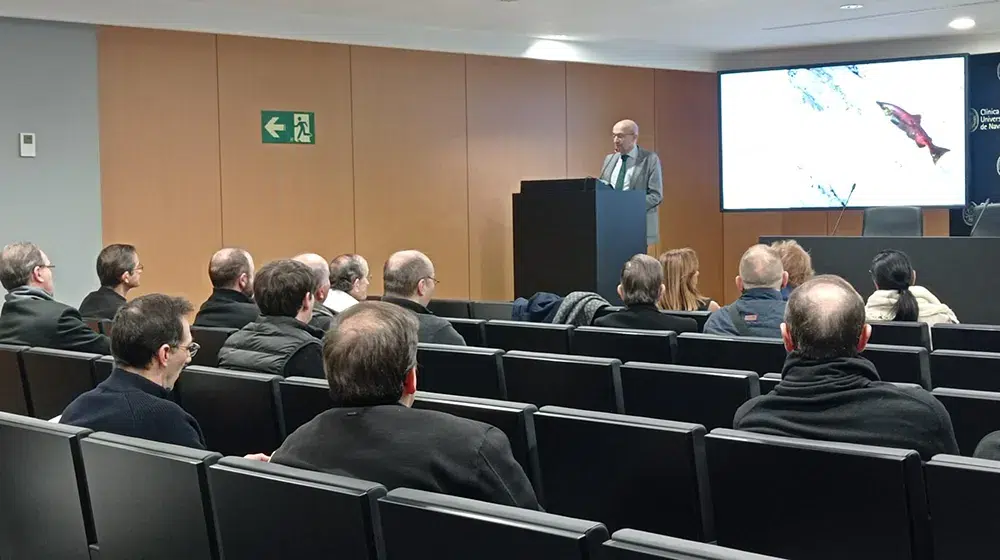
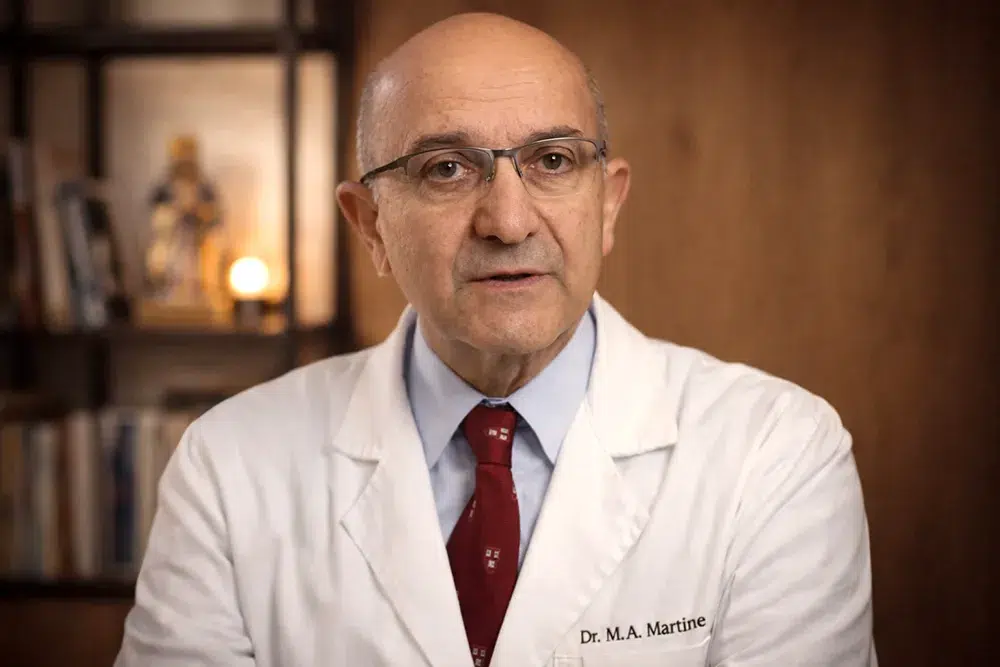
On January 24, 2009, the speaker was the Dr. Miguel Ángel Martínez-González, Professor of Preventive Medicine and Public Health at the University of Navarra and Visiting Professor of Nutrition at the Harvard T. H. Chan School of Public Health. H. Chan School of Public Health.
His speech, entitled Screens and addictions, was based on two of his most recent works: Salmon, hormones and screens (Planeta, 2023) and Twelve solutions to overcome display challenges (Planeta, 2025), especially focused on the prevention of the impact of the use of screens on children and adolescents.
The speaker stressed that the cell phone addiction should not be approached solely as an educational or disciplinary problem, but as a phenomenon with clinical implications, family members and social. From his experience in public health, he explained that early detection is key to avoid the chronification of dependency behaviors, especially in still immature stages of neurological development, such as childhood and adolescence.
In this regard, he encouraged priests to collaborate actively with families, educational centers and health professionals when they detect situations of risk.
He also pointed out that a correct medical referral should not be interpreted as a failure of accompaniment. pastoral, The treatment is not only a form of responsible integral care of the person, especially when there are symptoms of anxiety, social isolation, or significant deterioration of academic or work performance.
During his speech, the professor warned that the early handing over of smartphones to minors has become a public health problem.
As he explained, the main digital platforms are designed to maximize usage time through reward systems associated with dopamine release.
He added that the development of these technologies relies on highly specialized teams in neuropsychology and engineering, which places children and adolescents at a clear disadvantage.
The speaker identified four major risk areas associated with problematic screen use:
Addressing the priests, Dr. Martinez-Gonzalez explained that there are different degrees of dependency.
In mild situations, personal accompaniment and pastoral guidance may be sufficient. In more serious cases - when there is neglect of responsibilities, compulsive behaviors or withdrawal symptoms - it is necessary to refer to health or social work professionals. psychology.
He also stressed the importance of fostering a climate of trust that facilitates honesty, as well as being aware of the high frequency of this type of problem among young people.
The professor insisted that prevention begins at the level of the family and, in particular, in the formation of the parents.
He recommended promoting an early, personal and non-punitive dialogue on sexuality, as well as setting an example in the use of technology, establishing clear rules, schedules and parental control systems at home. He also advocated delaying the first smartphone until the age of 18 as much as possible.
In closing, he highlighted the growth of initiatives by mothers and fathers who are organizing to limit the impact of screens on family life, and educational, and encouraged support for these types of social movements.
Table of Contents
 carf@fundacioncarf.orgLandline: +34 914 029 082Mobile: +34 638 078 51145 Conde de Peñalver Street.