If there is one thing that characterizes priests today, it is that they barely have a minute to spare. Faced with the fall in vocations, priests must multiply in order to faithfully attend to the hunger for God that exists in the world, which causes many of them to hold several pastoral positions simultaneously and all of them are filled with great responsibilities.
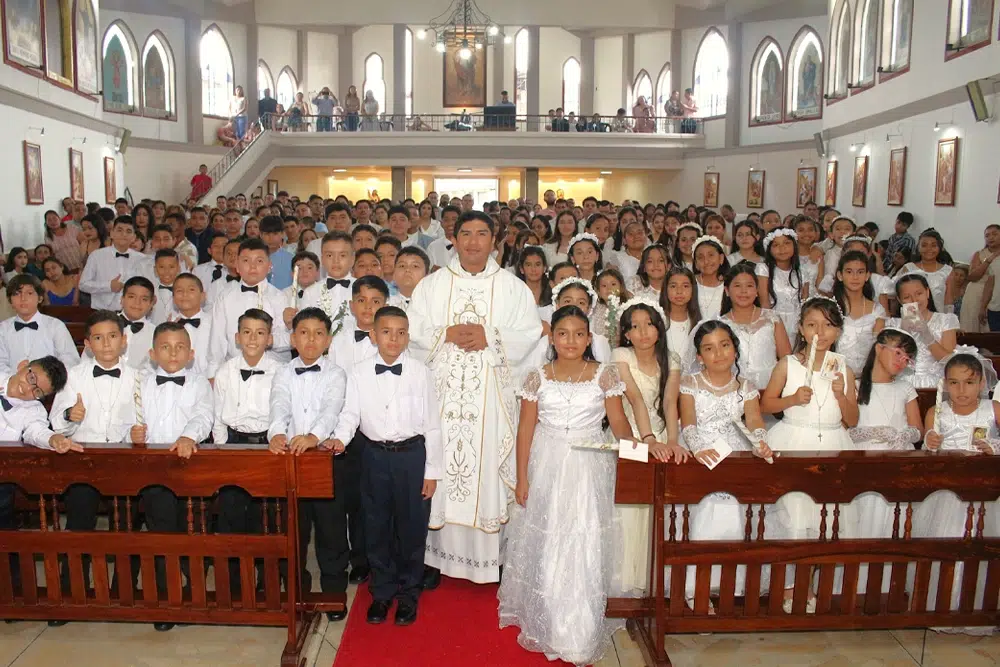
This is what happens in this case with the priest Héctor Oswaldo Salinas Calva, A priest of the Ecuadorian diocese of Santo Domingo, a relatively recent bishopric, since this diocese was erected by Rome in 1996. There is no lack of work in this territory, as it is home to almost 900,000 people, more than 80 % of whom are Catholics. With a surface area similar to that of the Community of Madrid, the Catholic Church has a little over 50 diocesan priests and about twenty religious, which makes the work of these priests a self-sacrificing mission.
In fact, at this moment Father Héctor is pastor of Holy Trinity in the city of Santo Domingo., The judge, at the same time ecclesiastical judge as defender of the bond for matrimonial causes and notary for criminal causes, a training The specific training he received in Spain, when his bishop sent him to Pamplona to study for a degree in Canon Law at the Ecclesiastical Faculties of the University of Navarre.
From his three-year stint in Pamplona he took with him not only the knowledge of law that he puts into play every day in the curia, but also transversal teachings that go far beyond the merely academic.
In this interview with the CARF Foundation, he fondly recalls his time in the University of NavarraIt has helped me to know better the ecclesial environment and the mission of the Church, but personally it has also given me a spiritual growth and has helped me to have more clarity about parish administration and social service, specifically through Caritas«.
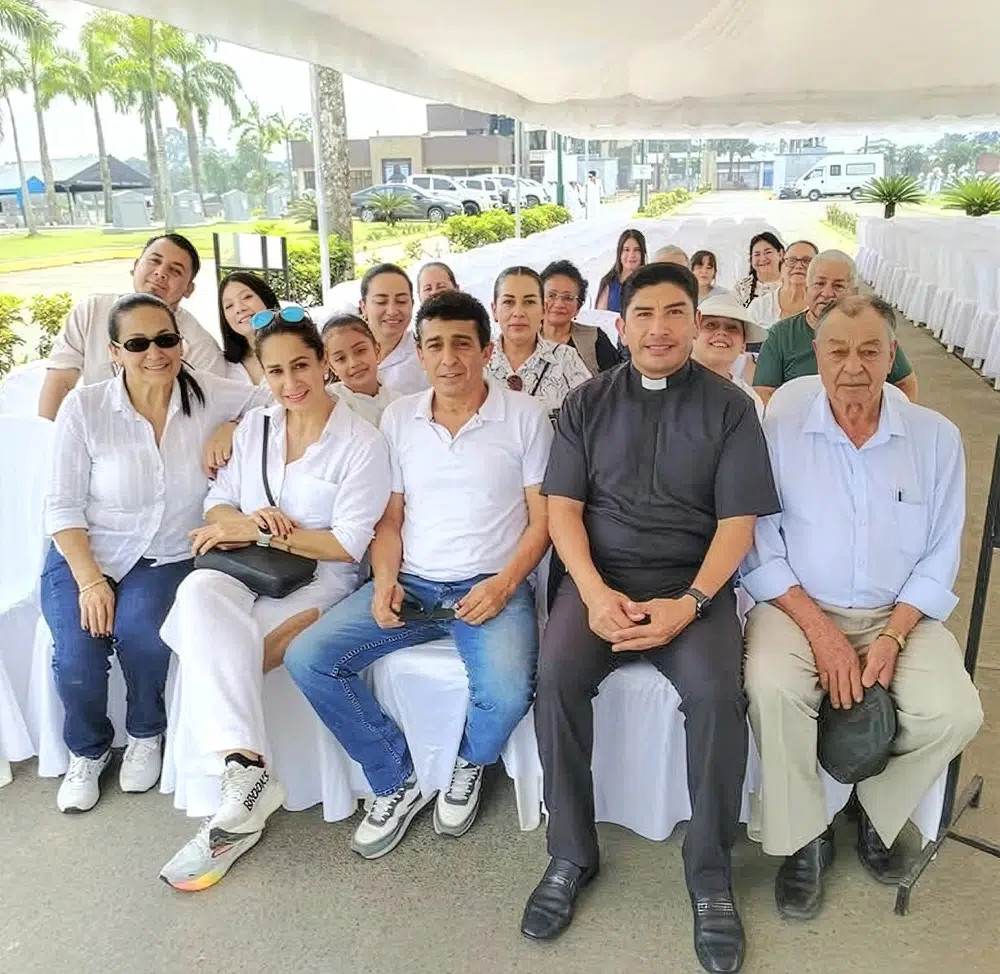
To showcase the excellent training he received at Canonic Law tells us an anecdote that has happened to him as an ecclesiastical judge, where in one of the cases in which he has participated, one of the parties asked him to please serve as defense counsel in a civil matter that he had to resolve.
Father Héctor did not have a religious childhood, nor was he close to the Church, but once he got to know the Church well, he never wanted to leave it. «When I came of age I started attending Sunday Mass and joined the parish youth group and later became a catechist,» he says.
It was precisely in these circumstances that he developed a passion for the priestly vocation. As he became more and more involved in the pastoral work of his parish, he became more intimate in his relationship with God, until he felt a call «to serve and, in a particular way, to serve the most vulnerable», a call to which he continues to respond today.
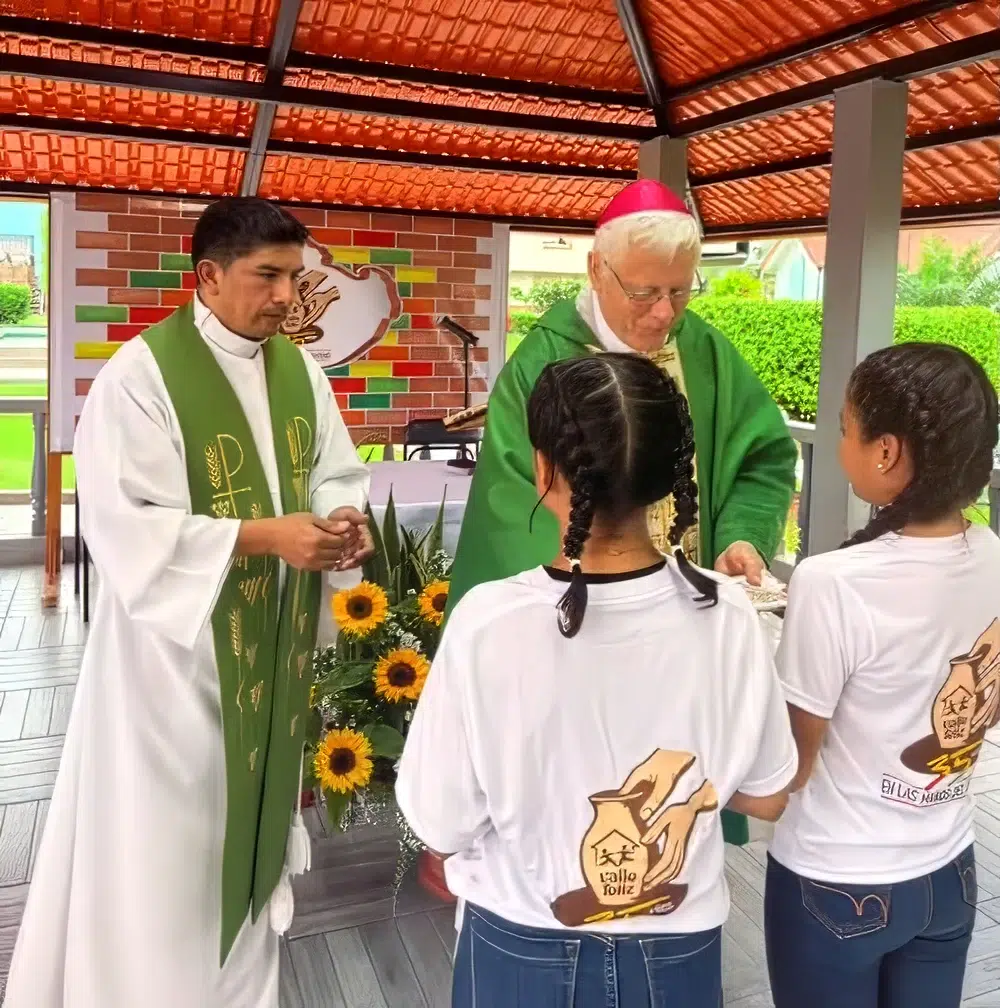
This Ecuadorian priest was ordained in 2010 and in these more than fifteen years of pastoral experience has a very clear aspect: «the formation received in the seminary is not sufficient».». In his opinion, «it is necessary for priests to be formed with higher studies in order to respond in the best way and with fidelity to doctrine to the challenges of our time».
But he does not believe that the key lies only in having a higher education, but also in working and training to have a charitable spirit and be close to the faithful, because the best way to help them is «to know their spiritual and material needs».
Finally, Hector is “infinitely grateful” for the work of the benefactors, partners and friends of the CARF Foundation for «their concern for the benefit of priests so that we can be formed and respond faithfully to the mission of the Church».
Hector's story is another example of fidelity and dedication to others, as is the story of Pedro Pablo. The documentary presented here is just a glimpse of the work that these priests do in their dioceses.
🎥 Discover how the commitment of so many people generates priestly vocations for all dioceses.
 carf@fundacioncarf.orgLandline: +34 914 029 082Mobile: +34 638 078 51145 Conde de Peñalver Street.