Friendship between saints: Padre Pio and John Paul II

Padre Pio, Italian Capuchin, (1887-1968), canonized in 2002, in a multitudinous ceremony by St. John Paul II under the name of St. Pio of Pietrelcina, this holy priest received an extraordinary spiritual gift to serve all the men and women of his time. This gift marked his life, filling it with suffering, not only with the physical pain caused by his stigmata, but also with the moral and spiritual suffering caused by those who considered him a madman or a swindler.

Padre Pio, generous dispenser of God's mercy

The reality is that this saint helped thousands of people to return to the faith, to convert and come closer to God. Padre Pio performed amazing healings. And predictions difficult to contrast, such as the one made to Karol Wojtyla himself, predicting his future papacy. The Frenchman Emanuele Brunatto credited that same gift of prophecy that allowed him to find out from time to time what was going to happen. "It is Jesus," explained Padre Pio, "who sometimes lets me read his personal notebook...".
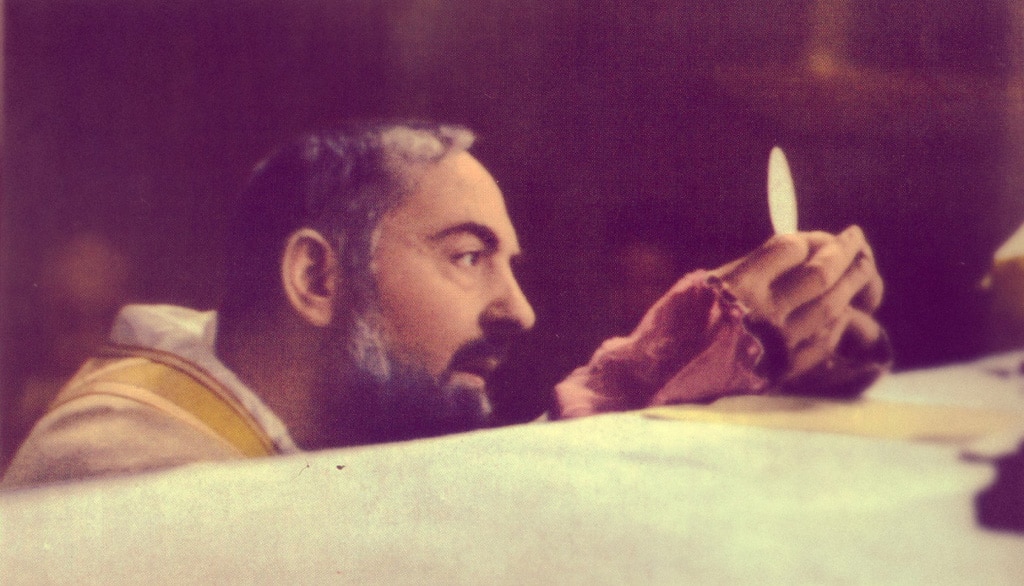
Privilege of a penitent

At the Mass of canonization on June 16, 2002 in St. Peter's Square at the Vatican, St. John Paul II affirmed that ".Padre Pio was a generous dispenser of divine mercyHe made himself available to everyone by welcoming them, giving them spiritual direction and especially by administering the sacrament of penance. I too, in my youth, had the privilege of benefiting from his availability to penitents. The ministry of the confessional, which is one of the distinctive features of his apostolate, attracted countless crowds of the faithful to the convent of San Giovanni Rotondo".

How did John Paul II and Padre Pio meet?

The relationship between Padre Pio and St. John Paul II is not only due to the fact that the beatification and canonization ceremonies of the Capuchin friar were held during the Polish pope's pontificate, but also because, in 1948, Karol Wojtyla met Padre Pio at San Giovanni Rotondo.

The first meeting of two saints

It was in April 1948 that Karol Wojtyla, a newly ordained priest, decided to meet Padre Pio. "I went to San Giovanni Rotondo to see Padre Pio, to participate in his Mass and, if possible, to go to confession with him." 

This first meeting was very important for the future pope. This was reflected years later in a letter he sent in his own handwriting, written in Polish, to the Father Guardian of the convent of San Giovanni Rotondo: "I spoke with him in person and exchanged a few words, it was my first meeting with him and I consider it the most important".

While Padre Pio was celebrating the Eucharist, the young Wojtyla took special notice of the friar's hands, where the stigmata could be seen covered by a black scab. "On the altar of San Giovanni Rotondo the sacrifice of Christ Himself was being fulfilled, and. during confession, Padre Pio offered a clear discernment and simple, addressing the penitent with great love".

The painful wounds of Padre Pio

The young priest was also interested in Padre Pio's wounds: "The only question I asked him was which wound caused him the most pain. I was convinced it was the one on my heart, but Padre Pio surprised me when he said: 'No, the one that hurts me the most is the one on my back, the one on my right side.

This sixth shoulder injuryas the one Jesus suffered while carrying the cross or the patibulum on the road to Calvary. It was the sore "that hurt the most", because it had festered and had never "been treated by the doctors".

The letters of John Paul II and Padre Pio date back to the Council period.

The letter dated November 17, 1962 read: "Venerable Father, I ask you to pray for a forty-year-old mother of four daughters who lives in Krakow, Poland. During the last war she was in the concentration camps in Germany for five years, and is now in grave danger of health, even life, due to cancer.

Pray that God, with the intervention of the Blessed Virgin, will show mercy to her and her family. In Christo obligatissimus, Carolus Wojtyla".

At that time, Monsignor Wojtyla, who was in Rome, received the news of the serious illness of Wanda Poltawska. Convinced that Padre Pio's prayer had a special power before God, he decided to write to him to ask for help and prayers for the woman, mother of four daughters. 

This letter came to Padre Pio from Angelo BattistiAngelo, an official of the Vatican Secretariat of State and administrator of the House of the Relief of Suffering. He himself recounts that after reading the contents to him, Padre Pio uttered the famous phrase: "I can't say no to this one!", and added: "Angelo, keep this letter because one day it will be important".
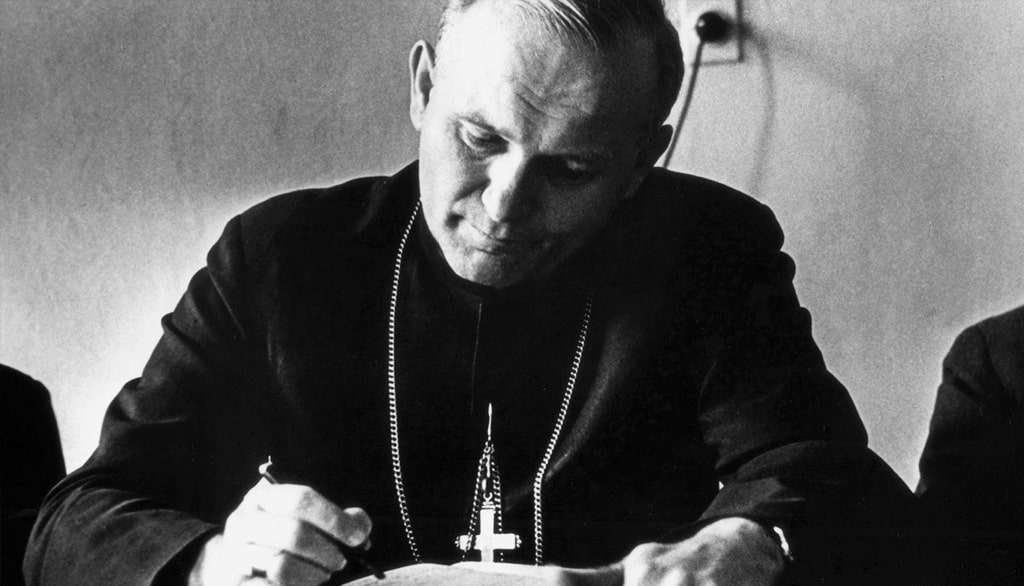
Thanks for the healing

A few days later, the woman underwent a new diagnostic examination which showed that the cancerous tumor had completely disappeared. Eleven days later, John Paul II again wrote her a letter, this time to thank her.

The letter said: "Venerable Father, the woman who lives in Krakow, Poland, mother of 4 girls, was suddenly cured on November 21 before surgery. We give thanks to God and also to you, Venerable Father.

I express my sincere thanks on behalf of the lady, her husband and the whole family. In Christ, Karol Wojtyla, Capitular Bishop of Krakow". On that occasion the friar said: "Praise be to the Lord!

"Look at the fame that Padre Pio has achieved; the followers he has gathered around him from all over the world. But why, because he was a philosopher, because he was a wise man, because he had the means?
Nothing of the sort: because he said Mass humbly, went to confession from morning to night and was, it is difficult to say, a representative sealed with the wounds of Our Lord. A man of prayer and suffering". Pope St. Paul VI, February 1971.
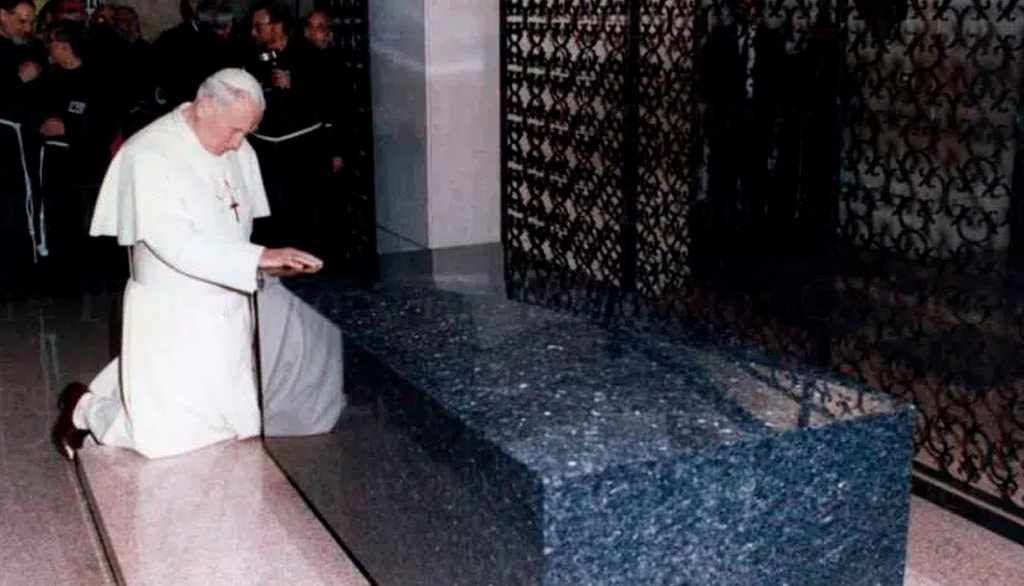
Karol Wojtyla praying at the tomb of Padre Pio in San Giovanni Rotondo.

John Paul II's visits to the tomb of Padre Pio

Wojtyla returned to San Giovanni Rotondo on two more occasions. The first, when he was Cardinal of Krakow, in 1974 and the second, when he was already proclaimed Pope, in 1987. On these two trips he visited the mortal remains of Padre Pio and prayed kneeling at the tomb of the Capuchin friar. 

In the autumn of 1974, then Cardinal Karol Wojtyla, was back in Rome and, "as the anniversary of his ordination to the priesthood (November 1, 1946) approached, he decided to commemorate the anniversary in San Giovanni Rotondo and celebrate the Mass at the tomb of Padre Pio. Due to a series of vicissitudes (November 1 was particularly rainy) the group composed of Wojtyla, Deskur and six other Polish priests was delayed considerably, arriving in the evening around 9 pm.

Unfortunately Karol Wojtyla could not fulfill his wish to celebrate Mass at Padre Pio's tomb on the day of his ordination to the priesthood. So he did it the next day. Stefano Campanella, director of Padre Pio TV.
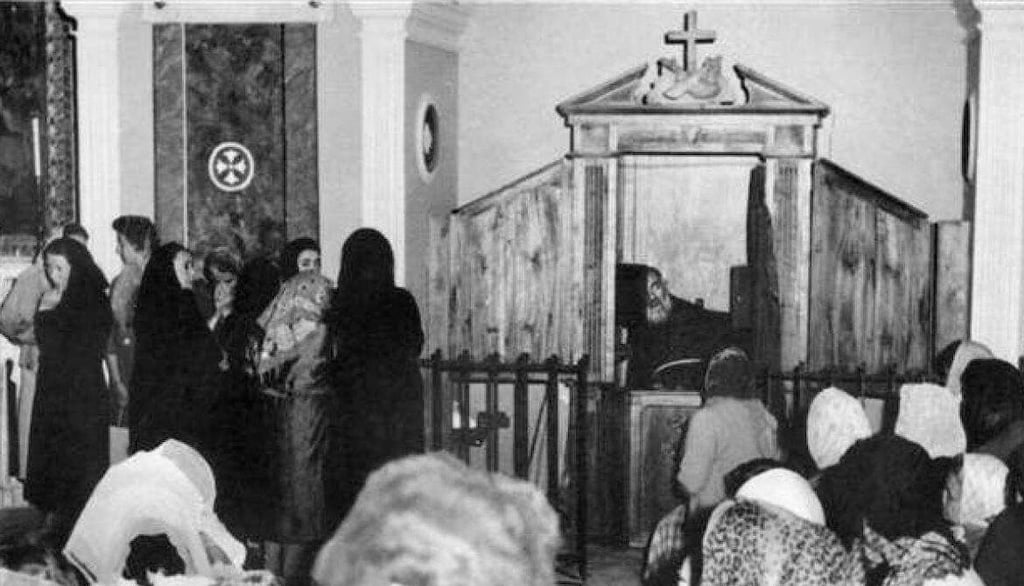
Love for penitents

Padre Pio "had a simple and clear discernment and treated the penitent with great love," John Paul II wrote that day in the visitors' book of the convent in San Giovanni Rotondo.

In May 1987, St. John Paul II, now Pope, visited the tomb of Padre Pio on the occasion of the first centenary of his birth.

Before more than 50,000 people, His Holiness proclaimed: "Great is my joy at this meeting, and it is for several reasons. As you know, these places are linked to personal memories, that is, to my visits to Padre Pio during his earthly life, or spiritually after his death, at his tomb.
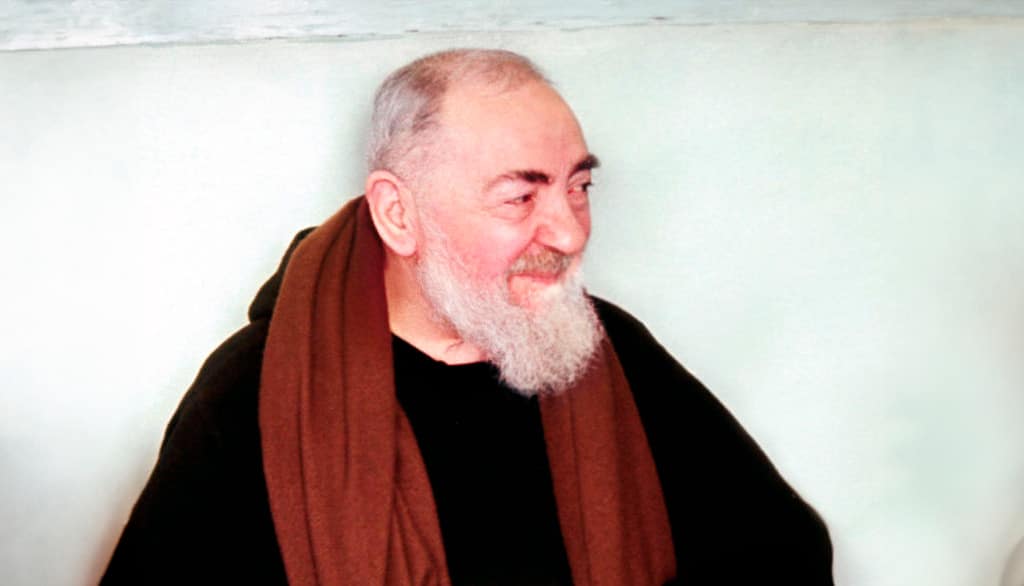
St. Pio of Pietrelcina

On May 2, 1999, John Paul II beatified the stigmatized friar, and on June 16, 2002, he proclaimed him a saint. On that day, St. John Paul II canonized him under the name of St. Pio of Pietrelcina. In the homily of his sanctification, John Paul recited the prayer he composed for Padre Pio: 

"Humble and beloved Padre Pio: Teach us too, we ask you, humility of heart, so that we may be considered among the little ones of the Gospel, to whom the Father has promised to reveal the mysteries of his Kingdom. 

Help us to pray without ever tiring, in the certainty that God knows what we need before we ask him for it. Reach out to us with a gaze of faith capable of readily recognizing in the poor and the suffering the very face of Jesus. 

Sustain us in the hour of struggle and trial, and if we fall, grant that we may experience the joy of the sacrament of forgiveness. Transmit to us your tender devotion to Mary, Mother of Jesus and our Mother. 

Accompany us on our earthly pilgrimage towards the happy homeland, where we too hope to arrive to contemplate eternally the glory of the Father, the Son and the Holy Spirit. Amen.

Did St. Pio and St. Josemaría have a relationship?

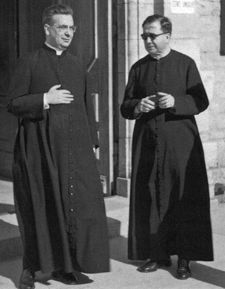
According to several sources, There is no record that St. Josemaría Escrivá and Padre Pio of Pietrelcina ever met personally.

Although they did not meet directly, there was an indirect relationship and mutual respect between them. Padre Pio even defended Opus Dei on one occasion. It is related that an Italian businessman, Luigi Ghisleri, who had doubts about the Work, consulted Padre Pio, who replied: "Don't worry. Opus Dei is God's work, it is a holy thing!

Moreover, the founder of Opus Dei, St. Josemaría, was convinced of Padre Pio's holiness and defended him whenever anyone questioned the figure of the Capuchin. Both saints were elevated to the altars by St. John Paul II, becoming important intercessors for the Church.


Bibliography

- La Brújula Cotidiana interviews the director of Padre Pio TV, Stefano Campanella.
- Interview with Polish Archbishop Andrew Maria Deskur, 2004.
- Homily of John Paul II. Mass of Sanctification, 2002.
St. Matthew, Apostle and Evangelist, September 21

Every September 21st, the Church celebrates the feast of St. MatthewSt. Matthew, apostle and evangelist, was one of the twelve disciples who followed Jesus and were direct witnesses of his life, teachings, Passion and Resurrection. St. Matthew, also known as Levi, offers us a profound example of conversion, dedication and fidelity to the evangelizing mission, qualities that continue to inspire priests and faithful today.

His life shows how a personal encounter with Jesus can completely transform a person's heart and lead to a radical commitment. The figure of St. Matthew helps us to know the history of early Christianity and to understand how to live the priestly vocation and evangelizing commitment.

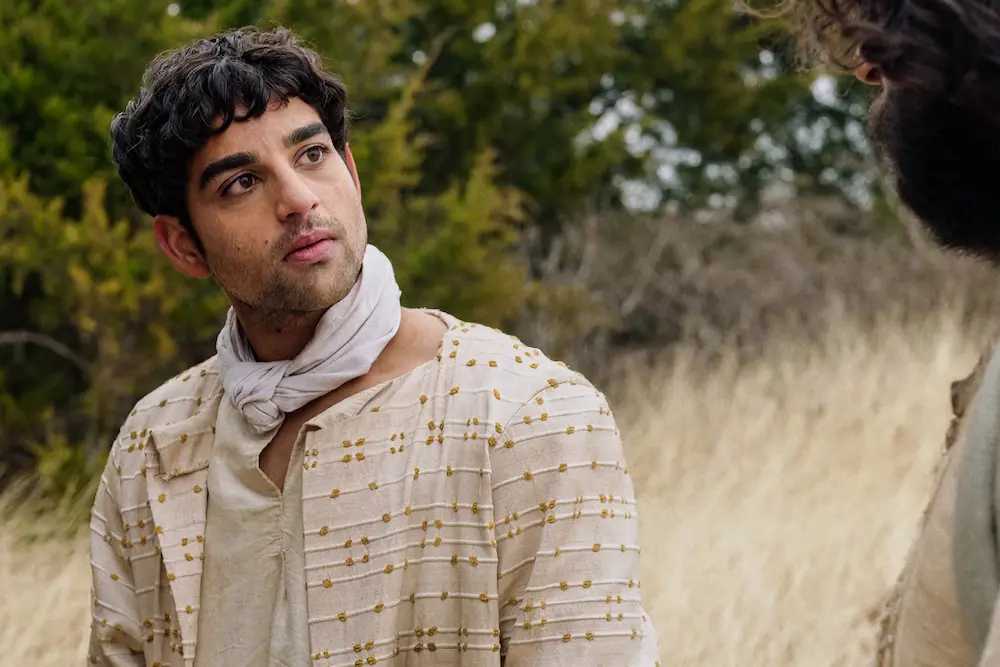
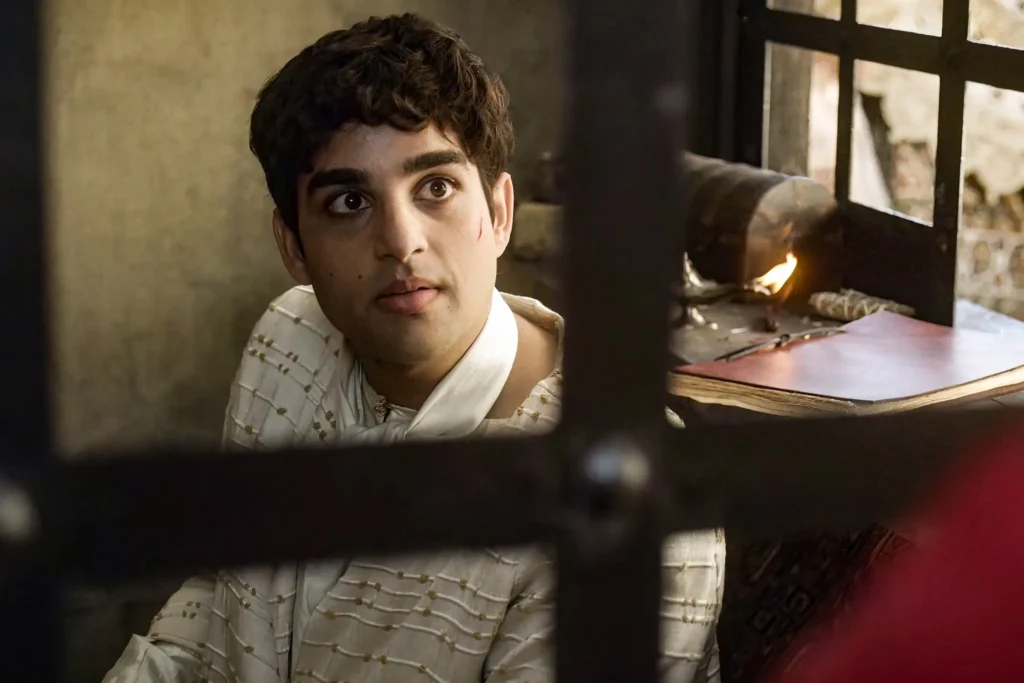
Matthew in his position as tax collector before meeting Jesus. Facebook image via The Chosen.

Before being called by Jesus, Matthew practiced the profession of tax collector in Capernaum. This work, which was socially frowned upon by the Jewish people and often associated with corruption, did not prevent Jesus from choosing him as a disciple. The choice of Matthew underlines a central message of the Gospel: God calls each personregardless of its past, in order to transform it and place it at the service of its mission.

Upon hearing Jesus' invitation, Matthew promptly responded by leaving what he was doing and going away. This resolute act of total self-giving is an opening of the heart to a vocation and serves as a model for all those who feel a call to the priesthood, to total self-giving in celibacy or to the consecrated life. Matthew understood that true richness is found in the surrender of one's life to God and in the mission of bringing his message to others.

Matthew dedicated himself to following Jesus and being a witness of his work. Later, he will write the Gospel that bears his nameThe first of the four gospels of the New Testament and one of the three synoptic gospels, in which he presents Jesus as the promised Messiah and fulfilling the prophecies of the Old Testament. He tries to convince the Jews through this relationship with the scriptures that he knew well. This Gospel emphasizes Jesus' closeness to the needy and the value of daily life.

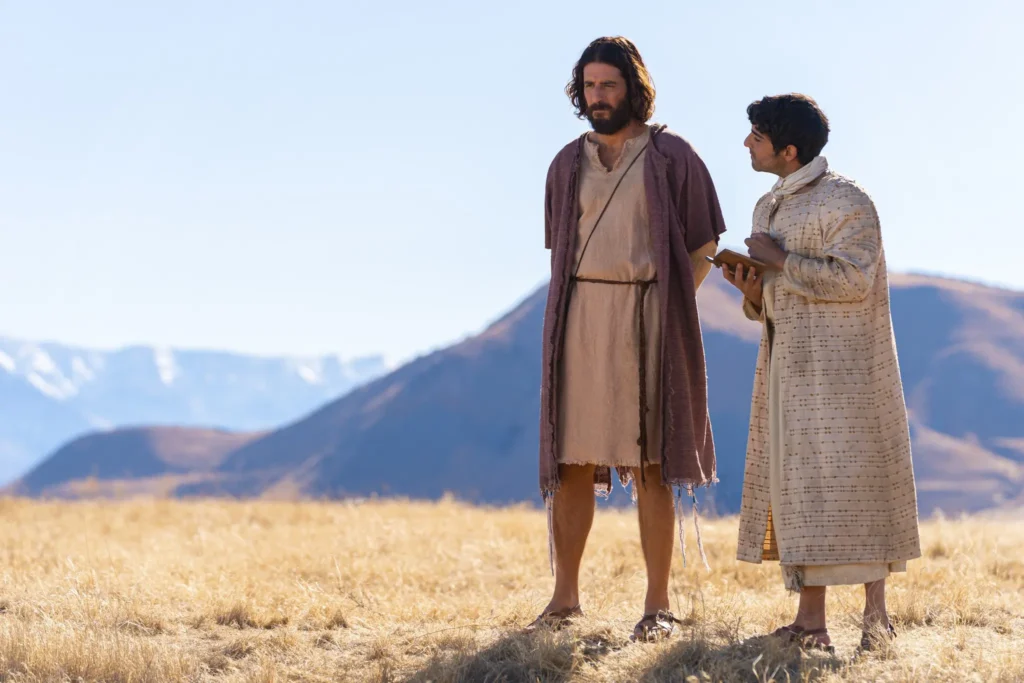
Matthew, together with Jesus, takes notes for his Gospel. Facebook image via The Chosen.

The Gospel of Matthew

The Gospel according to St. Matthew is characterized by its pedagogical and moral approachThe book was addressed to both Jews and Christians of all times. His contributions include:

This Gospel thus becomes a source of inspiration for priests and laityreminding them that evangelizing does not mean just preaching words, but setting an example that transforms lives and communities.

Priests: continuers of the mission

Priests are called to be references for all disciples of JesusThe mission of the apostles, continuing the work of Matthew and the twelve apostles. His mission is framed in three basic dimensions:

  1. Preaching the GospelThe aim of the project is to transmit the message of Christ in a clear and accessible way, adapted to the present times.
  2. Administering the sacramentsThe sacraments of Baptism, Confirmation, Marriage, Priestly Ordination and Anointing of the Sick are the most frequent sacraments of the Eucharist and Confession.
  3. Pastoral accompaniment of the faithfulTo guide, educate and support people in their spiritual growth and in the living of their faith.

In a rapidly changing world, priests face the challenge of bringing the faith to new contexts: globalized cities, digital societies, pluralistic cultures. Following the example of St. Matthew, priests are called to adapt to new media and channels of communication. communication without losing the authenticity of the Christian message.

The evangelization in the 21st century has been transformed by digitalization and the global reach of the internet. Social networks, blogs, podcasts and live broadcasts allow the voice of the Gospel to reach millions of people who otherwise would not have direct contact with the Church.

Examples of current initiatives include:

These examples are just a sample that allows evangelizing young people and adults in their natural contextsThe Gospel is a way of integrating faith into daily life and making the witness of Christian life more palpable. Just as St. Matthew transmitted his experience with Jesus through his Gospel, today priests and digital evangelizers seek to share the faith in a concrete and close way.

Matthew listens to the words that Jesus speaks to him. Facebook image via The Chosen.

A call for everyone

St. Matthew is a model for priests and evangelizers, and also for all Christians. His life reminds us that we are all called to be witnesses to the Gospel. This implies:

Evangelization is not only a task for priests; every member of the faithful has a role to play in the evangelization process. to bring the message of Christ to their environmentinspiring others with concrete works.

St. Matthew, apostle and evangelist, teaches us that the true vocation is born of a personal encounter with Jesus and is expressed in the dedication of one's life to the service of others. His story is a reminder that no matter what a person's past, God always offers an opportunity for conversion.

In the 21st century, priests and evangelizers continue their work, adapting to the new means of communication and finding innovative ways of reaching people's heartsas St. Matthew reached out to his contemporaries with the power of the Holy Spirit and the Gospel. Following his example, we are all called to be active disciples, witnesses and agents of transformation in the world.

 "As Jesus passed by, he saw a man named Matthew sitting at the tax counter, and he said to him, "Follow me."" If Jesus could transform a tax collector into a servant, a traitor into his close friend, he can also transform us into children of God, into his close friends.

St. Mother Teresa of Calcutta: September 5th

Each September 5the Church celebrates the memory of Mother Teresa of Calcutta. His life, marked by humility and total dedication to those most in need, continues to be a model of holiness and service.

Bishop Javier Echevarría pointed out how Mother Teresa knew how to look at life from the perspective of Christian love: a love that gives of itself, that reaches out to the most needy and that transforms every act into an opportunity to live with God. The then prelate of Opus Dei, stressed that she "saw the world as a common home" and that her life invited to "learn to live for others".

Institution of liturgical memory

The Dicastery for Divine Worship and the Discipline of the SacramentsThe Pontifical Council for the Laity, under the prefecture of Cardinal Arthur Roche, issued a decree on December 24, 2024, officially instituting the liturgical memorial of Mother Teresa on General Roman Calendar.

This decree allows his memory to be celebrated on September 5 in all the dioceses of the world. The intention is that the faithful remember his example of humility and service, and that liturgical celebrations include prayers and readings that reinforce the centrality of love of neighbor in Christian life.

The institution of the liturgical memorial also facilitates the Church's ability to disseminate the liturgical texts Mother Teresa's own, which include readings from Isaiah 58 (Break your bread with the hungry) and Matthew 25 (As you did it to one of the least of these my brethren, you did it to me), reinforcing the spiritual dimension of her testimony.

The spiritual legacy of Mother Teresa of Calcutta

In an article published in opusdei.orgJavier Echevarría, then prelate, recalled that St. Teresa always bent down to "welcome the abandoned or heal wounds of body and soul. These words reflect well what she was: a woman who knew how to discover Christ in the face of the poorest.

In his reflection on Mother Teresa, he emphasized how she incarnated charity on a day-to-day basis. He did not limit himself to grandiose gestures, but found Christ in every person in need: the sick, the poor, the abandoned. His life demonstrates that holiness is built through concrete acts of love, consistency and dedication.

His life challenges all Christians, because it is not only a matter of admiring his generosity, but of make delivery a way of life in the ordinary. As he taught St. Josemaríaholiness is in the little things, at work, in the family and also in selfless service to those around us.

For this reason, the memory of Mother Teresa becomes an opportunity to review our Christian commitment: do we look at those who suffer with eyes of faith, do we know how to discover in each person the dignity of a child of God, do we put love in the concrete details of life?

Why September 5?

In the Church, the memory of a saint is celebrated on the day of his deathThe moment when she enters fully into the glory of heaven. In Mother Teresa's case, this corresponds to the moment when she enters fully into heaven. September 5, 1997He died in Calcutta on that date.

Since that day, many began to remember her example and to pray through her intercession. His canonization in 2016 by Pope Francis reinforced the importance of this date. Thus, the annual celebration not only honors his life, but also invites the faithful to reflect on holiness and concrete service to others.

In various dioceses and parishes, this date has become an occasion for the realization of charitable activities and liturgical celebrationsrecalling that Mother Teresa's life was a testimony of love for the poorest and most marginalized.

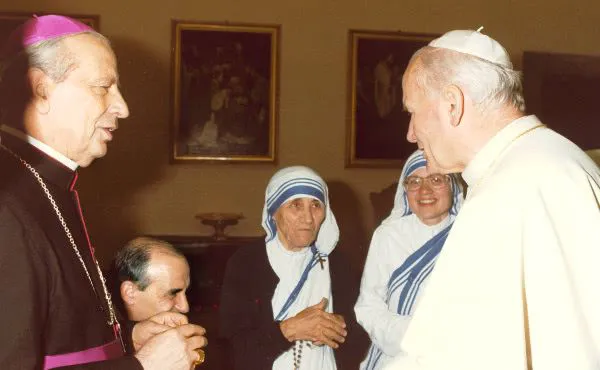
St. John Paul II, with St. Teresa of Calcutta and Blessed Alvaro del Portillo, June 1, 1985.

Mother Teresa illuminates the service

Cardinal Arthur Roche, prefect of the Dicastery for Divine Worship, affirmed that Mother Teresa is "a exceptional witness of hope"in times of pain and marginalization. His life is a concrete response to the call of the Gospel to serve the least and forgotten.

From a Christian perspective, its liturgical feast is not only a historical remembrance, but an invitation to to follow his example in the present. Every Christian can incarnate this same spirit in his environment: caring for the sick, accompanying the lonely, the dying, the orphaned... dedicating time to those in need.

Thus, Mother Teresa becomes a guide for living charity with consistency, reminding us that the path to holiness is not measured by words, but by concrete gestures of love.

Liturgical texts and celebrations

The liturgical decree includes specific texts for the Mass and the Liturgy of the Hours, adaptable by the episcopal conferences in different languages. Among them are prayers, readings and antiphons that emphasize the mercy of God and the importance of active charity.

This ensures that the faithful can participate in a uniform celebration throughout the world, and that the feast of Mother Teresa is not limited to a historical remembrance, but is lived in a spiritual and communal way.

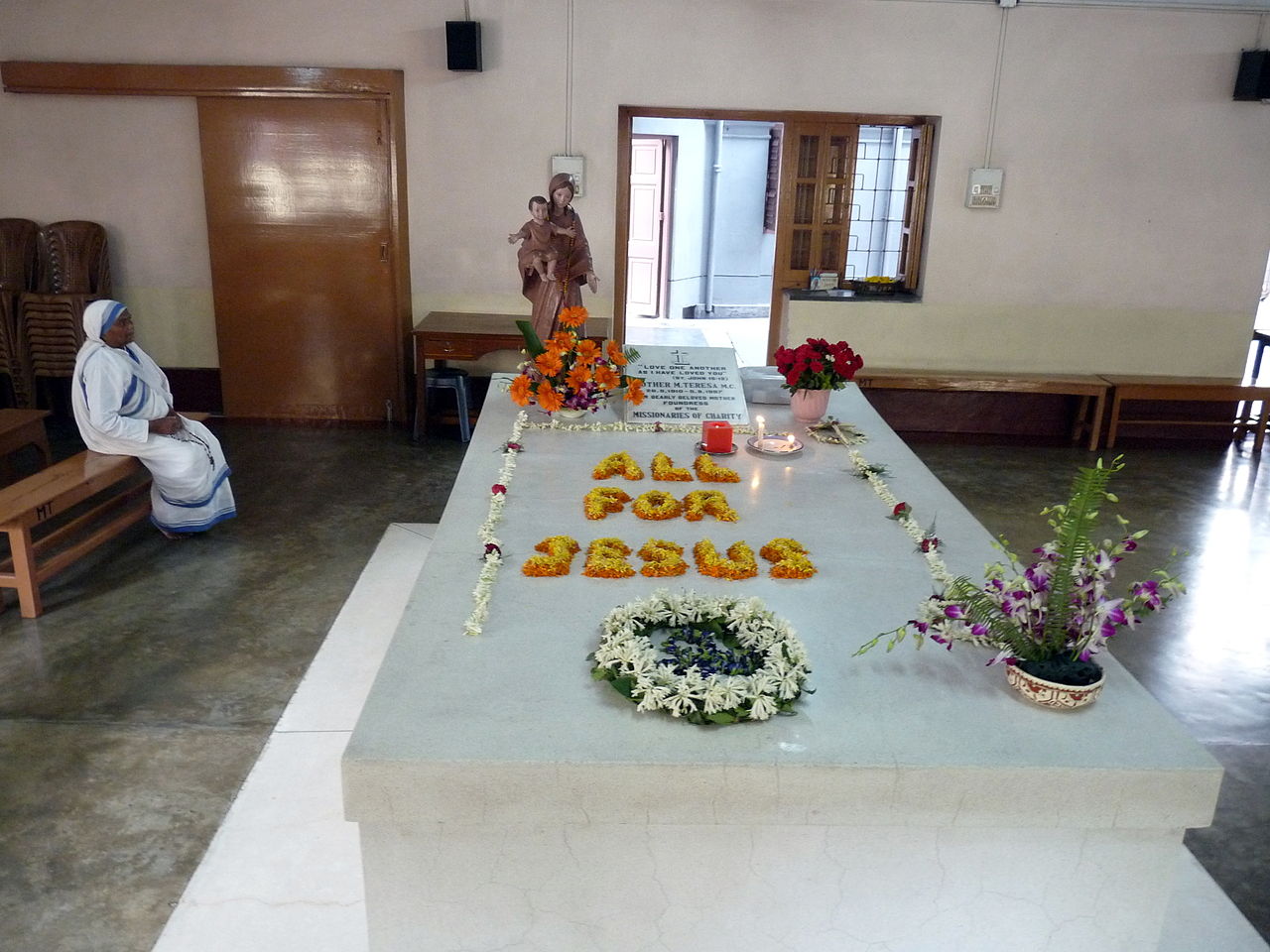
Mother Teresa's tomb in Calcutta (India).

Key facts about St. Teresa of Calcutta

His life and work show how Christian charity can transform concrete realities and leave a legacy that continues to inspire millions of people around the world.

The feast of Mother Teresa invites us to look at the world with her eyes: eyes of compassion, of faith, of limitless dedication. As the prelate of Opus Dei, Javier Echevarría, stressed, it is a matter of learning to living for others.

Two days before his departure to the Father's House, the Pope John Paul IIa personal friend of the nun, dedicated the Sunday Angelus prayer in St. Peter's Square to Mother Teresa of whom he said: "The beloved nun, universally recognized as the Mother of the Poor, leaves us an eloquent example for all, believers and non-believers. She leaves us the testimony of God's love. Her works speak for themselves and demonstrate to the people of our time the high meaning of life.".

How can you make your daily life a service to others? On September 5, but throughout your life, celebrate Mother Teresa's feast day with gestures of service: prayer, acts of charity or a reflection on how to put love and compassion into your daily life. Help us spread her legacy of holiness and dedication.


Sources consulted

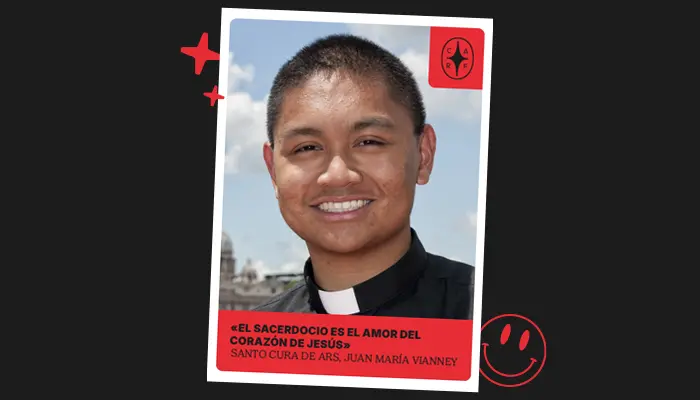
The Curé of Ars, patron saint of priests

St. John Mary Vianney (1786-1859), known throughout the world as the Cure of Ars, is one of the most impressive and luminous figures of the Catholic priesthood. His life was a total dedication to God and to the faithful, a vocation lived with humility, sacrifice and ardent love for souls.

He was proclaimed patron of parish priests and of all priests of the world, not because of his intellectual gifts or great human feats, but because of the depth of his holiness, his pastoral fervor and his heroic fidelity to his ministry.

At the CARF Foundation, which promotes the formation of future diocesan priests around the world, his figure is a source of continuous inspiration. What makes this simple village priest a universal example? We tell you about it below.

Born in times of persecution

John Mary Vianney was born on May 8, 1786 in Dardilly, a small village in the south of France, into a deeply Christian peasant family. His childhood was marked by the French Revolution.This was a period when religious practice was persecuted and many priests celebrated Mass clandestinely.

From a very young age, Juan María showed a special love for the EucharistHe was a great admirer of priests who, at the risk of their lives, continued to exercise their ministry. He attended Mass in hidden places, accompanied by his mother, and deeply admired the priests who, at the risk of their lives, continued to exercise their ministry. That priestly courage sowed in him a seed that would germinate in the form of a vocation.

A road full of difficulties

At the age of 20, Juan María clearly felt the call to the priesthood, but his path was not an easy one. His poor previous formation and his difficulties with Latin made many consider his entrance into the seminary unfeasible. However, with the help of Abbé M. Balley, parish priest of Écully, he managed to prepare himself and was ordained a priest in 1815, at the age of 29, through sheer perseverance and faith.

He was never brilliant in academics, but he was brilliant in virtue, obedience and pastoral zeal. At his final examination, a superior said of him: "He doesn't know much, but he is pious; we leave him in God's hands. This man 'without great lights' would later become a beacon of conversion for thousands of people.

cura de ars juan maría vianney patrono sacerdotes
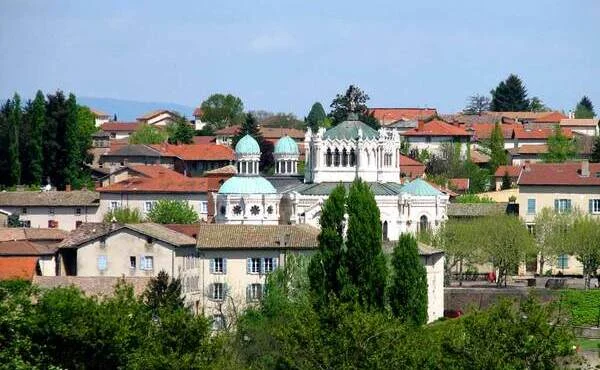
View of the town of Ars, with the Basilica where the body of St. John Mary Vianney is venerated. By Paul C. Maurice - [1], CC BY-SA 3.0 (Wikipedia).

Ars: a small town for a big mission

In 1818 he was sent as parish priest to Ars, a tiny, forgotten village in the south of France. It had only 230 inhabitants, most of them far from religious practice. Many priests considered these destinations as a punishment. Juan María, however, saw it as a mission field.

He began his pastoral work with a life of penance and prayer. He fasted frequently, spent long hours before the Blessed Sacrament and dedicated all his time to the faithful. His humility, closeness and dedication gradually won the hearts of the people of Ars.

His simple but profound preaching, his love for the poor and his zeal for the salvation of souls caused the town to begin to transform. What seemed like a forgotten corner of France became a spiritual center to which thousands of people flocked.

The confessional: throne of mercy

If there is one thing that characterizes the holy Curé of Ars, it is his tireless ministry at the confessional. He spent between 12 and 18 hours a day hearing confessions, especially in the last years of his life. Pilgrims from all over France and other countries came to Ars, seeking reconciliation with God.

It is estimated that, during peak years, more than 80,000 people per year were coming to Ars. The reason was simple: John Mary Vianney had a special gift for reading hearts, counseling with tenderness and showing God's mercy. He was an instrument of the Holy Spirit to heal souls.

Confession was not for him a mere sacramental practice, but the place where God's love was poured out on his children. His life in the confessional was his daily martyrdom, and also his source of joy.

Poverty, mortification and charity

St. John Mary Vianney lived with extreme austerity. He slept little, fed himself with the bare necessities and deprived himself of every comfort. He offered everything for the conversion of sinners. His room was so simple that many were surprised when they visited it.

But his real wealth was charity. He founded the ProvidenceShe was the head of an orphanage for girls without resources, and she devoted herself to caring for the most needy. Her love was concrete, full of small and constant gestures.

Despite his growing fame, he never became conceited. In fact, he asked several times to be transferred to another parish farther away, because he considered himself unworthy of his mission. His superiors always denied him this wish, aware of the immense good he was doing in Ars.

Temptations of the devil and spiritual attacks

Like all great saints, St. John Mary Vianney was subject to temptations and furious attacks by the devil. For years he suffered preternatural phenomena in his house: noises, screams, furniture that moved by itself, fires... The devil tried to frighten him and keep him from his mission. Far from being frightened, he offered everything for the conversion of sinners.

He used to say humorously: "The devil and I are almost friends, because we see each other every day". His spiritual strength was the fruit of a life deeply united to God.

A holy death and a living legacy

On August 4, 1859, after 41 years as pastor of Ars, St. John Mary Vianney died. serenely, surrounded by the affection of his people. He was 73 years old. He went to beatified in 1905 and canonized in 1925 by Pope Pius XI, who proclaimed him patron of parish priests. In 2009, on the occasion of the 150th anniversary of his death, Pope Benedict XVI declared him the patron saint of all priests throughout the world..

His incorrupt body can be venerated today in the shrine of Ars, which continues to receive pilgrims from all over the world. His figure remains a light for the Church and especially for priests.

The model for seminarians and priests

In a world that sometimes loses sight of what is essential, the figure of the holy Curé of Ars reminds priests of their true identity: to be men of God for othersinstruments of his mercy, shepherds with the smell of sheep, as Pope Francis said.

In the CARF Foundation, which supports the formation of seminarians and priests on the five continents, the life of St. John Mary Vianney serves as a model and stimulus, as does that of St. Josemaría, who drew much inspiration from him, even naming him Patron of Opus Dei.

Many young people today - like him in his time - find it difficult to be formed, lack resources or live their vocation in adverse environments. Our task is to help them, like the Curé of Ars, to become holy priests.

The Curé of Ars and the founder of Opus Dei

The feast of St. John Mary Vianney is celebrated on August 4. And, as we mentioned above, the feast of St. John Mary Vianney is celebrated on August 4, St. Josemaría always turned with faith to the intercession of the Curé of Ars, patron of the secular clergy.

His first trip to the city of Ars (France), to visit the places where St. John Mary Vianney carried out his pastoral work and to pray before his remains, was in 1953. After that, he returned on numerous occasions. Always accompanied by Don Alvaro del Portillo, he returned in 1955, 1956, 1958, 1959 and 1960. St. Josemaría always had faith in his intercession and emphasized his priestly traits.

cura de ars san juan maría vianney sacerdotes

St. Josemaría, referring to the dedication of priests to the sacrament of PenanceHe said to them: "Sit in the confessional every day, or at least two or three times a week, waiting there for the souls as the fisherman waits for the fish.

At first, perhaps no one will come. Take with you the breviary, a book of spiritual reading or something to meditate on. In the first few days you will be able to; then a little old lady will come and you will teach her that it is not enough for her to be good, she must bring her little grandchildren with her.

After four or five days, two little girls will come, and then a boy, and then a man, a little on the sly.... At the end of two months they will not let you live, nor will you be able to pray anything in the confessional, because your anointed hands will be, like those of Christ - confused with them, because you are Christ - saying: I absolve you". 

The power of a yes

St. John Mary Vianney was neither a great theologian nor an ecclesial reformer. He was, quite simply, a priest faithful to his vocationa man in love with Christ and souls. His life teaches us that holiness is not reserved for the wise or the strong, but for those who trust in God and give themselves without reserve.

His witness is still relevant and necessary. In every seminarian who is trained with the help of the CARF Foundation there is a possibility that a new Curé of Ars will emerge. Because what the world needs is not only good professionals, but also a new Cure of Ars. holy priests.

???? Did you know that...?

CPon cara a tu donativo, comparte la sonrisa de Dios en la Tierra, los sacerdotes

???? Supports the formation of future saintly priests

Would you like more priests like St. John Mary Vianney to bring the Gospel and the faith to all the dioceses of the world?

With your donation, you help form seminarians and diocesan priests at the University of Navarra and the Pontifical University of the Holy Cross.

???? Find out how to collaborate with the CARF Foundation: !donate now!

July 25th St. James the Apostle: why celebrate?

Who was James the Apostle

The St. James the Apostle is the eldest son of Zebedee and Mary Salome. Brother of John, the Evangelist. They lived in the city of Bethsaida, by the Sea of Galilee, where they had a small fishing business.

The name Santiago comes from the words Sant Iacob, from the Hebrew Jacob. During battles the Spaniards used to shout out Saint Jacob, help us and by saying it fast and repetitively it sounded like Santiago.

After witnessing the miraculous catch of fish, hearing Jesus say to them, "From now on you will be fishers of men," James left his nets, his father and his fishing company and set out to follow Jesus Christ.

James the Greater was one of the twelve disciples. Together with Peter and John, they accompanied Jesus in very important moments of his life. Such as the Transfiguration of the Lord, which we remember in the fourth of the Luminous MysteriesThe miraculous catch of fish and Jesus' prayer in the Garden of Gethsemane, among others.

The Acts of the Apostles relate that James was the first apostle martyred, beheaded by order of Herod Agrippa around the year 43 in Jerusalem.

apostol-santiago-dia-de-santiago-apostol-camino-santiago

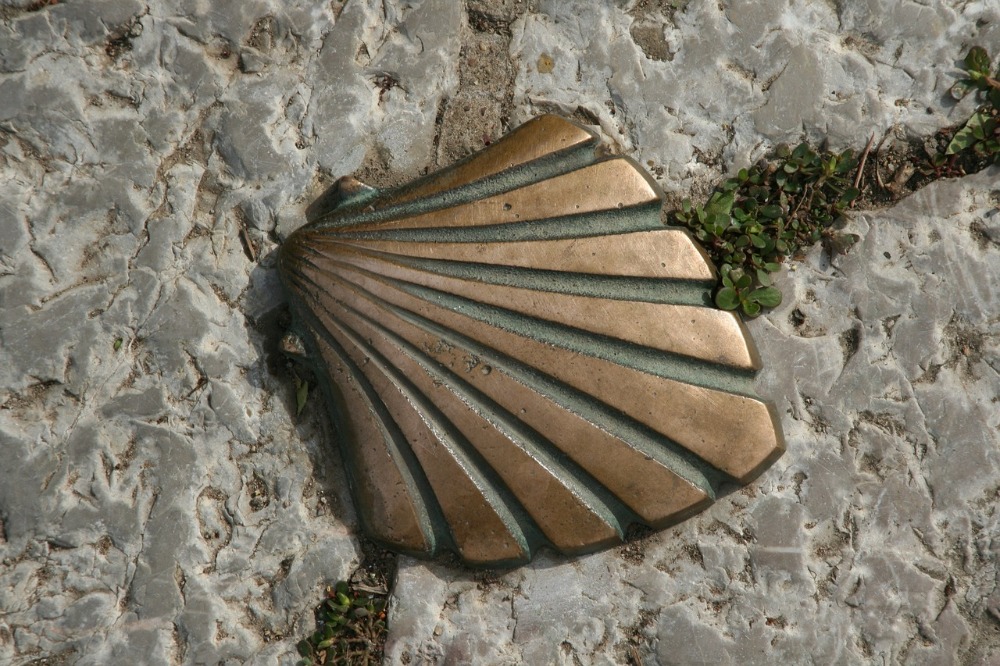
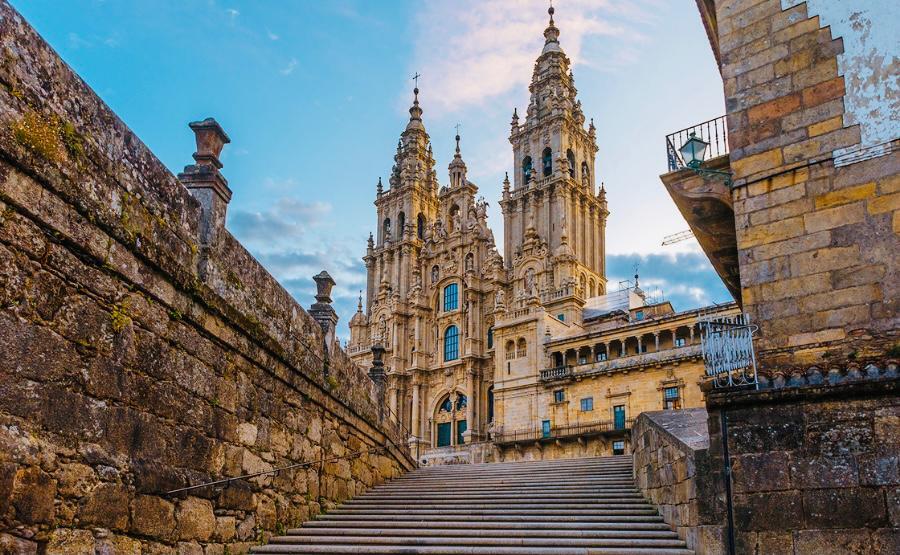
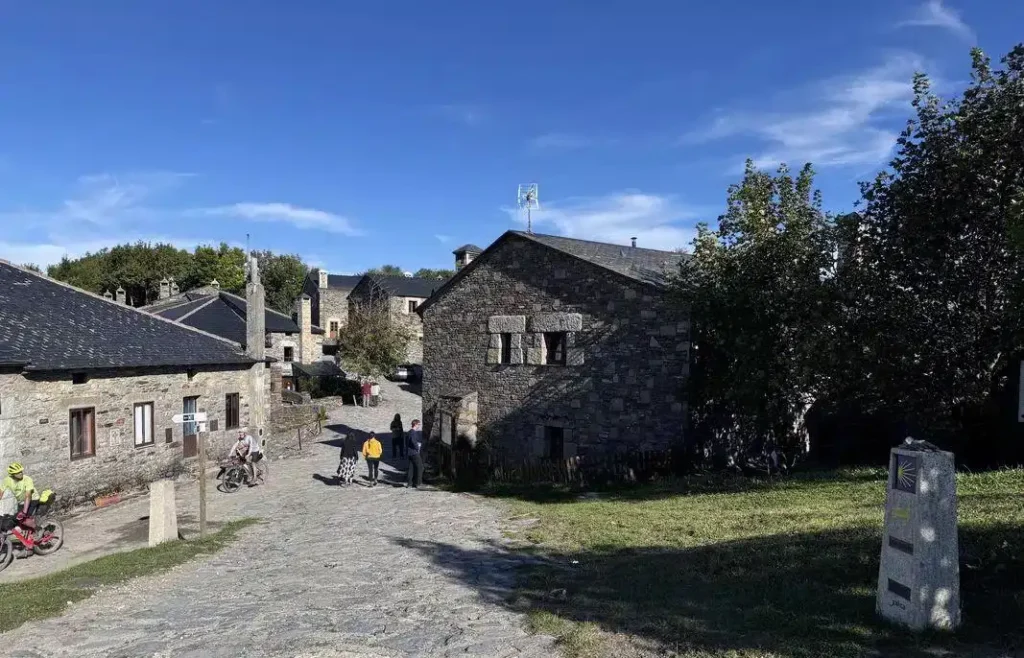
Santiago came to Spain to proclaim the Gospel. The Cathedral of Santiago de Compostela is its main sanctuary, where the relics of the apostle are kept. Thousands of people make pilgrimages there every year, eager to walk the Camino de Compostela. Santiago apostle is represented dressed as a pilgrim or as a soldier mounted on a white horse in fighting attitude.

In 1982, when St. John Paul II visited this Spanish Cathedral, he called on Europe to revive "those authentic values" proclaimed by St. James.

The apostle St. James is also known for having paved the way for the Virgin Mary to be recognized as the "Pillar" of the Church.

Pope Francis, in February 2014, reflecting on armed conflicts, noted that James gives us simple advice: "Draw near to God and He will draw near to you."

The importance of St. James the Apostle in Spain

Although since the ninth century the kings of the reconquest recognized St. James the Apostle as their patron saint, it was not until the seventeenth century when the patronage of Spain was granted to the saint.

Pope Urban VIII, in 1630 declared, under the reign of Philip IV, that St. James the Apostle was officially recognized as the sole patron saint of Spain (which since 1627 he shared with St. Teresa of Jesus).

This decision was made in conjunction with the recognition by the Church that his remains were buried in Compostela and also establishing that the feast of St. James the Apostle would be celebrated every July 25.

santiago apostol camino apostol santiago

Since 1646, by Philip IV, the Vow of St. James was institutionalized, which consisted of an offering by the kings, princes and the archbishop of Compostela to the Virgin of Santiago de Compostela. Santiago Cathedral every July 25th. This offering still takes place today, albeit in a symbolic way, at one of the parts of the Mass of the celebration on the Apostle's Day.

"The Camino de Santiago awakens one of the deepest desires of man's heart, the yearning to purify oneself, to improve; in short, the desire for God." St. Josemaría Escrivá Image by Almudena Cuesta.

When is St. James' Day?

It is the 25th of July when the festivity of the apostle Santiago and the day of Galicia is celebrated. This is a Christian celebration that takes place in many Spanish towns and places around the world.

However, since the end of the Dictatorship in Spain, the Apostle's Day is not a holiday throughout the country, but only in the autonomous communities that so decide each year when setting their holiday calendar, with the exception of Galicia, which celebrates its big day, so it is a holiday every year.

What do we celebrate and why on Santiago Apostle's Day?

On this day we celebrate the death of the saint, his death by martyrdom, an end that together with his character as a disciple very close to Jesus Christ gives him his name of apostle and saint. There are data and references that point to the year 44 as the date of the martyrdom of Santiago, although the choice of July 25 does not seem to be based on any historical data.

In any case, the celebration of St. James' Day is a very ancient celebration, a feast established in Rome around the tenth or eleventh century when we have news of its celebration in the Roman basilica of St. Peter.

In addition, on the day of St. James plenary indulgences can be obtained, that is, the possibility of obtaining forgiveness of sins for the pilgrims or faithful. In order to gain the Jubilee, and obtain the plenary indulgence, three conditions must be fulfilled:

  1. Visit the tomb of St. James the Apostle in the cathedral. 
  2. Saying a prayer.
  3. Receiving the sacrament of Confession fifteen days before or fifteen days after visiting the tomb and receiving communion.
apostol santiago peregrinacion-camino-de-santiago-

Where is Santiago Apostle's Day celebrated?

Today, in the XXI century, the feast of St. James Day is celebrated more than ever in Galicia in the city of Santiago de Compostela. It represents the religious and forgiveness aspects that unite and congregate pilgrims from all corners of the world in the different areas of the city.

During the 25th, the celebration of La Holy Mass solemn ceremony in the cathedral, in which the king or a delegate of the Royal Household makes the traditional offering to the apostle Santiago.

Within the current celebration are the magnificent fireworks that take place in the Plaza del Obradoiro during the night of the 24th, which in recent years has been accompanied by projections and audiovisual shows on the facades of the cathedral and other historic buildings in the square.

"...from James we can learn many things: the readiness to welcome the Lord's call even when he asks us to leave the boat of our human securities, the enthusiasm in following him along the paths he points out to us beyond our illusory presumption, the readiness to bear witness to him with courage, if necessary even to the supreme sacrifice of life. (...) Following Jesus like James, we know, even in the midst of difficulties, that we are on the right path."
Benedict XVI, General Audience June 2006

How the Camino de Santiago came about

The apostle Santiago is one of the most important saints of Christianity. After the discovery of his tomb around the year 813, where his remains rest, many Christians from the north of the country began to pilgrimage to what is now Santiago de Compostela to show his devotion.

This custom became a tradition, expanding the phenomenon of the Camino de Santiago throughout Europe, so that the city became one of the most important centers of pilgrimage in Christianity, along with Rome and Jerusalem.

In addition, pilgrims to Compostela could obtain general forgiveness for all their sins, a forgiveness that could be extended to the whole year when the feast fell on a Sunday, that is, when it was a Compostelan Holy Year.

o cebreiro apostol santiago peregrinacion-camino-de-santiago-

Prayer to ask for the intercession of the apostle on St. James' Day

Almighty and merciful God,
that you chose twelve apostles to evangelize the whole world.
Among them, three were favored in a special way by Your Son Jesus Christ,
who deigned to include the Apostle Santiago in this select number.

 Through her intercession may we be worthy to obtain the glory of Heaven,
where You live and reign forever and ever. Amen.

St. James the Apostle and Our Lady of Pilar

This saint is closely related to Zaragoza since it is known that Santiago Apostle "arrived with his new disciples through Galicia and Castile, to Aragon, where the city of Zaragoza is located, on the banks of the Ebro.

On the night of January 2, 40, Santiago was with his disciples by the Ebro River when "he heard the voices of angels singing Ave Maria, Gratia Plena and saw the Virgin Mother of Christ appearing, standing on a marble pillar".

The Blessed Virgin, who was still living in mortal flesh, asked the Apostle that a church be built for her there, with the altar around the pillar where she was standing, and promised that "this place will remain until the end of time so that the virtue of God may work portents and wonders through my intercession with those who in their needs implore my patronage".

The Virgin disappeared and the jade pillar remained there. The apostle Santiago and the eight witnesses of the prodigy immediately began to build a church on that site. The Basilica of the Virgin of Pilar in Zaragoza

In honor of the apostle, one of the towers of the Pilar, the high gate of the Plaza, bears the name of Santiago. In addition, Zaragoza is also one of the stops on the Camino de Santiago and has a church named after the apostle: the Church of Santiago el Mayor, where Holy Mass is celebrated on St. James' Day.


Bibliography:


St. Mary Magdalene: Witness of the Resurrection

Every July 22nd, the Catholic Church celebrates with special devotion the feast day of saint Mary Magdaleneone of the closest disciples to Jesus and the first person to witness his Resurrection. Her figure, often shrouded in historical confusion, has been vindicated by the Magisterium as a key woman in the beginnings of Christianity.

Who was this saint? What do we know about her life before she followed Christ? Why has she come to have such a prominent place in the tradition of the Church?

Who was Mary Magdalene?

The Gospel identifies it as Mary, who was from Magdalaa small town located on the shores of Lake Galilee. Hence the name Magdalena.

According to Luke 8:2Jesus had expelled from it seven demonsThis expression can allude to a situation of profound physical, spiritual or moral suffering. Be that as it may, what we know with certainty is that, from that encounter with Jesus, his life changed radically.

Thereafter, it becomes disciple and faithful follower of Jesus, accompanying him and other women during his public ministry. Many of them helped with their goods to support the mission.

Mary Magdalene thus represents the figure of the believing woman who, after experiencing divine mercy, leaves everything to follow the Master.

María Magdalena Resurrección y Jesús
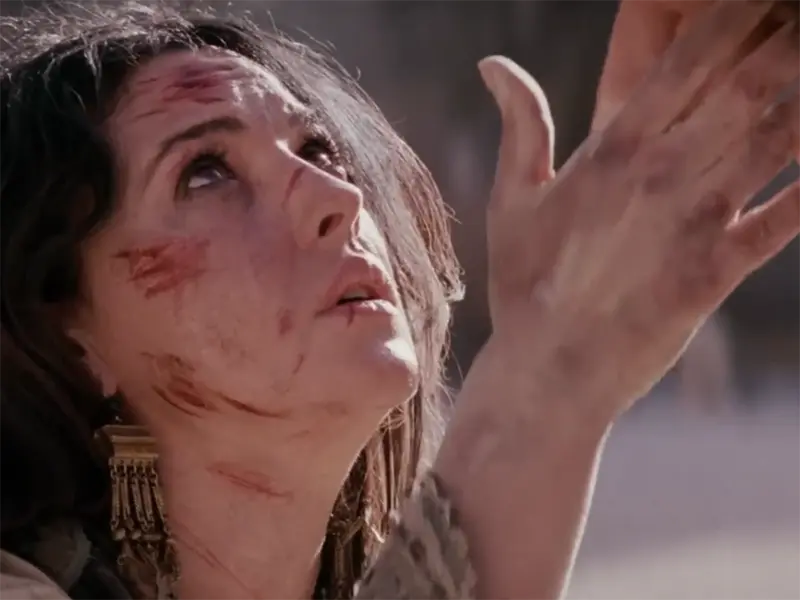
Mary Magdalene, before the Resurrection, prostrate before the cross of Jesus in The Passion of Christ.

A life transformed by the love of Jesus

We hardly have any concrete data on Mary Magdalene's life before she met Jesus, but what the Gospels show us is sufficient to understand the depth of her commitment to the Lord.

Tradition has linked Mary Magdalene with the sinful woman who anoints the feet of Jesus with perfume in the house of Simon the Pharisee (cf. Lk 7:36-50), although modern biblical studies tend to distinguish them as different persons.

Nevertheless, the gesture of love and repentance made by that woman shows similarities with the way in which Mary Magdalene responded to the grace received: with total, unreserved dedication. For this reason, he has become a model of sincere conversion, grateful love and radical discipleship.

Faithful disciple to the Cross

While many disciples were fleeing in fear after Jesus' arrest, Mary Magdalene remains at the foot of the Cross. The Gospels explicitly mention her as a witness to the Crucifixion and death, together with Mary, the mother of Jesus, and other women. This fidelity at the moment of pain and apparent failure proves her unconditional love and deep faith, even though she did not yet fully understand the paschal mystery.

After the death of Jesus, Mary is also mentioned as one of the women who went to the tomb, at dawn on Sunday, carrying perfumes to anoint the body of the Lord without realizing that his word had already been fulfilled and that the Resurrection was a fact.

First witness of the Resurrection

It is at that moment that one of the most beautiful and significant episodes of the Gospel takes place: Mary Magdalene is the first to see the risen Christ (cf. Jn 20:11-18). Filled with sorrow for the loss of her Master, she weeps outside the empty tomb until Jesus appears to her, although she does not recognize him at first. It is when he calls her by name - Mary - that her eyes are opened and she recognizes the Lord.

This encounter with the Risen One marks a turning point: Jesus entrusts him with to announce the good news to the apostles. Once again it is significant that the Lord wants a woman (at that time they were of little consideration) to be in charge of the proclamation to his disciples.

For this reason, the patristic tradition has given him the title of Apostle to the Apostlesbecause it was sent by Christ Himself to bear witness to His victory over death.

María Magdalena Resurrección y Jesús
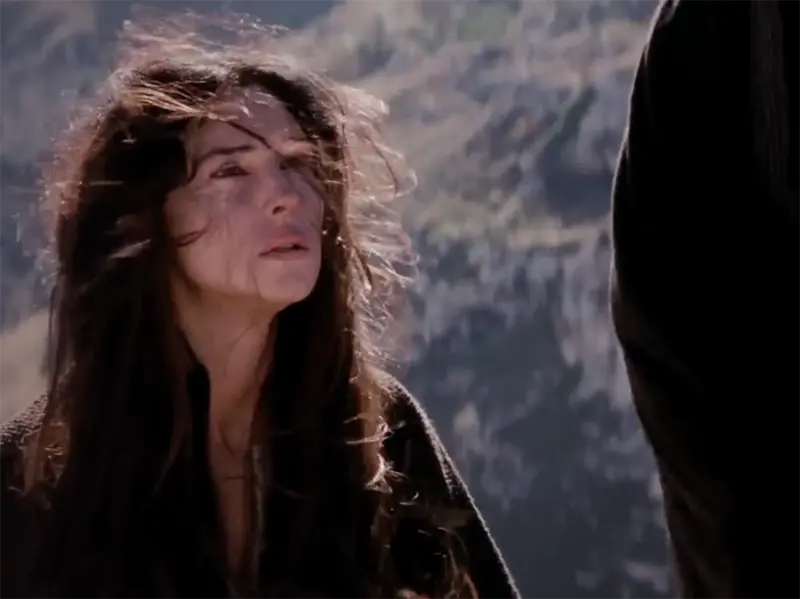
Scene of The Passion of ChristMary Magdalene mourns the death of Jesus at the foot of the cross.

A place of honor in the Church

Pope St. John Paul II recalled it in his apostolic letter Mulieris Dignitatem as an example of the essential role of women in the life of the Church. And in 2016, Pope Francis elevated his liturgical memorial to the status of partythe same rank as the celebrations of the apostles.The report also emphasizes its relevance as a model of discipleship.

This official recognition aims to recover and cleanse the image of Mary Magdalene, often distorted by popular or literary interpretations that have unfairly portrayed her as a prostitute or fallen woman, when in reality she was a brave girl.

Devotion and legacy

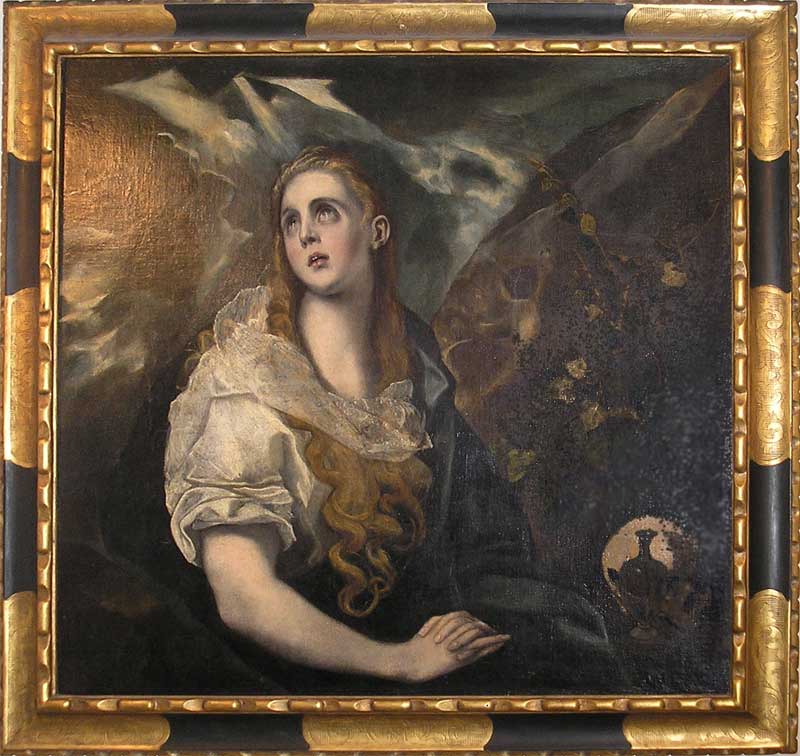
The figure of St. Mary Magdalene has been the object of devotion since the first centuries of Christianity. In Western tradition, especially in France and Spain, there are numerous churches, monasteries and shrines dedicated to her name. She has also inspired Christian art, which usually depicts her with a bottle of perfume in her hand, symbolizing her love for the Lord and the moment when she anointed him.

María_Magdalena_Jesús_Resurrección
Penitent Magdalene, El Greco 1557.

Its history is a constant invitation to hope, forgiveness and fidelity. In a world that often judges and condemns without mercyMary Magdalene reminds us that the love of God can transforming even the deepest wounds into a source of grace.

St. Mary Magdalene is much more than a secondary character in the Gospels. She is the woman renewed by the love of Christ, model of a faithful disciple and first herald of the Resurrection.

As his life challenges us, let us think: do we have the same passionate love for the Lord? Do we know how to stand firm by the Cross? Are we witnesses of the Risen Lord in the midst of the world?