Plenary indulgence is an extraordinary gift of the Catholic Church, which allows for the complete remission of the temporal punishment that remains after sins have been forgiven in the sacrament of confession.
Since 1983 the Code of Canon Law (can. 992) and the Catechism of the Catholic Church (n. 1471), define indulgence as follows:
"An indulgence is the remission before God of the temporal punishment for sins, already forgiven, as to guilt, which a faithful willing and fulfilling certain conditions obtains through the mediation of the Church, which, as the administrator of redemption, distributes and applies with authority the treasure of the satisfactions of Christ and the saints."
St. Josemaría also emphasized the spiritual depth of indulgences when he stated: "indulgences are a manifestation of God's infinite mercy" (The Way, 310).
Difference between plenary and partial indulgence
Plenary and partial indulgence are expressions of God's infinite mercy. Although they differ in scope, both encourage us to seek holiness through faith, prayer and works of charity.
The plenary indulgence is an extraordinary gift, since it completely removes the temporary grief that remains after the sorry of sins in the sacrament of confession. It is an act of love that allows us to present ourselves before God purified free of any stain that keeps us away from His presence.
On the other hand, the partial leniency remits only a part of this sorrow, but it is no less significant. It is an important step that motivates us to continue advancing in our spiritual journey, offering our prayers, sacrifices and good works as concrete signs of repentance and faith.
Pope Francis, explained it clearly during his General Audience, March 9, 2016 that. "the plenary indulgence is a gift that helps us to grow closer to God and to live a holier life.". This is why we must remember that plenary indulgences are an invitation to walk towards holiness with hope and trust in divine mercy.
Every time we have recourse to indulgences, we renew our commitment to conversion, we confirm that God's love is always ready to welcome us and to give us a new opportunity. What greater consolation can we have than to know that, through these practices, we draw closer to the Father's loving heart?
Requirements to obtain a plenary indulgence
Pope Benedict XVI, in his Message for Lent 2008, affirmed: "The indulgence cannot be understood as a kind of 'discount' on the punishment due for sin, but as an aid to a more radical conversion". Indulgence is a sincere opportunity to commit ourselves to the path to holiness and to renew our relationship with God.
Sacramental confession: this sacrament allows us to be in a state of grace and to be reconciled with God. In the act of confessionWe find the loving embrace of the Father who is always ready to forgive us.
Eucharistic communion:receive the Eucharist with devotion. As we approach the altar, we find the strength to live in holiness.
Prayer for the Pope's intentions: praying an Our Father and a Hail Mary unites us to the universal Church. This simple act invites us to think beyond our own needs and to pray for the common good.
Total detachment from sin: This step does not demand perfection, but a sincere desire to reject sin, even venial sin. It is a call to examine our heart and to live according to God's will.
Carry out the indulgenced work: for example, pray the Rosary in community, to read Sacred Scripture for at least half an hour or to adore the Blessed Sacrament or carry out works of mercyboth spiritual and corporal.
Meeting these requirements is a reminder that God's grace is always available to those who seek it in humility and sincerity.
When can a plenary indulgence be obtained?
There are particularly significant moments for obtaining plenary indulgences:
In the Holy Year or Jubilee: an exceptional opportunity to receive abundant graces. It is celebrated every 25 years or in special circumstances designated by the Pope.
November 1, All Saints Day: by visiting a cemetery and praying for the deceased, we remember those who have preceded us in faith and offer our prayers for their souls.
November 2, All Souls Day: a day dedicated to intercede for the souls in purgatoryshowing our charity and union with the communion of saints.
During the Easter: a time of special spiritual intensity, where the Stations of the Cross and the celebrations of the Passion of Christ unite us deeply with the mystery of the Redemption.
The first Sunday after Easter, Feast of the Divine Mercy: instituted by St. John Paul II, this celebration highlights the infinite mercy of God, a privileged moment to obtain indulgences.
September 15, Memorial of the Blessed Virgin Mary of Sorrows (in 2024): one day for to accompany the Virgin in her sorrow and deepen the mystery of redemptive suffering.
In liturgical acts such as the Stations of the Cross: Participating with devotion in this representation of the Passion of Christ invites us to unite ourselves to His sacrifice and renew our conversion.
In addition to these specific dates, the Pope may designate other special occasions to obtain indulgences. Each of these opportunities brings us closer to the merciful heart of God and invites us to live our faith.
Plenary indulgence and medal of St. Benedict
At specific moments, the Church grants the possibility of gaining plenary indulgences related to the use of the St. Benedict medalThe usual conditions are met: confession, communion, prayer for the Pope's intentions, detachment from sin and the performance of an indulgenced work.
Among the most notable occasions for gaining a plenary indulgence linked to the medal of St. Benedict are:
On the feast of St. Benedict (July 11)by participating in liturgical or devotional acts in honor of this saint, bearer of faith and protector against evil.
By using the medal of St. Benedict with devotionThe prayer of exorcism inscribed on it, an act that reaffirms our trust in God's grace to protect us from evil and renew our faith.
Receiving the blessed medal of St. BenedictIn the context of a religious ceremony, where the intention to live according to the principles of the Gospel that St. Benedict promoted is manifested.
Reverse and obverse of a medal of St. Benedict.
By knowing the meaning and beauty of the gift of plenary indulgence, we come closer to the infinite mercy of God. In this journey of faith, the work of the CARF Foundation is fundamental, as with your support it trains priests and seminarians for the Catholic Church, who will be the ones to guide and accompany us in our relationship with God. Supporting the CARF Foundation means that more Christians can come closer to God's redeeming grace throughout the world.
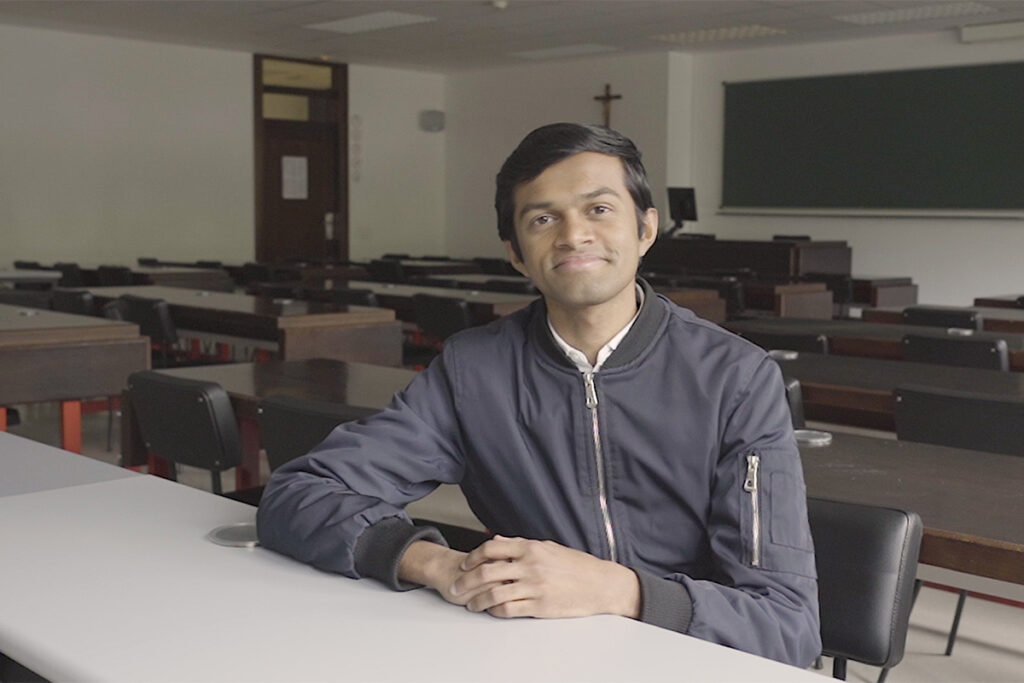
Asitha: "being a good and well-formed priest will help people to reach the path of God".
Being a priest for Asitha Sriyantha is fulfilling his childhood dream. His family is Catholic and devout, but he studied in a Buddhist school that could have changed the course of his life. But it didn't. Now a seminarian, he studies at the University of Navarra in Pamplona and resides in the Bidasoa International Seminar.
When God calls in childhood to be a priest
"Since my childhood I had the desire to be a priest. When teachers asked me what I wanted to be when I grew up, I would answer: I want to be a priest," says Asitha.
And although he comes from a devout Catholic family, with parents who are actively involved in parish activities, the decision to become a priest was not initially welcomed by his father, because in Asia it is difficult to accept that your only male child enters the seminary and leaves the family business.
"Now he is proud to have a son preparing to be a priest," exclaims Asitha. Thanks to his parents, his mother's influence, and the simple faith of his grandmother who lives with them, he grew in faith and relationship with God.
"Being a good, well-formed priest can help a lot of people.".
His childhood in a Buddhist school
Asitha studied primary school in the school near the parish church and among her daily routine it was normal to serve at the morning Mass.
In high school his life took a turn when he entered a Buddhist school, an experience that has given him a broader understanding of Buddhism, the majority religious practice in his country.
My teachers and friends didn't understand," he says. Later, when I explained it to them, they understood my desire a little better and even encouraged me."
Now, his relatives and friends are happy because he is the first in his family to become a priest. "I hope and pray that some of my relatives will choose this wonderful life path: to become a priest," he exclaims. His only sister is always there for whatever is needed.
Catholics in Sir Lanka and the great contribution of the Church in Aasia
The Catholic Church counts in Sri Lanka with about 1.4 million faithful, representing about 7 % of the population. It is organized into 11 dioceses including one archdiocese. Asitha Sriyantha Lakmal is from the Diocese of Colombo, a diocese to which he will return after training in theology and philosophy at the Ecclesiastical Faculties of the University of Navarre.
"Asia is incredibly diverse, with numerous ethnicities, languages and cultural practices," comments Asitha, aware that the Church in Asia contributes to the rich tapestry of religions in various ways, reflecting the diverse cultures, traditions, and histories of the continent.
"In fact, the Church in Asia often embraces and integrates this diversity, fostering a sense of unity in the midst of differences. Asia is home to several major religions, including Christianity, Islam, Hinduism, Buddhism, Sikhism and others," he comments.
Therefore, the great contribution of the Church in Asia is its participation in interreligious dialogue, promoting mutual understanding and cooperation among people of different religions and thus contributing to peace.
"In many Asian countries Christians carry out their mission in peace and freedom, but in others there are situations of violence and persecution," he laments.
Training, the great challenge in the face of secularization
However, the great challenge faced by young people is that they priests of the 21st centuryThe main reason for this, both in Asia and in the rest of the world, is the strong secularization of society.
To face this great challenge, Asitha Sriyantha is convinced that "formation is key to address the challenges of our mission. I believe that every priest must fulfill his mission in the face of the thinking of the modern world," says Asitha.
And an integral formation is also a challenge to attract young people, a formation that will help to find innovative ways to address these challenges and to serve actively in the divine mission.
Prayer and sacraments
But in addition to formation, Asitha reminds us that prayer and the sacraments are the essence of our Catholic faith, because "we will only bear the fruit that God wants, if we seek God's grace and guidance, maintaining a close relationship with Him".
This relationship of trust and faith with the Lord was acquired as a child thanks to his parents, a seed that left its mark on his soul. Thus, at the age of sixteen he entered the minor seminary of St. Aloysius in Colombo and three years later he entered the propaedeutic seminary.
"I did three years of philosophical studies at the National Seminary of Our Lady of Lanka, Kandy, and now I can study theology in Pamplona thanks to the CARF Foundation," he says excitedly.
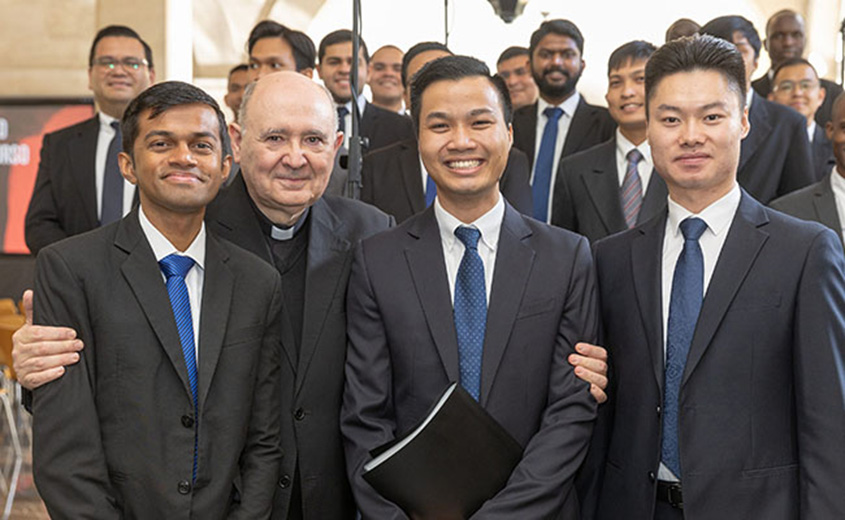
Asitha with Mr. Emilio Forte and other members of the Bidasoa choir.
The diversity of the universal Church in Bidasoa
In addition, his experience at the Bidasoa International Seminary gives him a very broad richness in his vocational journey. "In Sri Lanka, we experienced the local Church. But in Bidasoa, where I live in Pamplona, the universality of the Catholic Church is palpable. We may be different with our cultures and languages, but we are one in our faith."
God willing, he will be ordained a priest to serve his diocese. "Our life is one and we serve one Master. Our thoughts and ideas may differ, but we work together and walk together towards the same goal," Asitha concludes.
In conclusion, he is very grateful for the financial effort that benefactors make so that young people like him from all over the world can finish their studies. "A good and well-formed priest can help people to reach the path of God," he says joyfully.
The flea market, now in its 28th edition, will be held from November 26 to 30 on the premises of the parish of St. Louis of the French, on the 9 Padilla St.Madrid, every day from 11:00 am to 9:00 pm.
The PAS volunteers have been organizing this flea market for many years, whose main objective is to cooperate with the diocesan Church around the world.
Thanks to the sale of furniture restoredantiques, antiques, some works of art, garments, etc. vintageThe project, which includes handmade baby clothes, household goods and decorative items, is used to finance study aids and, above all, to contribute to the cost of the backpacks of sacred vessels that seminarians who graduate and return to their countries receive.
Where and when?
???? Dates: November 26 to 30
???? Location: Padilla, 9 - Madrid
⏰ Hours: 11:00 a.m. to 9:00 p.m.
Come and contribute to a great cause! Help the CARF Foundation continue to form committed priests, while finding special gifts for your loved ones, we are waiting for you!
The most traditional charity flea market in the Salamanca neighborhood
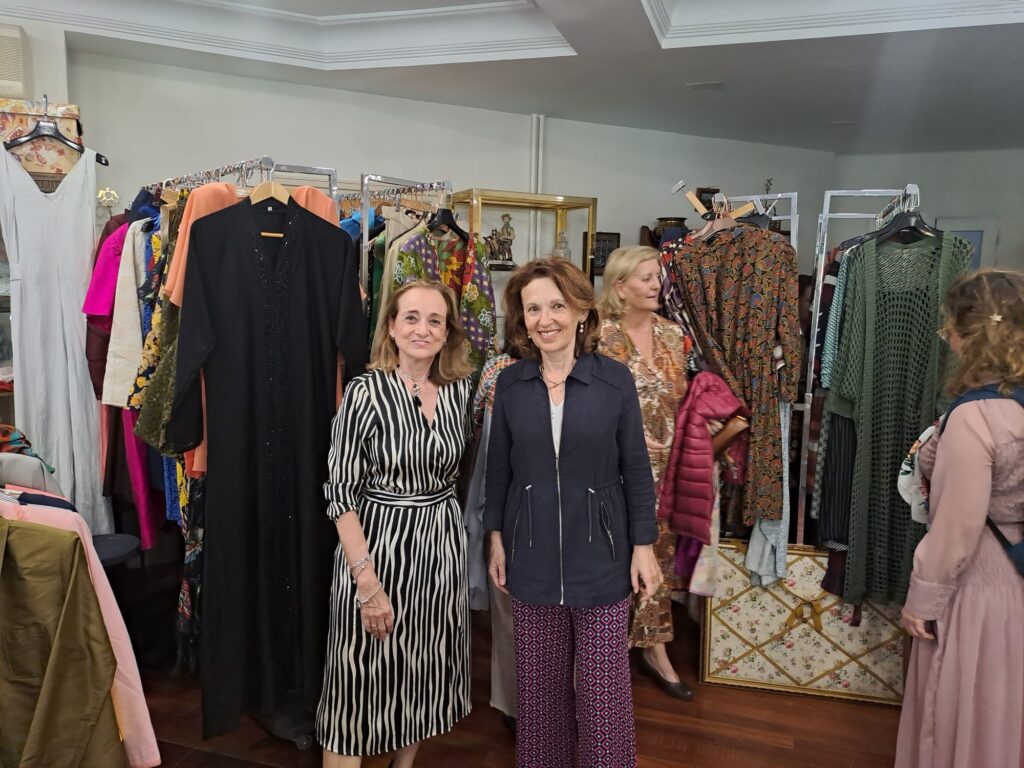
The charity flea market, one of the most traditional in the Spanish capital, is once again being held in the rooms of the parish of San Luis de los Franceses in the Salamanca district. "This year is the twenty-eighth edition, a great success," say Carmen and Rosana, PAS coordinators.
Thanks to the work of PAS volunteers, the flea market has a wide variety of furniture, dresses and baby clothes handmade by the volunteers themselves, you can also find artwork, vintage cutlery, among other things.
The proceeds go to cover the formation expenses of seminarians, diocesan priests and religious sisters and brothers around the world. In addition, it also helps us to cover the expenses of the sacred vessel backpacks that each seminarian receives at the end of his studies in Rome and Pamplona (Sedes Sapientiae and Bidasoa seminaries).
From early in the morning, many antique dealers, faithful to their annual appointment and aware of the value and quality of the objects on sale, will come to the premises of Padilla Street, 9.
The team behind the charity market
Rosana Diez-Canseco and Carmen Ortega, as presidents of the board of trustees, have led a team, mostly female, whose work reaches its peak at the flea market, but which is carried out throughout the year. Month after month, the volunteers receive and catalog the objects to be offered for sale, restore the furniture, knit the baby clothes and embroider the albs that will also be given to the seminarians.
The backpacks of sacred vessels with a custom-made alb.
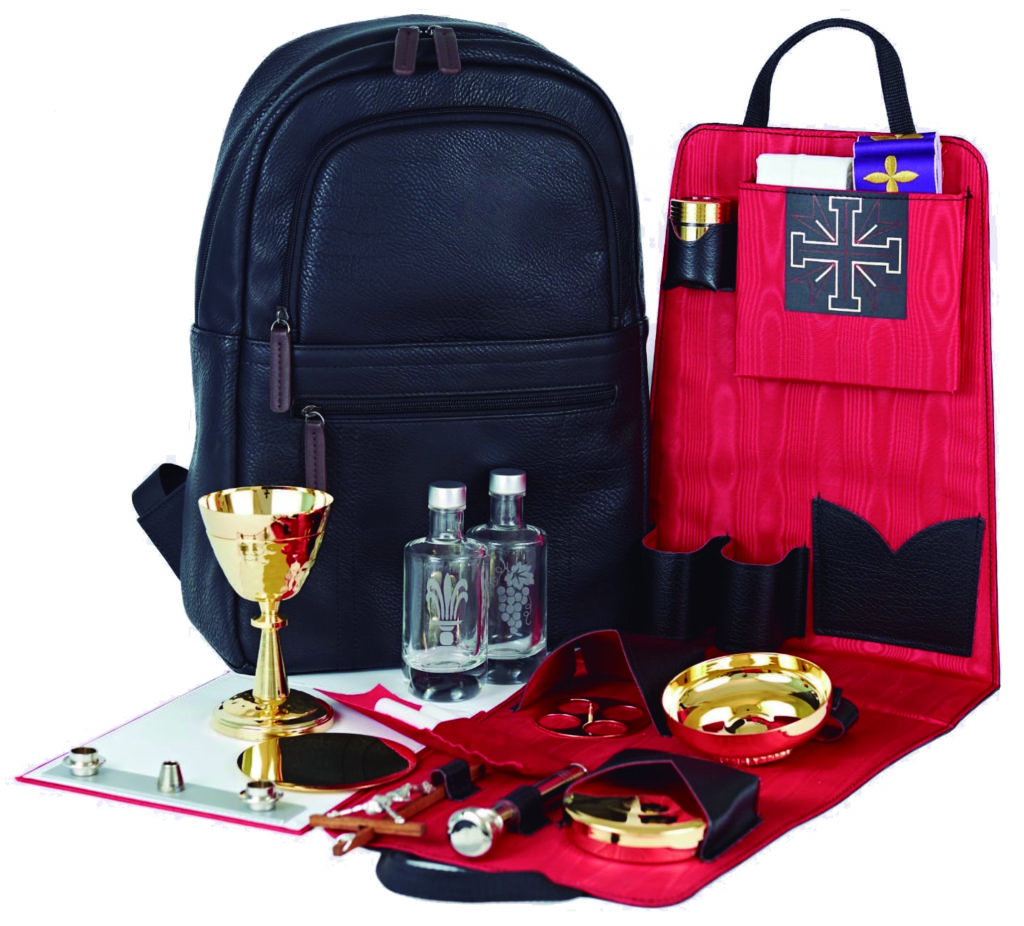
These backpacks contain everything needed to celebrate Mass anywhere in the world: a small silk altar cloth, chalice, paten, ciborium, two cruets, stole, hyssop, chrism oil, cincture, a custom-made alb and even two candles and a crucifix.
Emmanuel, Paul, Modest, Halalisane, Thomas, John... are some of the names of the 19 seminarians who will graduate this year from the Bidasoa International Seminary (Pamplona) and who are studying at the University of Navarra.
Backpack of sacred vessels with everything necessary to celebrate Holy Mass.
All of them will receive, from the PAS leaders, their backpacks with liturgical objects and the albs sewn to measure for each of the seminarians.
With this help, they will be able to celebrate the Eucharist and the sacraments with dignity, whether in a remote village in Latin America or in Africa where the presence of priests is scarce.
The backpack and all its contents, which cost 600 euros, is made by Granda, a renowned artisan workshop of liturgical objects located in Madrid. The charity market is one of the events that help us cover this cost.
Every year some 300 seminarians are trained between Pamplona and Rome. And approximately 1,700 diocesan priests at the Pontifical University of the Holy Cross, in Rome, and in the Ecclesiastical Faculties of the University of Navarra, in Pamplona, in addition to a hundred people in consecrated life.
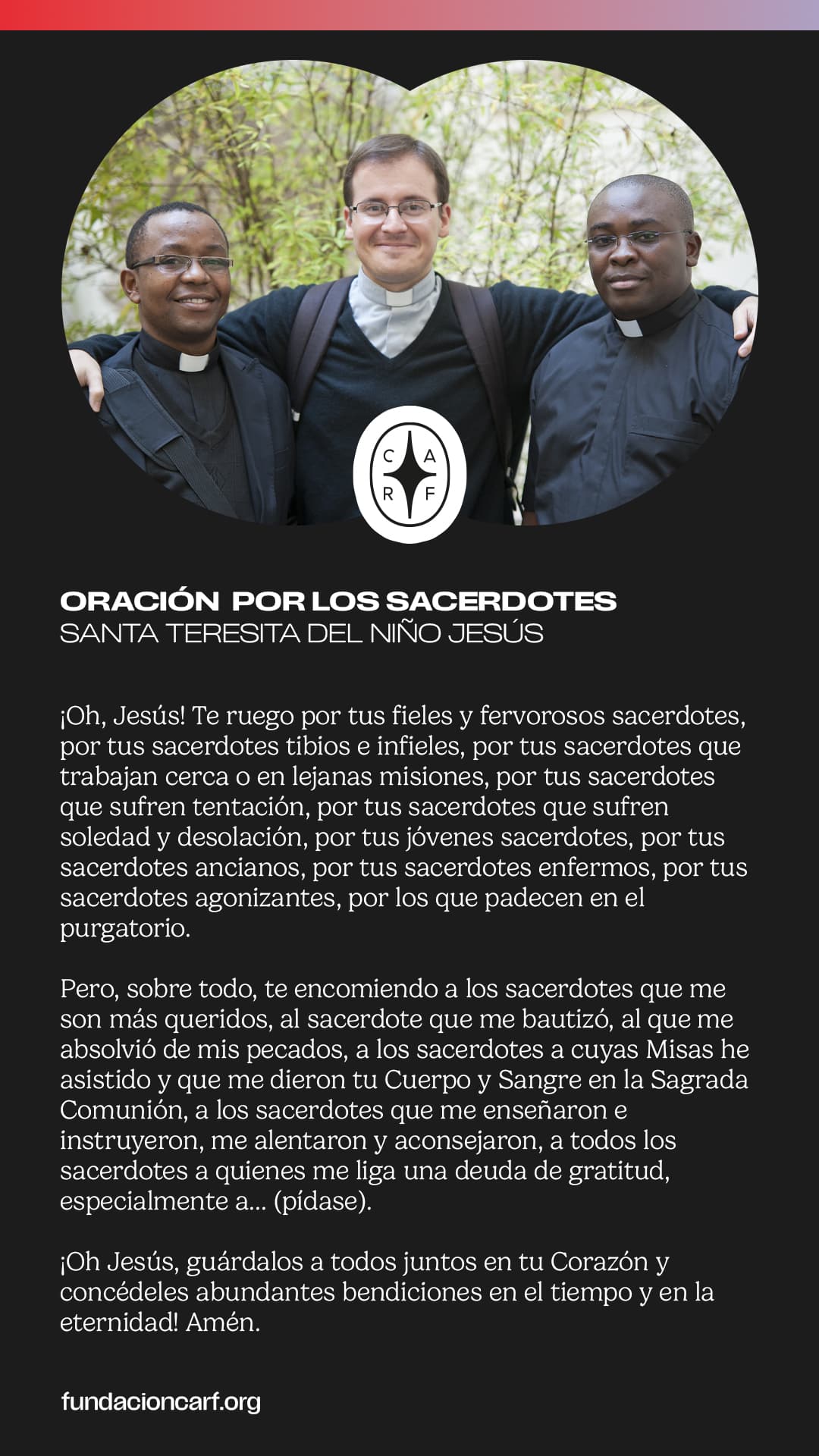
Praying for priests: why and how to pray
Praying for priests is a mission of love and responsibility. Pope Francis reminds us that a priest does not do it alone; he needs the support and prayers of all of us. In his exhortation Evangelii Gaudium (The Joy of the Gospel) and in many homilies, the Pope stresses that the path of the priesthood is deeply linked to all Christians.
The priestly vocation involves great sacrifices and challenges, and priests face difficulties that can weaken their mission if they do not receive the necessary support. That is why our prayers are an act of love and commitment, a way of caring for those who, in turn, care for us and bring us closer to God.
Women and men should always be praying for priests.
Why should we pray for priests?
St. Josemaría Escrivá taught that the priest, although a man among men, is Christ himself! Through our prayer, we can be his shield and strength. Priests are spiritual directors and living examples of love and dedication to Christ, but they also need our prayers to remain firm in their vocation. Praying for them is an act of empathy and deep support, a gesture of love that accompanies and strengthens them in their daily mission of service. And the prayers go back and forth, since all priests pray daily in the Liturgy of the Hours for all human beings all over the planet.
3 reasons to pray for priests
To offer them spiritual support in their mission: the prayer of the Christian Church is a powerful force that sustains priests in their mission. As Pope St. John Paul II expressed it in his Letter to Priests in 1979, there is a profound connection between the ministerial priesthood and the common priesthood of the faithful. While priests guide and form God's people, the faithful participate through their own lives and prayers. By praying for them, we strengthen their vocation and help them bring Christ to all.
That they may be instruments of grace and find strength in their vocation.The priesthood is a gift offered for the sake of communion (Catechism of the Catholic Church, 1533). Through the sacraments, especially the Eucharist and ConfessionGod's grace reaches out to all Christians, nourishing and guiding their lives. However, priests also need constant support to remain faithful to their vocation in the midst of challenges and trials. Divine grace is that force that drives and sustains the Christian journey, acting in the depths of the soul in the face of difficulties. As we pray for them, we ask that this grace envelop them, strengthen them and fill them with joy so that they may fulfill their mission faithfully; in turn, they contribute to the holiness and growth of the whole Church.
Protection against temptations and spiritual wear and tear: St. John Mary Vianney, patron of priests, expressed with great clarity the importance of priestly work: "Without the priest, the Passion and Death of our Lord would be of no use. It is the priest who continues the work of redemption on earth". To pray for them is to help them resist the trials and renew their commitment to holiness, which requires God's help and the support of the whole community.
How to pray for priests?
Praying for priests is a simple and profound way of accompanying them in their mission. There are many ways to do this; an easy option within everyone's reach is to include them in our daily intentions: to dedicate a prayer for them, every day, as a pearl of love that enriches the Church.
You can also offer a rosario or the celebration of the Mass on their behalf; or participate in a ninth especially dedicated to his holiness and strength.
In addition, in moments of silence and meditation, they ask God to give them strength and wisdom to face the challenges of loneliness or misunderstandings. These prayers sustain them spiritually and remind them that they are not alone on their journey.
What is the prayer of the faithful for priests?
The prayer of the faithful is a punctual moment of the Holy Mass. Mass in which, united as one heart, we raise petitions to God for different intentions, among them, do not forget the sanctity of life and the mission of priests. In this prayer we pray for those who have dedicated themselves to the service of the Church.
This prayer is invaluable because we recognize that priests, like all human beings, need God's grace and strength to be faithful and helpful. It is a sign of gratitude, for in praying for them, we also recognize their sacrifice and dedication. This joint prayer reflects the desire of all to see priests as models of Christ who, like the good shepherd, cares for his flock with tenderness and courage.
What is intercessory prayer for priests?
Intercessory prayer is a prayer in which we ask God for the good of others, in this case, for priests.
Intercession in times of crisisWhen the Church or priests are going through difficult times, praying makes a difference. Pope Francis has emphasized the importance of not judging priests harshly, but praying for them. In his homily delivered on June 23, 2014, the Pope stated, "Do not judge, because, if you do, when you do something wrong, you will be judged. It is a truth that is good to remember in everyday life, when we feel the urge to judge others, to criticize others, which is a form of judging. On the contrary, we should be men and women of prayer, intercede for others, especially in times of crisis, when they need more of God's grace and support.
Daily intercession: Including priests in our daily prayers is a simple practice. This intercession can be integrated into the rosary, offering each mystery for their vocation, or in our morning and evening prayers, asking God to sustain and enlighten them.
Pray for priests
Prayer brings an incalculable richness to the Church through the gift of priestly ministry and consecrated life in its many charisms and institutions. We thank God for the life and witness of so many priests and people of consecrated life.
In the CARF Foundation we work with dedication to support the integral formation of diocesan priests from all parts of the world. This effort is possible thanks to the generosity of benefactors and friends and, above all, to the constant prayers of those who value the priestly mission.
The benefactors of the CARF Foundation form a group of committed Christians who, in addition to financial support, unite in prayer, not only for the vocations of future priests, but also for those who are already developing their mission.
We pray that all of them, present and future, receive the necessary grace to carry out their vocation, overcoming challenges and living joyfully their service to the diocesan Church and the world.
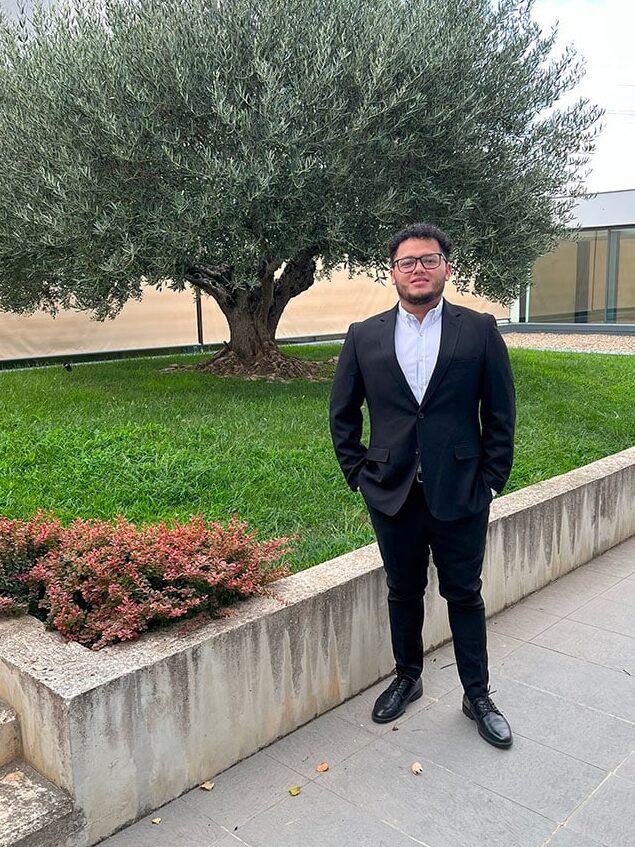
Gabriel Hernán, the seminarian who wants to lead Honduras out of violence
Gabriel Hernán Méndez (Honduras(1994) is a 30-year-old seminarian from San Pedro Sula, Honduras, who belongs to the Diocese of Santa Maria de las Gracias and dreams of helping young people in Honduras to leave gang violence behind. He is currently in his third year of Theology at the University of Navarra and resides in the Bidasoa International Seminar.
From doubt to faith: spiritual awakening
Although his family was not religious, the influence of his grandmother, who taught him to pray, was decisive. However, in his adolescence he drifted away from the faith and stopped attending Mass, as constant changes of address and youthful interests distanced him from the Church. In spite of this, he felt an inner attraction to the faith that never disappeared.
"In my adolescence, I completely distanced myself from the Church and everything related to religion. This was mainly due to my parents' work commitments, which forced us to move frequently, which prevented me from having a fixed place to attend Mass. Also, because of my age, there were other things that caught my interest. However, deep down, I always felt attracted to the things of the Church", Gabriel tells us.
Years later, a nun invited him to a catechesis to receive Confirmation. Gabriel agreed, initially motivated by the presence of a classmate he liked, but over time he began to get involved in Church activities. Upon receiving the sacrament, the bishop asked him how he was going to serve a poor Church like the one in Honduras, words that resonated deeply with him.
The process of discernment and formation in the seminary of Honduras
A seminarian, now a priest, invited him to vocational discernment meetings for young high school graduates who wanted to discover their vocation. At the end of 2013, Gabriel received acceptance to enter the major seminary Nuestra Señora de Suyapa in Tegucigalpa, where he began his formation in 2014 at the age of 19, although without the support of his family.
"It was a new experience for me, as I left without the support of my family, who, not practicing the faith, did not understand my decision to enter the seminary," he says.
A pause in his presbyteral formation
After finishing Philosophy (2017) various circumstances led him to put a pause in his presbyteral formation and return home. He started working in a group of companies dedicated to commerce, which represented a new challenge for him, as he had to adapt to another lifestyle and work environment.
"Here I must mention a person that God put in my path: Magdalena Méndez, the owner of the group of companies. She trusted me and gave me the job even though I had no experience whatsoever," says Gabriel.
A call to a vocation as a priest that persists
As time went by, he was promoted in the company and one day he was offered the position of General Manager and legal representative of the company. He had achieved many things he had never imagined. However, in spite of everything, the idea of becoming a priest always kept echoing in his head: "There was a kind of emptiness inside me," confesses this young man from Honduras.
Throughout this time she maintained communication with her spiritual director. Later, he was appointed bishop of a new diocese in Honduras and invited him to an experience in a parish in his diocese to help him in his discernment process.
"In January 2023, I resigned from my job and moved to the San Matías Apóstol Shrine in La Campa, Lempira (Honduras) where Father Rubén Gómez accompanied me. While I was there, the opportunity arose to come to Spain to an international seminary, the one in Bidasoa. The bishop made me the proposal, which I accepted, and in August 2023 I arrived in Pamplona, where I resumed my formation and studies with a view to priestly ordination".
One mission: to help young people caught up in gang violence
During all this time Gabriel never stopped praying and asking God what he wanted for his life. "I grew up among maras and gangs. Honduras is a country with a lot of violence where young boys join violent gangs. Some of these young people saw me close to the Church and came to talk to me. To accompany these young people I thought: I believe that God is asking me to be a priest. From my example of life perhaps I can drag these young people to another way of life and that they discover that not only the mara or the gang is the only way out", he relates with emotion.
He is saddened when he thinks that some of his classmates have not finished high school because they have entered the violent world of gangs. "My city, San Pedro Sula, is marked by gangs and maras, and many young people see no other way out than to go there because they see the group as a family, which they have not found at home. They suffer from emotional deprivation and family emptiness," he laments.
His desire: to be a priest who will help these young people
Gabriel aspires to be a committed priest, firstly, in the spiritual field, evangelizing, and transmitting the love that God has for all these young people. And, secondly, by supporting the creation of rehabilitation centers: "When a young person enters a gang, they are not allowed to leave. That is why it is important to create these centers to take in children before they enter these organizations, to teach them trades that occupy their minds.
In this mission, Gabriel is grateful for the work of the Church, which has centers and religious congregations dedicated to working with young people at social risk. However, the job is complicated by the fact that, for many of these young people, gangs represent the only viable way out. In addition, the government shows great disinterest in addressing this problem.
The problem of sects and the lack of priests
Another problem in Honduras is the influence of sects.Today Catholics are no longer the majority in a country that has traditionally been Catholic. Young people are more attracted to these sects, since in the neighborhoods there is one in every street, while Catholic churches are scarce, with only one per neighborhood. In addition, the priest is often unable to arrive even once a monthHe has to attend to 50 more temples," he laments.
With this great challenge Gabriel asks for prayers to all the benefactors and friends of the CARF Foundation to become a good priest: the first thing we priests must be clear about is the message of the Gospel. and how to transmit it, announcing Jesus Christ without being influenced by ideologies that attack society. On the contrary, he must act as a shepherd and look for the lost sheep, who often do not have someone to show them the way".
"You preach Christ, not yourself."
Moreover, for Gabriel, a 21st century priest must remember that one preaches Christ and not oneself. "With the rise of social media, there is a risk that Christ will be relegated and the preacher will be put at the center..... Therefore, it is essential that the priest prepare himself intellectually to give a reason for our faith, not only with prayers, but also with eloquence in his teaching, both in word and deed".
In all this task, he is grateful to the CARF Foundation for the support he is receiving in order to receive more and better formation. "Well-trained priests are needed because in this world, with so much ideology, we have to give reasons for our faith, to lay the foundations of a new evangelization and thus contribute to the new resurgence of the Church".
Prayer and thanksgiving
Gabriel is very grateful to all of the benefactors of the CARF Foundation and the Association for Humanistic StudiesI pray for you and I am very grateful to you because without your help it would not be possible to complete my theological formation at the University of Navarra. Gabriel's goal is to be able to train very well to return to his diocese and help in the formation of future priestly vocations in his country.
Marta Santínjournalist specializing in religion.
Guardini: the encounter and its role in pedagogy
Let us leave aside, although the author considers it briefly, the encounter between two material objects, between two plants, between two animals, which in each case follows different laws according to their respective modes of being.
Conditions for the personal encounter to take place
We are talking about meetingwe are told, properly when a man contacts reality. It is not yet an encounter if it only seeks, for example, to satisfy its hunger, although it may go beyond instinct. Just as it is not yet a simple clash between two people.
Two initial conditions for a (personal) encounter to take place, according to Romano Guardini1) the encounter with the reality beyond a simply mechanical, biological or psychological interaction; 2) to establish a distance reality, to focus on its uniquenesstake position to it and to adopt a conduct practice with respect to it.
This requires freedom. In freedom, two sides can be seen: a material freedomthrough which we can enter into relationship with everything that surrounds us; a formal freedomThe person's own initial energy, as the faculty to act (or not) from the person's own initial energy. Sometimes the person can come to the conviction that one should not trust everything that comes one's way: "He can close the doors of his heart, and shut out the world. The ancient Stoa [school of Stoicism] did so, and so behaves religious asceticism, to direct love only to God" [1].
The meeting can start only on behalf of the personFor example, in front of something that awakens our interest, such as a fountain, a tree or a bird, it can become an image of something deeper or even help us to radically understand existence. This, provided that habit, indifference or snobbery, conceited and self-satisfied presumption are overcome [2]. Such are the main enemies of the encounter.
But the meeting can also be bilateral, and then a special relationship arises, in which two people value each other more deeply, beyond their mere presence or their social functions: they become a "you".
Like contents of the meeting Guardini lists:
1) the knowledge of the person and his or her behavior that derives from it;
2) a "experience peculiarity of familiarity and strangeness": familiarity which can grow and become trust in union; and here, the relationship to character and activity, people and social group, ideas, relationship to the world, etc., but also to differences, strangeness and irritation, antipathy and enmity;
3) Always, even among the most intimate persons, there is that element of strangenessThe individuality is irreducible. This necessarily marks the distance of the person.
In addition, the meeting requires that a good timeThe moment is a propitious moment, made up of thousands of more or less conscious or unconscious elements: past experiences and images, energies and tensions, needs, environment, state of mind, creative and affective elements, etc. Hence the difficulty or impossibility of make an encounter, and the opening of the encounter to approach Providence and fate.
The meeting requires, therefore, at the same time, freedom and spontaneityIn the sense that it only happens if it is not searched for, as would be the encounter with a blue flower that opens the way to the treasure.
Dimensions of the encounter: metaphysical, psychological and religious.
The encounter phenomenon can be described by its metaphysical sideThat is, what concerns the very being of the encounter: why is it the way it is, how did it come about? This is attested to by the experience of the wise. Above all, that the great things have to be giftsare not enforceable and cannot be forced.
"This points to an objective creativity that is above the individual and human; to an instance that directs, condenses and 'writes' the situation with a wisdom and originality before whose sovereignty human actions turn out to be silly and elementary.
For this reason, every authentic encounter awakens the feeling of to find oneself in front of something undeservedand also of gratitude or, at least, of surprise for how curiously and well everything has turned out.
These reactions need not always be conscious; but they form an attitude (an element that, depending on the outcome and the circumstances, can become overwhelming" 3].
The encounter can be described, as Guardini also does, on the psychological sideThe encounter is subtracted before what we call concentrationThe encounter resists the search for the useful, the systematic, the pedantic and diligent. The encounter resists the search for the useful, the systematic, the pedantic and diligent.
"Frequently encounters are given away to people who do not strive for them, who may not even apparently deserve them (happiness)..." [4]. It is felt that it has been a gifted crossroads of freedom and necessityMany circumstances, perhaps seemingly coincidental, have come together to make it happen, and the curious feeling arises that "it could not be otherwise".
The meeting has, in third place, relationship with the spiritual and the religious, insofar as it represents a personal achievement or success, thanks to a factor that does not come simply from work or human foresight, which could degenerate into pure habit without joy or emotion.
This factor, while respecting freedom, directs existence towards a certain fullnessThe encounter therefore affects the encounter, without letting it become, on the other hand, an unstable adventure and a toy of the moment. That is why the encounter affects the spiritual center o inside of the person.
This is so, Guardini points out, "because in the encounter what emerges is not only what is essential and singular, but also the mystery" [5]. "The moment I encounter a thing or a person, they can take on a new dimension, the nun.
Then everything becomes a mystery; and to this responds admiration, gratitude, emotion". Guardini adduces the event narrated by St. AugustineHe tells of how he was relieved of a severe toothache after going to his own and others' prayers (cf. Confessions, IX, 4, 12).
The core of the meaning of the meeting
In order to show what he considers to be "the core of the meaning of the encounter", Guardini resorts to some words of Jesus on the road to Jerusalem. It should be noted that these words always have a special meaning for Guardini, because they are linked to a transcendental moment in his life, when he experienced a conversion both intellectual and spiritual [6]: "....Whoever wishes to save his life (psychelife or soul), he shall lose it; but whosoever shall lose his life for my sake shall find it.", Mt 16:25).
These words refer to man's way of behaving in his relationship with Christ and, according to Guardini, they are keys to understanding human existence in general. They come to mean: "He who clings to his self in his own being will lose it; he who loses it for the sake of Christ finds it" [7].
And Guardini explains this somewhat paradoxical expression (since it is getting lost whatleads to meet): "Man becomes himself freeing themselves from their selfishness. But not in the form of lightness, superficiality and existential emptiness, but for the sake of something that deserves that for its sake one runs the risk of not being him" [8].
How can one be liberated from oneself in this sense? This, Guardini answers, can happen in many different ways. For example, before a treeI can think simply of buying it, taking advantage of it, etc., that is, of its relationship with me. But I can also consider it in another way, in itself, contemplating its structure, its beauty, etc.
Another example given by Guardini is that of two students One works with an eye to his future, to his opportunities and the benefit he can get from such and such a subject or such an exam, and he will end up being a good lawyer, doctor or whatever. The other is interested in the subjects themselves, in research, in the truth, and may end up with a reasonable career.
For the former, science is a means to an end, which consists in affirming oneself in life. The second is open to the object, putting at the center not himself but the truth. And this was self-realized as his self grew in contact with the advances of his approaches and research.
Other examples would serve, Guardini points out, in connection with friendship y love (calculating and authentic friendship; love based on appetite and personal love).
"Friendship is born only when I recognize the other as a person.I recognize its freedom to exist in its identity and essence; I allow it to become a center of gravity in its own right and experience a living request for this to actually happen... Then the form and structure of the personal relationship, and the state of mind with which I approach it, become the same.
The relationship is centered on the other person. Realizing this, I continually distance myself from myself and thus find myself, as a friend, rather than as an exploiter; free rather than bound to my own benefit; truly magnanimous, rather than full of pretensions"[ 9].
Guardini concludes his reflection by offering a conclusive interpretation of the ultimate meaning of the encounter, we would say, in the light of a Christian anthropology. It is, therefore, important as a key to a pedagogy of faith.
First from an anthropological level. And then, anthropological-theological, in relation to the Christian revelation: "Man is made in such a way that from the outset he manifests himself in an initial form, as a project. If he clings to that project, remains closed in on himself and does not move on to surrender, he becomes increasingly narrow and petty. He has 'kept his soul', but has been losing it more and more.
On the other hand, if it opens up, if it surrenders to something, it becomes a field where the other can appear (the country he loves, the work he serves, the person to whom he is attached, the idea that inspires him), and then he becomes more and more profoundly and properly himself" [10]. Moreover, in the encounter with the surrounding world, man incarnates what he is and creates by making culture in its broadest sense [11].
"This going out of oneself can be more and more complete. It can reach a religious intensity. Let us bear in mind that the term with which a very high form of religious commotion is expressed is that of 'ecstasy', which means precisely to be taken out of oneself, to be outside oneself.
It is necessary to think that, as happens in all relationships, ecstasy is not unilateral, that is to say that it does not affect only the person who goes out of himself in search of the one who goes out to meet him, but he also goes out of himself; his being goes out of the arcane of his own self. He reveals himself, he opens himself" [12].
Man becomes truly man when it comes out of itself responding in properly human events. Well then: "The meeting is the beginning of this processor, at least, it can be.
It represents the first touch by what comes our way, by virtue of which the individual is called to leave his immediate self and renounce his egoism, encouraged to go beyond himself in pursuit of what comes his way and opens up to him" [13].
All of this can undoubtedly be educated in the sense of facilitated, encouraged, and guided by means of a pedagogy of encounter.
The encounter in pedagogy
In his pedagogical writings, Guardini shows the role that the encounter plays in education as a whole. On the basis constituted by the form (structure of the concrete personal existence) that unfolds in the "formation with the help of education, the person is also realized thanks to the encounter, in the midst of the movement of becoming and of the multiplicity of its phases in the diversity of factors of one's own being and in the plurality of its determinations" [14].
All this is part of the pedagogy of the subjective or immanent aspect of the person.
To this must be added the objective or transcendent aspect of the person (in relation to ideas, norms and values: reality, the world, people, history, culture, God, the Church, etc., which are worthwhile in themselves and not primarily for their meaning for me).
The latter is carried out by means of the pedagogy of the acceptance (acceptance of the objective, as it is) and of the service (surrender to what reality asks of me)[15]. In this transcendent aspect, Guardini will say, is founded human dignity.
Education must teach the discernment The question of what should be the center of gravity of each personal action, taking into account the whole: the personal form, the encounter or the service. To teach how to make these decisions with authentic freedom: this is what is proper to pedagogy.
REFERENCES:
(*) Cf. R. Guardini, "The Encounter" in Id, Ethics. Lectures at the University of Munich (collected texts from 1950-1962), BAC, Madrid 1999 (original German 1993), pp. 186-197; Id., "L'incontro" (essay published in German in 1955), in Id, Persona e libertà. Saggi di fondazione della teoria pedagogica, a cura di C. Fedeli, ed. La Scuola, Brescia 1987, pp. 27-47. [1] Persona e libertà, 32. [2] Cf. ibid., 34. [3] Ethics, p. 192. [4] Ibid. [5] Ibid., 193. [6] Cf. https://iglesiaynuevaevangelizacion.blogspot.com/2018/10/50-aniversario-de-romano-guardini.html. [7] Ethicso. c., o. c., p. 194. [8] Ibid., 195. In this regard, it is worth recalling what the Second Vatican Council said ten years later in Gaudium et spes, 24: "Man, the only earthly creature whom God has loved for himself, cannot find his own fullness except in the sincere gift of himself to others". [9] Persona e libertà, 45. [10] Ethics, 196. [11] Cf. Guardini, Foundations of training theory, EunsaPamplona 2020, 51s. [12] EthicsThis is what happened, in fact, with Christian revelation (in which God communicates himself to man) and, in another way, in every authentic awareness of one's own vocation. [13] Ethics., 197. [14] Foundation of the theory of formation, 80s. [15] Cf. ibid., 82-88.
Mr. Ramiro Pellitero IglesiasProfessor of Pastoral Theology at the Faculty of Theology of the University of Navarra.
Published in his blog Iglesia y nueva evangelización.