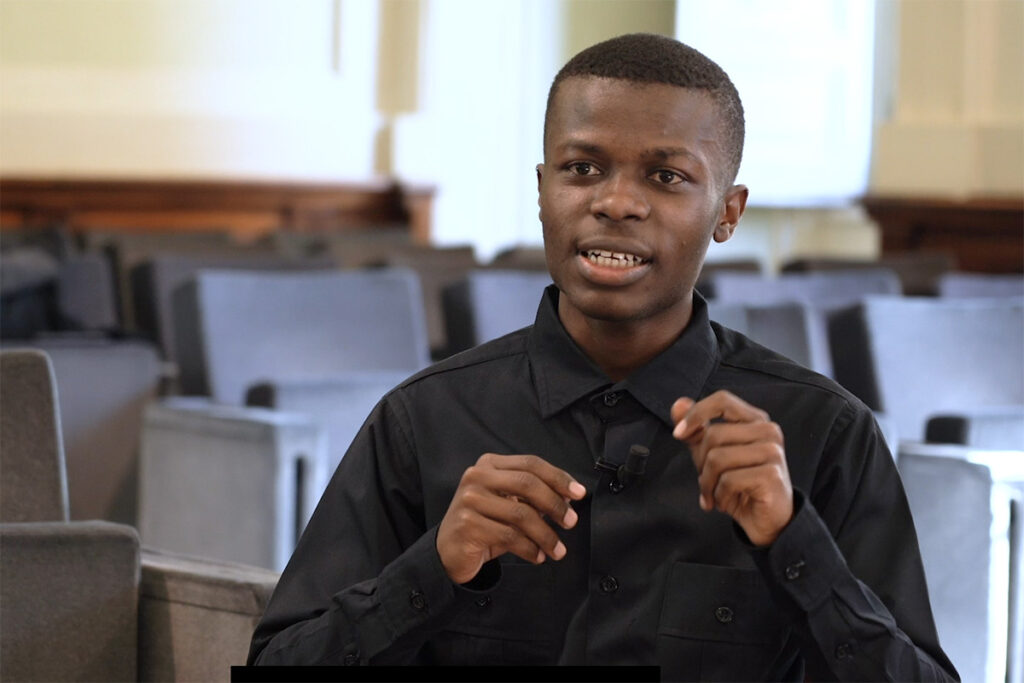
The backpack of sacred vessels for celebrating Mass in rural areas

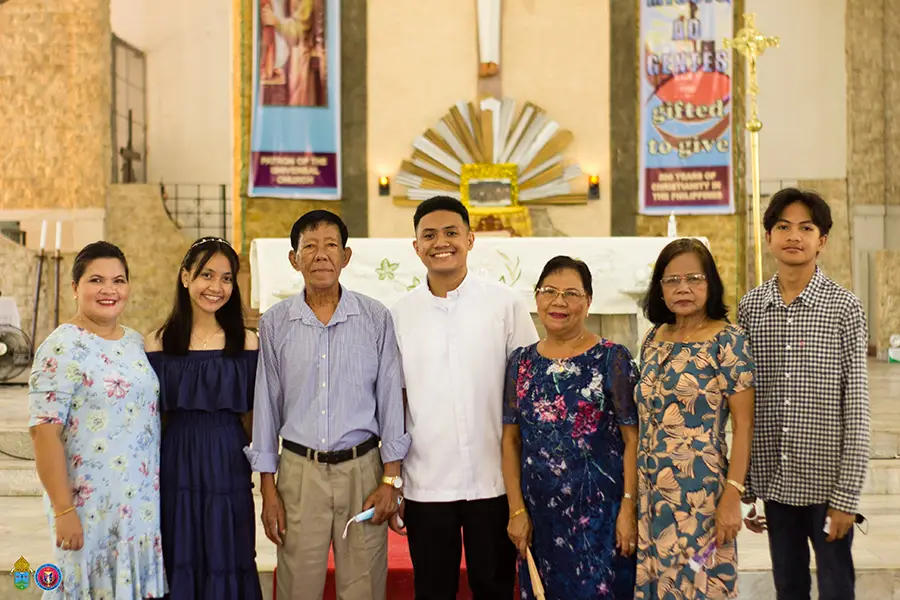
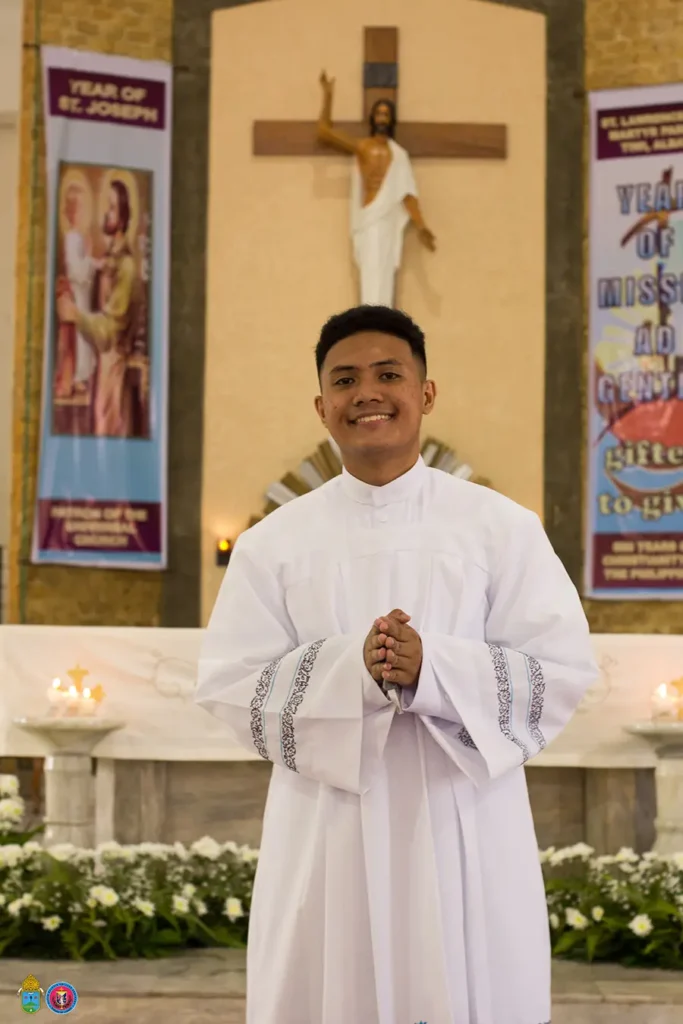
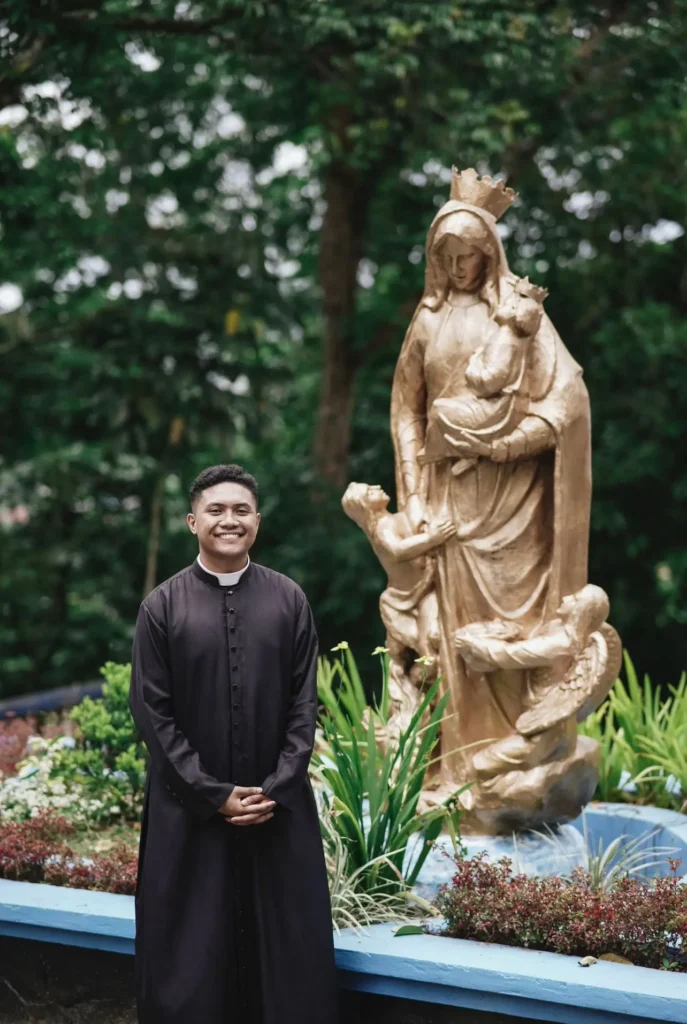
The CARF Foundation provides backpacks of sacred vessels to seminarians who are to be ordained as priests, as was the case of Hanzell Renatoallowing them to celebrate the Eucharist in rural areas of resource-poor countries.

Hanzell, ordained priest in September 2021 and appointed pastor of Sacred Heart of Jesus in Boaco Viejo, expresses his gratitude for this support. He notes that, thanks to the backpack, he has been able to celebrate Mass with dignity; visit the sick and impart the sacrament of Anointing and bless homes in rural areas. This resource is essential for priests serving in regions with limited resources, facilitating the administration of the sacraments and strengthening the faith in isolated communities.

"I thank the board of trustees I would like to thank the CARF Foundation's Social Action team for their closeness and support, both spiritual and material. I would like to share with you that the backpack of sacred vessels that they gave me, a gift on May 28, 2021, has been a great help to me in the mission that I now have".

Hanzell Renato studied Theology at the Ecclesiastical Faculties of the University of University of Navarra and during his stay in Spain, he resided at the Bidasoa International Seminary.

Gracias al estuche de vasos sagrados proporcionado por la Fundación CARF, sacerdotes como Hanzell Renato Hernández pueden celebrar la Eucaristía en comunidades rurales de Nicaragua, acercando los sacramentos a quienes más lo necesitan.

Impact of the backpack of sacred vessels on pastoral work.

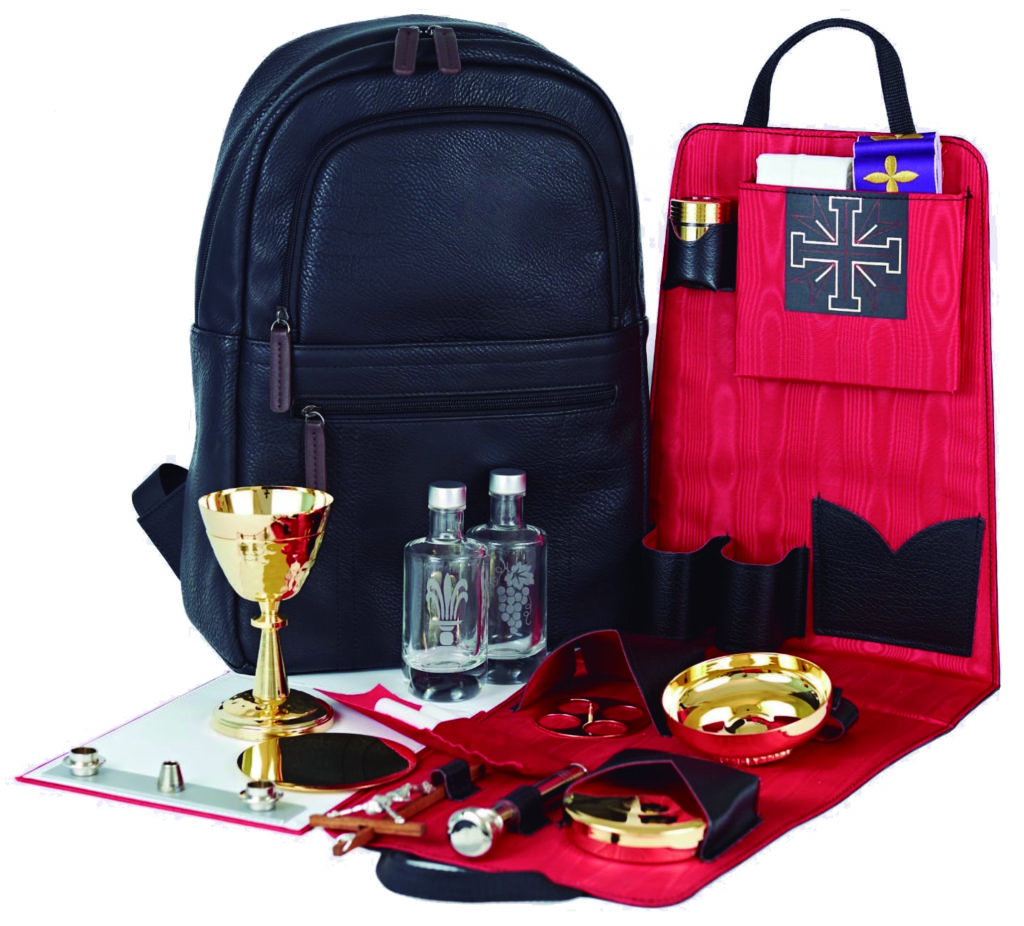
The backpack is an indispensable resource for priests working in isolated and under-resourced regions. It contains the necessary elements to celebrate the Eucharist, such as the chalice, paten and other liturgical accessories.

This allows priests to celebrate Holy Mass with dignity even in adverse conditions, bringing the presence of Christ to places where communities do not have access to a church.

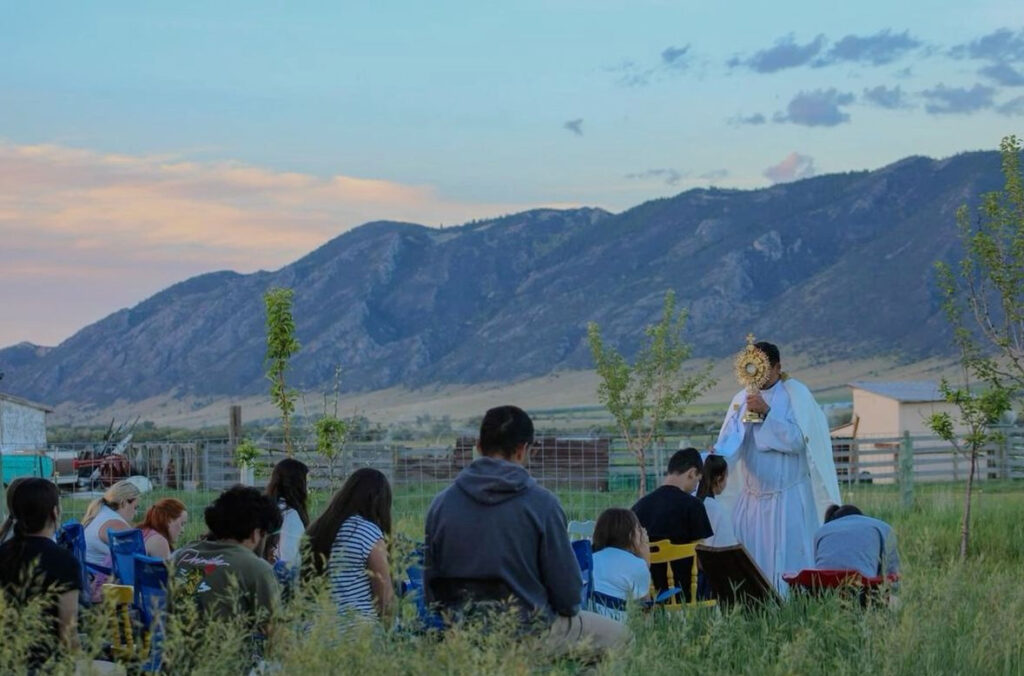
"On one occasion, I met a community of faithful who had not participated in the Eucharist for months, a pain for not having Mass. Thanks to the backpack, I was able to offer them the Eucharist and feel the joy of bringing them closer to God," adds Hanzell.

Testimonies of priests who have benefited

Hanzell's testimony reflects the mission of many priests in rural areas of Latin America, who face challenges such as lack of infrastructure, long distances and scarce material resources. With the support of the CARF Foundation, these difficulties are transformed into opportunities to strengthen the faith of their faithful communities, often in rural areas that are difficult to access.

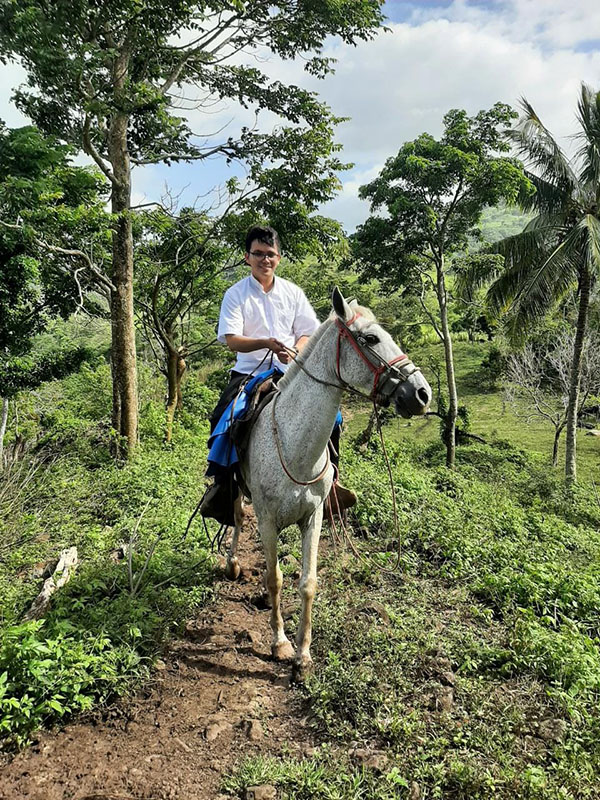
Hanzell montando a caballo por comunidades rurales
Hanzell riding horses in rural communities.

A letter from Pedro Antonio

Pedro Antonio is another priest from a Central American diocese and an alumnus of the international weekly Bidasoa. He writes to thank us for the gift of the backpack of sacred vessels he received from the volunteers of the Social Action Board of the CARF Foundation.

"I am Pedro Antonio, a priest from Central America and an alumnus of the Bidasoa International Seminary. First of all, I want to thank God for the opportunity to have studied at the University of Navarra, especially for allowing me to form my priestly heart in Bidasoa. 

The truth is that without the help of the trainers and so many good people from the CARF Foundation, it would be impossible to carry out this great work. A year ago I received as a gift, a backpack of sacred vessels with the necessary to celebrate the Holy Eucharist. On June 12, 2021, I was ordained a priest and the time had come to wear it.. After my ordination I remained as a collaborator at the shrine of Our Lady of Candelaria, my home parish," writes Pedro.

mochila vasos sagrados

The story of Jesus, from Venezuela

Jesus Melean is a priest of the Diocese of Cabimas, Venezuela. He studied Theology at the Ecclesiastical Faculties of the University of Navarra and was a resident at the Bidasoa Seminary. Before returning to his country, he received the backpack of sacred vessels from the volunteers of the Social Action Board

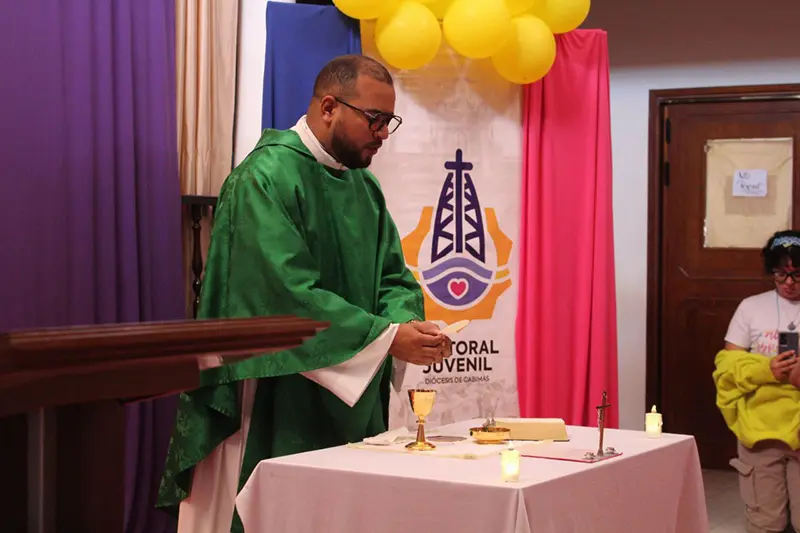
"This weekend I was able to celebrate Mass with a group of young people that I have the opportunity to accompany in their spiritual life. The backpack of sacred vessels has been a gift that I value very much because it is being very useful for this type of celebrations.

I have Mass once a month in different communities and this gift helps me to celebrate the Eucharist worthily everywhere.

Always grateful to the CARF Foundation for this gift... I could say that it is a gift that helps us to give (bring) Christ to others".

Donations that transform lives

The CARF Foundation is dedicated to providing academic, human and spiritual formation to seminarians, diocesan priests and religious men and women from countries around the world, mainly those with scarce resources.

The donations and prayers of benefactors enable these priests to carry out their pastoral mission with dignity and effectiveness. The CARF Foundation supports the promotion of infrastructure, formation and support projects for parishes in vulnerable areas.

"Every contribution we receive from benefactors has a direct impact on the lives of thousands of people. They not only help diocesan priests, but the entire community they serve," notes a CARF Foundation spokesperson.

How you can help

If you want to be part of this mission, you can make a donation here on our website. Every contribution, no matter how small, helps bring the sacraments to those who need them most, strengthening the faith and hope of all. With the support of benefactors and volunteers, the CARF Foundation continues to transform lives and ensure that the message of Christ reaches every corner of the world.

Anto Bezingar, seminarian from India: "my country needs more priests".

Anto Benzigar, a seminarian from India, entered the seminary at the age of 17. Now 26 (in 2025), he is studying the fourth year of theology at the Ecclesiastical Faculties of the University of Navarre and resides at the Bidasoa International Seminary in Pamplona.

He discovered God's love as a child, thanks to the Christian formation of his parents.

Anto discovered the love of God as a childFrom a very early age, I received the spiritual nourishment I needed from my family, catechism and a formation in the association. Little Way. Through my parents' prayer life, and their total trust in Christ and devotion to Mary Most Holy, I became aware of the love of God, my almighty Father".

Because for him, the training received at home, in the family, is a treasure that we all have to thank our parents for.. A Christian formation that remains impregnated in our soul.

Anto (center of the picture), together with other seminarians from India.

A faith handed down from generation to generation

"Keralite (South Indian) families, like my own, often have a deep-rooted Catholic faith that is passed down from generation to generation.. This determination in family prayer and spiritual practices can be a valuable lesson for European families seeking to strengthen their faith," says the young Indian seminarian.

During his childhood, serving as an altar boy sparked in him a burning desire to become a Catholic priest. And after finishing his high school studies, he entered the seminary on May 31, 2015. He remembers the exact date with great joy and hope.

The origin of Christianity in your Indian diocese

The origin of Christianity in his diocese (Neyyattinkara) dates back to 1600, when a group of Catholics baptized by St. Francis Xavier settled in some localities in the area such as Neyyattinkara, Vlathankara, Amaravila and Parassala.

In 1707, the Jesuit missionary Fr. Severia Borgis started the Nemom Mission. The first converts came from the community of Nair and the first church of this diocese was erected in 1775 in Amaravila.

An 11 % of Catholics

But the spread of the Catholic faith increased in his diocese at the beginning of the 20th century with the missionary activity of the saint. Archbishop Aloysius Maria Benziger (OCD).

"His holy life, powerful leadership, missionary zeal and generous assistance to missionary priests paved the way for the formation of several ecclesial communities and the erection of many churches," says Anto.

Finally, on June 14, 1996, St. John Paul II, by means of the bull Ad Aptius Provehendum erected the Latin diocese of Neyyattinkara.

Today, the total population of this diocese is 1,467,000 inhabitants, of which 160,795 are Catholics, 11 %.

Shortage of priests: a major challenge

"With a relatively small Catholic population compared to the total population, there is a potential need for evangelization and reaching more people," says Anto, who says vocation needs and a shortage of priests in his diocese is a major challenge.

Paradoxically, this area of India has many parishes and missionary centers, and it is a great responsibility of the diocese to provide adequate pastoral care to its faithful, because, in addition, the people in India respect the catholic priest and holds him in high esteem.

What can we Europeans learn from India?

This shortage of priests does not prevent the parish life of Kerala is very activewith vibrant communities that foster a sense of belonging and participation in the Church.

"This is something that can inspire European parishes: to create more attractive and inclusive environments for young people," says this young seminarian.

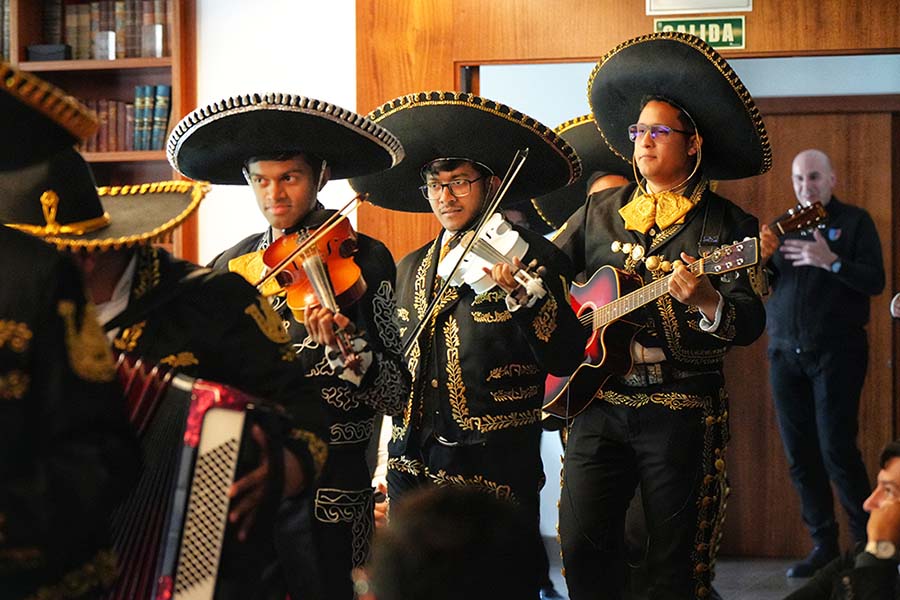
Anto's classmates dressed as mariachis playing at an end-of-year festival in Bidasoa.

Cultural and religious diversity in India

Another of the riches of Kerala, the province of Anto Benzigar, is the rich cultural heritage that combines Hindu, Christian and Muslim traditions. For him, this cultural diversity creates a unique and vibrant society where people from different backgrounds can live and work together.

"I believe this feature can inspire Europeans to embrace cultural diversity and learn from different traditions," he says.

One thing Europeans can also learn from their country is how to overcome obstacles: "Kerala has faced numerous challenges, including natural disasters and socio-economic problems. However, the Keralite people have demonstrated a remarkable resilience and a strong sense of community to overcome these adversities. This spirit of perseverance can be an inspiration to Europeans as they face their own difficulties".

The richness of living in Bidasoa

But Anto Benzigar is also gaining great knowledge of Spain. In addition to the language that gives him an international perspective, the cultural heritage of our country and its different ways of thinking.

Of course, as he says, Spain's rich history and art are giving him a deeper insight into the country's past.

But the most important thing is the international perspective that residing in the United States provides. Bidasoa International Seminar: "Meeting people from diverse backgrounds and cultures fosters understanding, tolerance and a broader worldview," she says with satisfaction.

To this he adds the broad theological, spiritual, human and community formation, because, for him, living in a seminary fosters a sense of community and shared values.

"I am learning to live closer to others, cultivate relationships and support each other in this spiritual journey. Moreover, the pastoral experience I am gaining, such as volunteering in local parishes or working with marginalized communities, is of great value in serving others. All of this contributes to deeper personal growth, to manage my time, develop self-discipline and cultivate inner peace," she concludes.

Anto Benzigar formación seminarista India

The seven characteristics of a 21st century priest

Faced with the great challenge he will face when he returns to his country, this young seminarian from India dares to launch seven characteristics that a 21st century priest must have in order to live for the people he serves.

1. Authentic and accessible

2. Technology expert and communicative

3. Compassionate and inclusive

4. Passionate and mission-driven

5. Open to learning and growth

6. Collaborative and team-oriented

7. Openness to scientific research


Marta SantínJournalist specializing in religious information.

"My priestly vocation has been a true work of God."

Nataniel's vocation to the priesthood originated in the most unexpected situation, since his father belonged to the Kimbanguist religion, an African religious current originating in Angola, founded in 1921 by Simão Tocoknown as the prophet Kimbangu.

This faith combines elements of Christianity, especially Protestantism, with traditional African practices and beliefs. Kimbanguists believe in a supreme God, the importance of prophets and spiritual healing. They also promote unity, peace and social justice, and are distinguished by their emphasis on the fight against oppression and racial discrimination. Religion has a strong influence in Angola and other parts of Africa. However, a providential path led Nataniel to embrace the Catholic faith and, over the years, to feel a call to the priesthood.

Today he is in Rome, studying for his bachelor's degree in theology and living in the Sedes Sapientiae International Seminarthanks to a grant from the CARF Foundation.

Religion in the family

Nataniel is the second of five brothers and sisters, and comes from a family that is not strictly Catholic, but had a religious experience that marked his life. His father is a military man, and although he does not practice much, in his family the religion that was practiced was kimbanguista. On the other hand, his mother, Isabel, who was a hairdresser, was baptized in the Catholic Church but ended up converting to Protestantism. This was Nataniel's reality until 2012.

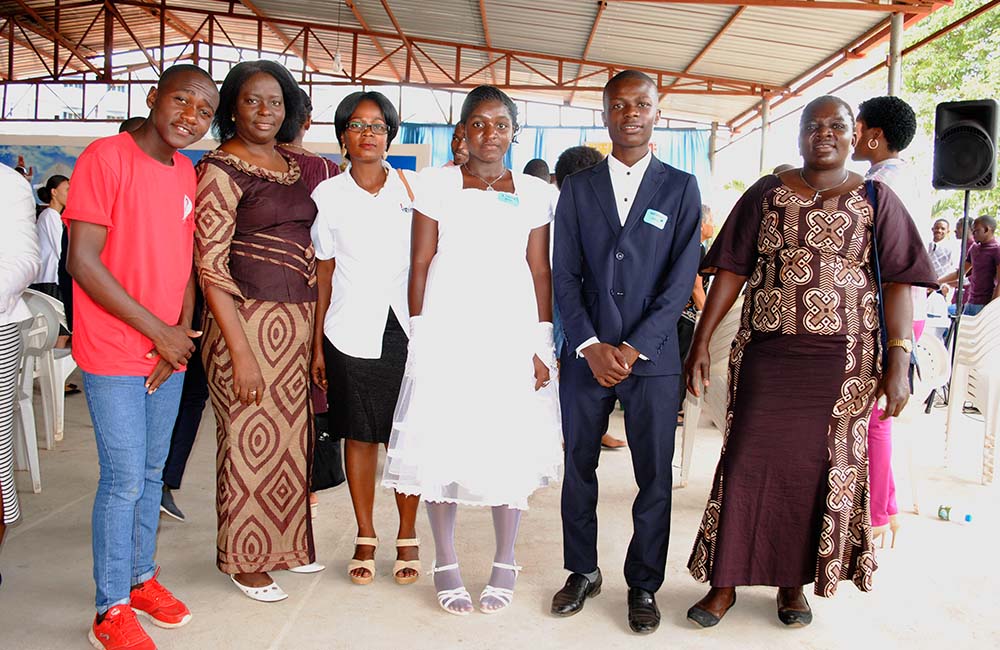
Nataniel con sus hermanas y su madre

The mother's reconversion

The change began when Nataniel's mother decided to return to the Catholic Church. "She gave us the order that we would no longer attend any other church, and we started going to church every Sunday." For Nataniel, it was a challenge. He had grown up participating in the Protestant church's Sunday school, where Bible quizzes were held, and what motivated him most to go was the chance to win prizes. Now, attending church, everything seemed strange and different. But he had no choice but to accompany his mother.

The discovery of the Catholic faith

By attending catechesis, Nataniel began to discover the teachings of the Church. He studied the Bible and Church history in greater depth, which strengthened his faith and gave new meaning to his life. In 2015, he joined the acolyte group, getting closer to the liturgy and the priest, and that same year he received baptism. "We can lose fame, youth, money, but the one thing that truly cannot be lost is Christ."

Priestly vocation

The year 2015 was key, not only because of his baptism, but also because he started high school. During that period, the idea of entering the seminary began to take shape in his heart. "Seeing the pastor carry out his ministry motivated me to follow in his footsteps. I felt in the depths of my being that my vocation was to be a priest, to give my life to the service of God and for the salvation of souls. I wanted to be an instrument of God in the midst of his people," he tells us joyfully.

The challenge of yes to Jesus

Nataniel was a bright boy in studies, he had received scholarships to study computer engineering in London or the United States, but in 2017 he makes the decision to share with his parents his desire to enter the seminary. "It was a difficult time, especially for my mother. She didn't understand why I wanted to take such a radical step in my life. For her, having her only male child take this path was hard to understand."

Over time, his parents, who had returned to the Catholic faith, began to open their hearts and understand their son's desire. Finally, in February 2018, Nataniel's parents accepted their son's decision to become a priest and on February 25 he entered the archdiocesan seminary of Luanda, a decisive step towards the dream of his vocation. "It was a moment of great joy and gratitude to God for allowing me to follow the path that I felt He had prepared for me."

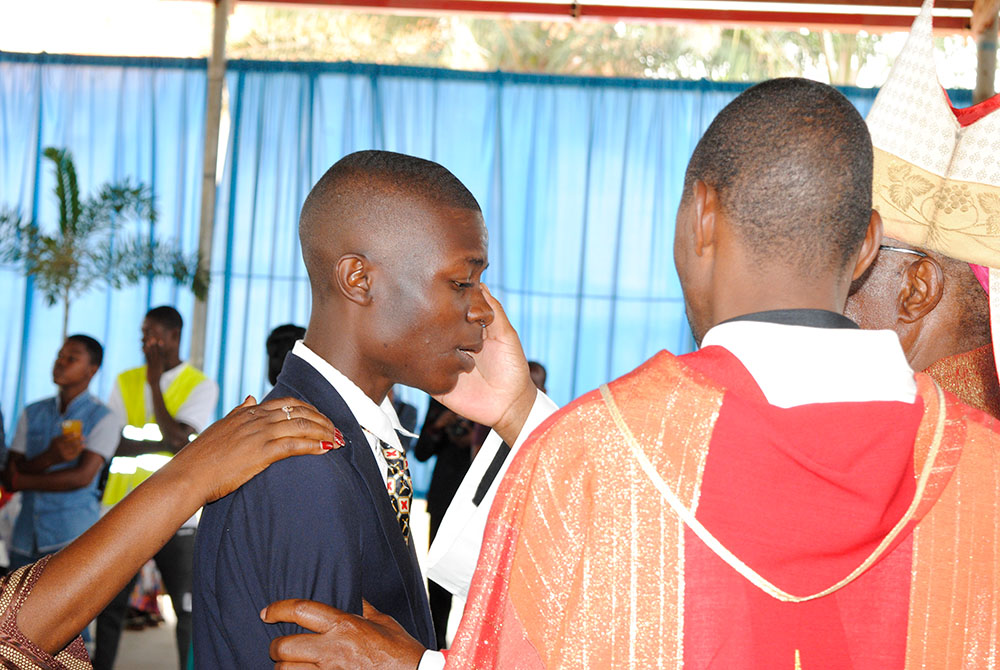
Nataniel recibiendo la bendición

A journey of faith

Today he sees how each step has led him to where he is, to this call to the priesthood that began in his heart in an unexpected way, but which has been confirmed and strengthened over the years. "My vocation was born in a diverse family context, it has been a true work of God."

He is deeply grateful to his parents for their understanding and for supporting him on this path. "My desire is to move forward, with faith and hope, dedicating my life to the service of God and his people."

Grateful to the benefactors

With this testimony, Nataniel wishes to express his deep gratitude to all the benefactors of the CARF Foundation for giving him the opportunity to continue his studies in Rome.

She is currently in her third year of Theology at the Pontifical University of the Holy Cross. "Thanks to your support, I am able to commit myself to the mission of Holy Mother Church to bring the Gospel of Our Lord Jesus Christ to all nations," he says.

"I pray every day for you so that the Lord, the Supreme and Eternal Good, from whom all blessings come, may continue to bless you and guide your steps towards the vocation to which we are all called, Holiness. Thank you very much!" he says with a smile.


Gerardo FerraraBA in History and Political Science, specializing in the Middle East.
Head of the student body at the Pontifical University of the Holy Cross in Rome.
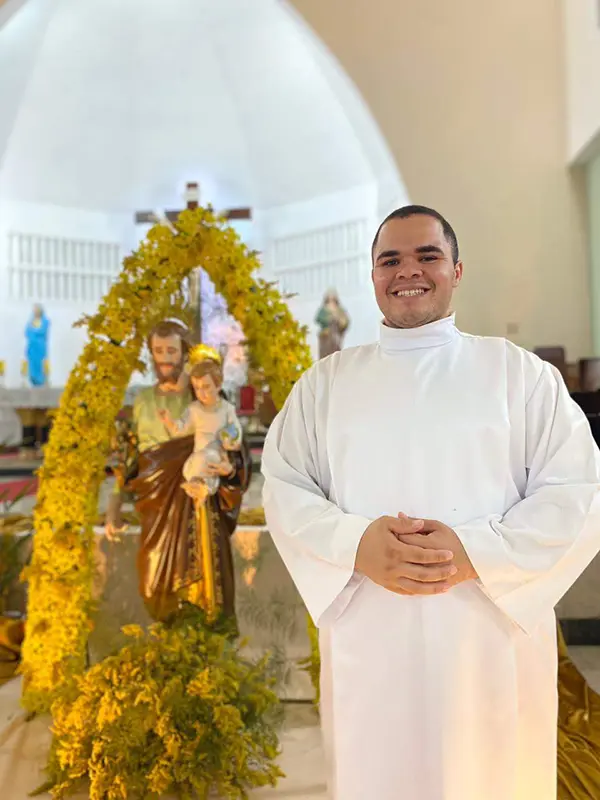
Paul from Malawi: "we need well-trained priests to help everyone".

The great cultural richness of Malawi is countered by the scarcity of means, especially in the diocese of Karonga, a young and small diocese in need of many priests. This is Paul's dream: to be well trained in Pamplona in order to return and serve effectively the diocesan church of his country.

This young African, 23 years old, resides in the Bidasoa international seminar and is studying theology at the University of Ecclesiastical Faculties of the University of Navarre. The bishop of the diocese of Karonga, in the north of Malawi, has sent him to Pamplona to receive a solid and integral formation so that, when he returns, he can put all the preparation he has acquired to work in the Church in his country.

Need for priests in Malawi

"The need of my diocese is to have more priests. There are very few of us and it is a young, new and small diocese, founded in 2010," Paul explains. For this reason, he is very excited about the complete preparation he is receiving in Pamplona. 

Your diocese needs not only well-trained priests, but also more missionaries to help the few who are not yet in the diocese. diocesan priestsThe diocese has only 19 diocesan priests and 28 seminarians.

Living conditions in Malawi

In his diocese there is also a shortage of health and education professionals. Paul explains, "We certainly need the help of these health facilities to improve the living conditions of Christians, but also of the entire population of the diocese. But we are grateful that the diocese has done all it can to help with new schools and some health centers, even though the demand is still very high." 

Had it not been for the help of the CARF Foundation and benefactors, Paul would not have had the opportunity to receive a complete formation as a priest that will do so much good for his people.

Coexistence between Christians, Muslims and African traditions

Certainly, your diocese has scarce economic means, but a great wealth in terms of coexistence. 

"Catholics in Malawi live in peace, celebrate their faith joyfully and demonstrate it culturally. Malawi is a very peaceful country, we live in harmony and cooperation with other Christians, Muslims and African traditions without killing each other. Religious expression is not a problem," he says happily. 

In this African country, Catholics have a higher percentage (17.2 %) than other Christian denominations; it should be remembered that there are many other groups of Christian confessions, because Great Britain colonized the country and the first Christians who evangelized were Protestants from England and Scotland. A few years later, the Catholic White Fathers from France went as missionaries, when Protestantism had already spread in the country.

The example of priests

The example of Catholic priests and missionaries in Malawi had a positive influence on Paul, as well as the strength of his environment. He comes from a large family of seven siblings with strong Catholic roots: four boys and three girls. Paul is the sixth. 

The departure of his mother to Heaven in 2014, when he was only 13 years old, caused him great sorrow. But this grief turned into hope and faith thanks to the support of her family and religious, an example that was decisive in helping her to move forward and shape her vocation.

"Lord, let me try."

He began to discern his vocation to the priesthood as a child, when he participated in the activities that took place in his school, in the minor seminary. But he did not know if he could carry out such a mission. 

"As a child I thought I could live like them, like the priests who took care of me and educated me. And I told the Lord: let me try, I'm going to give everything so that one day I can be a priest," he says. 
Finally, he entered the major seminary at the age of 19. In this vocational journey that he has undertaken, he hopes to alleviate the need of his diocese for well-trained priests, especially to reach out to the youth.

Reaching out to young people

"Young people are very influential in spreading the Gospel through the media, but also in the annual youth meetings and conferences that are organized to keep the faith and spread it; they gather in large numbers, which is very promising," Paul Benson proudly expresses. 

For him, young priests are able to understand what young people need by developing new approaches to explaining Catholic doctrine, giving arguments and thus being able to live and witness to the Catholic faith in Malawi.

What Europeans should learn from Africans

Africa has great challenges, but so does Europe, because Europeans must learn great virtues from African Catholics: "audacity and resilience to resist and keep the faith, the tradition itself; to proclaim the truth and help this broken generation, where many things are happening contrary to our Christian customs, among them, many sexual immoralities," Paul laments.

Thanks to the CARF Foundation

This is one of the reasons why he believes that the formation of a priest is paramount: "We must help everyone, those who believe and those who don't, those of one class and those of another. That is why we need priests who are well trained". 

With enthusiasm and joy he thanks the CARF Foundation for all it does for his academic studies. "Our formation is academic, spiritual and pastoral, and I am very happy for your help."


Marta Santín, journalist specializing in religion.


Benedikt's vocation: from carpenter to seminarian

The dream of his vocation has taken him to Rome to be trained as a priest at the Pontifical University of the Holy Cross and is in the first year of the first cycle of Theology.

Benedikt Aicher was born on April 26, 1999 in Rosenheim, Bavaria, Germany, about 90 kilometers from Marktl am Inn, where Josef Ratzinger, who later became Pope Benedict (Benedikt in German) XVI, was born.

This young German is based in Rome and is part of the institute. Work of Jesus High PriestThe FMA, a Catholic community dedicated principally to the sanctification of priests and the promotion of a life of service, prayer and apostolate. Its charism is centered on consecration to the Immaculate Heart of Mary and the pursuit of Christian perfection through the evangelical counsels of poverty, chastity and obedience.

A childhood marked by faith and family

Benedikt Aicher grew up with his two brothers in a small village in the Bavarian Alps, where family work, prayer and Christian values were fundamental. As a child, his parents taught him the importance of sacrifice and dedication to others, laying the foundations for a vocation that would later lead him to want to become a priest.

"Our parents taught us one thing in particular: to make sacrifices out of love for others. There was always a lot of work, so we soon had to help out. Since we had no sisters, housework was also a matter of course for us," she tells us.

The influence of his grandfather and Benedict XVI

Benedikt's Catholic heritage extends to his grandfather, who studied alongside St. John Paul II's successor, Pope Benedict XVI. This family legacy, along with the traditions of the Church, created an environment conducive for Benedikt to cultivate his faith from an early age.

"My parents received a profound Catholic influence from their own parents and from the Church. My father spent many years in a minor seminary. My grandfather also attended the seminary, along with Joseph Ratzinger, with the sincere desire to become a priest, but World War II interrupted his formation. When he returned from prison in France, he wanted to continue his studies, but because of what he had lived through, he could no longer find the peace he needed to study," Benedikt tells us.

From an early age, he and his siblings attended Mass every Sunday and were introduced by their parents to Catholic traditions. Thus, at home, they created an environment conducive to God's work.

"After my First Communion I told my mother: now I'll start being an altar boy and then I'll enter a monastery!" he tells us with a smile.

Discovering his vocation in the midst of doubts and dreams

Although Benedikt dreamed of becoming a carpenter, his heart was won over by God's call to the priesthood. During his youth, the Virgin Mary played a central role in guiding him to a life of prayer and dedication. At the age of fifteen, after some resistance, he finally accepted his vocation, taking concrete steps to enter the seminary.

"My vocation to the priesthood came as a child, but I also dreamed of becoming a carpenter. My uncle, who unfortunately is now in Heaven, was a Benedictine friar and worked as a carpenter in the monastery. When I was a child I wanted to train there with him, but with time this desire disappeared.

During his time at school, he was a very shy boy. At home, on the other hand, he made a lot of fuss. High school took him out of town, to the city. "My school still had Christian values. That, along with the protection of the Virgin Mary, saved me from many things. In fact, we never left home without praying with our mother before the statue of the Virgin and making the sign of the cross with holy water."

Although carpentry was something that appealed to Benedikt, there was another path for him. "I always liked to participate in the altar boys' group. It was my preference all the way. After a few years, my brothers and I became senior altar servers and we would lead the group according to our abilities. We also helped in other parish activities, such as Confirmation preparation. For many years, I played the tenor horn in the marching band. Halfinger Bläserkreis".

Discernment of vocation

The Virgin Mary always wanted to bring Jesus to him. "At the age of twelve, we began attending monthly Legionaries of Christ conferences, where we found spiritual nourishment. When I was fourteen, my brothers and I began to participate in a youth camp every two months, also spiritually accompanied by the Legionaries of Christ. Eventually, I became part of the organizing team, where I was mainly in charge of the economic tasks together with my older brother".

This period had a great impact on his faith life, as he was led to the Eucharist and Confession. At the age of fifteen he again felt the call to the priesthood. "It was brief and I rejected it firmly. In the following years, the intervals in which I felt this call became shorter and shorter and more intense."

The prayer groups he attended told him to pray for his future wife. Benedikt had not yet accepted his vocation, but he could not pray without adding: "And if you have another way for me, grant someone else a good wife," he says joyfully.

Jesus conquered his heart, and Benedikt gradually embraced that call to the priesthood.

The key role of the CARF Foundation in his formation as a seminarian

Today, Benedikt is a seminarian and studies theology at the Pontifical University of the Holy Cross thanks to the support of the CARF Foundation. With the help of benefactors, Benedikt has not only been able to receive quality training, but has also felt the spiritual and material support necessary to continue his mission of serving the Church.

Benedikt Aicher's story is a living example of how the faith, work and generosity of CARF benefactors can transform lives and strengthen the Church.


Gerardo Ferrara
BA in History and Political Science, specializing in the Middle East.
Head of the student body at the Pontifical University of the Holy Cross in Rome.
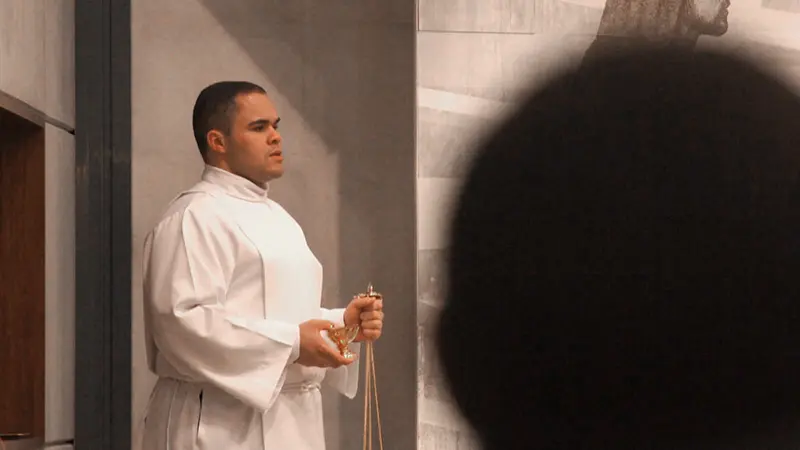
Asitha: "being a good and well-formed priest will help people to reach the path of God".

Being a priest for Asitha Sriyantha is fulfilling his childhood dream. His family is Catholic and devout, but he studied in a Buddhist school that could have changed the course of his life. But it didn't. Now a seminarian, he studies at the University of Navarra in Pamplona and resides in the Bidasoa International Seminar.

When God calls in childhood to be a priest

"Since my childhood I had the desire to be a priest. When teachers asked me what I wanted to be when I grew up, I would answer: I want to be a priest," says Asitha.

And although he comes from a devout Catholic family, with parents who are actively involved in parish activities, the decision to become a priest was not initially welcomed by his father, because in Asia it is difficult to accept that your only male child enters the seminary and leaves the family business.

"Now he is proud to have a son preparing to be a priest," exclaims Asitha. Thanks to his parents, his mother's influence, and the simple faith of his grandmother who lives with them, he grew in faith and relationship with God.

Ser sacerdote
"Being a good, well-formed priest can help a lot of people.".

His childhood in a Buddhist school

Asitha studied primary school in the school near the parish church and among her daily routine it was normal to serve at the morning Mass.

In high school his life took a turn when he entered a Buddhist school, an experience that has given him a broader understanding of Buddhism, the majority religious practice in his country.

My teachers and friends didn't understand," he says. Later, when I explained it to them, they understood my desire a little better and even encouraged me."

Now, his relatives and friends are happy because he is the first in his family to become a priest. "I hope and pray that some of my relatives will choose this wonderful life path: to become a priest," he exclaims. His only sister is always there for whatever is needed.

Catholics in Sir Lanka and the great contribution of the Church in Aasia

The Catholic Church counts in Sri Lanka with about 1.4 million faithful, representing about 7 % of the population. It is organized into 11 dioceses including one archdiocese. Asitha Sriyantha Lakmal is from the Diocese of Colombo, a diocese to which he will return after training in theology and philosophy at the Ecclesiastical Faculties of the University of Navarre.

"Asia is incredibly diverse, with numerous ethnicities, languages and cultural practices," comments Asitha, aware that the Church in Asia contributes to the rich tapestry of religions in various ways, reflecting the diverse cultures, traditions, and histories of the continent.

"In fact, the Church in Asia often embraces and integrates this diversity, fostering a sense of unity in the midst of differences. Asia is home to several major religions, including Christianity, Islam, Hinduism, Buddhism, Sikhism and others," he comments.

Therefore, the great contribution of the Church in Asia is its participation in interreligious dialogue, promoting mutual understanding and cooperation among people of different religions and thus contributing to peace.

"In many Asian countries Christians carry out their mission in peace and freedom, but in others there are situations of violence and persecution," he laments.

Training, the great challenge in the face of secularization

However, the great challenge faced by young people is that they priests of the 21st centuryThe main reason for this, both in Asia and in the rest of the world, is the strong secularization of society.

To face this great challenge, Asitha Sriyantha is convinced that "formation is key to address the challenges of our mission. I believe that every priest must fulfill his mission in the face of the thinking of the modern world," says Asitha.

And an integral formation is also a challenge to attract young people, a formation that will help to find innovative ways to address these challenges and to serve actively in the divine mission.

Prayer and sacraments

But in addition to formation, Asitha reminds us that prayer and the sacraments are the essence of our Catholic faith, because "we will only bear the fruit that God wants, if we seek God's grace and guidance, maintaining a close relationship with Him".

This relationship of trust and faith with the Lord was acquired as a child thanks to his parents, a seed that left its mark on his soul. Thus, at the age of sixteen he entered the minor seminary of St. Aloysius in Colombo and three years later he entered the propaedeutic seminary.

"I did three years of philosophical studies at the National Seminary of Our Lady of Lanka, Kandy, and now I can study theology in Pamplona thanks to the CARF Foundation," he says excitedly.

Asitha junto a don Emilio Forte y dos compañeros del coro de Bidasoa
Asitha with Mr. Emilio Forte and other members of the Bidasoa choir.

The diversity of the universal Church in Bidasoa

In addition, his experience at the Bidasoa International Seminary gives him a very broad richness in his vocational journey. "In Sri Lanka, we experienced the local Church. But in Bidasoa, where I live in Pamplona, the universality of the Catholic Church is palpable. We may be different with our cultures and languages, but we are one in our faith."

God willing, he will be ordained a priest to serve his diocese. "Our life is one and we serve one Master. Our thoughts and ideas may differ, but we work together and walk together towards the same goal," Asitha concludes.

In conclusion, he is very grateful for the financial effort that benefactors make so that young people like him from all over the world can finish their studies. "A good and well-formed priest can help people to reach the path of God," he says joyfully.


Marta Santínjournalist specializing in religion.